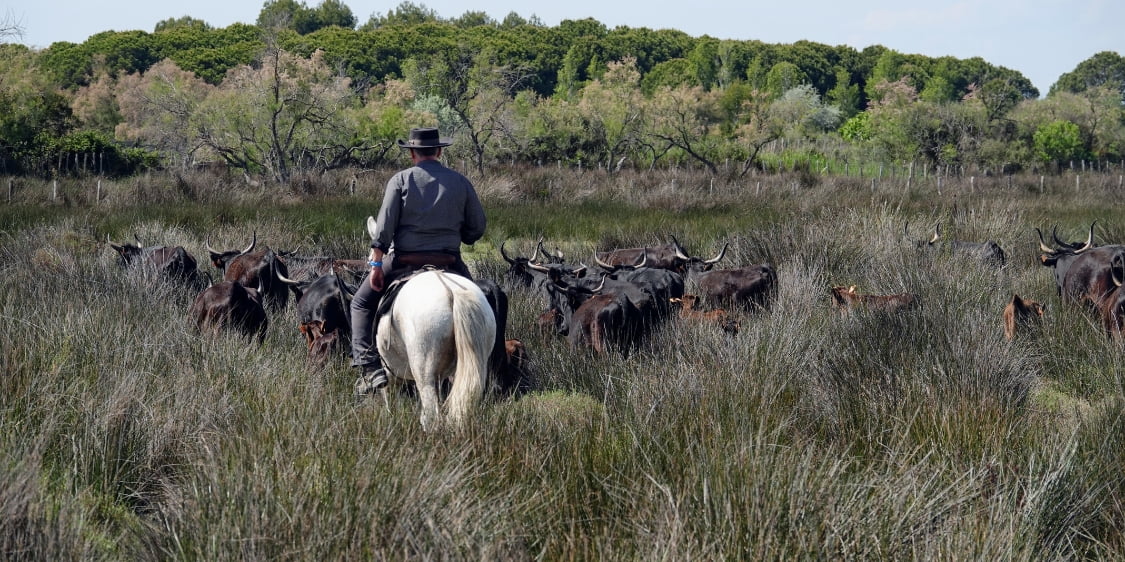
A trip to the Camargue means discovering a wild and unspoilt natural environment. It’s a chance to explore vast stretches of land where horses, bulls and pink flamingos share the land in harmony, under the watchful eye of the gardians.
A manade in a nutshell
Bull breeding
A manade is a typical Camargue farm. More specifically, a manade is a farm whereCamargue bulls are bred.
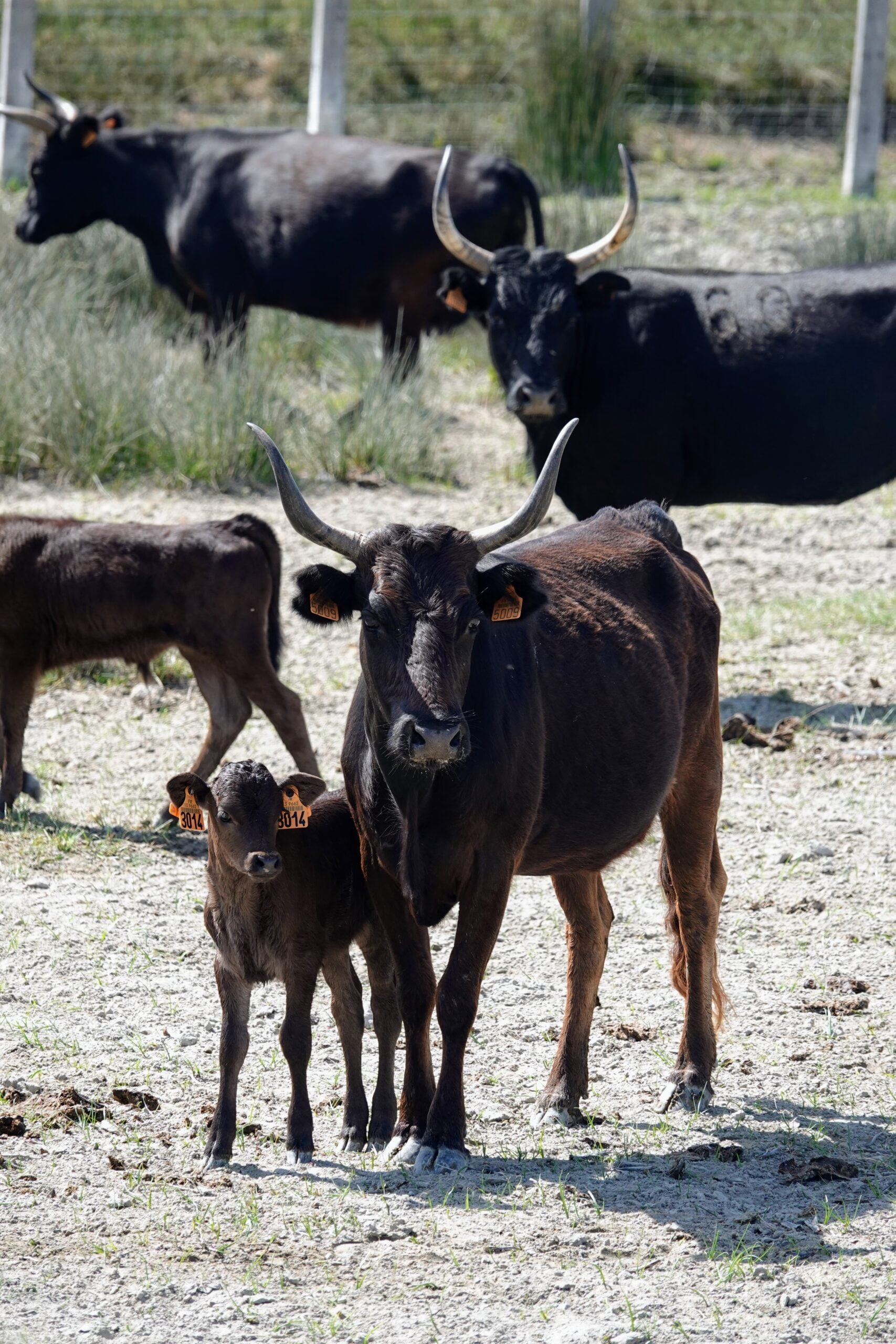
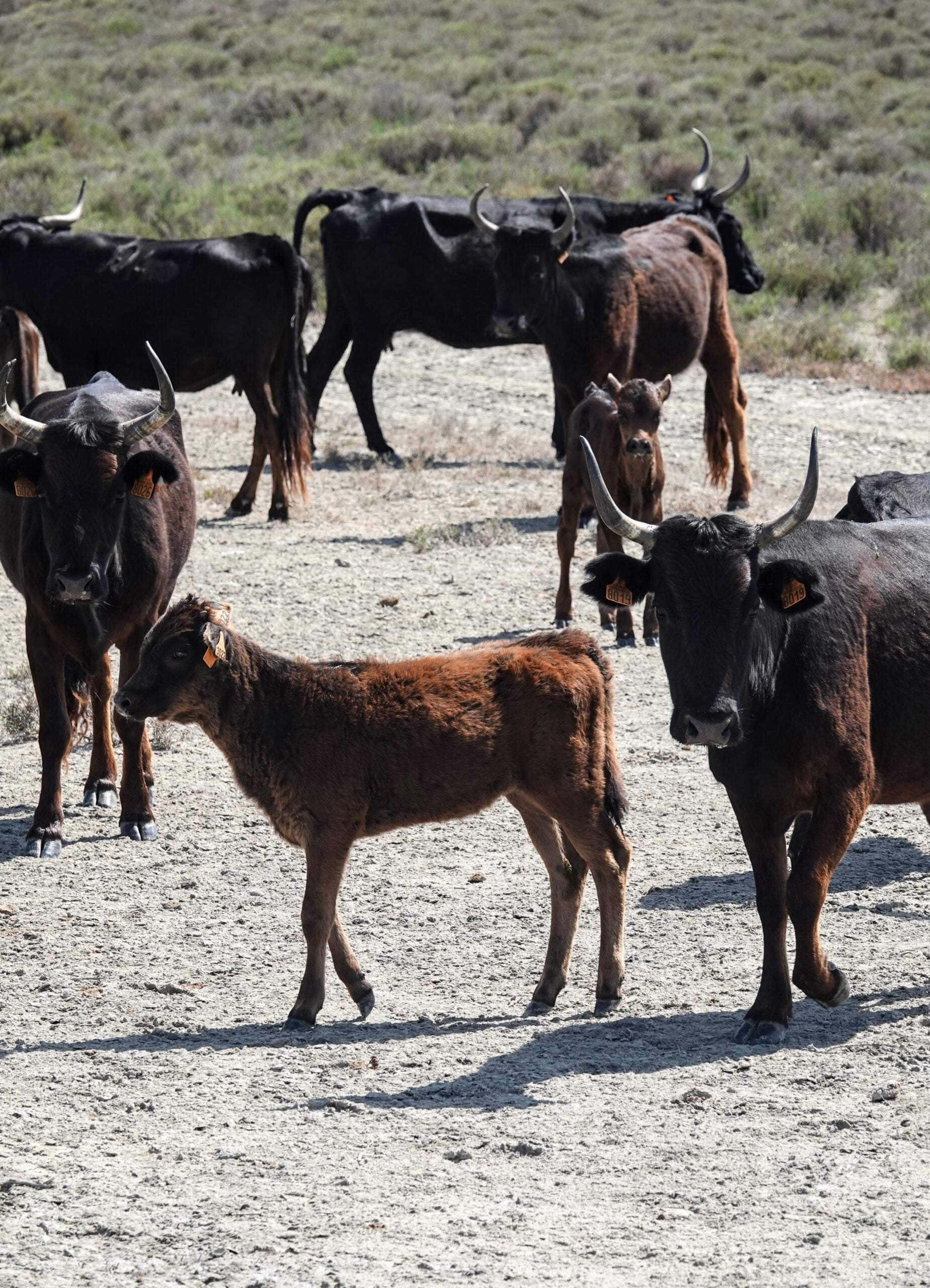
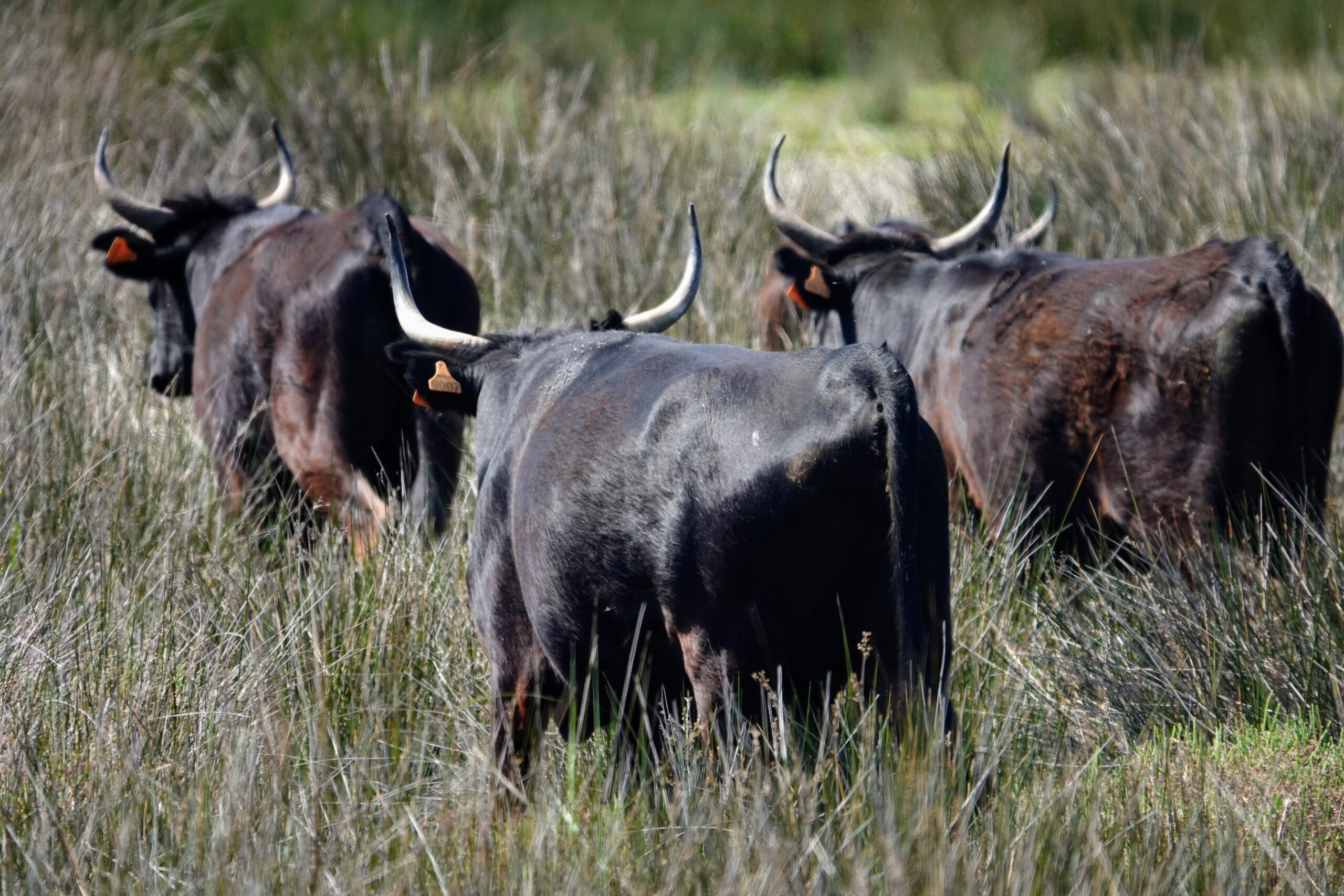
Living in semi-liberty in vast marshy areas, the Camargue bull is the only European breed of cattle still considered wild. Contact with humans is kept to a minimum: health checks, branding of calves (the ferrade), sorting of cattle, grouping of herds for sale.
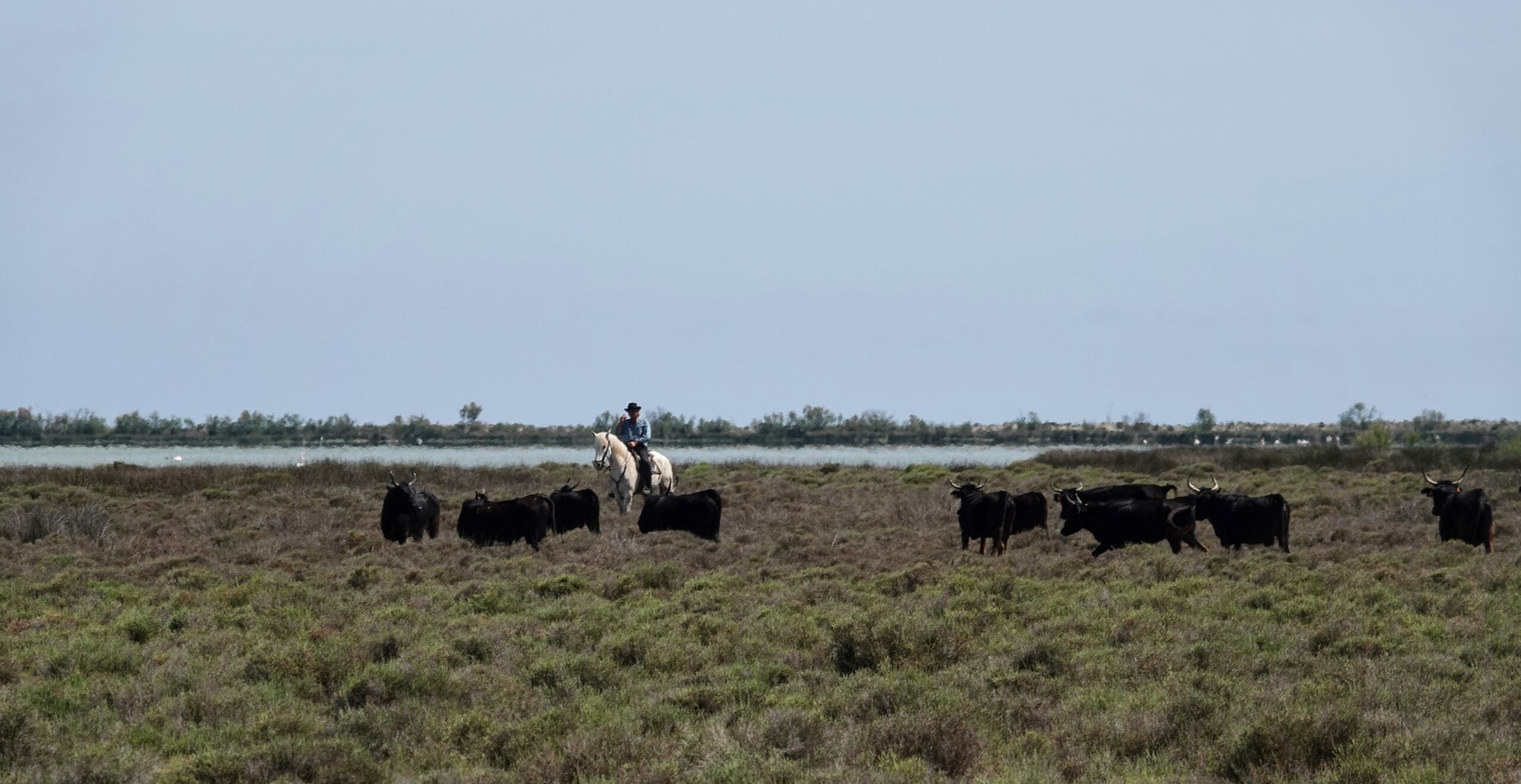
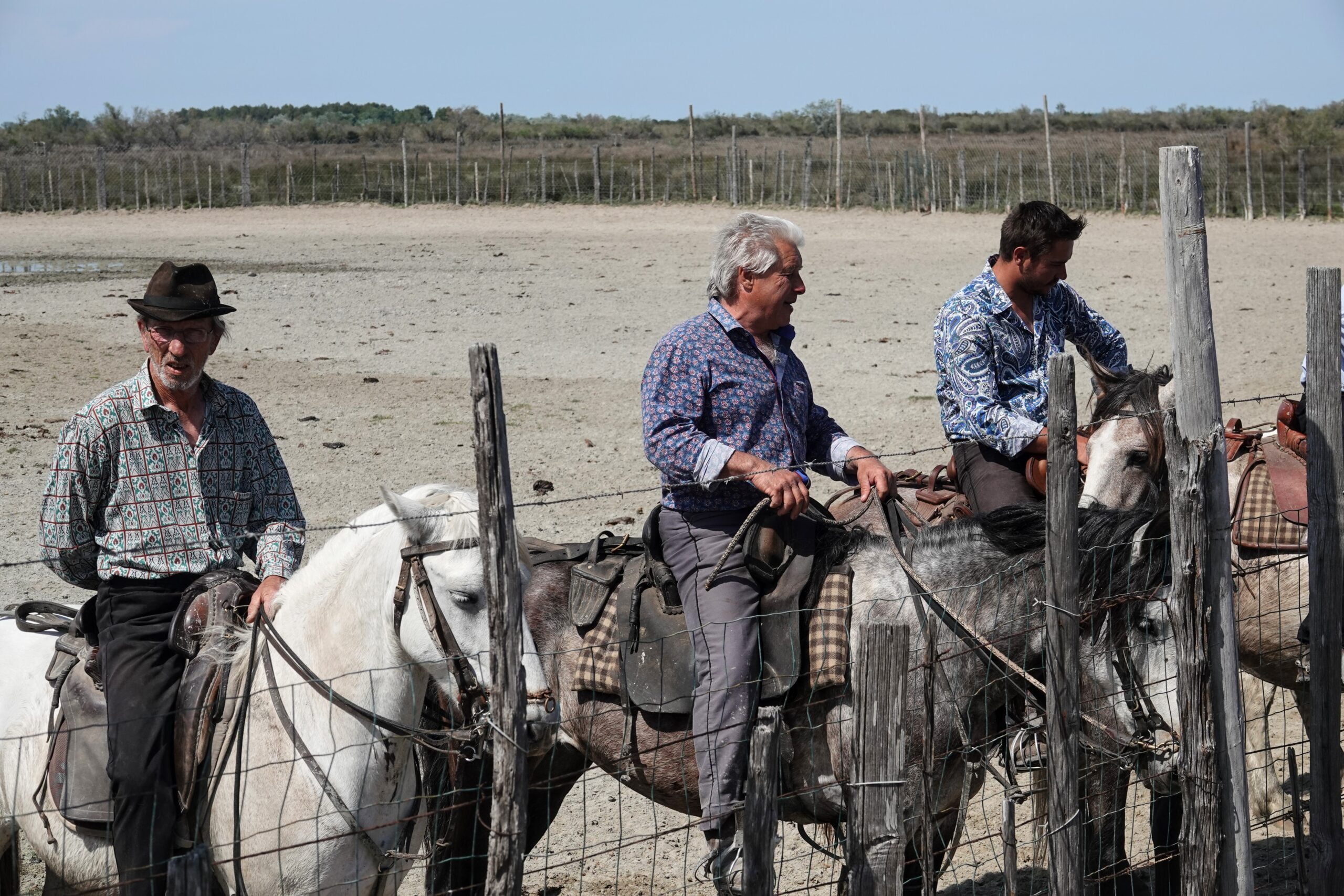
In addition to bulls, some manades also breed Camargue horses, whose primary function is to work the cattle. Renowned for its adaptability to marshy terrain, the Camargue horse’s liveliness and maneuverability make it the ideal companion for gardians and manadiers.
The manadier
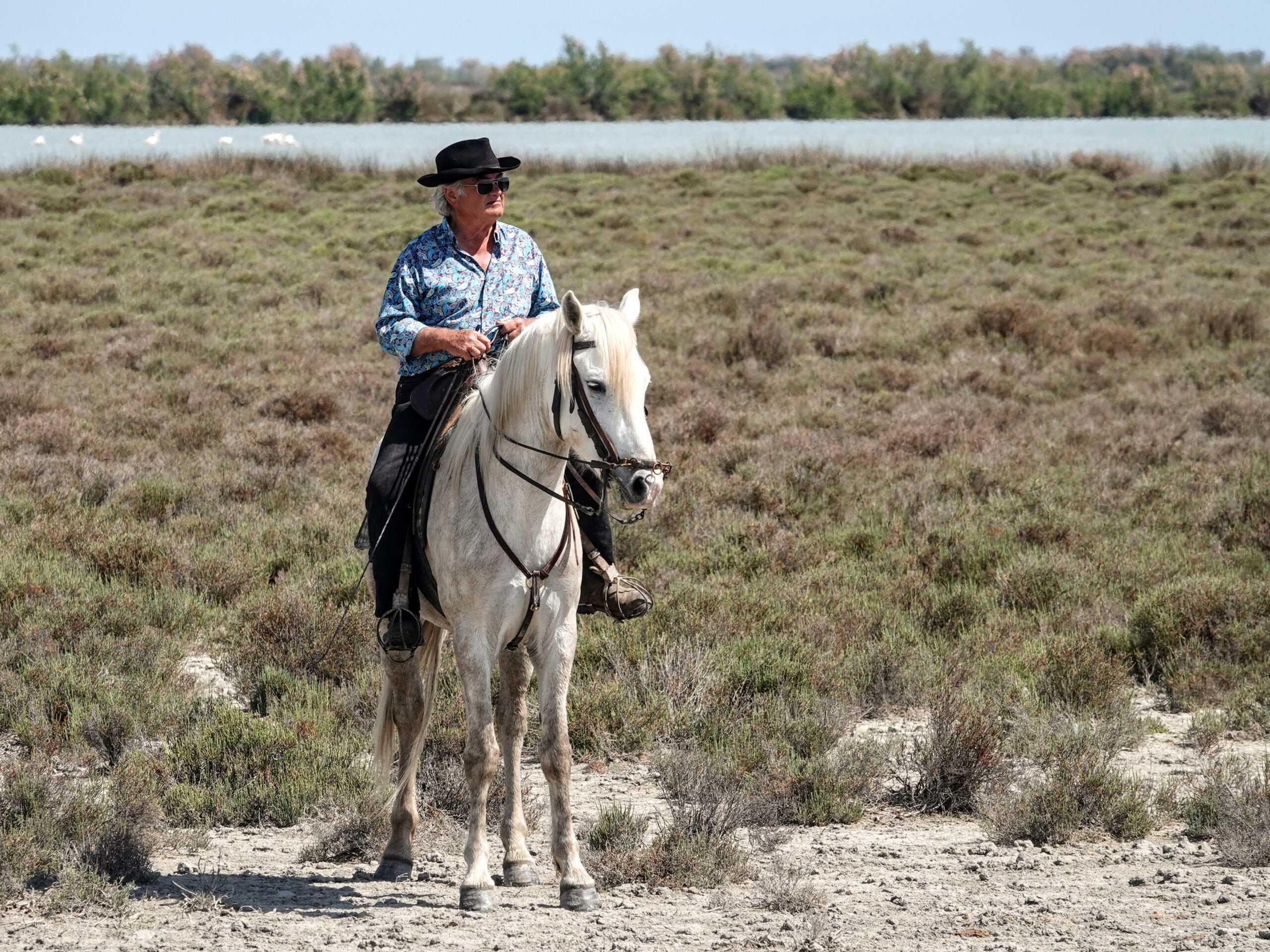
Whether owner or operator, the manadier is the person in charge of the manade. His role is to oversee all activities linked to the management of the manade, from animal husbandry to ecosystem preservation, animal care, pasture management and the organization of tourist activities.
In addition to managing the manade, the manadier is also involved in preserving the traditions and heritage of the Carmargue. It plays a key role in passing on the knowledge and skills needed to raise animals and perpetuate cultural traditions such as Camargue racing.
The manadier works closely with the gardians.
The gardians
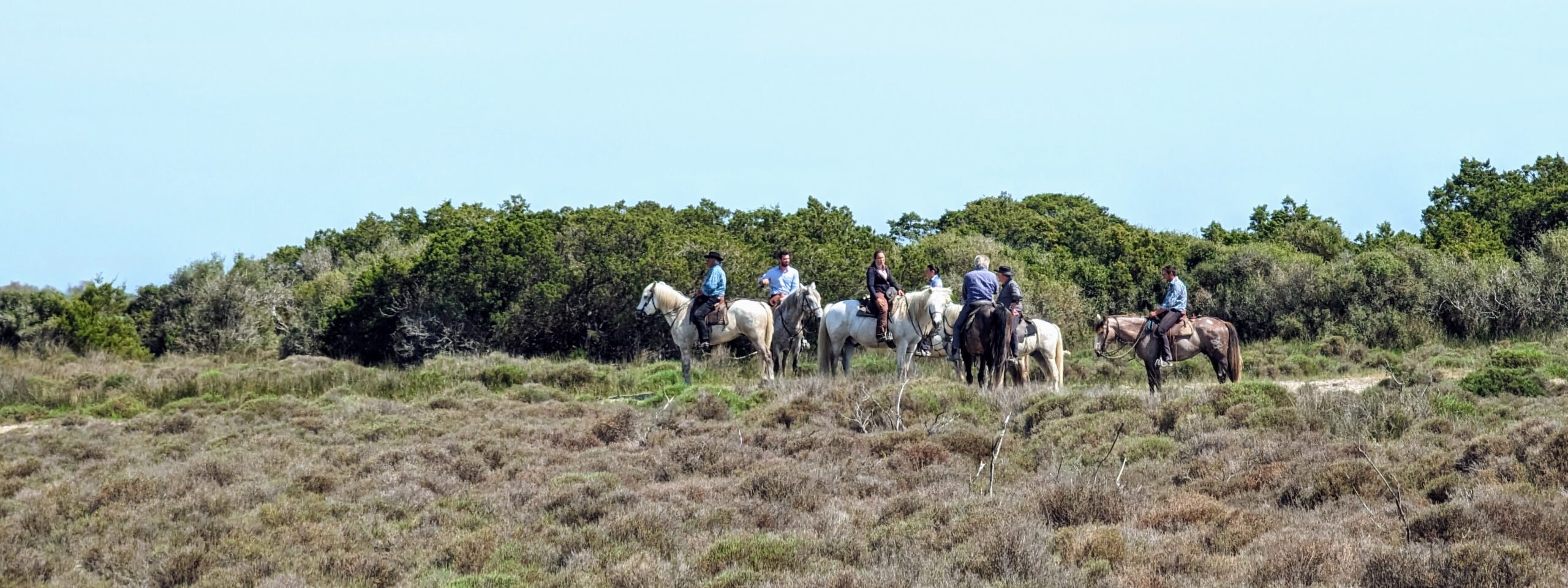
A gardian is a term specific to the Camargue region. It designates a herdsman.
While the manadier is the manager of the farm and the livestock, the main role of a gardian is to look after the animals’ well-being and guide them through the pastures.
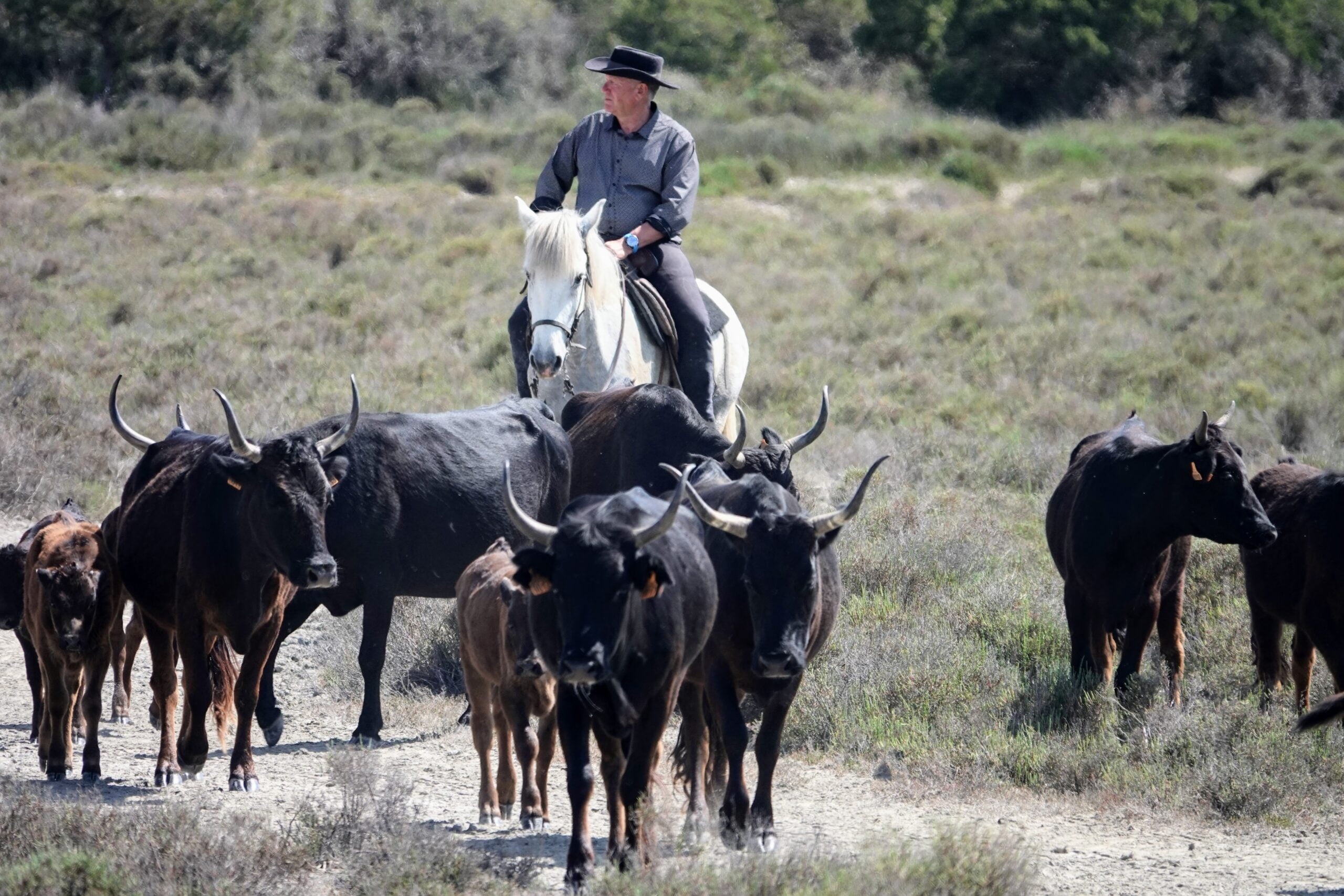
To move efficiently through marshy areas and manage their herds in complete safety, the gardians use Camargue horses to herd, sort and move the animals according to the needs of the farm.
The gardian’s work
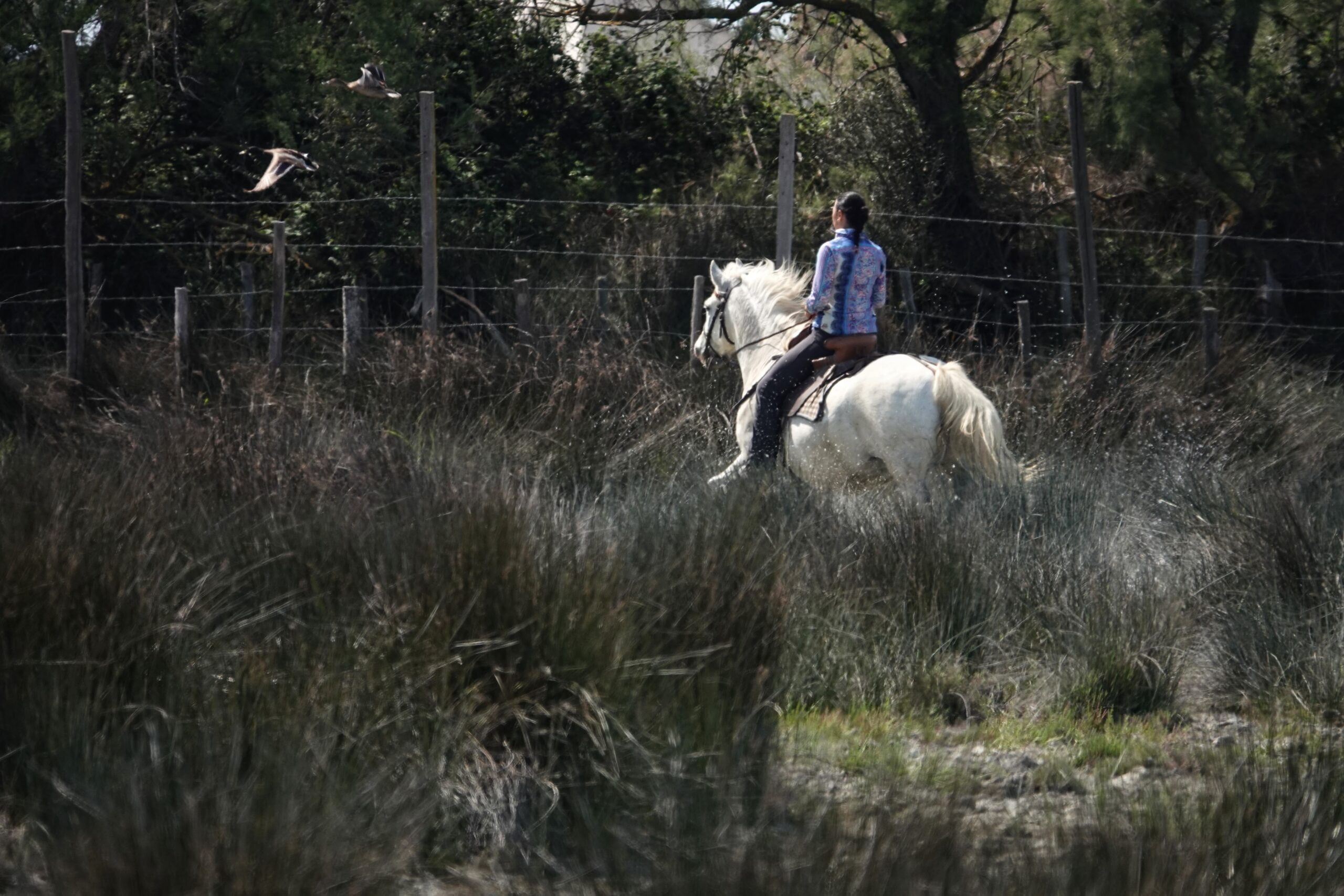
The gardian’s job is tough and not very lucrative. To survive, they often have to combine animal husbandry, agriculture and tourism. Despite the technical modernization of the trade, traditions are scrupulously perpetuated, in particular the Gardian way of riding.
The gardian and, above all, the manadier are mainly passed down from father to son.
Today, there are many more so-called amateur gardians than professional ones. They come to lend a hand to the manadiers in busier periods.
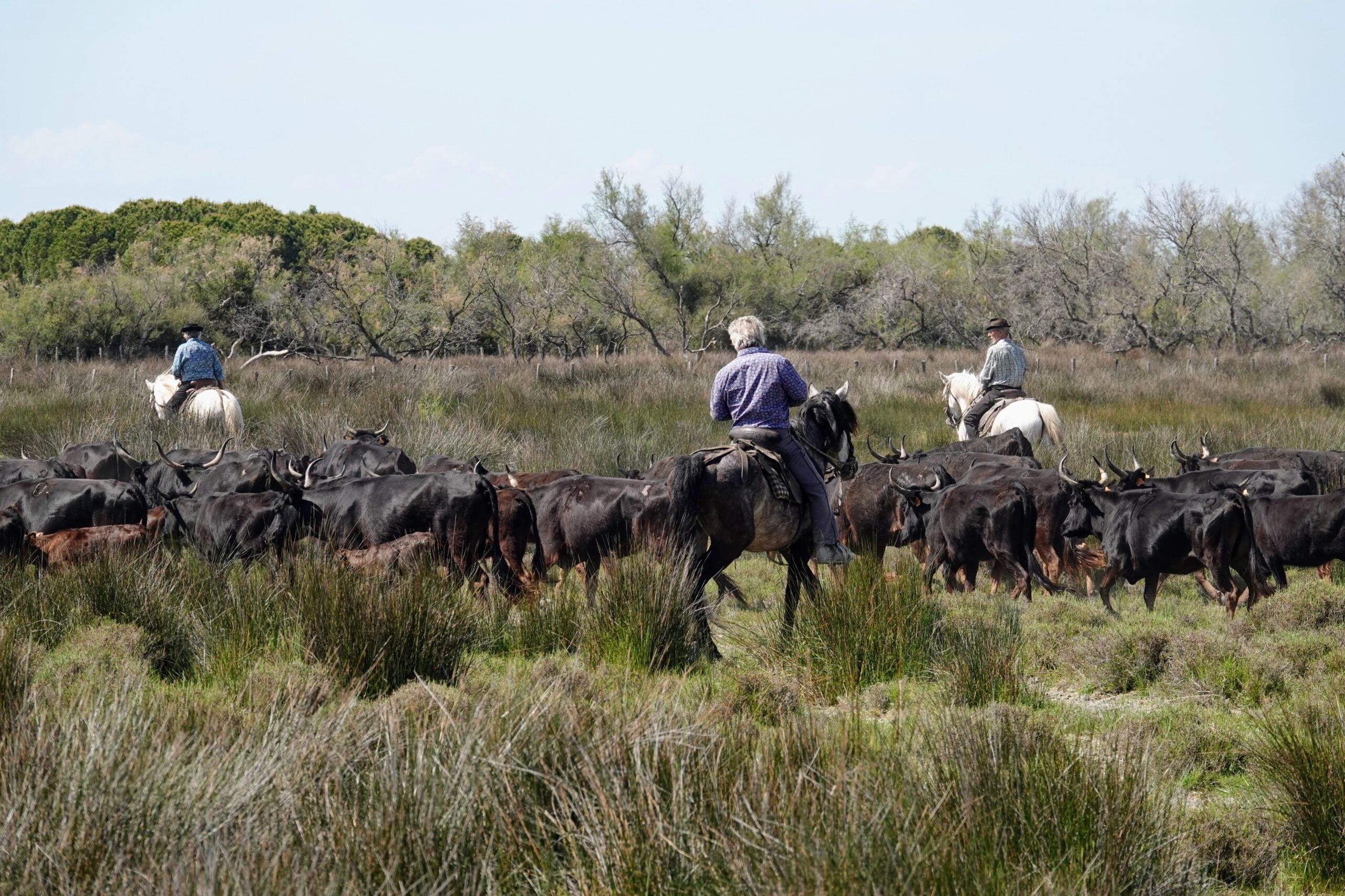
Deeply rooted in traditional Camargue culture, the gardians perpetuate the methods and skills handed down from generation to generation. Their tasks include:
- Ferrade – branding of the manade and an identification number on the left thigh and ribs of young bulls of the year(steers), as required by veterinary services.
- Sorting – rounding up and locking up the herd’s animals to sort them before a race or ferrade.
- Bistournage – castration of young bulls to make them less aggressive and more suitable for Camargue racing.
- L’engasade – herd immersion when crossing the Rhône or a marsh
- L’abrivade – the bulls gallop to the bullring, accompanied by gardians on horseback (a practice commemorating the days when there were no trucks to move the bulls in the race).
- La bandide – bulls are herded by gardians from the bullring to the meadows
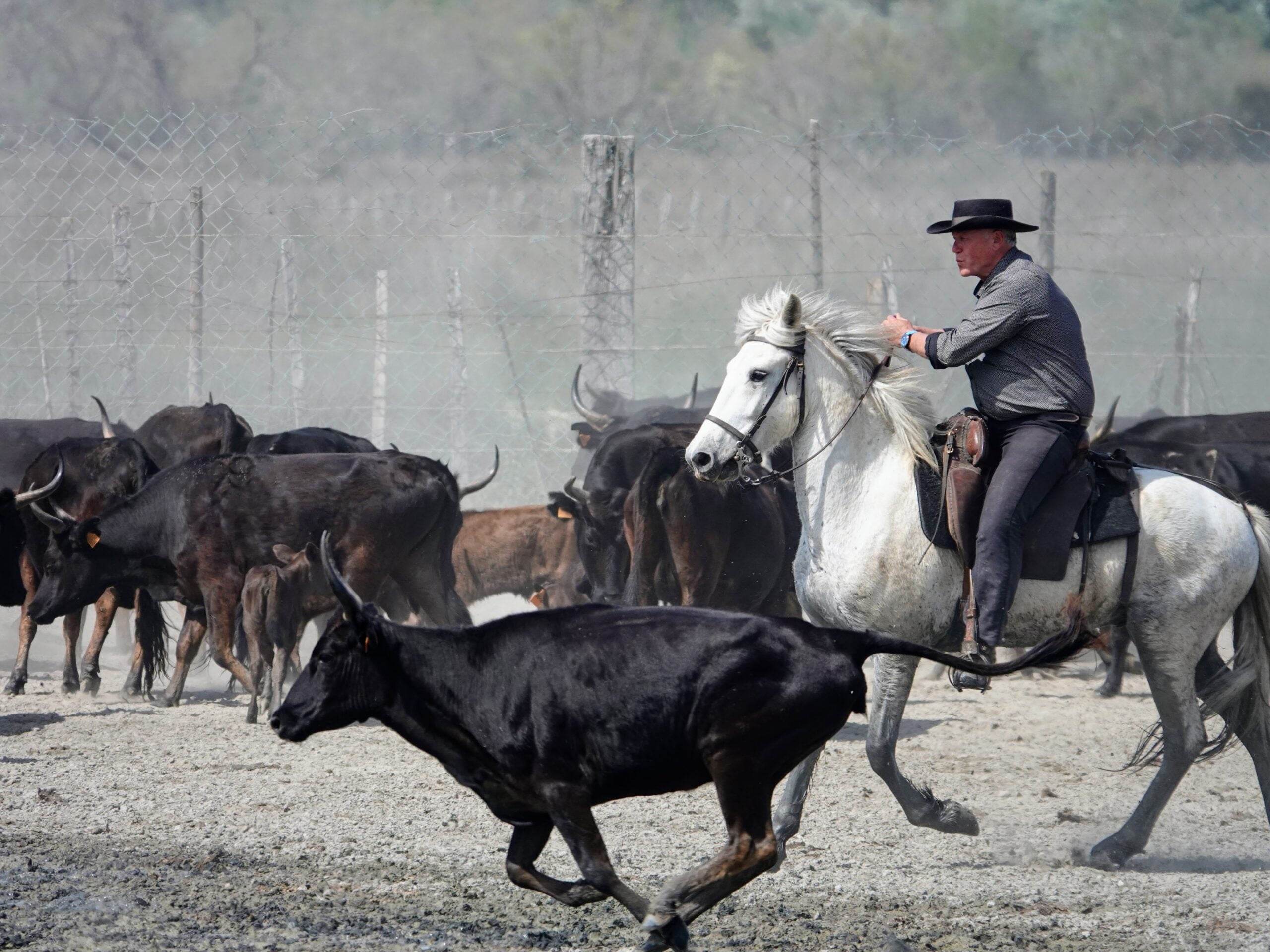
Proud of their role in preserving local culture, the gardians take an active part in events and festivities that enable them to demonstrate their skills, including Camargue races and equestrian activities specific to the region.
Every May 1st, the day of Saint-Georges (patron saint of the Confrérie des Gardians), the Fête des Gardians brings together numerous gardians and manadiers in Arles. Dressed in traditional costumes, they cross the town before gathering in the arena for a grand equestrian show.
Camargue races
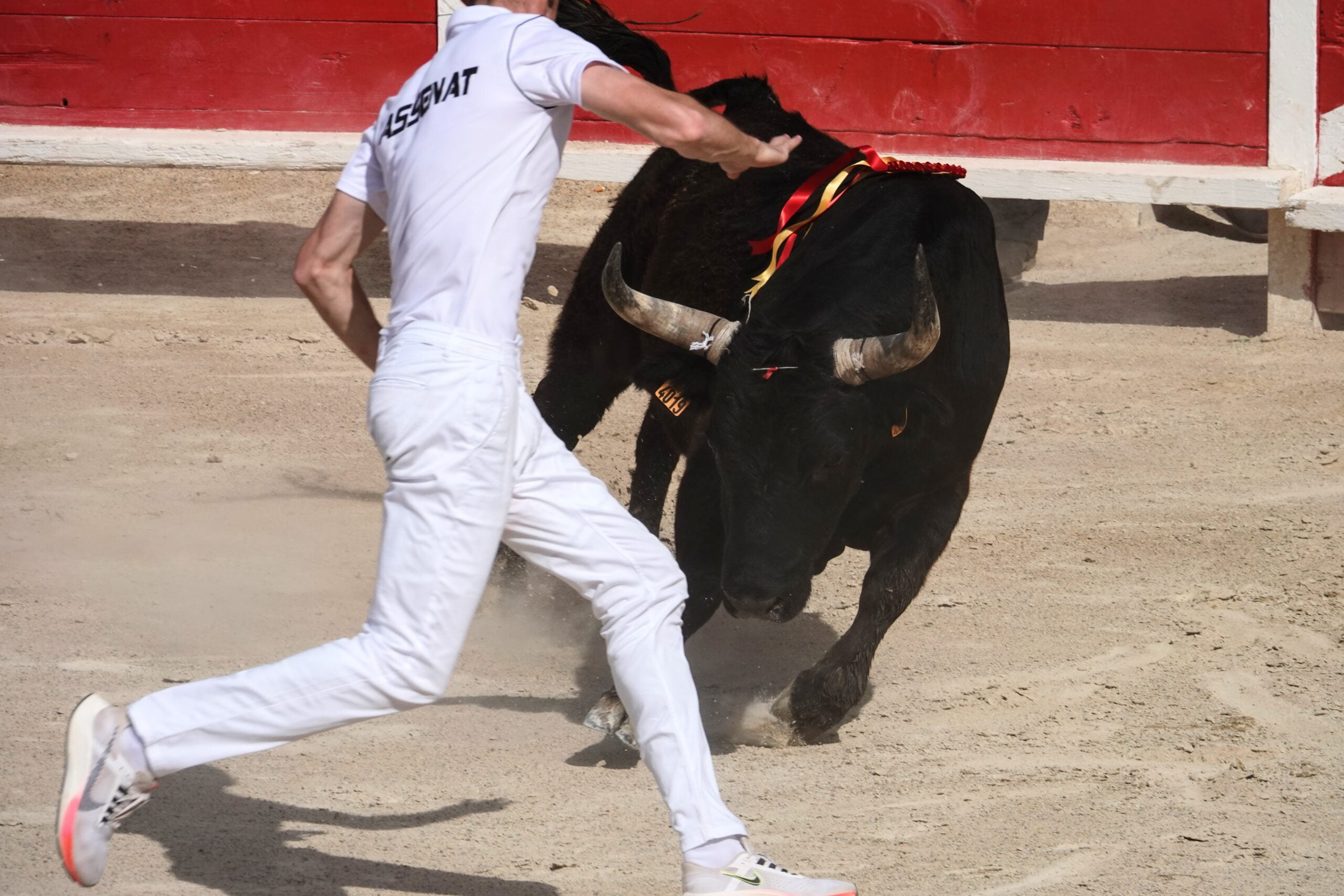
The bulls raised in the manades are mainly used in Camargue races, which take place in arenas, public squares or in the streets.
Camargue racing is a traditional sport in which the participants (raseteurs) have to catch attributes attached to the front of the bull, known as the “cocardier” or biòu. Unlike bullfighting, there’s no question of putting the bull to death.
Manade Raynaud
Founded in 1904, the Raynaud manade is based at Le Grand Radeau, near Les Saintes-Maries-de-la-mer.
The Raynaud family has been breeding Raço di Biou bulls for 6 generations. Two of their bulls have won the coveted Biou d’Or trophy (best bull in the Camargue): Régisseur in 1957 and Ratis in 2013.
With 250 cattle on nearly 1000 hectares, it’s the oldest bull farm in the Camargue.
History of the manade Raynaud
In 1875, Théophile Papinaud bought Camargue bulls to start a breeding operation. After a few disappointing cross-breeding experiments with Spanish animals, he devoted himself to the search for pure Camargue blood. His son, Gustave Papinaud, succeeded him in 1896 and continued his selection work.
When he died in 1904, Mathieu Raynaud, his bayle (trusted man), acquired the manade in accordance with his wishes. In the years that followed, he continued to mix the herd to further refine its breed purity.
In 1922, his son Joseph took over. Then came the turn of his two sons, Casimir and Jacques, in 1945. The manade moved to Le Grand Radeau, between Le Sauvage (on the right bank of the Petit Rhône) and the sea. In 1951, the manade was launched in Beaucaire under the name Raynaud Frères.
After Casimir’s death in 1959, his sons Marcel and Jean inherited their father’s livestock, while Jacques kept his shares.
In 1985, Marcel’s son Frédéric bought his uncle’s animals to keep the herd together, while his daughters Aurélie and Aude bought Marcel and Jean’s animals in 2016. Today, as manadiers, the two sisters have managed to carve out a place for themselves in a world that is still very much male-dominated.
Visit the gardians
A visit to a manade means experiencing the traditions of Camargue bull breeding up close, while discovering the passion and authenticity of the local culture.
The manade Raynaud opens the gates of its stud farm during traditional Camargue days, providing an opportunity to learn more about the gardian’s trade, discover the estate and watch a demonstration of their work with the horses.
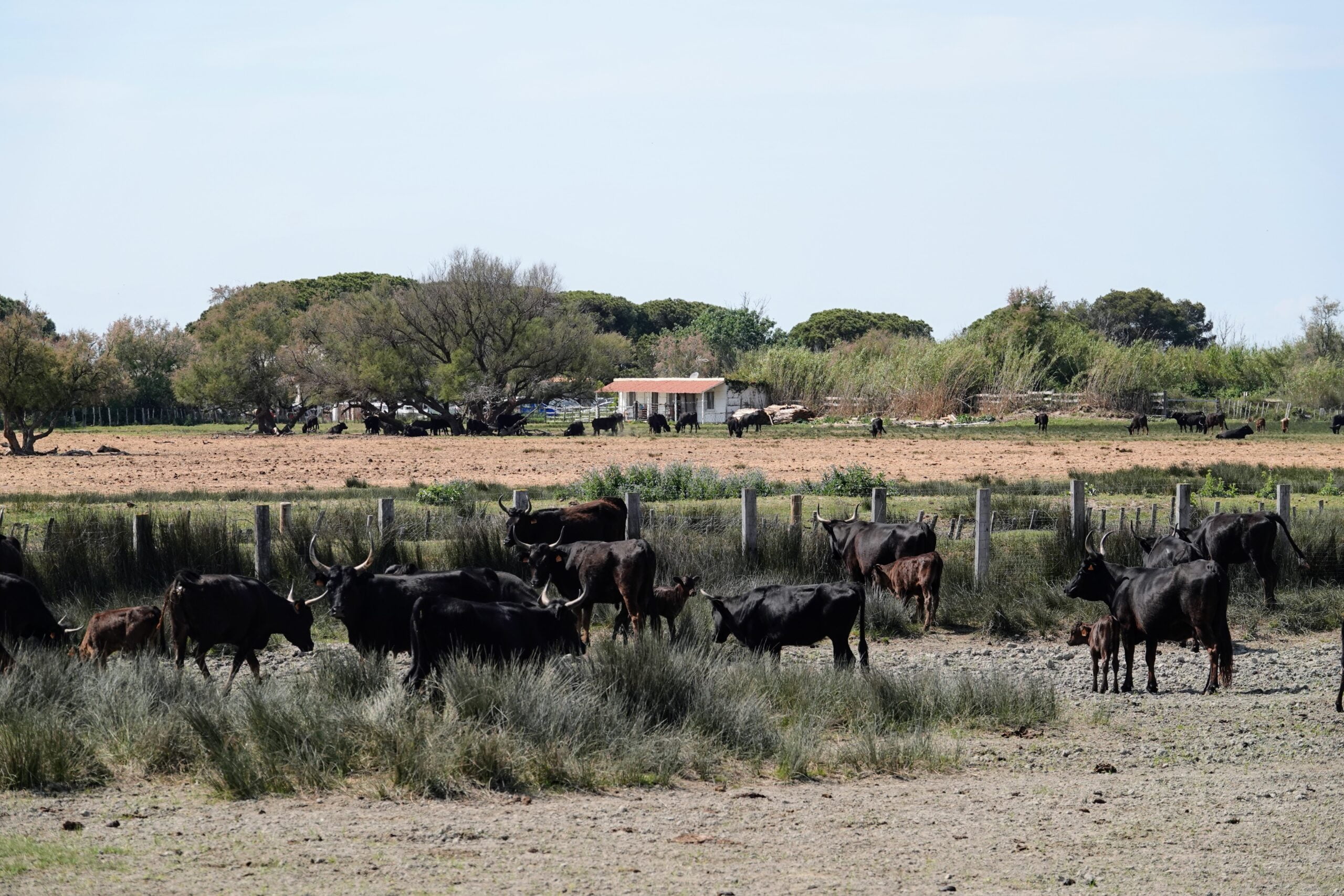
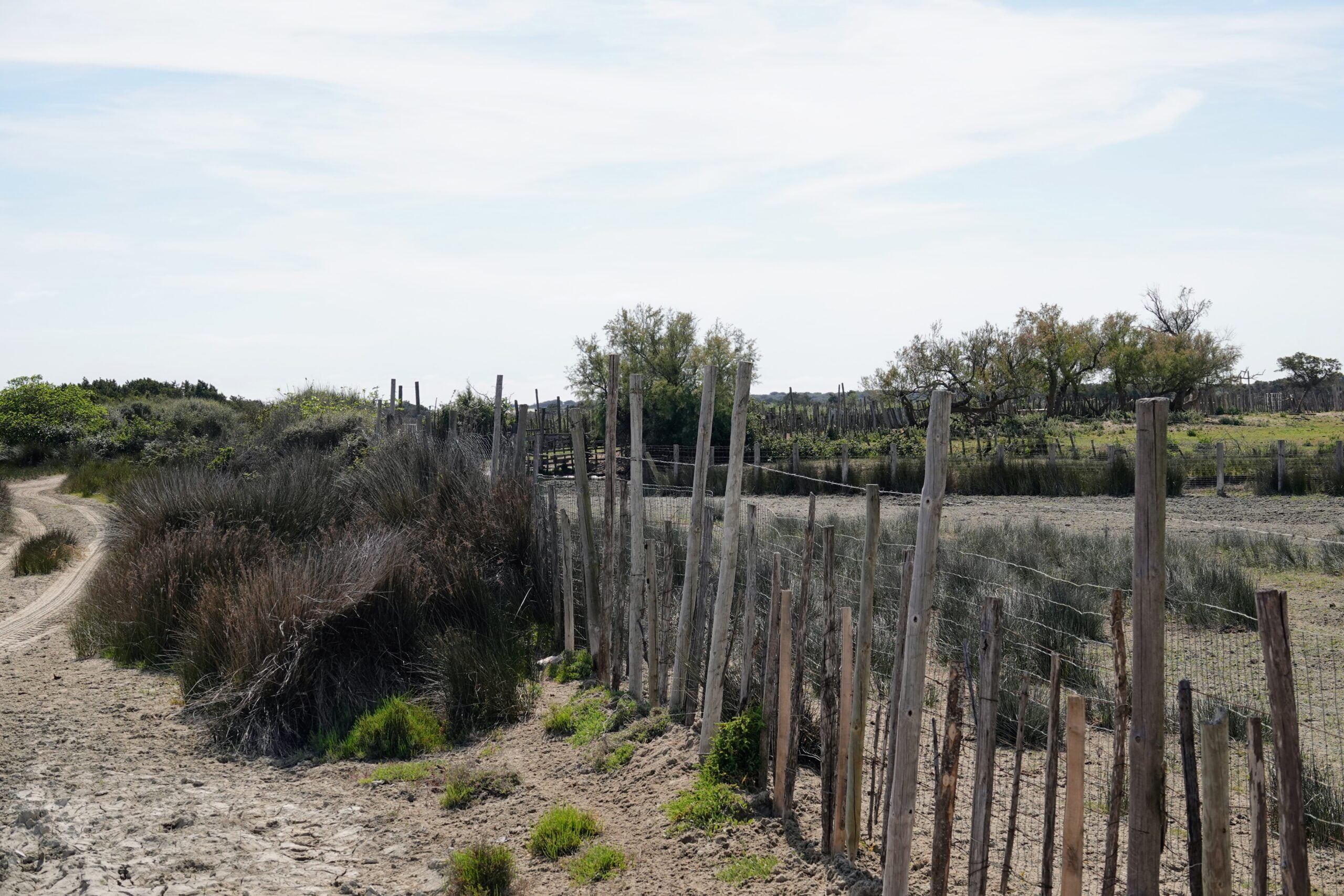
We arrive at the manade mid-afternoon. Just enough time to say hello to Aurélie, one of Frédéric’s two daughters, and we’re in the trailer to discover a (very small) part of the estate.
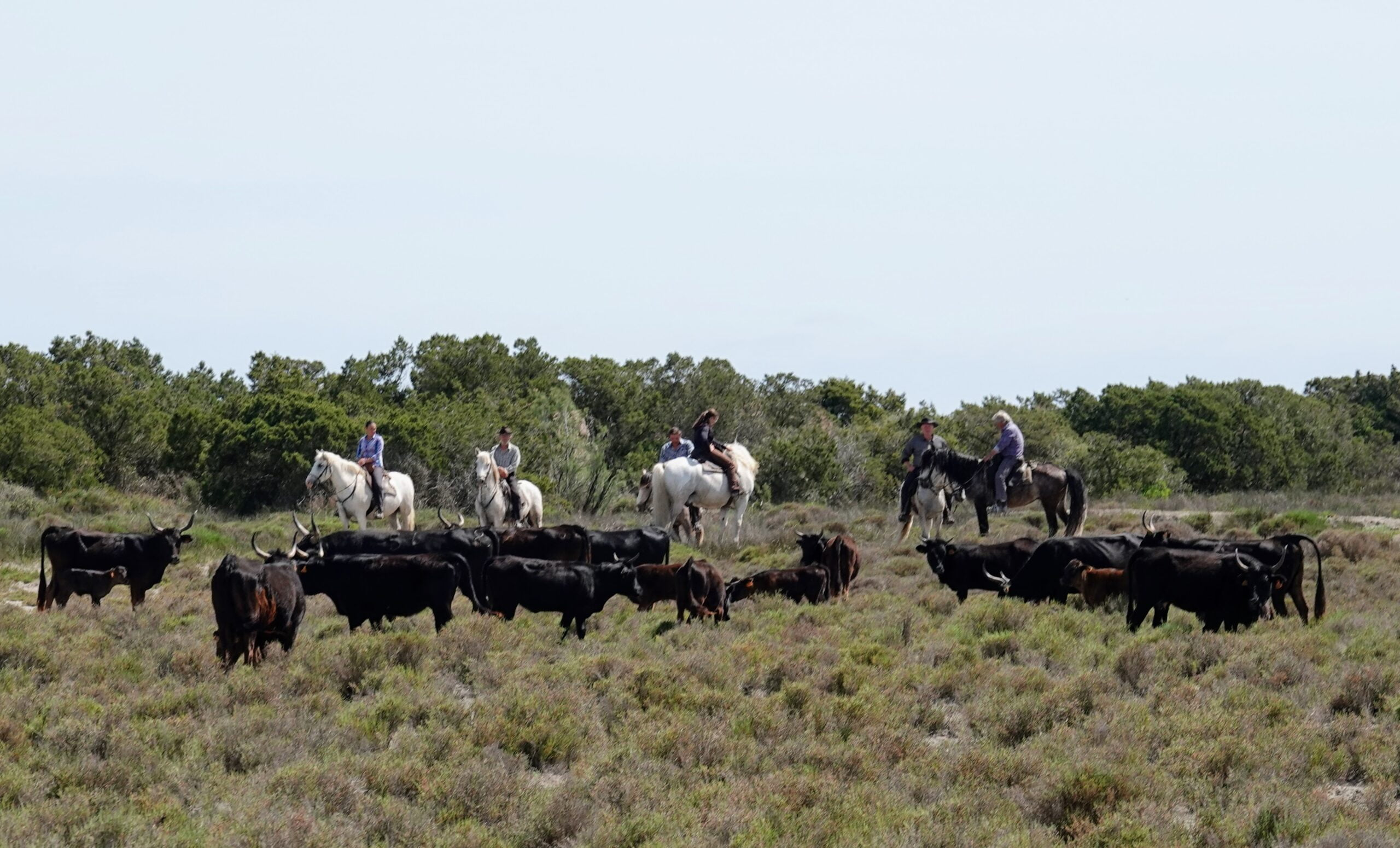
The herd comes up behind us. In perfect synchronization with their horses, the gardians lead the herd with calm authority.
Knowing every nook and cranny of the landscape, the gardians move with ease through the manade’s vast pastures. Their confident, fluid gestures suggest that they are guiding the herd with no apparent effort.
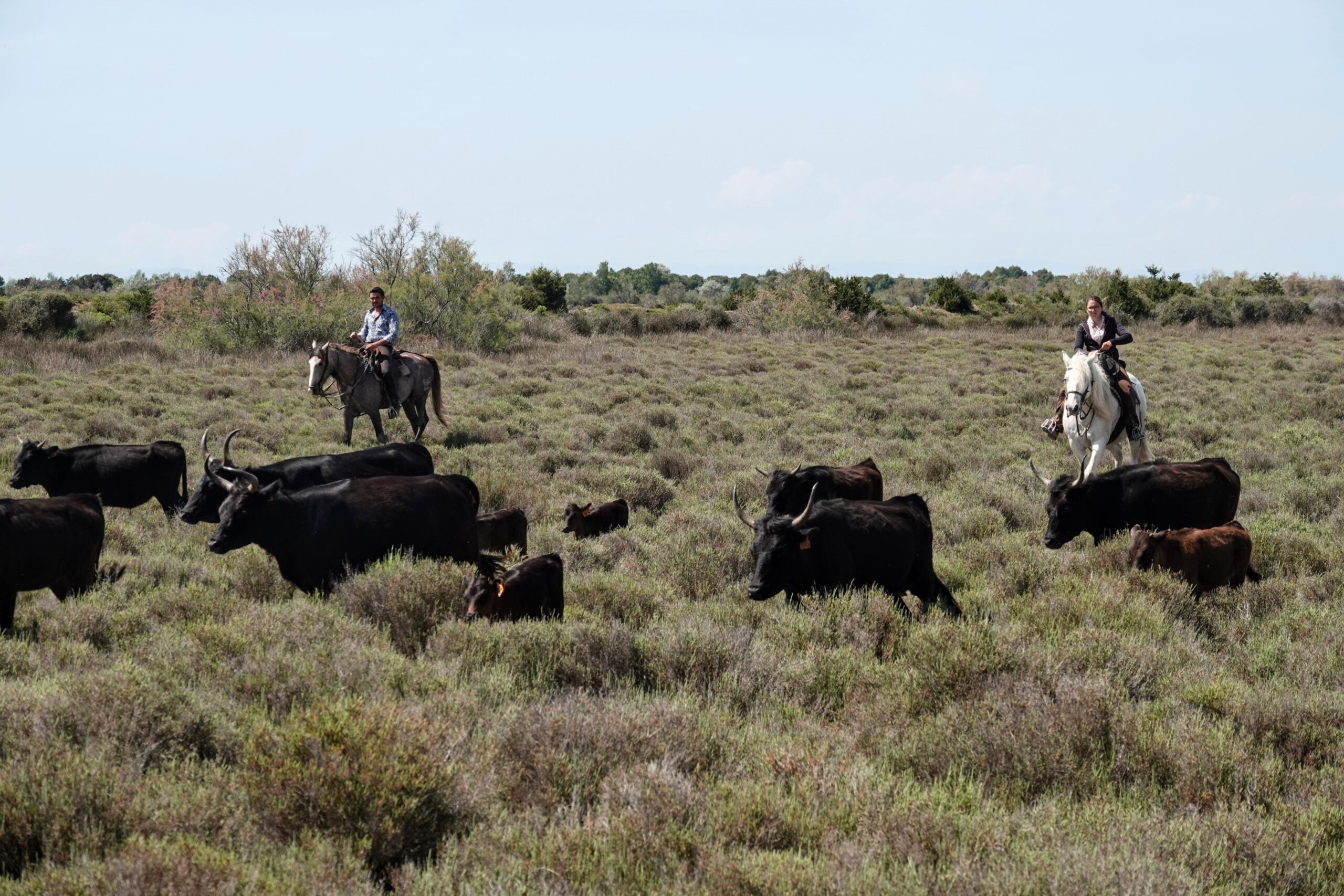
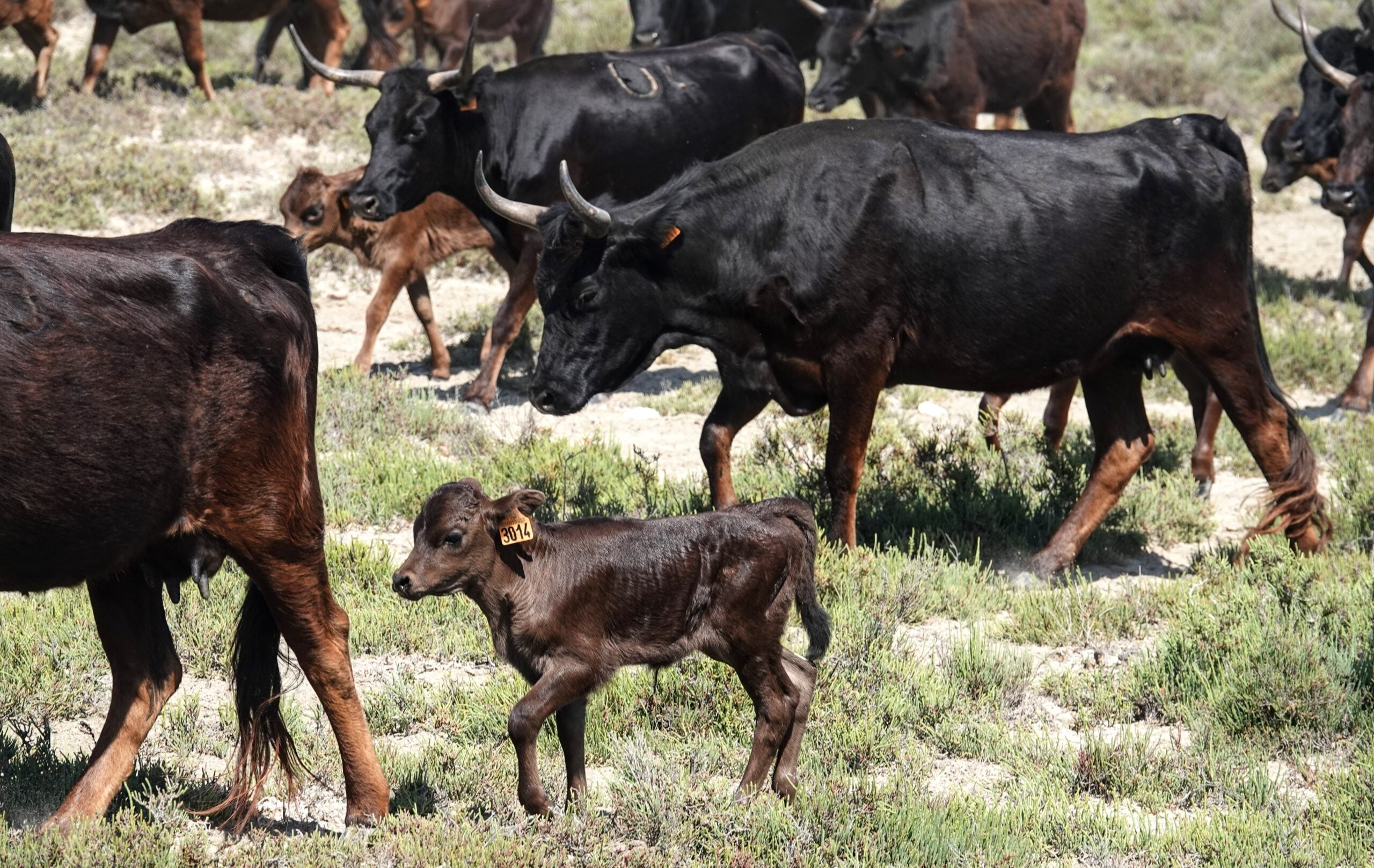
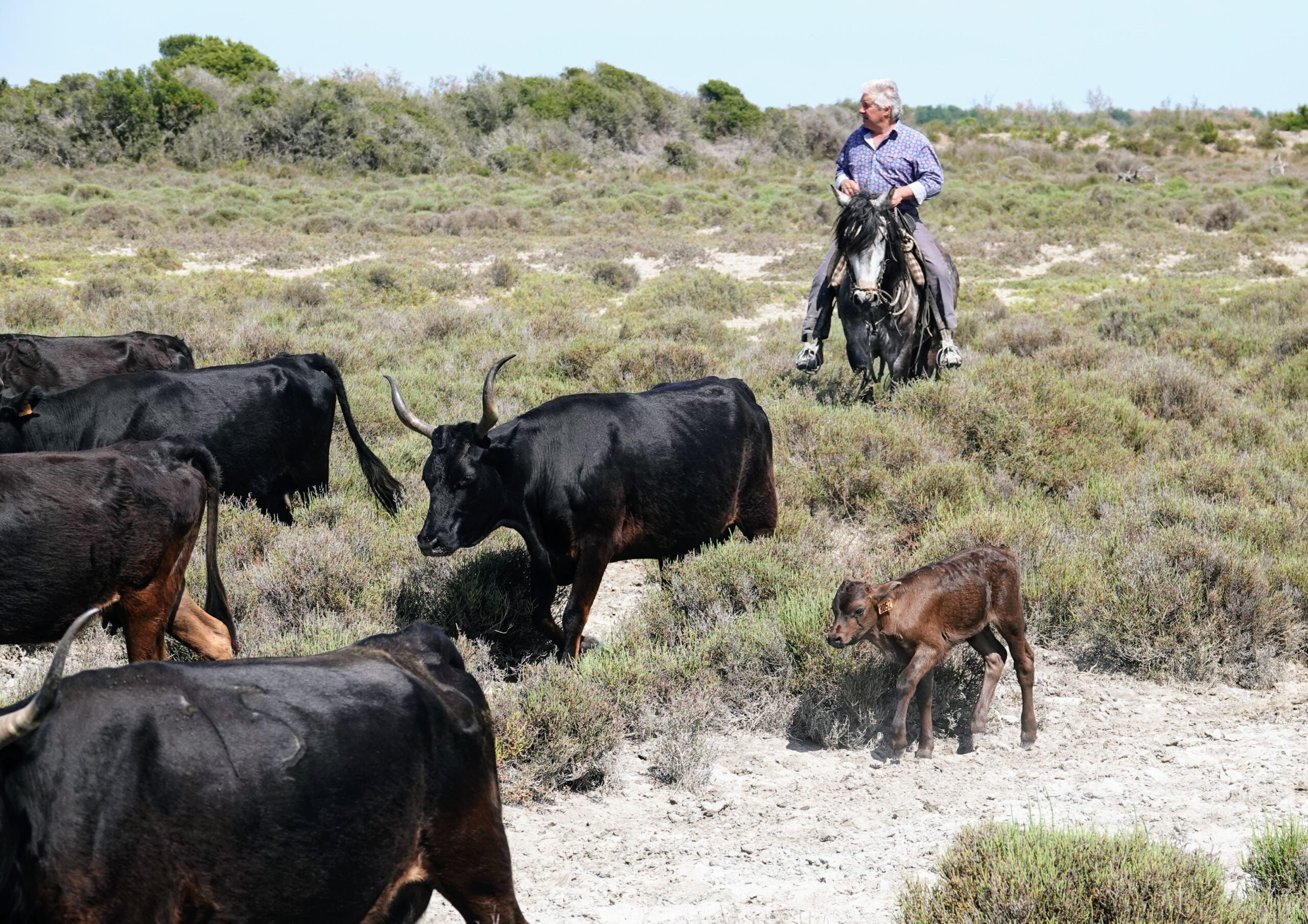
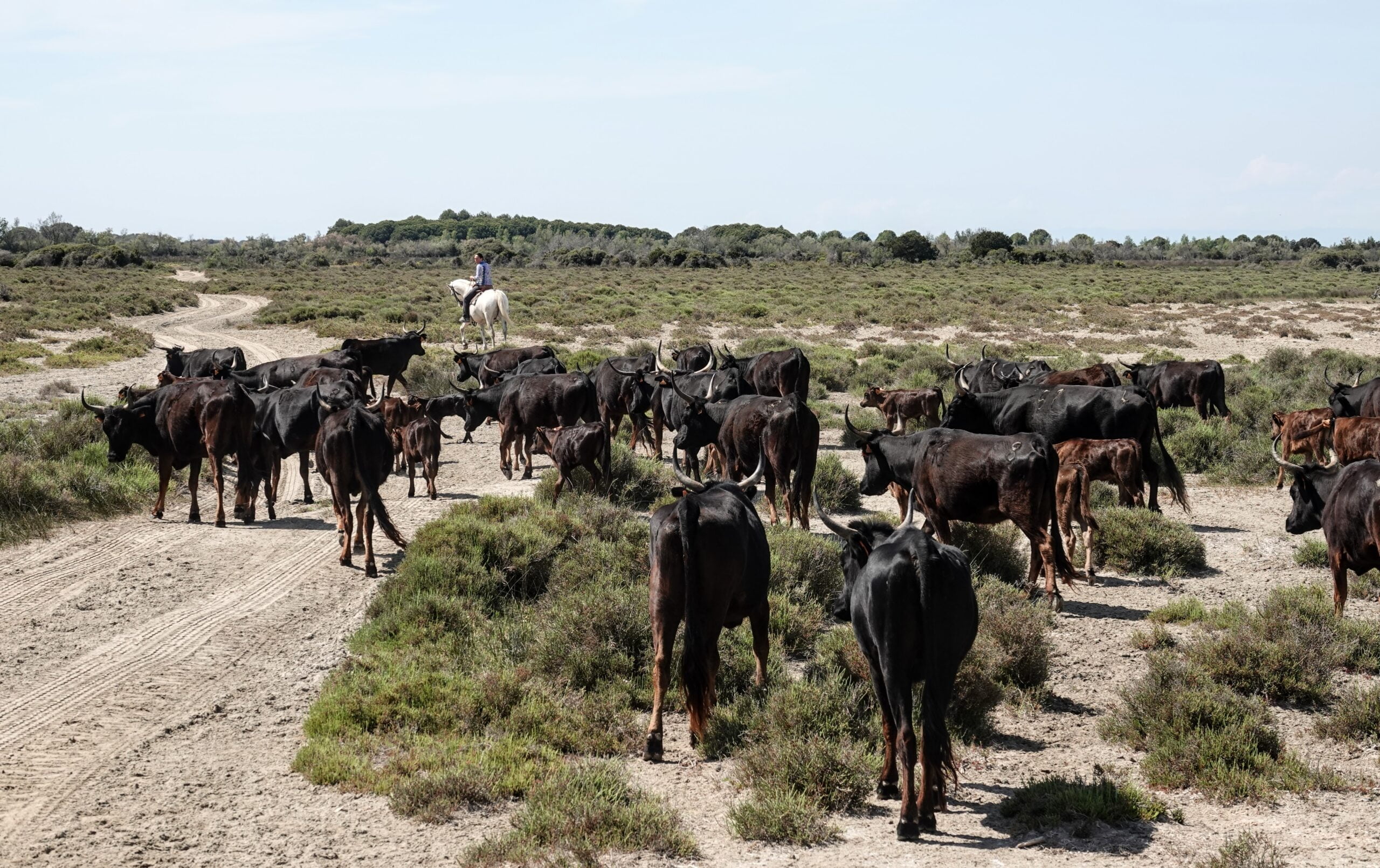
The trailer stops to give us a chance to watch the gardians leading the herd towards us. Once the animals are assembled, the gardians form a circle around the herd, keeping a safe distance to avoid stressing the animals.
It’s time to get back on track for a sorting demonstration.
But first, the gardians welcome us and introduce themselves.
Frédéric Raynaud takes the opportunity to express his views. In just a few minutes, he manages to convey all his passion as a manadier. He also shares his concerns for the future, particularly in view of the encroaching sea, which is encroaching more and more on the manade’s territory every year.
Cattle sorting begins. Two gardians work together to isolate the first beast. Communicating with each other via signals and voice commands, they coordinate the movements of their horses and bodies to isolate the chosen animal from the rest of the herd.
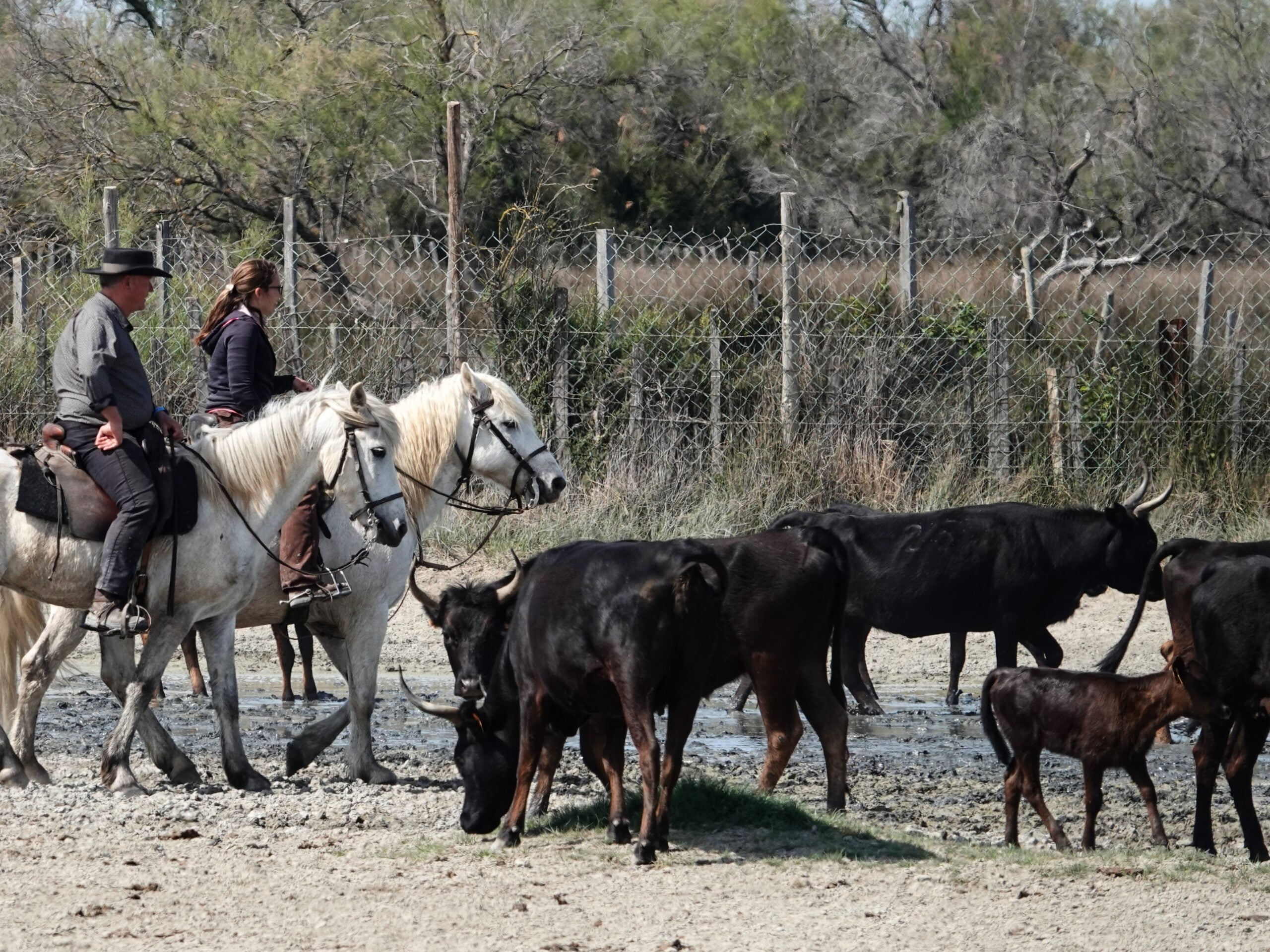
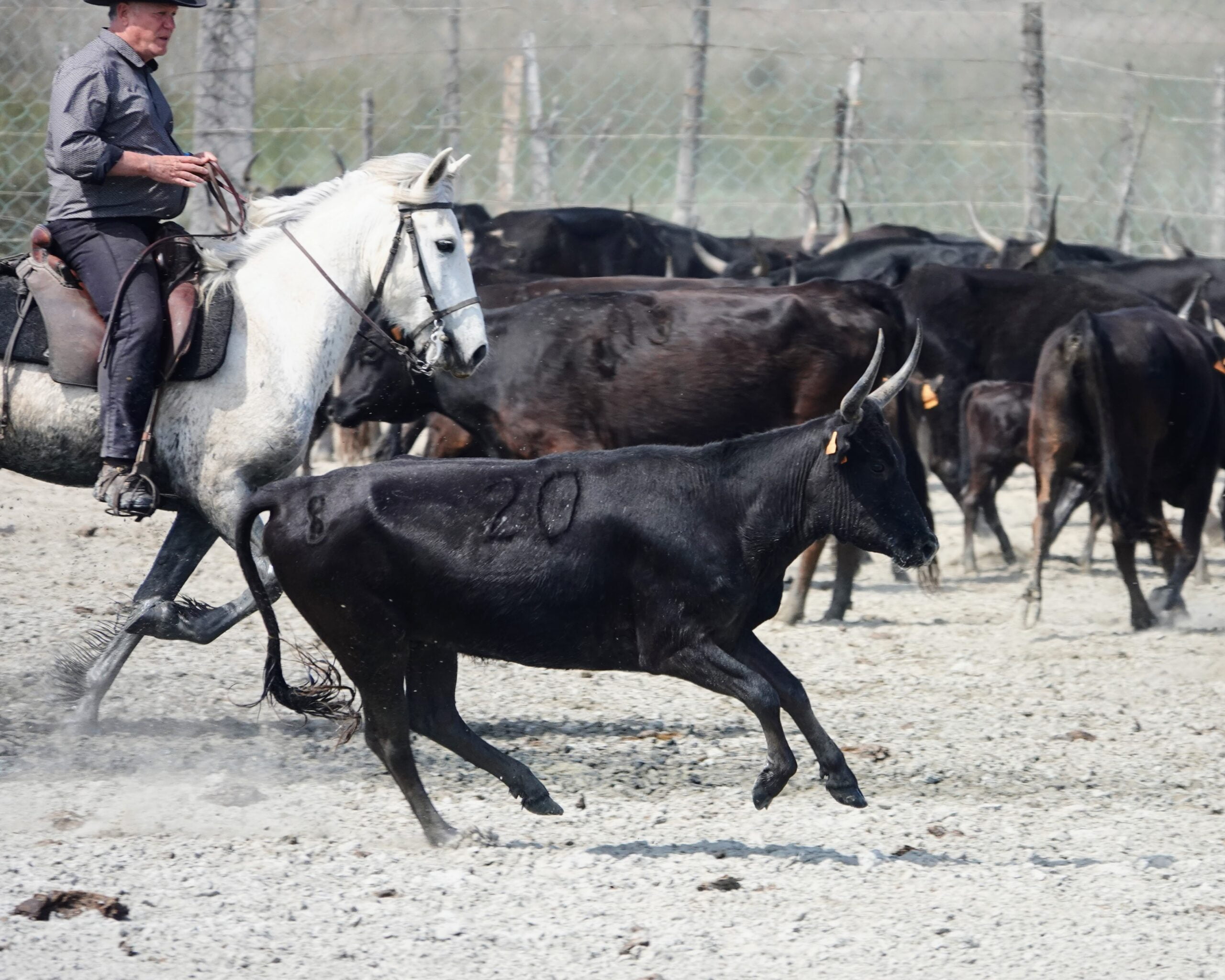
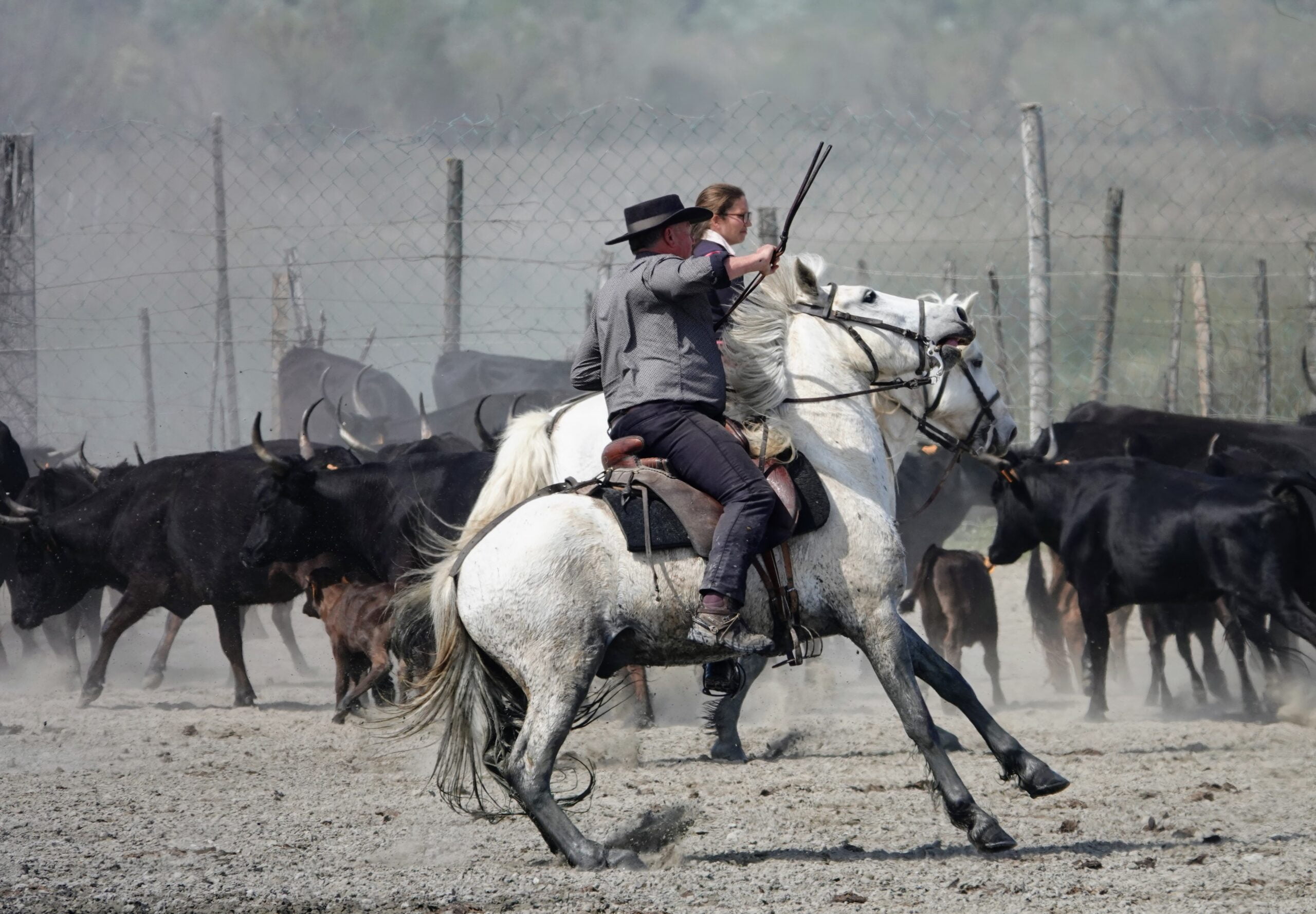
Sorting cattle with the gardians requires patience and skill, as well as a deep understanding of the animals. The gardians use their experience and knowledge of bull and horse behavior to anticipate their reactions and direct them smoothly and efficiently.
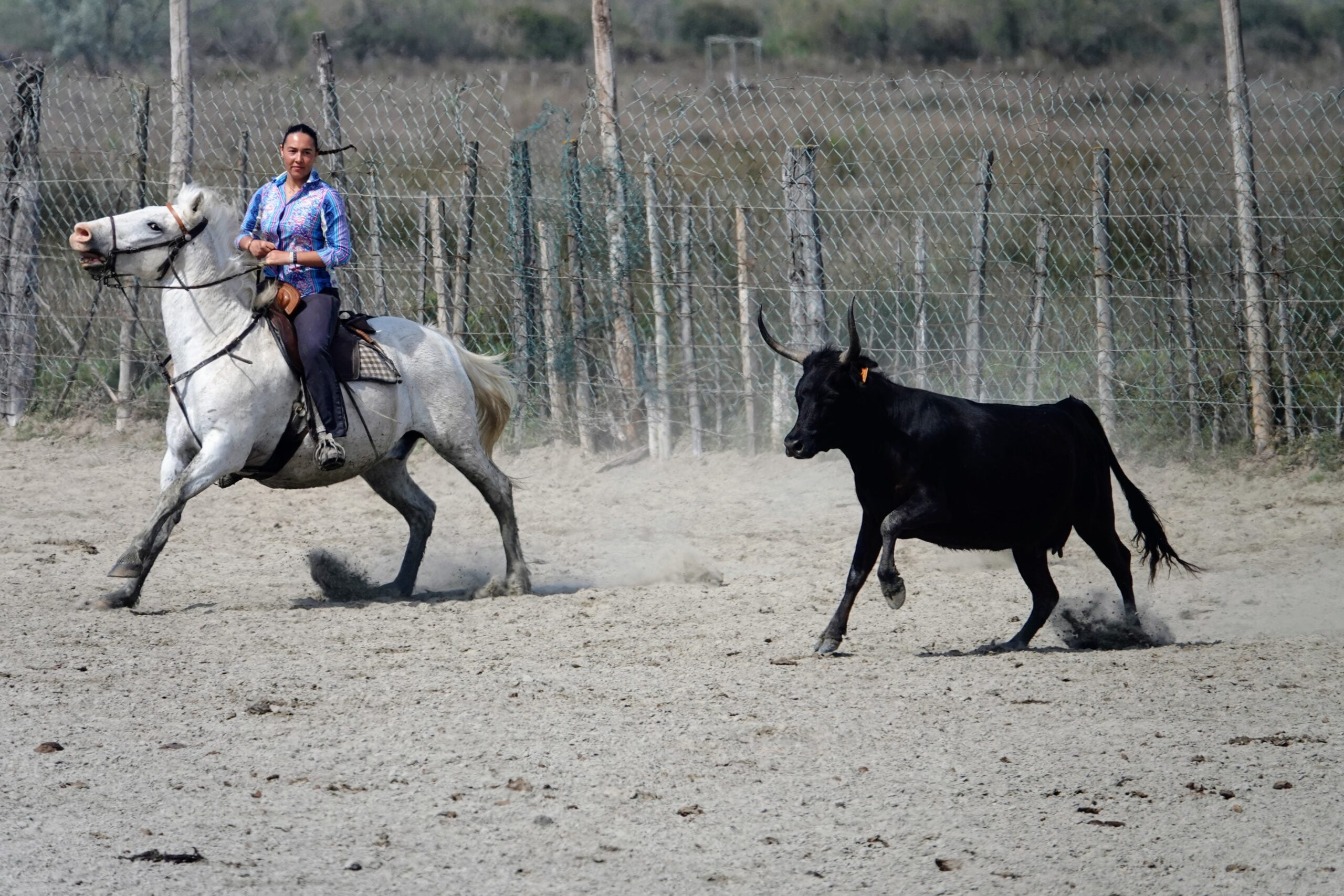
The visit ends in an atmosphere of serenity and respect for the gardians who embody the soul of the Camargue. Their work, imbued with tradition and passion, bears witness to the close relationship between man and nature, and the importance of preserving natural habitats.
Entrust us with the creation of your tailor-made holiday, with an itinerary and accommodation perfectly adapted to your desires and budget.
Contact us at hello@nanoo.travel to get your personalized quote today!