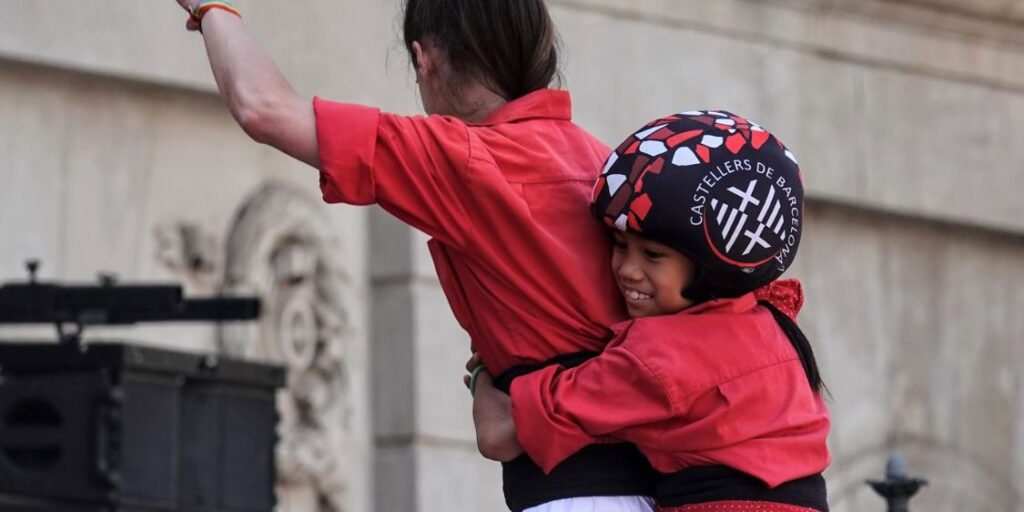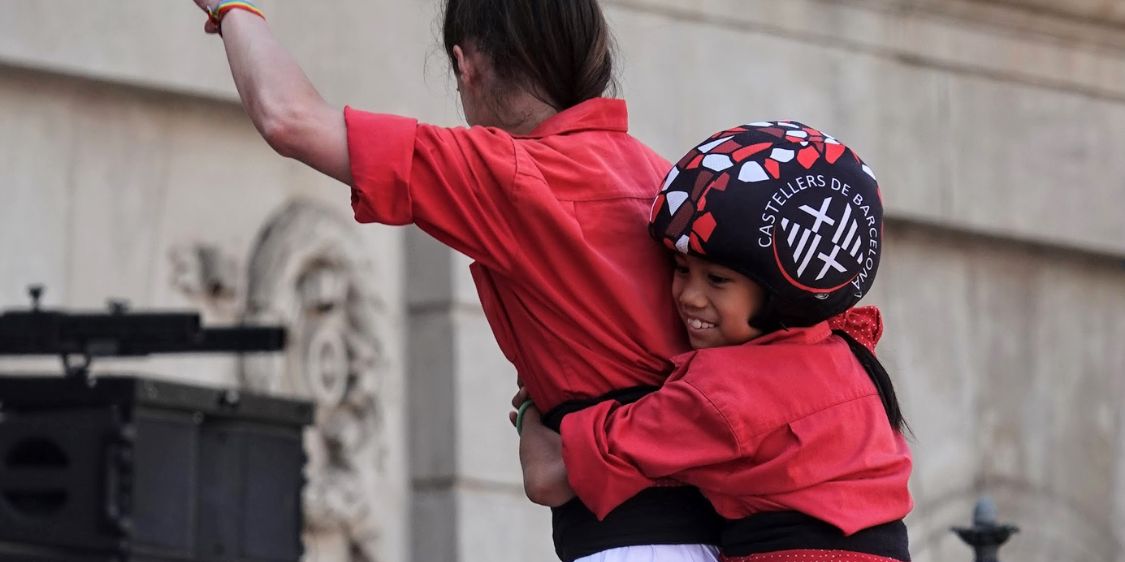
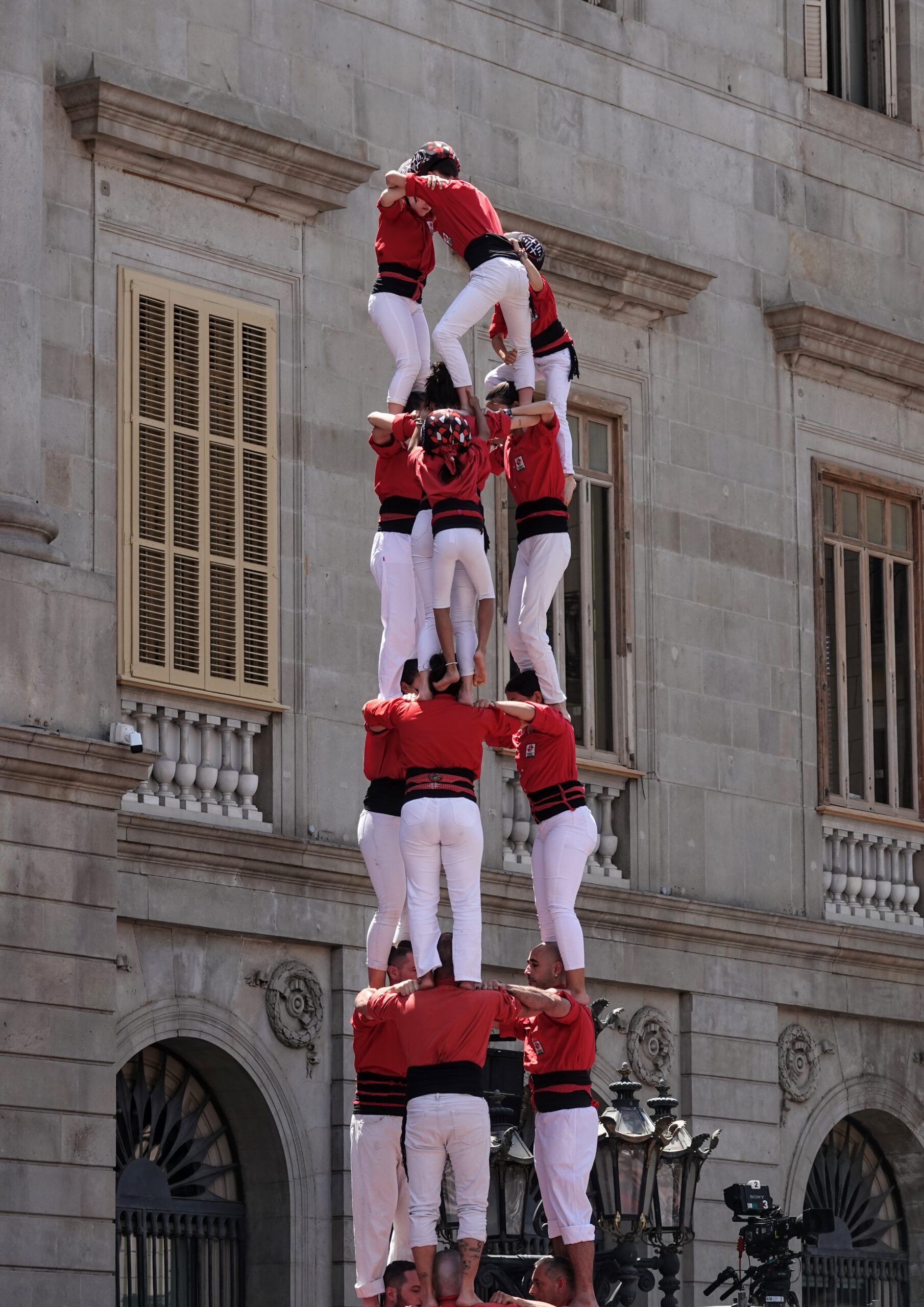
While in Barcelona, I had the opportunity to attend the 54th anniversary of the Castellers de Barcelone. A castell (“castle” in Catalan) is an impressive six- to ten-storey human tower built by castellers– men, women and children aged five and over, of all sizes and strengths.
How are such towers built? The video answer can be found further down in the article 😉 But before we get down to the nitty-gritty, a few words of introduction to better understand castell symbolism.
History of castells
The origins of castells can be traced back to certain early 17th-century dances practiced in southern Catalonia and the Valencian region, which ended with a final figure in the shape of a small human tower. This is called ball de valencians (“Valencian ball”).
During the 18th century, this type of ball took root in the Tarragona region, and the final figure gained in importance: the human tower had to be ever higher, not only to surpass itself, but also to surpass that of other groups.
It was in Valls that the final figure acquired its autonomy to become the castells we know today. The castells were created by colles, a group of people from the same community, village or family. When the tradition of castells spread throughout Catalonia in the 19th century, every town and village in Catalonia sought to form its own colle to take part in regional and national competitions.
Gaining in popularity, glues continue to outdo themselves. Construction techniques and castellers ‘ training were perfected, enabling the creation of more stable and daring towers. The first nine-storey castell dates back to 1851. But following a strong rural exodus, the success of the sardana (traditional dance) and the advent of modern sports like soccer, castells declined to the point of almost disappearing. In 1893, the last nine-storey castell in almost a century was built in El Vendrell.
From 1926 onwards, new colonies sprang up outside the castells‘ native territories, triggering strong growth in the casteller world. Eight-storey castells are collected, and colles choose colorful shirts to differentiate themselves.
The three years of the Spanish Civil War (1936-1939) marked a further decline in castellera activity. But while many Catalan symbols such as the national anthem, the sardana, the flag and the language were banned under Franco’s dictatorship, castells were not.
The transition to democracy was accompanied by a major social movement to reclaim the streets and reclaim Catalan culture. New adhesives are appearing outside the traditional casteller framework, introducing a new colla model. Closer to today’s values, castells become an altruistic and inclusive activity.
In 1981, almost a century later, Colla Vella dels Xiquets de Valls disassembled a nine-storey castell. These castells were then adopted by many other colles in the country.
With the presence of castells at the Barcelona Olympic Games ceremony in 1992, the castellera business really took off, leading to the creation of many new glues. By the end of the 90s, there were around sixty of them, twice as many as ten years earlier.
In 1993, the Minyons de Terrassa completed the first gama extra castell (more difficult than nine-storey castells ), and in 1998 the first ten-storey castells were built.
In November 2010, Spain declared castells a UNESCO World Heritage Site. Today, castells are still considered a symbol of Catalan unity, cooperation and culture. They are celebrated at festivals and special events throughout the year by some 13,000 castellers in around 100 colles.
Castell, instructions for use
Building a castell
Far from being the fruit of chance, a castell is built in 3 parts, following precise architectural rules:
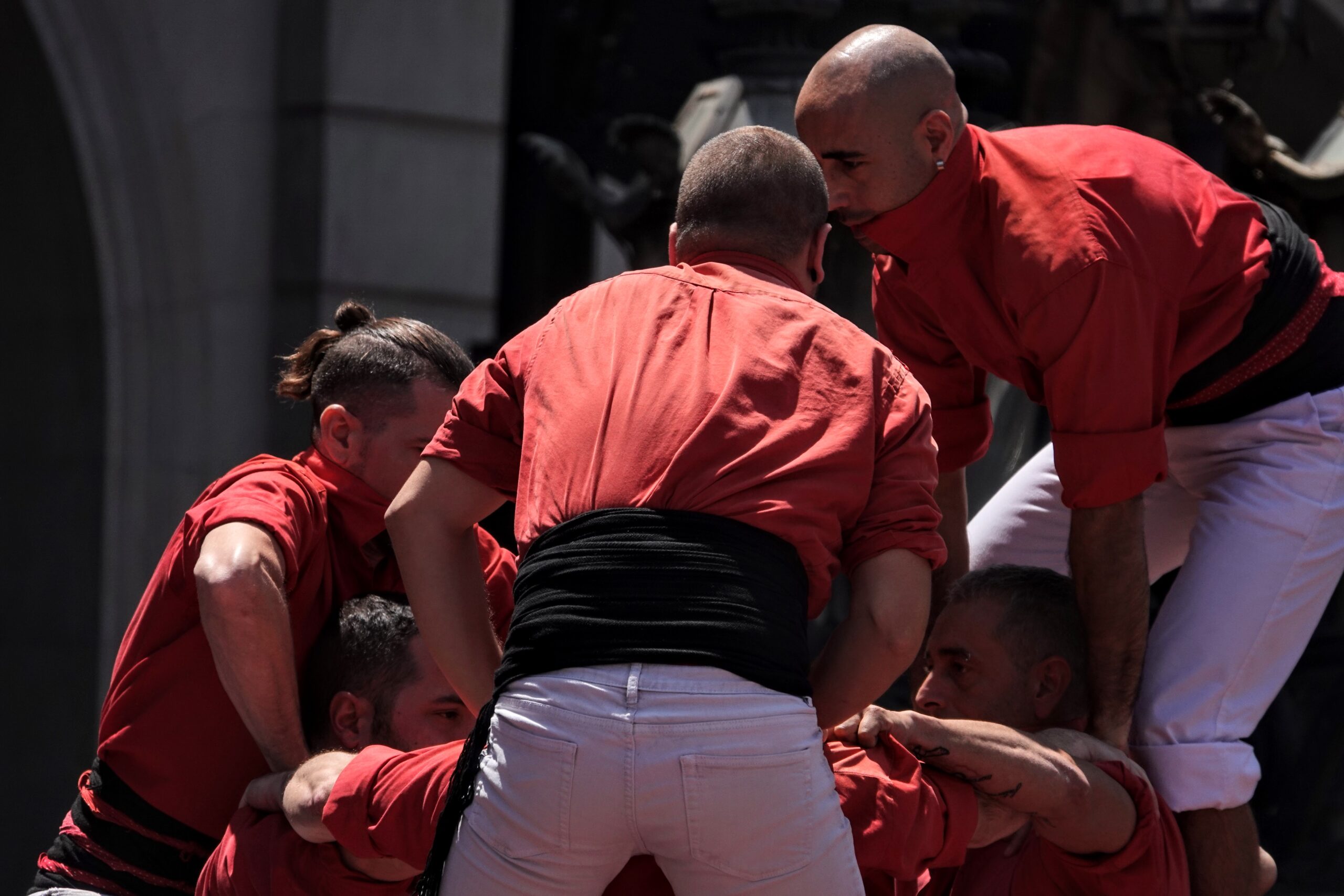
- The base of the tower (la pinya) is made up of dozens of castellers who hold each other by the shoulders to form a stable structure, capable of supporting the entire weight of the tower and cushioning any fall of the climbers. The width of the base depends on the number of floors planned for the tower.
- The trunk (trunk) can be assembled in as many stages as the figure allows. Each floor is made up of the same number of castellers, starting with the heaviest.
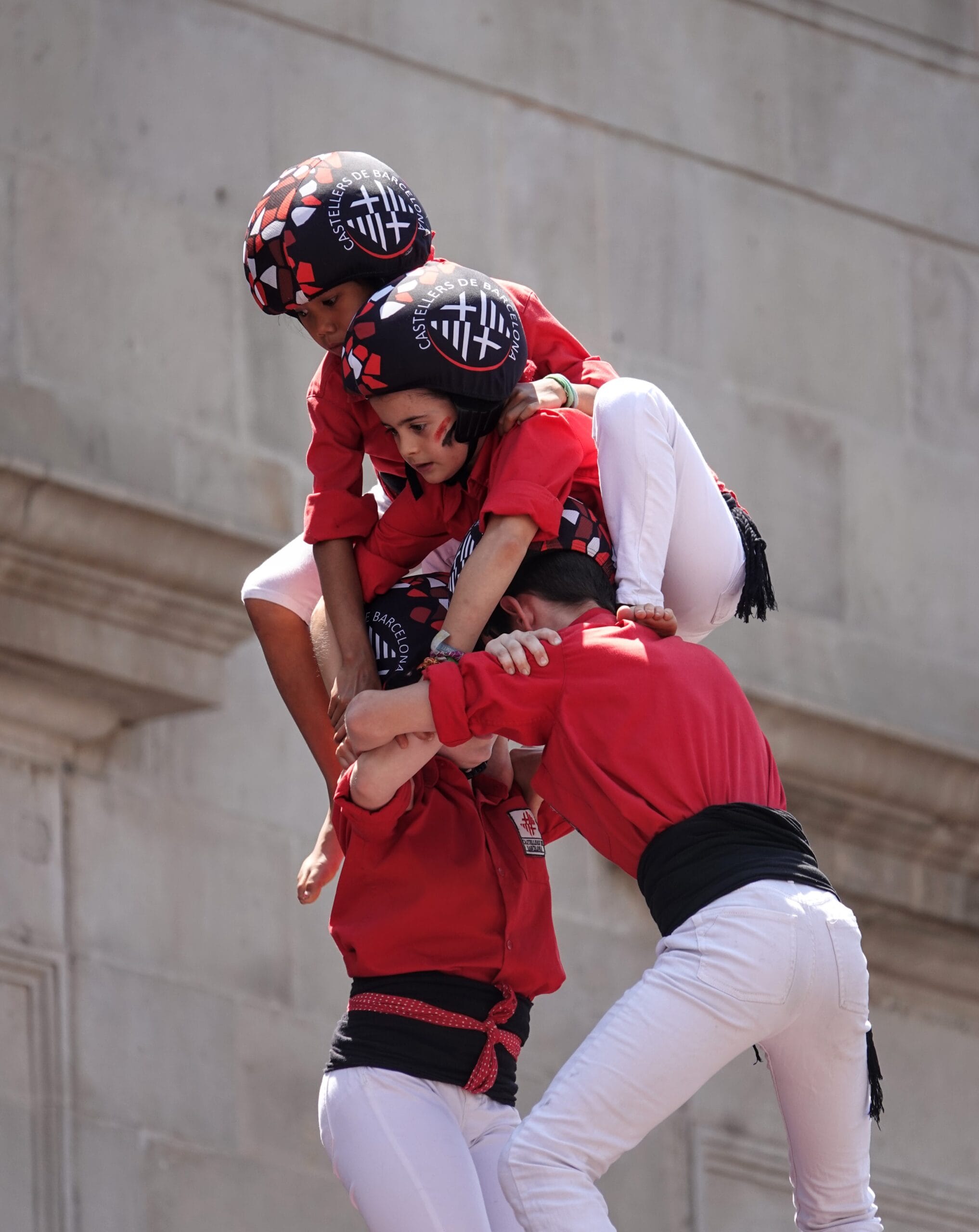
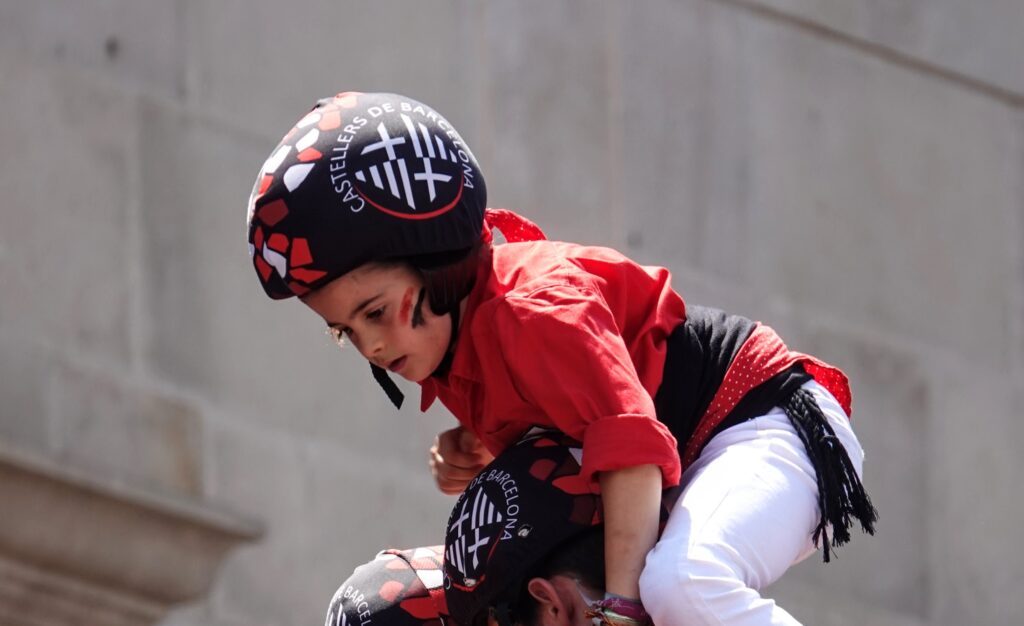
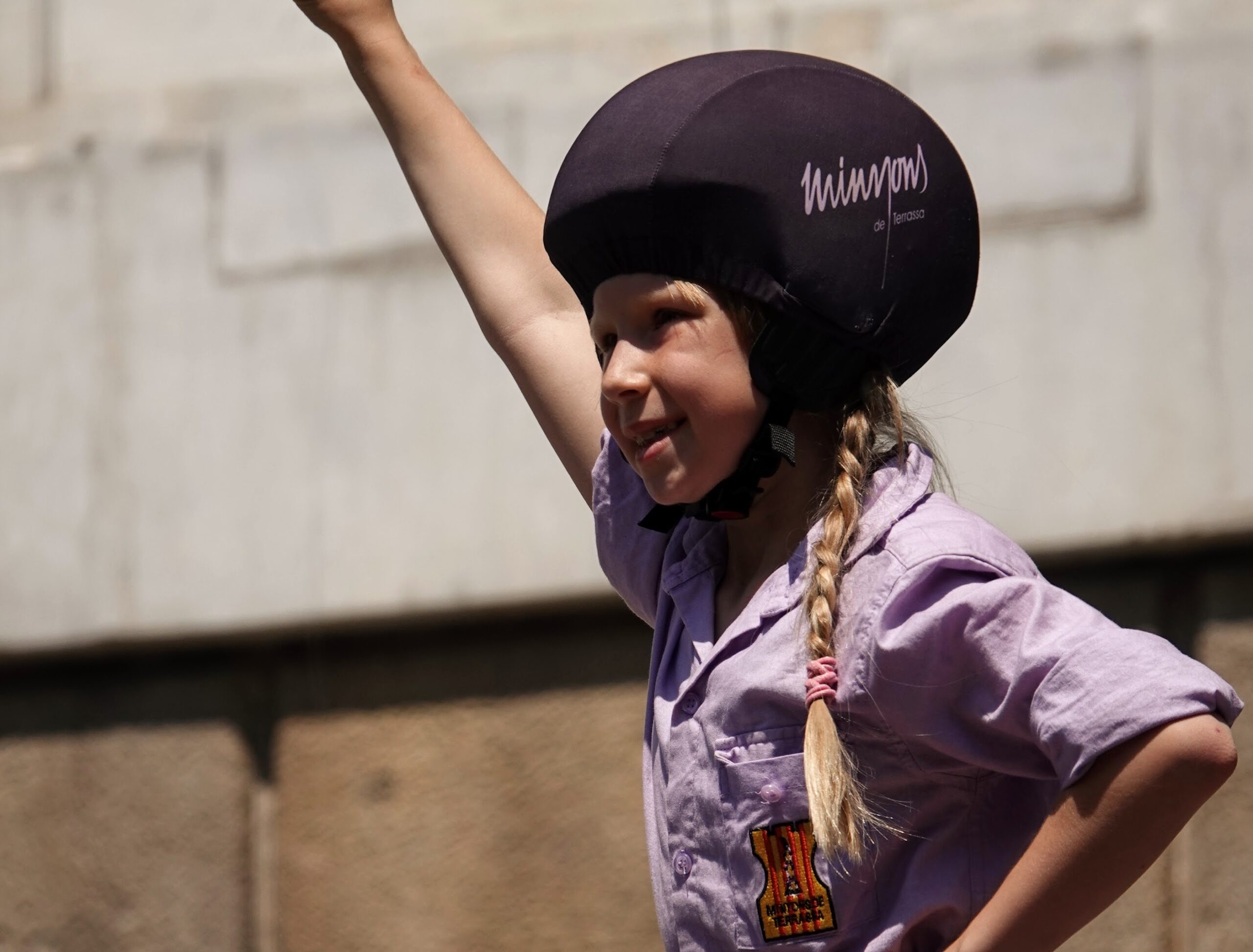
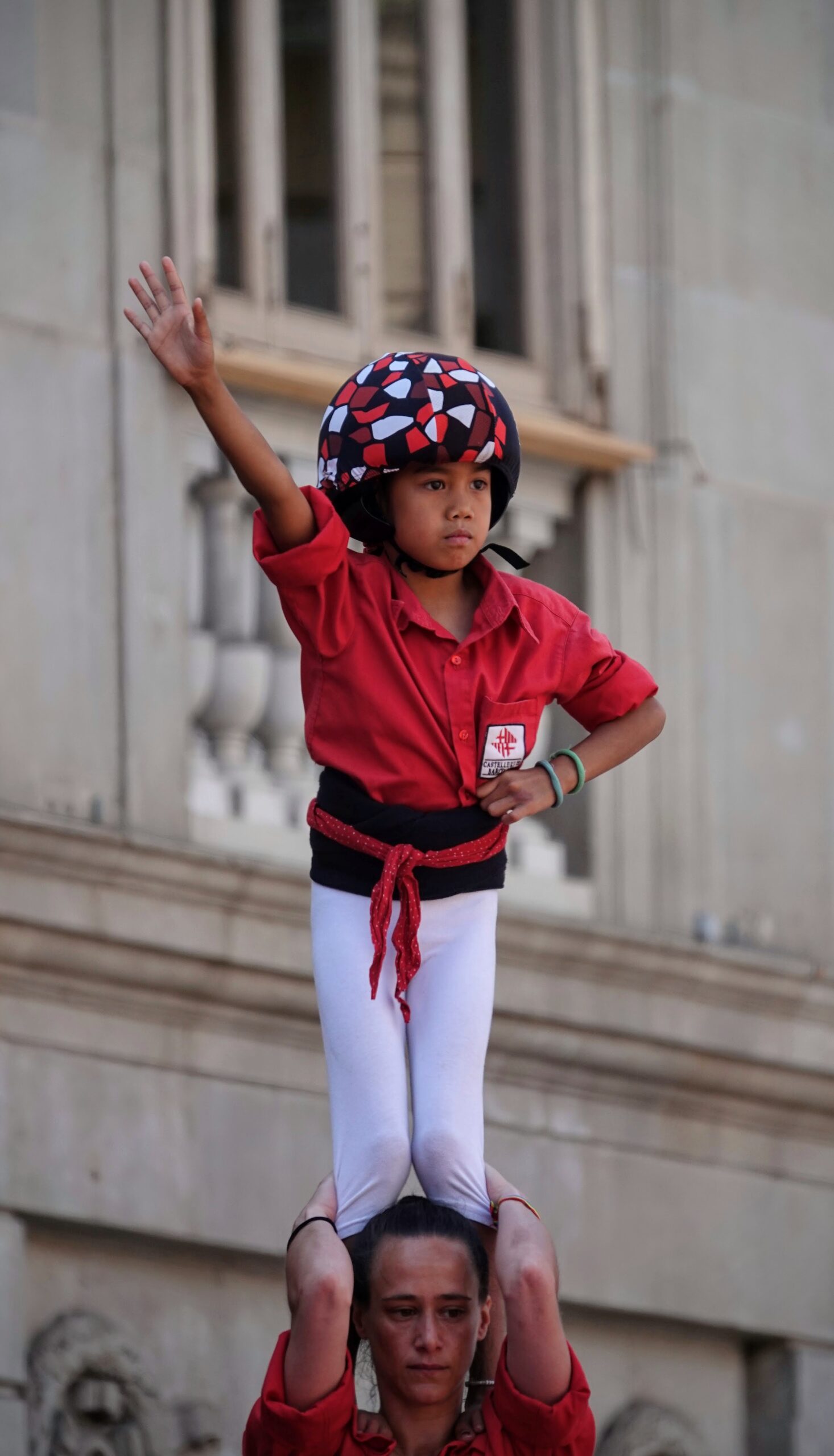
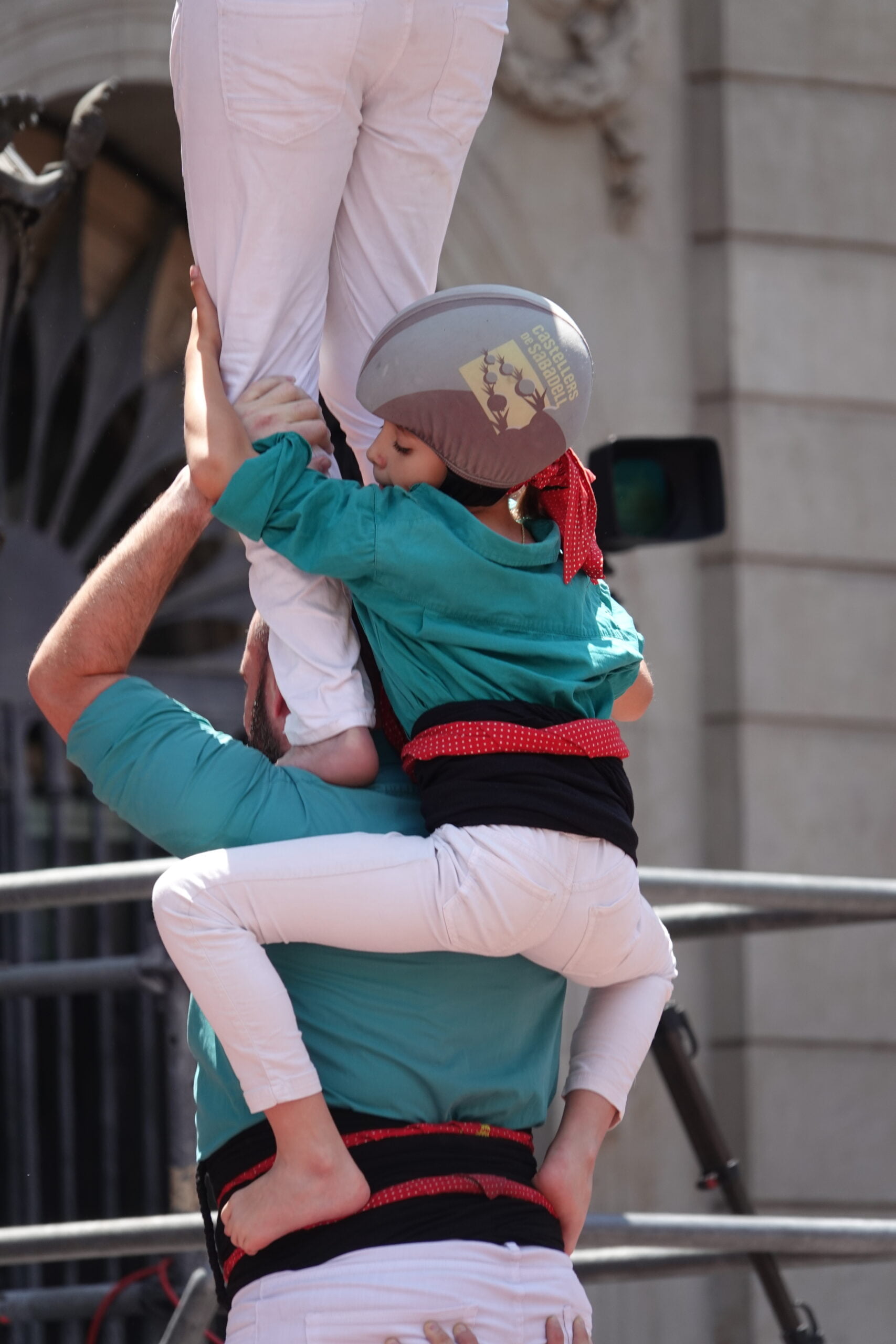
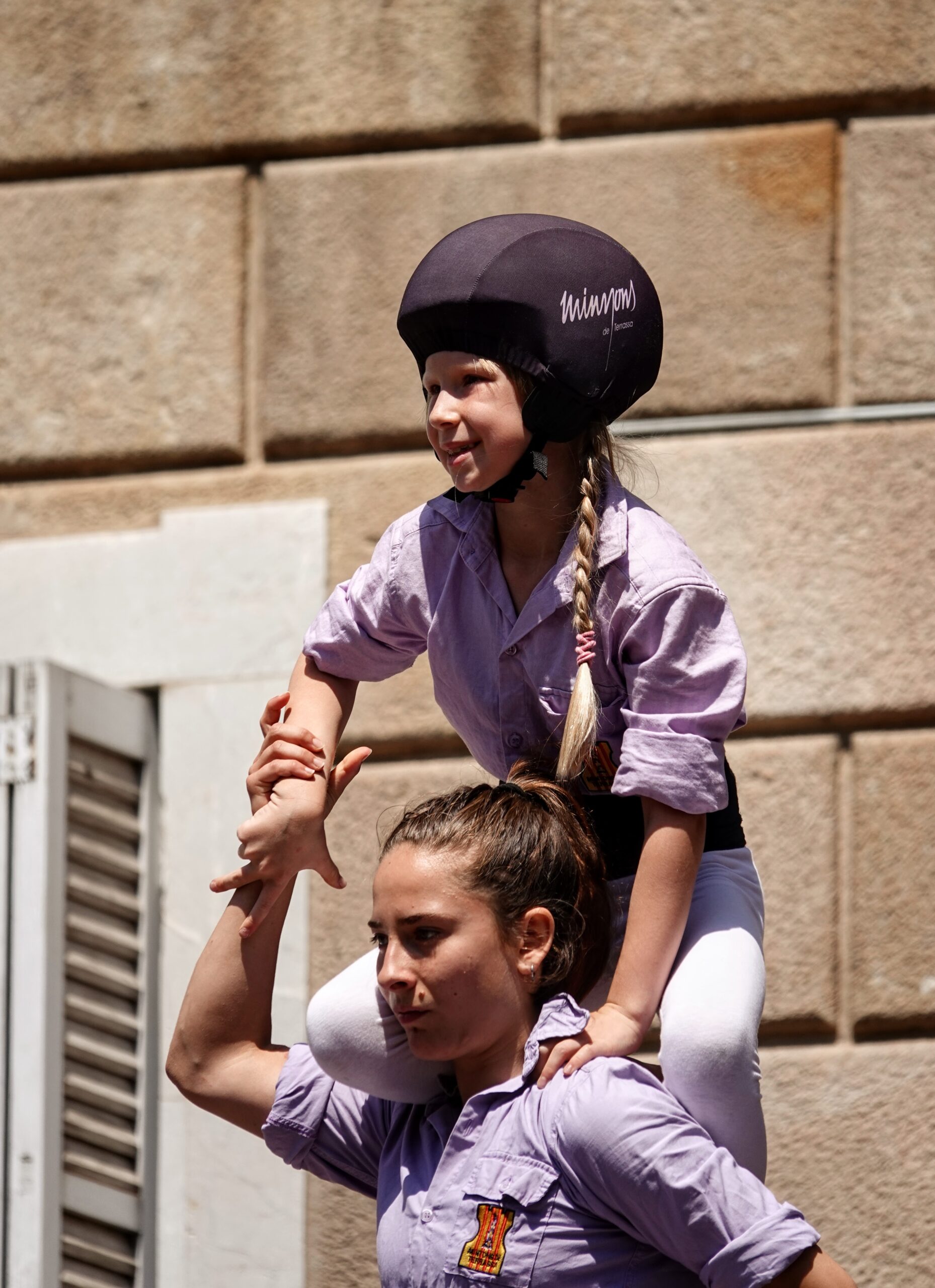
- The summit(pom de dalt) is formed by children, obligatorily wearing helmets. The youngest(enxaneta) climbs to the top of the tower and raises his or her arm to signify that the castell is complete. To be validated, a castell must also be disassembled (all climbers must come down safely).
When castells are made up of many storeys, the base is reinforced between the pinya and the trunk with the addition of a second support base(folre), or even a third(manilles), designed in the same way as a pinya, but with a smaller number of castellers.
The name of a castell depends on the number of floors and castellers per floor of the trunk. A “3 de 8” castell is thus a tower with eight floors(includingpinya, folre and shackles ), where each floor of the trunk is made up of three castellers.
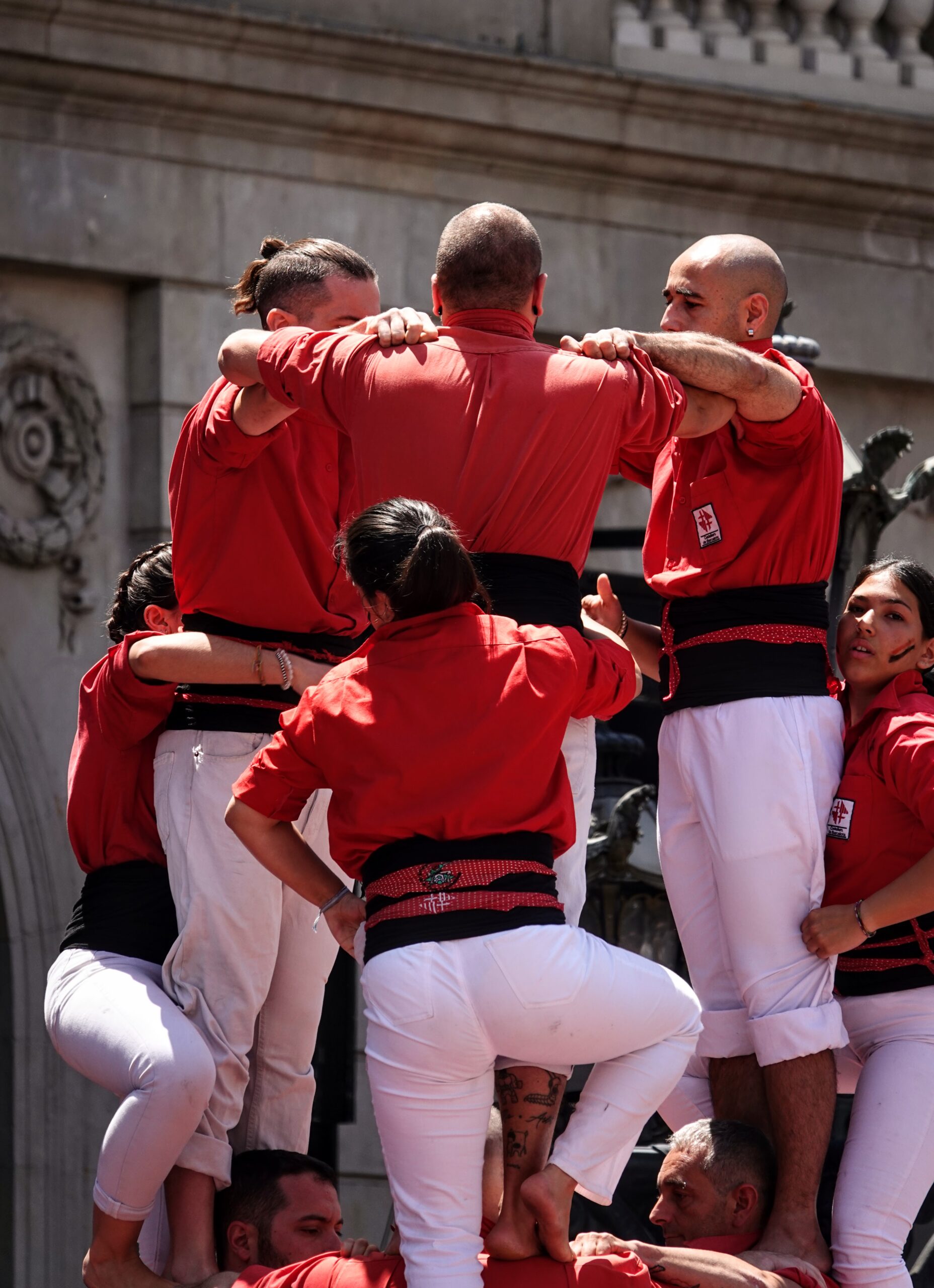
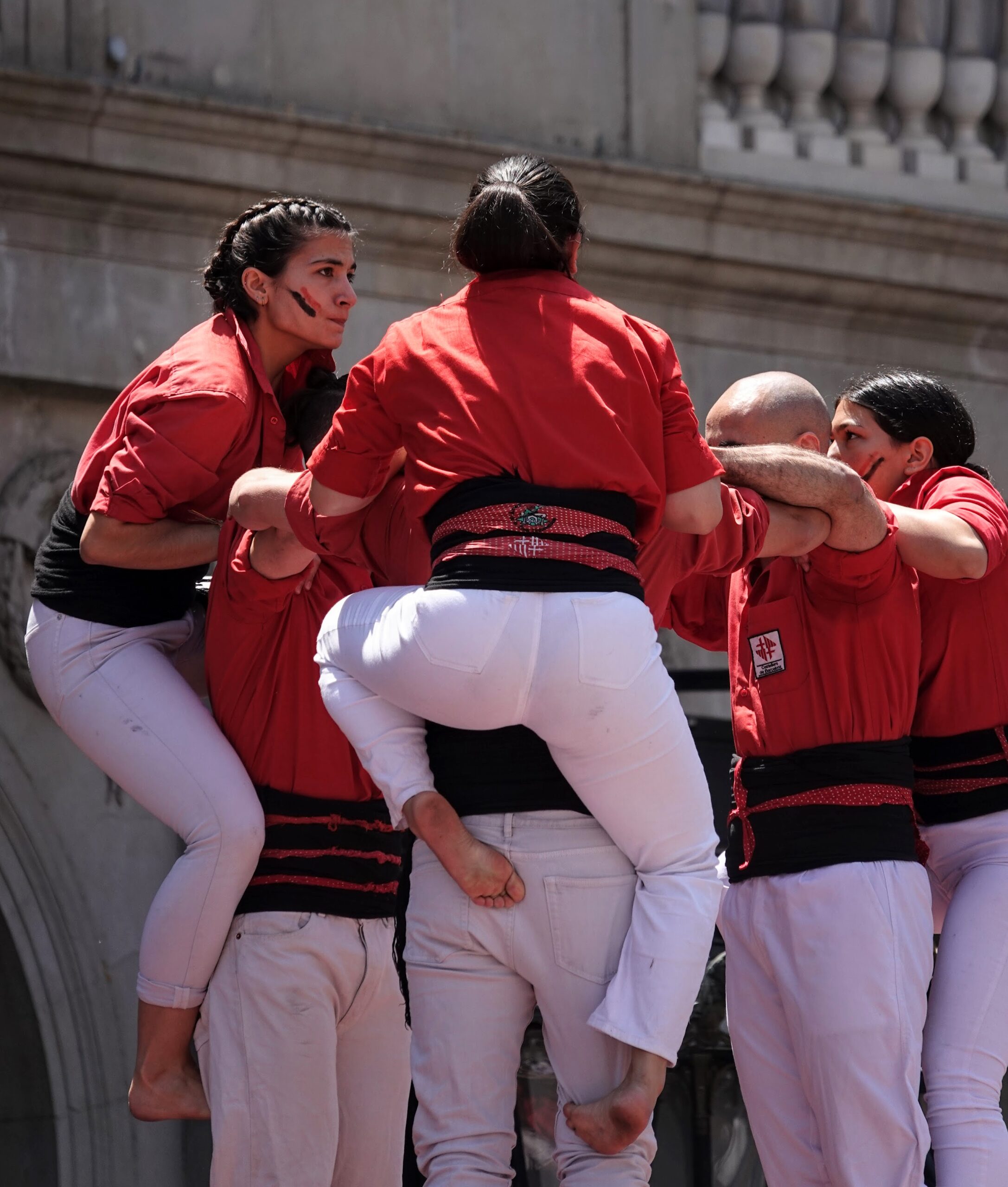
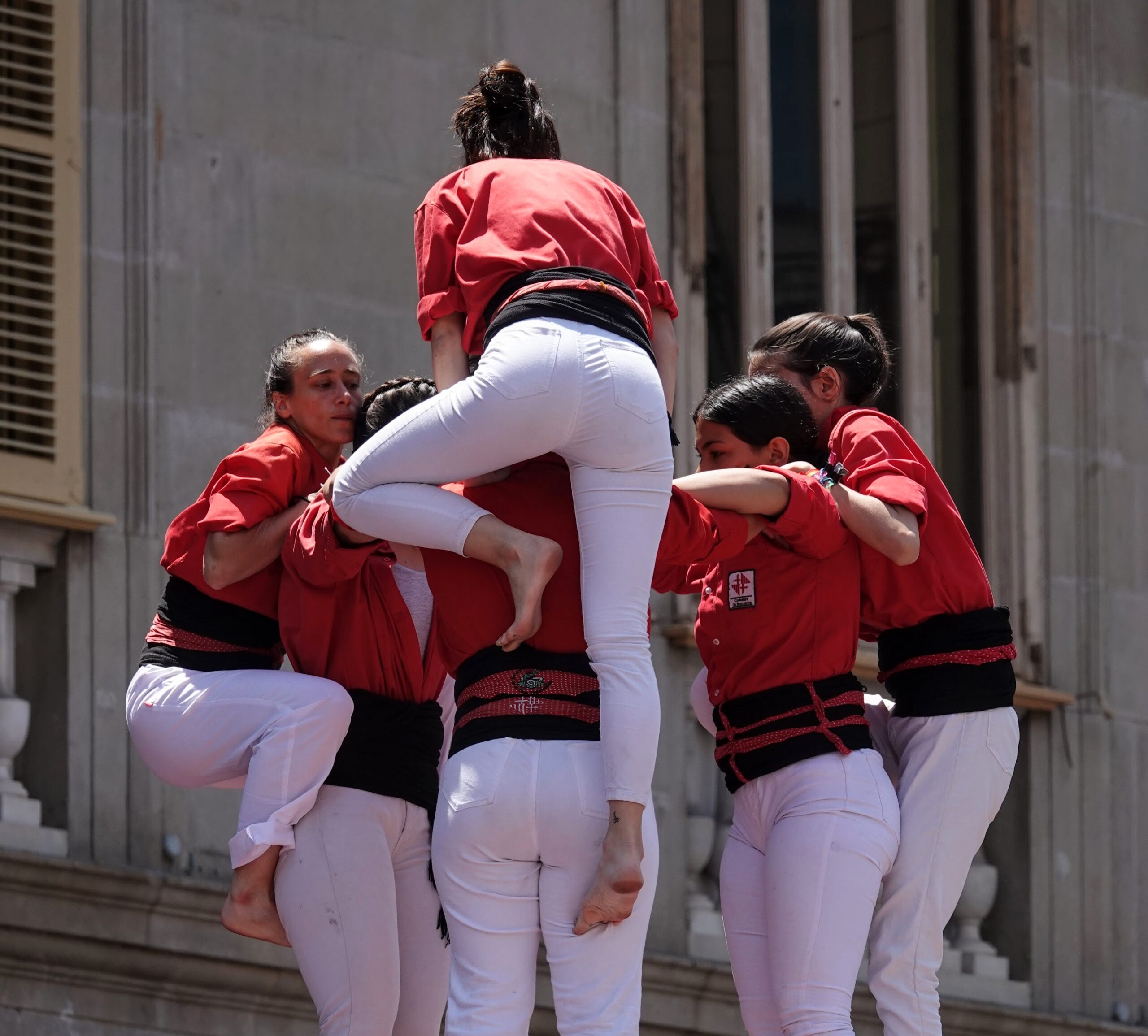
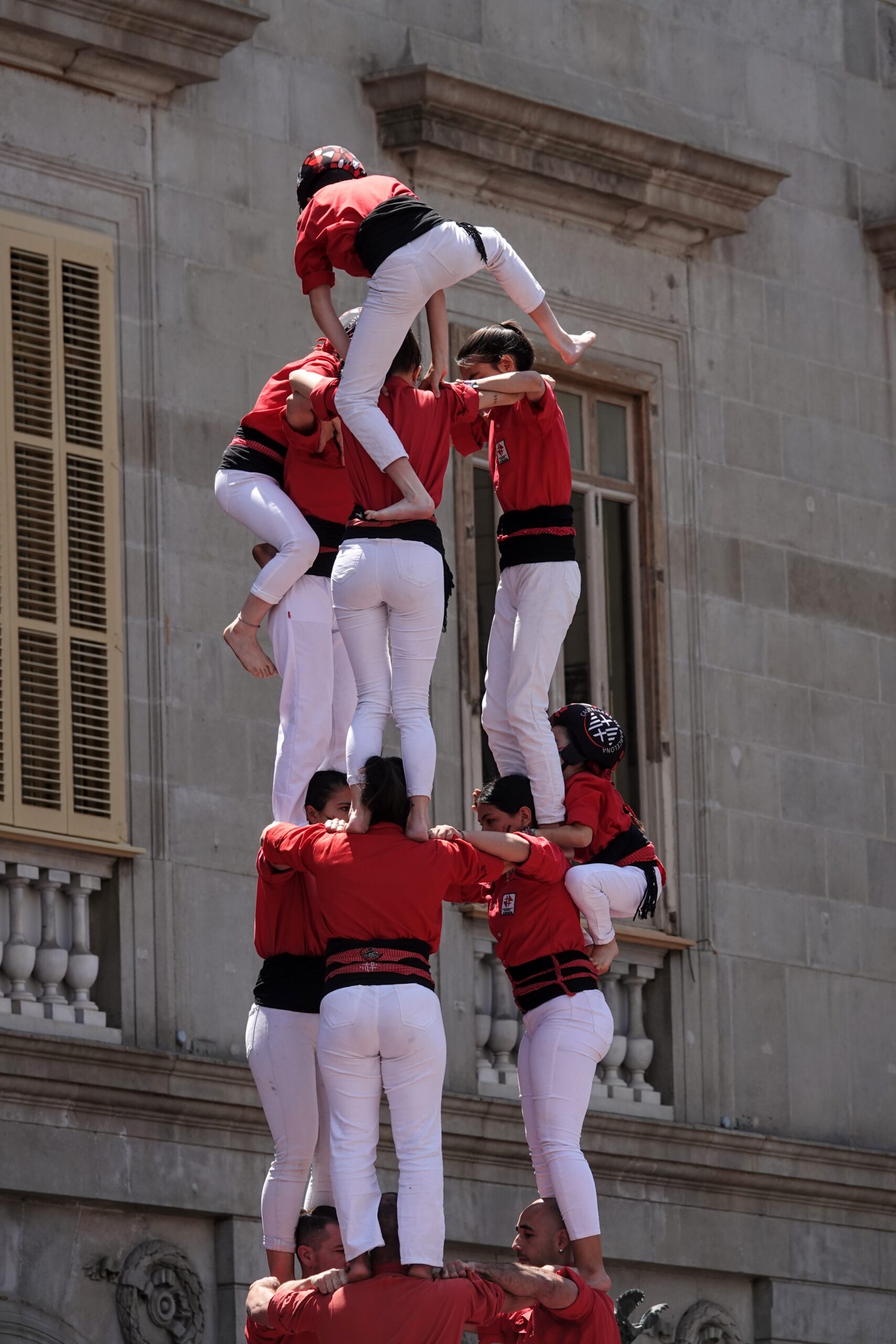
Here’s how it looks on video 😮
How castells work
While there are no castell regulations as such, the standards governing the construction of human towers are known to all castellers.
A castellera performance usually includes three castells (sometimes more) and an exit pillar from each participating colla. The castells are built in an agreed order, or by drawing lots before starting.
If a colla doesn’t succeed in the desired castell, it can try again. Colles don’t get together to defeat an opponent, but to surpass themselves and achieve their goals. When rival colles meet, they naturally seek to execute more complex castells than the others, but in the end there are no winners or losers.
Music from the castells
No castell is complete without the music of grallas (traditional Catalan oboes) and drums!
During a diada castellera (day of celebration), it’s the toc de entrada is the first to sound in the plaza, announcing the start of the castells. Next comes the toc del pilar caminant to accompany moving turns(pilar caminant). Although castells remain static in principle, they sometimes move around during special celebrations. The challenge then lies in covering a certain distance while supporting the weight of the tower and not losing balance along the way.
The towers are raised to the rhythm of the toc de castells, which accompanies the construction, adjusting its rhythm and volume according to the level of difficulty. The castellers supporting the base and those integrating the construction can thus coordinate their movements to the melody. The music evolves throughout the building and dismantling of the tower.
When the castells are finished, the music of the toc de vermut invites the audience to sit down to dinner.
Costume of the castellers
Originally, a casteller was dressed in the costume of a Valencian dancer: light-colored pants and shirt, scarf, espadrilles, bells on the ankles and castanets on the hands.
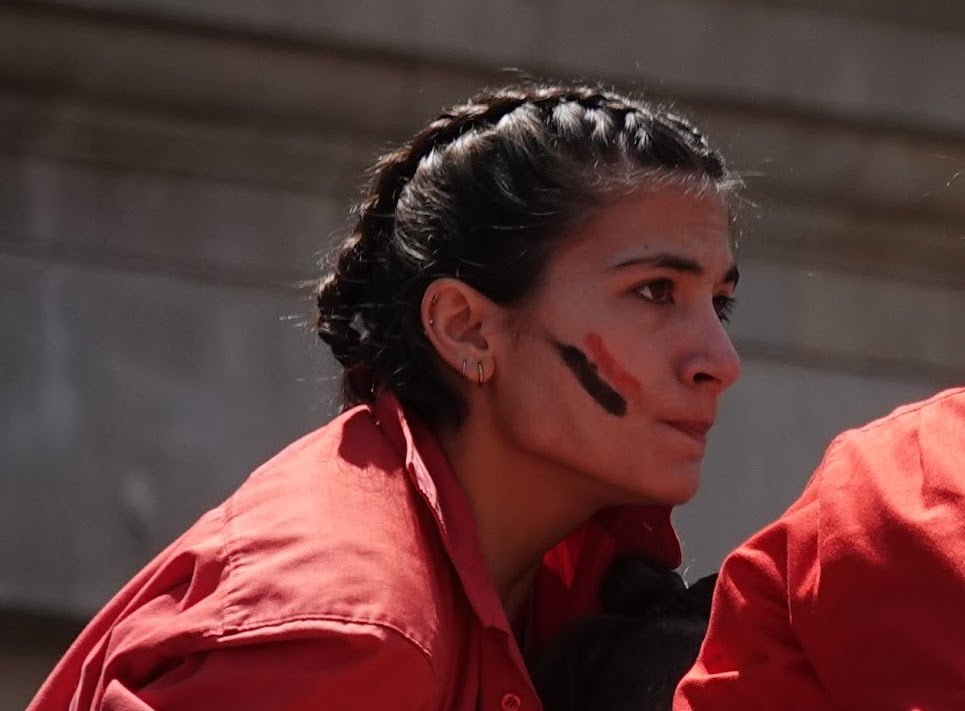
Impractical for building a castell, the traditional costume was then simplified: white pants, flannel belt(faixa) used as a grip for climbers, colored shirt (different color for each colla) and bandana.
Only the pinya castellers wear shoes, the others climb barefoot.
Where and when can you see castells?
Traditionally, the castellera season began on Sant Joan (June 24) and ended with the diada de Santa Úrsula at the end of October. This calendar has been extended over the years, however, and it’s now possible to see castells almost every weekend in a large part of the country – over 10,000 castells in all.
Some dates are more popular than others, such as the Festes Majors and the Diada Històrica de la Mercè (Barcelona’s patron saint’s day at the end of September), which features a collective performance by all the city’s colles on the plaza Sant Jaume.