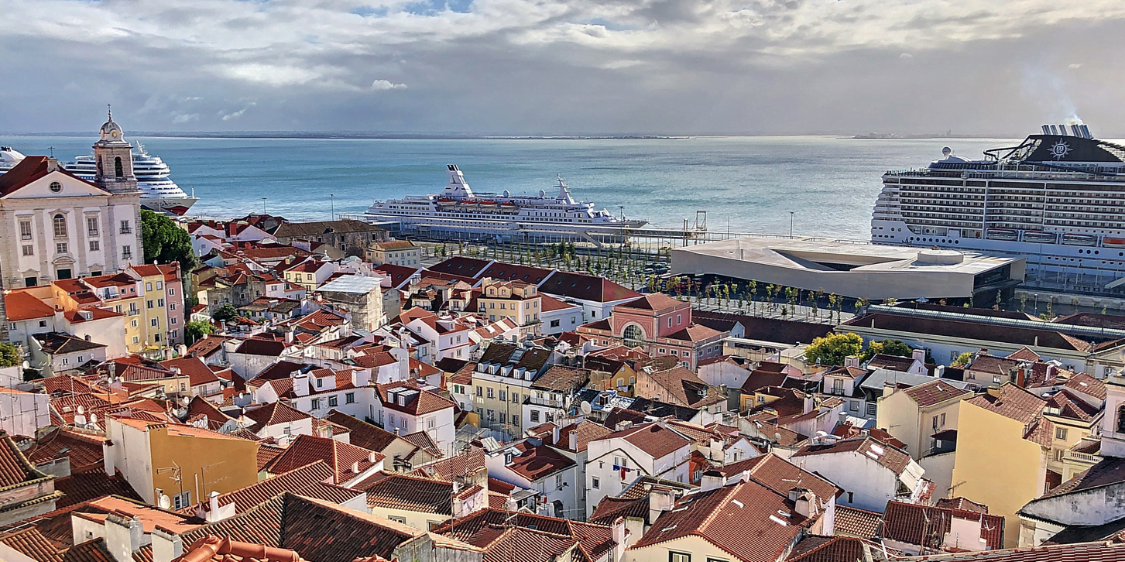
On our first day of our Lisbon citytrip, we explore Alfama, Graça and Mouraria, three districts steeped in local history and tradition.
Alfama, Graça and Mouraria in a nutshell
Alfama and Mouraria, Lisbon’s ancient medina
UnderRoman occupation, the Alfama was a residential district occupied by the upper classes of society. Several archaeological remains, including Roman public baths, bear witness to this.
When the Moors invaded Portugal in the 8th century, they transformed Alfama in the style of the medinas of Casablanca, Marrakech or Tangiers, building a complex network of narrow streets around the ancient citadel as a defense system against the invaders. The Mouraria district became the preferred place of residence of the Muslim population(mouro means “Mauritanian” or “Moor”).
With the return of Christianity in the 12th century, theAlfama expanded and became a residential district reserved for the Christian nobility and elite. The Moors, for their part, were forced to leave the city or cloister themselves in the Mouraria. A poor neighborhood and Moorish ghetto, Mouraria would become the cradle of fado and its sad melodies…
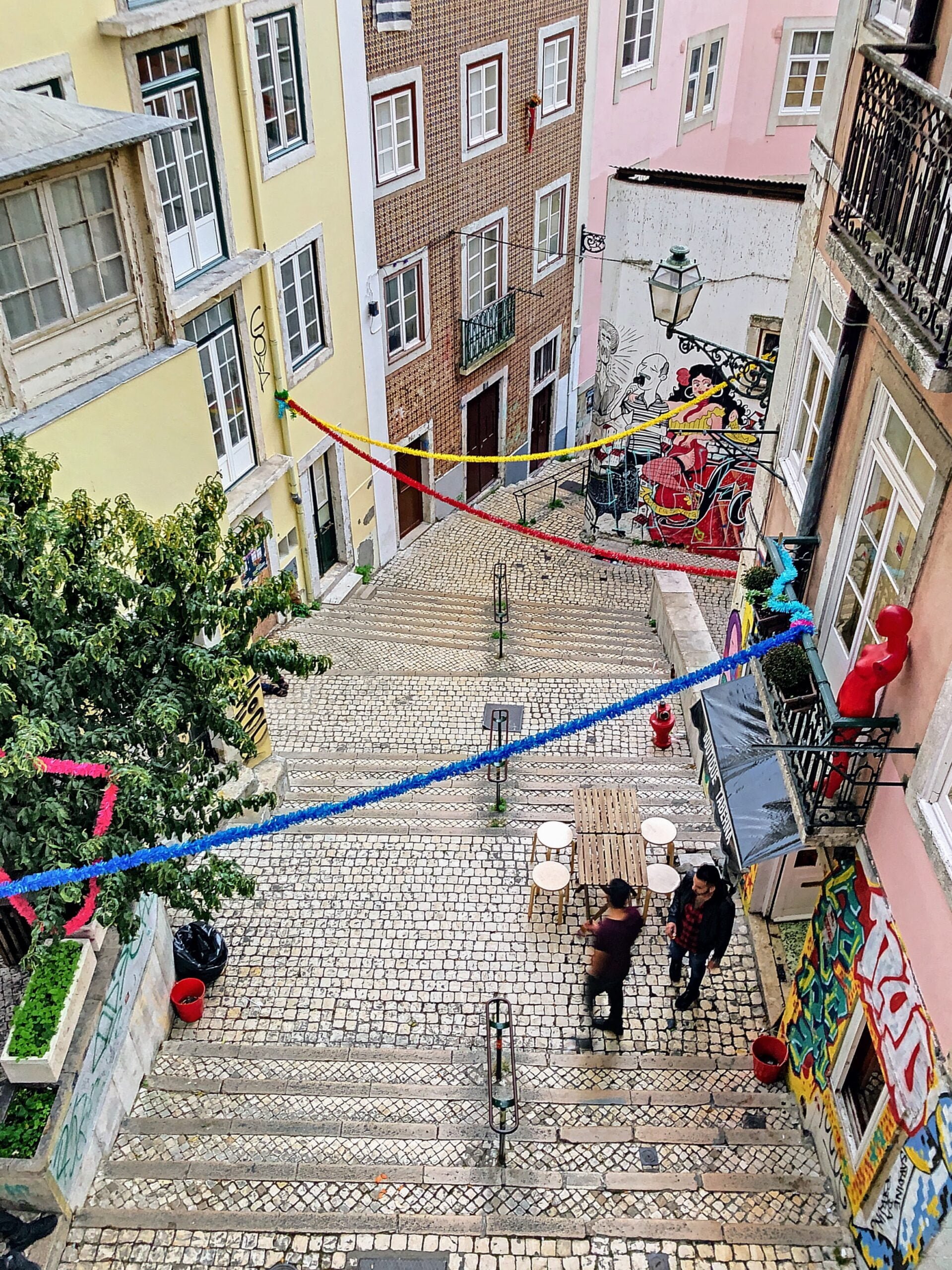
The only district to have withstood the earthquake of 1755 surprisingly well,Alfama is nevertheless seeing its inhabitants desert to find refuge further west, safe from earthquakes. Wealthy families gave way to fishermen and sailors looking for a few distractions before setting sail for the new Portuguese colonies. Alfama is synonymous with prostitution, crime and poor living conditions.
In the first half of the 20th century, Lisbon’s population boomed and housing became scarce. Alfama welcomed many new residents, and with them the capital needed to restore the district. Little by little, houses with faded facades give way to brand-new signs. The magic is still working, but for how much longer?…
With its narrow, winding streets, colorful houses, spiral staircases andazulejo-covered facades, the Alfama is a picturesque district that reflects the very essence of Lisbon.
Over the centuries, Muslims, Jews and Christians have continued to live side by side in the Mouraria, making the district a true place of exchange and multicultural encounters. But during the 20th century, the neighborhood experienced periods of economic decline and poverty, which led to problems with drugs and delinquency. Once a shantytown, the Mouraria district is now undergoing the same urban renewal as Alfama.
Despite ongoing urban transformation, Alfama and Mouraria retain their Moorish heritage, medieval character and strong popular identity. Their winding streets, colorful houses and picturesque ambience, much appreciated by visitors, make them emblematic districts of Lisbon.
Graça, authenticity and miradouros
Close to Alfama and Mouraria, perched on Lisbon’s highest hill, Graça is a neighborhood known for its tranquility, authentic atmosphere and superb panoramic views.
When Christian forces recaptured Lisbon in the 12th century, Graça, like Alfama, became a place of residence for the nobility and upper classes of Christian society. The district owes its name to the chapel of Nossa Senhora da Graça, whose construction dates back to the 13th century.
Over the centuries, Graça developed as a residential district, attracting a varied population. Churches, convents and palaces have been built here, adding to its historical and architectural importance. But like many of Lisbon’s neighborhoods, Graça sufferedextensive damage in the 1755 earthquake.
Having subsequently undergone periods of transformation and urban development, Graça has preserved its unique character and warm atmosphere. The scene of many local festivals and celebrations, including the Santo António festivities in June, the district is most popular for its picturesque alleyways and magnificent panoramic views over the city.
Day trip to Alfama, Mouraria and Graça
Alfama, Mouraria and Graça are all easily accessible by public transport. From the city center, you can even walk to the Mouraria and Alfama, enjoying a beautiful stroll through a labyrinth of steep streets with colorful facades.
The suggested itinerary below can be completed in less than two hours, but don’t hesitate to take the whole day to cover the 4 kilometers of this loop at your leisure. It’s by getting lost in the maze of alleyways of Alfama and Mouraria that you can appreciate all its charm 😍
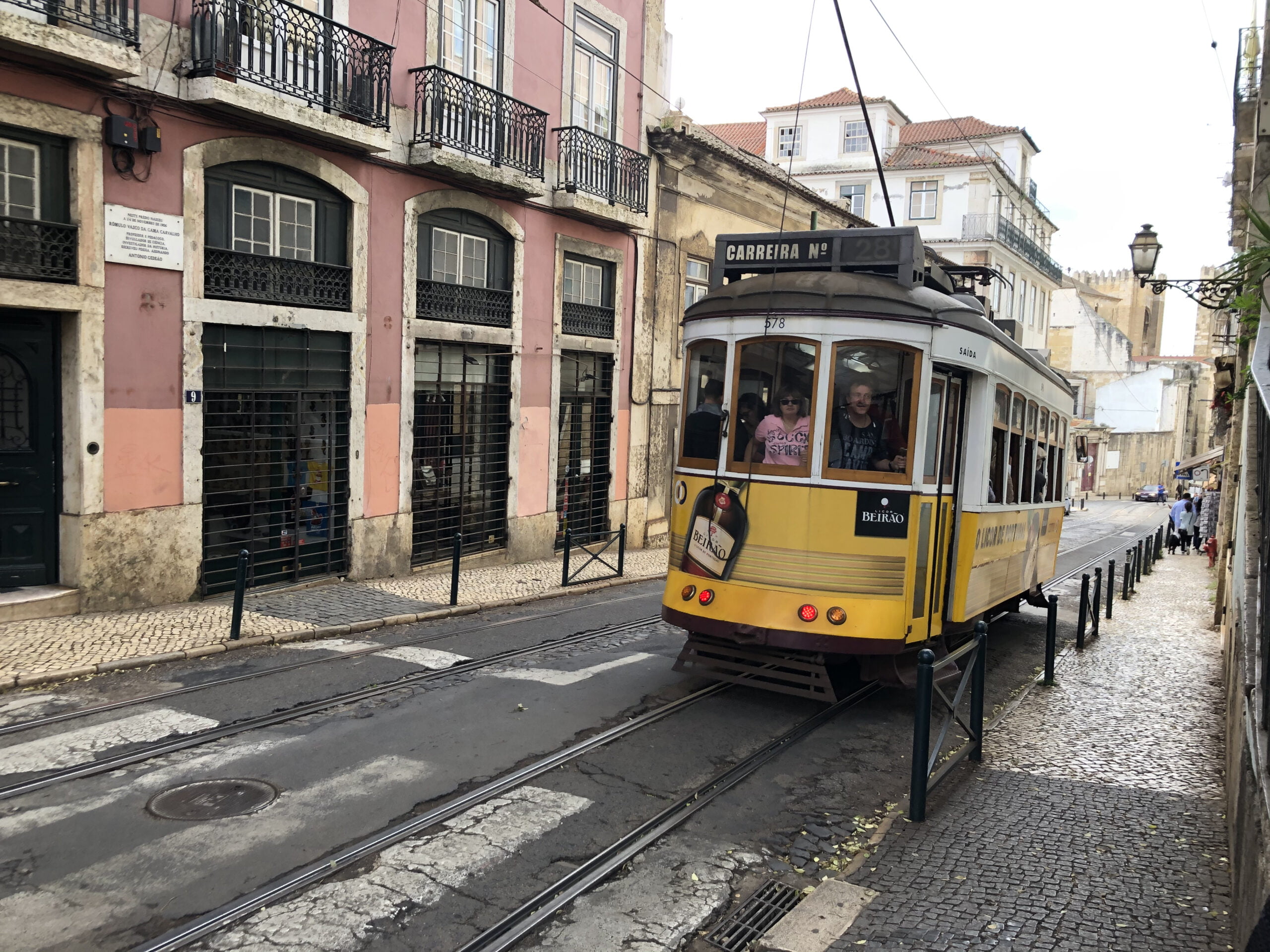
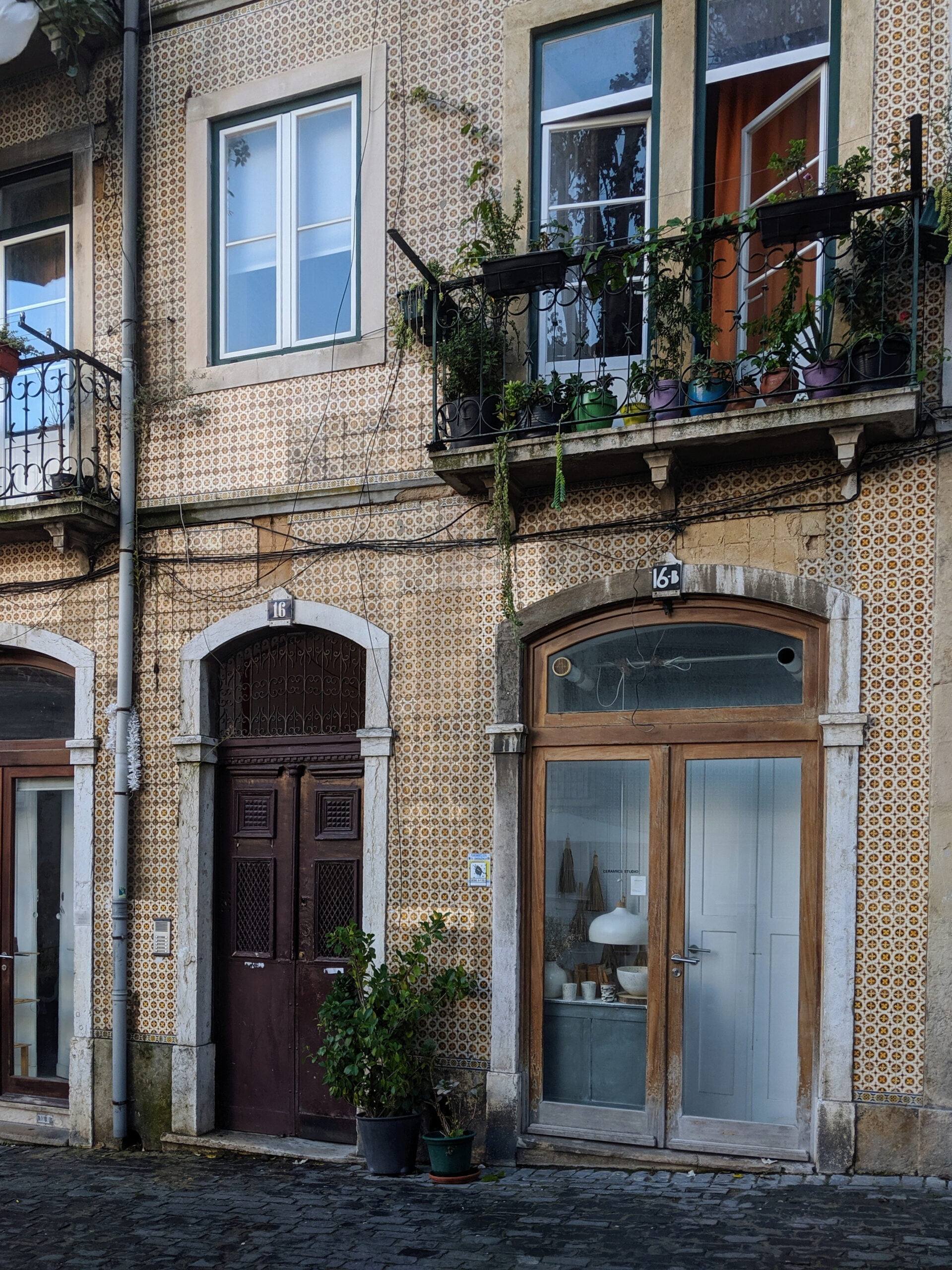
As our apartment is right in the heart of Mouraria(Largo dos Trigueiros), we walk along Calçada do Marquês de Tancos and Rua do Milagre de Santo António towards the first miradouro of the day. Many tourists avoid the climb by boarding the famous 28 tramway 😅
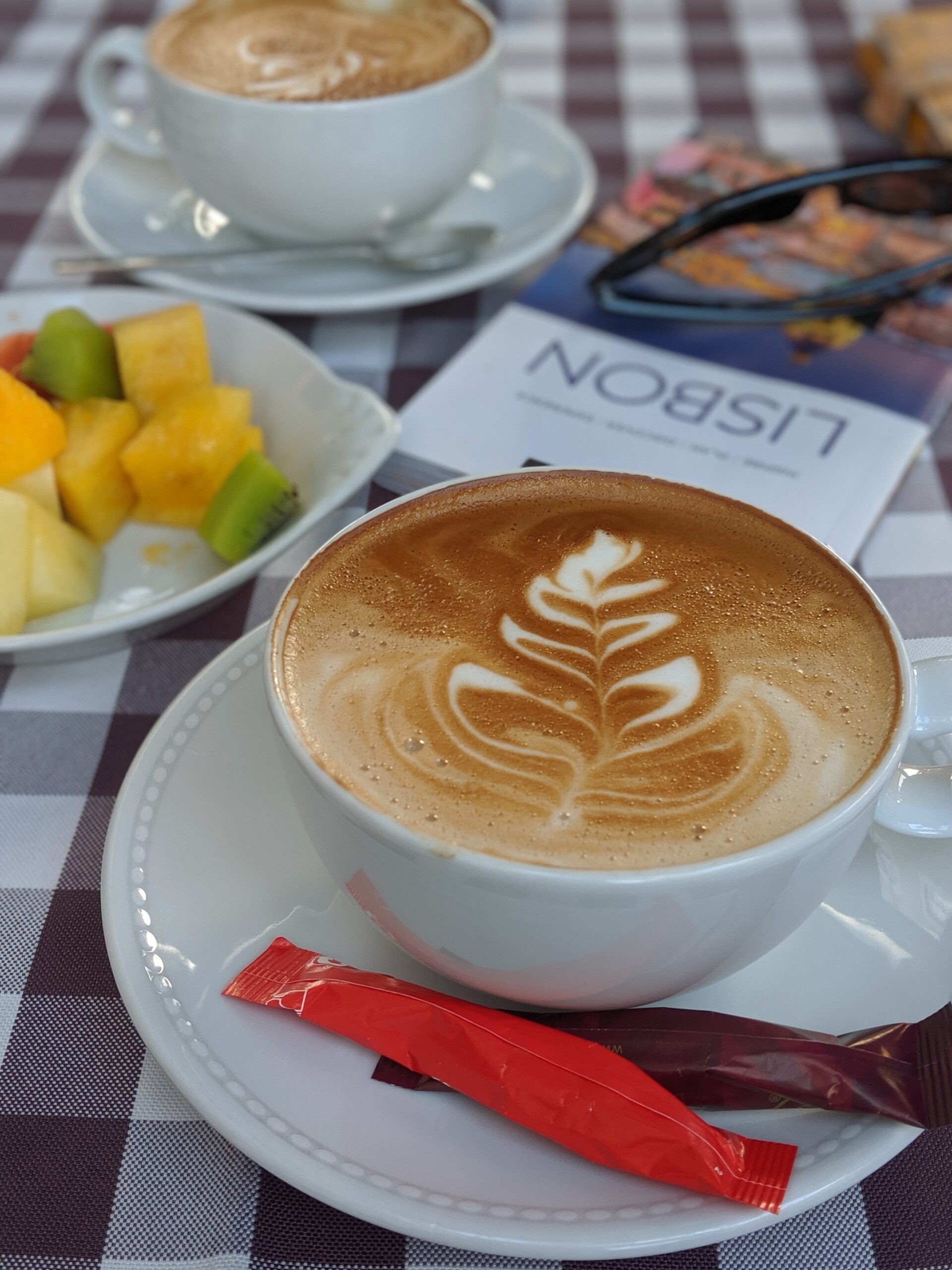
Breakfast break on the charming terrace of Audrey’s Cafe ☕
A few metres below, two lookouts offer panoramic views of the city and the traditional houses of the Alfama: the miradouro de Santa Luzia and the miradouro das Portas do sol.
Miradouro de Santa Luzia
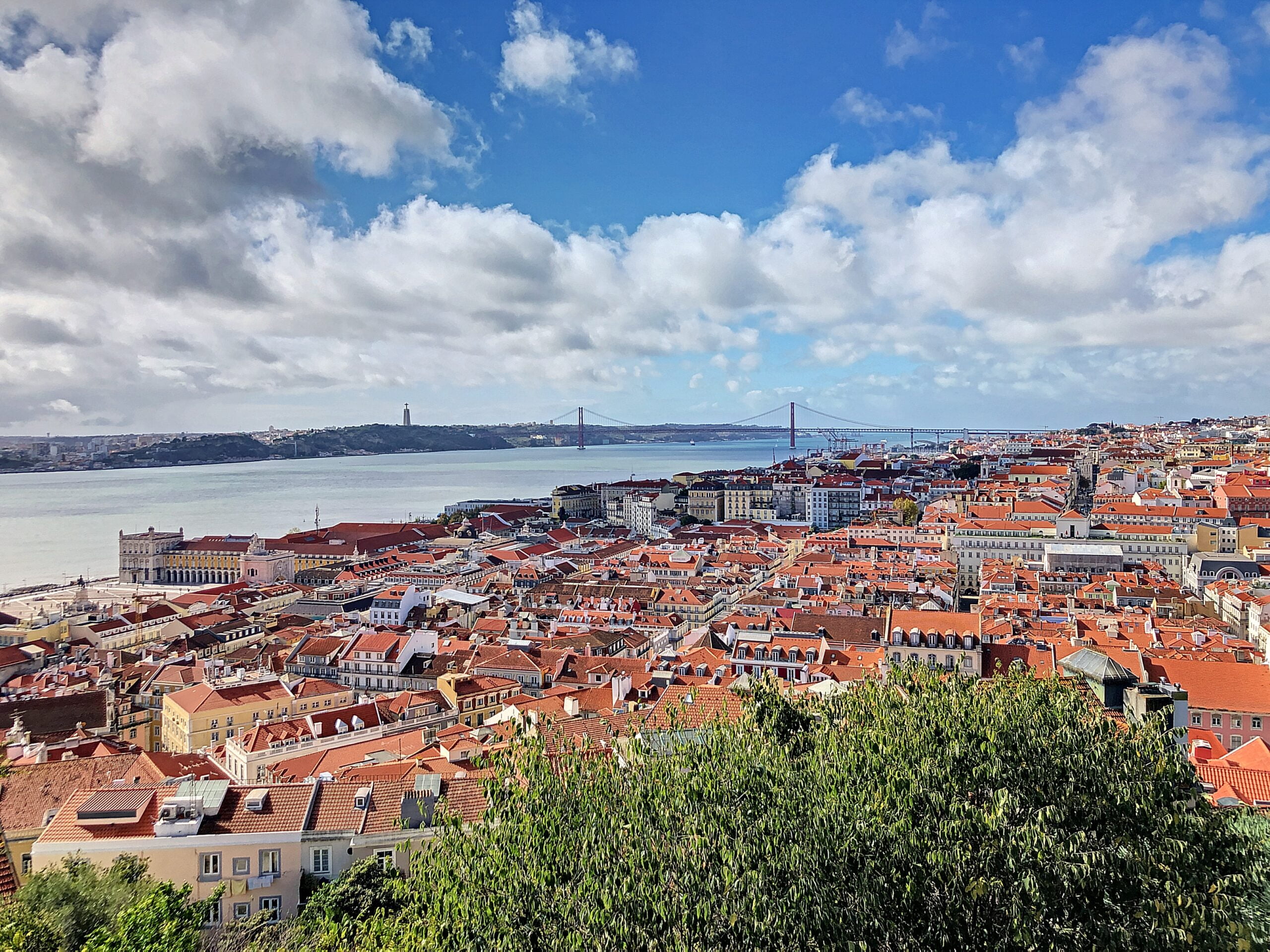
In the immediate vicinity of the popular miradouro das Portas do sol, the miradouro de Santa Luzia offers a breathtaking view of the Tagus and the red roofs of Alfama. Characteristic views are, from left to right, the São Vicente de Fora monastery, the dome of the National Pantheon, thechurch of Santo Estêvão and the two white towers of thechurch of São Miguel.
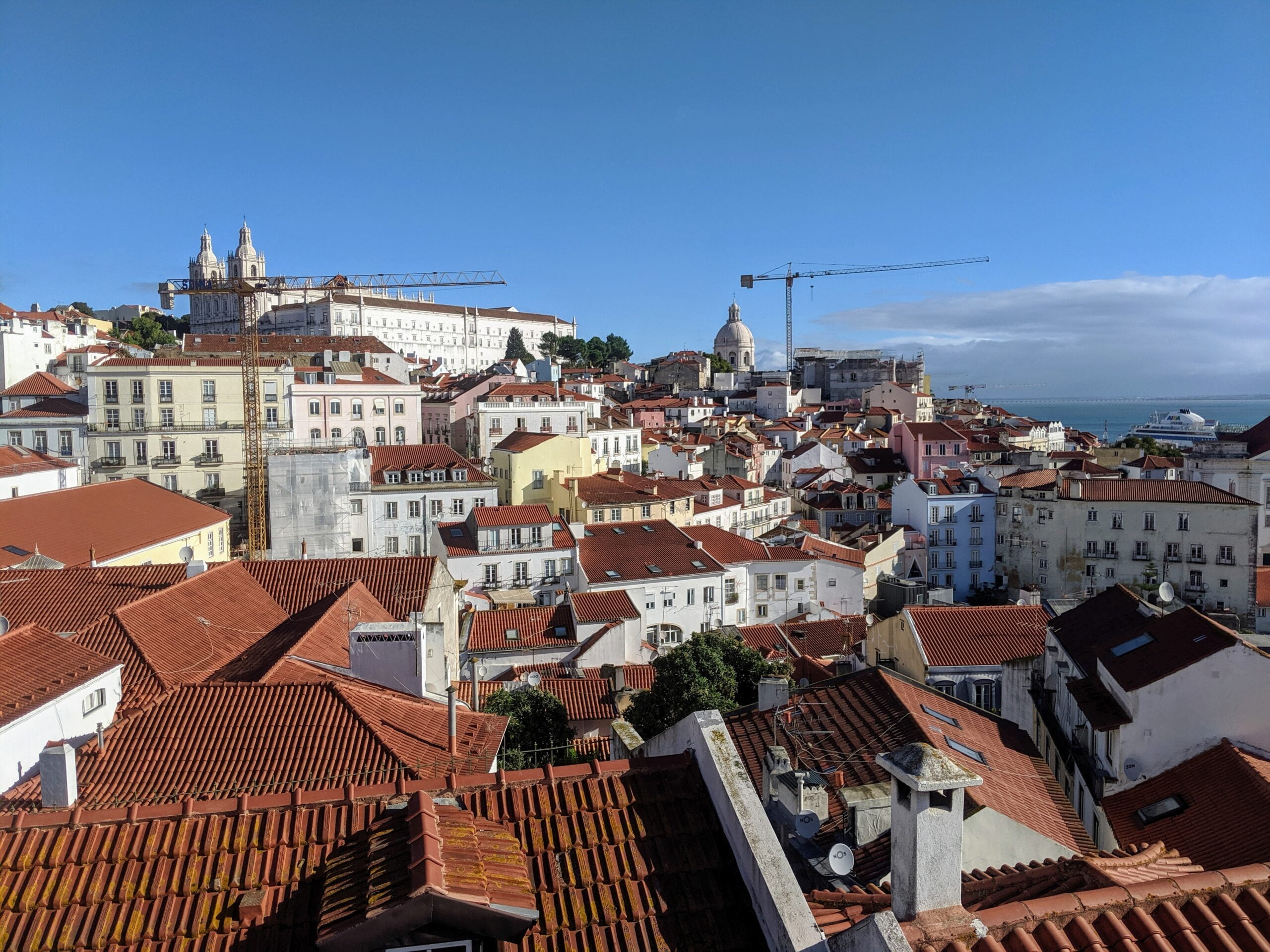
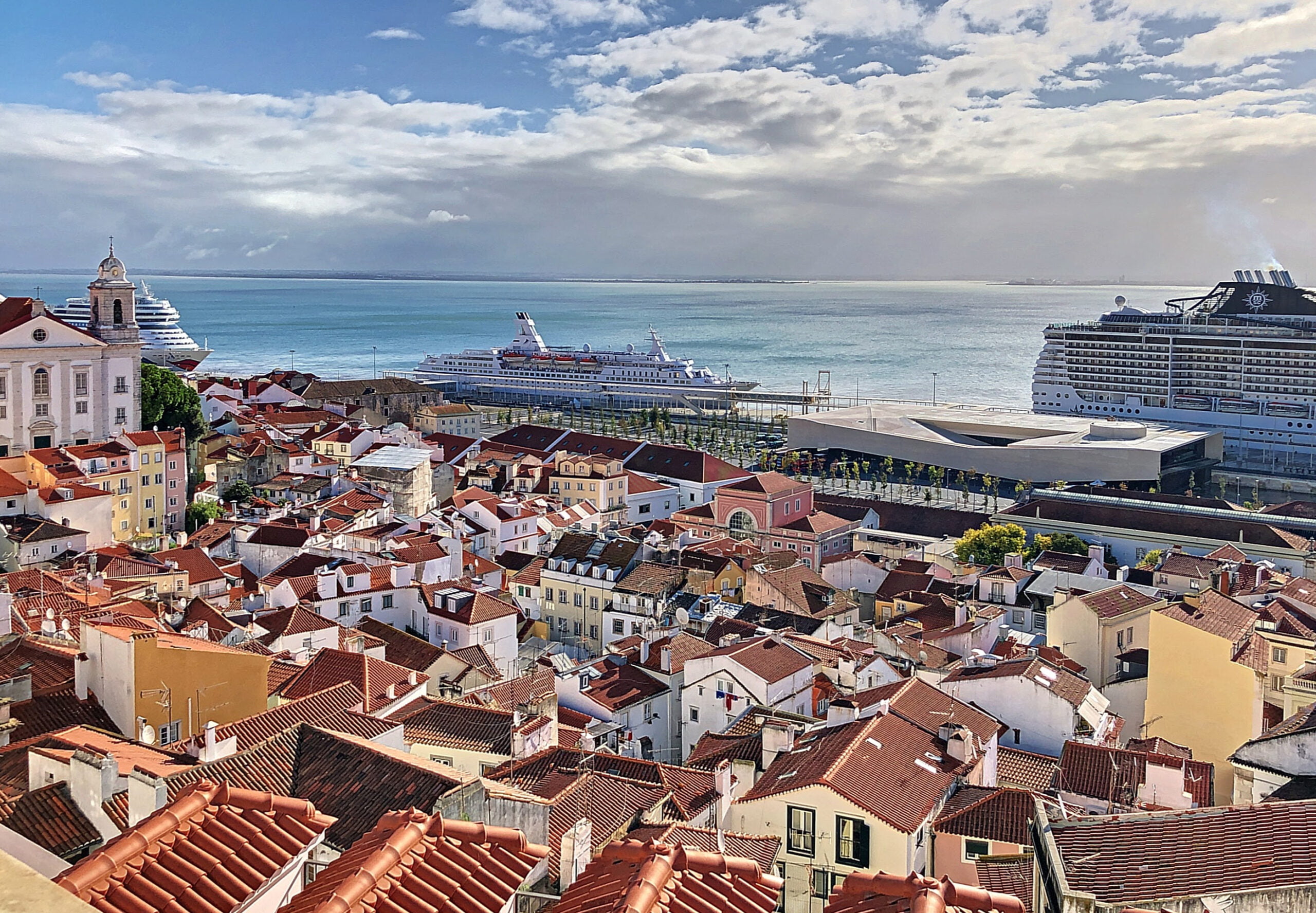
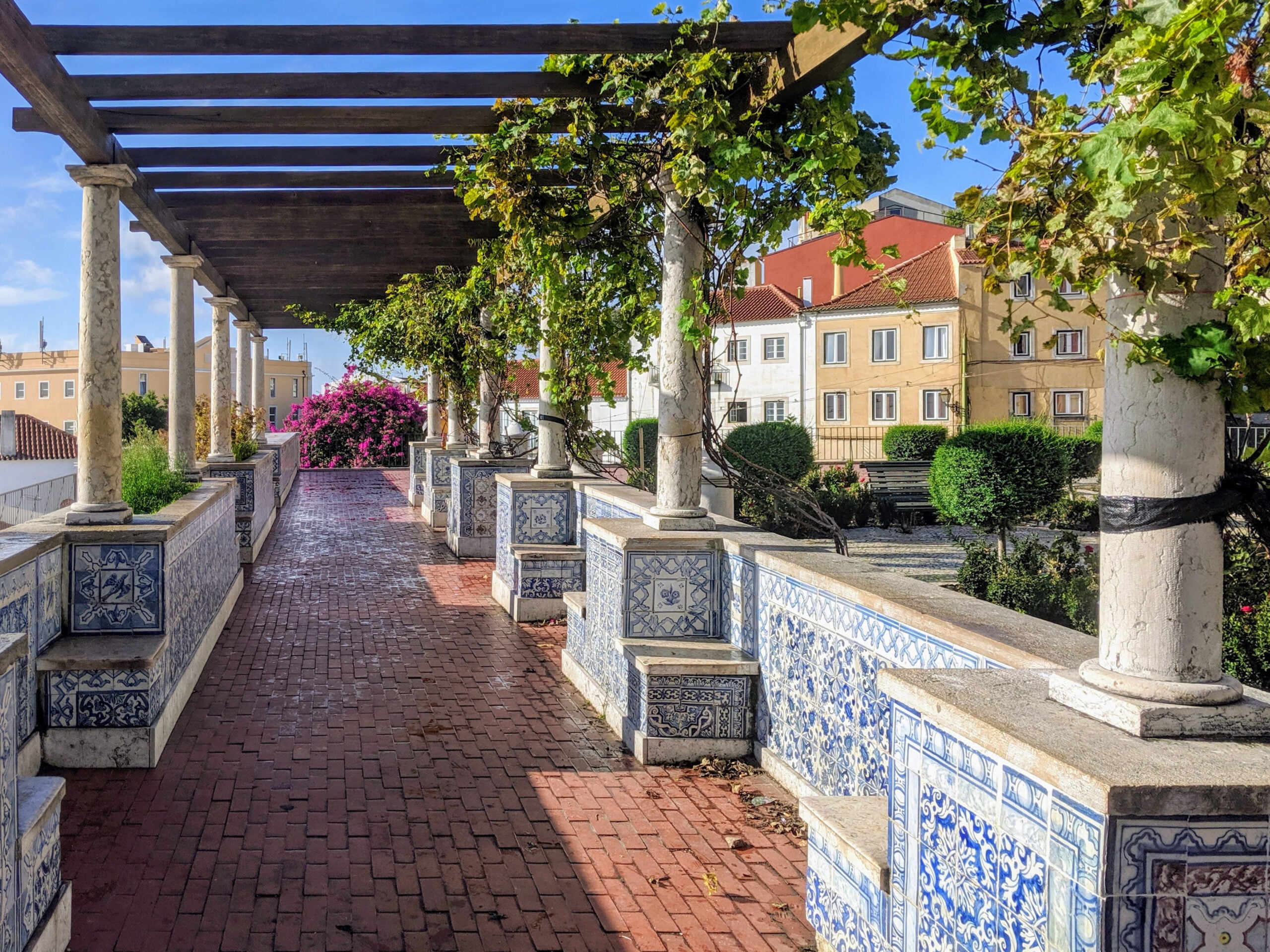
A true haven of peace, the Santa Luzia belvedere has two levels: one with a vine-covered columned terrace, the other a small garden surrounded by bougainvillea.
In the center of the garden, also known as Praça Júlio de Castilho, stands a bust of the writer Júlio de Castilho, the famous olisopographer (from Olisipo, the ancient name of Lisbon).
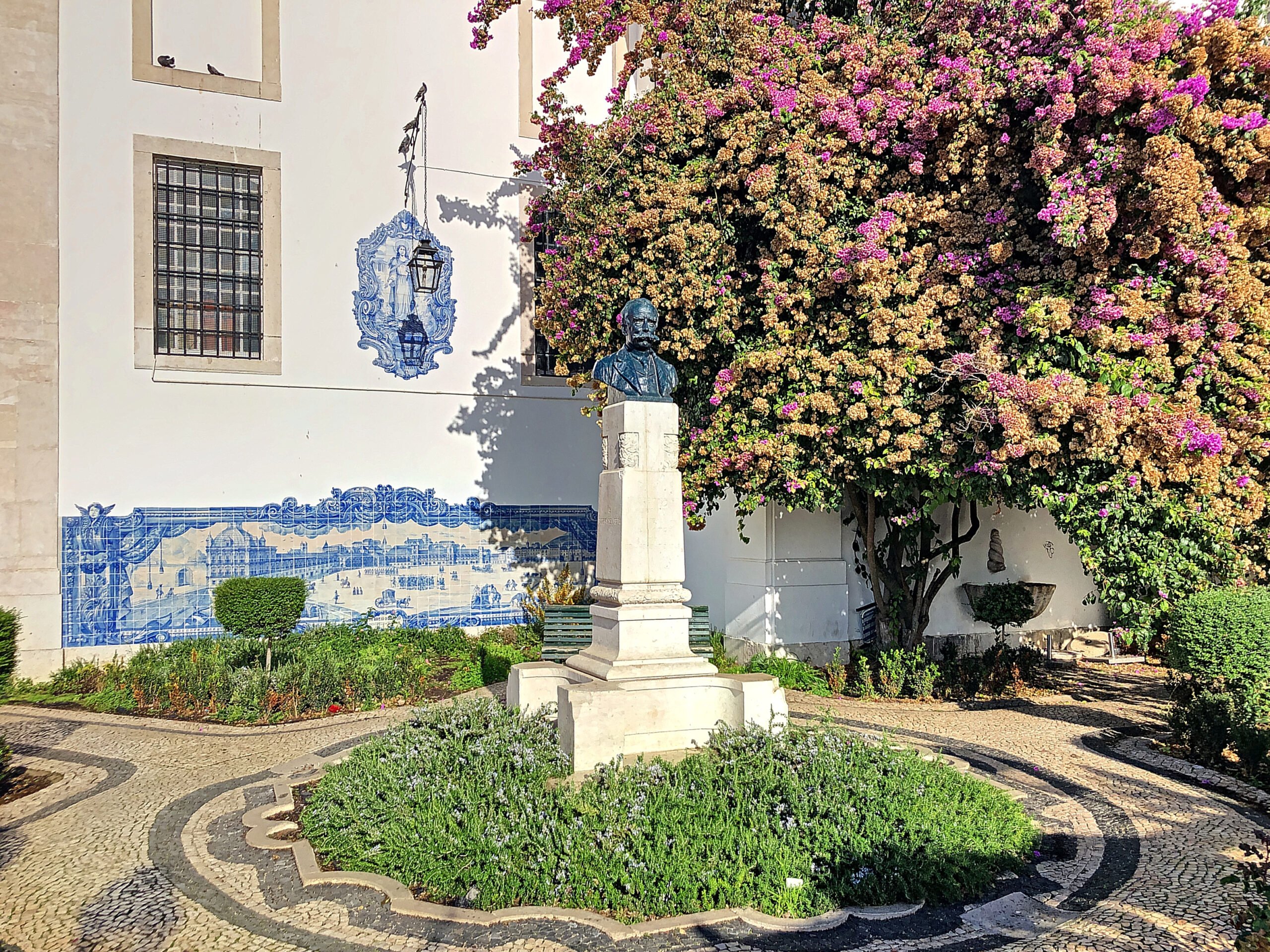
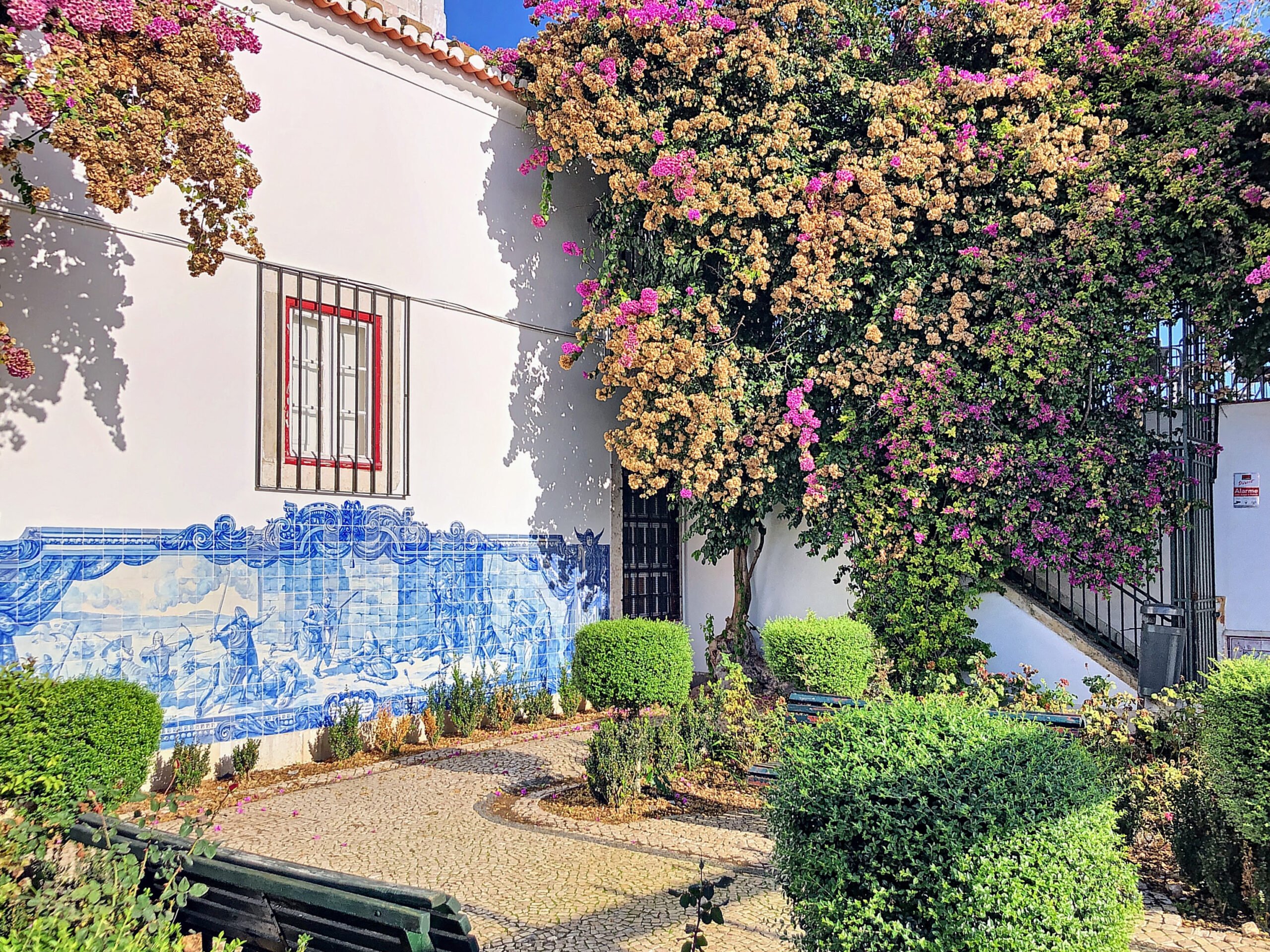
The 18th-centurychurch of Santa Luzia(Igreja de Santa Luzia) is right next to the belvedere. Its south facade is decorated with twoazulejo panels designed by António Quaresma: one depicts the Praça do Comércio (Lisbon’s Commercial Square) as it was before the 1755 earthquake; the other depicts the Catholic capture of São Jorge Castle in 1147.
➜ Located just behind, the view offered from the miradouro das Portas do sol doesn’t differ much from the miradouro de Santa Luzia. It’s worth taking the staircase along the belvedere to admire the History of Lisbon fresco.
History of Lisbon
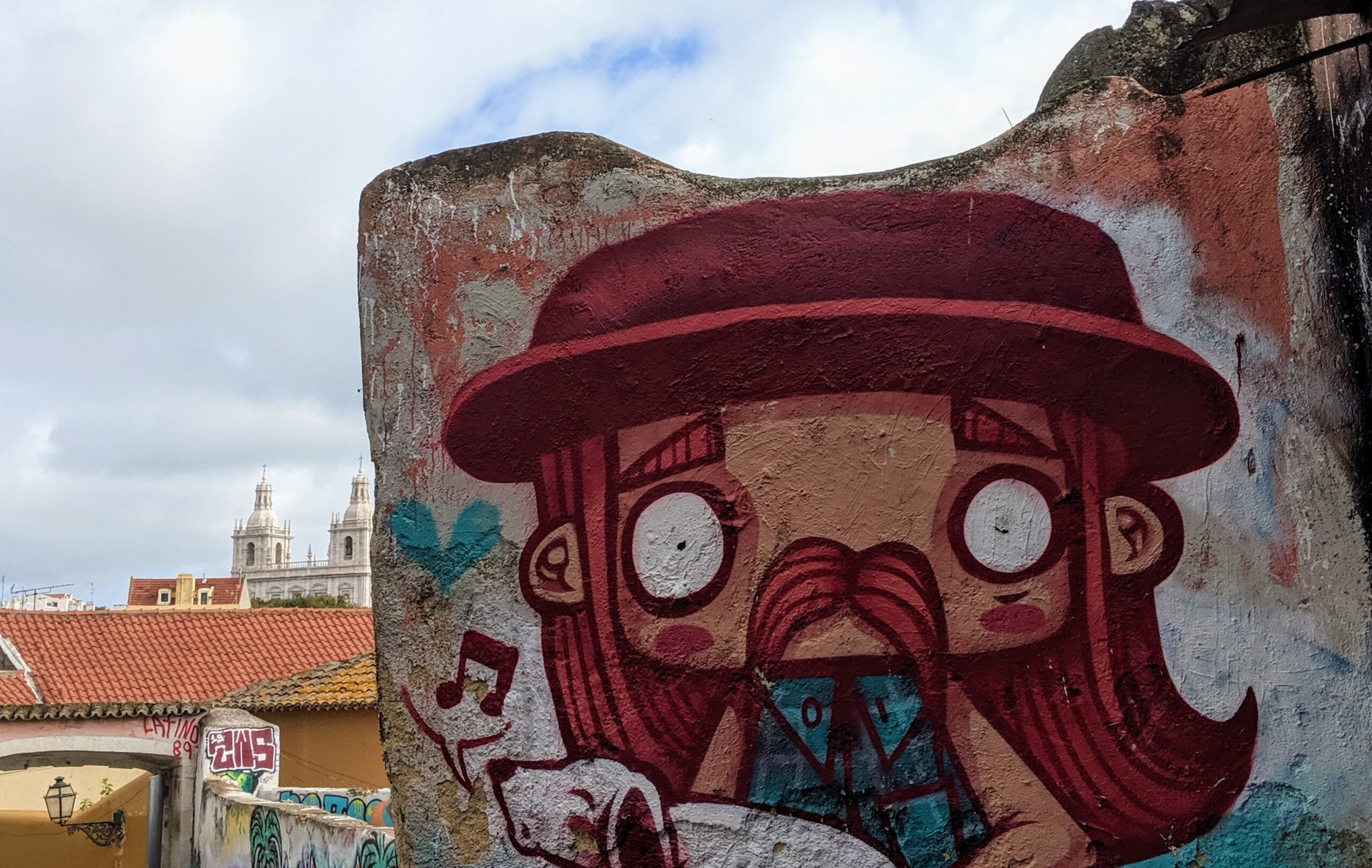
Painted in 2016 on both sides of the arch of a tiny tunnel, Nuno Saraiva’s History of Lisbon fresco depicts the history of Lisbon in comic-book format.
Based in Lisbon, Nuno Saraiva is a Portuguese multidisciplinary artist known for his illustrations, drawings and murals. Combining elements of graffiti, illustration and street art, Nuno Saraiva’s style is characterized by expressive brushstrokes, bright colors and humorous characters. His works often deal with themes linked to popular culture, history, architecture and everyday life in Lisbon.
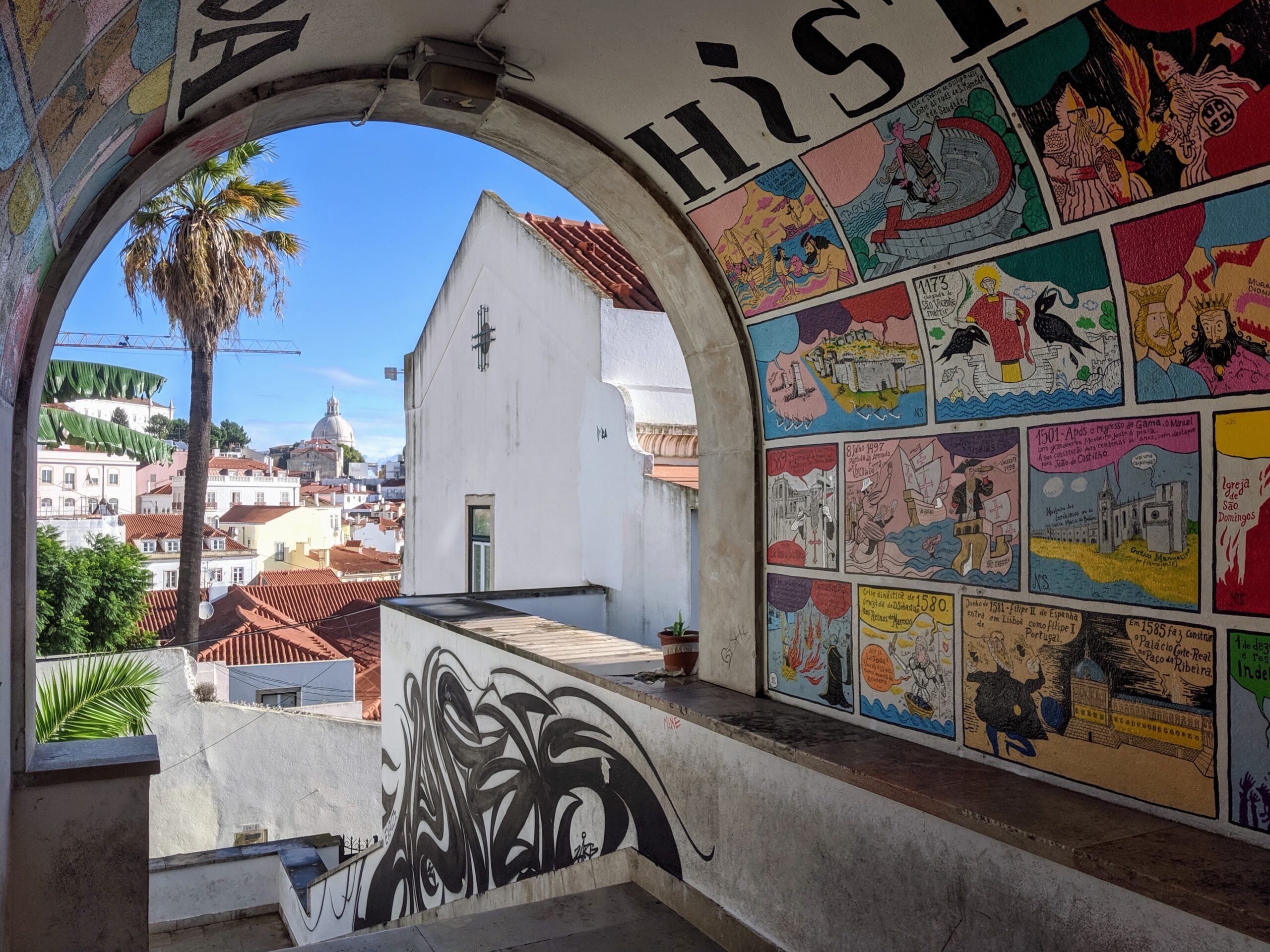
The fresco begins with the founding of the city by the Phoenicians, continues through the Portuguese Inquisition, depicts the terrible earthquake of 1755 and ends with the Carnation Revolution, the coup d’état of April 25, 1974 that restored democracy by overthrowing a dictator.
Vandalized in 2021, students at the Caldas da Rainha School of Art and Design set about restoring it, only to see it damaged once again.
A few meters to the left, on Rua de São Tomé, a work by street artist VIHLS celebrates fado singer Amália Rodrigues. Created in a traditional Portuguese paving style in collaboration with the city’s team of pavement-makers, the work entitled Calçada (sidewalk) also pays tribute to the pavement-makers themselves, who over the years have contributed to the development of a decorative art that has become an integral part of Portugal’s visual identity.
Further to the right, the narrow Beco dos Loios alley is in fact a series of steps linking Rua de São Tomé to Rua de São Vicente, towards the São Vicente de Fora mosteiro.
Mosteiro de São Vicente de Fora
In Romanesque style, the first St. Vincent de Fora monastery, also known as the mosteiro de São Vicente de Fora, was founded in 1147 by Alfonso I, the first Portuguese king. Located outside the city walls(de Fora means “outside the walls”), it is dedicated to Saint Vincent de Saragosse, patron saint of Lisbon. At the time, it was one of the most important monasteries in medieval Portugal. The present building, commissioned around 1582 by King Philip II of Spain, is a reconstruction erected on the site of the former medieval edifice.
Built between 1582 and 1627, themonastery church (Igreja de São Vicente de Fora) features a majestic , austere facade in the Renaissance style later known as Mannerism.
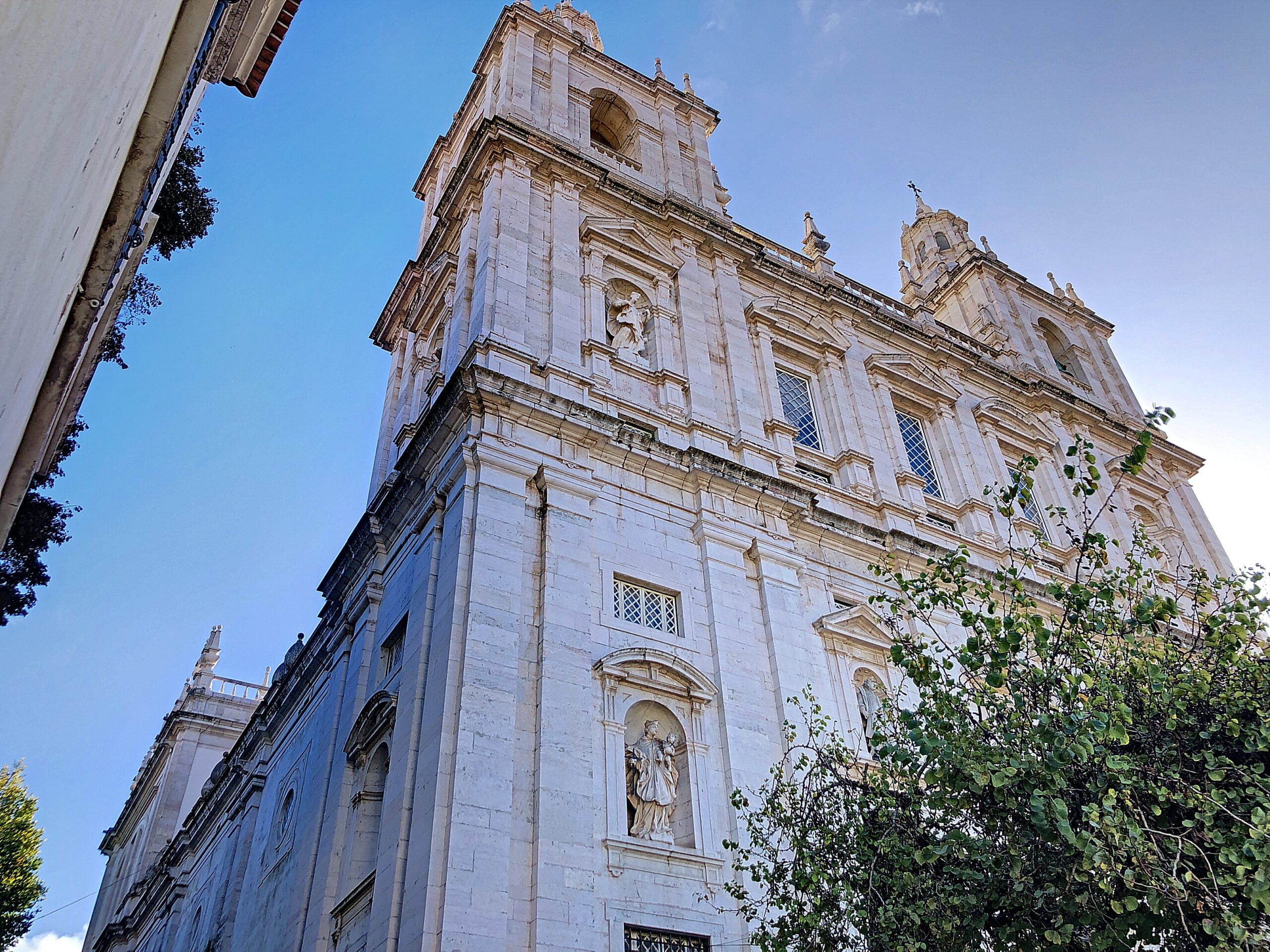
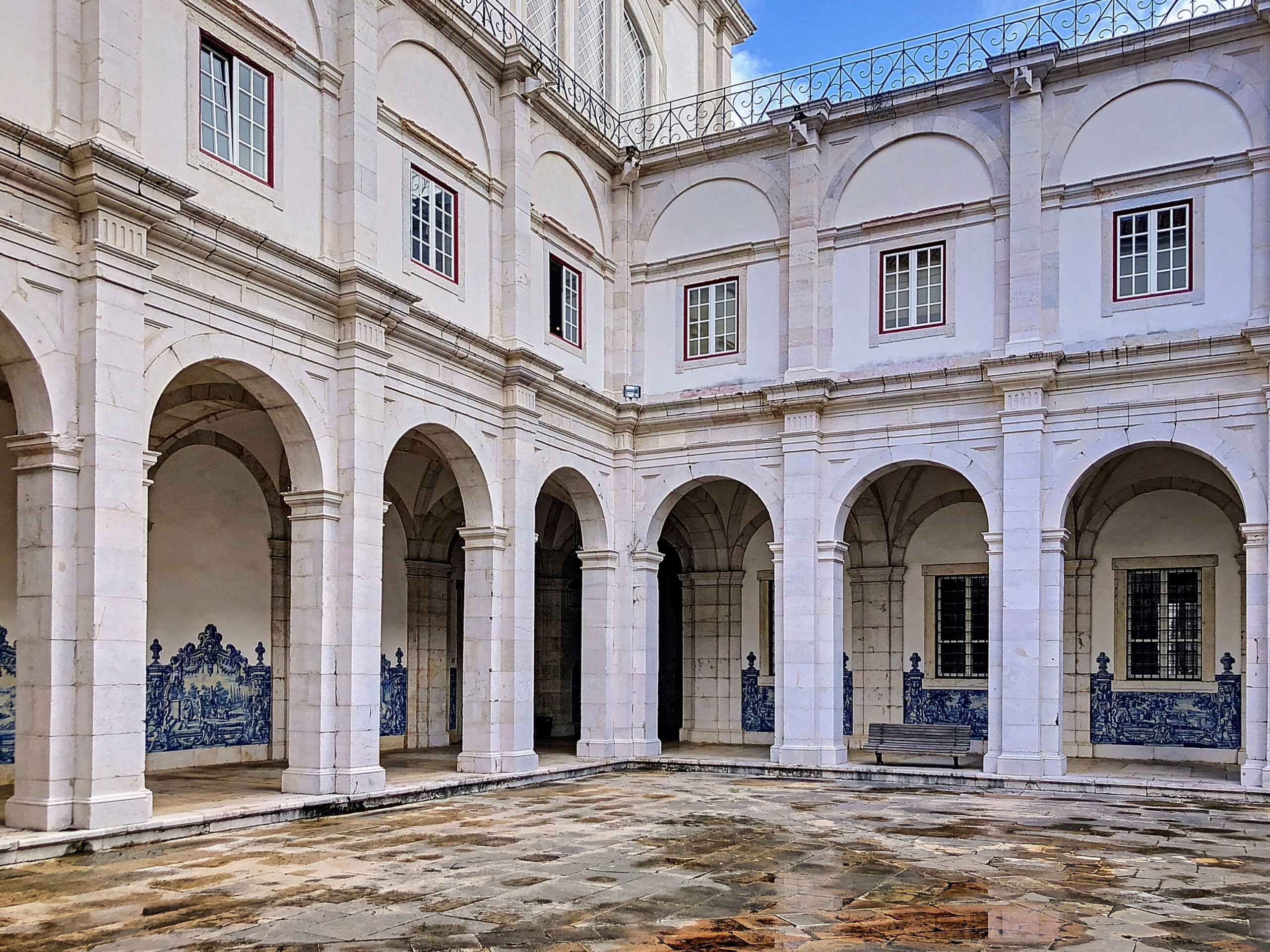
Next to the church, a magnificent Baroque portal gives access to the monastery and its two cloisters.
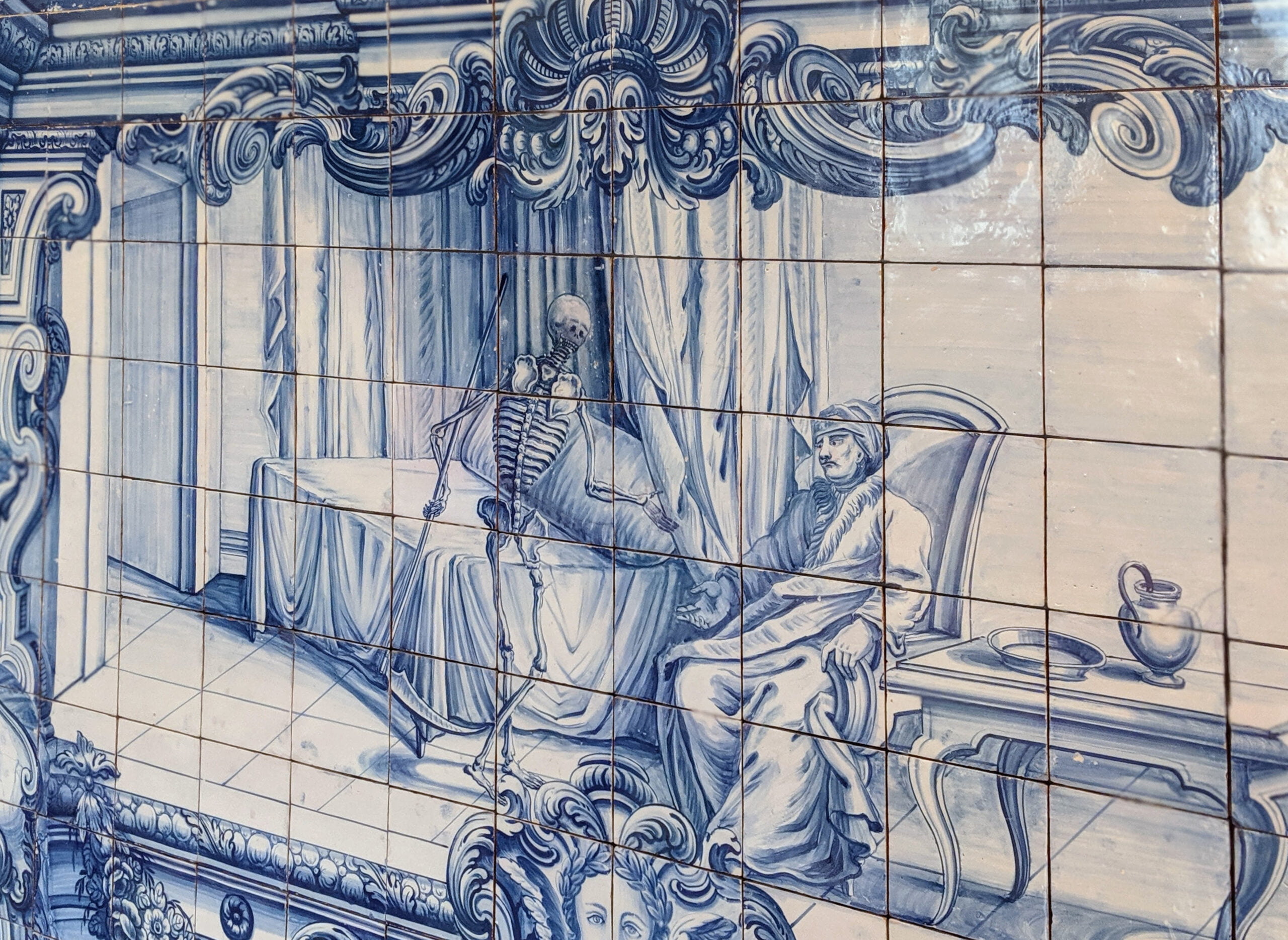
With their pointed arches, the cloisters are an impressive example of Manueline architecture, a Portuguese architectural style characteristic of the era of the Great Discoveries. Their walls are decorated withazulejos depicting various secular scenes (walks, hunting, fishing) inspired by French engravings.
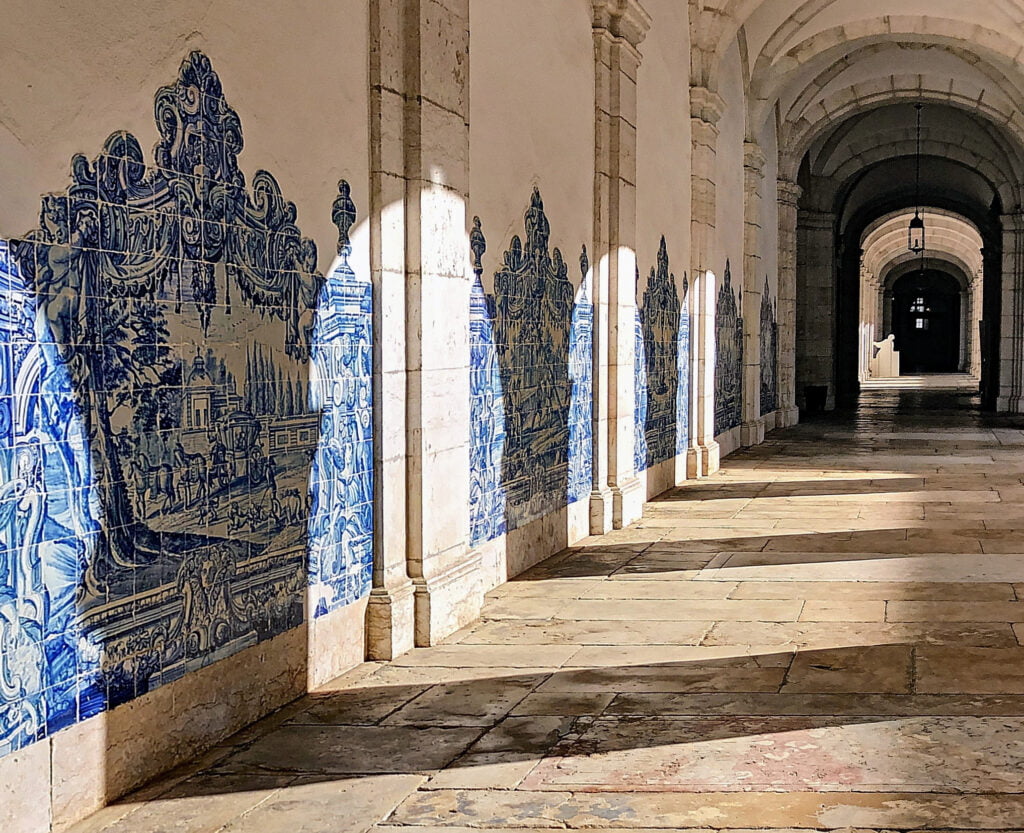
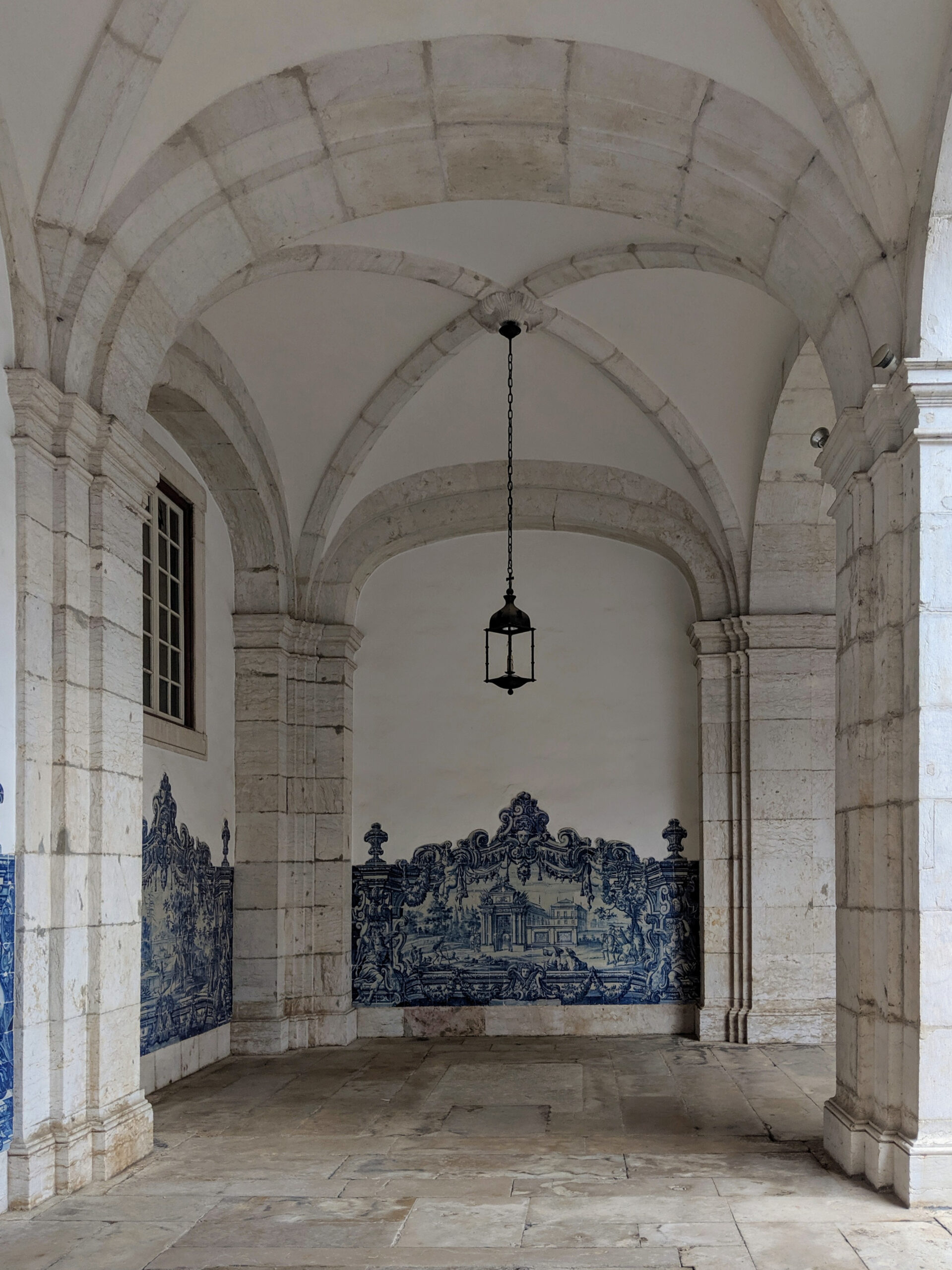
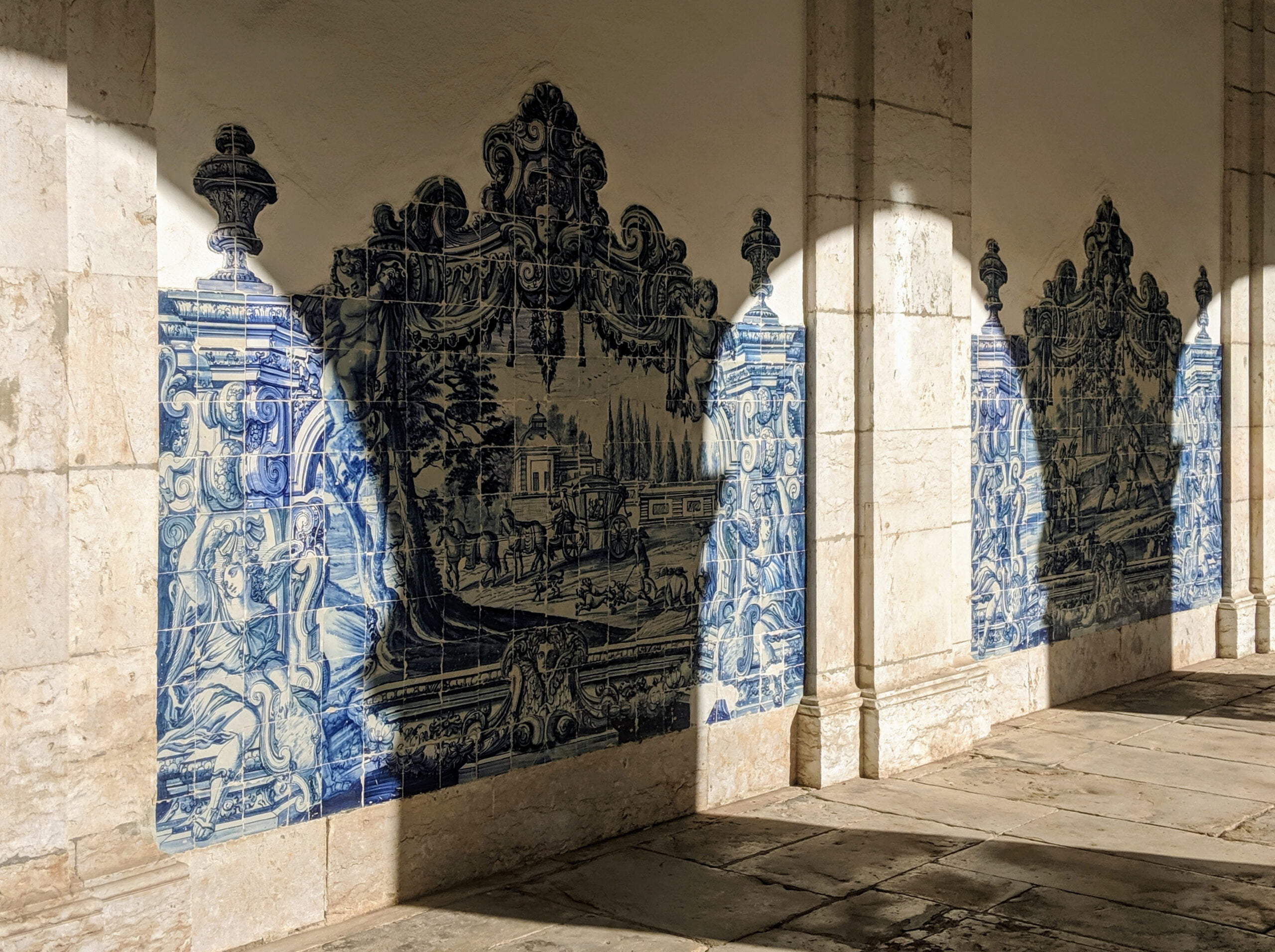
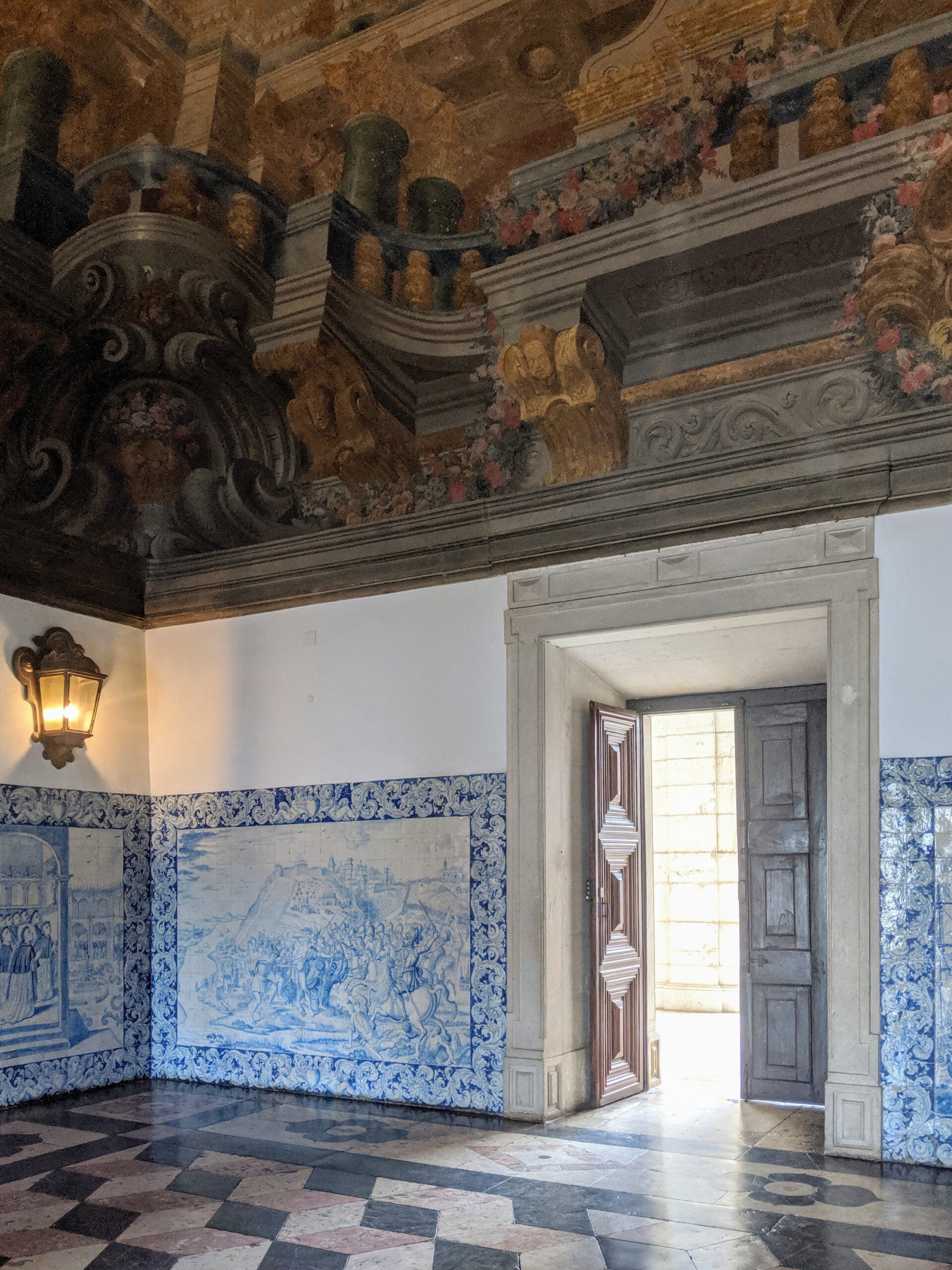
Themonastery ordinance was the former main entrance to the building. This makes it one of the most lavishly decorated areas. It features a trompe-l’œil ceiling painted in 1710 by Vincenzo Baccarelli, walls covered with azulejo panels, one of which recounts the siege of Lisbon in 1147, and a floor covered in pink and grey marble.
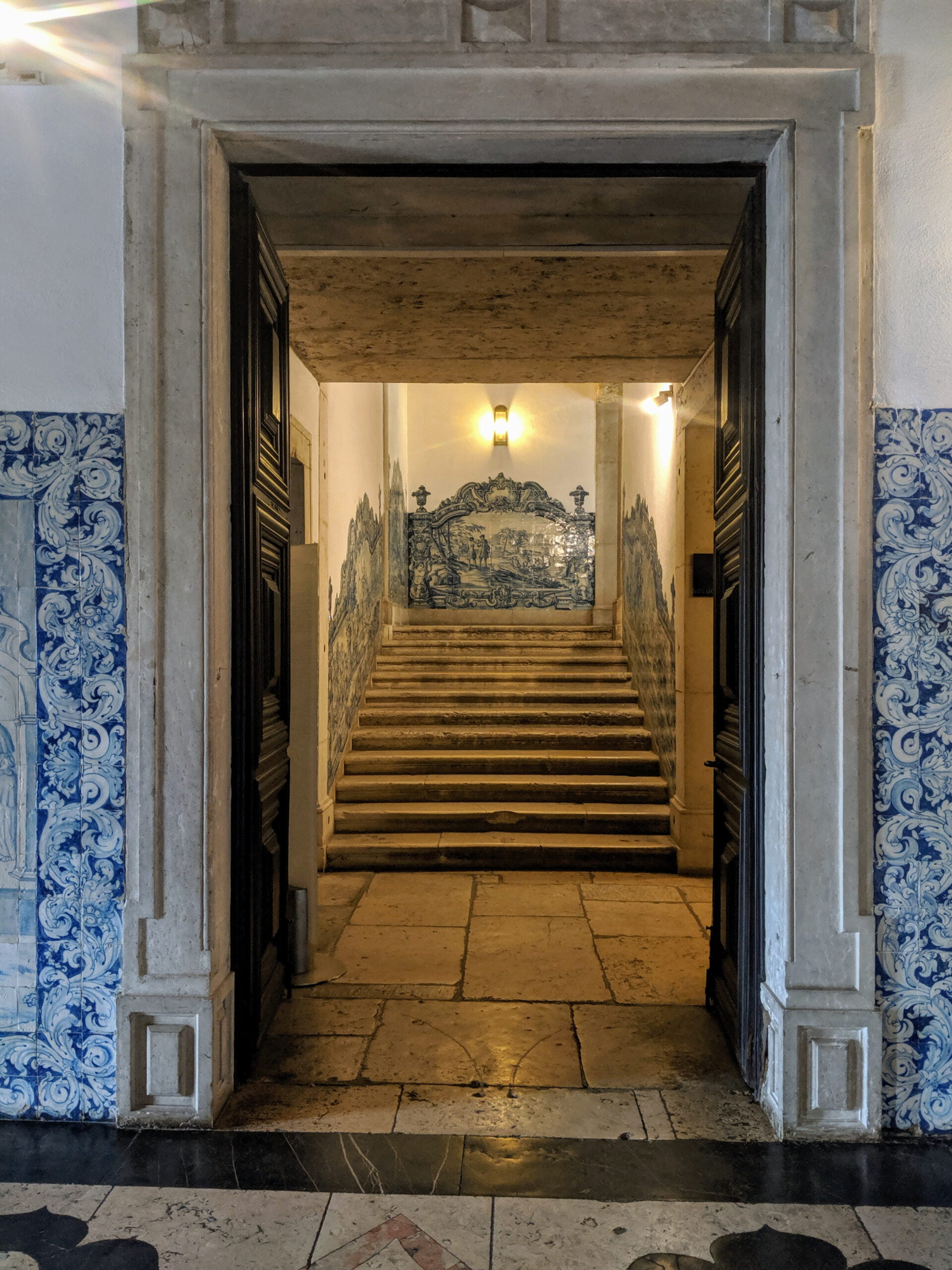
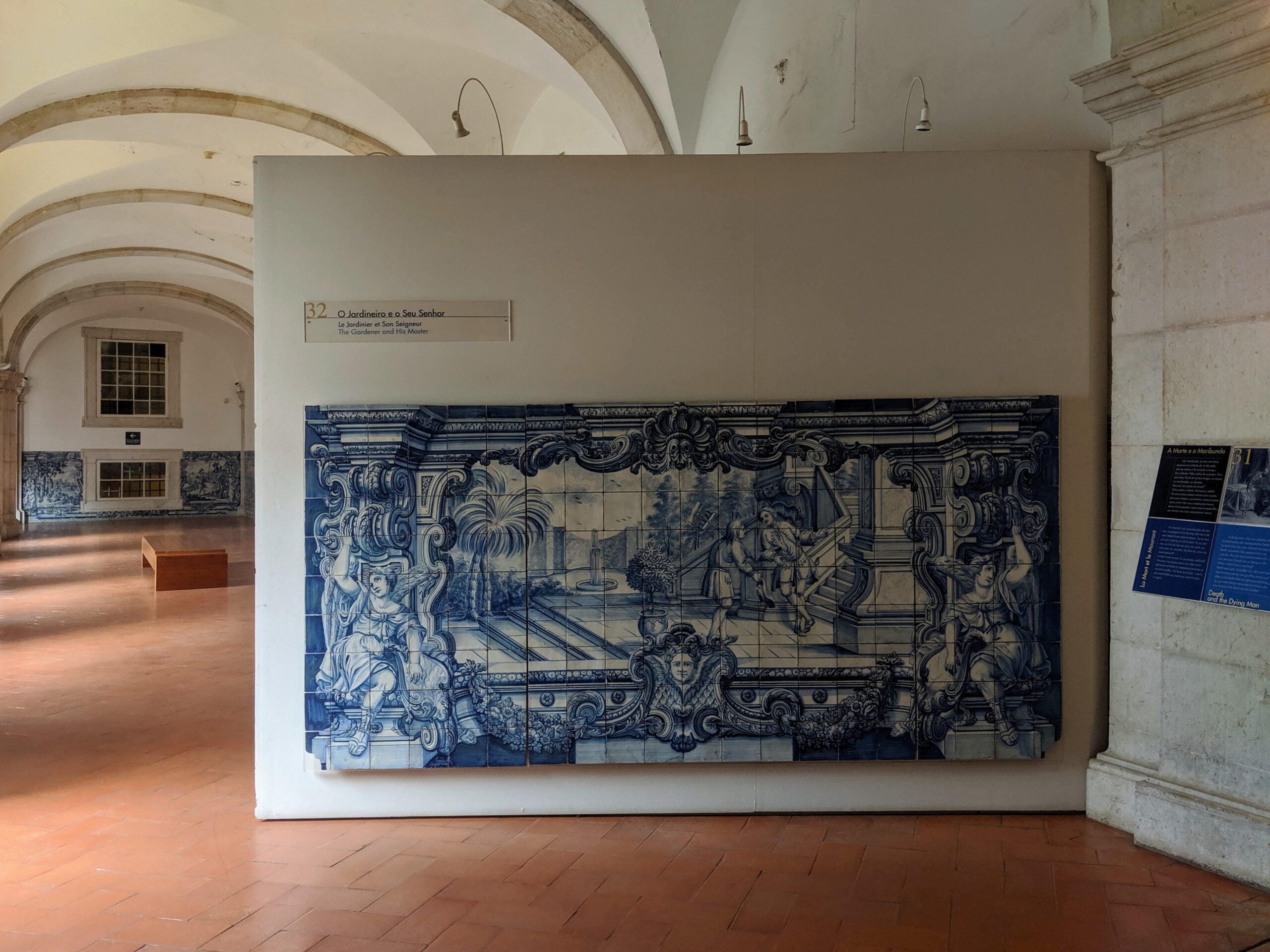
The entrance hall is not the only place to admire azulejos, however, as the monastery boasts some 220 panels comprising over 100,000 azulejos, making it the largest collection of Baroqueazulejos in the world.
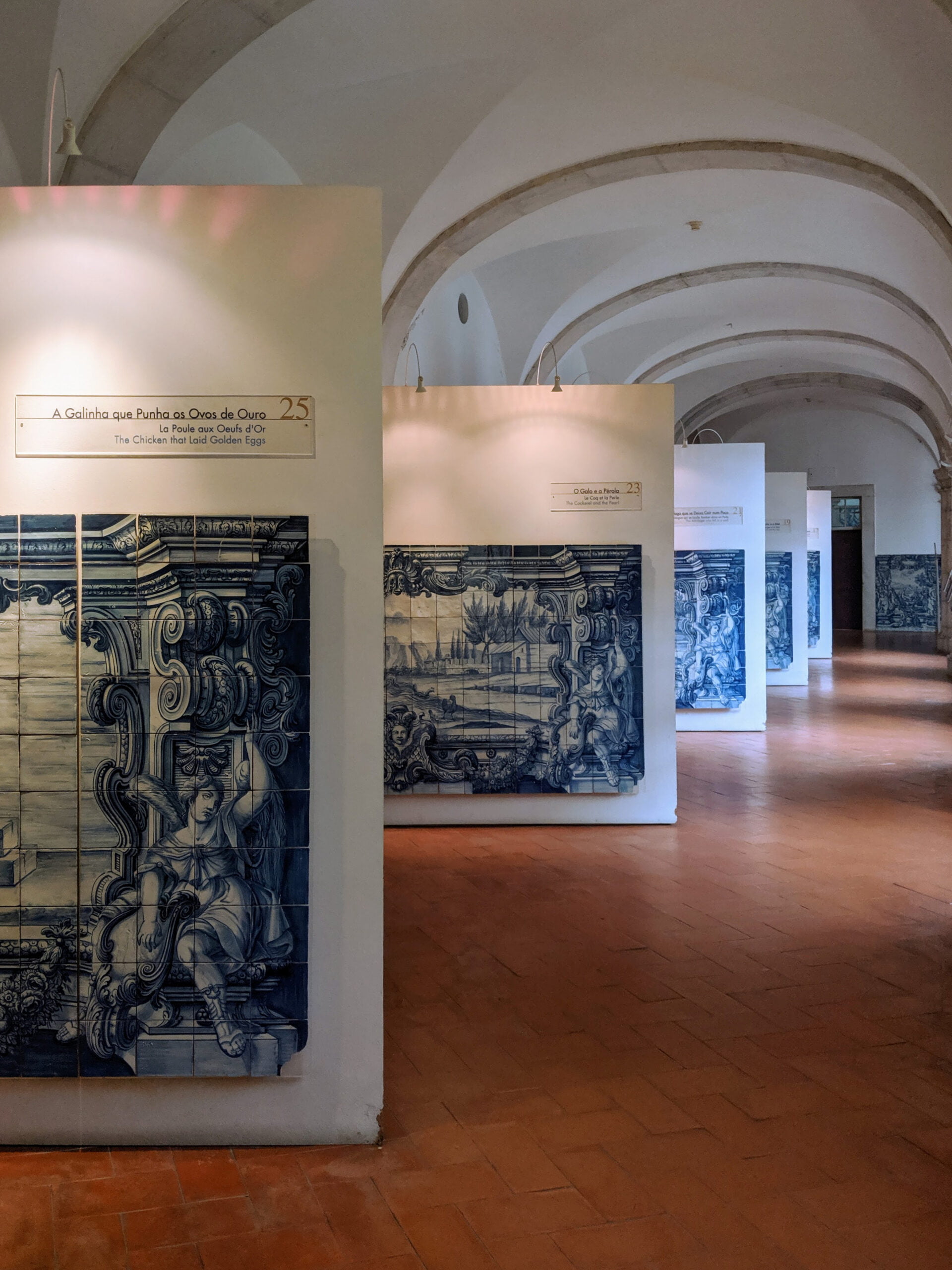
Another unique feature is the representation of La Fontaine’s fables in azulejos! Between the 18th and 20th centuries, the cloister arcades were closed and decorated with 38azulejo panels depicting the fables of Jean de La Fontaine. When the cloisters were reopened, the panels were removed and restored for display in the monastery. To this day, the choice of this theme for the monastery’s decoration remains unknown.
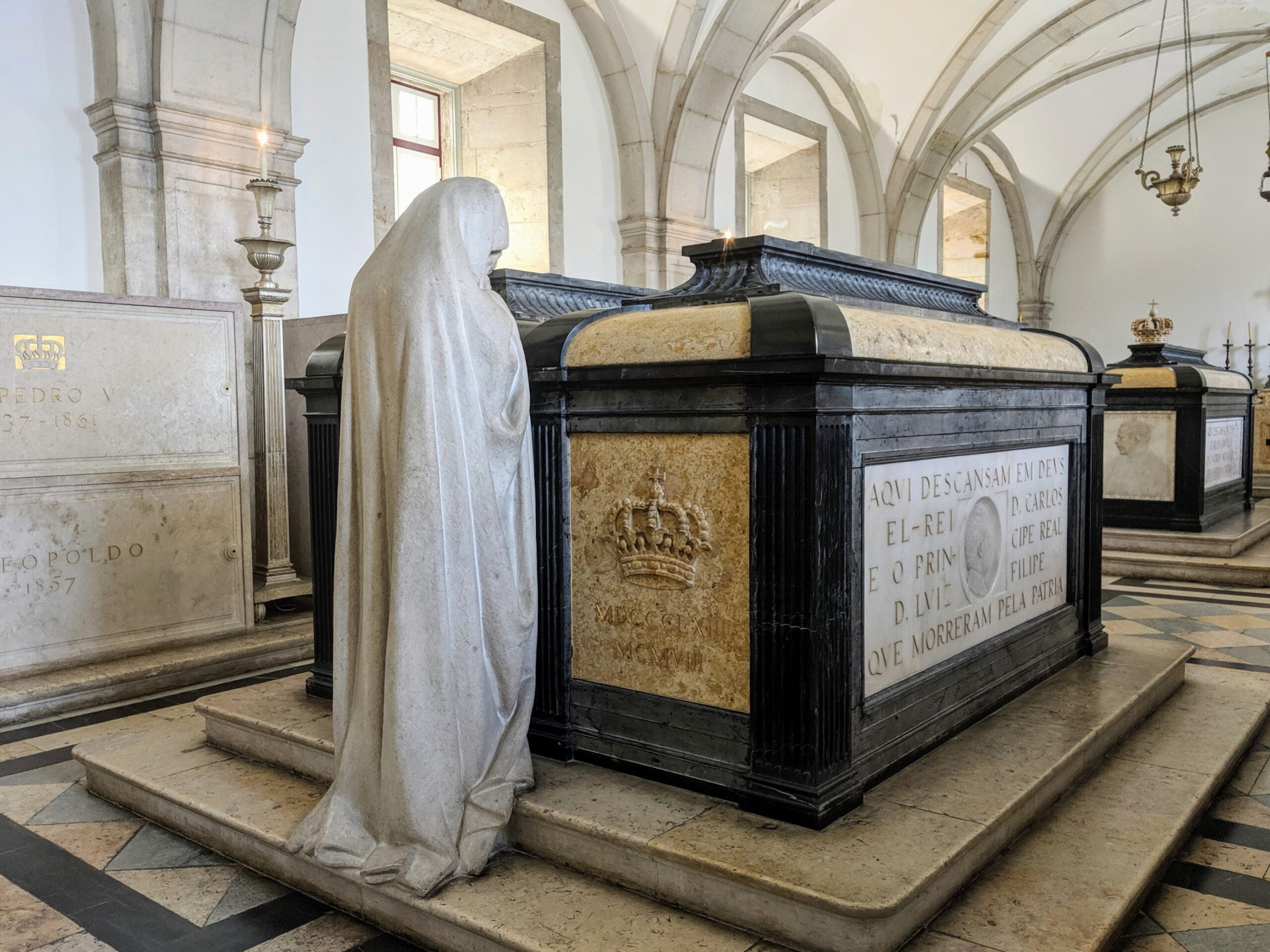
Next to the monastery’s cloisters, the former monks’ refectory was transformed in the 19th century into the Royal Pantheon for the Bragança dynasty. This pantheon houses the remains of 59 members of the second House of Bragança, a dynasty that ruled Portugal from 1640 to 1910.
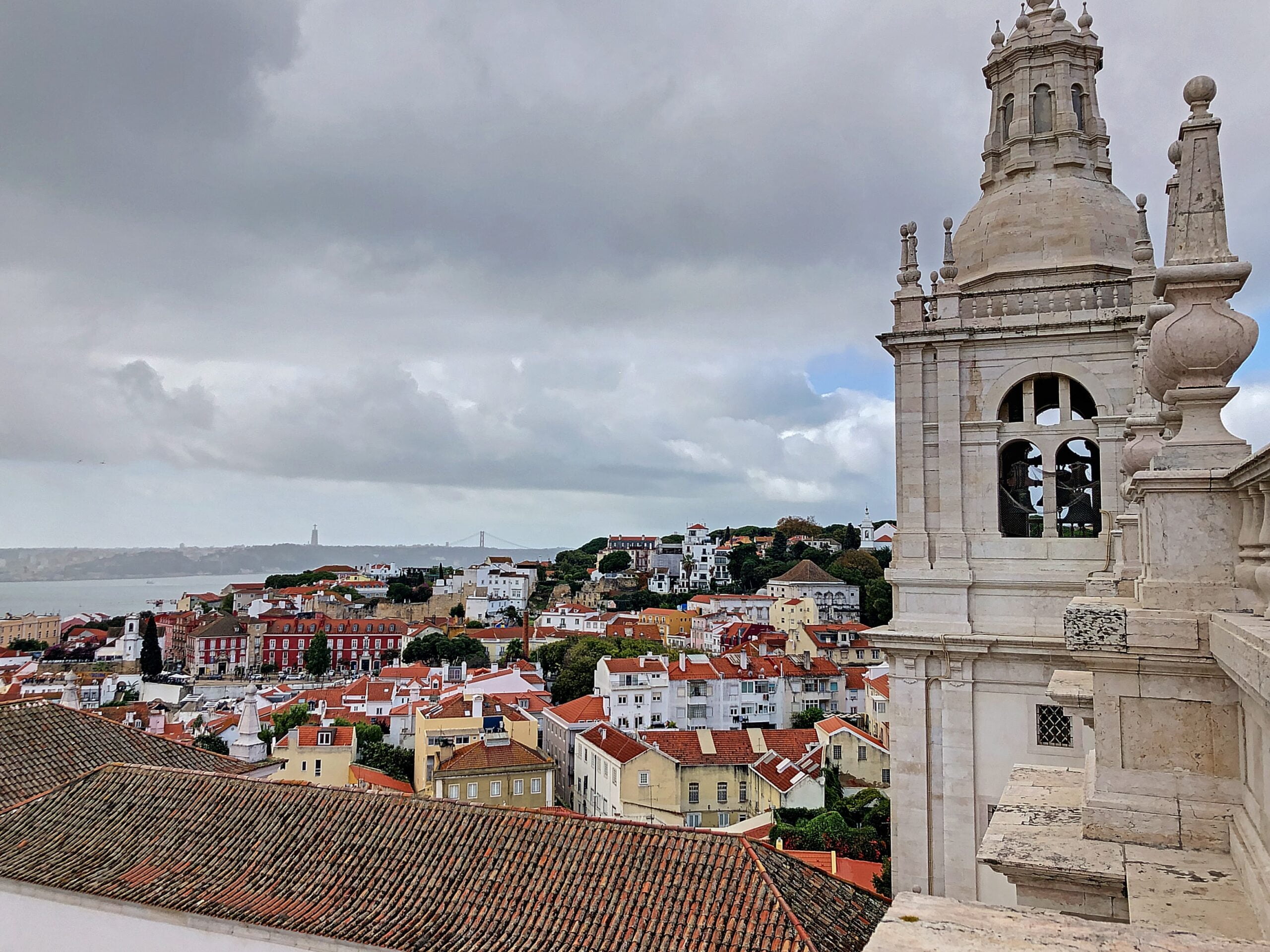
➜ Don’t end your visit without accessing the monastery’s rooftop terrace! Here you’ll discover one of Lisbon’s finest vantage points, with a 360º panoramic view of the city and the Tagus 🤩
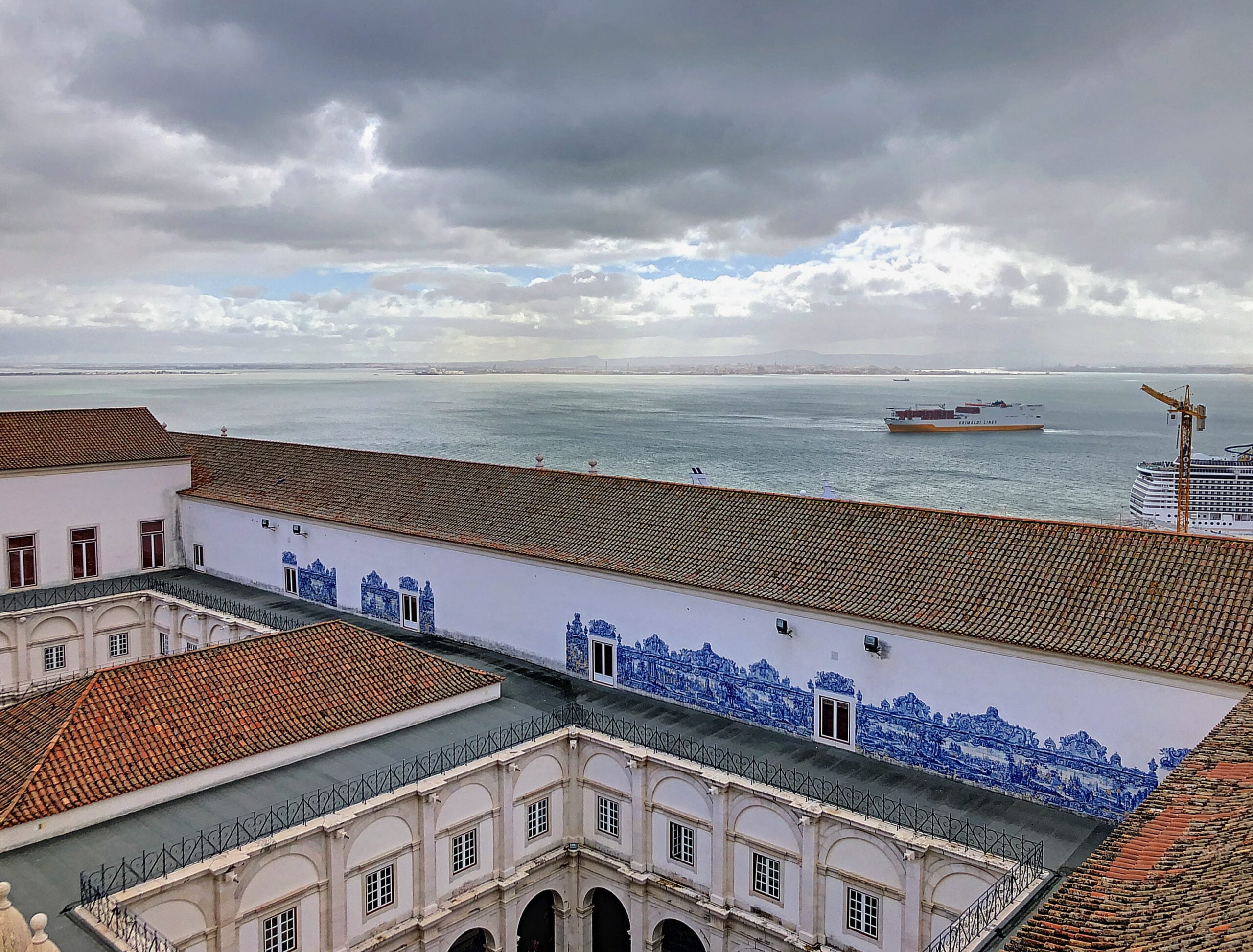
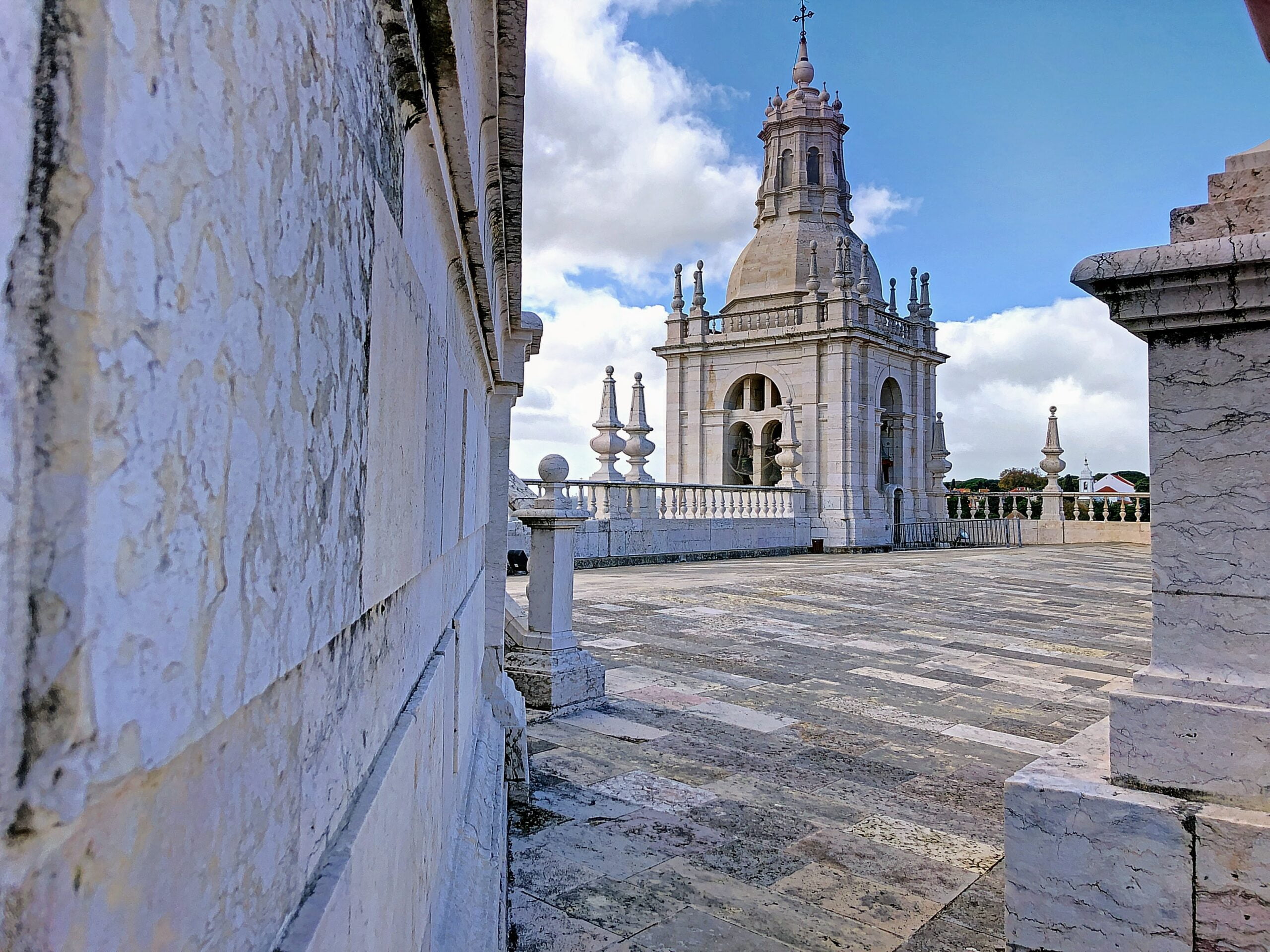
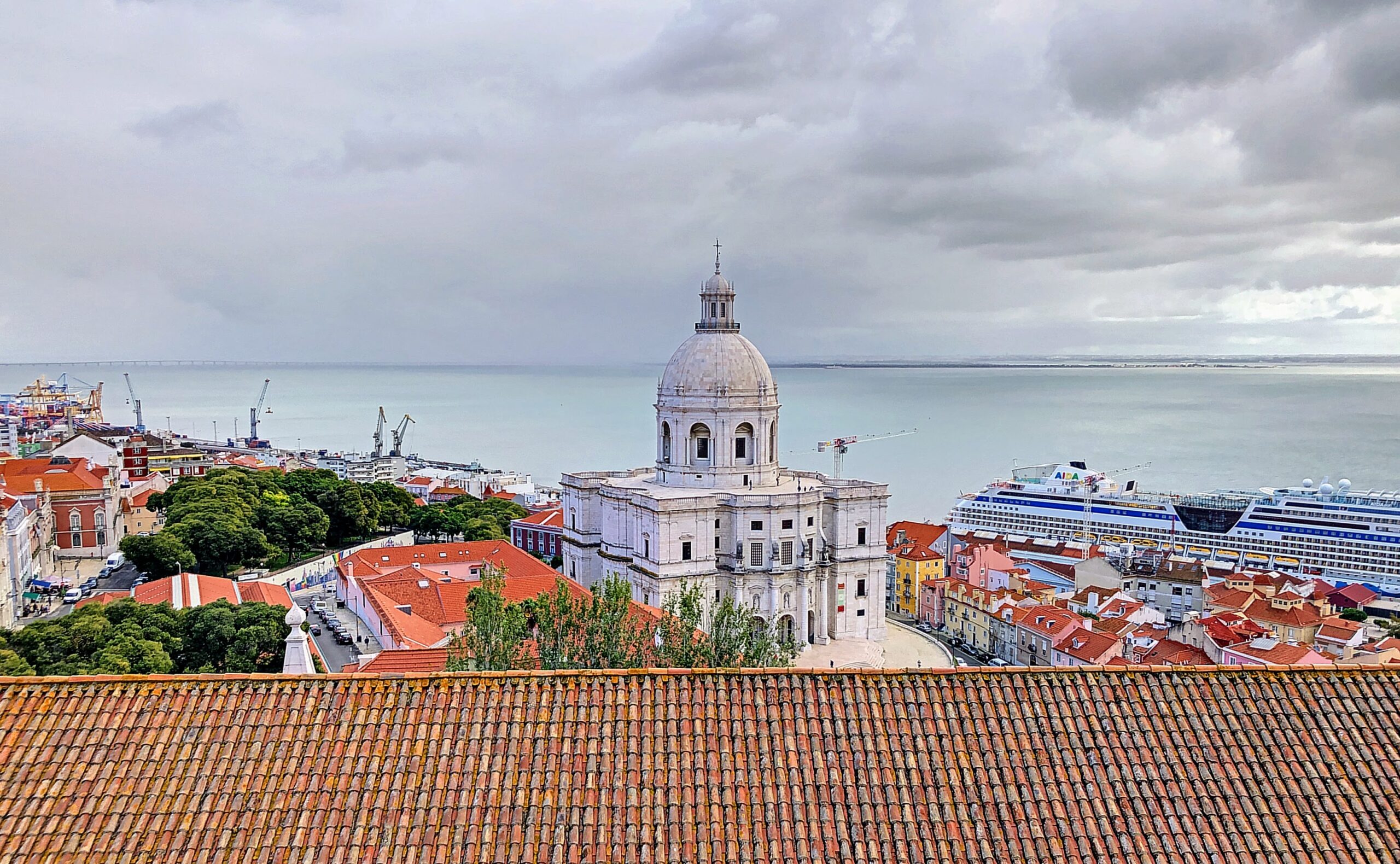
Occupied by Poor Clare nuns until 1834, the building is still used today as a monastery, housing a male religious community. The monastery buildings are nevertheless open to the public.
Good to Know
- Located on Largo de São Vicente, the São Vicente de Fora monastery is easily reached by cab, bus, streetcar or on foot while strolling through the Alfama district.
- The monastery is open daily from 10:00 to 18:00 (last admission at 17:00)
Closed on: January 1, Good Friday, Easter Day, May 1 and December 25. - Tickets cost €5 for adults.
- Several guided tours are available on site. See the website for more information.
Pass under thearco Grande de Cima to descend to the Santa Clara market. In the surrounding area, several houses feature magnificent azulejo facades, including the Casa dell’Arte Club House.
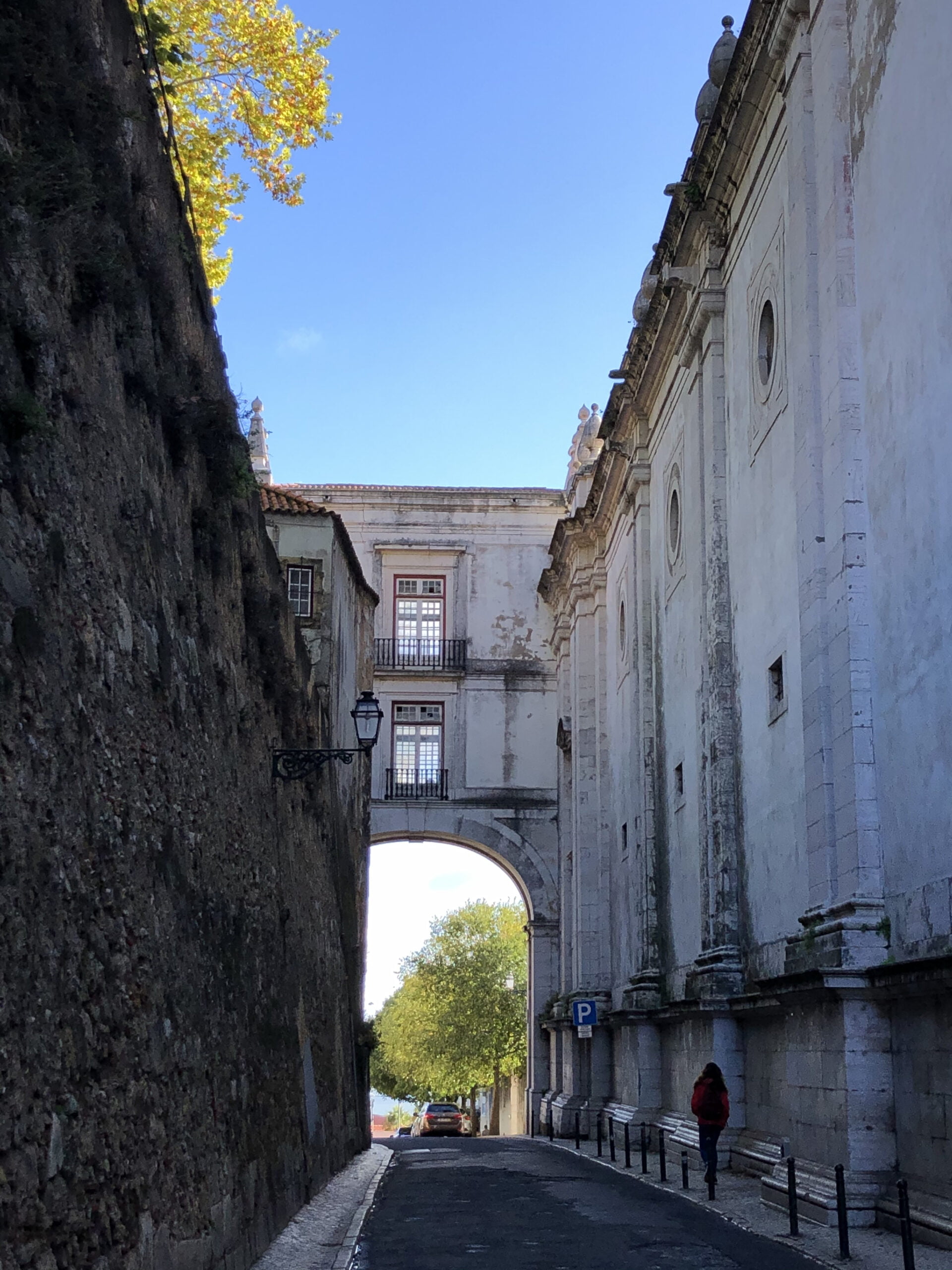
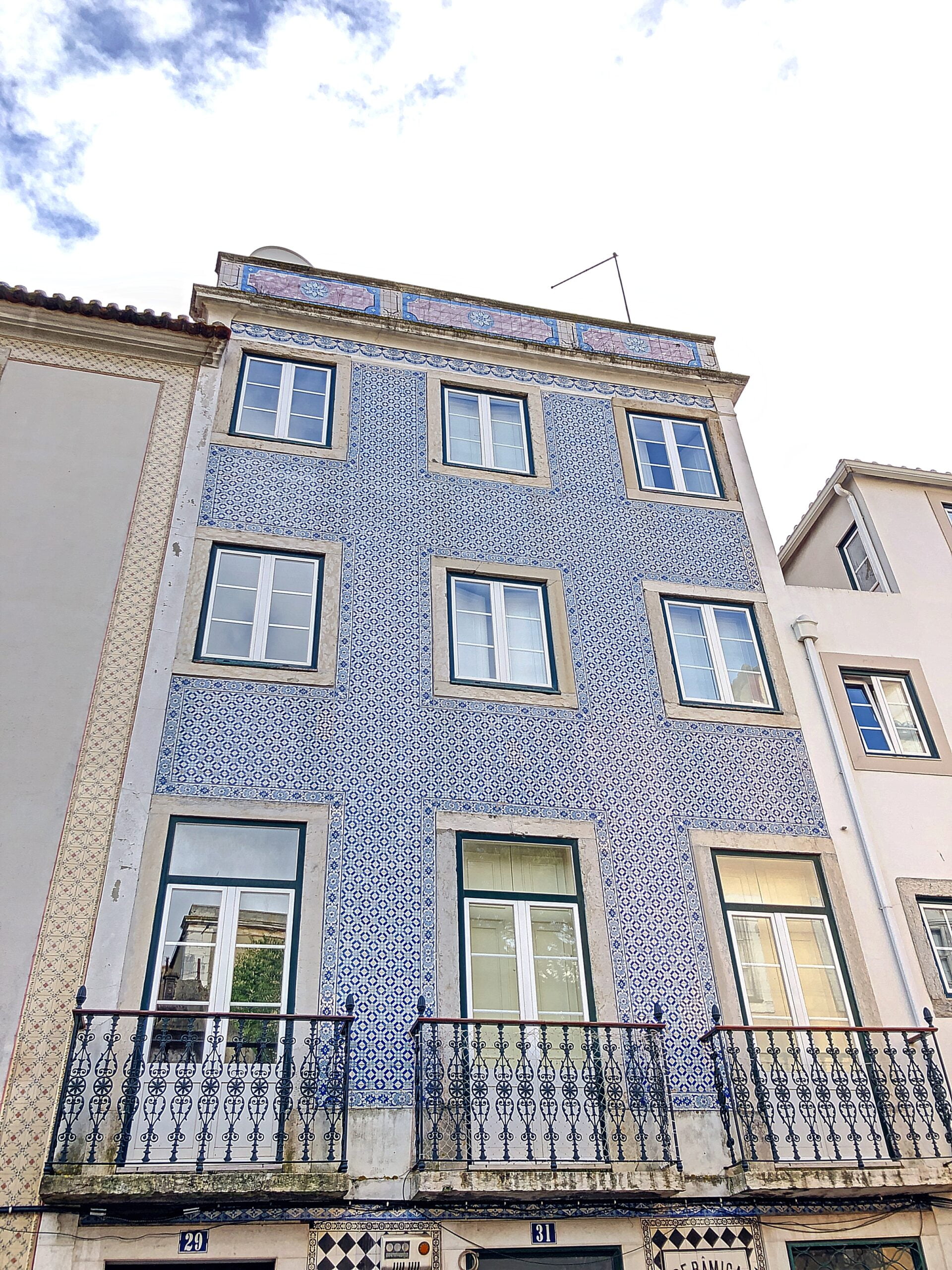
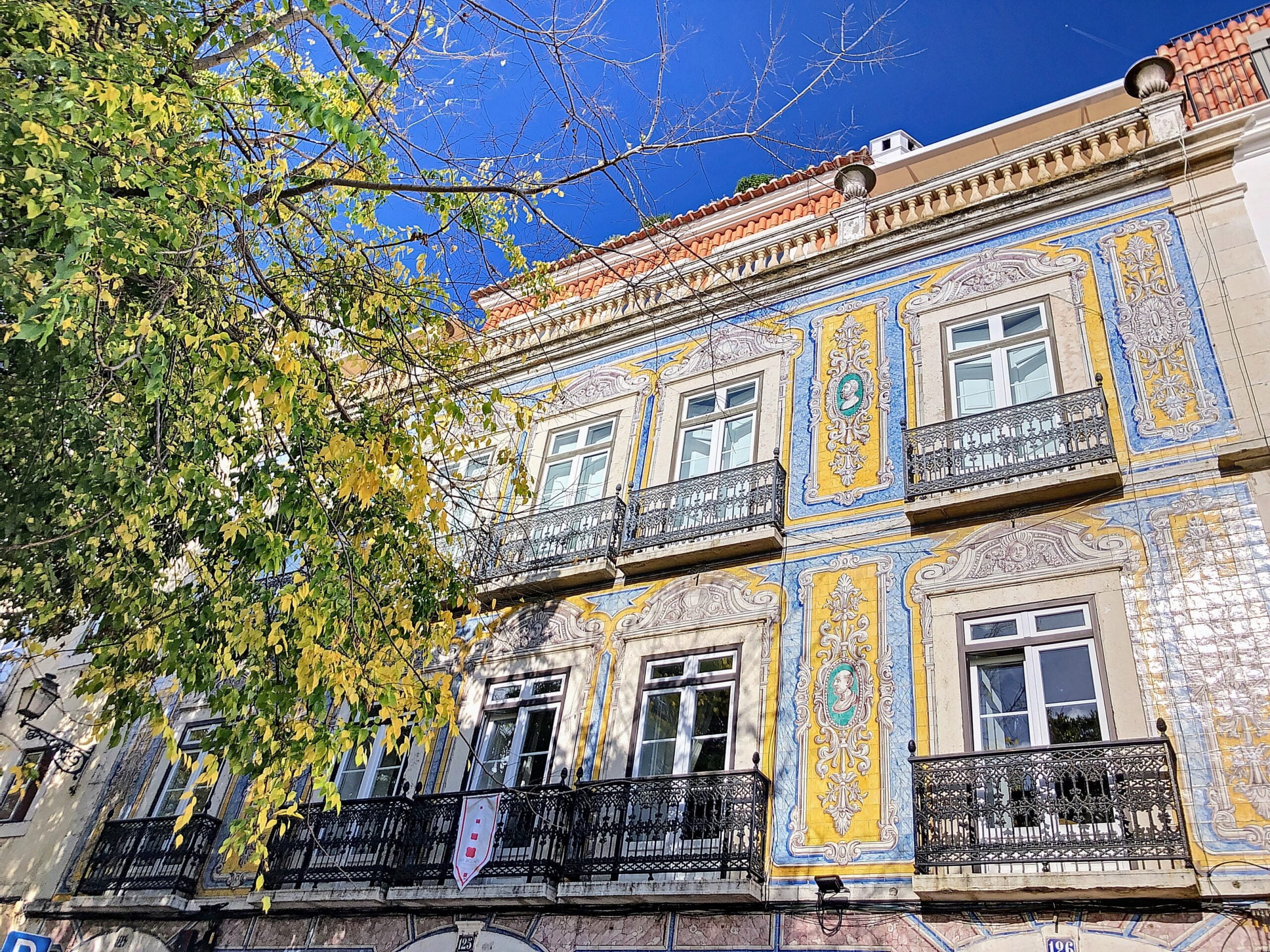
Mercado de Santa Clara
The Santa Clara market (mercado de Santa Clara) is a small covered market located in the Alfama district, between the São Vicente de Fora monastery and the National Pantheon. Inaugurated in 1877, the building has undergone several renovations, but its traditional character has been preserved over the years. Fresh produce, local foods, flowers, handicrafts and souvenirs await tourists and city dwellers at the stalls.
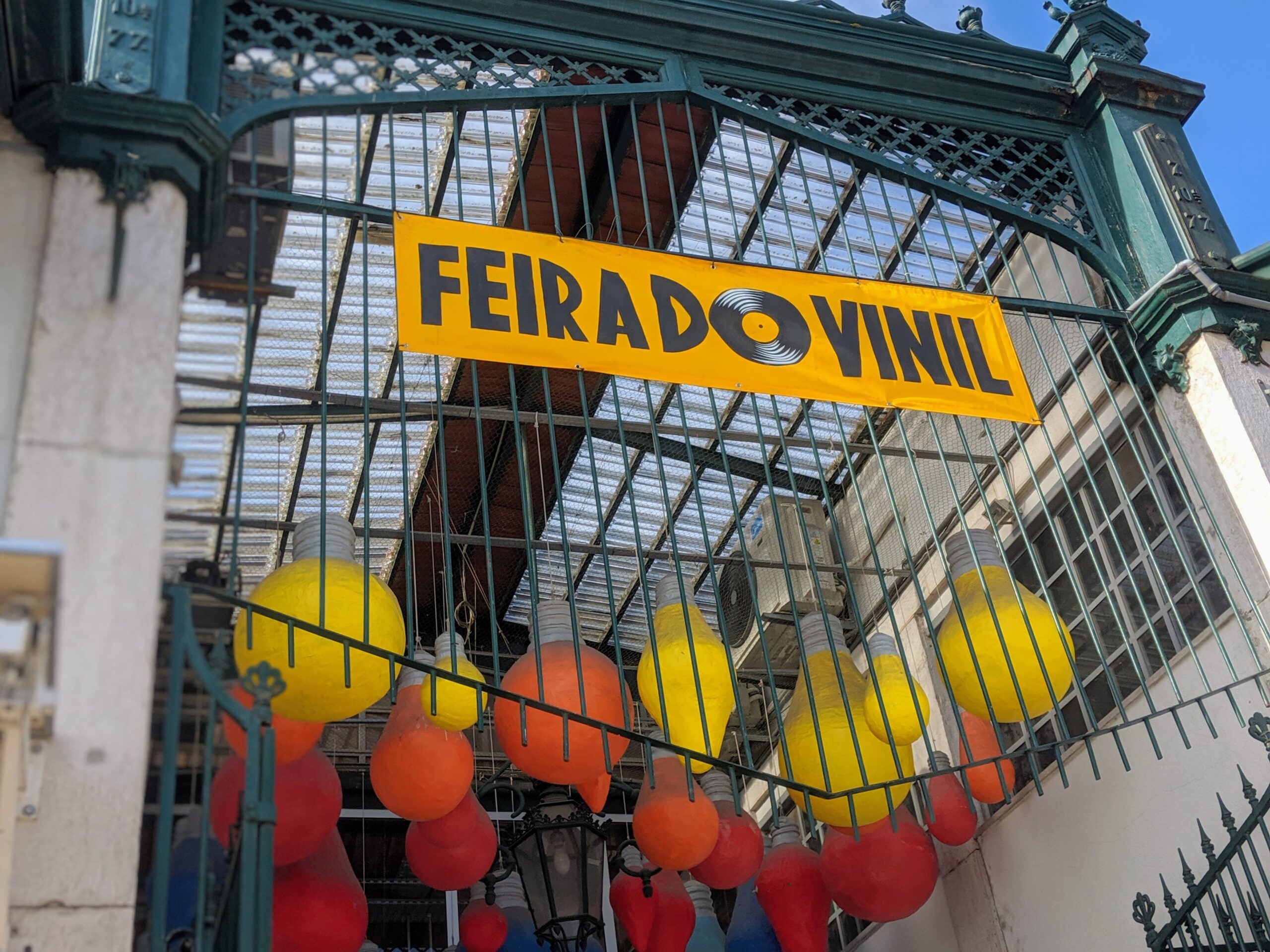
Campo de Santa Clara is also home to a famous flea market, the Feira da Ladra (literally “Thieves’ Market”). Dating back to the 13th century, this is Lisbon’s oldest and best-known market. After various locations, he settled in Campo de Santa Clara in 1903. Here, in a lively, authentic atmosphere, you’ll find everything from second-hand clothes and furniture to books and vinyl records.
Good to Know
- Feira da Ladra is usually held on Tuesdays and Saturdays, from 9am to 6pm.
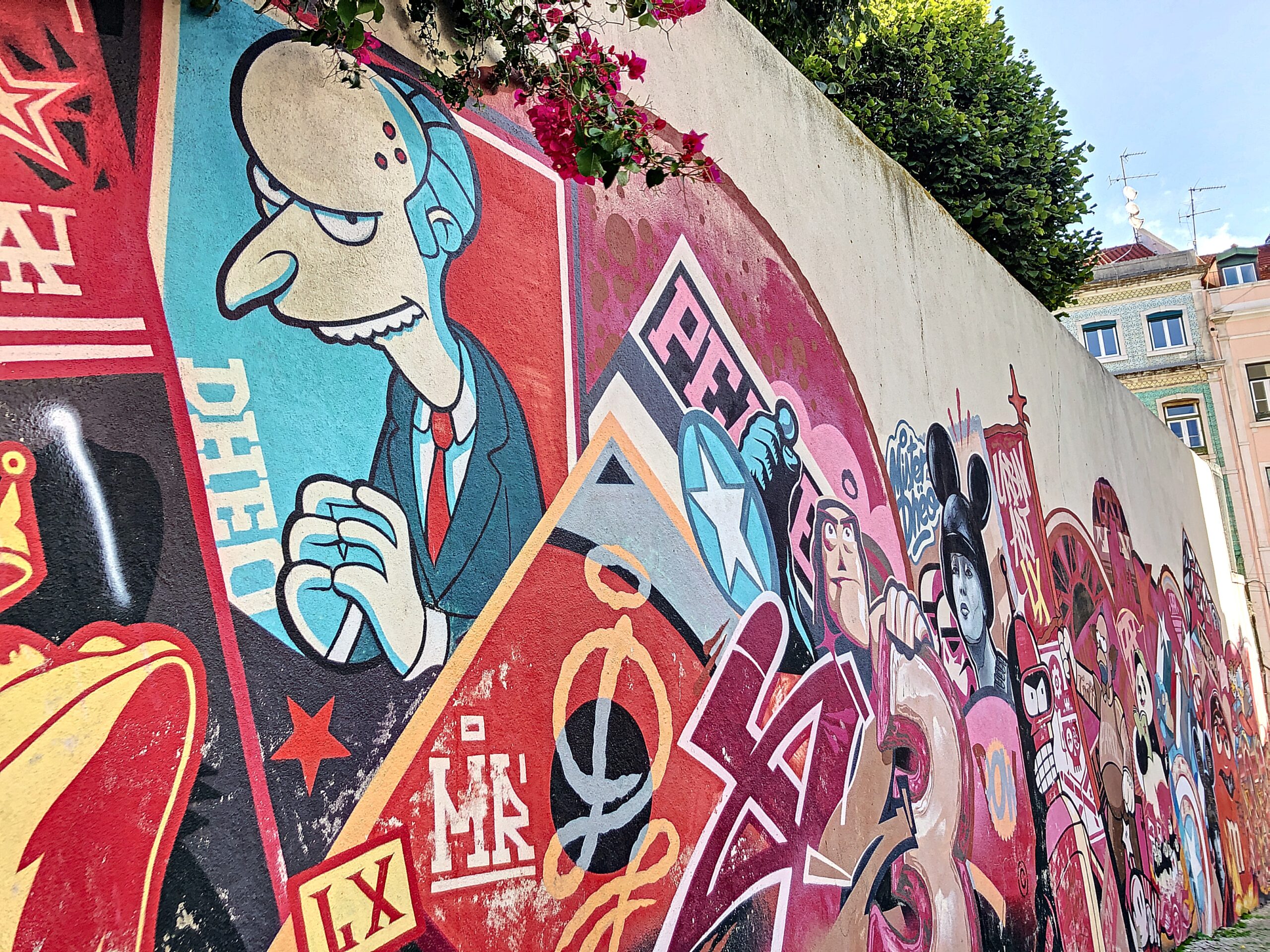
Heading towards the miradouro da Graça, on the Travessa de São Vicente, a mural by Mr Dheo and Pariz One evokes the Carnation Revolution that overthrew Salazar on April 25, 1974. Created in 2014 on the walls of an elementary school, this mural uses elements of popular children’s culture in a satirical way.
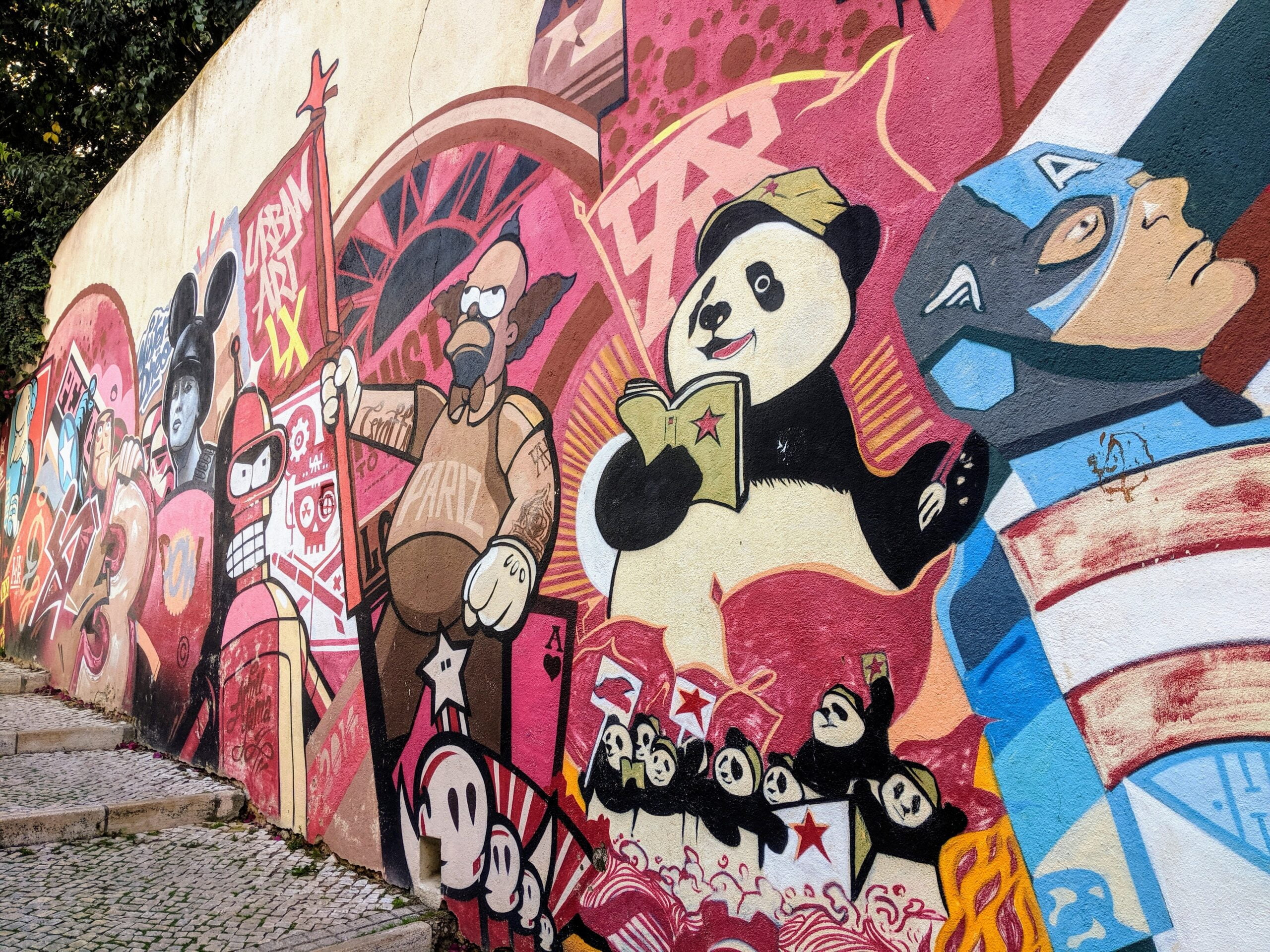
At the end of the street, close to the church of Graça(Igreja da Graça), the Jardim da Graça is a green space offering a beautiful panoramic view of Lisbon.
Igreja Paroquial da Graça
Theparish church of Graça(Igreja Paroquial da Graça) stands at the top of Graça hill, close to the lookout point of the same name. Built in the 13th century, the church has been renovated and enlarged over the centuries, with Baroque additions in the 17th and 18th centuries.
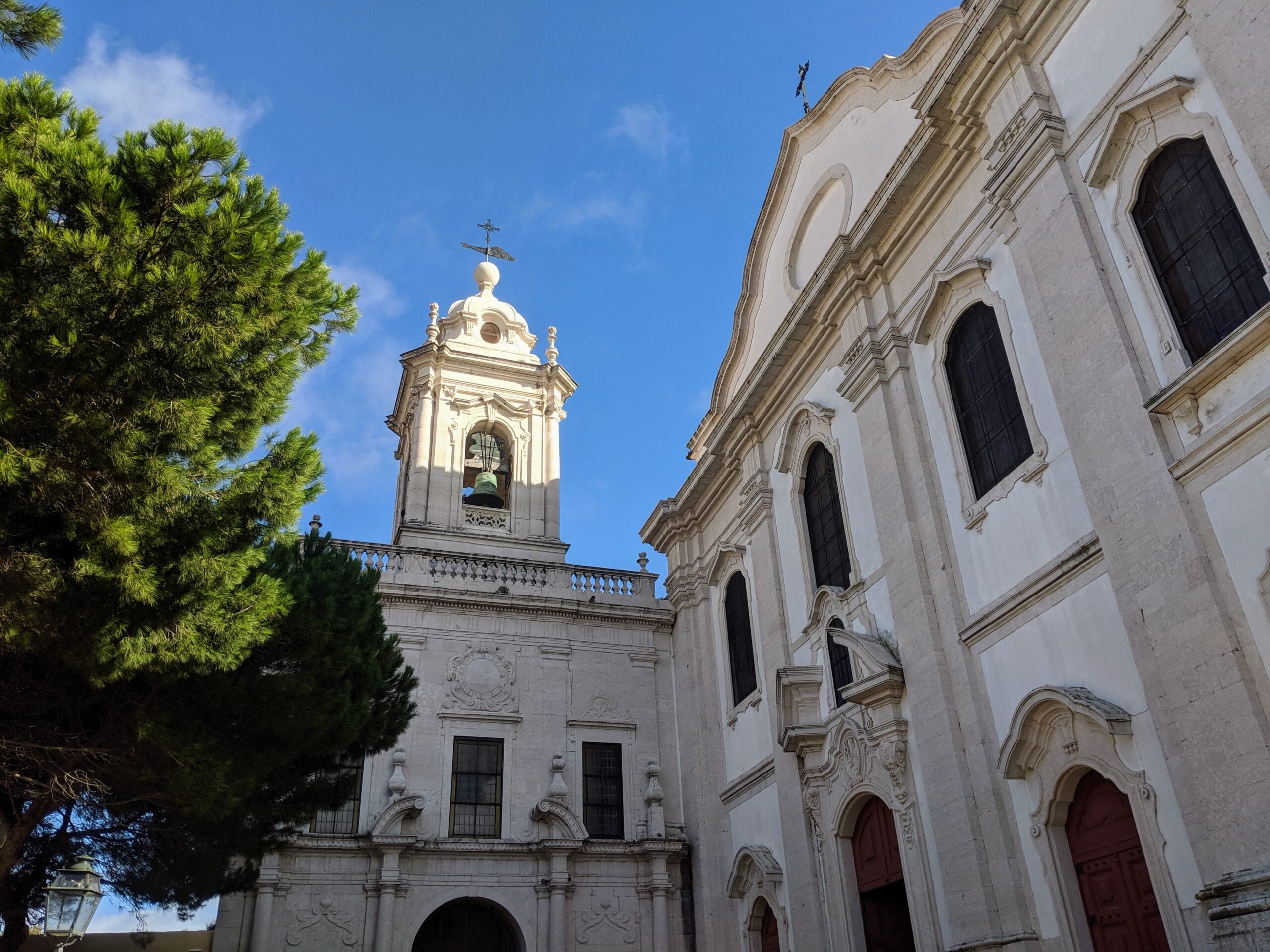
Miradouro da Graça
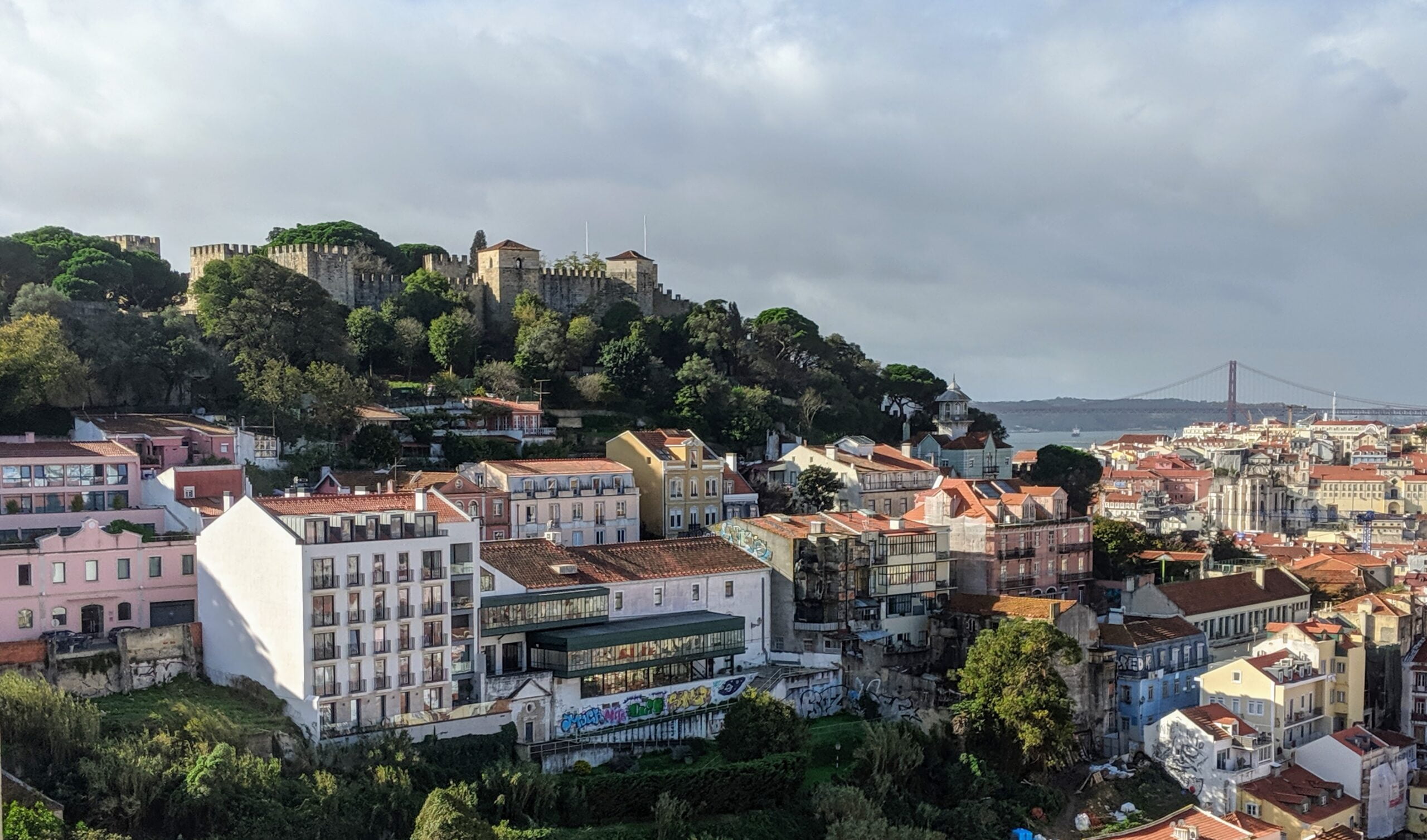
Still hosting masses and religious celebrations, the church is best known to tourists for its observation platform (miradouro da Graça), which offers magnificent panoramic views of São Jorge Castle, the Tagus River and the city skyline.
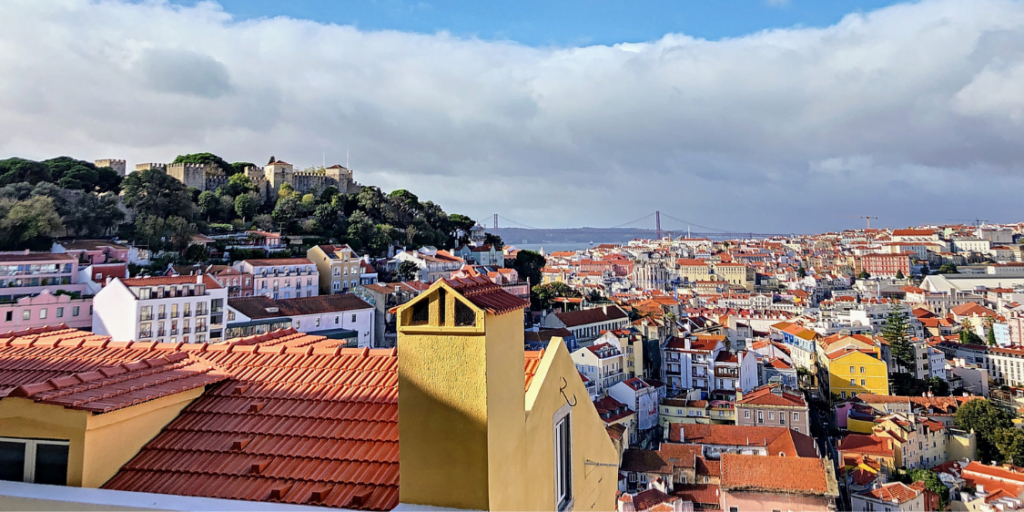
Castelo de São Jorge
A few hundred meters further down, perched on a hill, São Jorge Castle (castelo São Jorge) is an emblematic monument and a must-see Lisbon landmark.
Although its exact origins are unclear, the castle’s history can be traced back toRoman times. Enlarged and reinforced by the Moors in the 9th century and turned into a royal residence and fortress after the Christian reconquest of Lisbon in 1147, the castle combines Moorish, Romanesque and Gothic elements.
➜ Except for fans of medieval military architecture, São Jorge Castle doesn’t hold much interest. The panoramic view, on the other hand, is stunning.
Good to Know
- São Jorge Castle is open daily from 9am to 6pm, and until 9pm from March to October.
- Tickets cost €8.5.
Last stop of the day, the Patio de dom Fradique, located right next to the miradouro do Recolhimento, to discover several works of street art. Mikael Omik’s fresco offers another perspective on São Jorge Castle…