Although off the beaten track, Belém is one of Lisbon’s most visited districts. Here, in a much quieter atmosphere than in the city center, you’ll discover a number of emblematic monuments from the time of the great explorers. A one-day discovery tour along the coast of the Tagus estuary…
Belém in a nutshell
Belém is Lisbon’s royal and noble district. To get there – Belém is located 6 kilometers west of Lisbon – take streetcar 15, which runs along the banks of the Tagus between the gigantic concrete pillars of the famous Ponte de 25 Abril.
Belém takes its name from the Portuguese translation of “Bethlehem”, underlining the close link between Church and State in Portugal for many centuries.
But above all, Belém is known for having been the departure point for numerous expeditions around the world in the 15th and 16th centuries – such as Vasco de Gama, who set out for India in 1497 – as evidenced by several of the district’s emblematic monuments: the Torre de Belém, the Mosteiro dos Jerónimos and the Padrão dos Descobrimentos.
Day trip to Belém
Torre de Belém
Built between 1515 and 1521 by the military architect Francisco de Arruda, who had already designed several fortresses in Morocco, the Torre de Belém is a remarkable example of Manueline military architecture. Theinfluence of Moorish art is evident in the delicate decorations on the arched windows and balconies, as well as on the fluted cupolas of the watchtowers.
At the time of the Great Discoveries, the Tower of Belém served both as a fortress – to protect the mouth of the Tagus and the Hieronymites monastery – and as a departure point for numerous maritime expeditions. Originally situated on a small island in the middle of the Tagus River, the evolution of the river’s course has now placed it on the north bank of the river.
In 1983, the Belem Tower was declared a World Heritage Site by UNESCO.
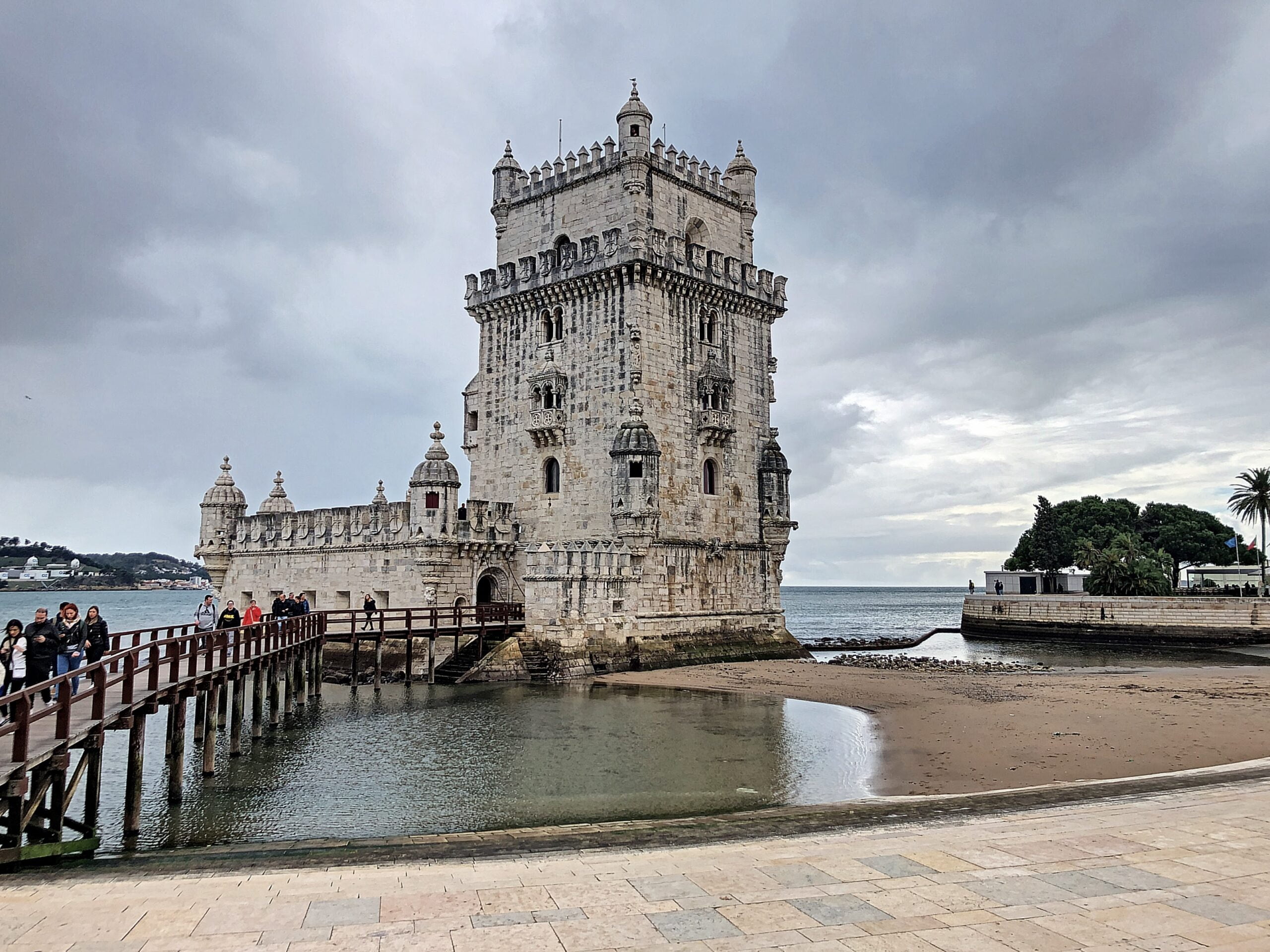
Architecturally, the Belem Tower can be divided into two parts – an irregular hexagonal bastion and a four-storey tower – the whole representing the prow of a caravel.
At 35 metres high, the tower has three floors and a terrace, linked by a small spiral staircase. The commander’s apartments were on the second floor.
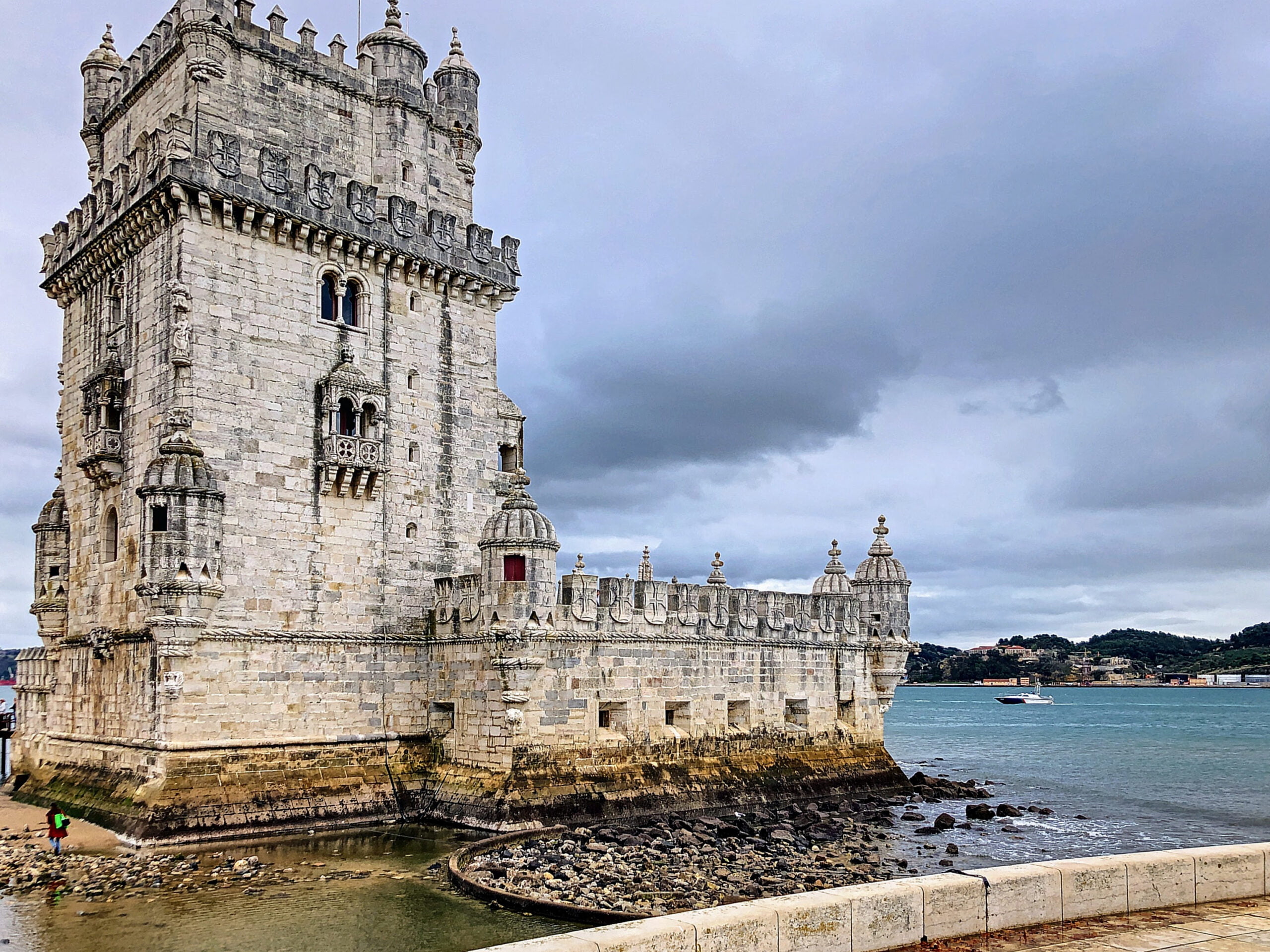
On the first floor, a vaulted room with openings in the walls 3.5 m thick for the installation of 17 large-calibre cannons, and ditches where prisoners were thrown.
On the Tower’s west facade, a funny rhinoceros-shaped gargoyle reminds us that the first rhinoceros to set foot on Portuguese soil came from India in 1513.
- The Belem Tower is open daily from 10am to 5pm from October to April, and from 10am to 6:30pm from May to September.
- The building is closed on Mondays, January1, Easter Sunday, May1 and December 25.
- Admission costs €6 per adult. Admission is free for children under 12.
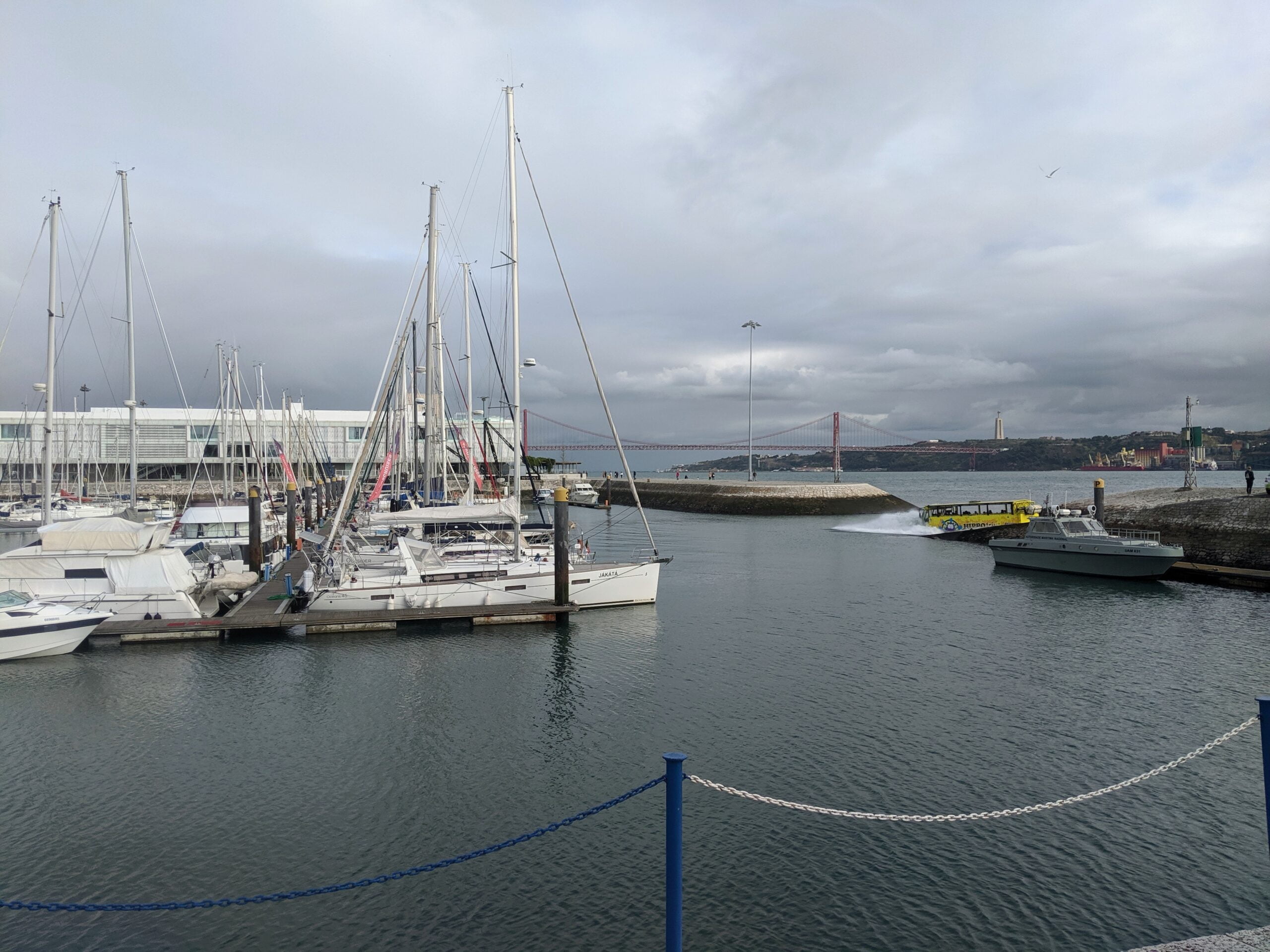
We lodge on the banks of the Tagus towards the Monument of the Discoveries. Pass the Bom Sucesso and Doca de Belém marinas, famous for their lively promenades lined with bars and restaurants.
Padrão dos Descobrimentos
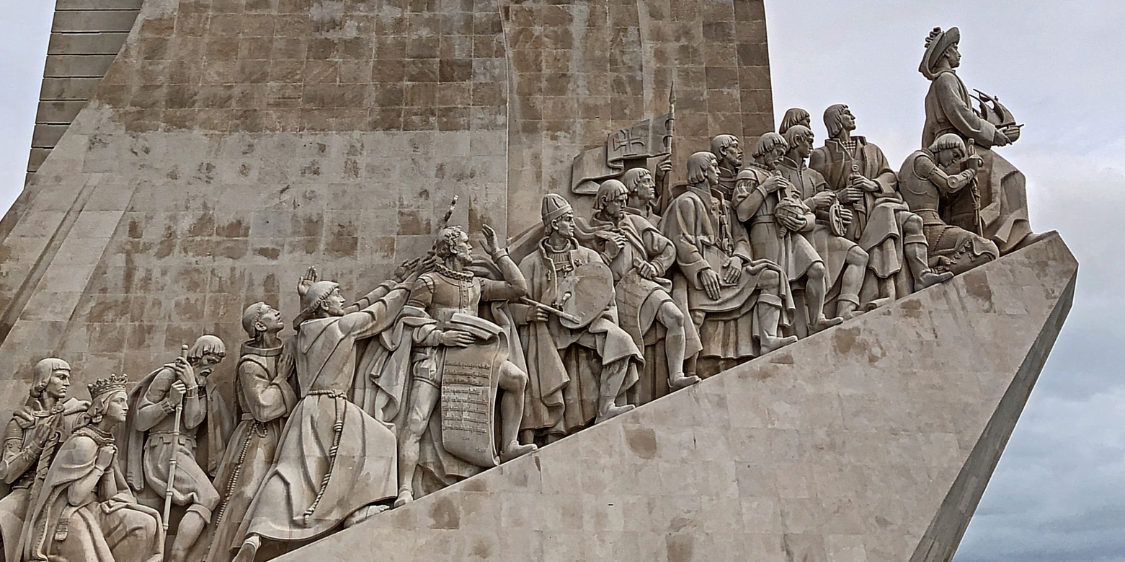
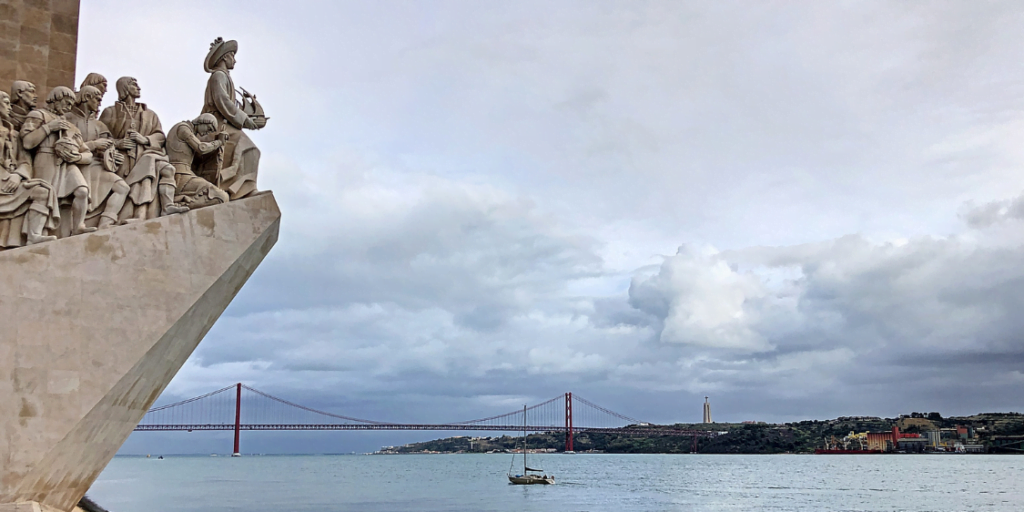
Belém‘s most famous contemporary monument, the Padrão dos Descobrimentos – or Monument to the Discoveries – is a vertical slab of concrete 52 metres high, 20 metres wide and 40 metres long.
Its name alludes to the padrões – literally “stone pillars surmounted by a cross or the arms of Portugal” – used by Portuguese navigators on their expeditions to mark the locations they discovered.
Designed in less than eight months for the Exposition du Monde Portugais in 1940, the monument was first built from perishable materials – wood and plaster – and then destroyed. It was rebuilt in 1960 to celebrate the 500th anniversary of the death of Henry the Navigator, who, despite never having sailed, financed a number of expeditions during the Age of Discovery.
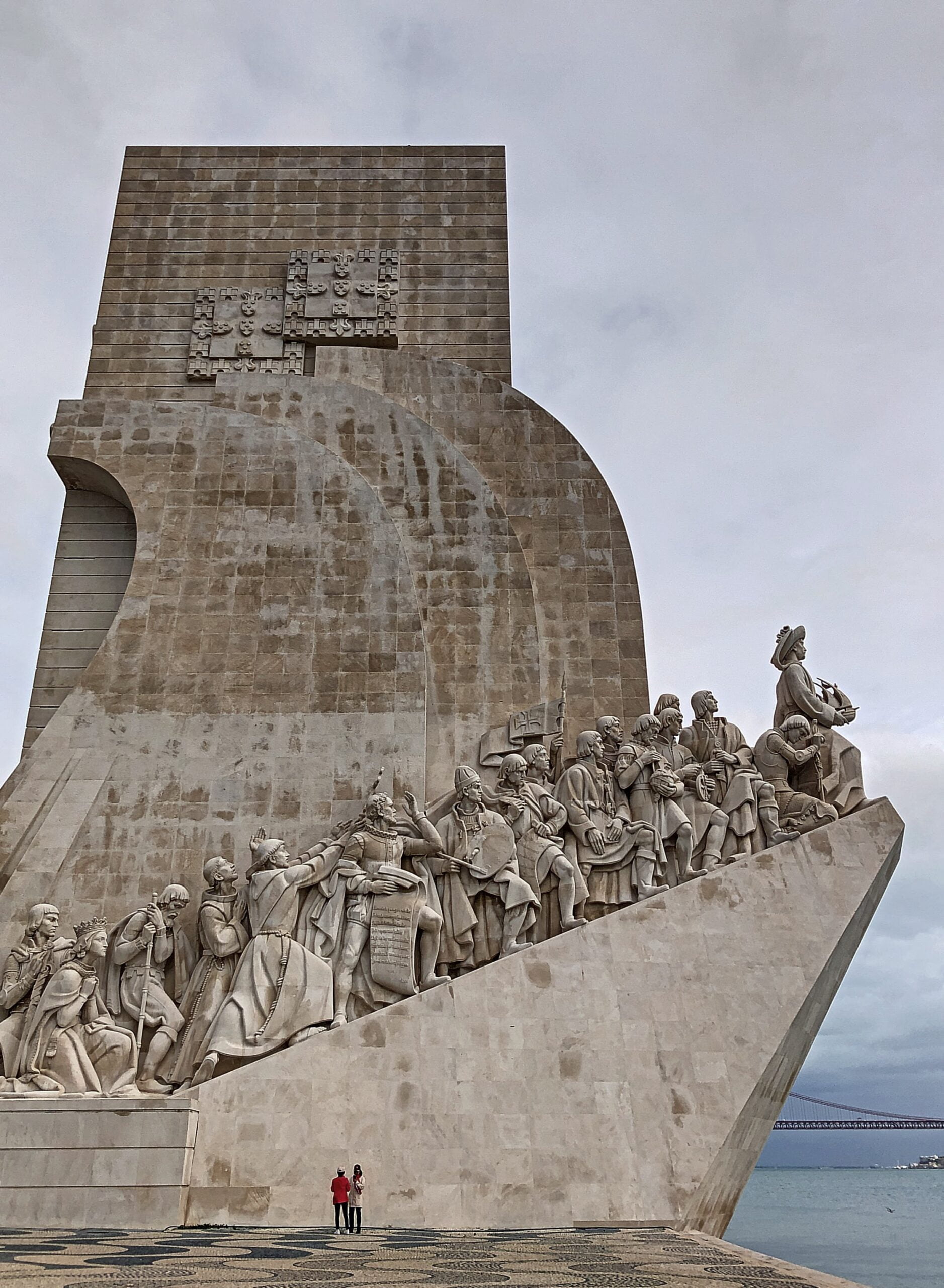
The slab is carved in the shape of a caravel’s prow, with a group of statues representing Henry the Navigator, followed by great explorers such as Vasco de Gama, Magellan and Camoes.
In front of the monument, you walk on a 50-metre marble compass rose with a planisphere at its center, showing the routes of the various explorers.
An elevator provides access to an observation platform at the top of the monument. Although the space is rather limited, the view over the Tagus and the April 25th Bridge is breathtaking.
Good to Know
- The Padrão dos Descobrimentos is located Av. Brasília.
- The monument is open daily from 10 a.m. to 7 p.m. from March to September, and from 10 a.m. to 6 p.m. from October to February. Closed on January1, May1 and December 25.
- A ticket to visit the exhibition room costs €3, and the combined Museum + Mirador ticket costs €6.
Jardim da Praça do Império
We leave the banks of the Tagus to cross the Praça do Império, known for its vast green spaces and peaceful atmosphere in the heart of Belém.
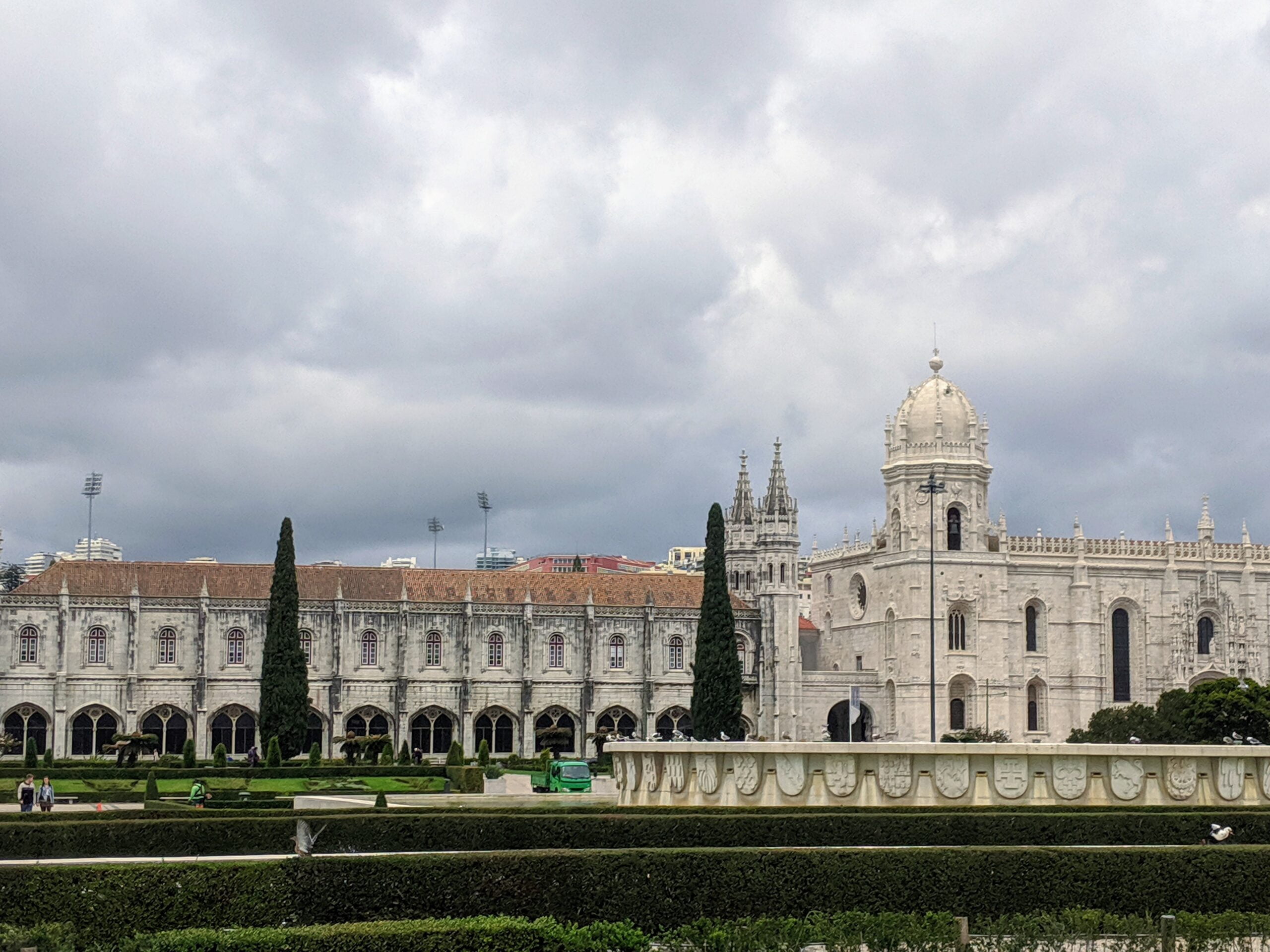
In the heart of Praça do Império, the Jardim da Praça do Império is a lush public garden lined with trees, colorful flowerbeds and winding paths, with a breathtaking view of the Hieronymites Monastery. To the south-east of the garden is the Belém National Palace, the official residence of the Portuguese President.
Mosteiro dos Jerónimos
The Mosteiro dos Jerónimos – or Hieronymites’ Monastery – is one of Lisbon’s most emblematic monuments and another outstanding example of Manueline architecture.
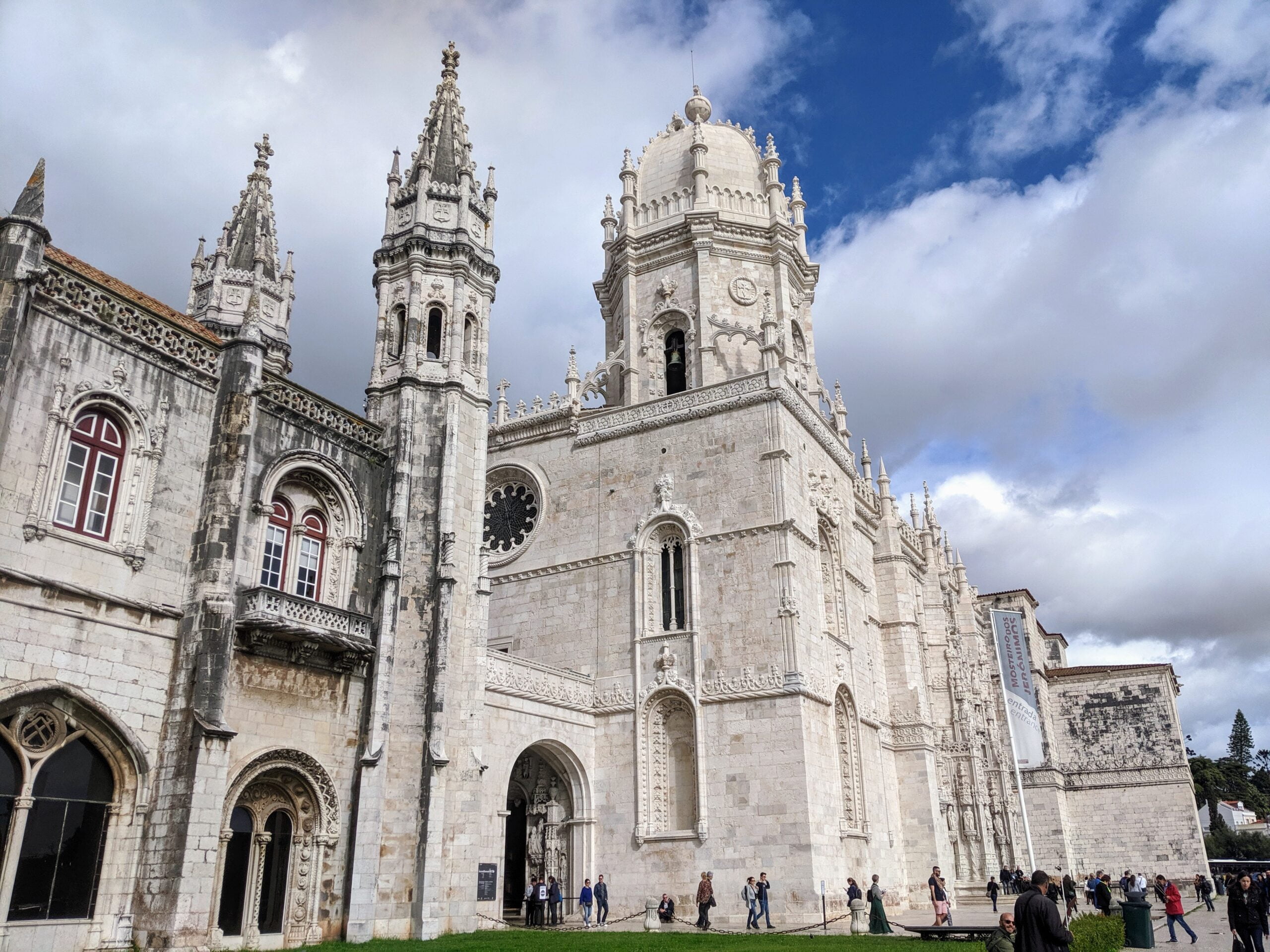
King Manuel I began building the monastery in 1502, on the site of a hermitage dedicated to the Virgin of Bethlehem. According to the official story, the monastery was built to mark Vasco da Gama’s return from his first voyage to India in 1499. Butwelcoming the Hieronymites – a Spanish order dedicated to the funerary worship of the Castilian royal dynasty –to Portugal was above all a gesture by the sovereign towards the Catholic Monarchs, with whom he wished to form an alliance.
Largely financed by the profits of the spice trade and the riches brought back by the great explorers, the construction of the monastery is themost accomplished architectural work in the Manueline style.
Classified as a historic monument in 1907, the monastery was included on UNESCO’s World Heritage List in 1983.
With its 55-meter-long sides and architecture featuring thousands of sculpted details, the monastery’s cloister is a masterpiece of Manueline art.
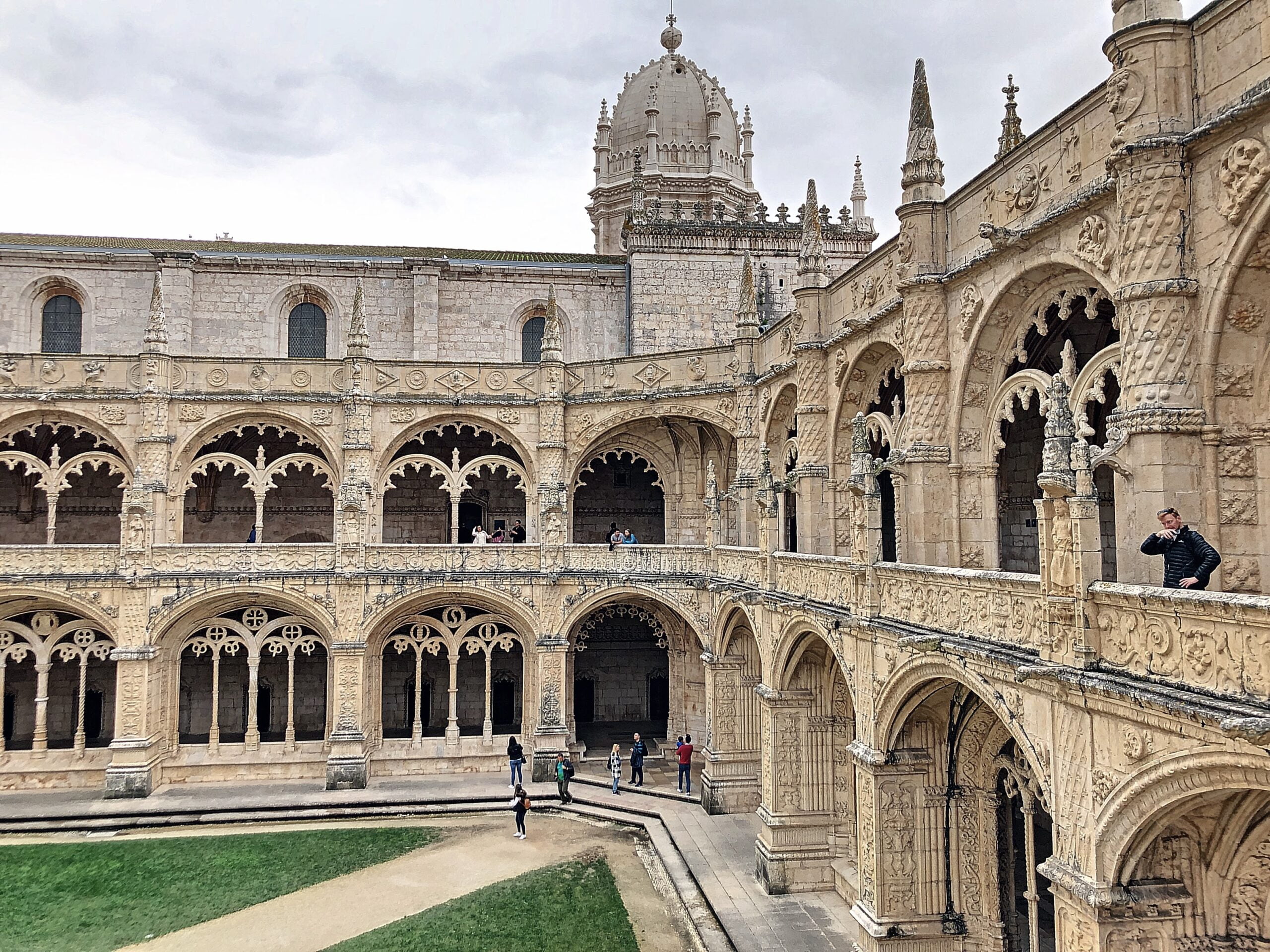
Designed by the architect Diogo Boitaca, the lower storey is inspired by Gothic and Renaissance styles, as evidenced by the wide arcades with fillets supported by fine carved columns. The upper floor, designed by João de Castilho, is much more sober.
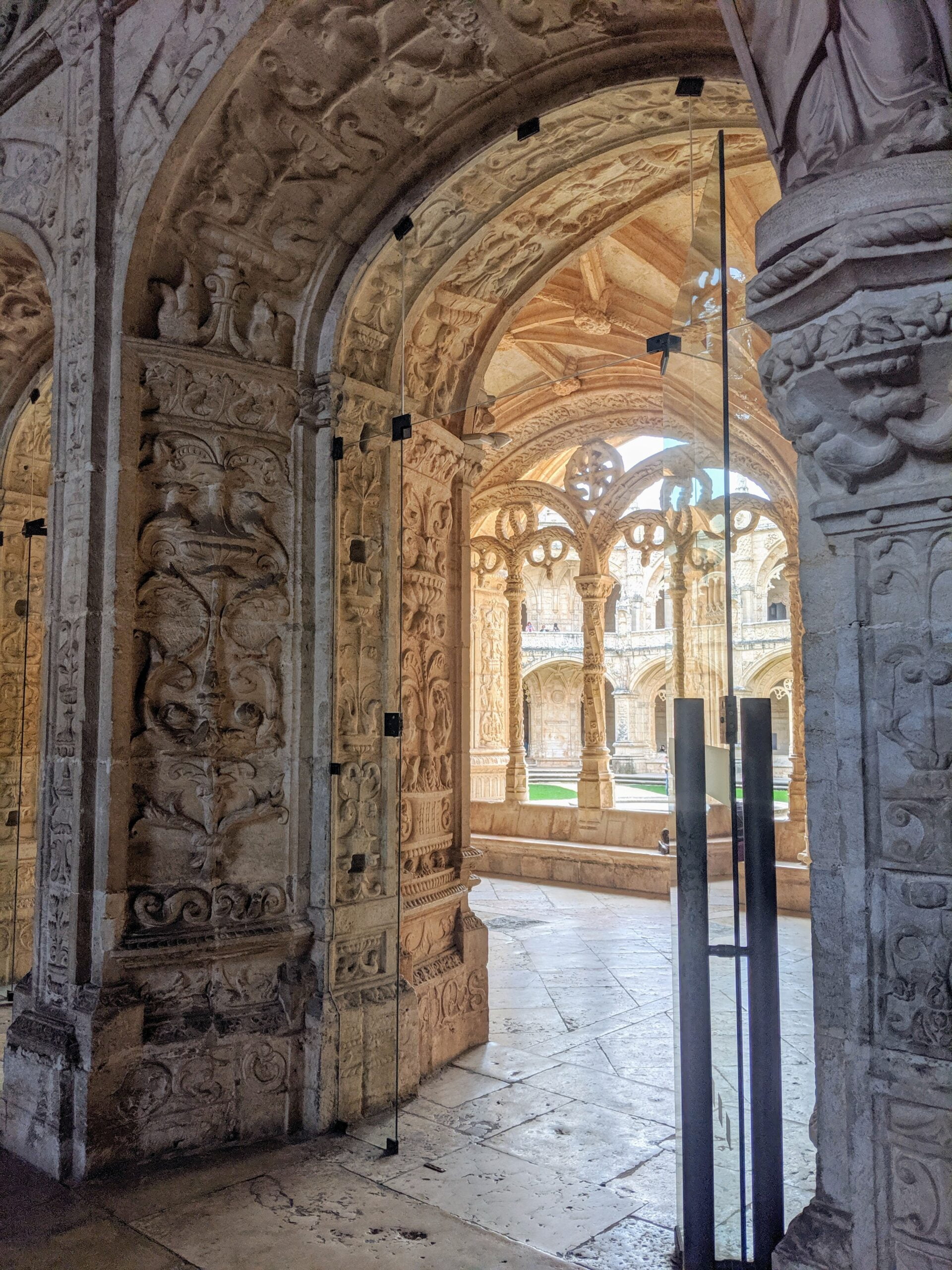
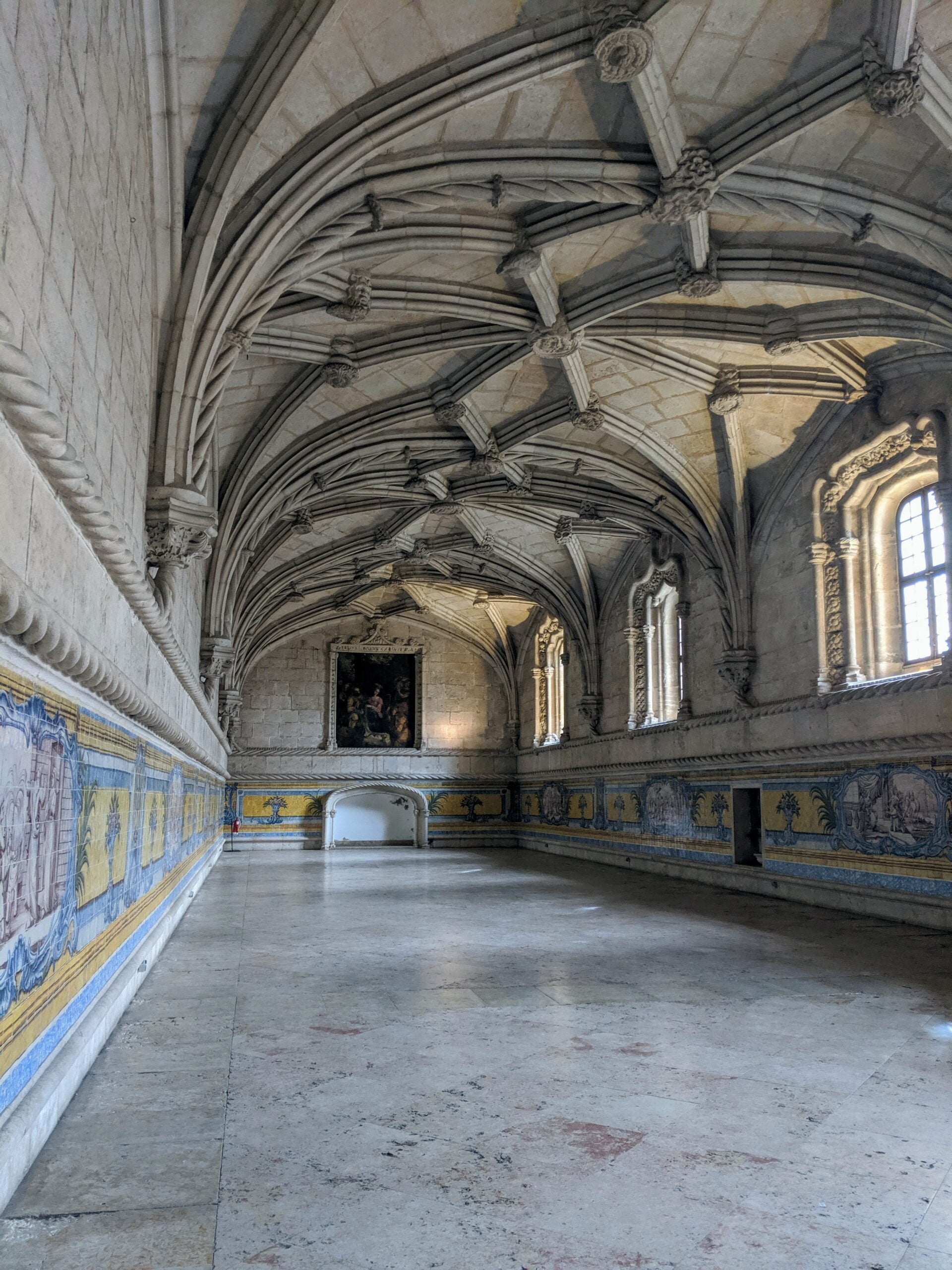
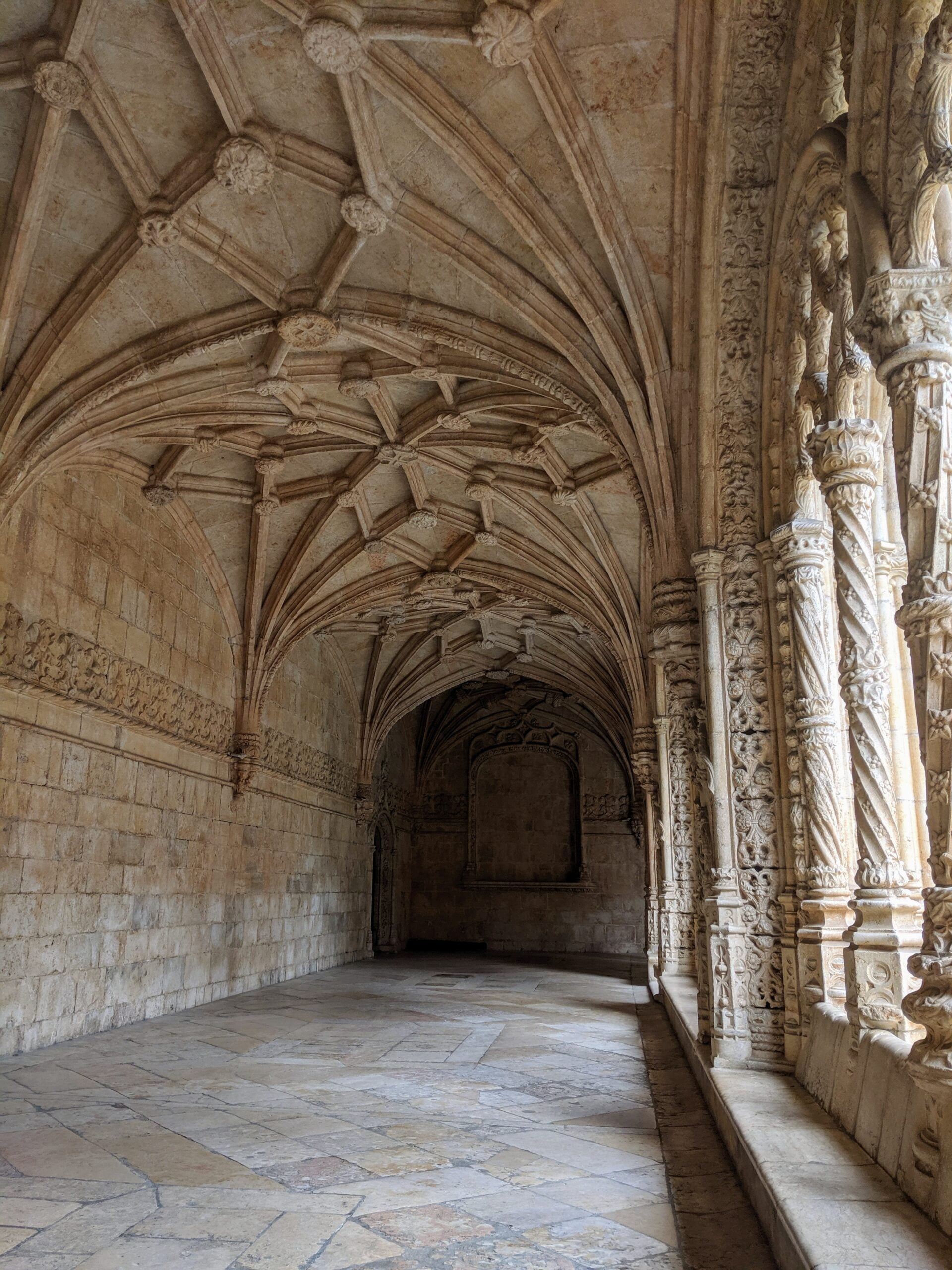
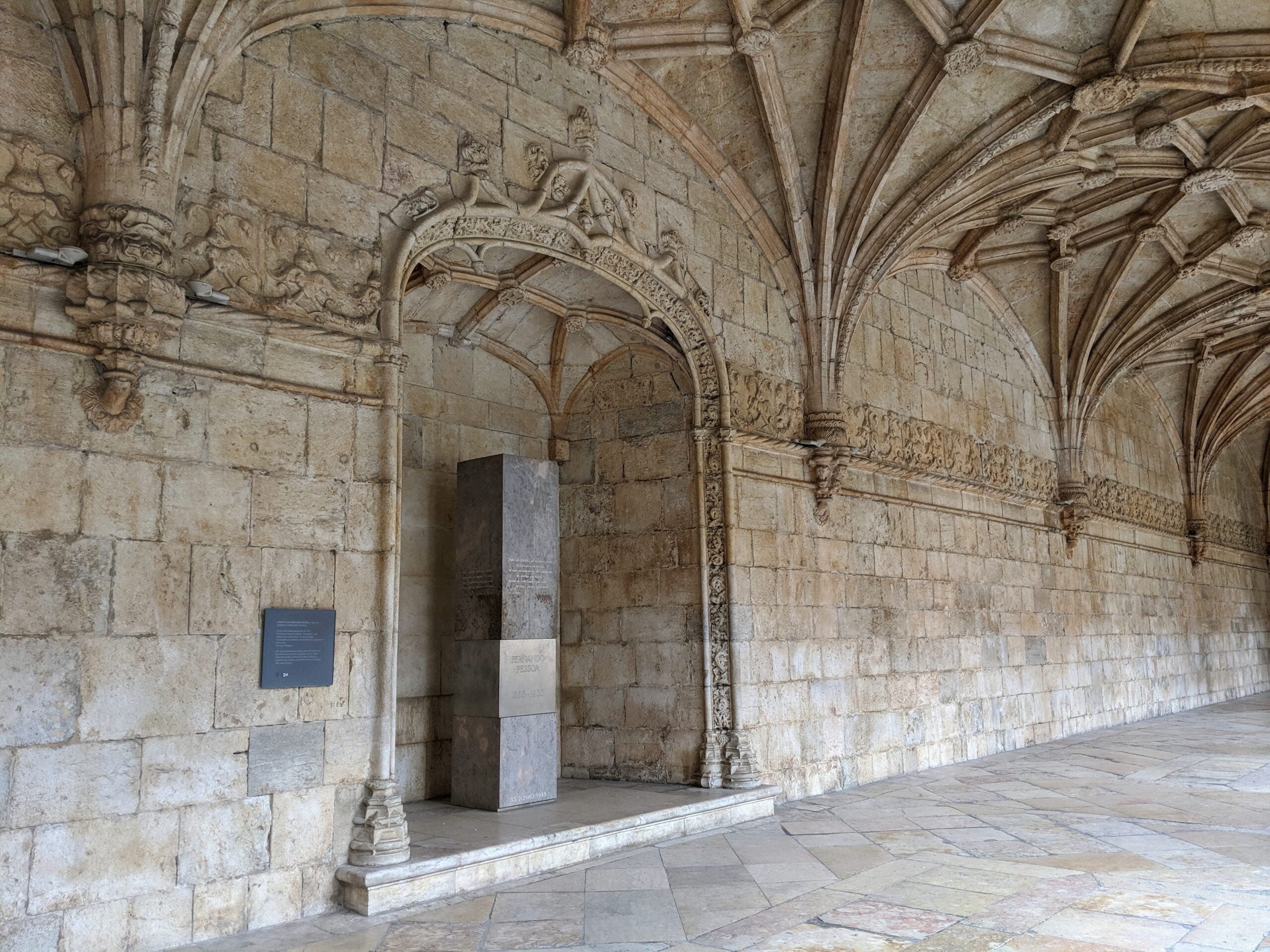
At the heart of the cloister are two tombs of illustrious Portuguese figures: that of Fernando Pessoa, one of the country’s first modernist writers, and that of writer-historian Alexandre Herculano in the Sala do Capítulo, converted into a national pantheon.
The interior of the nave of the Santa Maria church is surprisingly refined and virtuosic in its vaulting. João de Castilho decorated the pillars and vault in pure Manueline style.
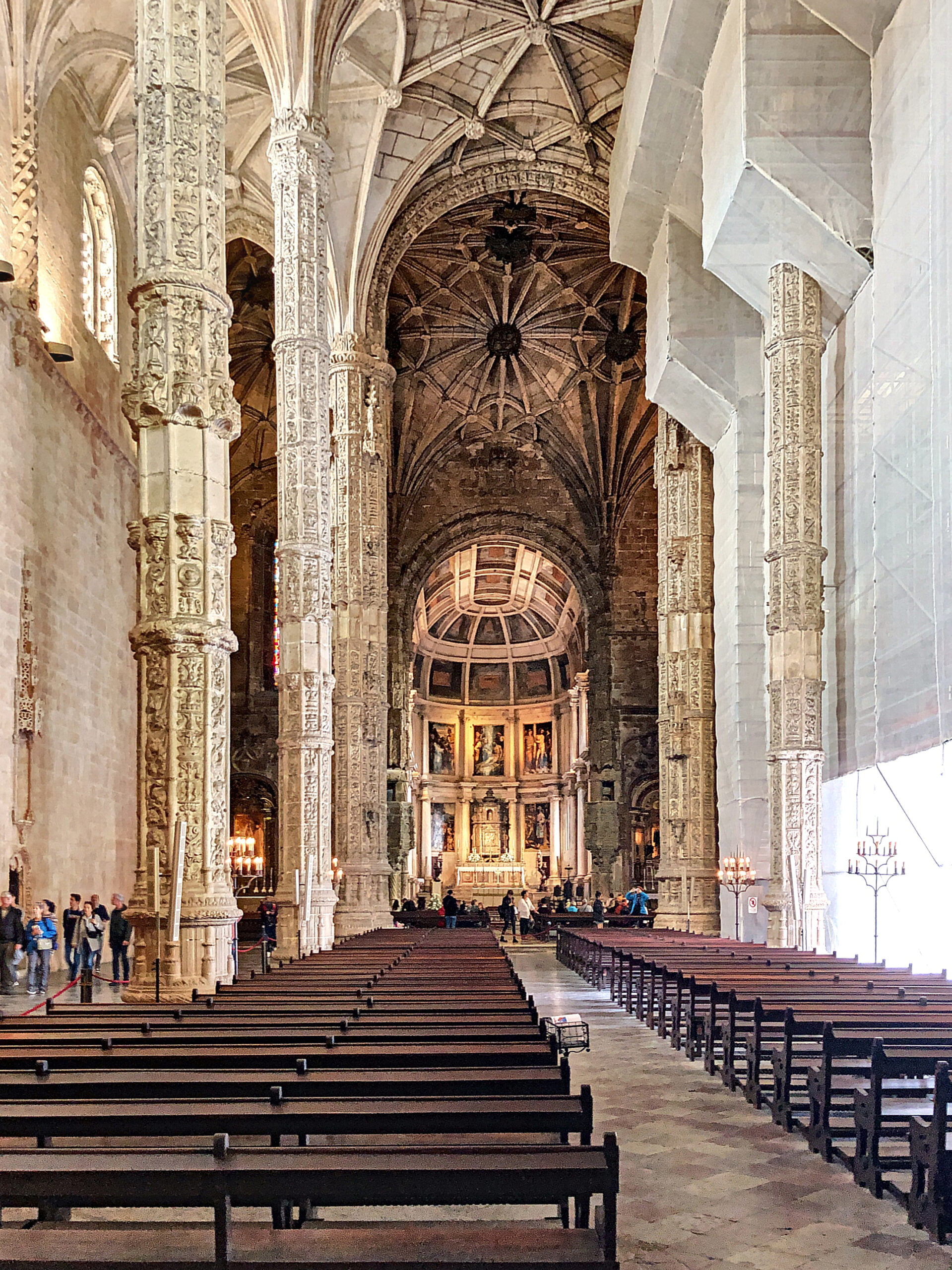
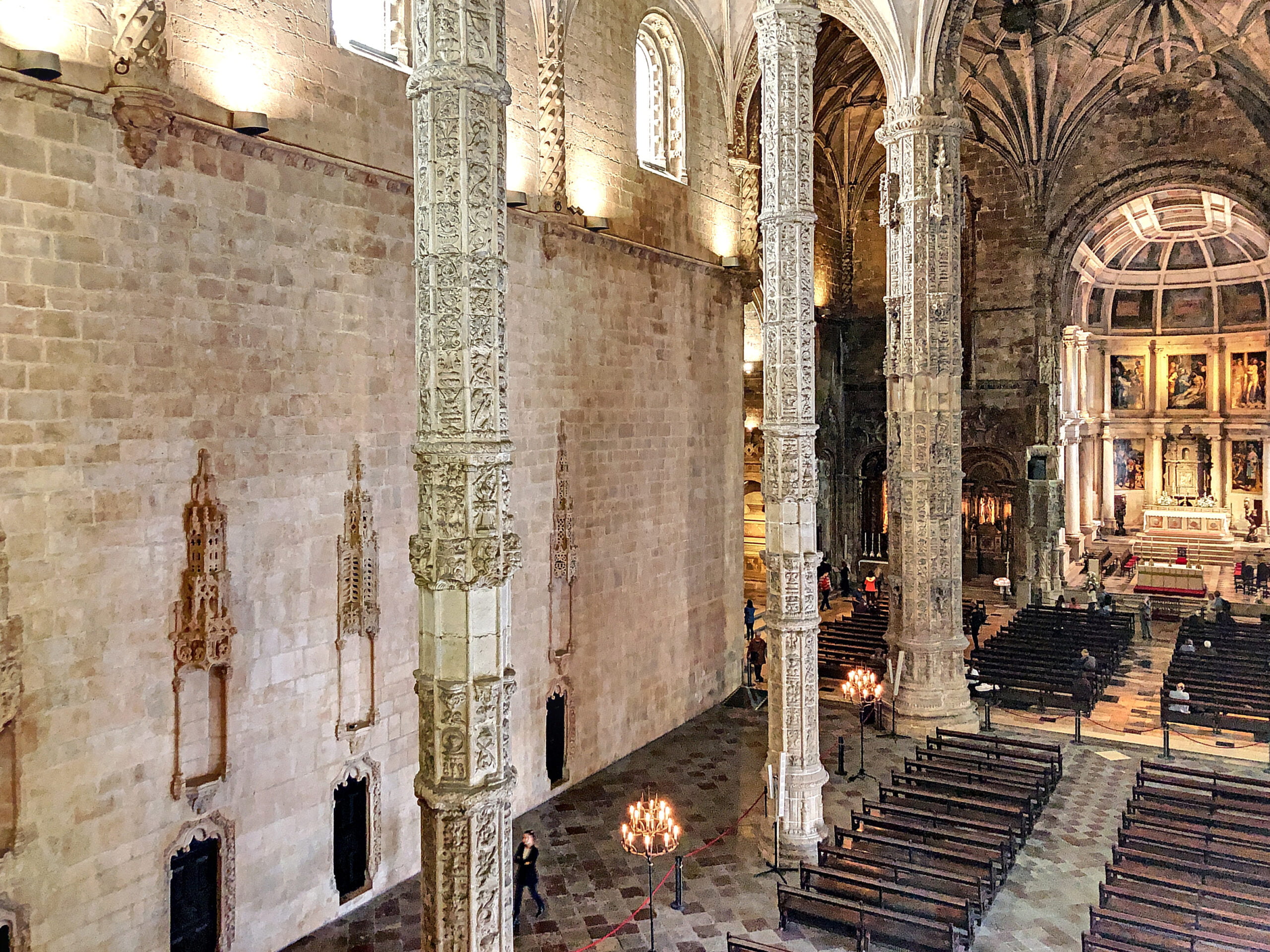
At the entrance to the church are the tombs of Vasco de Gama and Luis de Camões.
Good to Know
- Mosteiro dos Jerónimos is located in Praça do Império, Belém.
- The monastery is open Tuesday to Sunday from 10am to 5:30pm from October to April, and from 10am to 6:30pm from May to September.
- The monastery is closed on January 1, Easter Sunday, May 1 and December 25.
- While it’s possible to enter the Santa Maria church free of charge, admission to the cloister costs €10 per adult.
Pastéis de Belém
First created by the monks of the Hieronymites monastery in the 18th century, pastéis de Belém are now world-famous traditional pastries.
Although pastéis de Belém are made from crisp puff pastry filled with a smooth cream made from eggs, sugar, milk and vanilla, the original recipe is a well-kept secret, known only to a few people in the factory near the monastery.
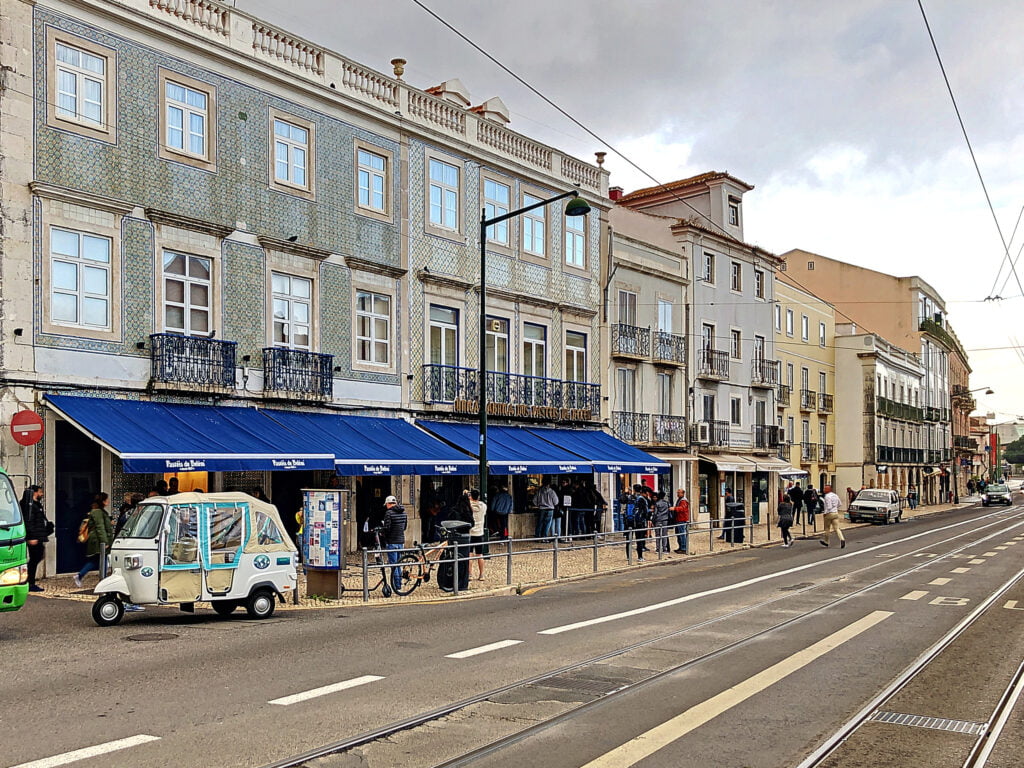
Founded in 1837, the historic Pastéis de Belém store continues to serve these sweet delights to tourists and locals alike. While the line is often long on the bakery side, it is possible to enter the establishment and sit down at a table to be served more quickly, and for the same price!
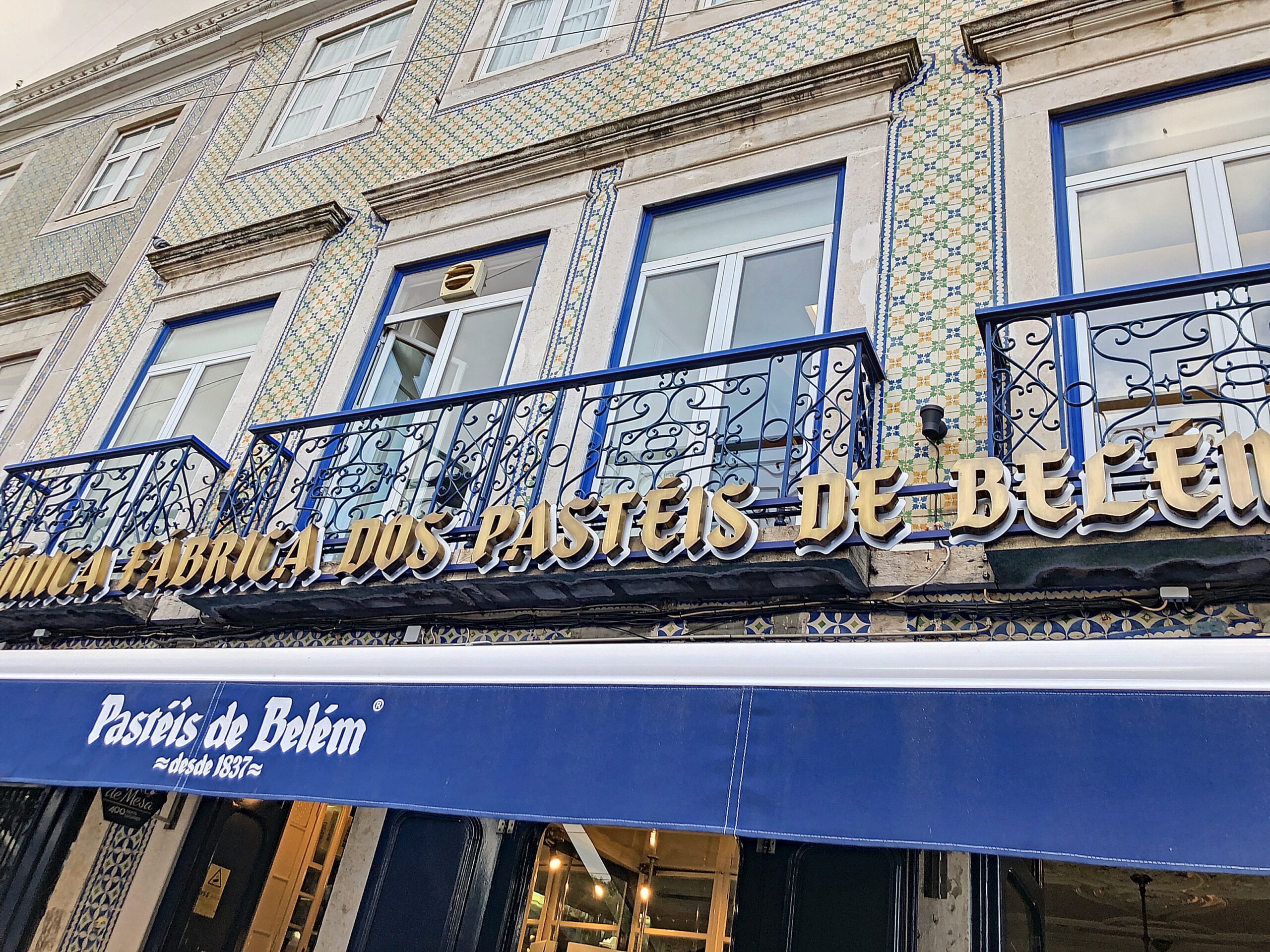
An excellent way to end a day’s visit in the footsteps of the great explorers…