The tour below can be completed in just a few hours. We can’t see everything, of course, but we’re taking the pulse of the red city, hoping to return soon 🙂
All stages of the tour are shown on the map below. In turquoise, the buildings we saw and visited; in coral, the restaurants where we ate; in mauve, the buildings we didn’t see for lack of time.
Menara Garden
Just 10 minutes from the airport is the Ménara garden. A veritable haven of freshness, its huge central basin (195 meters by 160) was dug in the 12th century to serve as a water reservoir during the Almohad era. It is still powered today by a hydraulic system over 700 years old. The Saadian dynasty then transformed the site into a vast garden planted with olive trees, which would have served as a gallant rendezvous for the sultans. At one end is a late 19th-century Saâdian pavilion. With the peaks of the Atlas Mountains in the background, this is one of Marrakech’s best-known views.
➜ The Menara garden is a peaceful place, away from the hustle and bustle of the city. It’s a nice place to take a stroll, but apart from the postcard photo, it’s not a stop that will leave you with lasting memories. Do it if you have the time. Otherwise, there are some beautiful photos on the web 😅
Good to Know
- The Menara garden is located three kilometers southwest of Place Jemâa El Fna. It is accessible via avenue de la Ménara. From the Koutoubia mosque, it’s a good 30-minute walk. Beware of hot weather, as the avenue is not very shady.
- Access to the Menara garden is free.
- The Menara garden is open daily from 8am to 6pm.
➜ The medina can be visited on foot, no need for a car. If you still need to park before entering the medina, the parking lot shown on the map (Rue Sidi Mimoun) is perfectly safe.
Bab Agnaou
Built in the 12th century by the Almohads, Bab Agnaou is one of Marrakech’s 19 gateways. Located in the southern part of the medina, it was built to protect access to the Kasbah administrative and military quarter. Built of Guéliz stone, it features four different arches. Originally, the gate also had two towers, which have now disappeared. This is where Bab Agnaou gets its name: the door of the ram without horns.
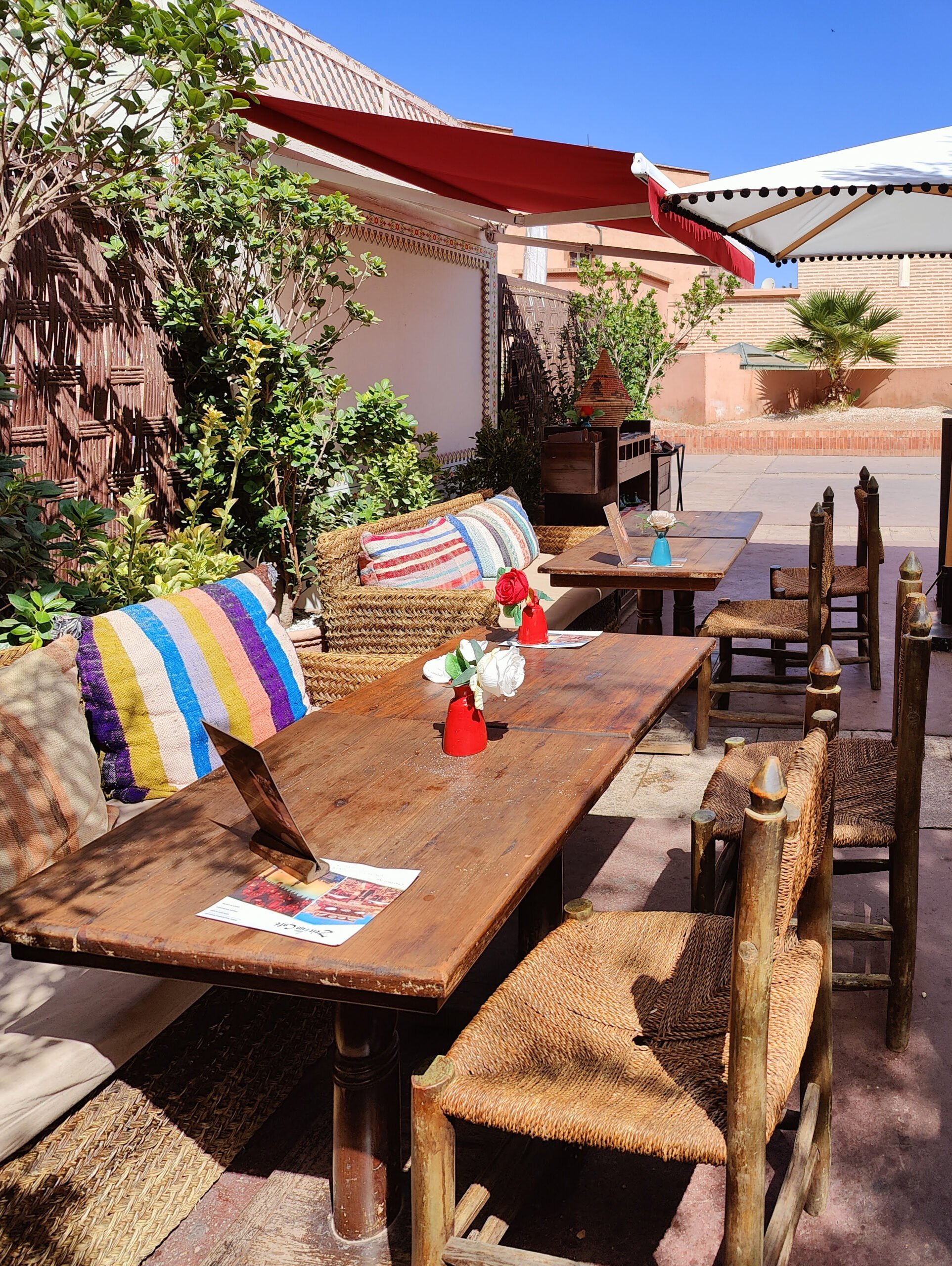
➜ If you start this tour in the morning, don’t hesitate to plan a breakfast break at Café Zeitoun Kasbah. Located 800 metres from Bab Agnaou, the café is just opposite the Kasbah mosque. To make sure there was room for everyone, I contacted them a few weeks beforehand. When we arrived, the tables were arranged on the main terrace, with a beautiful view of the mosque. The food was succulent and the service top notch 🥰
Good to Know
- Café Zeitoun Kasbah is located at 417, Bab Agnaou, in Marrakech’s medina.
- The café has an air-conditioned room and an elevated terrace offering a magnificent view of the El Yazid mosque.
- You can expect to pay between 45 and 60 dhs for a breakfast menu including orange juice, hot drink and a main course (omelette, batbout, baguette, crêpes, etc.). The café also offers a menu of salads and traditional Moroccan dishes for lunch and dinner.
El Yazid Mosque
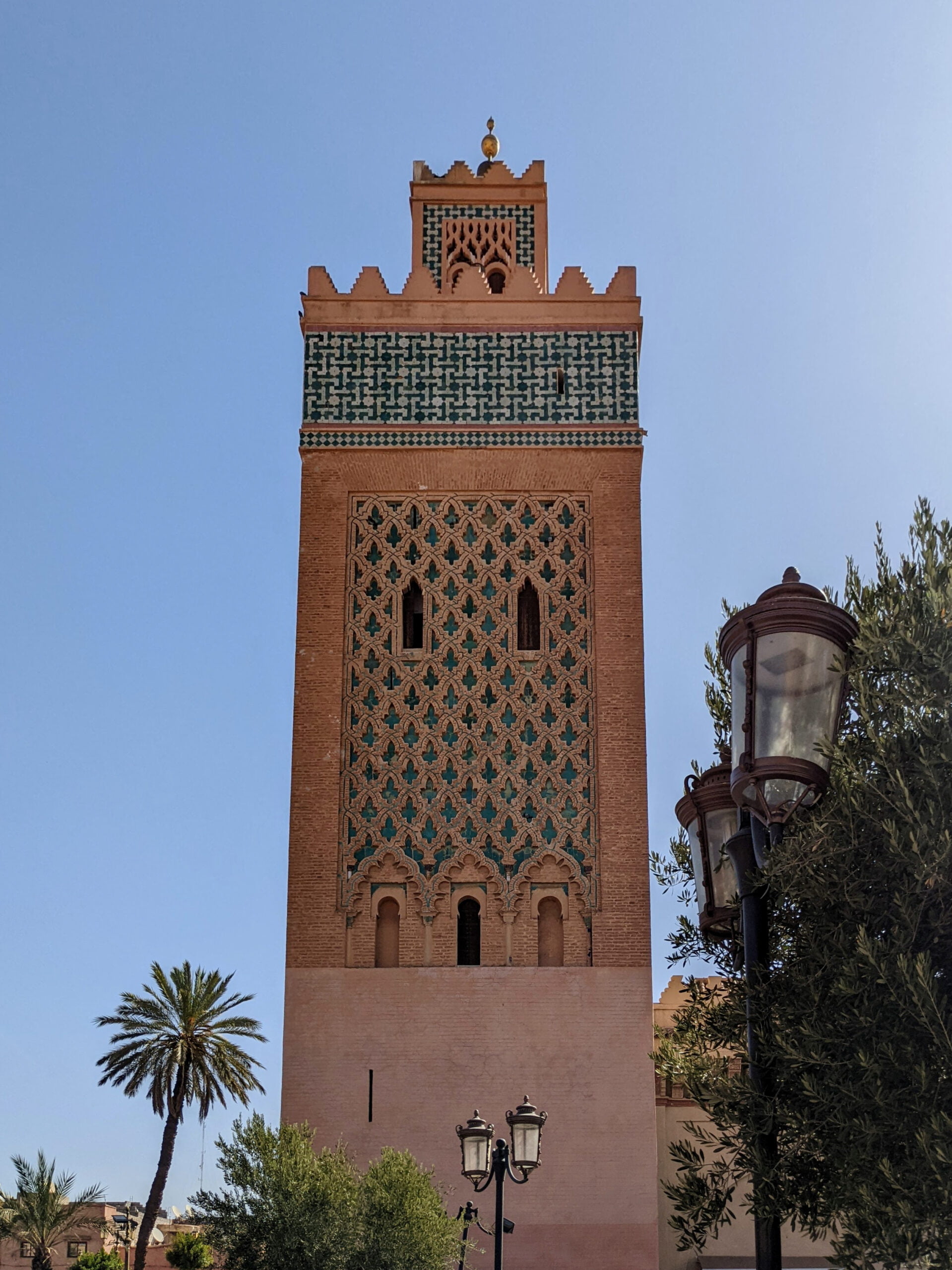
The Kasbah mosque, or El Yazid mosque, was built between 1185 and 1190 on the orders of the Almohad caliph Yaqub al-Mansour. It is part of the new Imperial Kasbah district, as a Friday mosque (or grand mosque).
Its minaret has a square base and is divided into two parts: a main body measuring 8.8 metres per side and a smaller lantern (4 metres per side). The minaret’s decoration, although different from that of the Koutoubia, served as a prototype for many minarets subsequently built in the Maghreb and Andalusia.
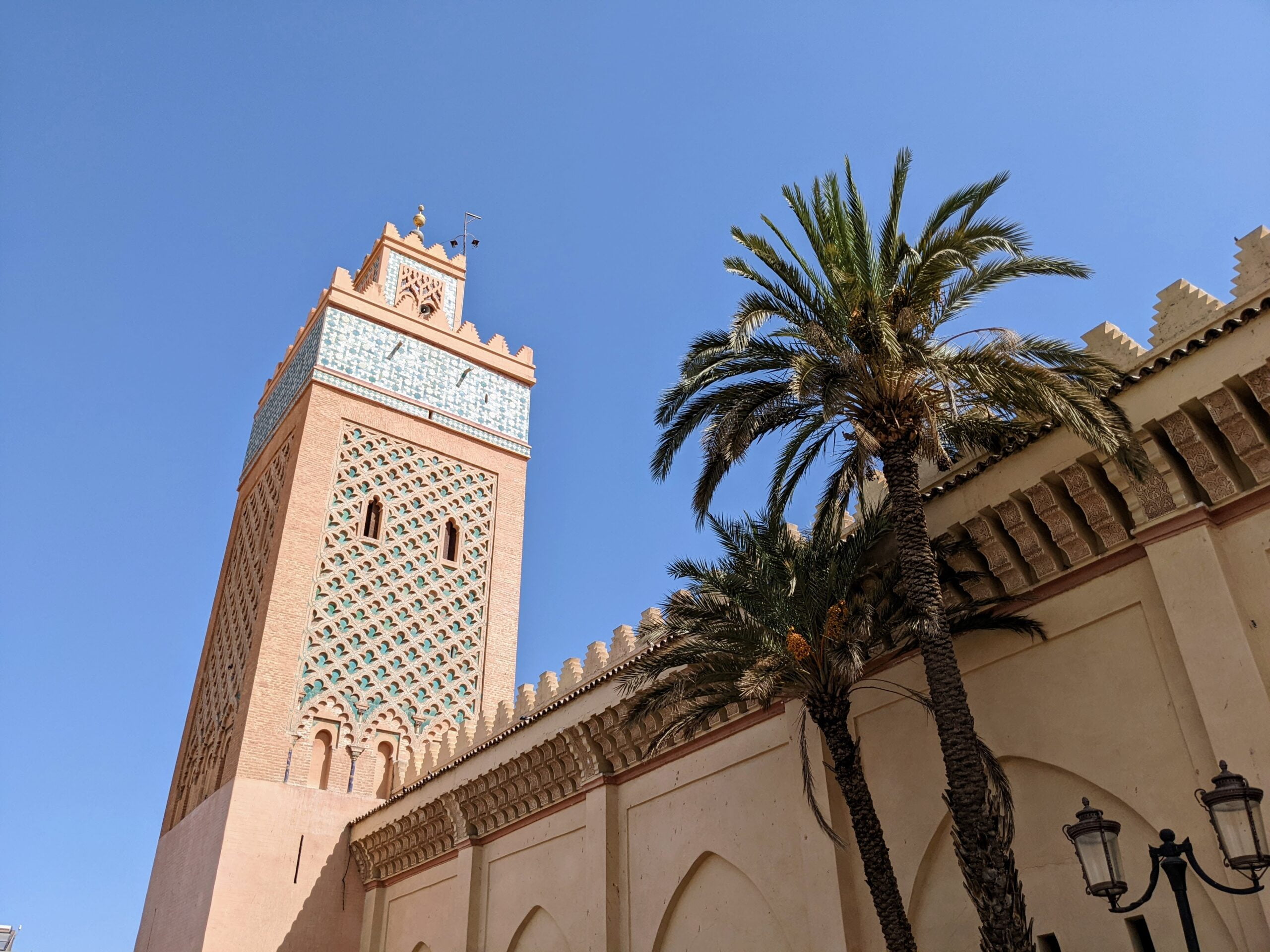
Severely damaged at the end of the 16th century following an explosion in a nearby gunpowder warehouse, the mosque was restored several times in the years that followed. Such is its prestige that important leaders and personalities began to be buried in a cemetery nearby, better known as the “Saadian Tombs”.
➜ The mosque is always used for prayer. It is therefore closed to non-Muslims. Nevertheless, the building is very attractive from the outside. It’s worth stopping here for a few minutes before continuing on to the El Badi Palace.
Saadian tombs
Next to the El Yazid mosque, surrounded by a high wall, the Saadian tombs house the graves of the rulers, wives, children and servants of the dynasty that ruled Marrakech in the 16th and 17th centuries. The main mausoleum comprises three funerary chambers adorned with white marble columns and glazed earthenware. Magnificent illustration of Hispano-Moorish art.
Still used as a burial ground after the demise of the Saadian dynasty, the necropolis contains 56 tombstones with marble epitaphs and around 100 more ordinary tombs. Today, the tombs are not only studied by art historians, but are also one of Marrakech’s main tourist attractions. Which no doubt explains the crowds at the entrance to the site… Having read mixed reviews of the place, we decided to move on.
Good to Know
- The Saadian Tombs are located on Rue de La Kasbah in Marrakesh.
- The site is open from 9am to 5pm.
- The entrance fee is 70dhs.
Place des Ferblantiers
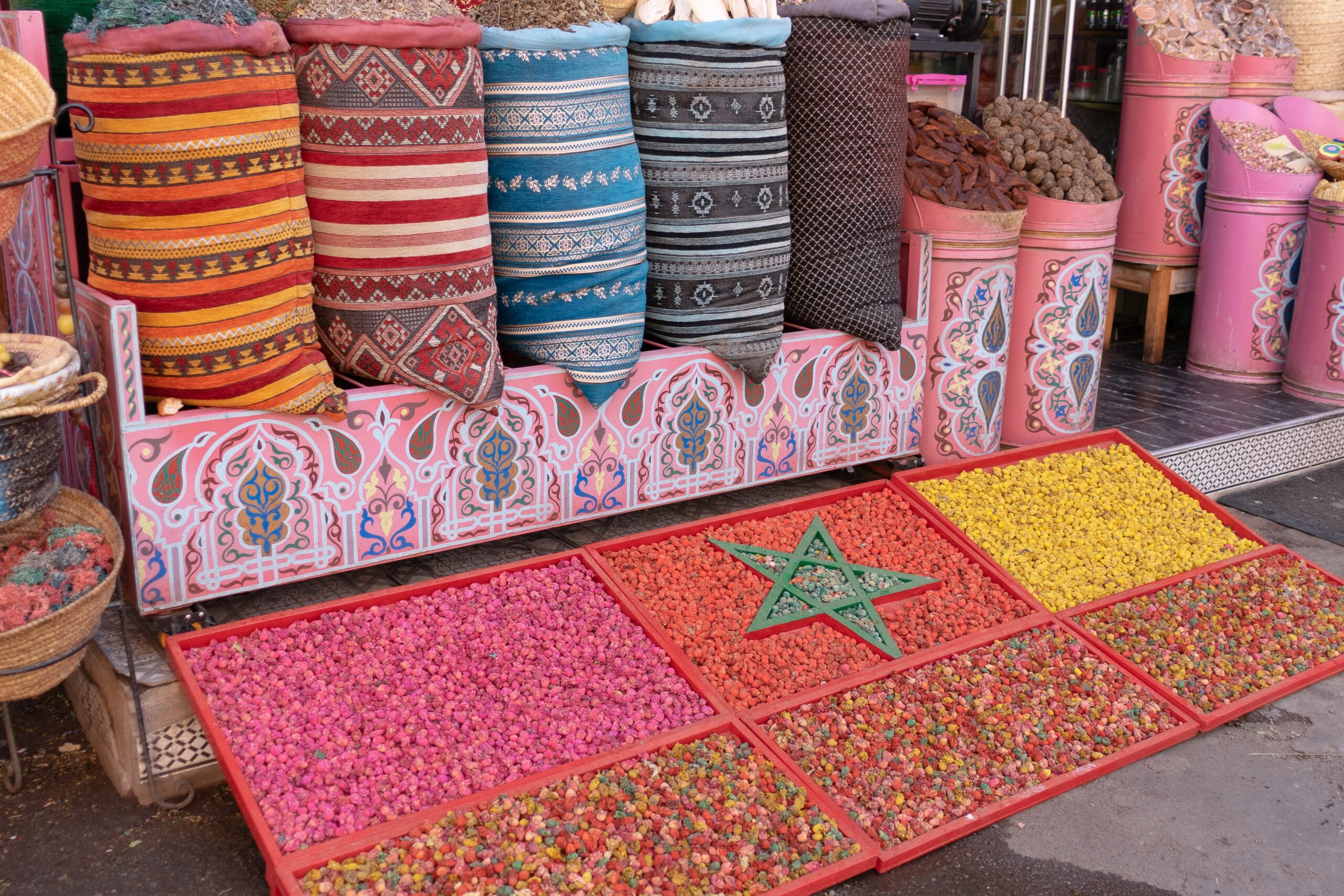
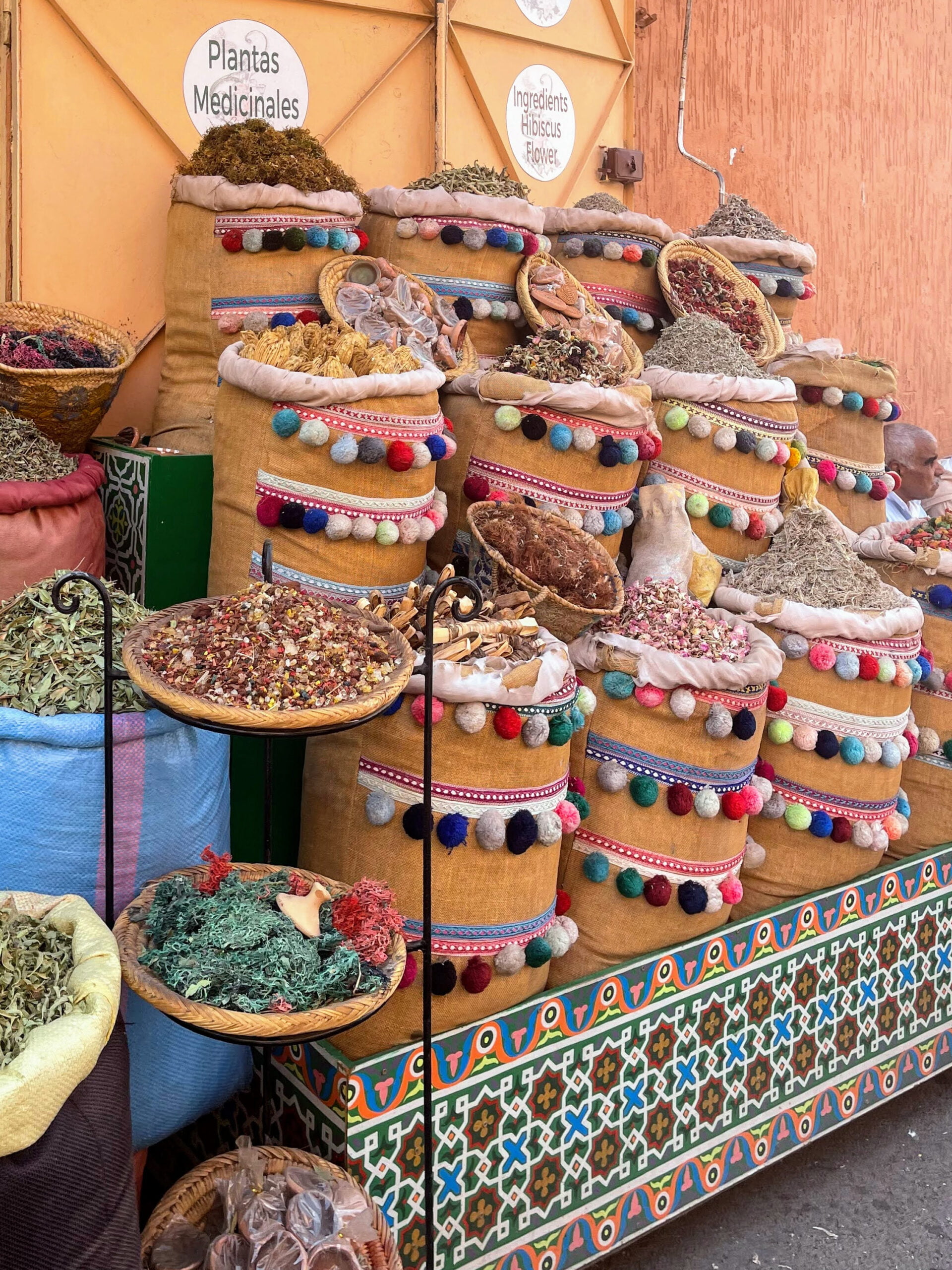
The journey from the El Yazid mosque to the El Badi palace is a short 5-minute walk. On the way, we pass through Rue Tougma and its many stalls selling fabrics and spices. Overflowing with colors and scents… We’re somewhere else.
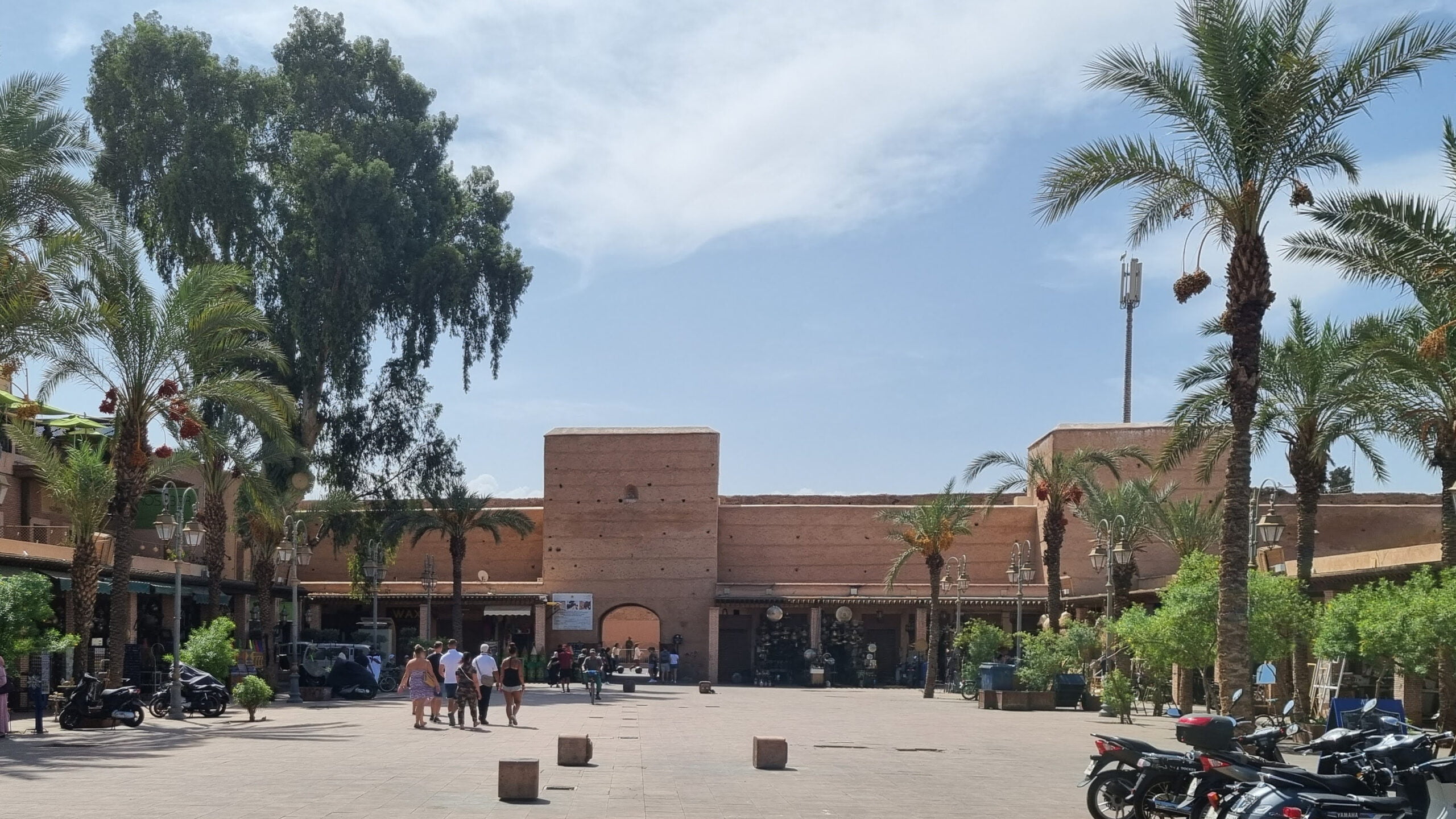
At the end of the street, a large roundabout with the Place des Ferblantiers just behind. Less well known than Jemaa el-Fna Square, this small square vibrates to the sound of the hammers of craftsmen working with tinplate in the traditional way.
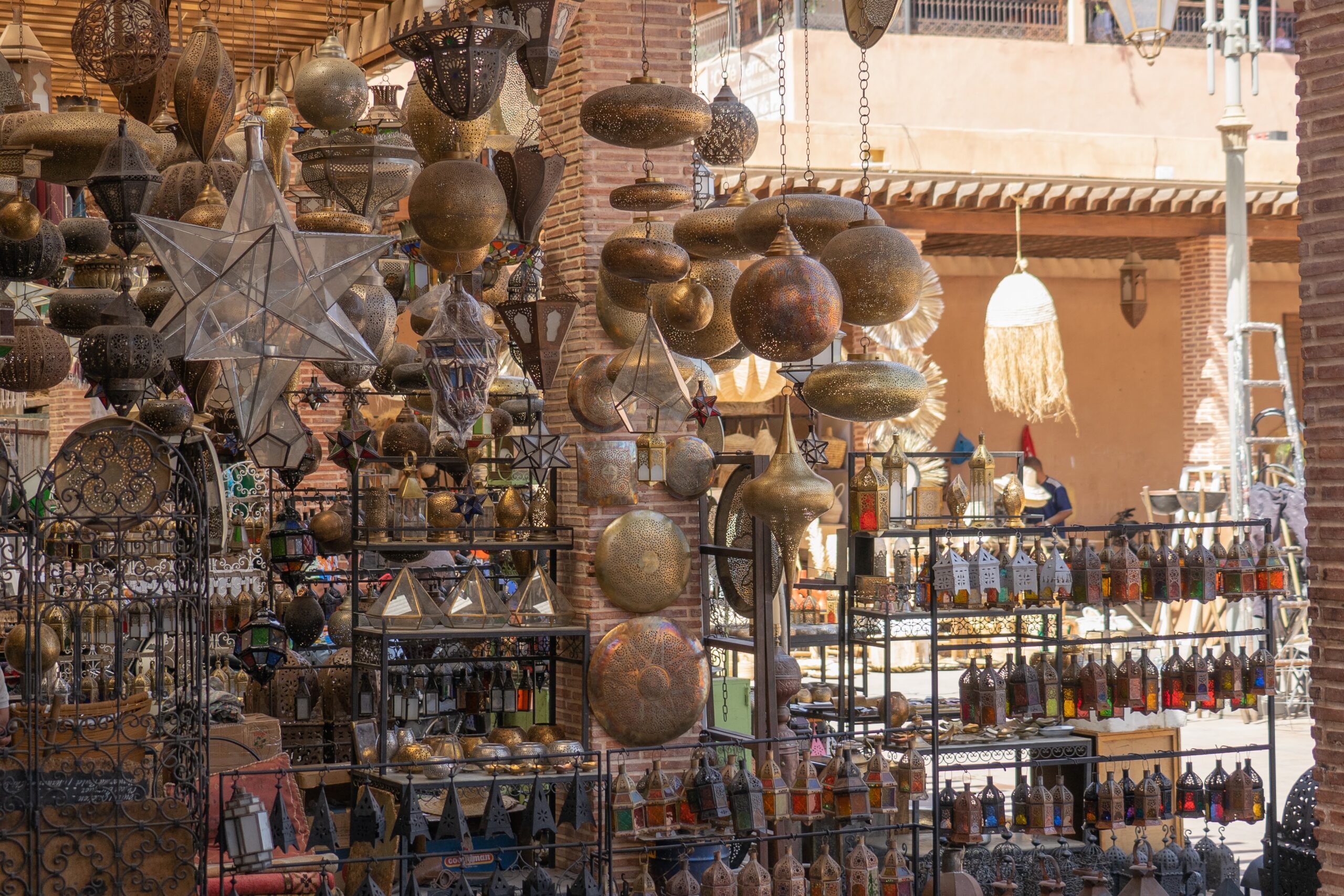
➜ The lanterns on display in front of the artisans’ workshops are each more beautiful than the last. It’s a bit of a cumbersome souvenir but if you’re looking for one, the Place des Ferblantiers is definitely a place to visit 🙂
In the vicinity of Place des Ferblantiers, there are several places worth a visit…
- The Mellah district is the former Jewish quarter, created by decree of Sultan Abdallah al-Ghalib in 1558 (Saadian dynasty) to protect Jews from the fanaticism of the Muslim population following, among other things, the massacre of the Jewish community in 1232. The Mellah was not a ghetto in the strict sense of the term: Jews could leave it to frequent other neighborhoods, and the non-Jewish population could enter. However, unless an exemption was granted, Jews were obliged to live and trade there. Having fallen into disrepair over time, the Mellah of Marrakech underwent major restoration work in 2016, following a decision by King Mohamed VI.
- Like many of Marrakech’s other great buildings, Dar Si Saïd was originally the residence of a mandatary (hence the name meaning “house of Si Saïd”) before becoming the Musée National du Tissage et du Tapis (National Weaving and Carpet Museum). Spread over two floors, the vast residence presents everything there is to know about Moroccan carpets and the art of weaving, as well as a collection of jewelry, accessories, weapons and everyday objects related to weaving.
- Near Place des Ferblantiers, the Palais de la Bahia was built at the end of the 19th century as the home of a powerful vizier, Si Moussa. After him, the vast 80,000m2 palace was occupied by his son, Ahmed ben Moussa, his four official wives, his harem of 24 concubines and their many children. The palace was named after his favorite, the Bāhiya (“the beautiful, the brilliant”). Although empty of furniture, the palace impresses with its splendid architecture (carved wooden ceilings, painted shutters, interior garden, fountains).
El Badi Palace
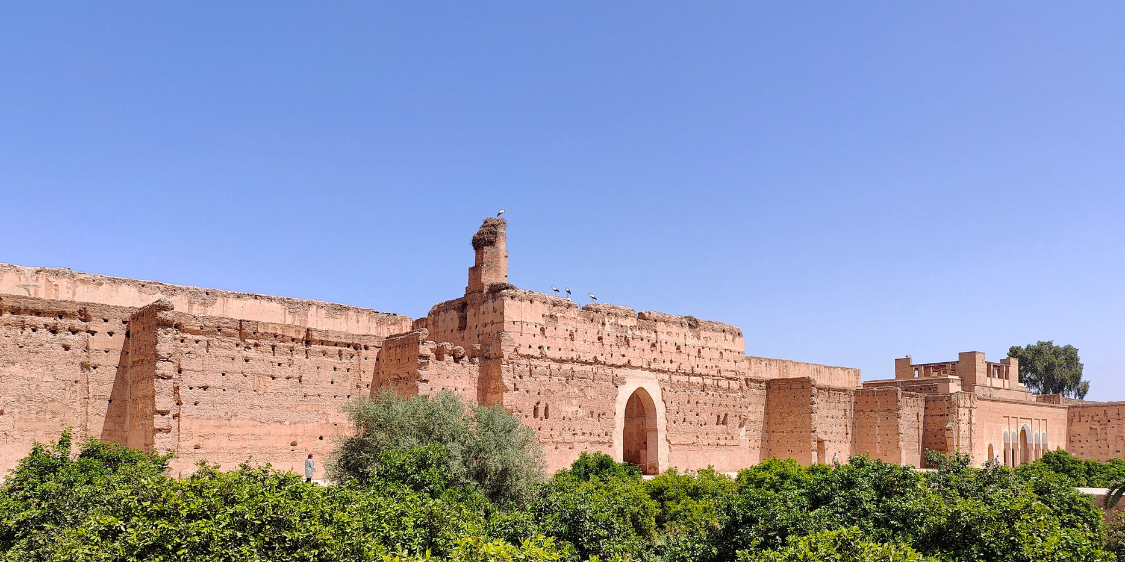
The El Badi palace (or El Badiî palace, literally the“palace of the incomparable“) was built at the end of the 16th century by the Saadian sultan Ahmed al-Mansur ad-Dhahbî to commemorate the defeat of the Portuguese at the Battle of the Three Kings, which put an end to Portuguese King SebastianI‘s plan to invade Morocco.
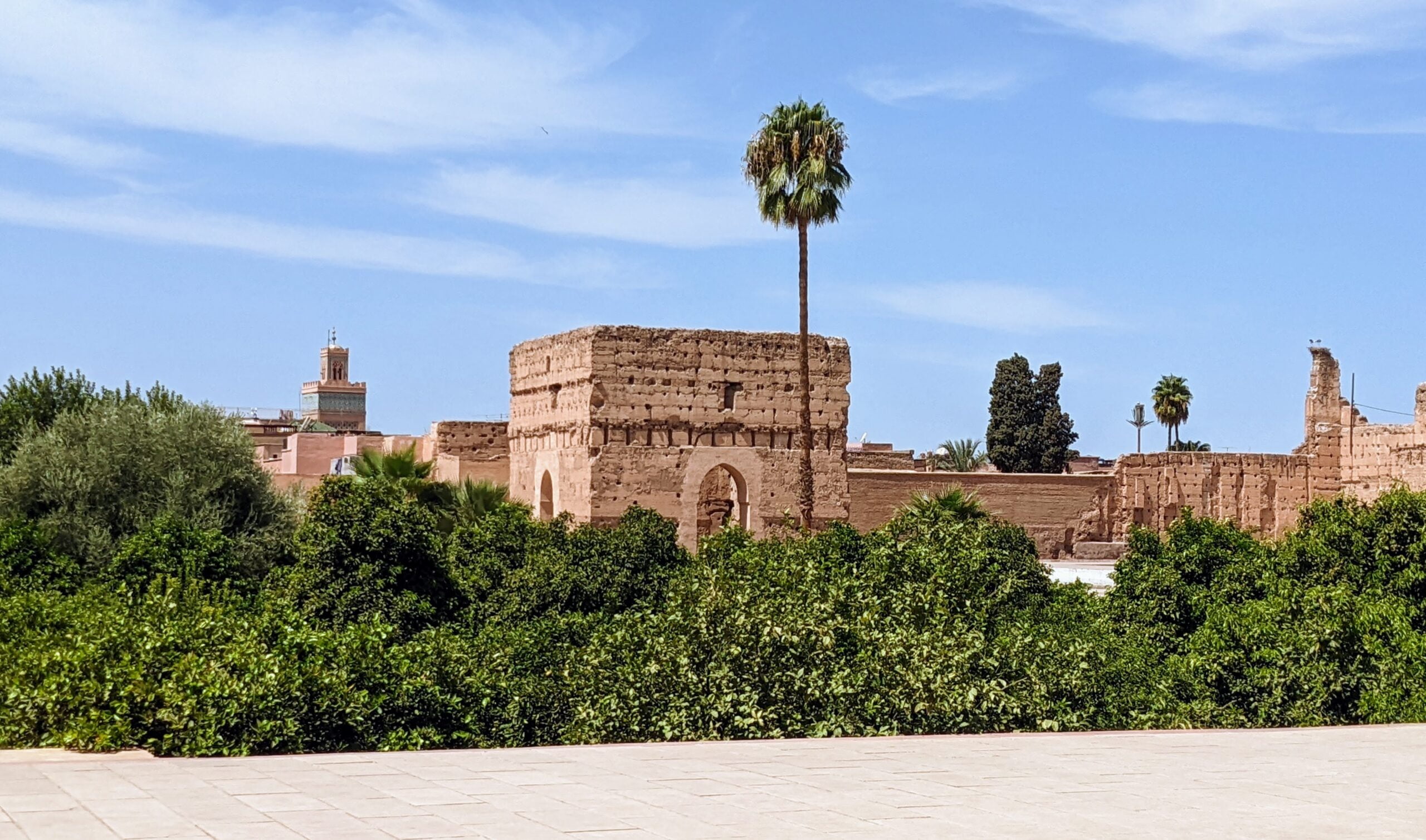
The palatial complex, whose construction was influenced by Granada’s Alhambra, is arranged around a vast rectangular courtyard measuring 135 by 110 meters, with a 90 by 20 meter pool at its center. Around the central courtyard, the “Crystal Pavilion” and the “Audience Pavilion” faced each other on the east and west sides, while the north and south sides were occupied by the “Green Pavilion” and the “Heliotrope Pavilion”. A system of underground passageways allowed slaves and servants to move around the palace unseen.
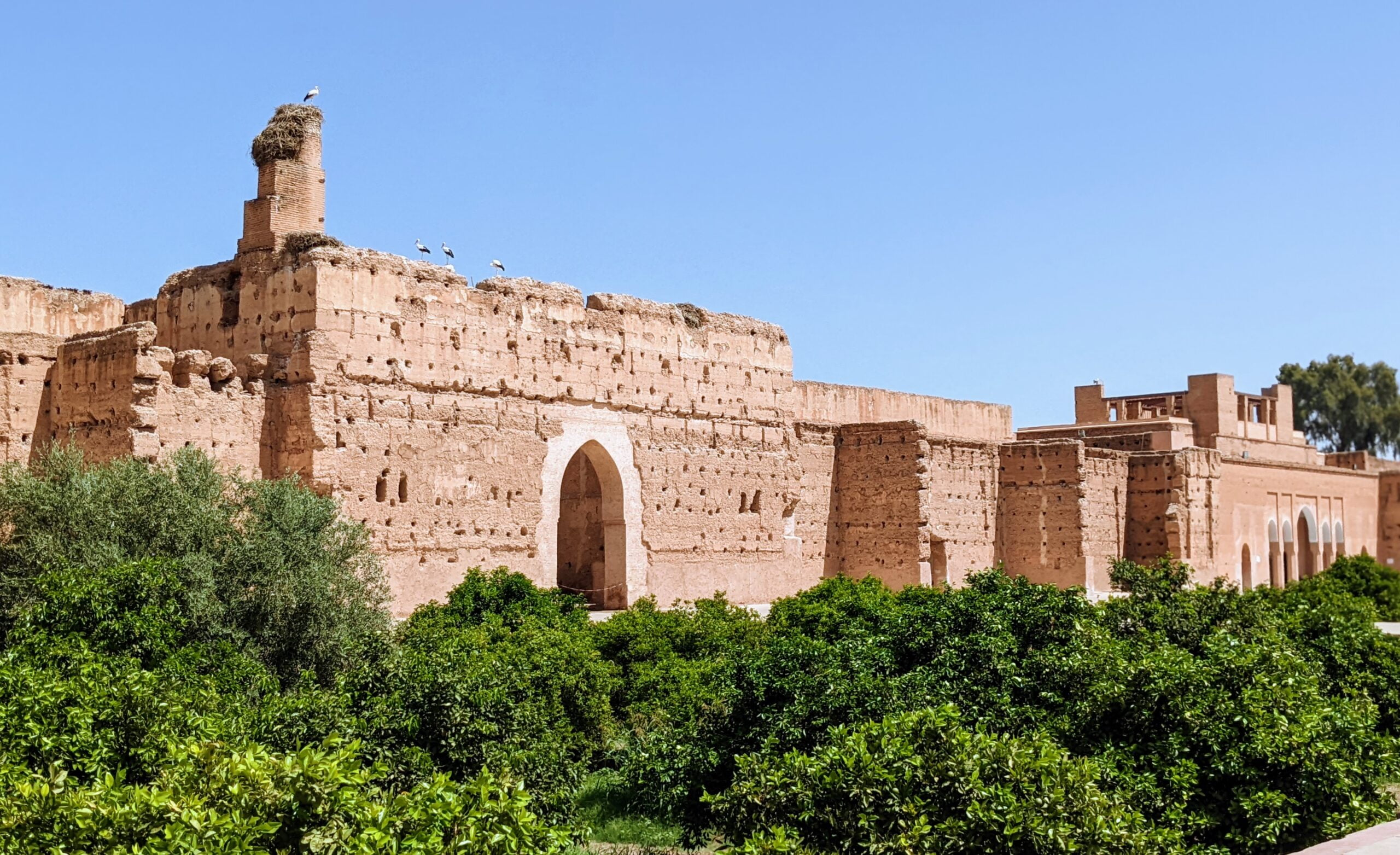
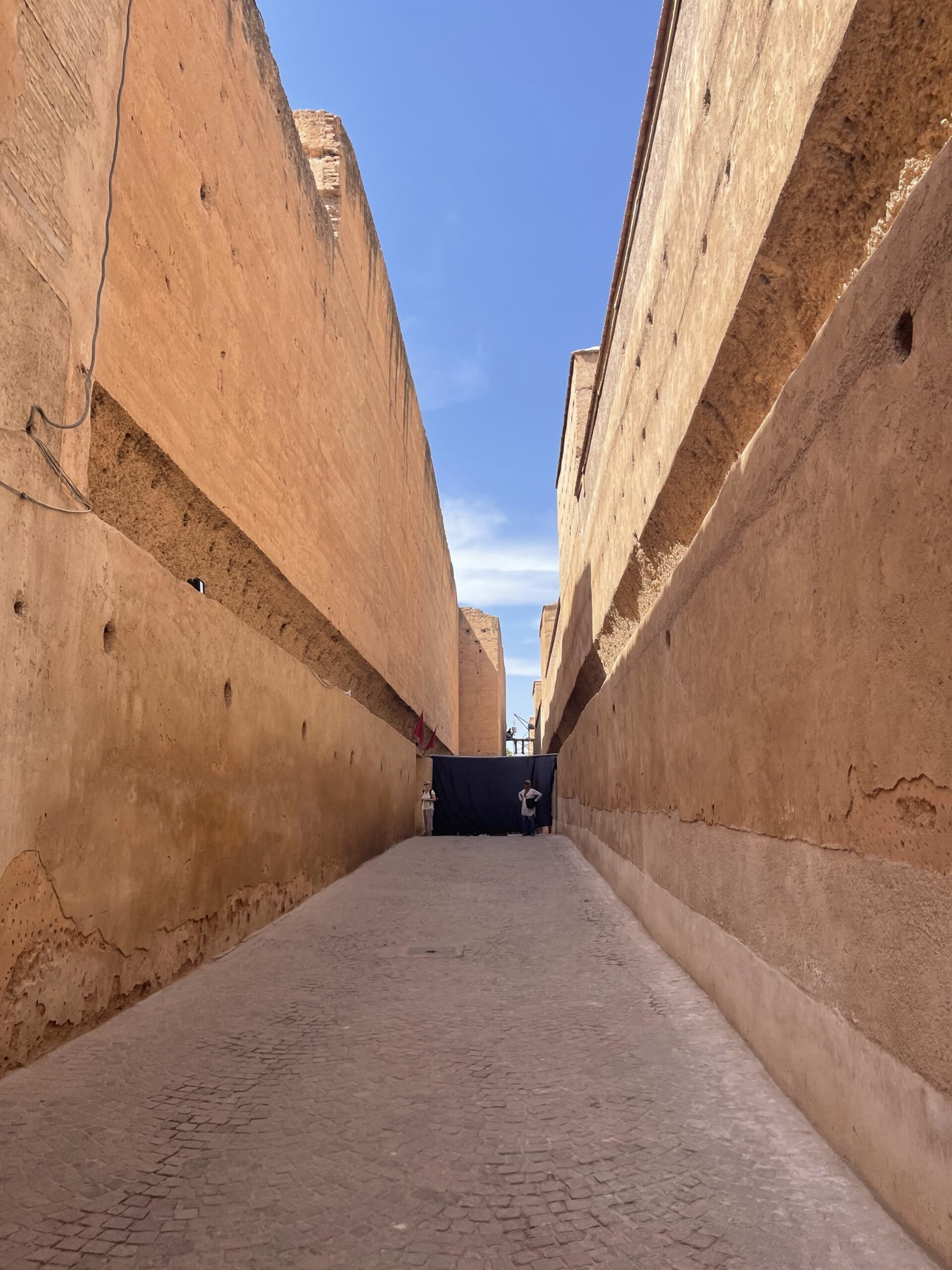
The architectural ensemble comprised 360 rooms decorated with the finest materials of the time: Carrara marble from Italy, gold dust from Sudan, porphyry from India and jade from China. But in 1696, the Alaouite sultan Moulay Ismaïl decided to transfer the capital from Marrakech to Meknes and, in the process, plundered the entire El Badi palace to build his new imperial city. All that remains of the original palace are ruins and a huge esplanade surrounded by high walls.
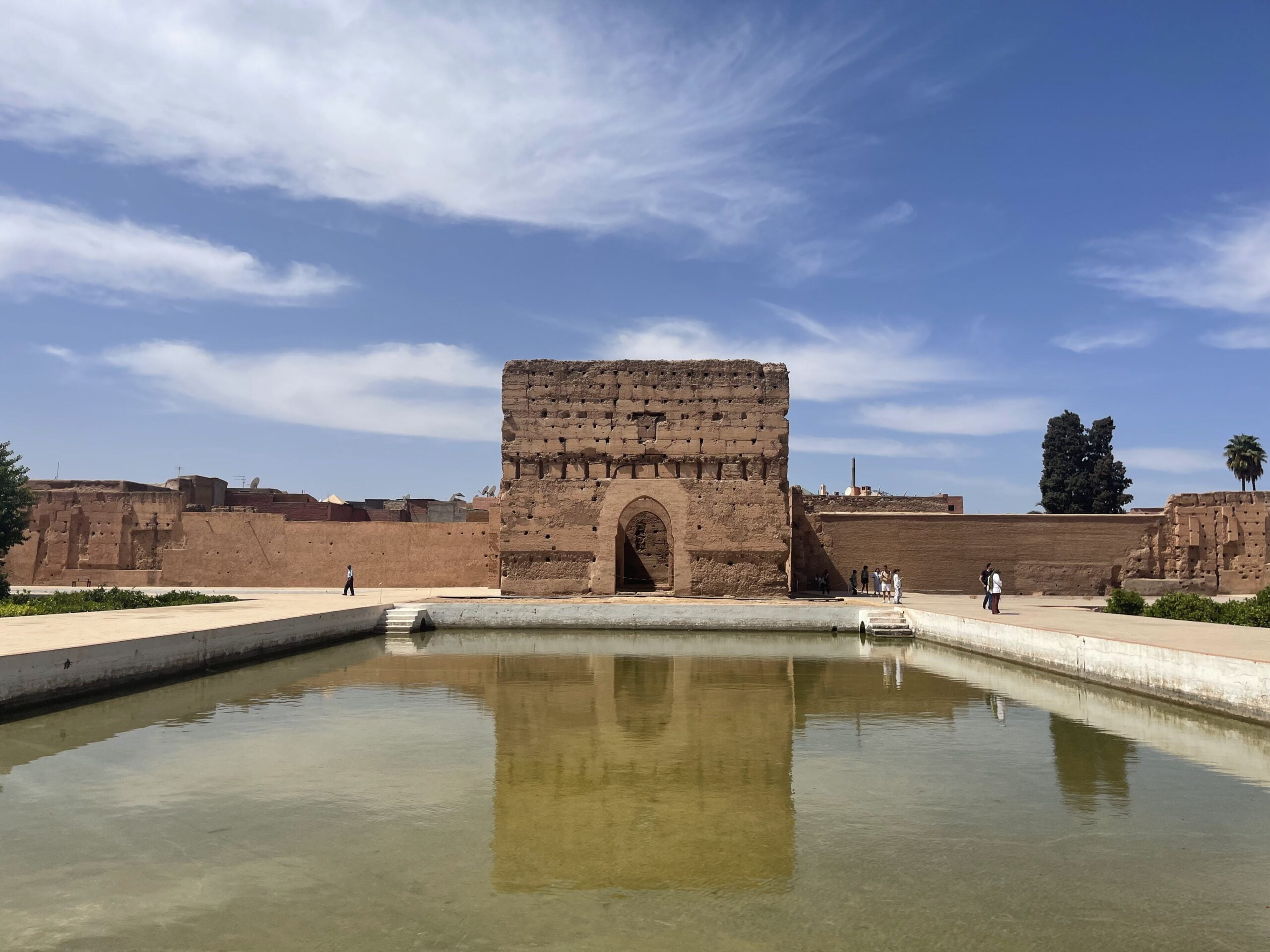
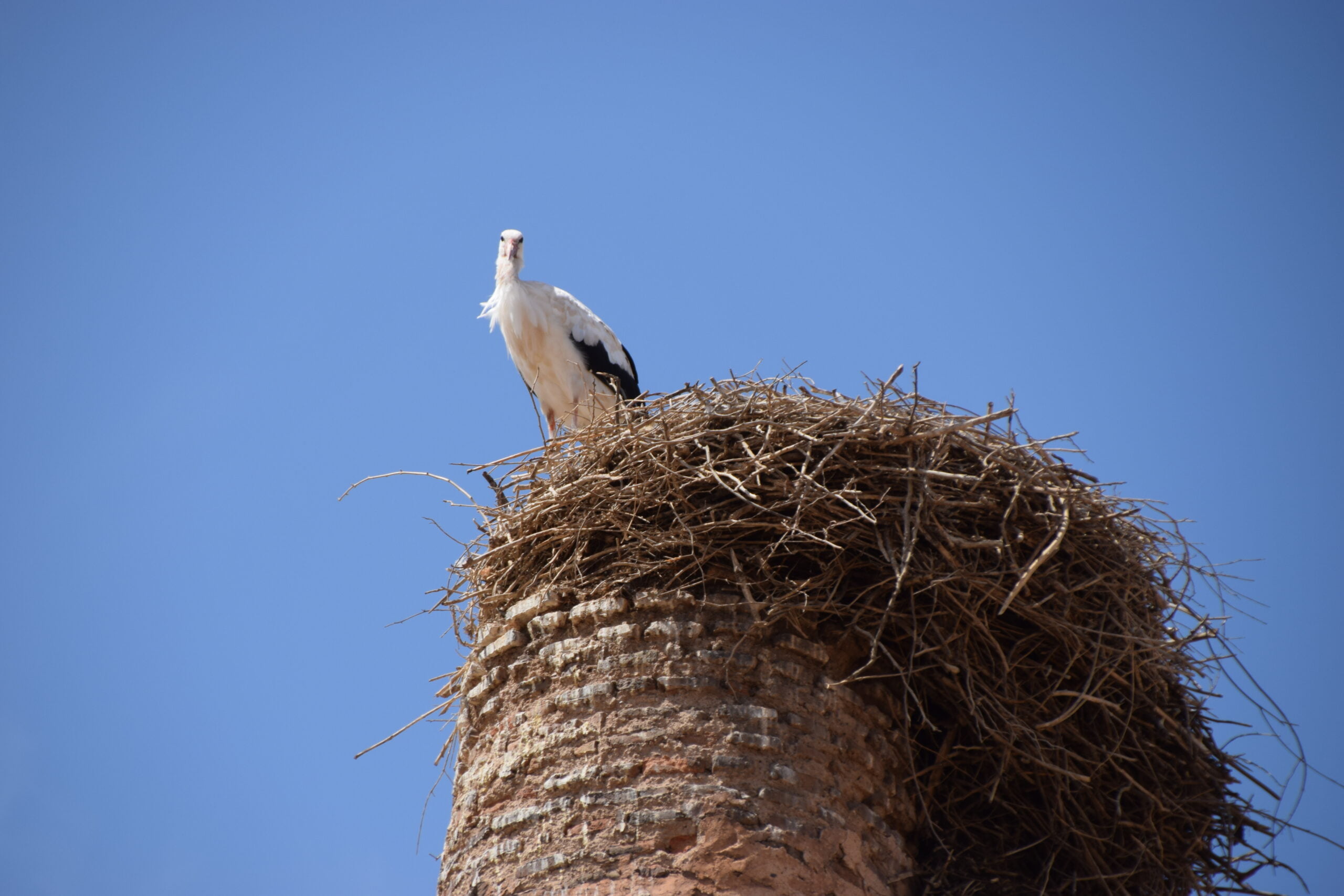
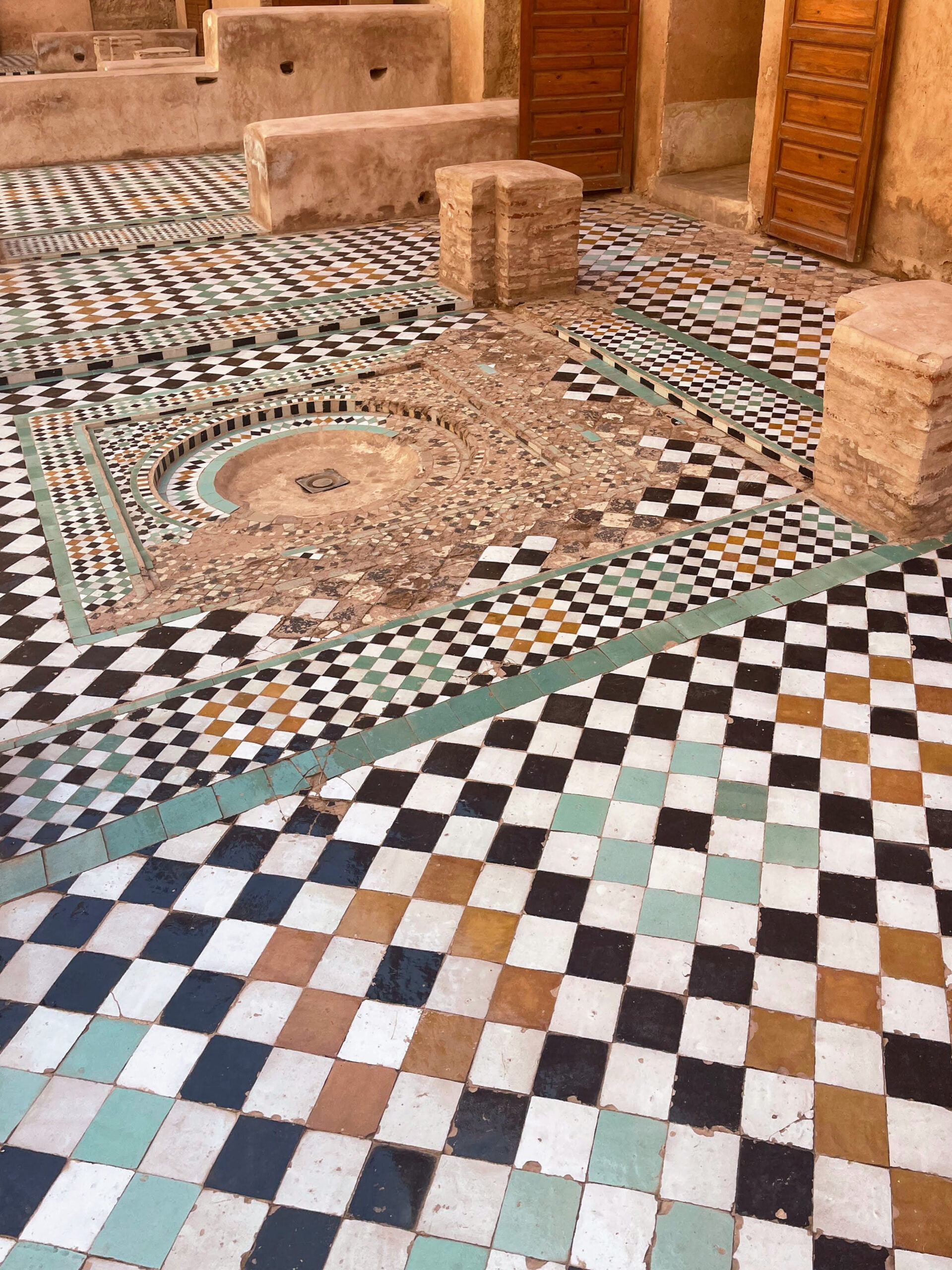
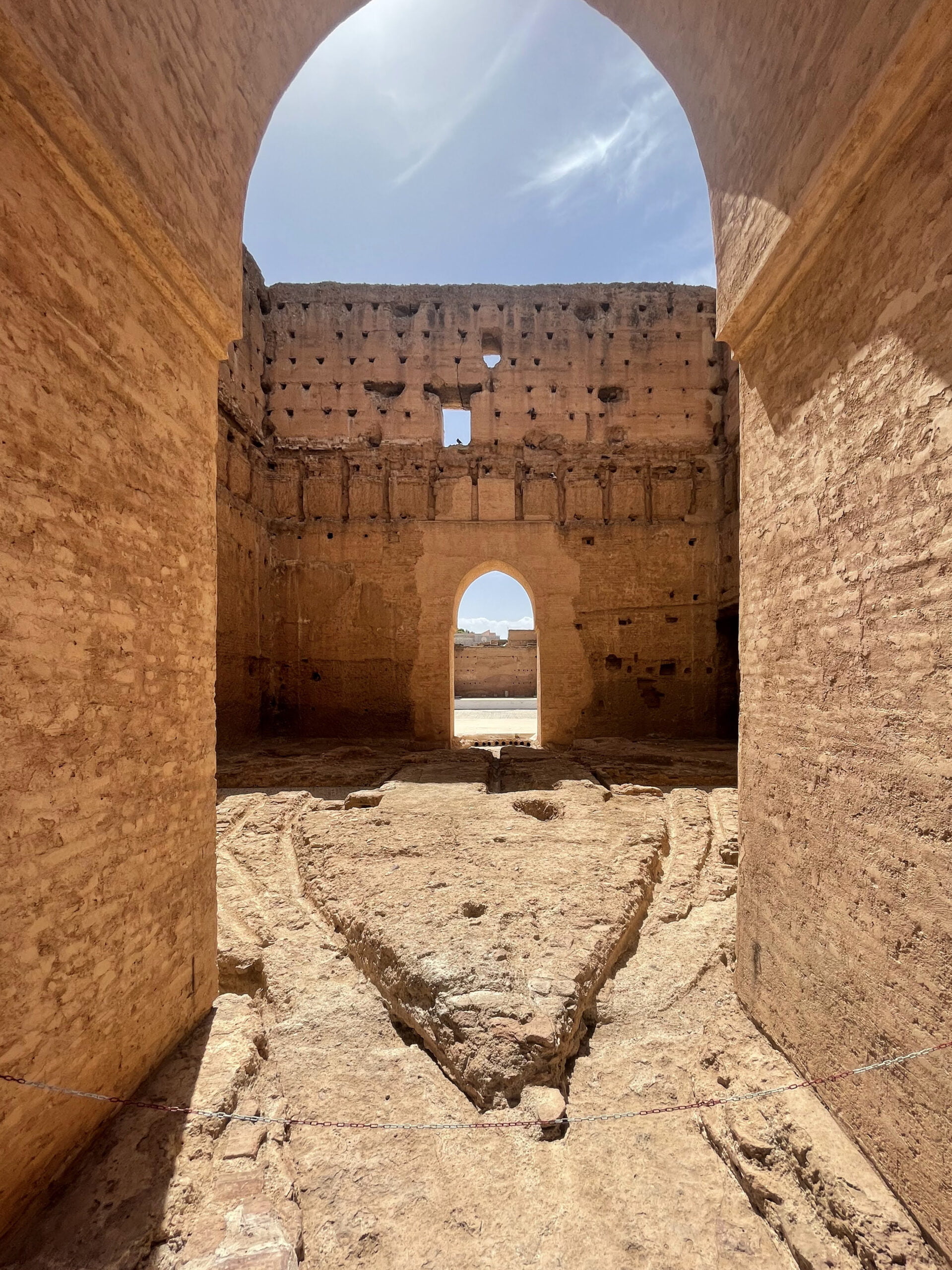
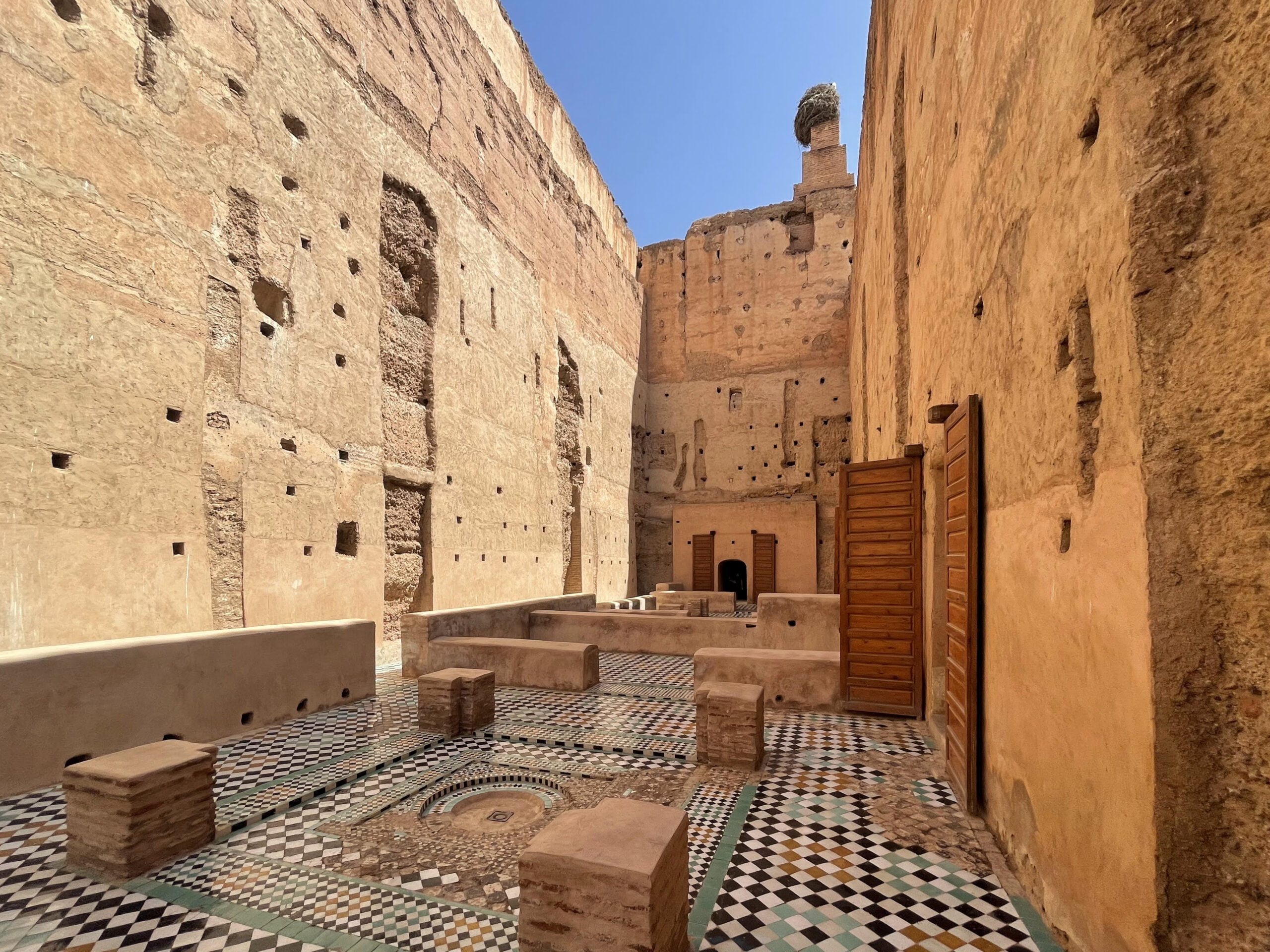
➜ Even in ruins, the El Badi Palace impresses. Part of the underground system is still accessible. You’ll discover plans and documents tracing the history of this unusual palace.
Good to Know
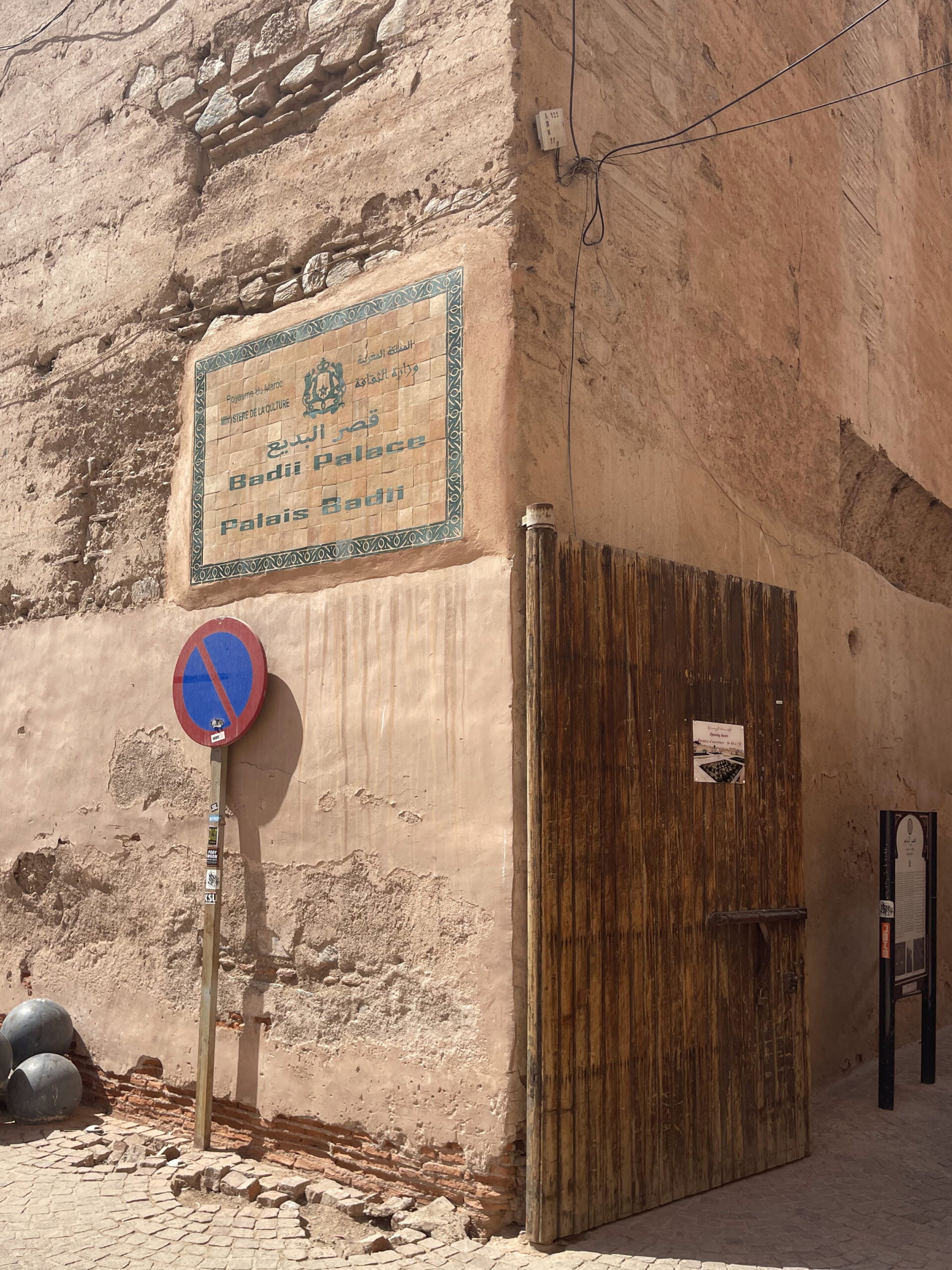
- El Badi Palace is located in Ksibat Nhass, Marrakech.
When you reach the Place des Ferblantiers, head for the “Bab Berrima” gate opposite. Turn right onto Rue Berrima and follow the long corridor to the entrance to the El Badi palace. - The palace is open daily from 9am to 5pm.
The tour takes 1 to 2 hours. - The palace is open daily from 9 am to 5 pm.
If possible, visit in the morning: the site is in the open air, with little shade to protect you from the heat. - Admission costs 70 dhs (+/- 7€).
Currency exchange in dirhams or euros is required, as credit cards are not accepted on site.
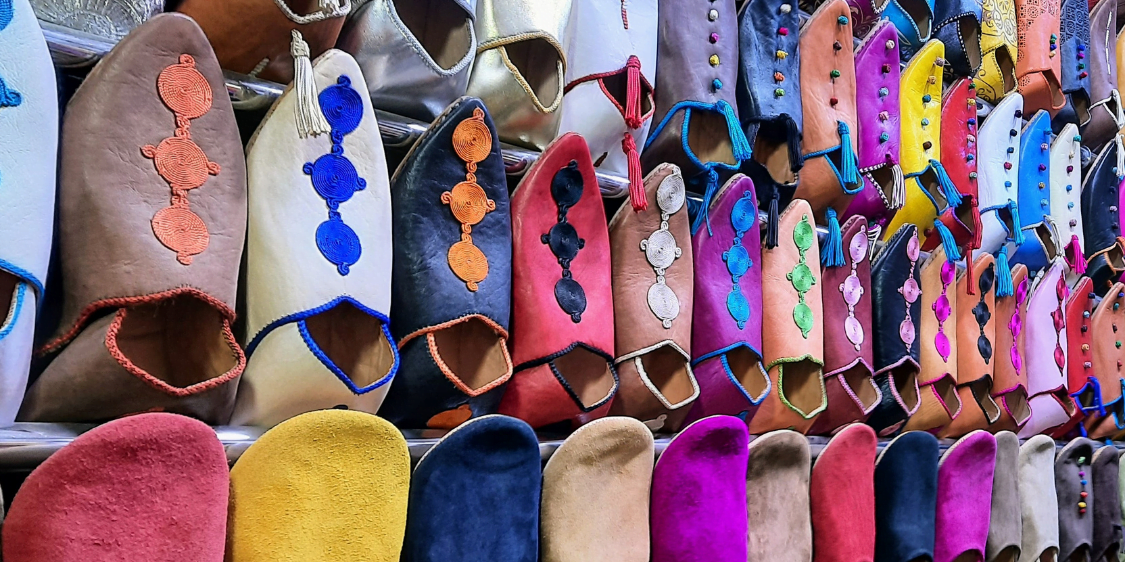
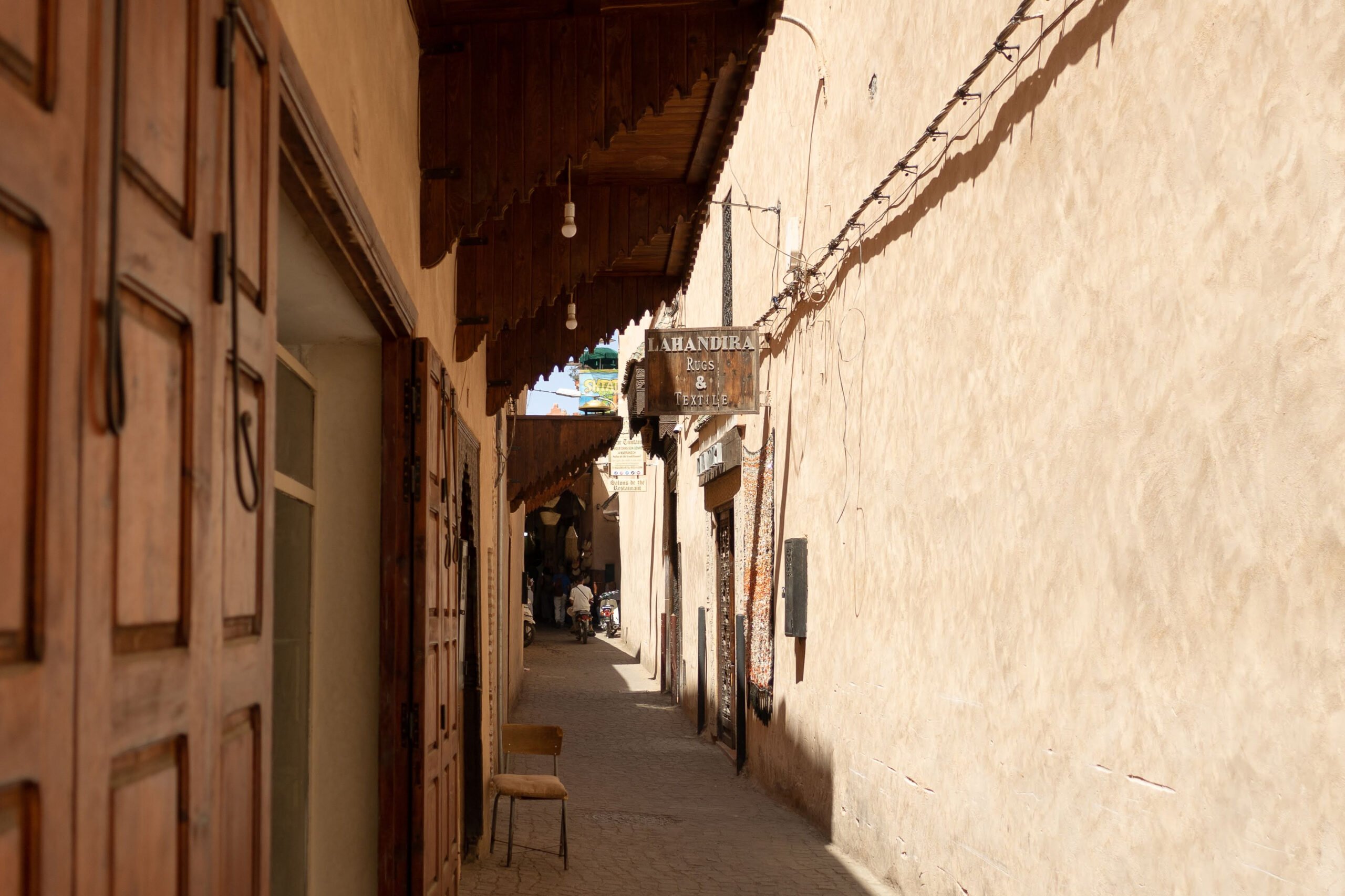
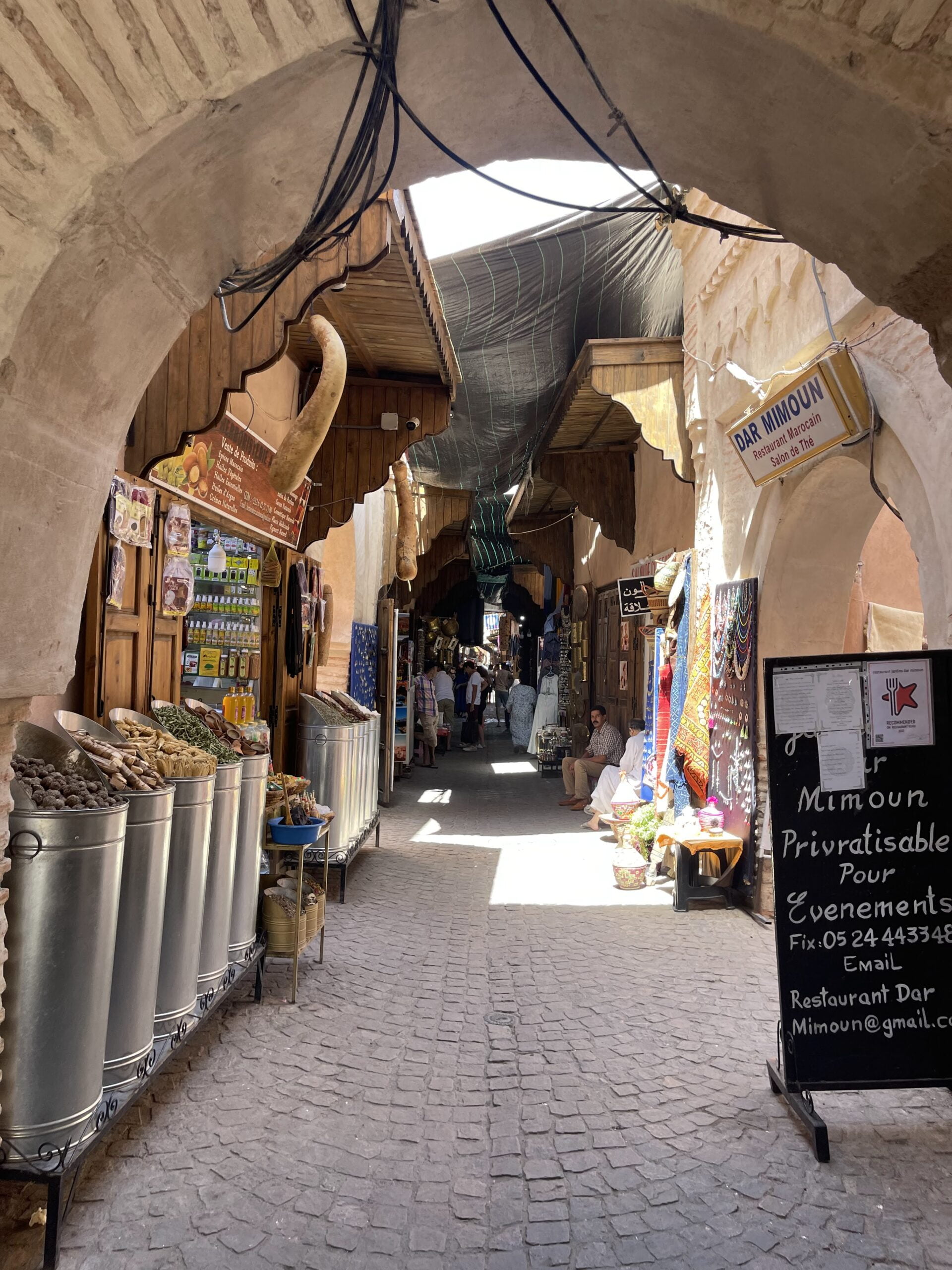
Leaving the Palais El Badi, we pass through Place des Ferblantiers again to take Rue Riad Zitoun Lakdim for about 800 meters, in the direction of Place Jemaa el-Fna. The alleys are narrow, often covered. The stalls are overflowing with spices, jewelry, babouches, bags and various souvenirs.
Jemaa el-Fna Square
Triangular in shape, Jemaa el-Fna Square is the geographical center of Marrakech and a key socio-cultural meeting place. Located to the southwest of the medina, it is dominated by the minaret of the Quessabine mosque, between the souk and the Koutoubia minaret. According to some, Jemaa el Fna means“Assembly of the Dead“, in reference to the time when criminals were beheaded on the spot. Others believe that the Saadian sultan Ahmed al-Mansour planned to build a large mosque on the square, to be known as Jemaâ el Hna (“Mosque of Peace”). But the mosque never saw the light of day due to a plague epidemic that decimated part of the population, including the king, and the square became known as“Place de la Mosquée Annéantie“(Jemaa el-Fna).
Today, the square is surrounded by restaurants, shops and public buildings. During the day, it comes alive with monkey trainers, snake charmers and henna tattoo artists strolling between stalls selling fresh juices and spices. As soon as night falls, the stalls of the day give way to food stalls, musicians and artists of all kinds.
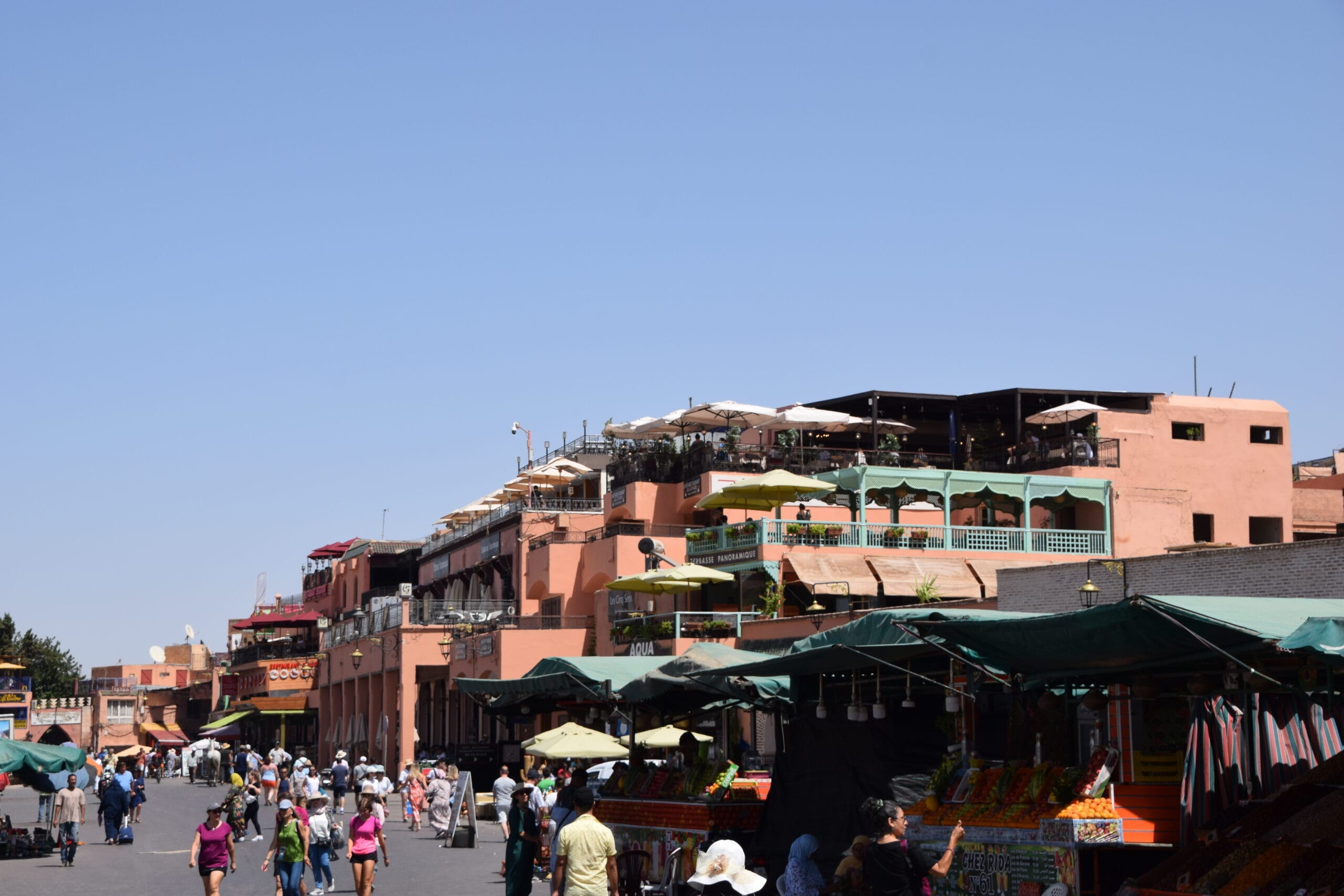
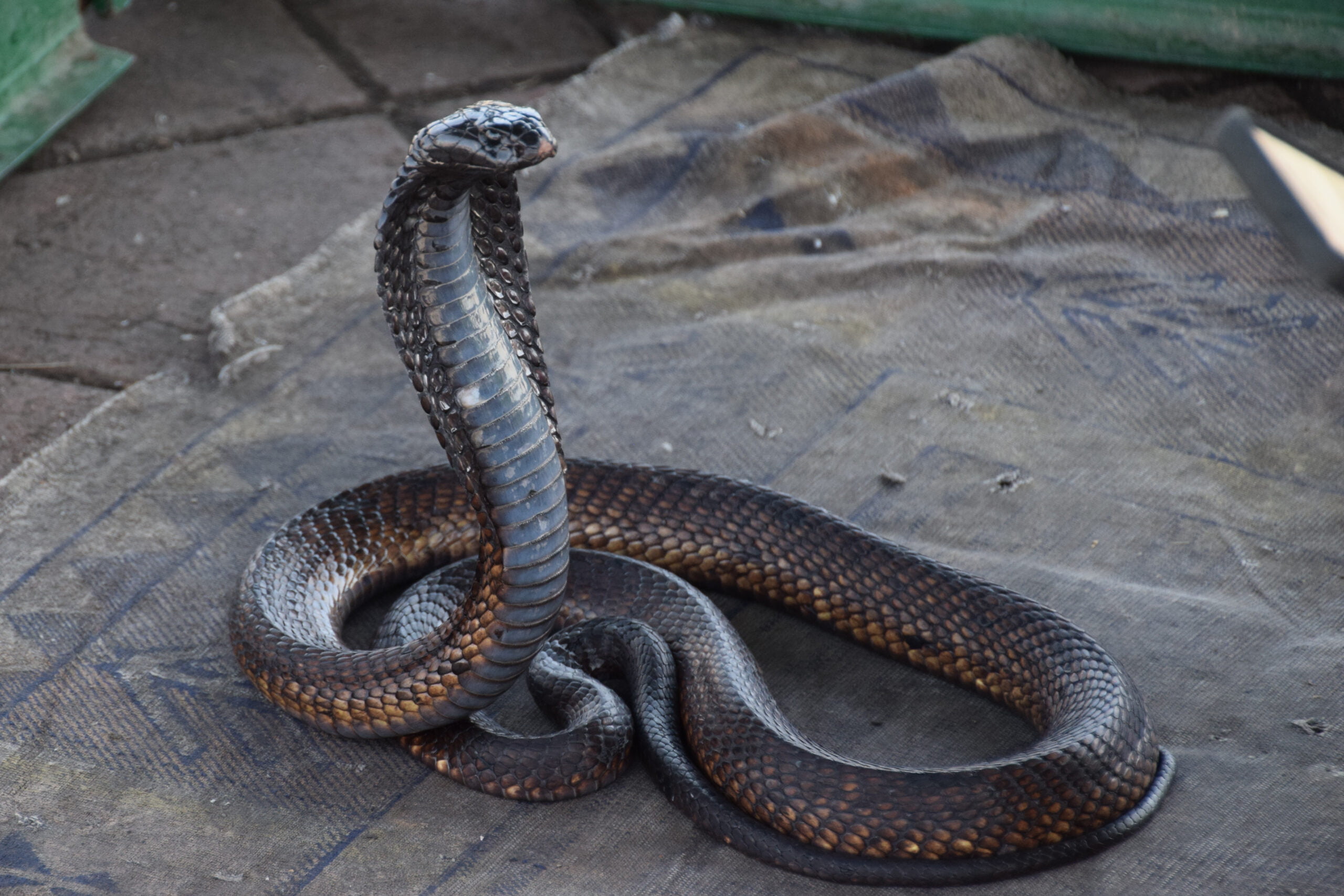
➜ With over a million visitors every year, Jemaa el-Fna Square is a must-see in Marrakech. We go there not to admire its architectural beauty, but to soak up its very special atmosphere. Be careful with your belongings and your hands… Some henna tattoo artists are very, if not too, quick to draw a tattoo on your hands that you didn’t really ask for. You’ve been warned 😅
The souks of the medina
Opposite the Koutoubia, the terrace of Café Zeitoun overlooks the square. One last look at the snake charmers, then off to the souk of the medina, which stretches north from Place Jemaa el-Fna to Medersa Ben Youssef.
A veritable labyrinth, Marrakech’s souks are home to over 2,600 artisans organized by district and trade. Each trade is organized into guilds. To complete his apprenticeship, an apprentice must produce a piece of his own design, judged by a commission of master craftsmen. Only then can he set up his own business as a craftsman.
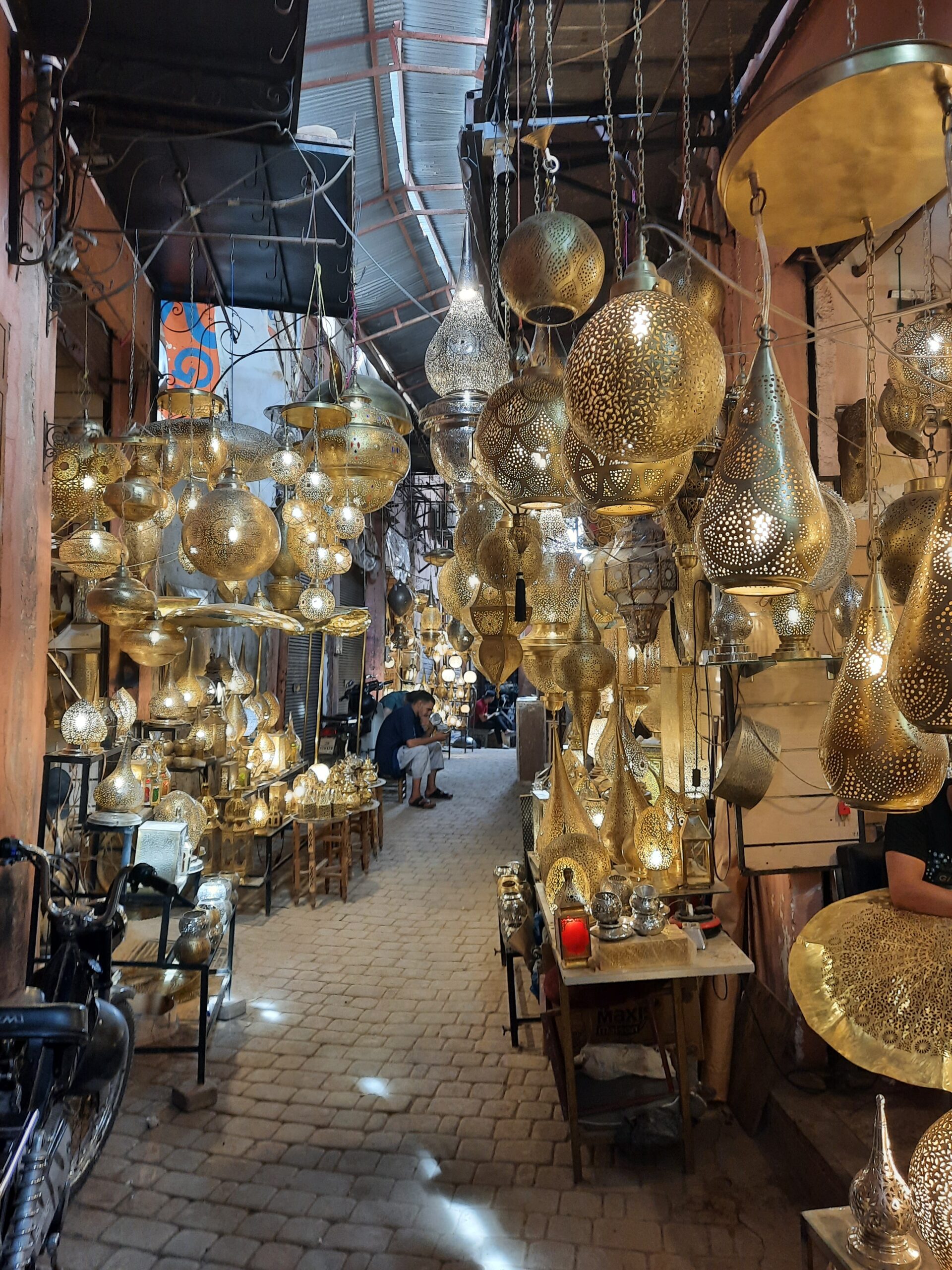
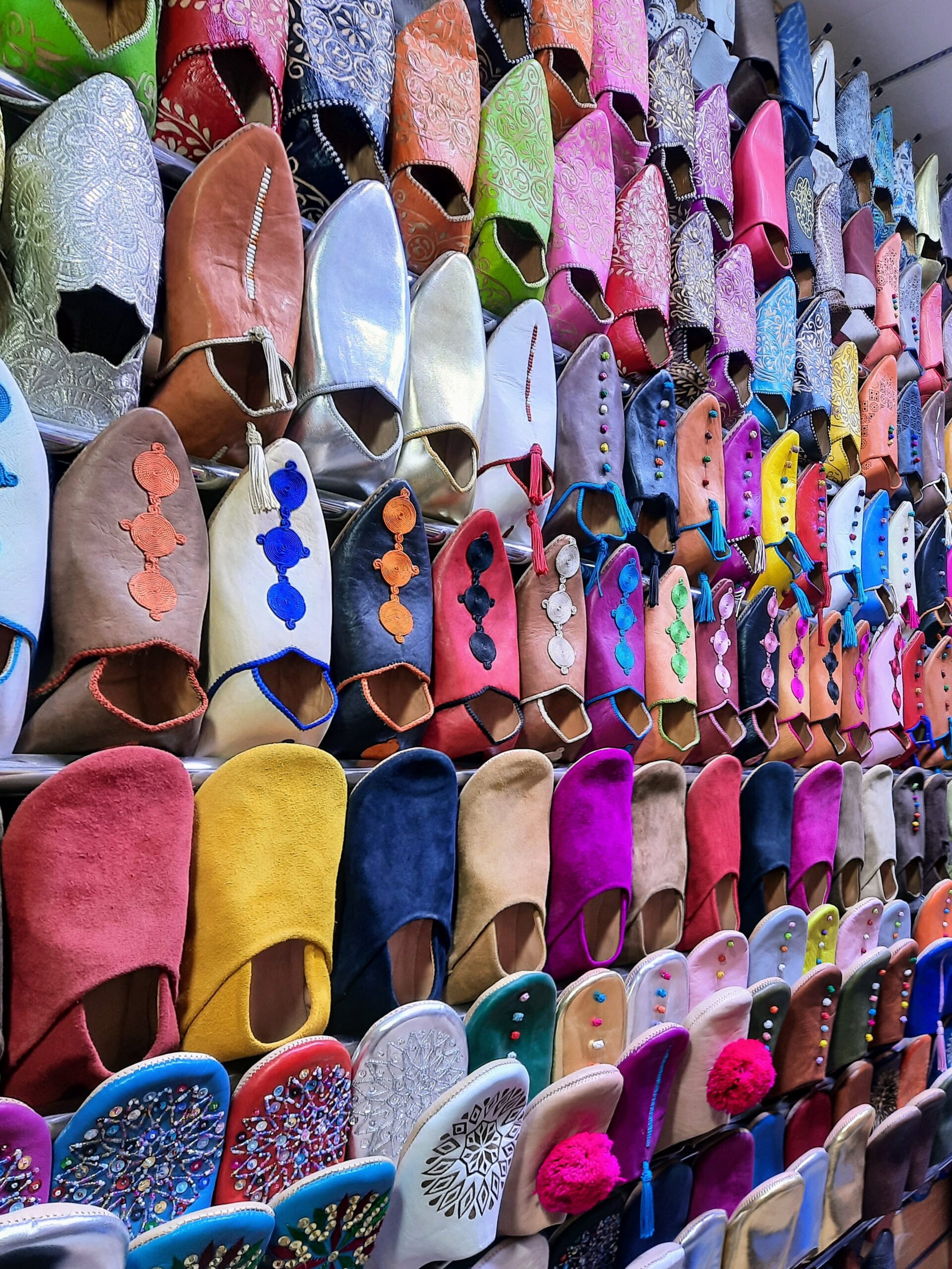
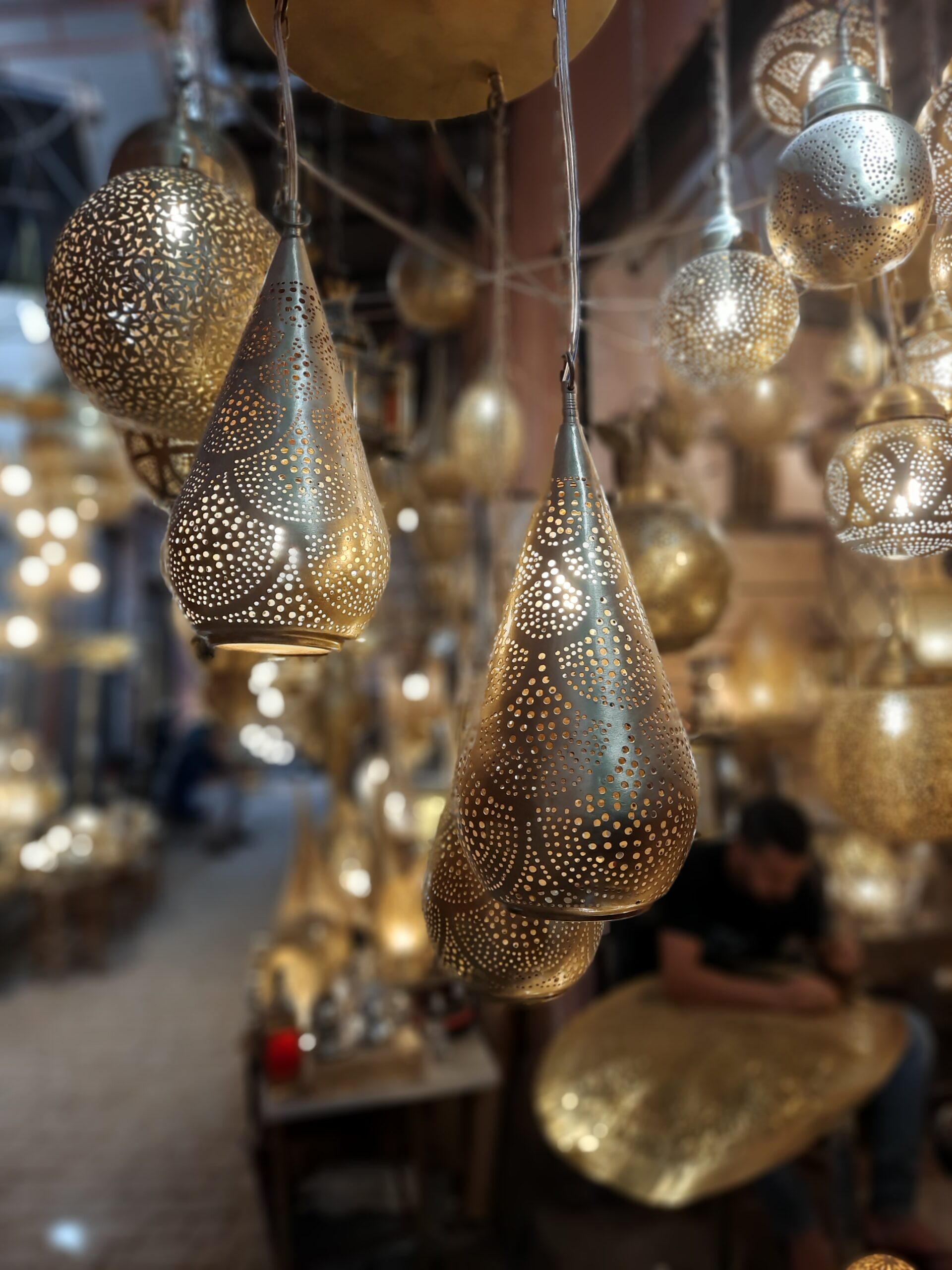
In the central aisles, stalls sell what craftsmen make in the workshops in the adjacent lanes. Moroccan handicrafts proliferate with jewelry, vases, lanterns, carpets, clothes, fabrics, spices and more.
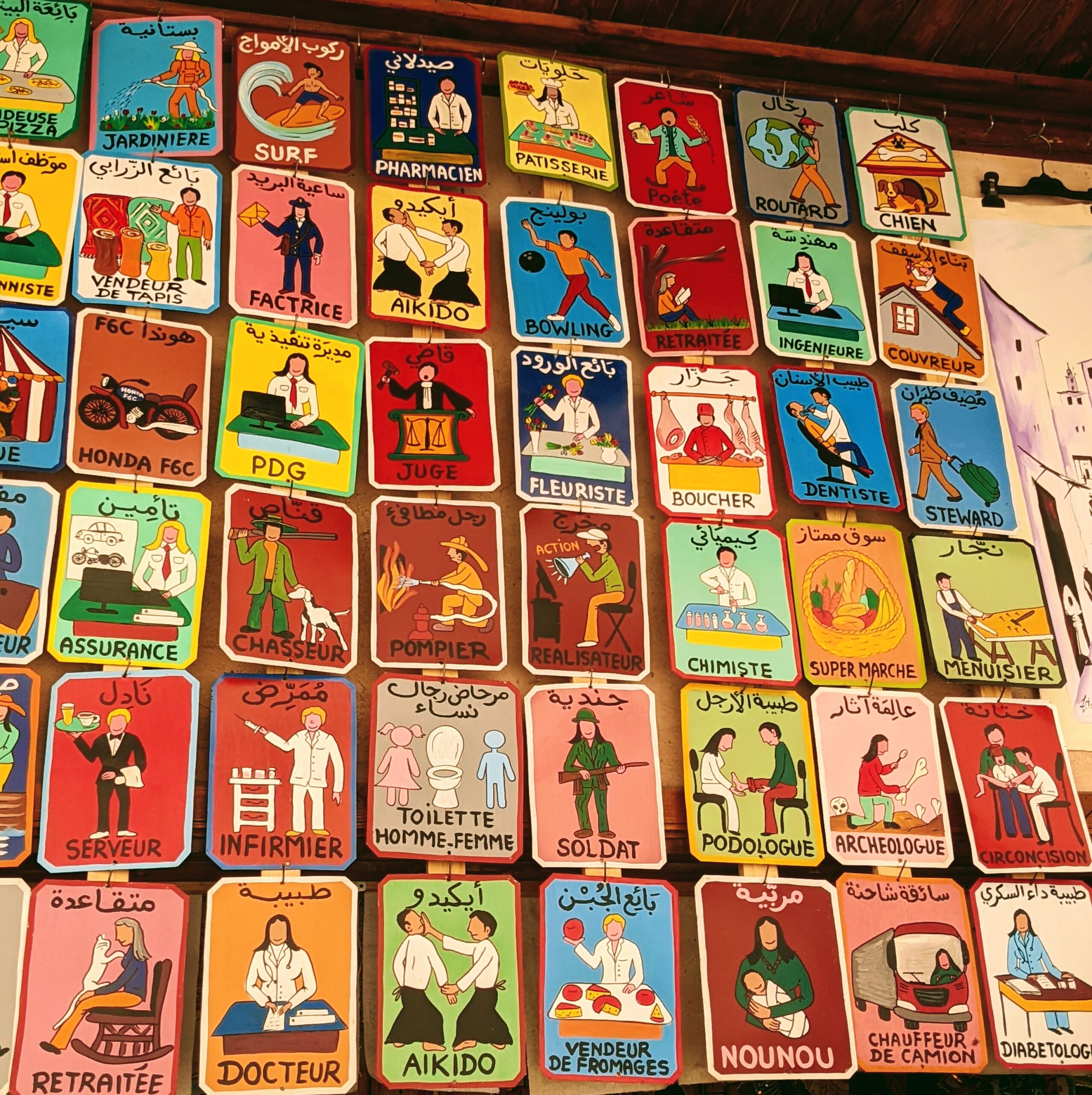

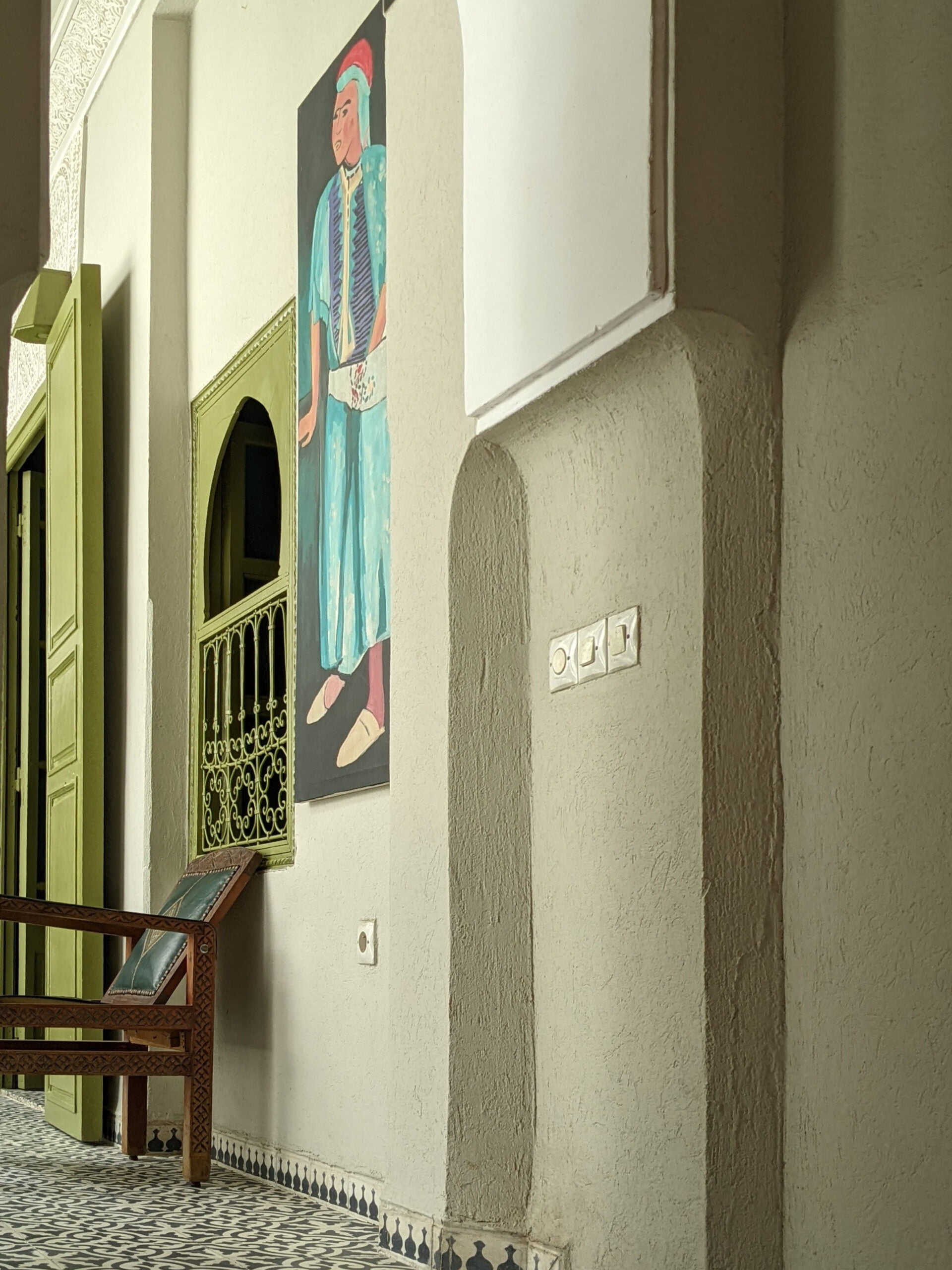
➜ While some of the alleyways may seem very dark, the souks are not a place where you feel unsafe. The only real danger is that of being taken for a ride by not haggling enough over what you want to buy. Here, more than anywhere else, haggling is a tradition, and with no posted price, there’s no choice but to go for it!
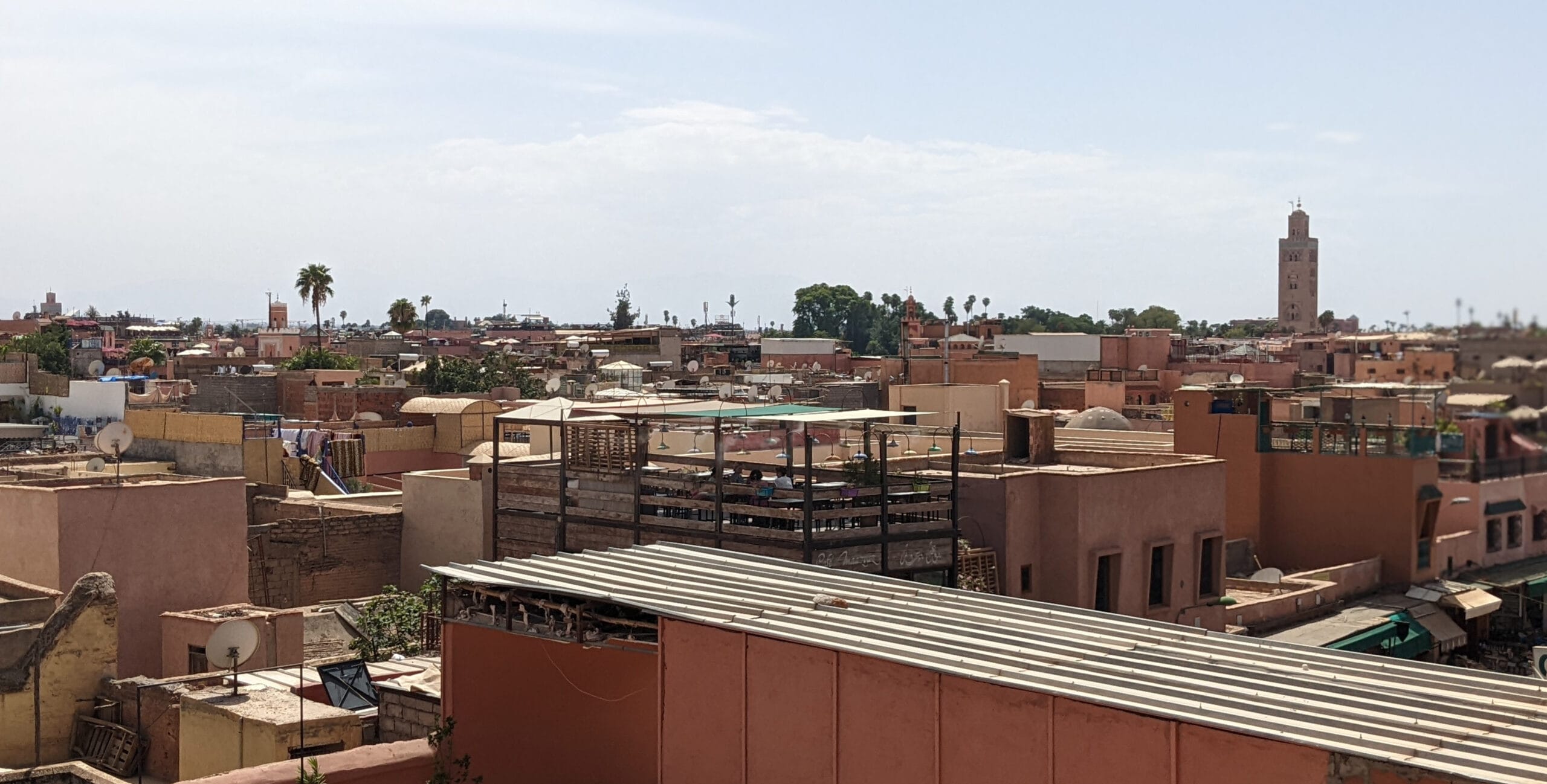
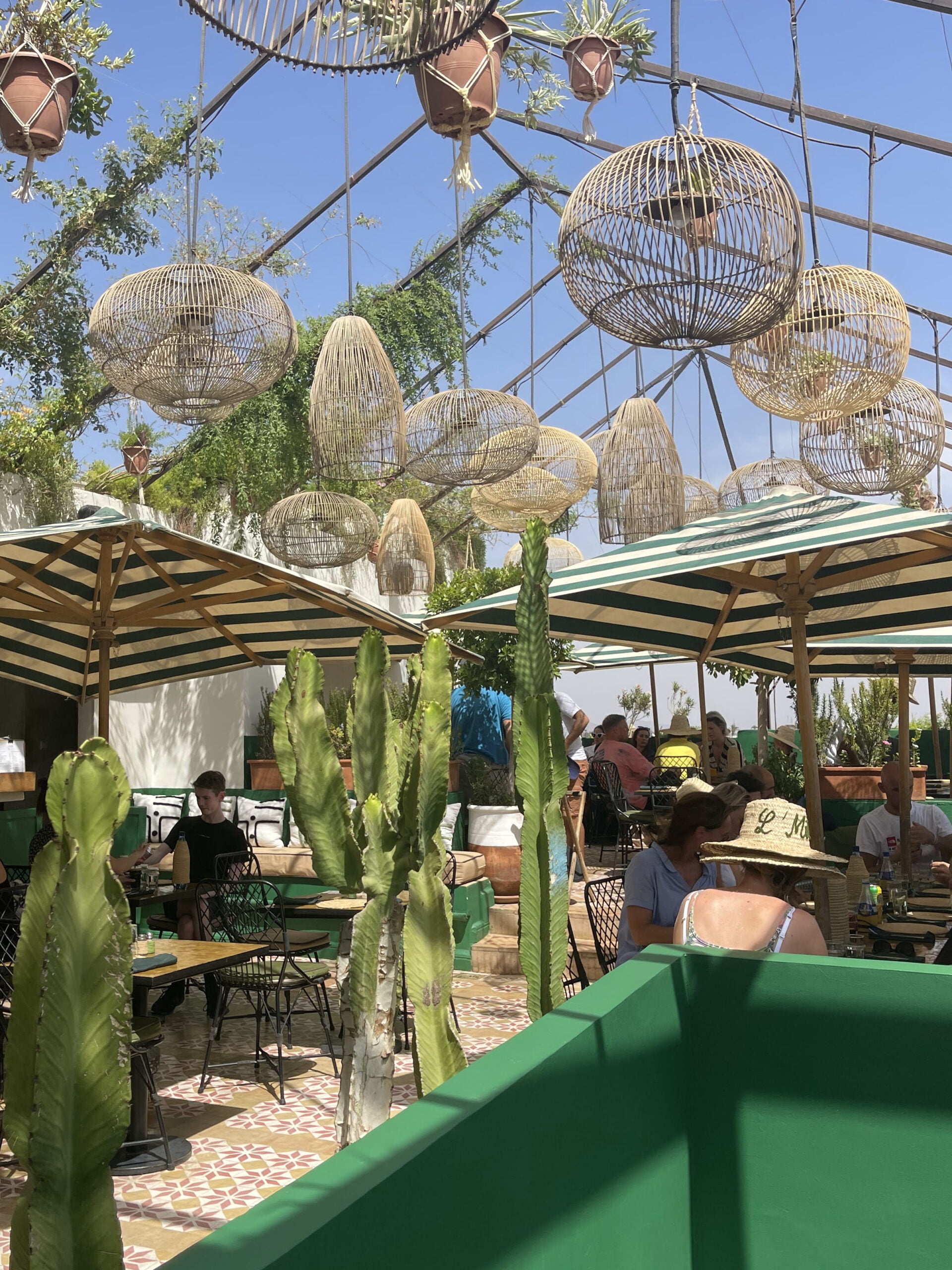
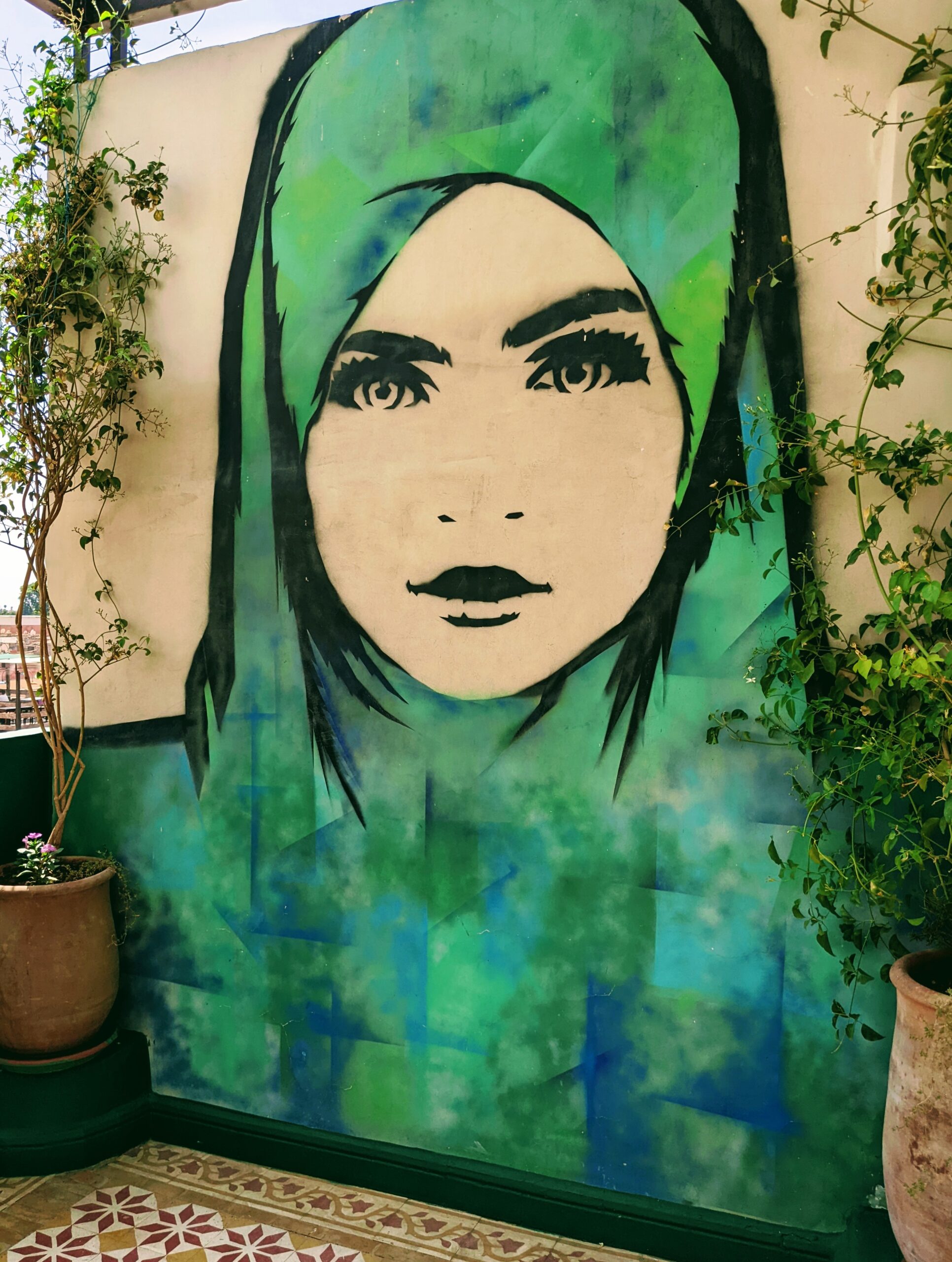
2pm, it’s getting hungry… L’Mida is just around the corner! The entrance isn’t much to look at, and neither is the small staircase you have to climb to reach the restaurant’s two floors. But what a decor, what a terrace and what a view 😍
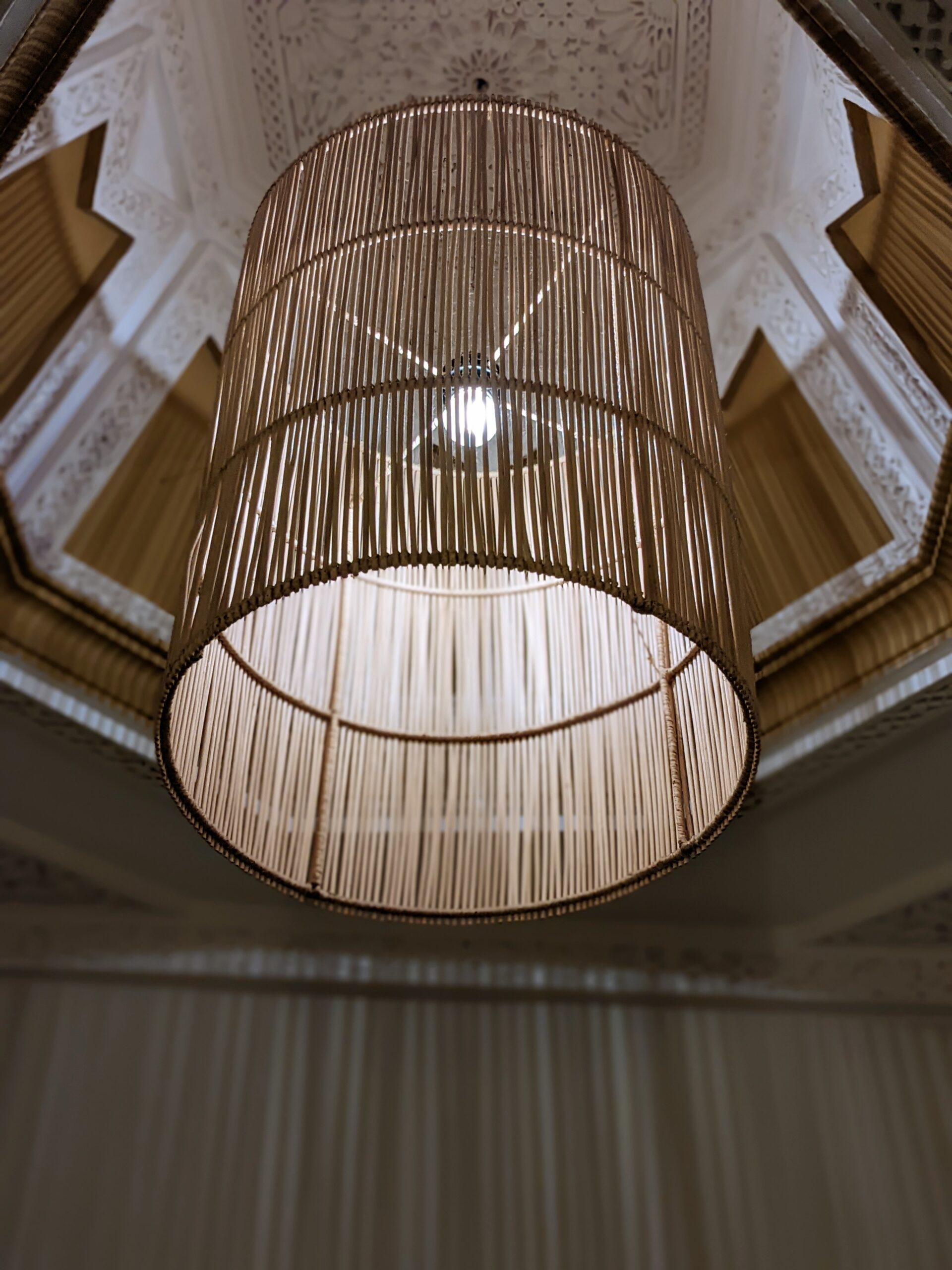
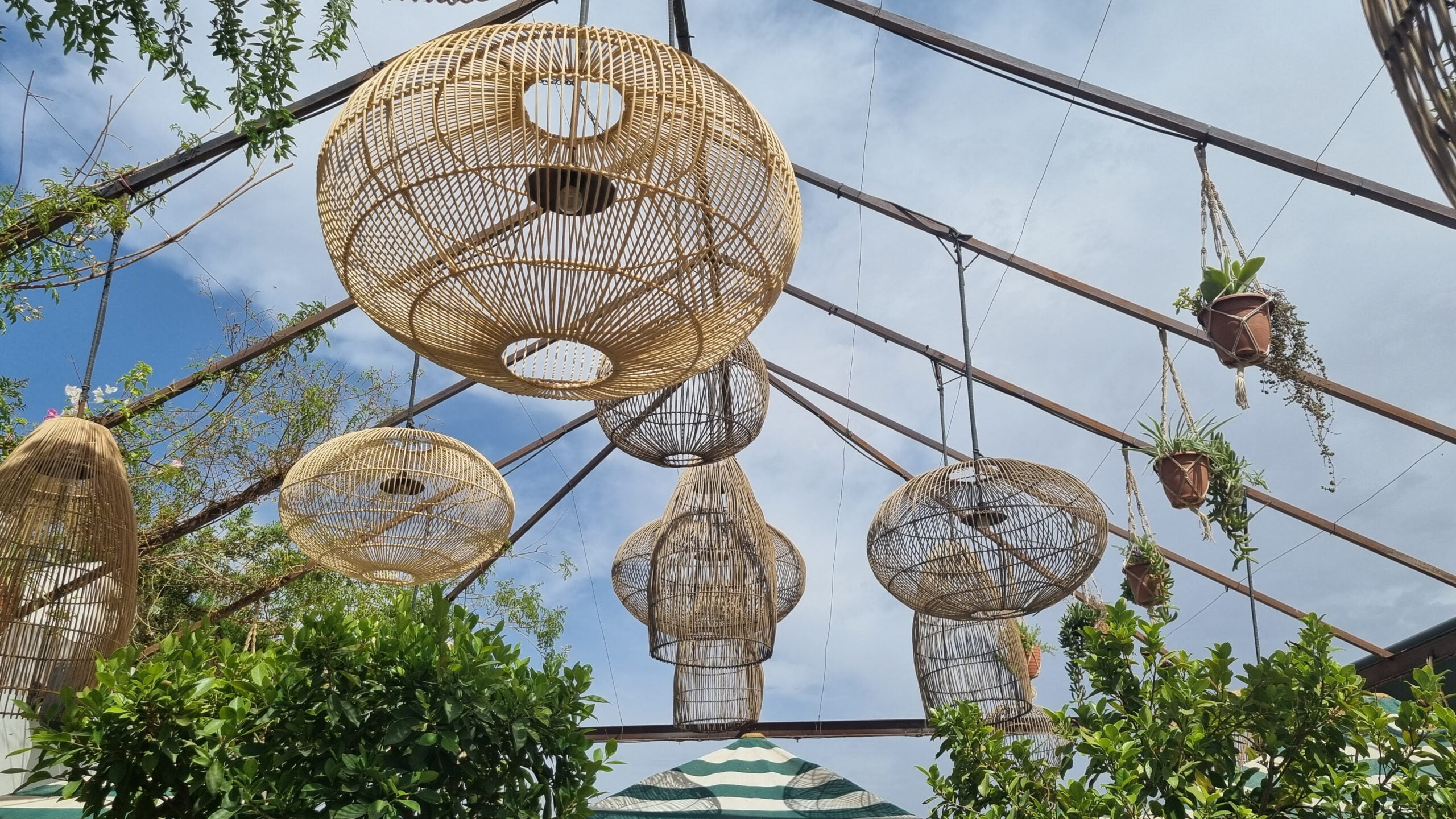
We take our seats on green banquettes, pretty wicker lamps hanging over our heads. On the plates, recipes that are rather avant-garde but totally rooted in traditional Moroccan cuisine: they’re pretty and, above all, very good.
Good to Know
- The L’Mida restaurant is located 78 bis Derb Nkhel Rahba Kdima, close to Place des Epices.
- The place is a big hit, and the terrace even more so. Reservations are essential for groups, but not only! Online reservations are possible via the restaurant’s website.
- Starters cost between Dhs75 and Dhs95, main courses between Dhs90 and Dhs150, and desserts between Dhs55 and Dhs75. As in many places in the medina, there are no alcoholic beverages on the menu. An excellent opportunity to taste L’Mida’s signature mocktails, which are to die for!
Leaving L’Mida, continue along Rue Sidi Isshak towards the Medersa Ben Youssef and the Almoravide Qoubba.
- Characteristic of Muslim countries, a medersa is an Islamic religious school. For over four centuries, the 132 rooms of the Ben Youssef Medersa served as a hostel for students from outside Marrakech. With a capacity of 900 students, the Ben Youssef Medersa was the largest in Morocco, and one of the largest in North Africa. While the rooms are austere, the courtyard and prayer room are majestically decorated. In Marrakech, the medersa is the only religious building open to non-Muslims.
- The Almoravid Qoubba or Qoubba al-Bu’diyyin is a religious building erected in 1117 by Ali ben Youssef. The qoubba (“dome”) was the ablution center for worshippers on their way to the nearby mosque. In operation for several centuries, the qoubba was also home to one of Marrakech’s first fountains. Today, it is the only remaining architectural vestige of the Almoravid era (1040 – 1147) in the red city.
The place of spices
Not having enough time to visit these two buildings, we retrace our steps to Rhaba Kadima Square, or Spice Square.
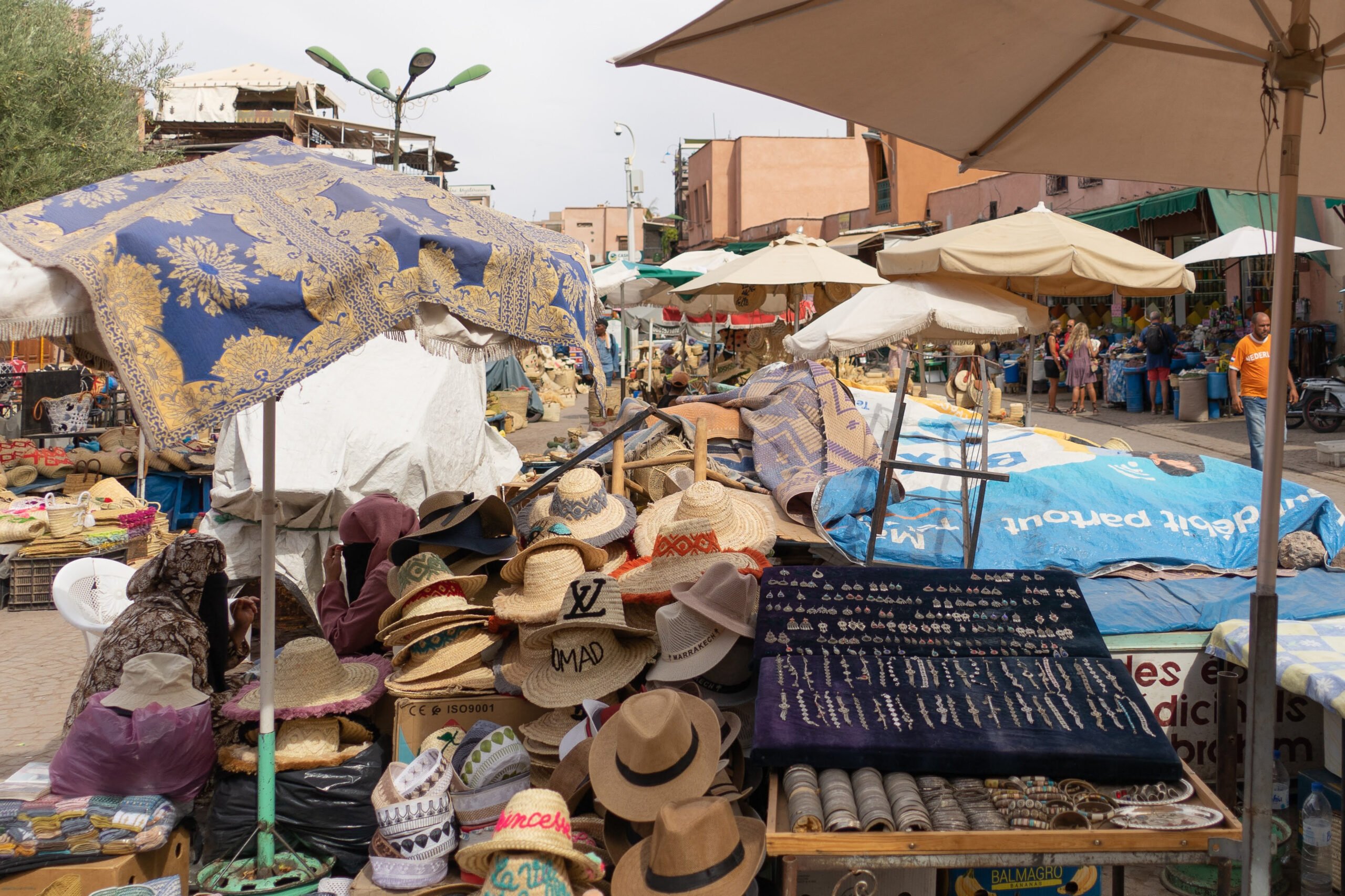
As its name suggests, the spice square is the hub of supply for anyone looking for spices, dried plants or essential oils.
But on closer inspection, some stalls offer more exotic items, such as snake or lizard skins, goose feet or even live turtles and chameleons (for the moment), destined to end up as a sacrifice in some magic ritual (black or white) or as an ingredient in a healer’s medicine. Spice Square is also known as Wizards’ Square, and it’s easy to see why 😅
No time to linger, we rush through the souk stailia to Rue Mouassine and the Secret Garden. Along the way, the Cherifia souk attracts attention with its chic bazaar feel. On the first floor, a motley collection of stalls and designer labels. Upstairs, La Terrasse des épices, a veritable Marrakech institution! Known as much for its homemade pastries as for its breathtaking view of the Atlas Mountains and the Koutoubia.
The Secret Garden
The origins of the Secret Garden date back to the 16ᵉ century, when the Saadian sultan Moulay ‘Abd-Allah undertook the urbanization of what is today the Mouassine district. Numerous buildings were erected, including palaces housing the greatest personalities of the time. However, the palace was destroyed during the decline of the Saadian dynasty.
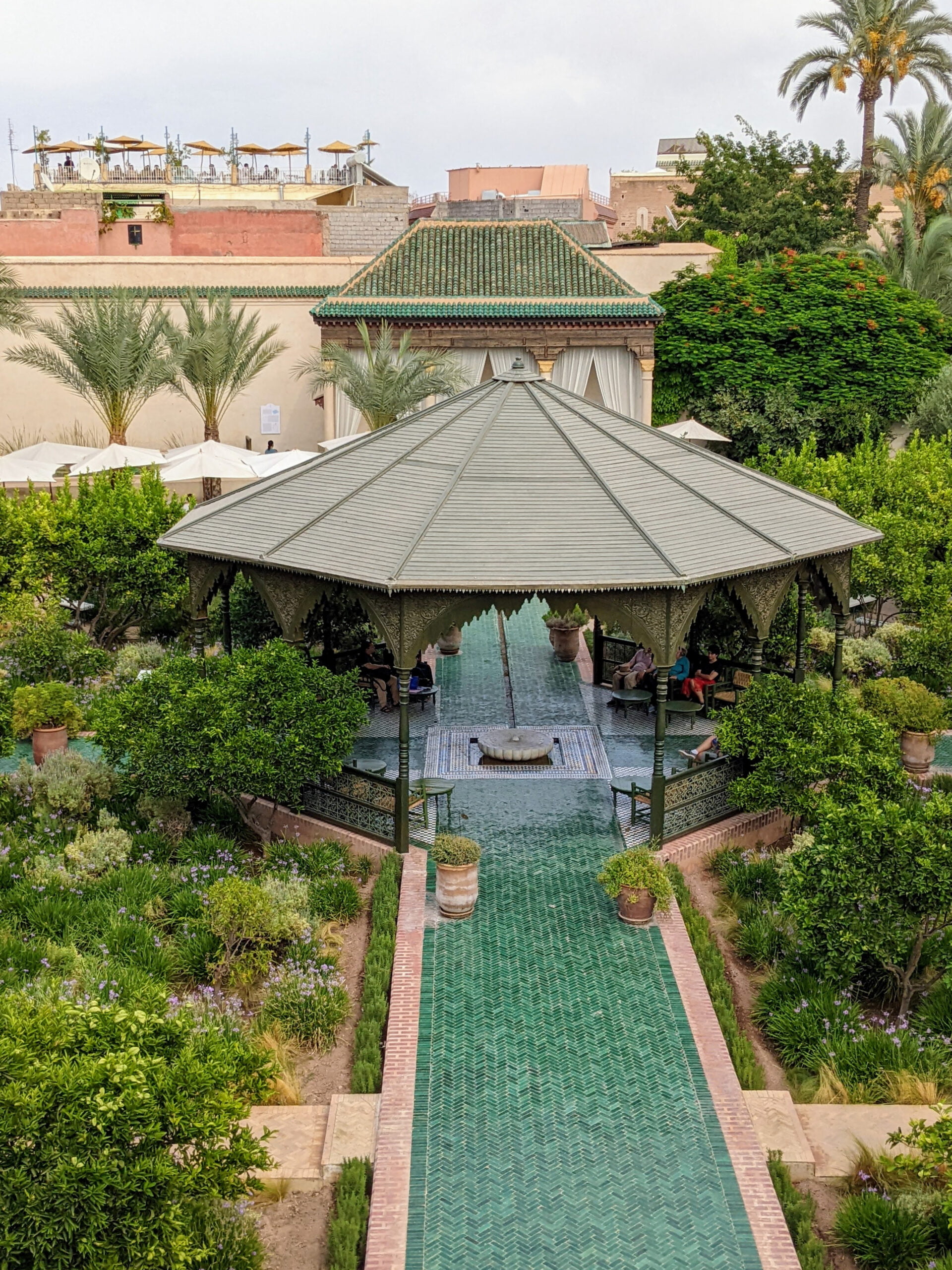
In the 19ᵉ century, the land on which the palace had been built was bought by an important Atlas caïd, who decided to rebuild a new palace identical to the inaugural one. When the caïd died, the property became home to some of the most prominent political figures in Morocco and Marrakech. Until 1934, when it was no longer maintained and fell into ruin. It wasn’t until2008 that a passionate Italian architect, Lauro Milan, came up with the idea of an open-air museum.
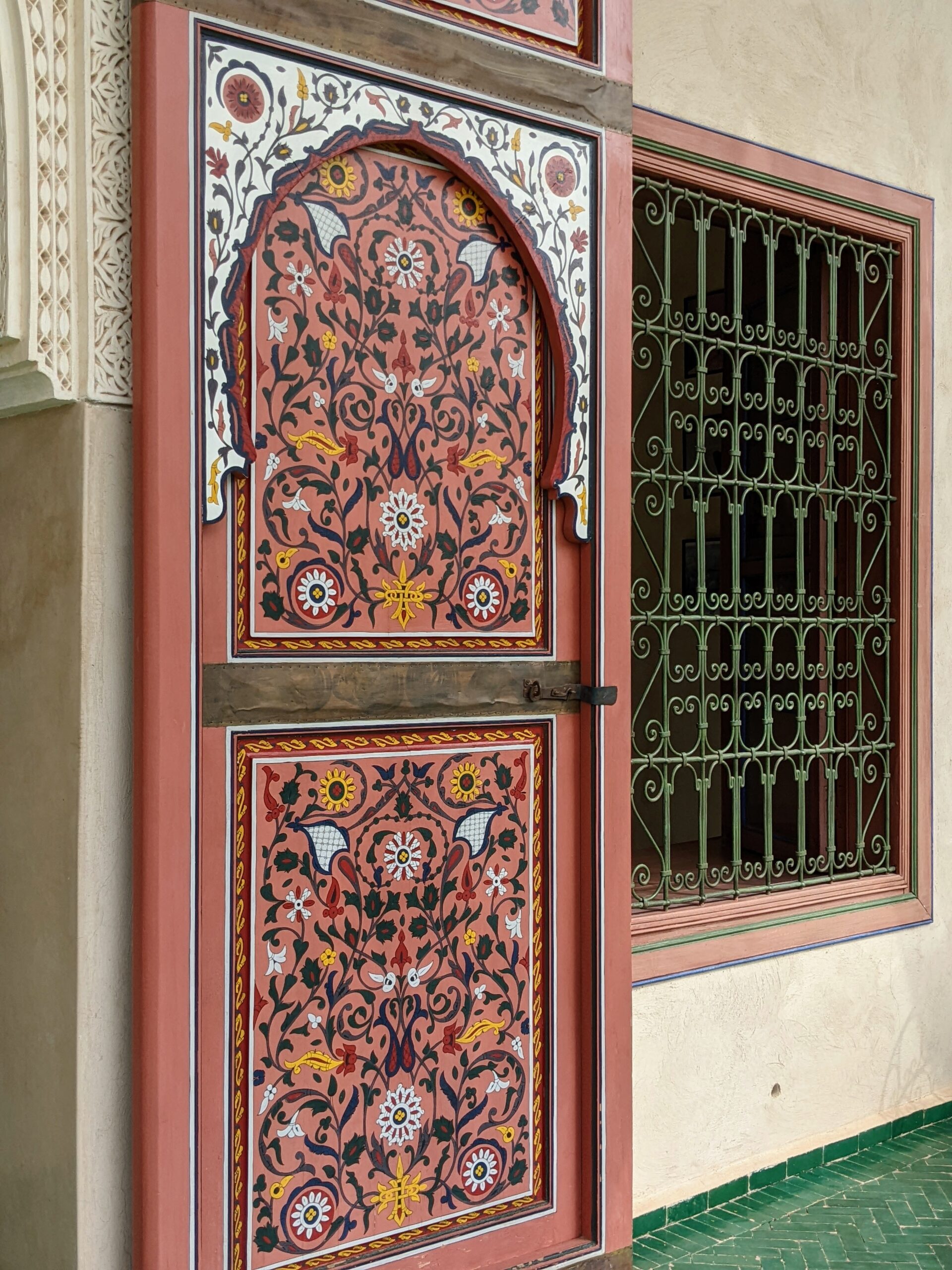
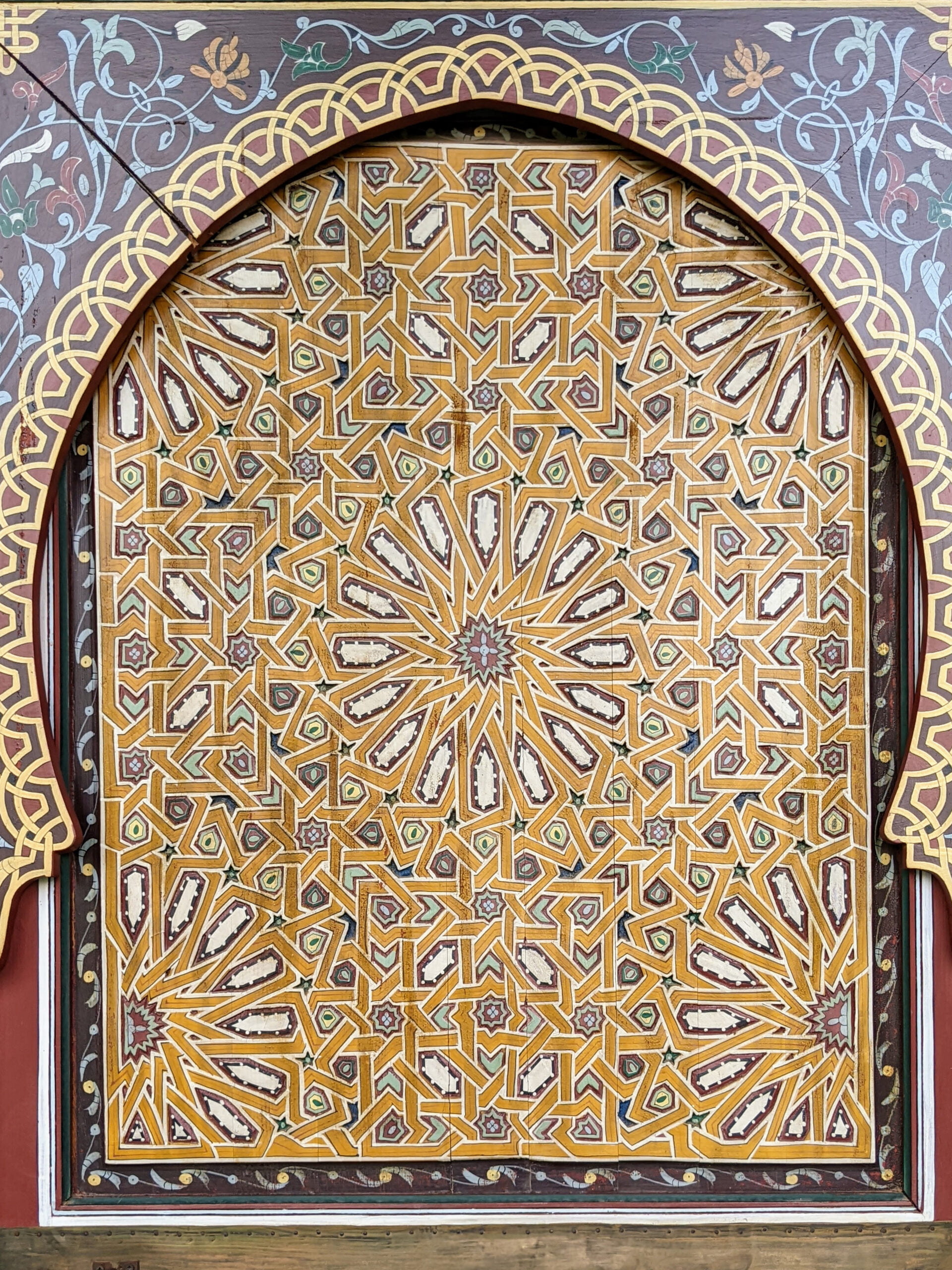
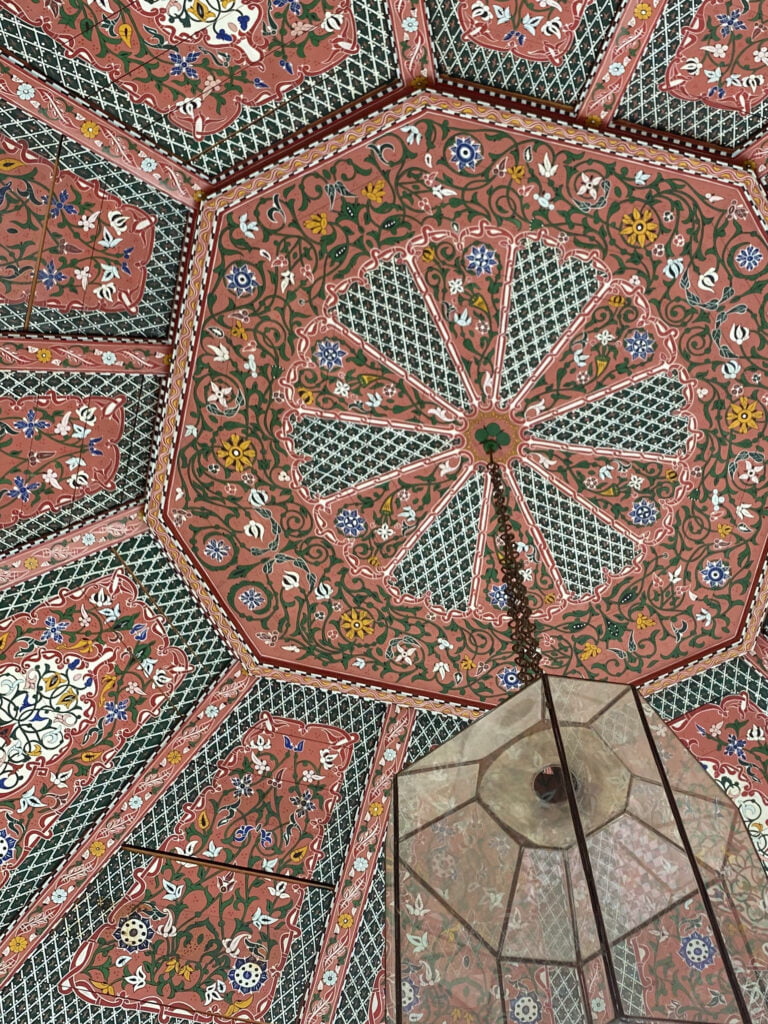
It took eight years to rebuild the palace and create two gardens: an exotic garden, with plants from all over the world, and an Islamic garden, in which water, fountains and basins are the basic elements of design and aesthetics. Water for the Secret Garden comes from the Agdal gardens via a khettara system, a hydraulic system that dates back over a century.
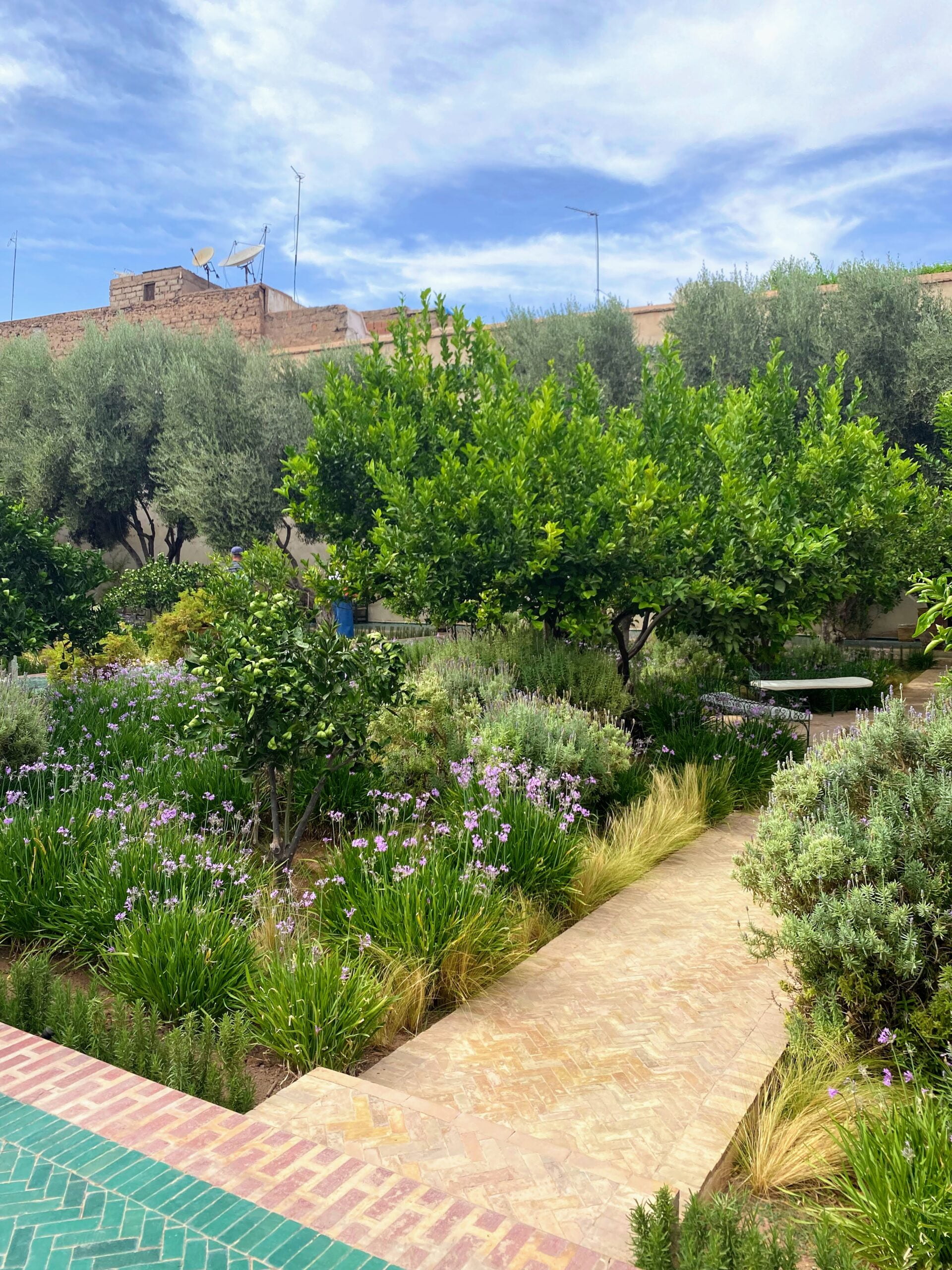
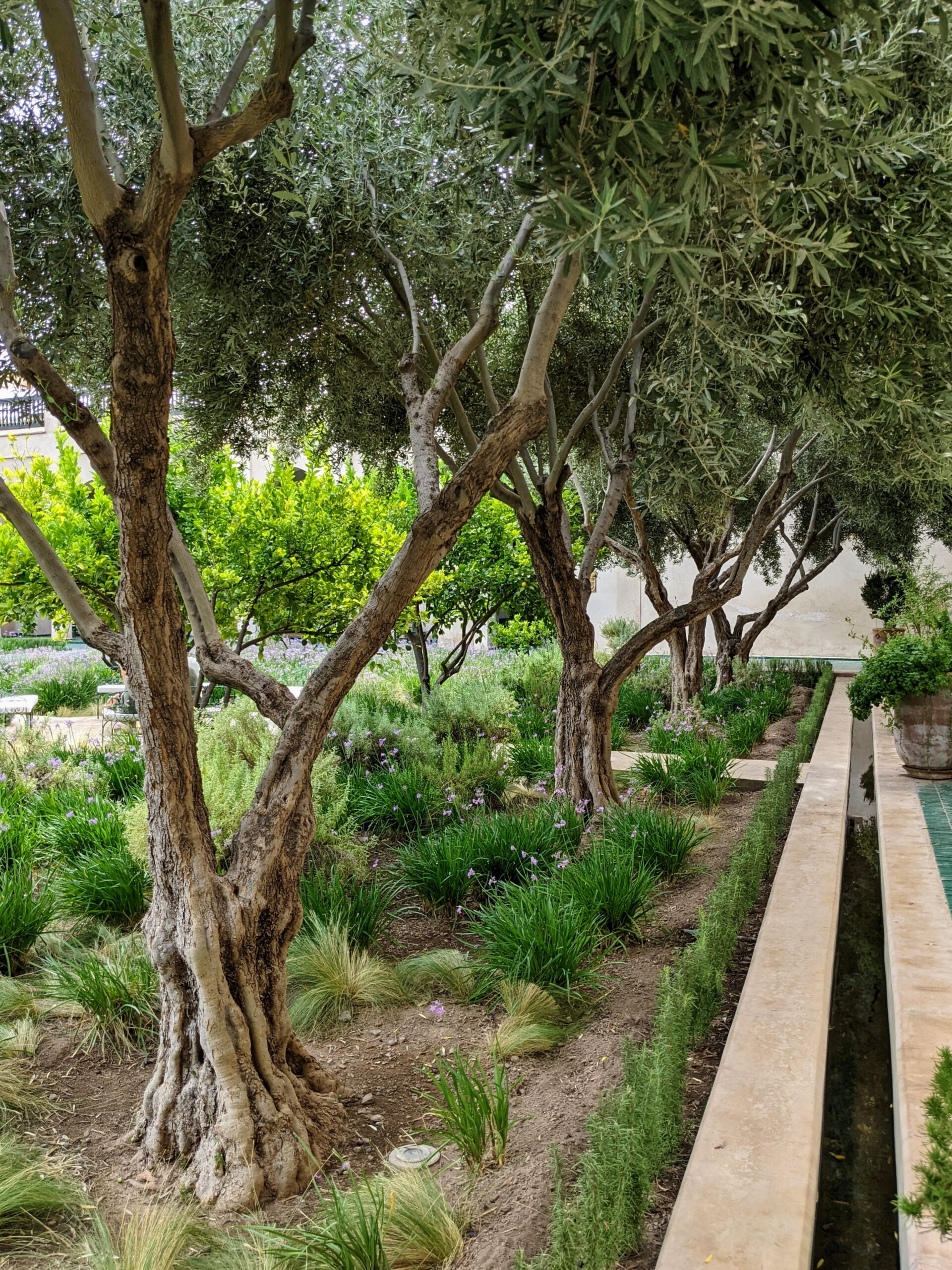
The Secret Garden is also famous for its tower, whose height, close to that of some of Marrakech’s minarets, offers a spectacular view of the medina.
➜ The Secret Garden is a true floral and architectural masterpiece. Its exterior façade, devoid of all artifice, gives no hint of the lushness of the gardens and the very special atmosphere that reigns there. A place not to be missed! And at the end of the circuit, the contrast is all the more striking…
Good to Know
- Le Jardin Secret is located at 184 Rue Mouassine in Marrakesh.
- The Secret Garden is open every day from 9:30 am to 7:30 pm (closing times change during the year, please check).
- Admission costs 60 dhs. You have to pay an extra 40 dhs to access the tower.
The day of discovery is drawing to a close. Last few kilometers in the red city to pick up our cars from the parking lot. You can see the Koutoubia from afar…
The Koutoubia
The Koutoubia Mosque lies between Marrakech’s medina and the New Town, 200 metres from Jemaa el-Fna square. Its nickname derives from its proximity to the old booksellers’ souk (“booksellers’ mosque”).
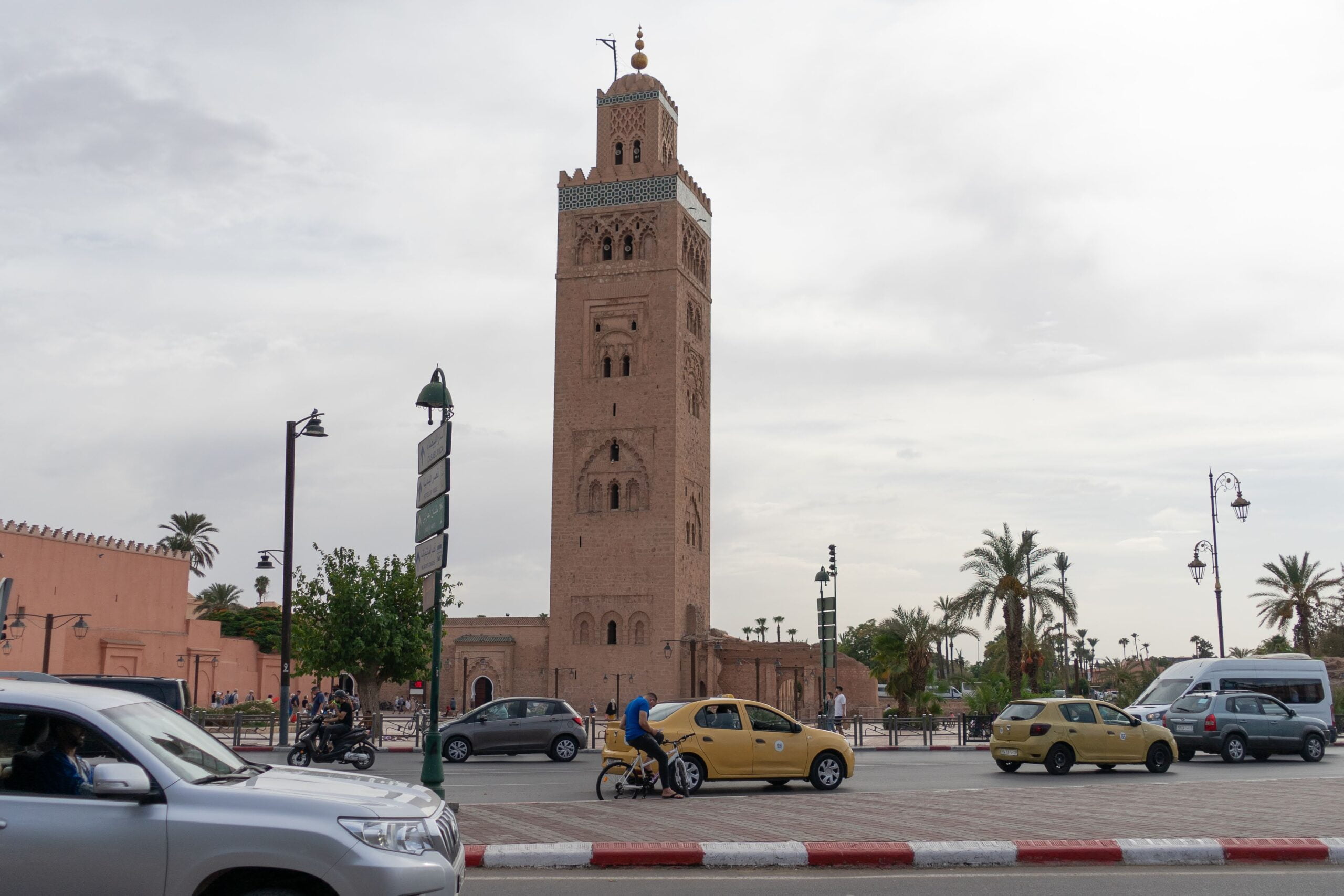
Built in the 12th century, the architecture of the Red City’s largest mosque reflects theart of the Almohads. A first mosque was built in 1148 by the Almohad sultan Abdelmoumen, before a second version of similar size in 1158. The minaret was completed in 1195 by Yacoub Al-Mansour. At 77 meters high, the minaret is decorated with various geometric motifs and topped by a spire and metal orbs. It is an urban landmark and a very important symbol of Marrakech.
After this day of discovery, it’s time to move away from Marrakech for a change of scenery.
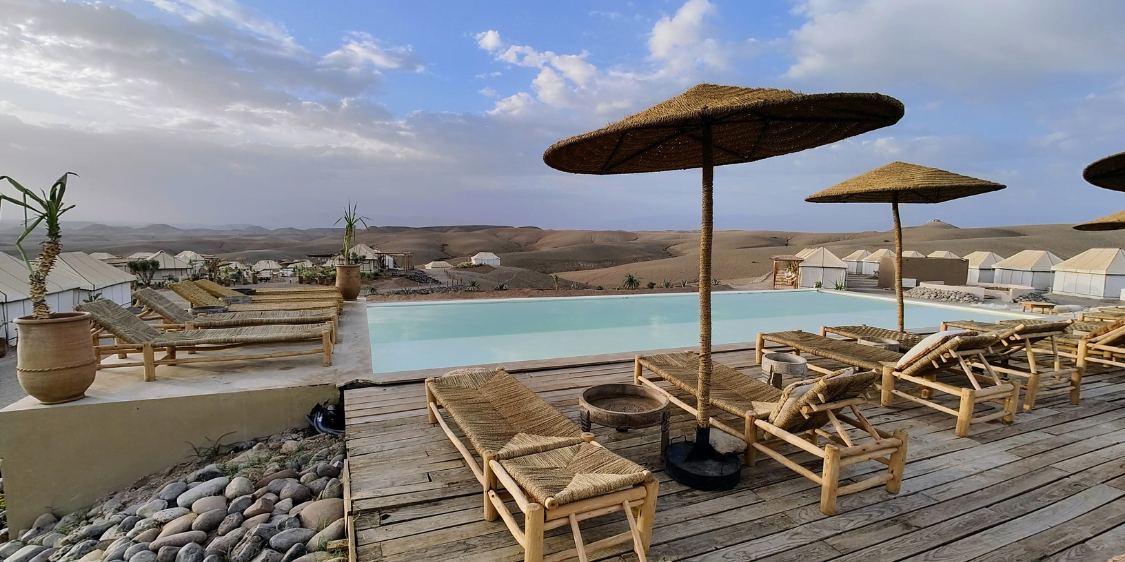
On the agenda for the rest of the weekend: a night at the Petit Hôtel du Flouka, on the shores of Lake Lalla Takerkoust, and a night of glamping in the Agafay desert. I tell you all about it in the article: “Weekend in Marrakech: Account of a crazy weekend with friends“.
➜ How to organize a weekend with friends in Marrakech? Where to stay, when to go? The answers await you in the article:“Weekend in Marrakech: practical info & good addresses“.