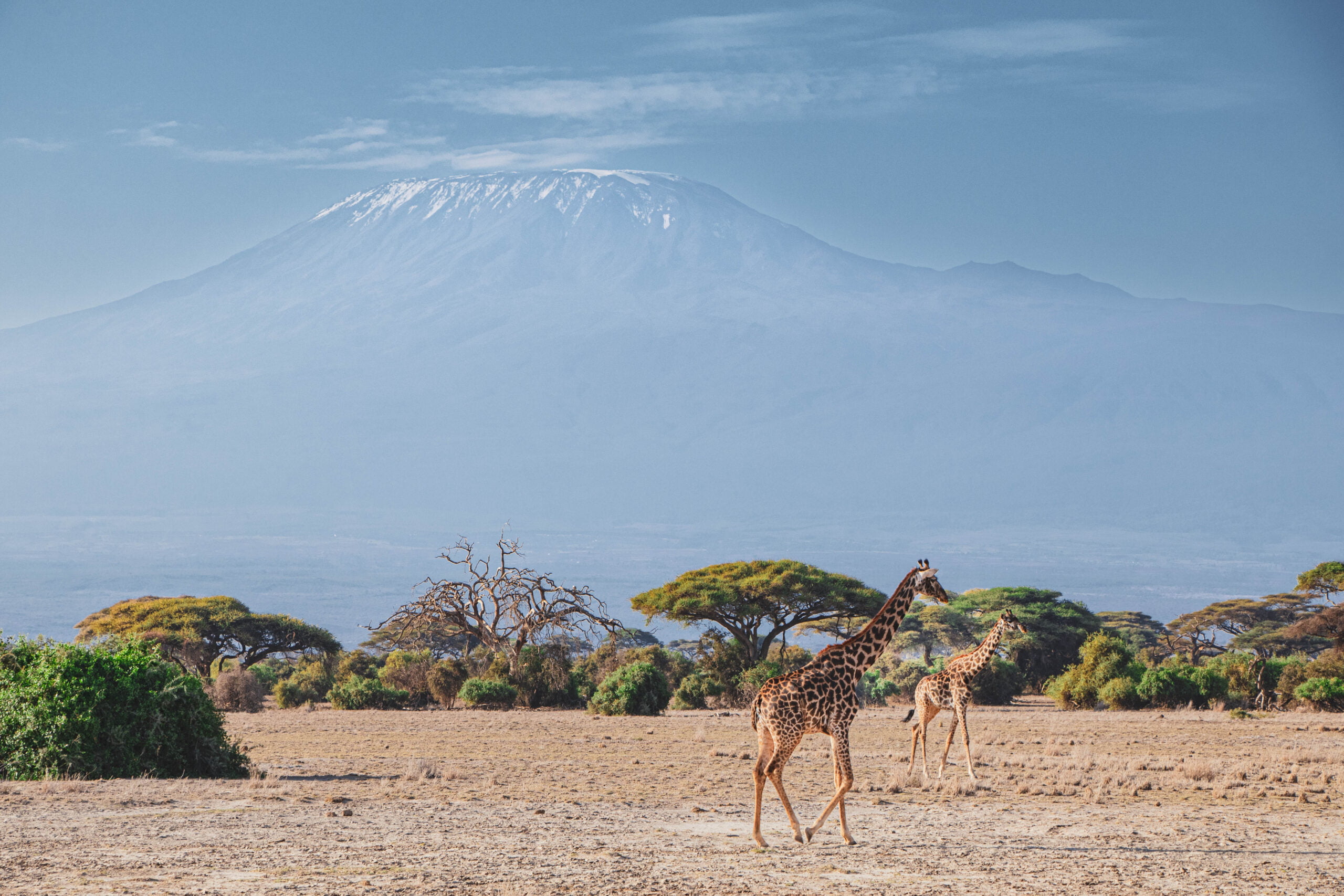
Kenya’s second most-visited park, Amboseli National Park is an iconic natural sanctuary, best known for its majestic elephants that move gracefully with the spectacular Mount Kilimanjaro in the background.
Burning to know what a day on safari in Amboseli National Park is like? I’ll tell you all about it below in the article 🐘
Amboseli National Park at a glance
Located in the Great Rift Valley, some 250 km southeast of Nairobi, Amboseli National Park is Kenya’s oldest park and, after the Masai Mara, the country’s second most visited.
Originally home to the Masai tribes who raised their cattle there, the reserve was granted national park status in 1974, a move that gave rise to much tension. In 1980, the park was classified as a biosphere reserve by UNESCO. Like most of Kenya’s parks and reserves, it is managed by the Kenya Wildlife Service.
Bordering Tanzania, the park covers an area of 392 km², making it one of Kenya’s smallest parks.
➜ The small size of Amboseli National Park is actually an advantage for safari, with the experience ultimately proving less strenuous than at the Masai Mara, for example. Shorter journey times mean more time for animal watching. It’s also one of the few national parks that can be visited freely (by self-drive) during the dry season, provided you have a suitable vehicle and comply with the regulations in force.
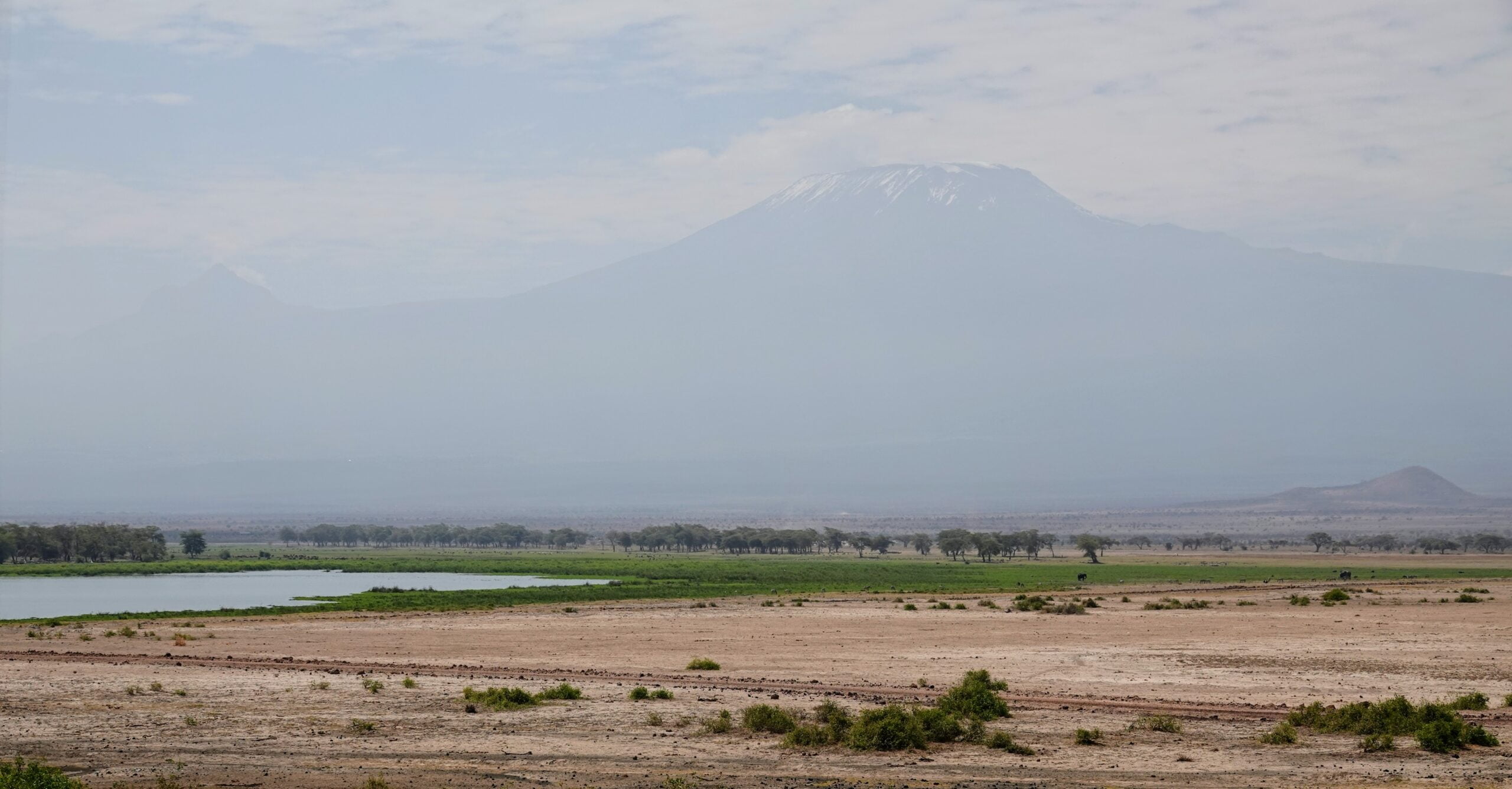
Mainly made up of fairly sparsely vegetated plains, the park offers exceptional views of Africa’s highest peak, Kilimanjaro (5895 m). While the park takes its name from the Masai word amboseli, meaning “salt dust”, in reference to the large, virtually dry lake in the center of the plain, the eternal snows flowing down from Kilimanjaro form vast wetlands that are particularly popular with the animals and quite characteristic of the Amboseli landscape.
What animals can you see in Amboseli National Park?
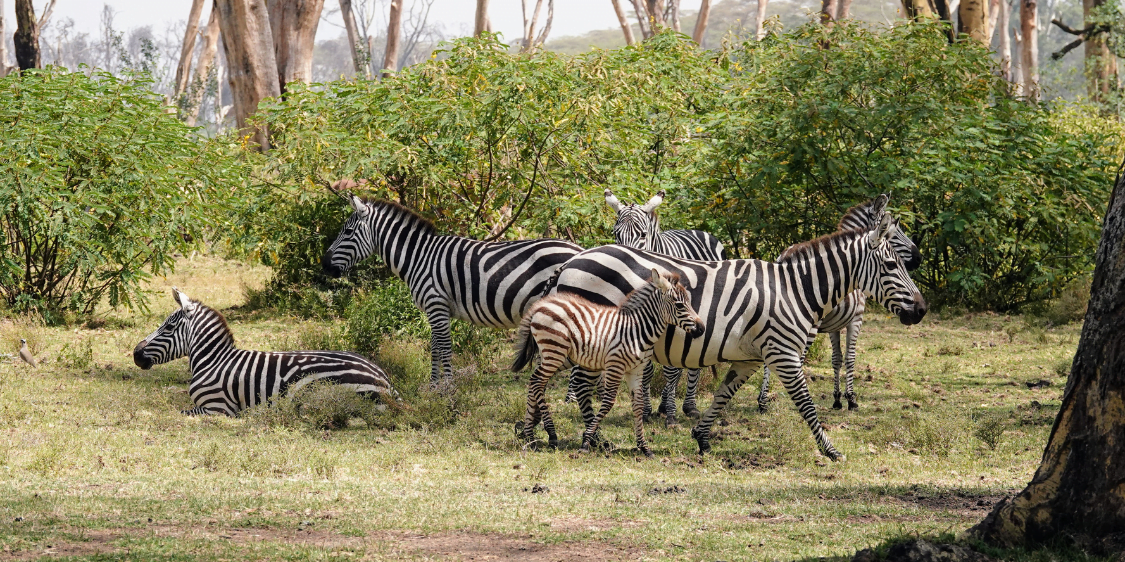
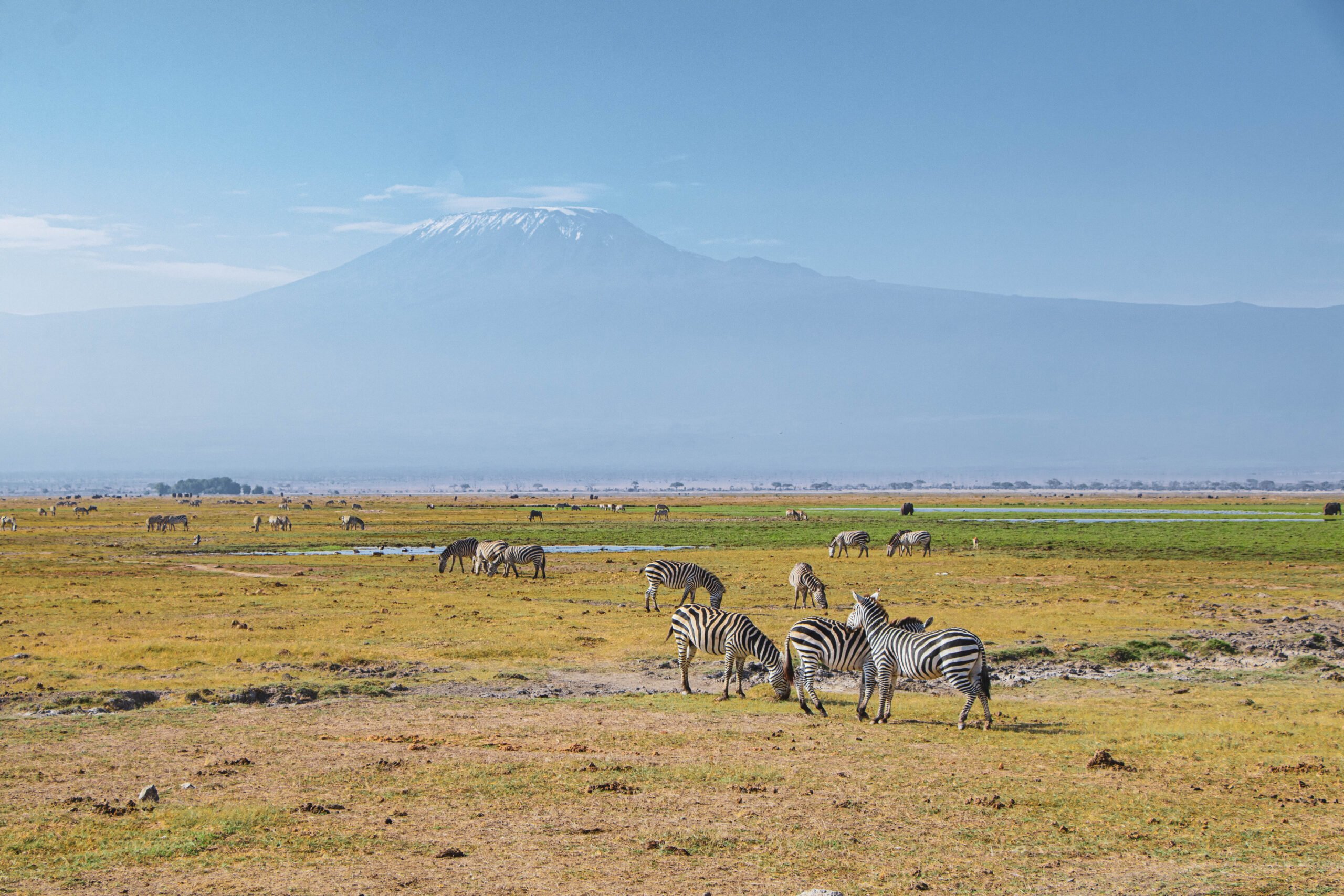
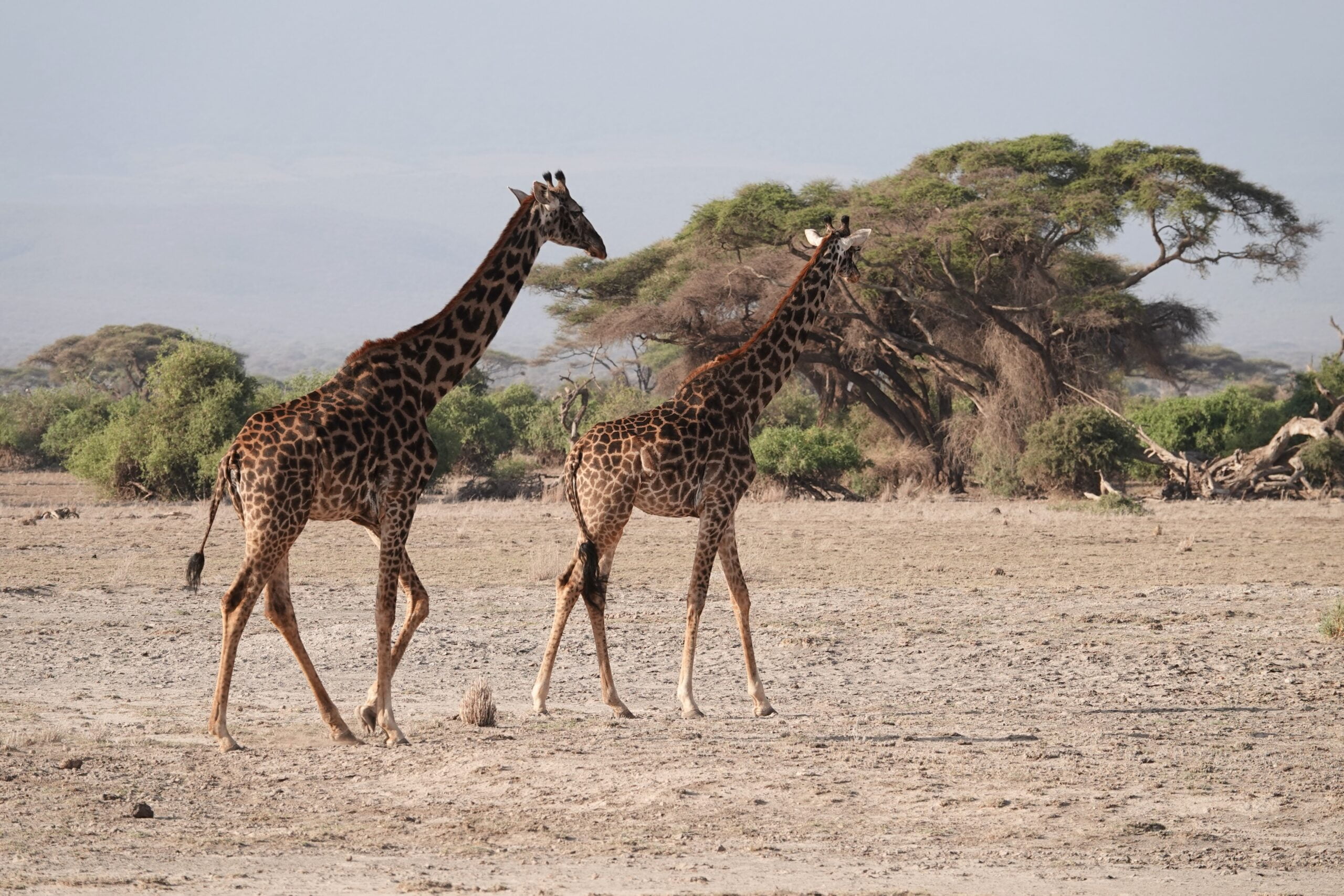
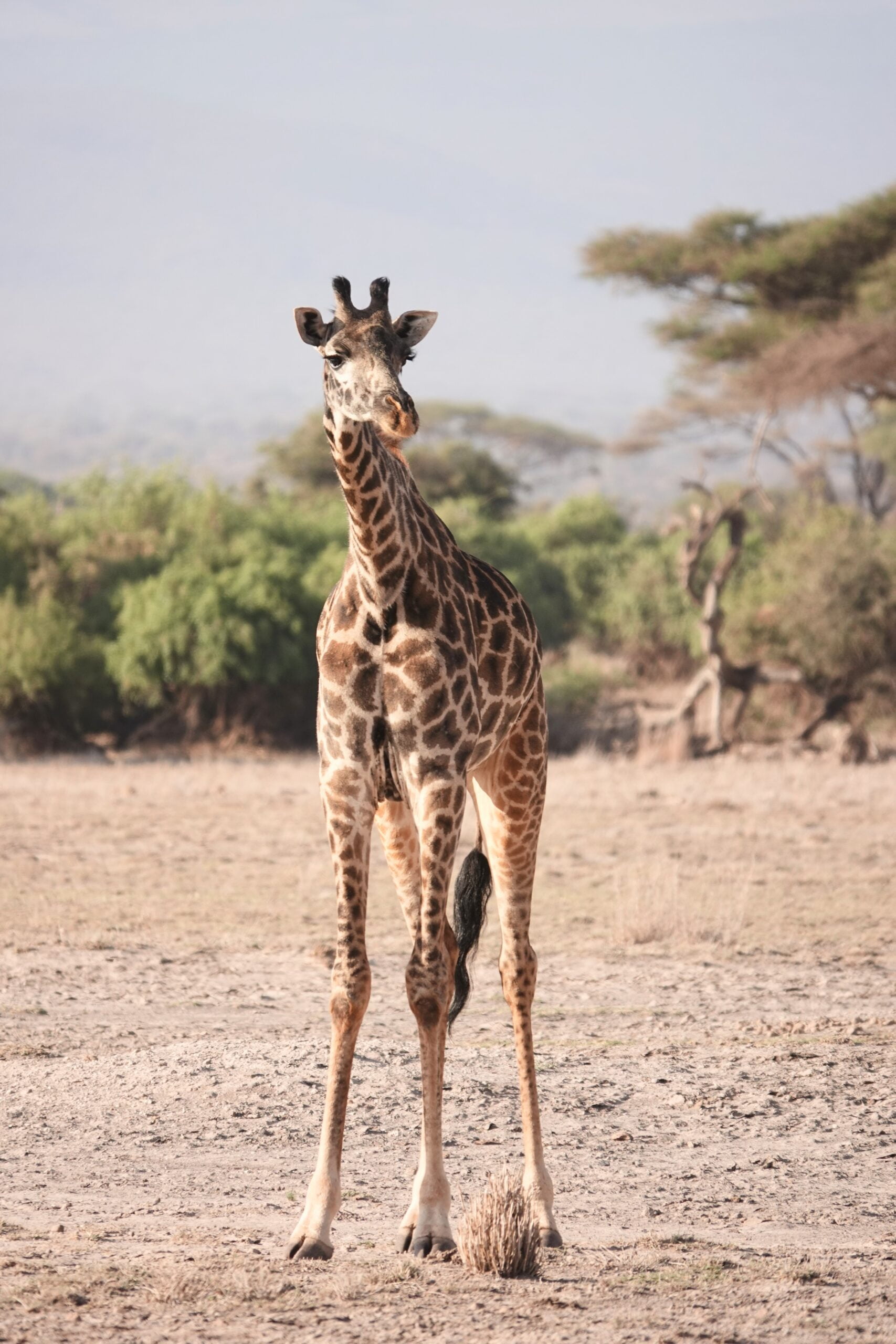
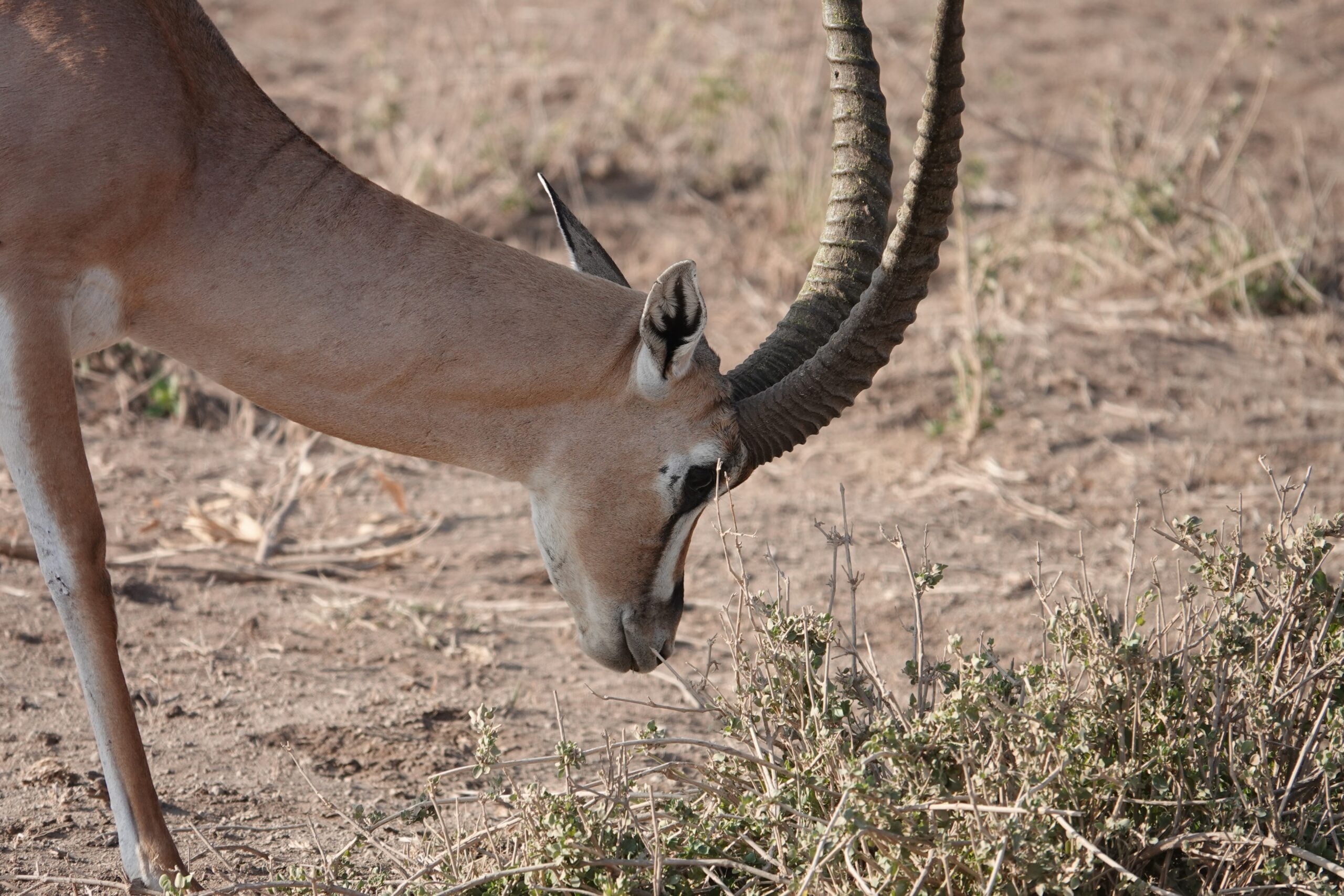
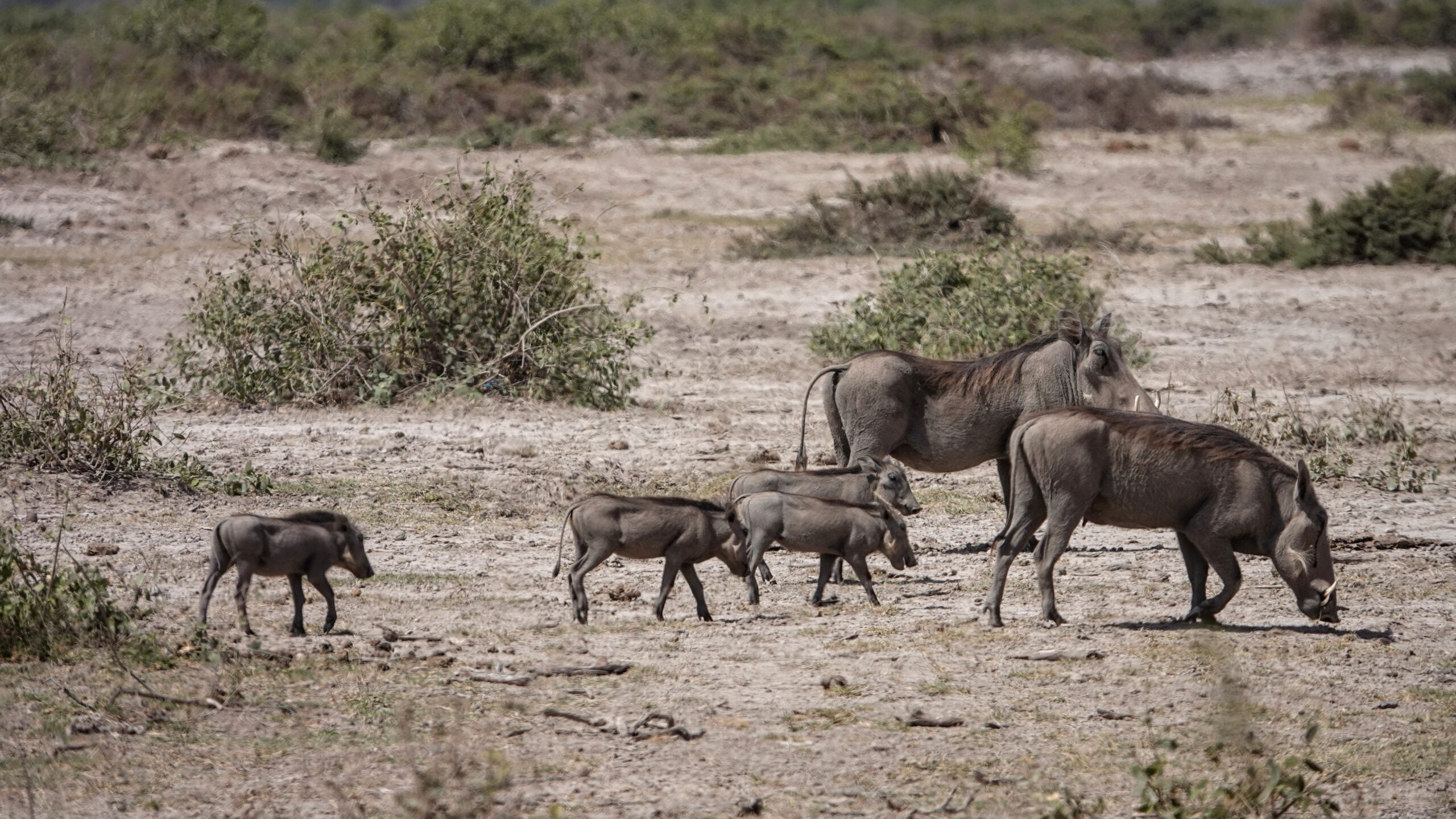
The wealth of wildlife is impressive for the park’s small size: zebras, wildebeest, antelopes, warthogs, hippos and birds by the hundreds often congregate near swamps. Giraffes move from acacia to acacia to feed and protect themselves from the sun.
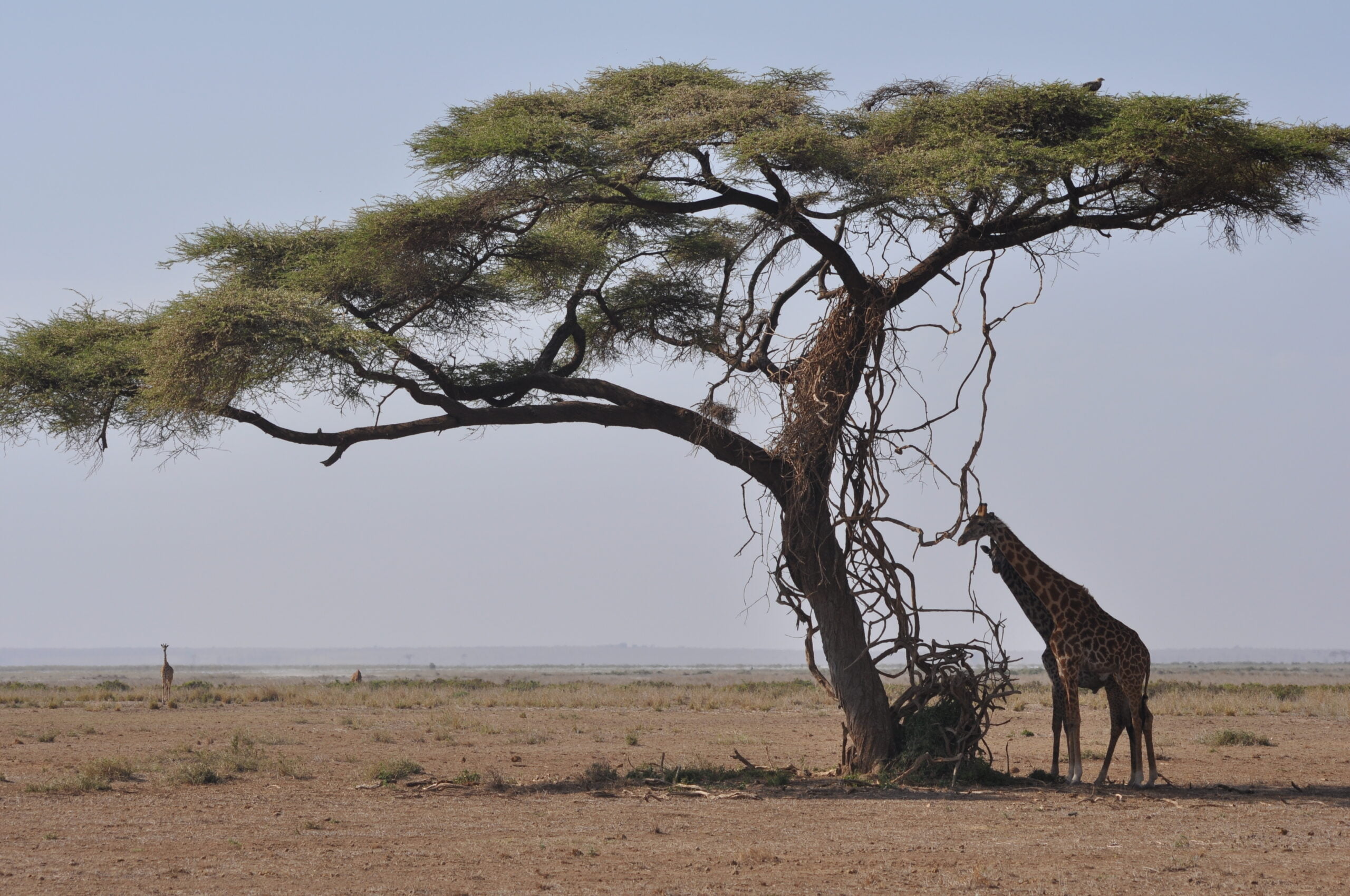
Felines and carnivores are rarer in Amboseli, but with a bit of luck, you can still spot the Big Five! While there are around sixty lions in the park, leopards are much more discreet and black rhinoceroses are often only seen when traveling between Kenya and Tanzania.
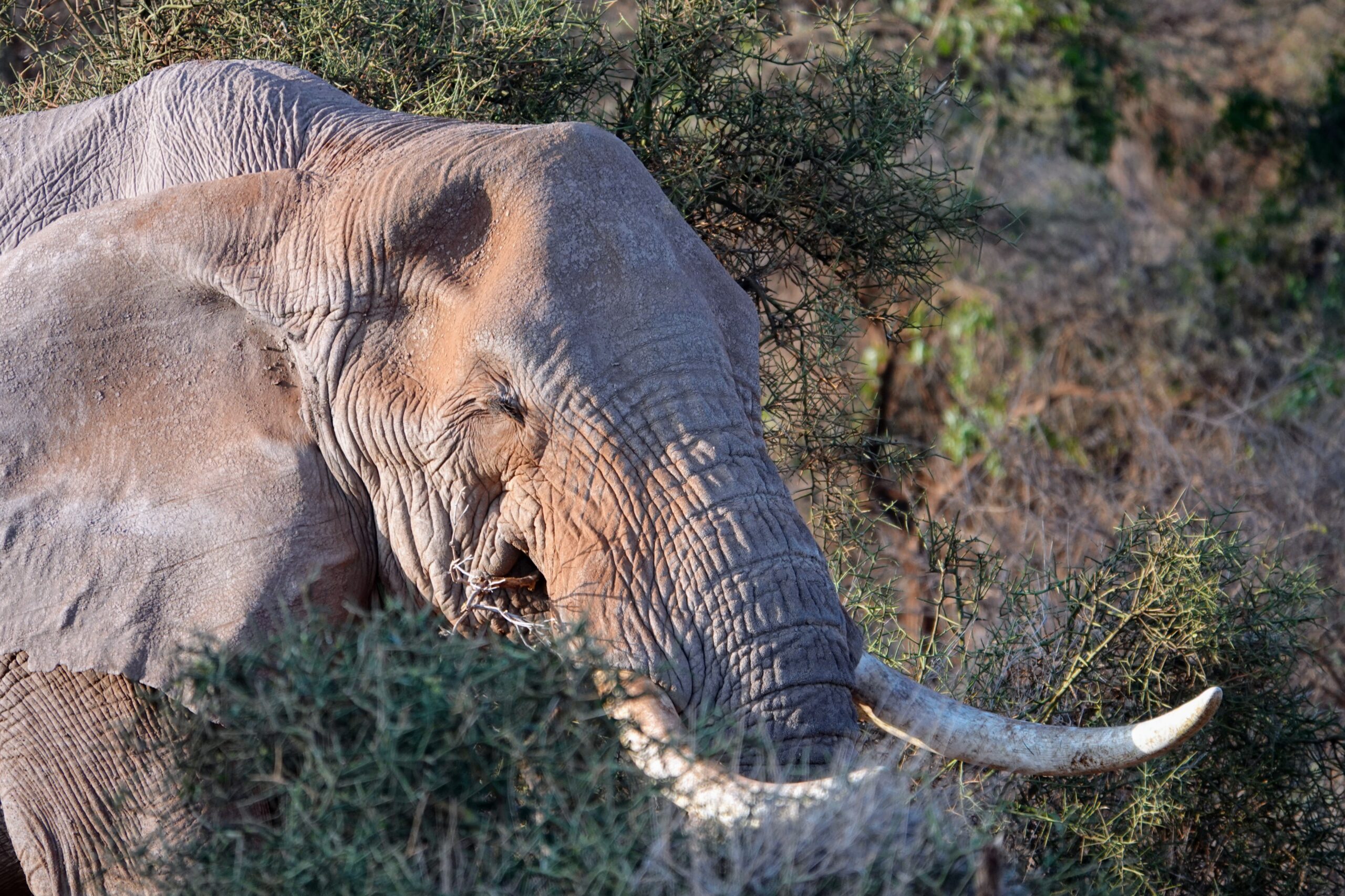
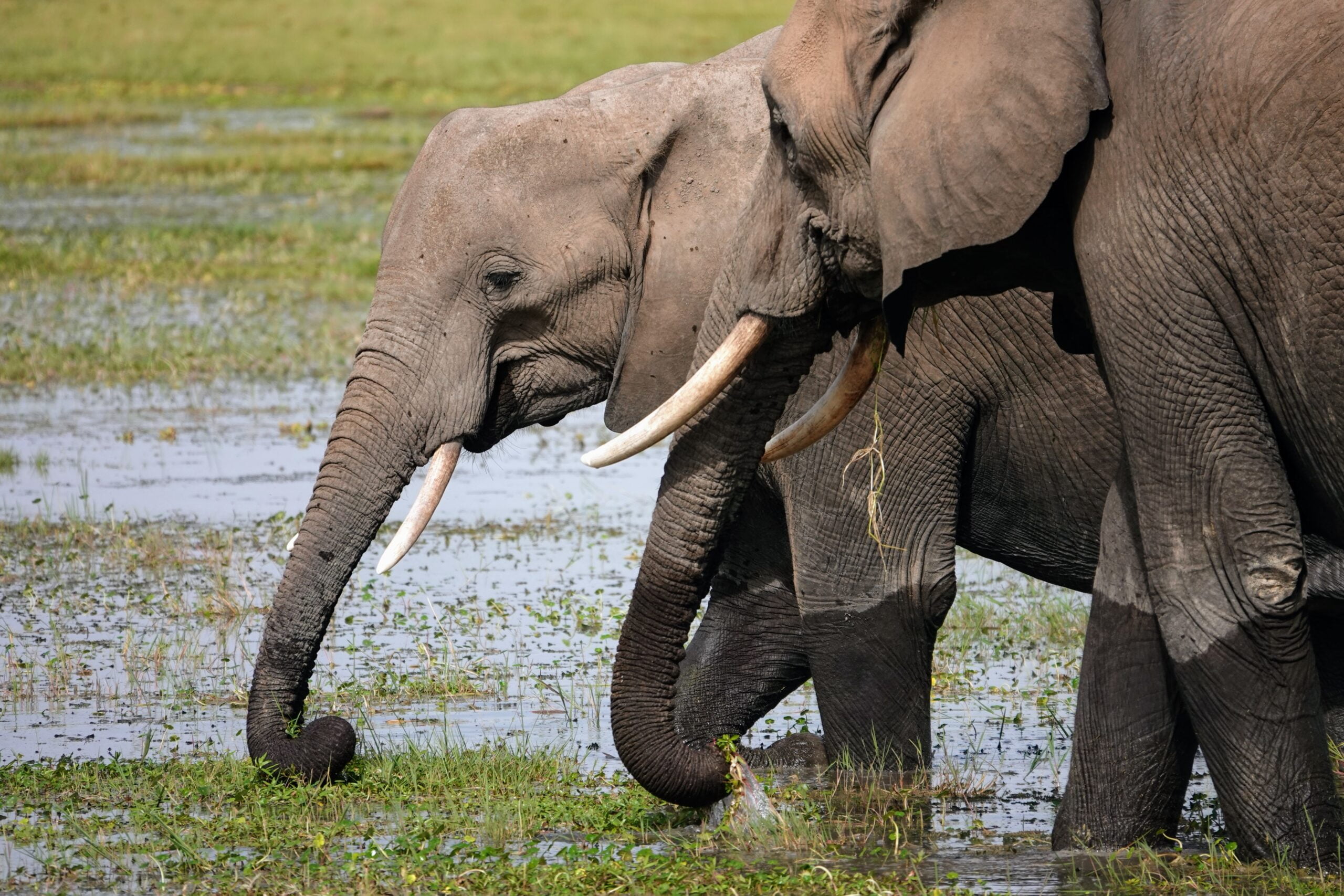
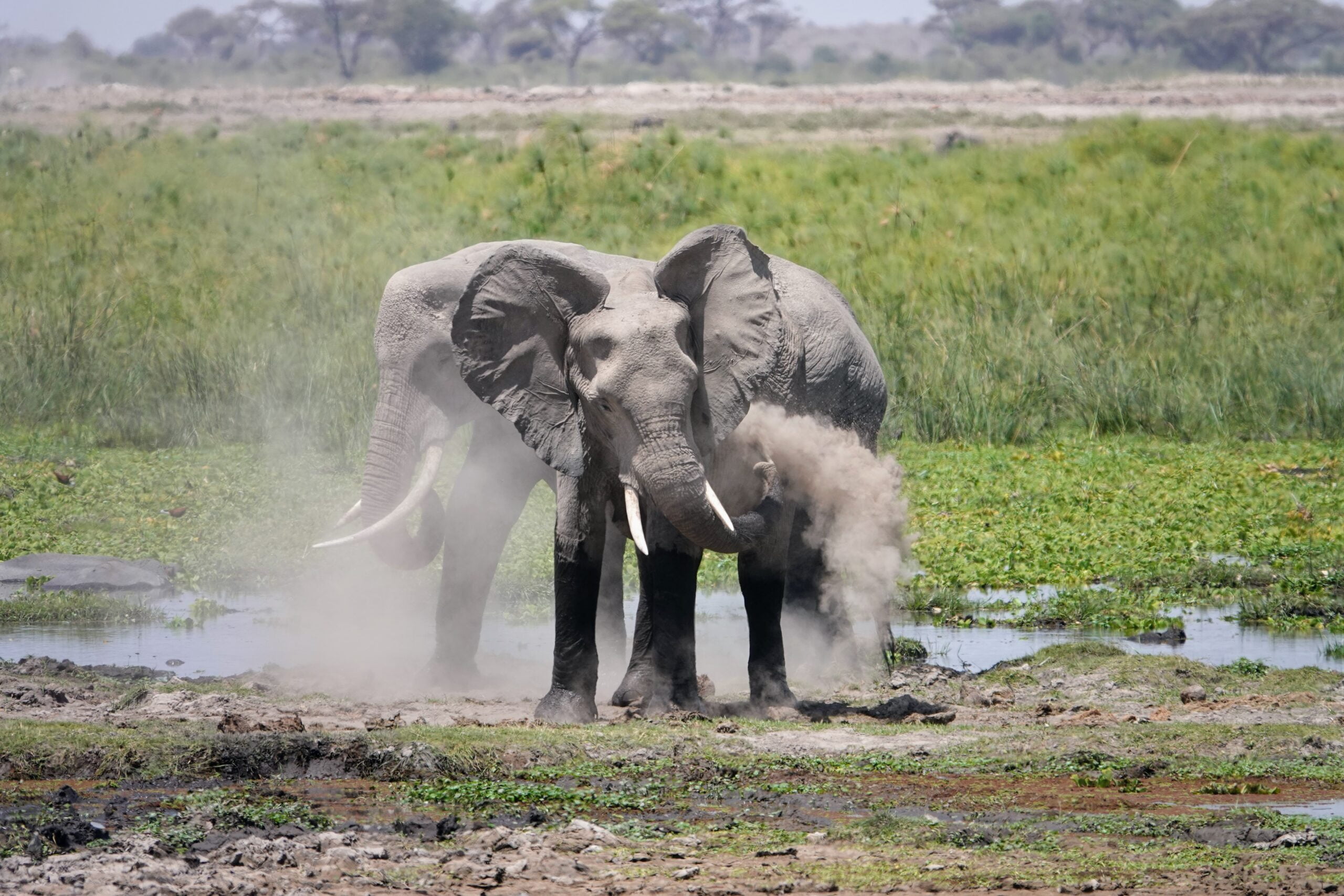
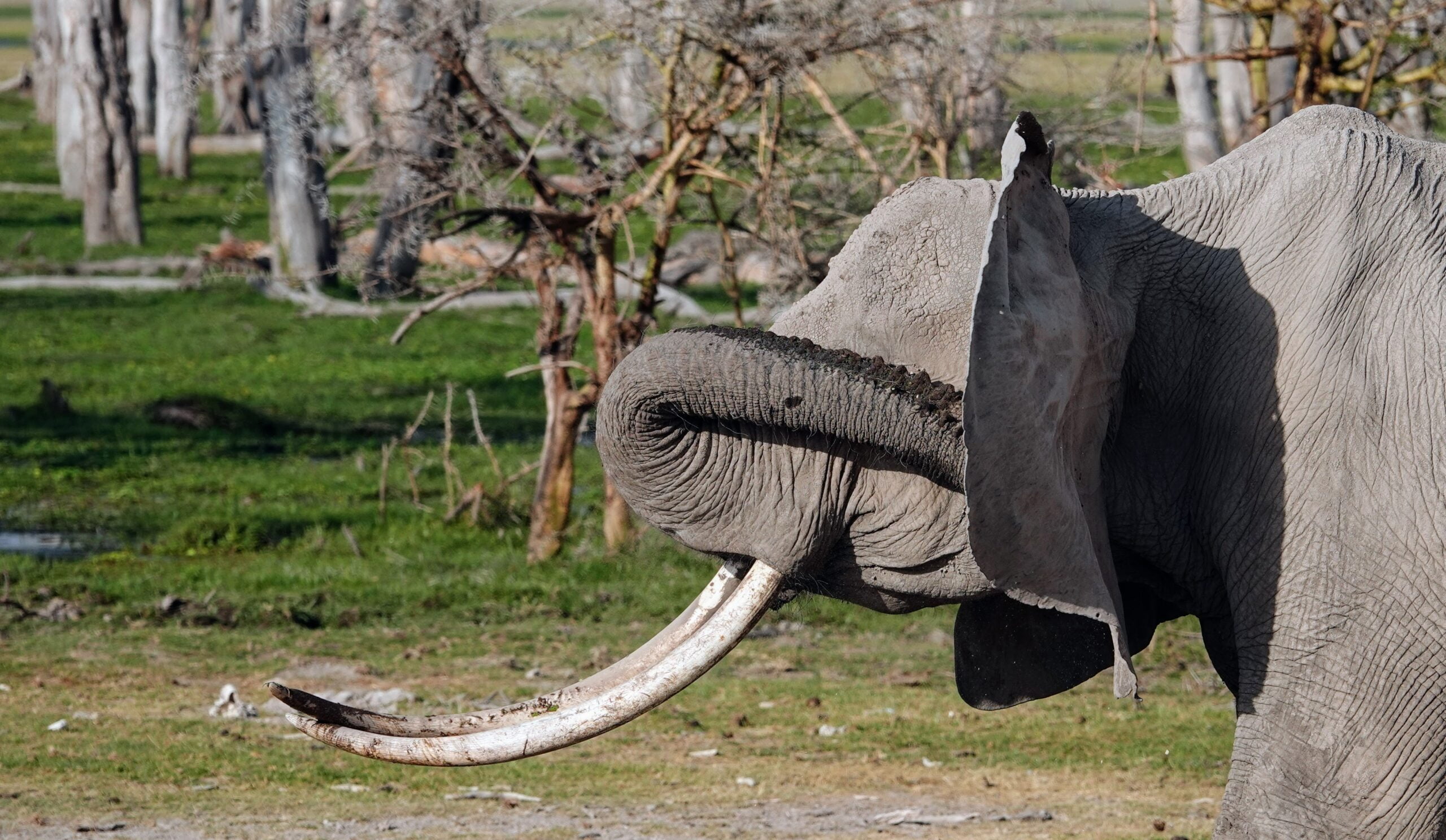
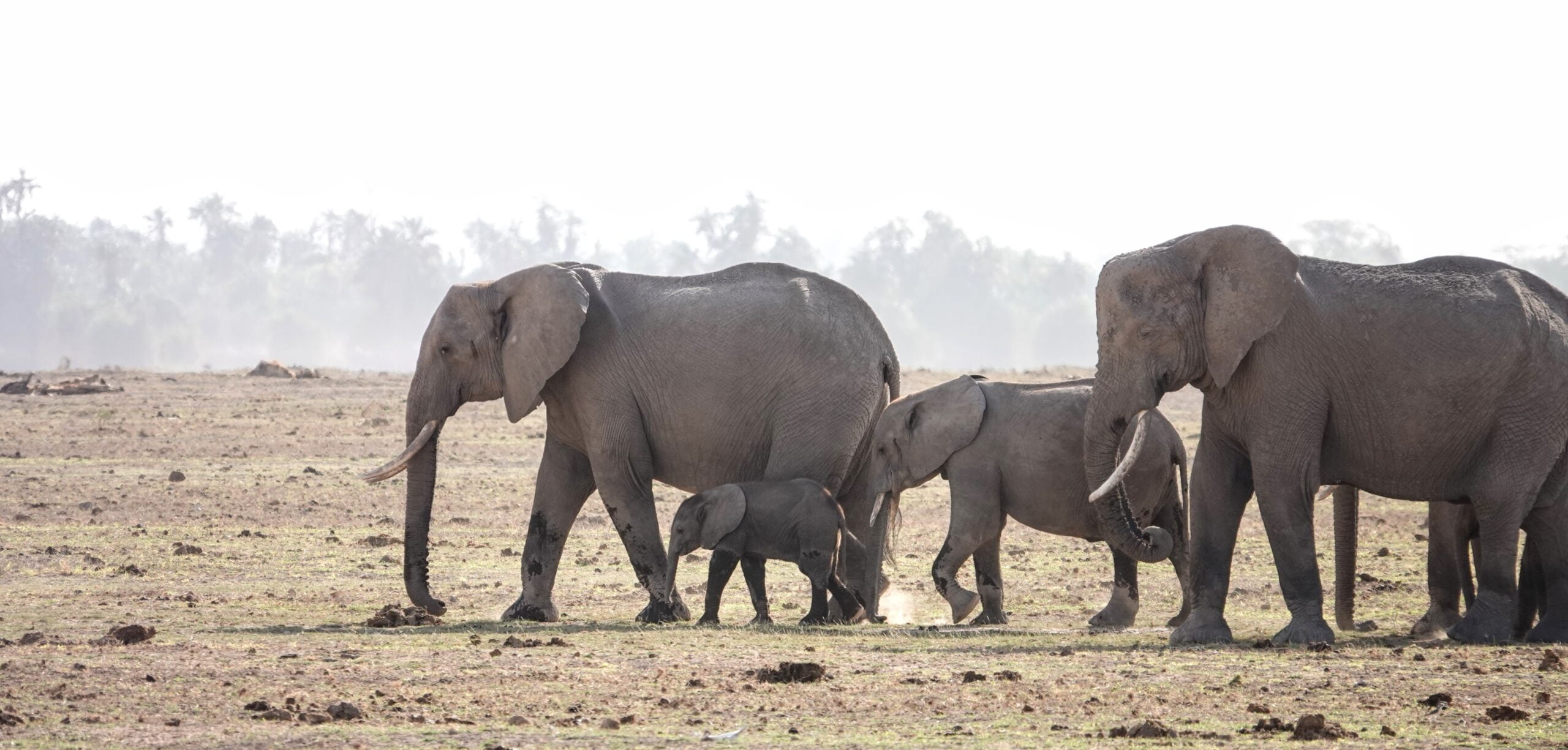
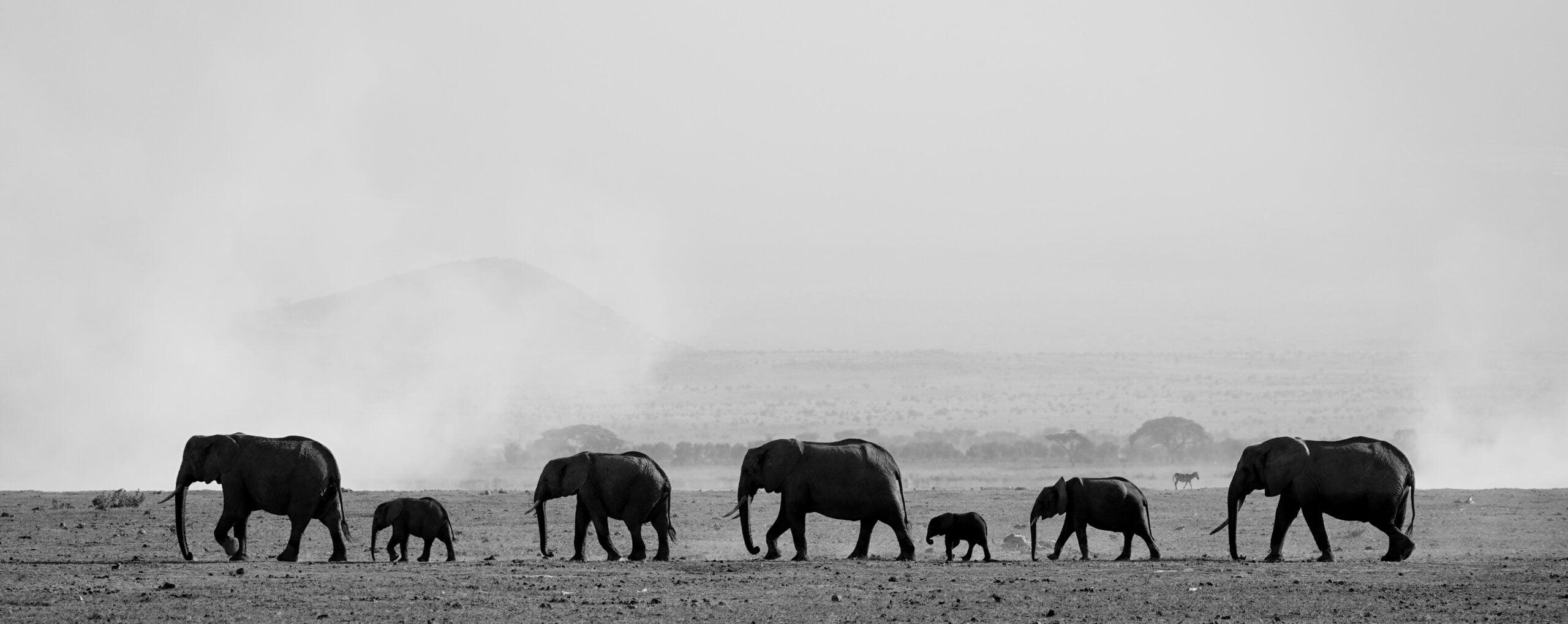
But Amboseli National Park is above all the kingdom of elephants, which we never tire of observing with Kilimanjaro in the background!
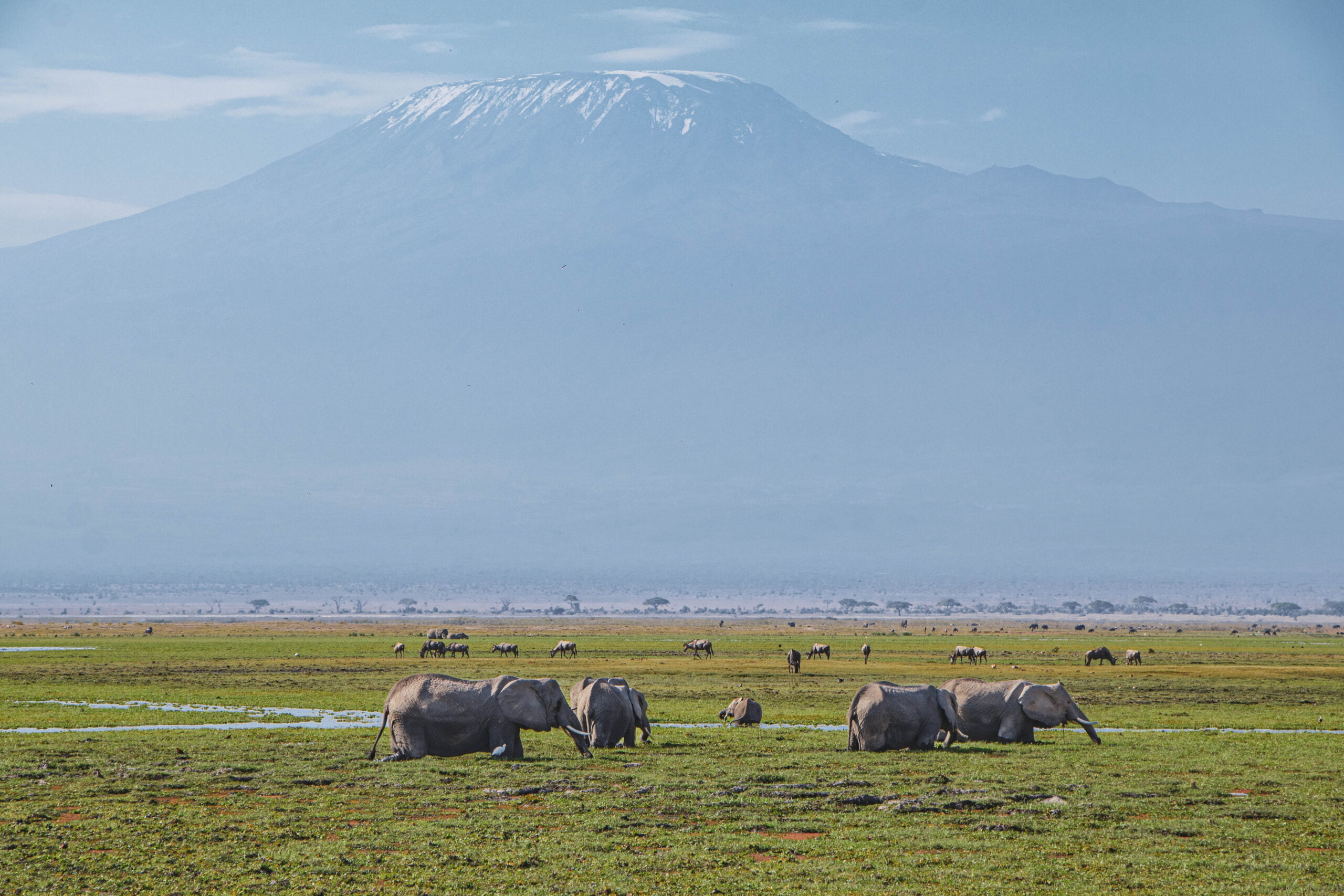
Thanks to researchers and the support of local communities, the elephant population has withstood periods of intense poaching in East Africa and doubled in Kenya over the last thirty years. Today, there are over 1,800 elephants in Amboseli National Park, compared with 600 in 1972.
Day safari in Amboseli National Park
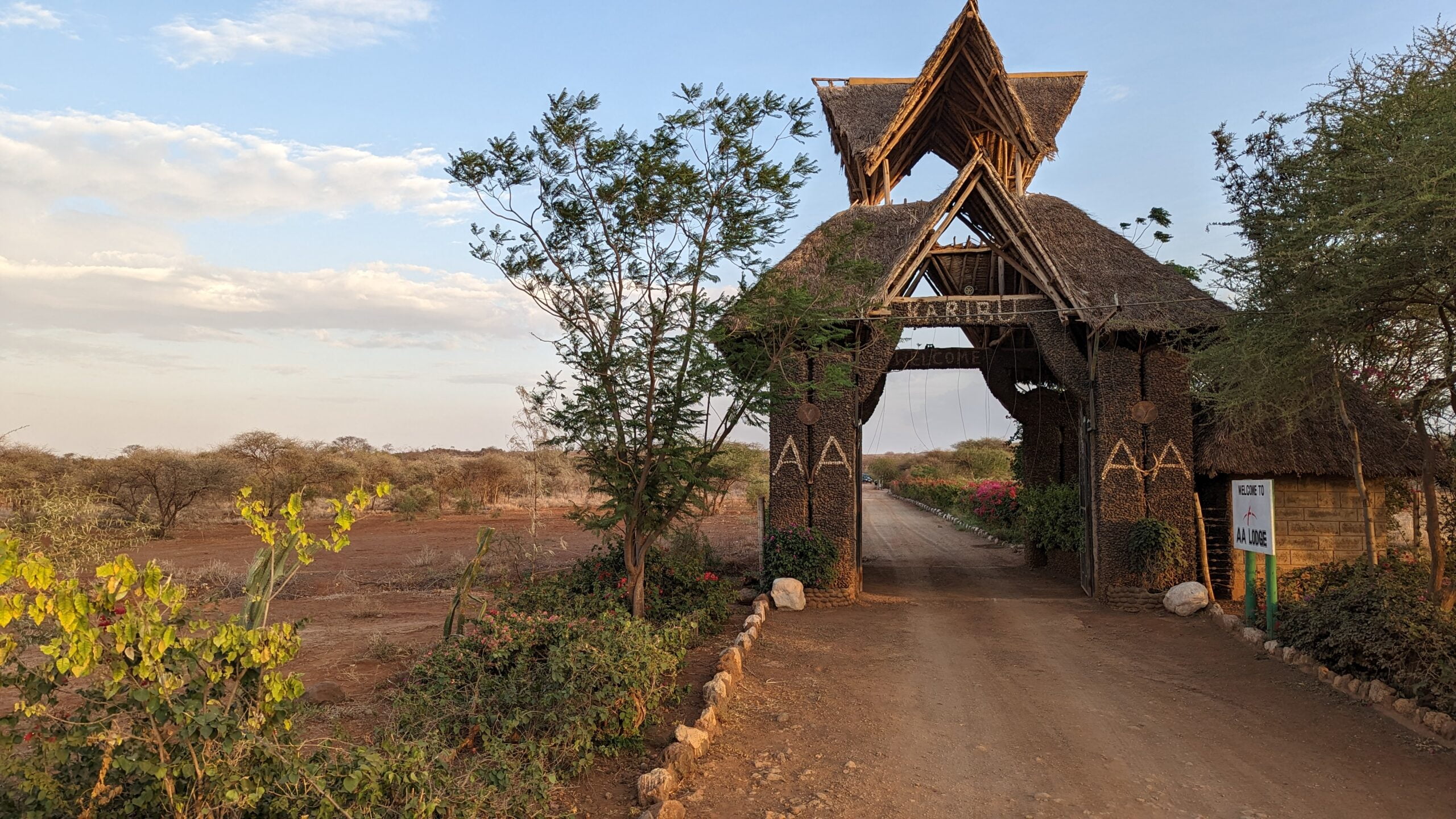
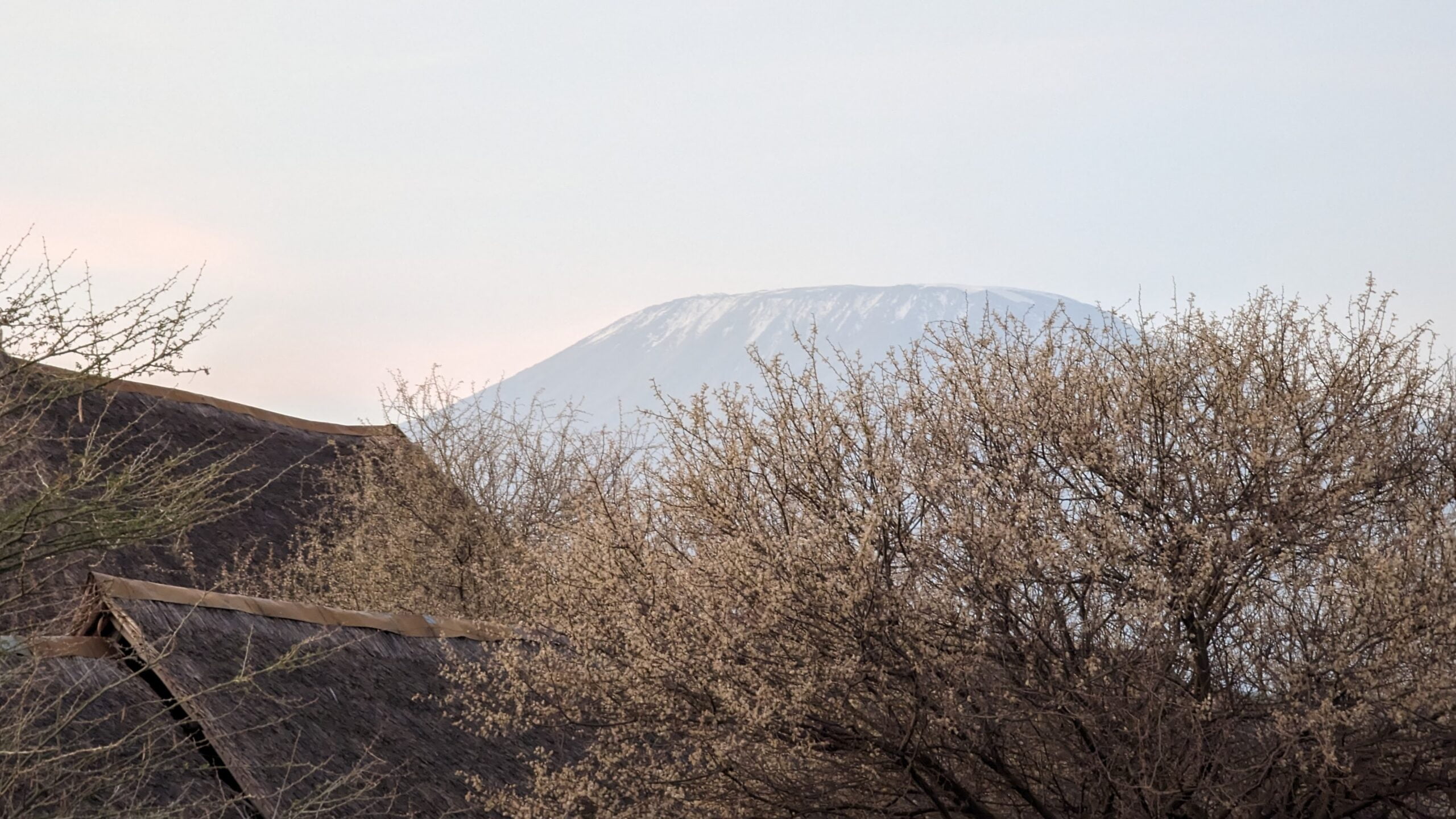
As on our Masai Mara safari day, the alarm clock goes off early in the tents of AA Lodge Amboseli. And the summit of Kilimanjaro, unseen when we arrived at the end of the day, is there for our breakfast 🤩
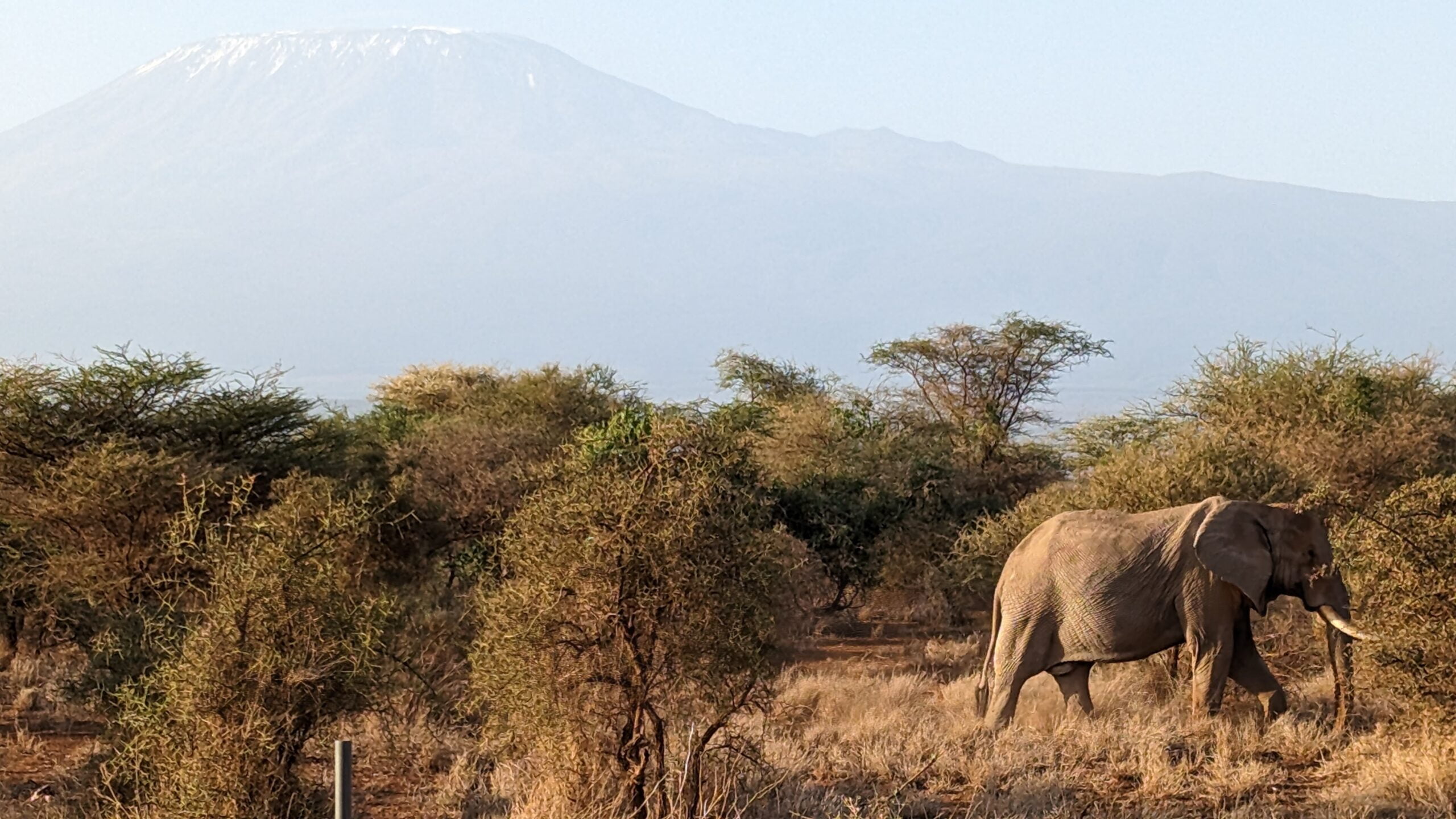
As soon as we set off, a huge pachyderm seems to point the way to the park 🐘 That’s all it takes to get the excitement in the cars up a notch!
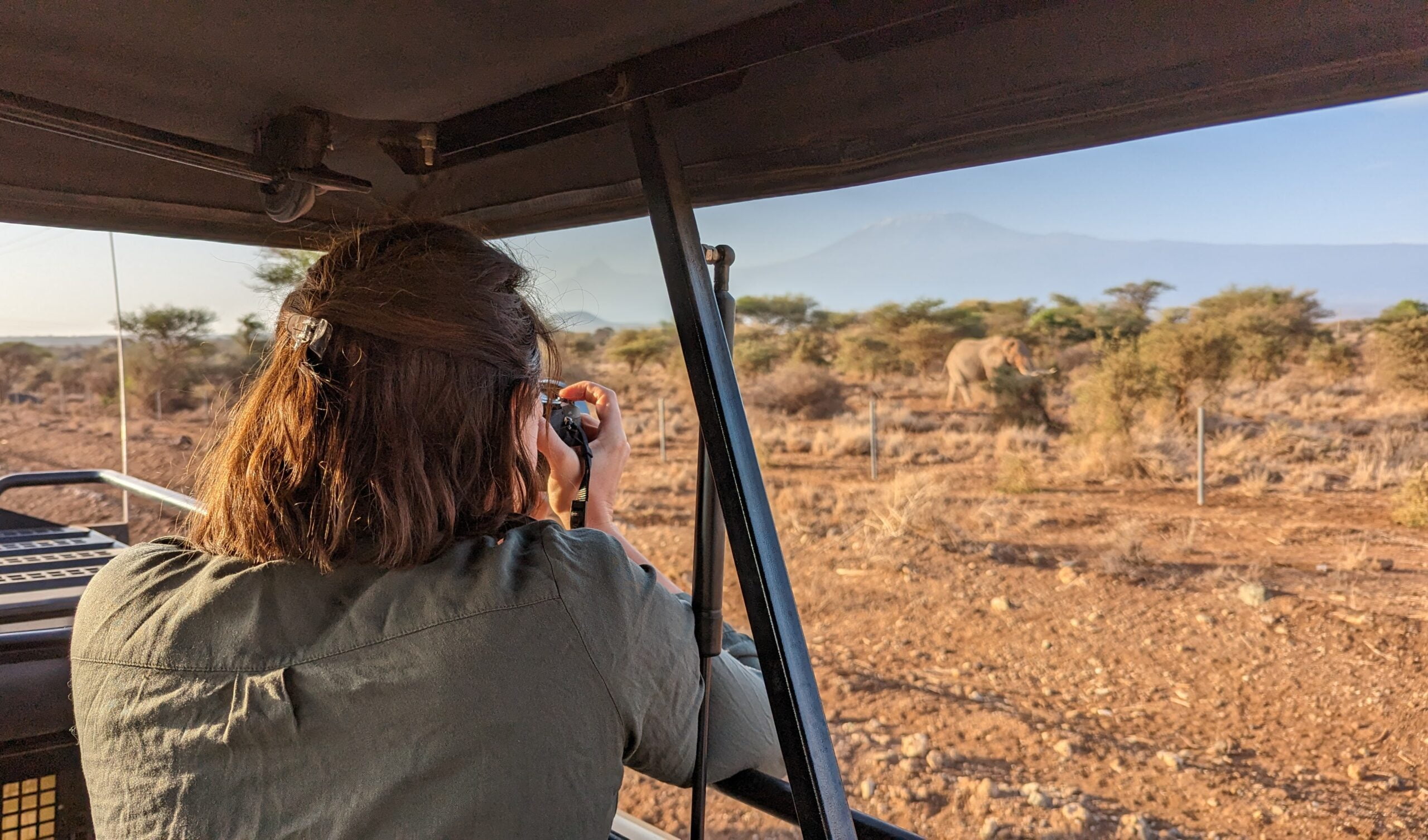
As the lodge is only 10 minutes from Kimana Gate, we are among the first to arrive to buy our tickets.
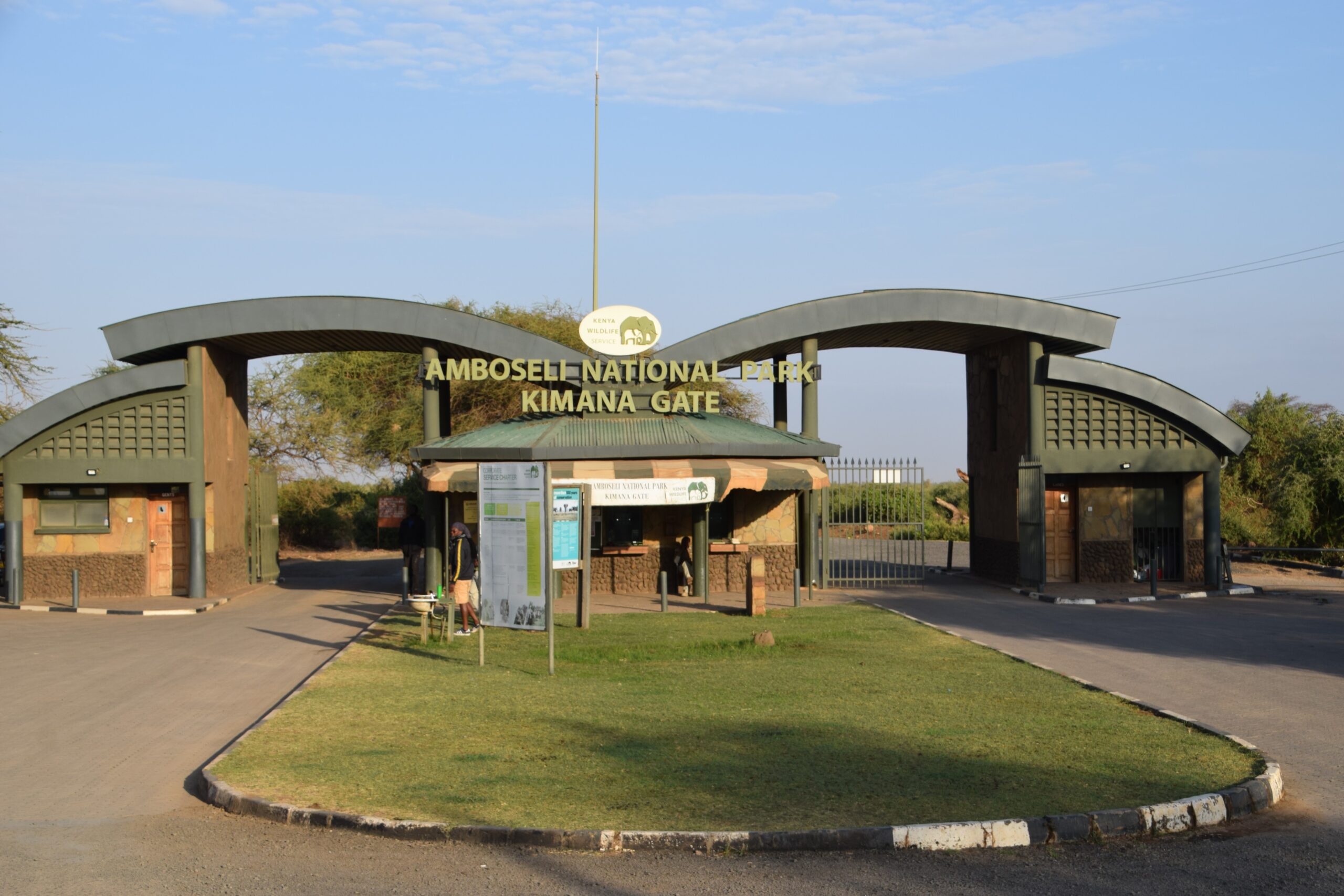
No sooner had we passed through the gates than we discovered several hyenas feasting. With the distance, it’s hard to see what’s on the menu, but they don’t ask for anything else!

Giraffes and gazelles are also at breakfast time.
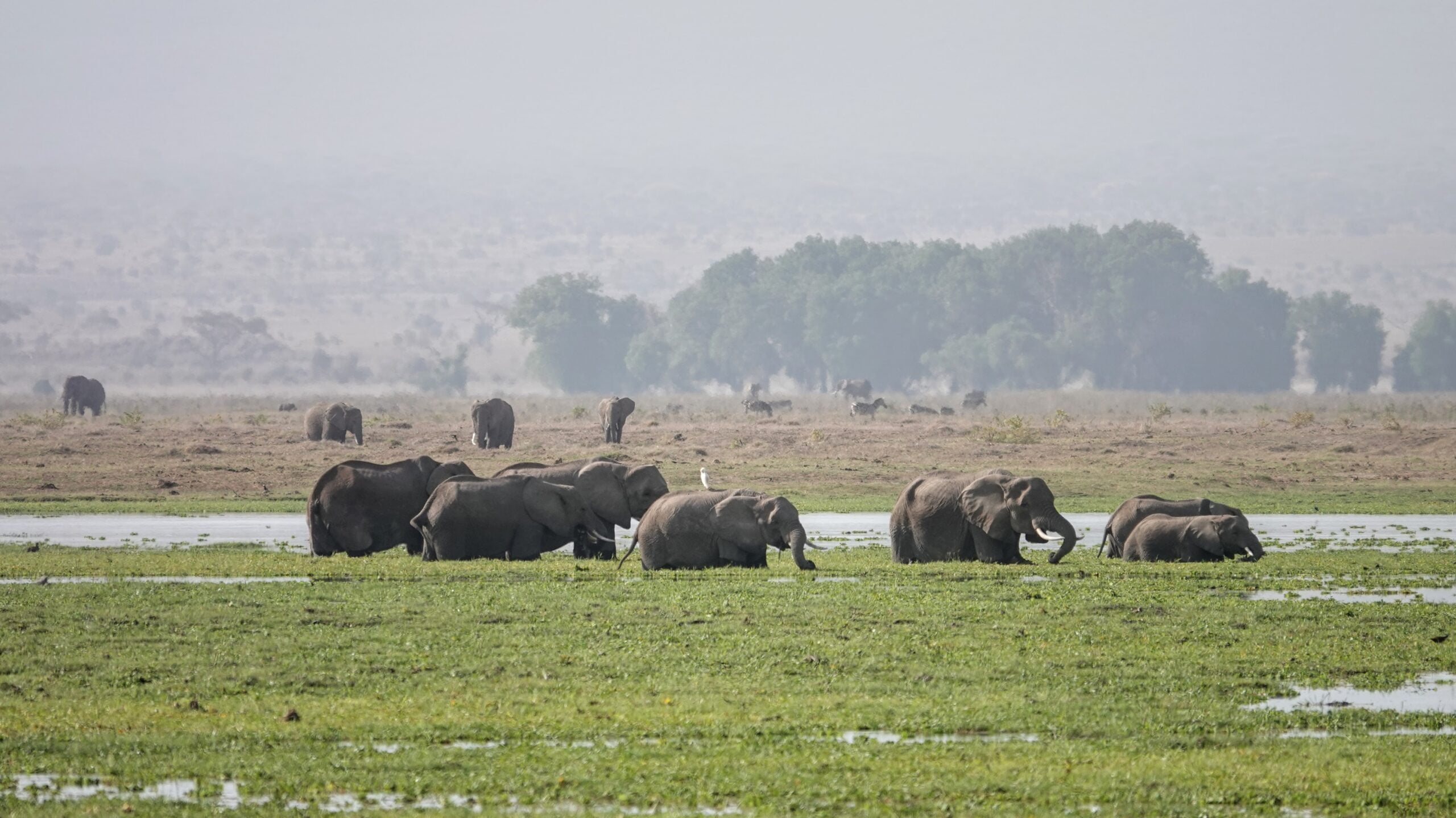
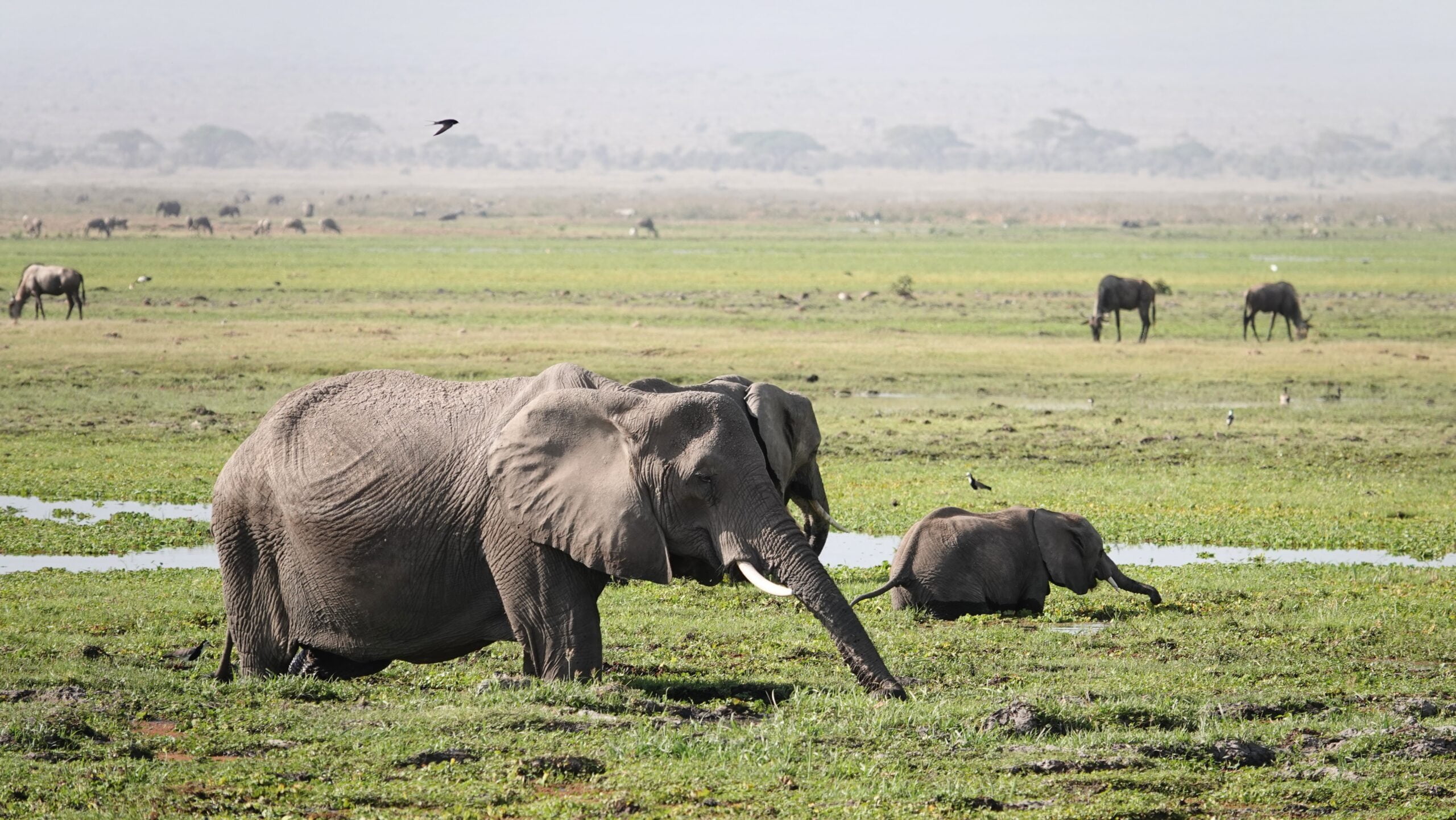
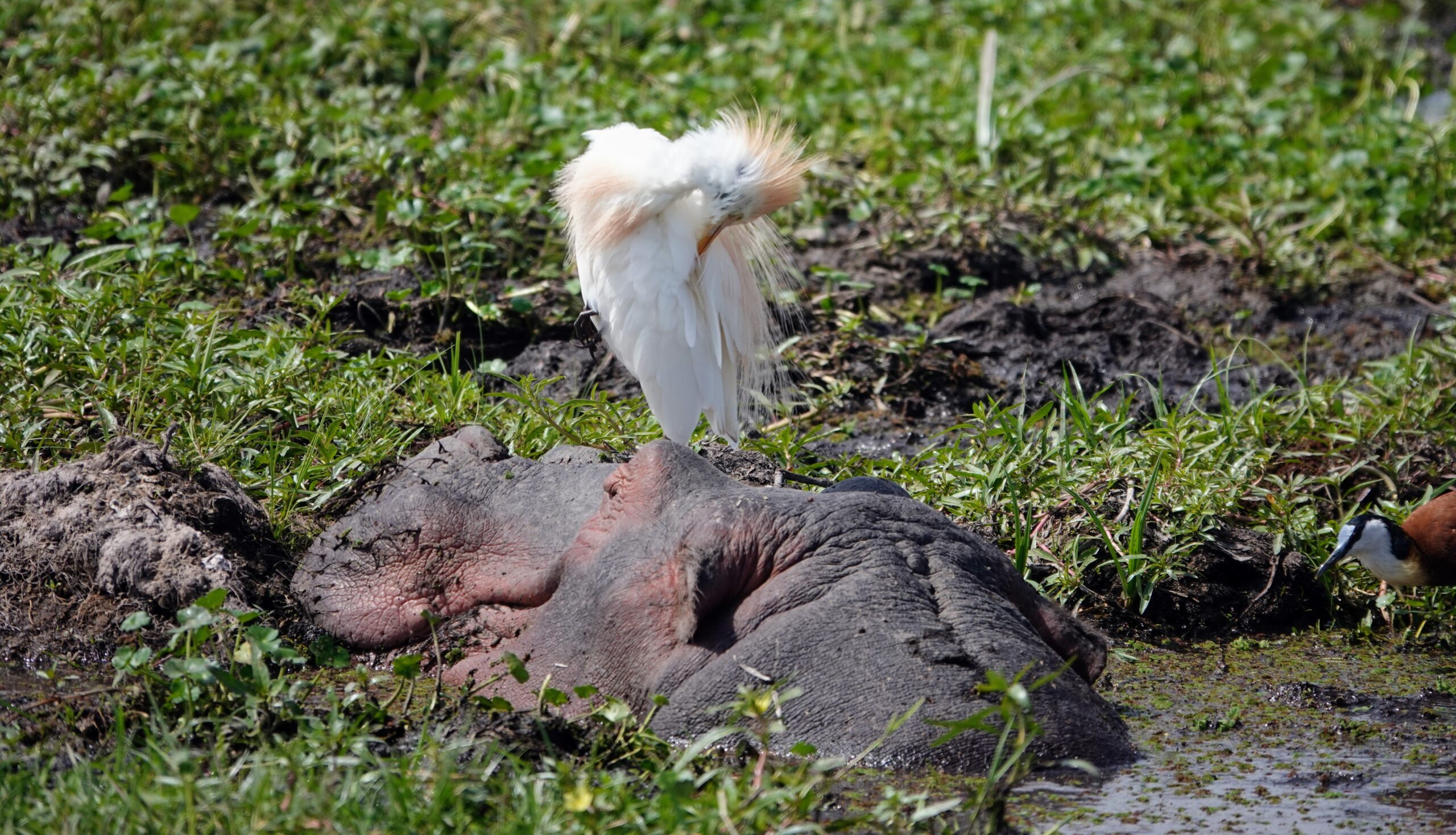
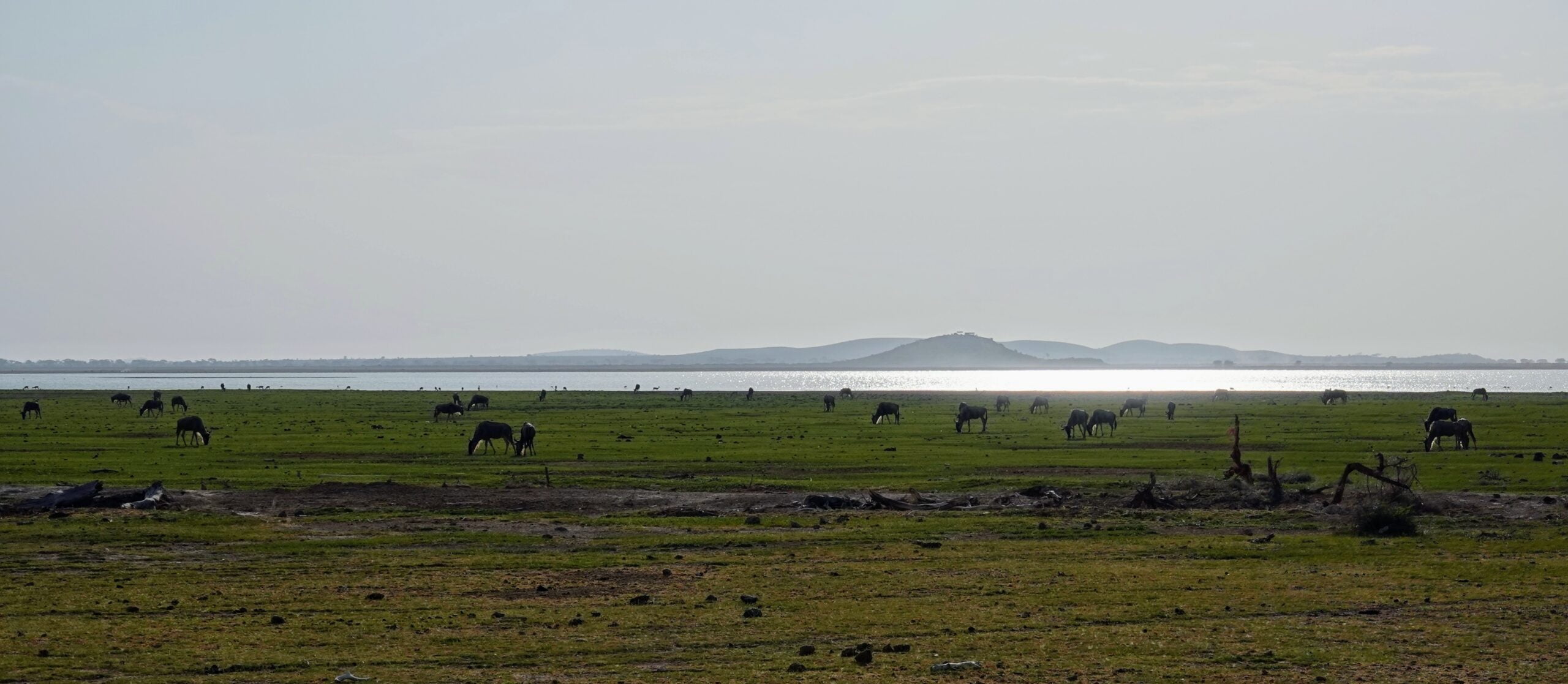
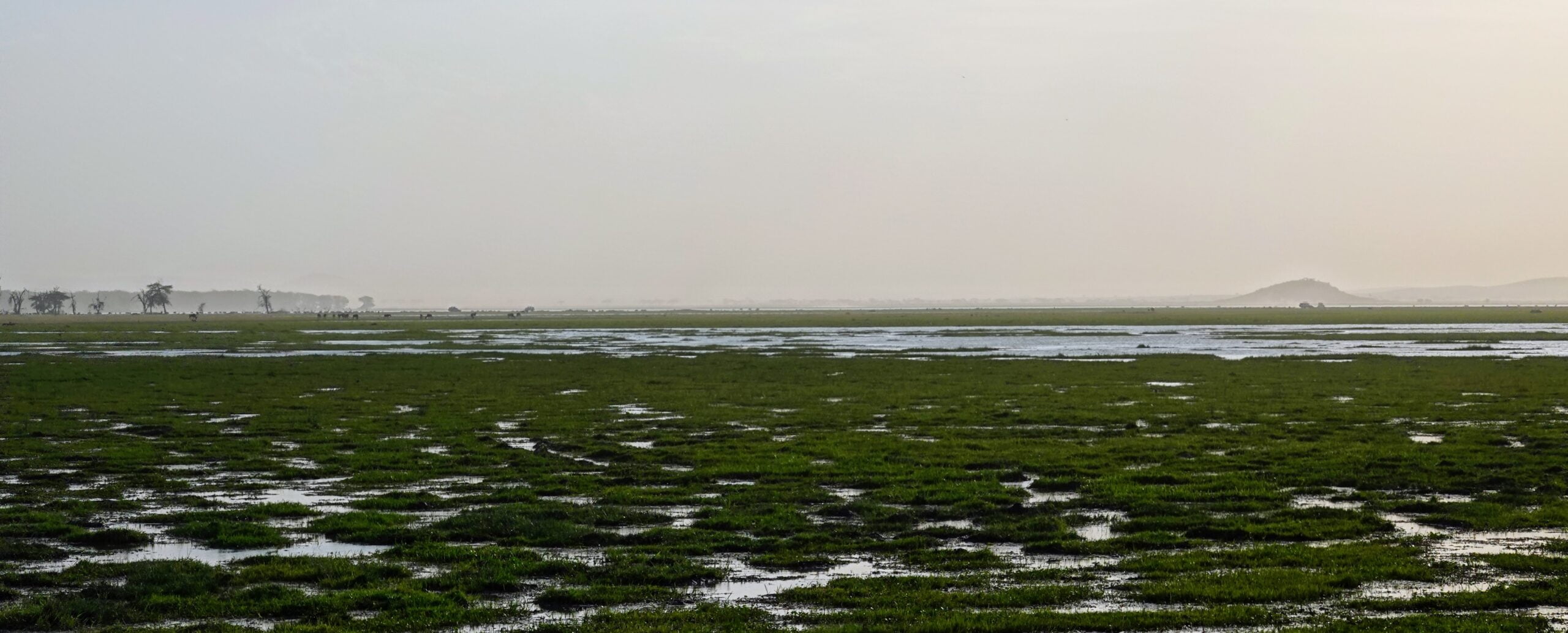
It doesn’t take long to see the stark difference between the landscapes of the Masai Mara and those of Amboseli Park. No rolling meadows here, but a swampy landscape teeming with life. Elephants, of course. But also zebras, wildebeests, hippos and lots of birds.
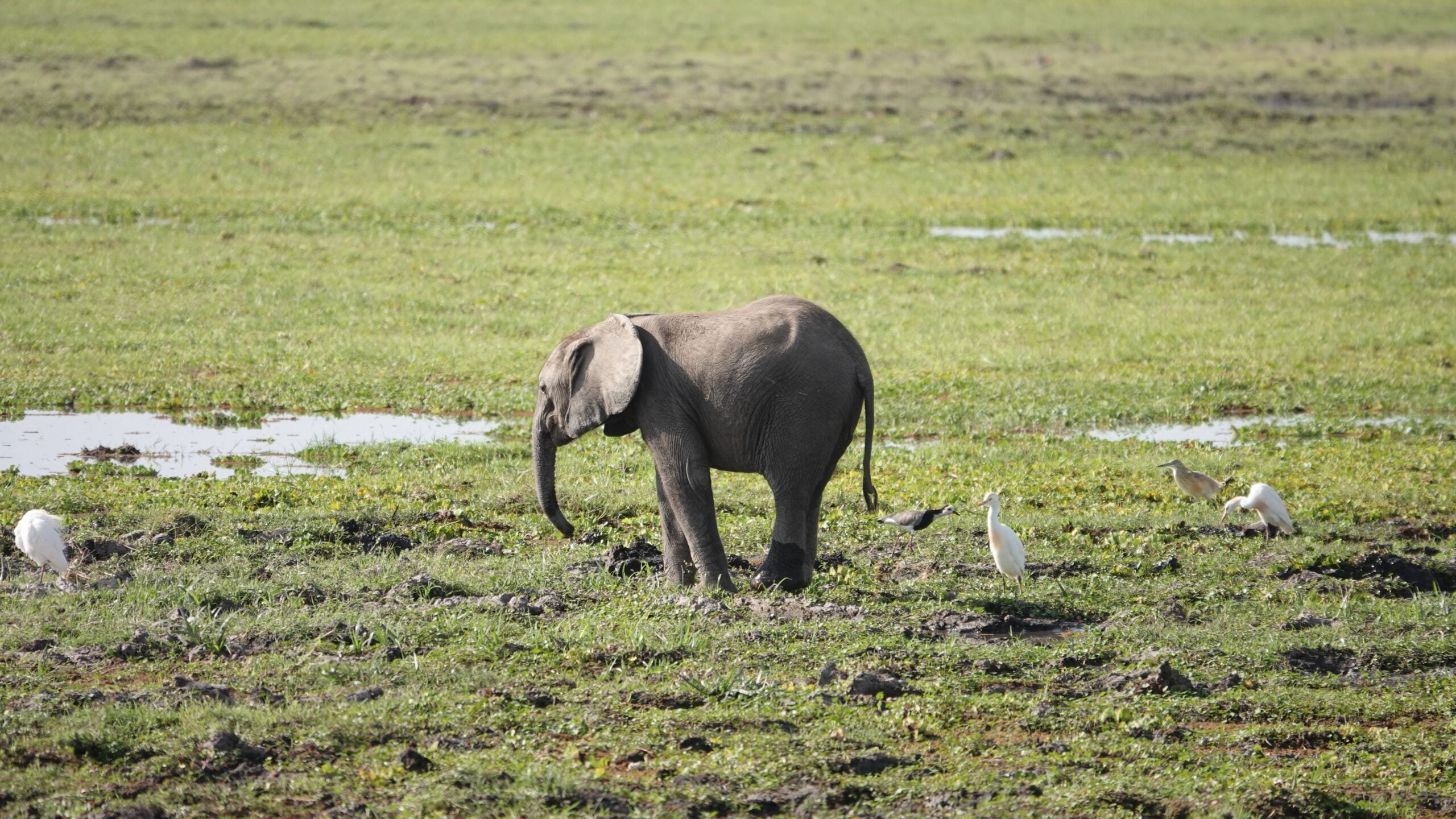
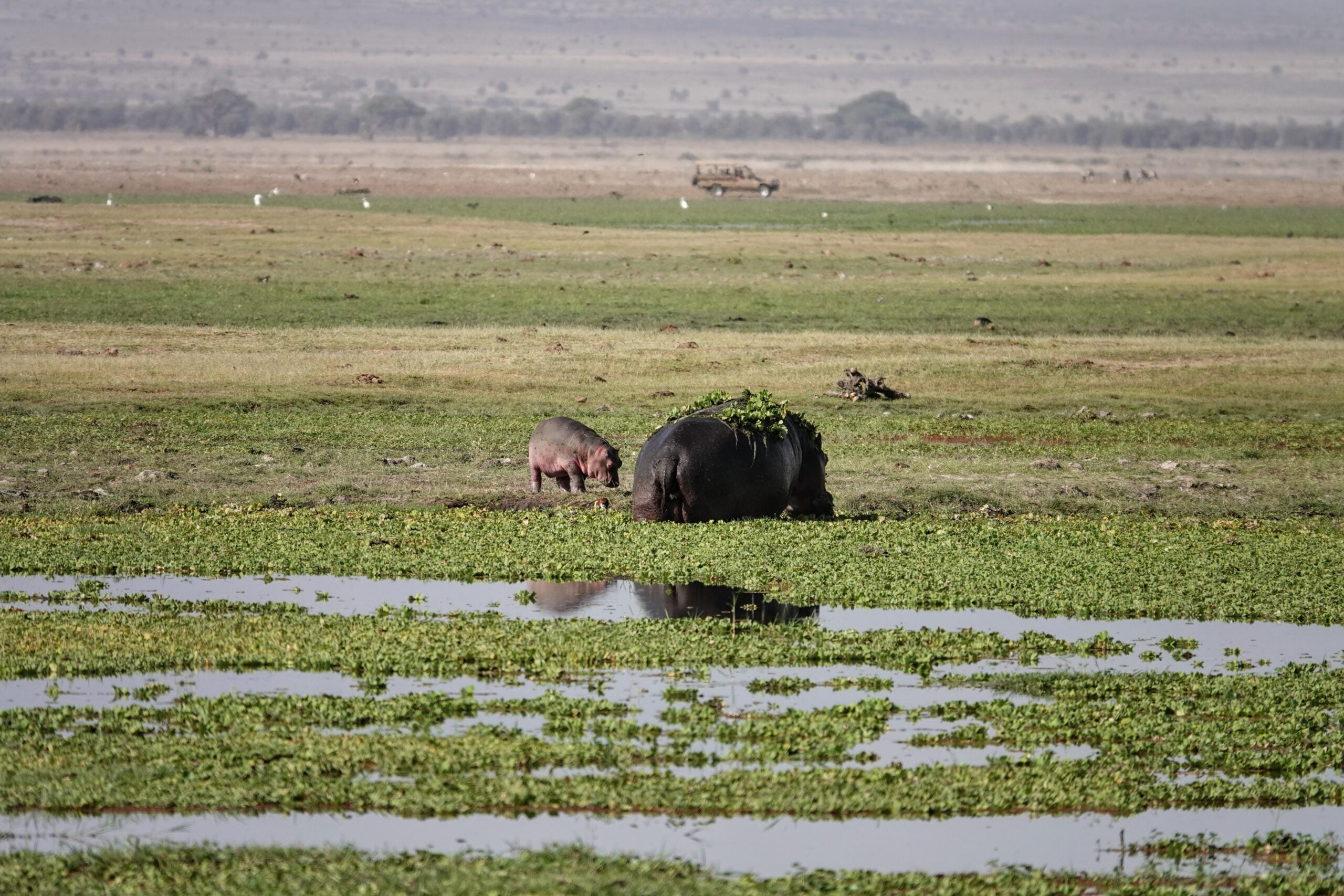
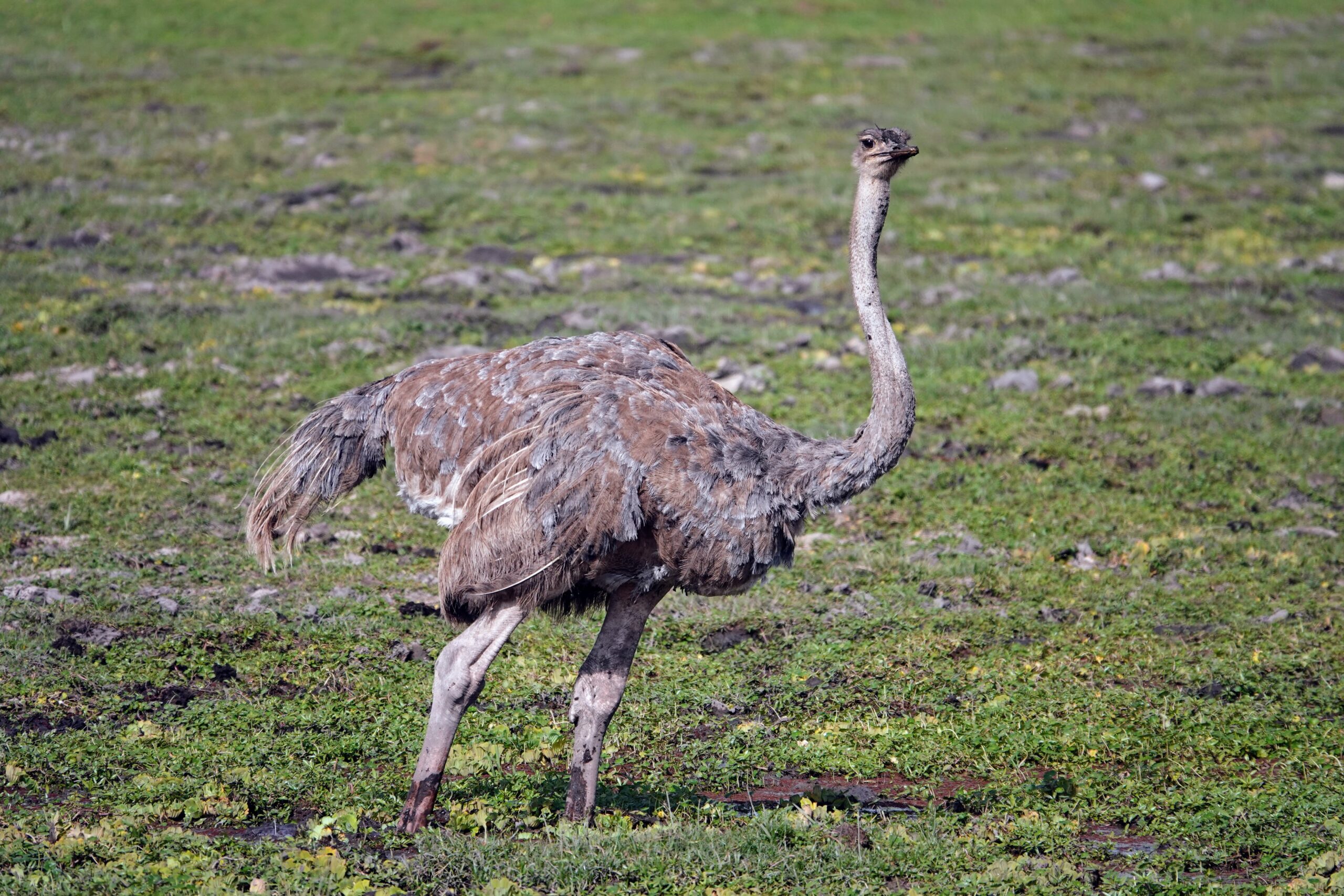
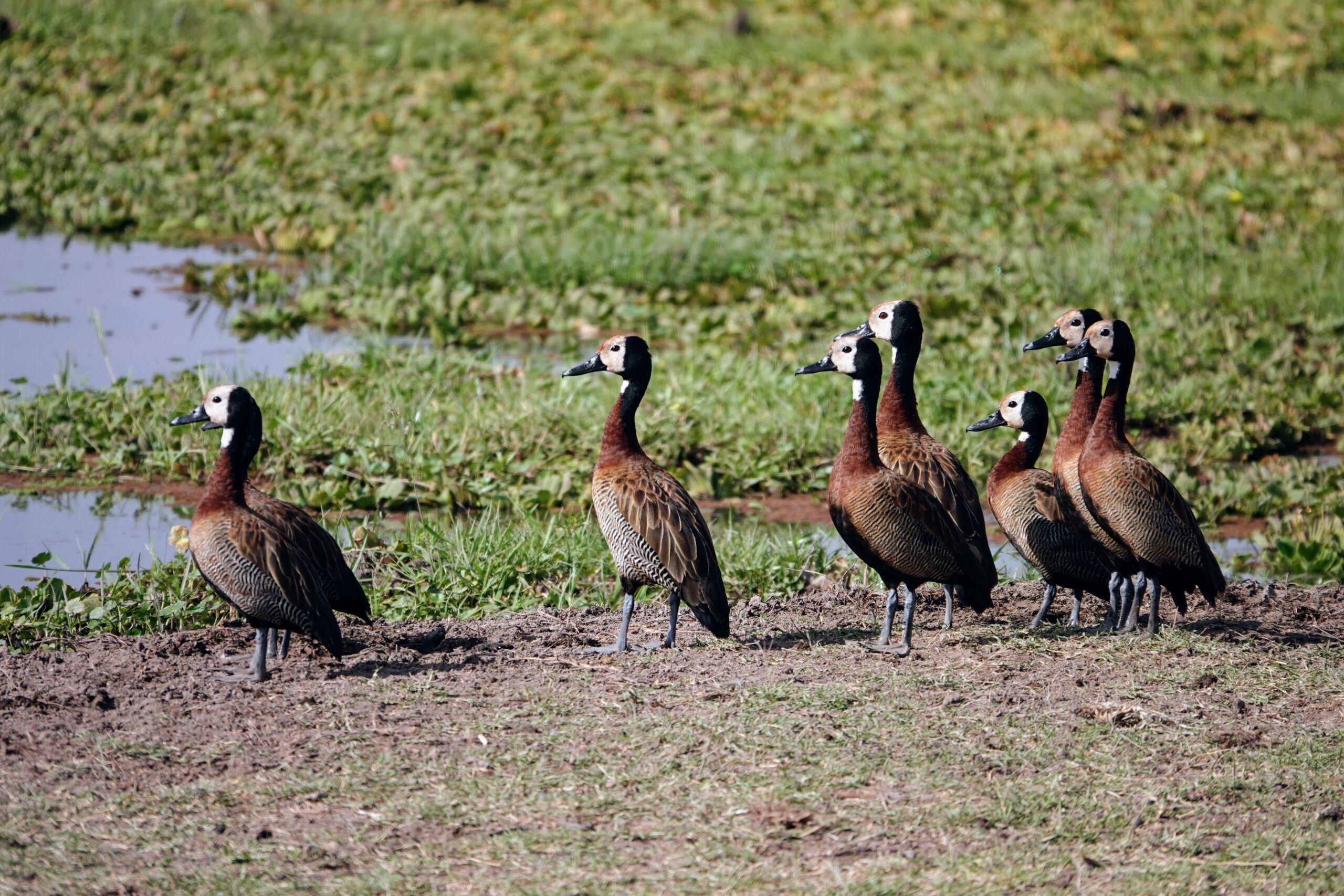
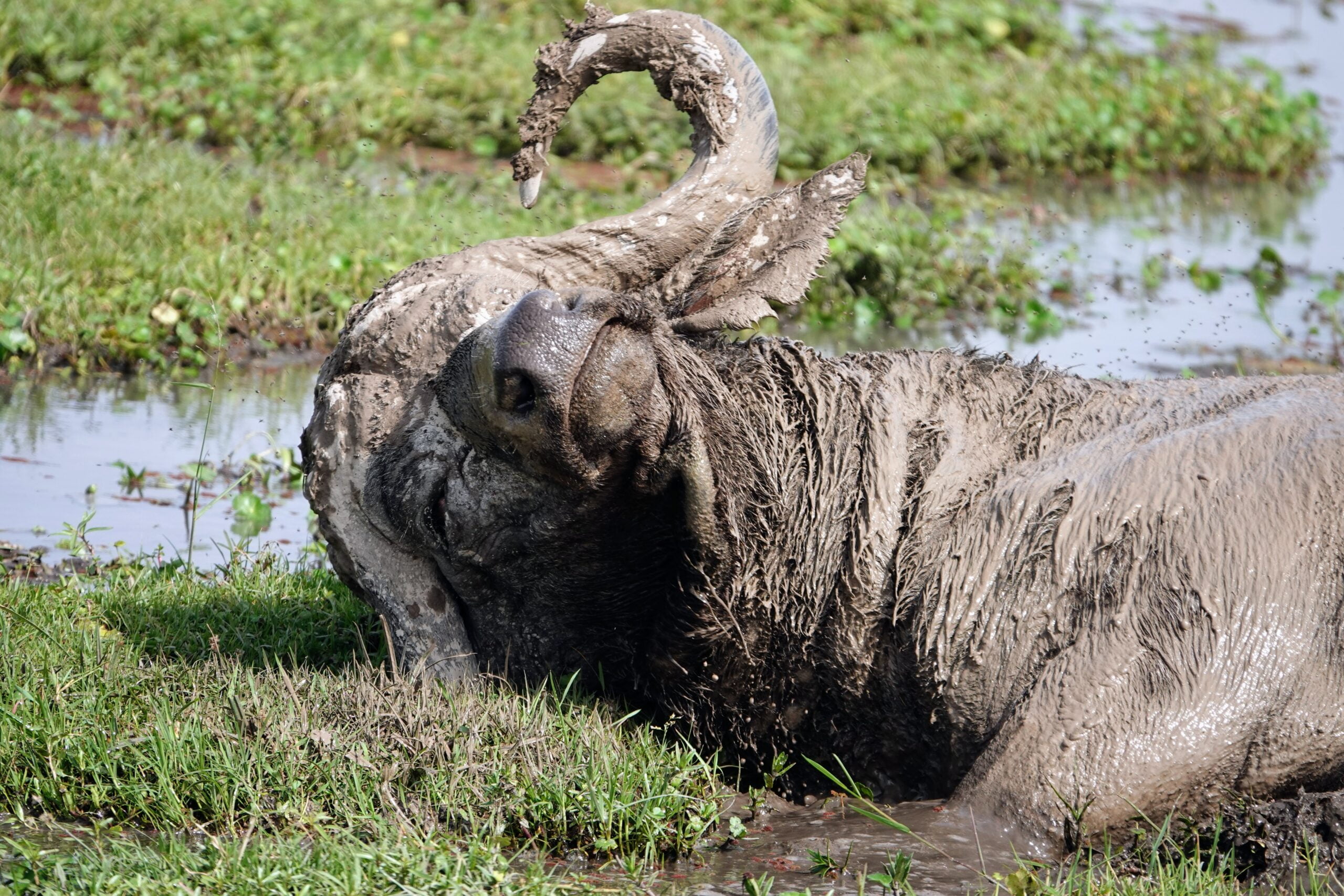
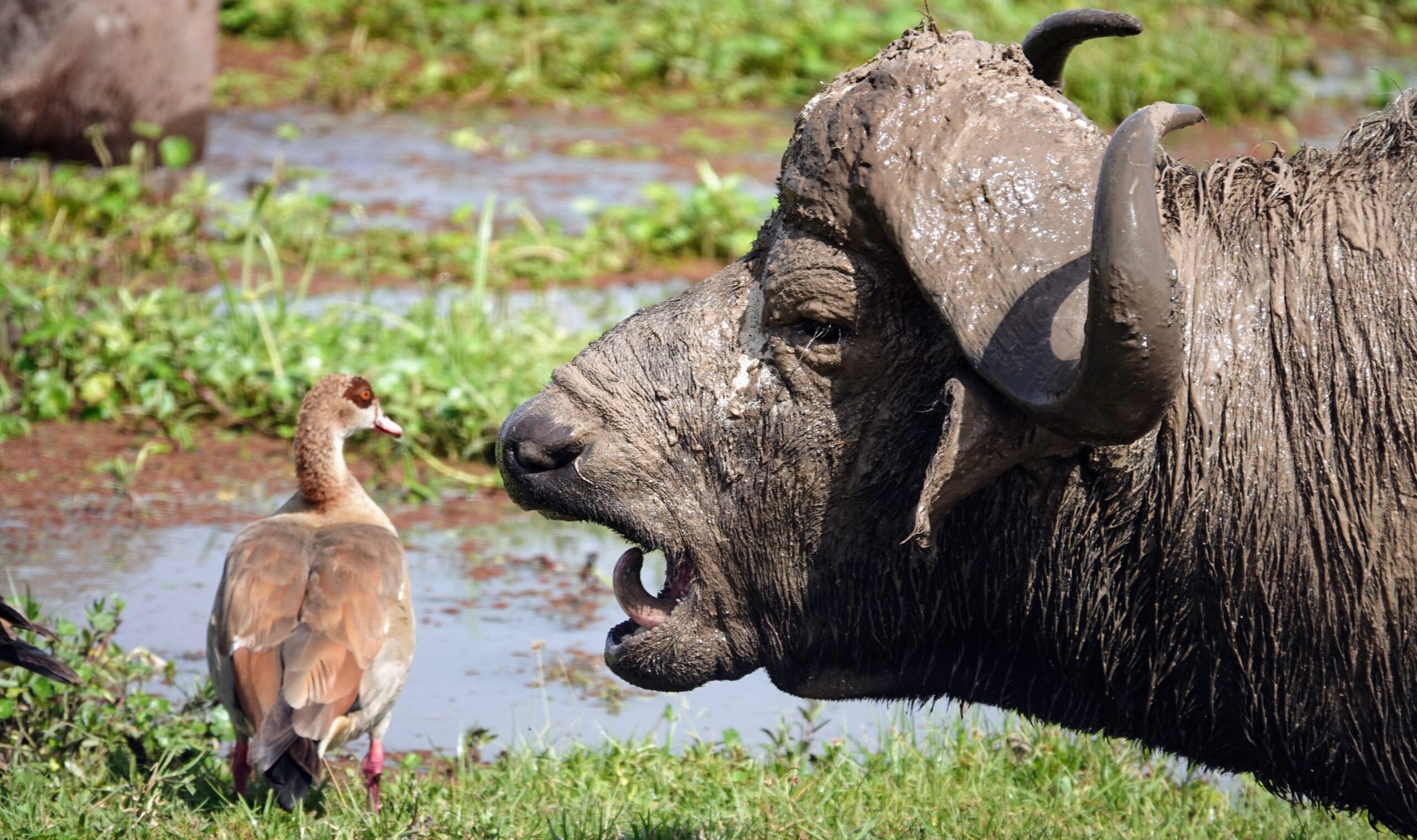
A huge buffalo enjoys a mud bath, before being disturbed by a curious bird.
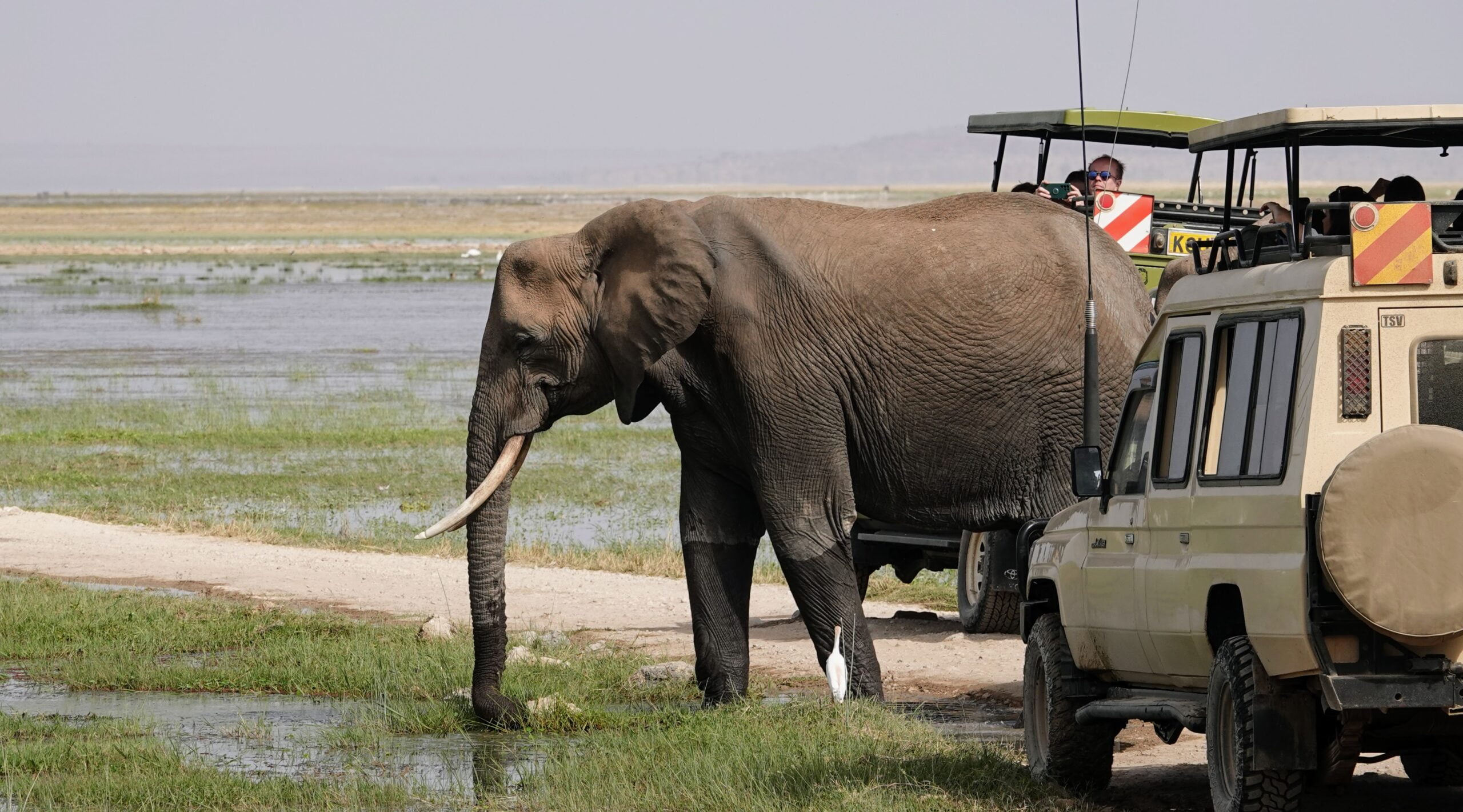
At ease, a herd of elephants weaves in and out of the cars. An opportunity to observe them up close…
Far away in the tall grass, slight movements attract our attention. The atmosphere is feverish. Could this be our first cat in Amboseli? Even with binoculars, doubt creeps in…
A herd of zebras stands out on the horizon. Then three lionesses. And following them, a male lion emerges from the thicket. His steps are slow, almost nonchalant.
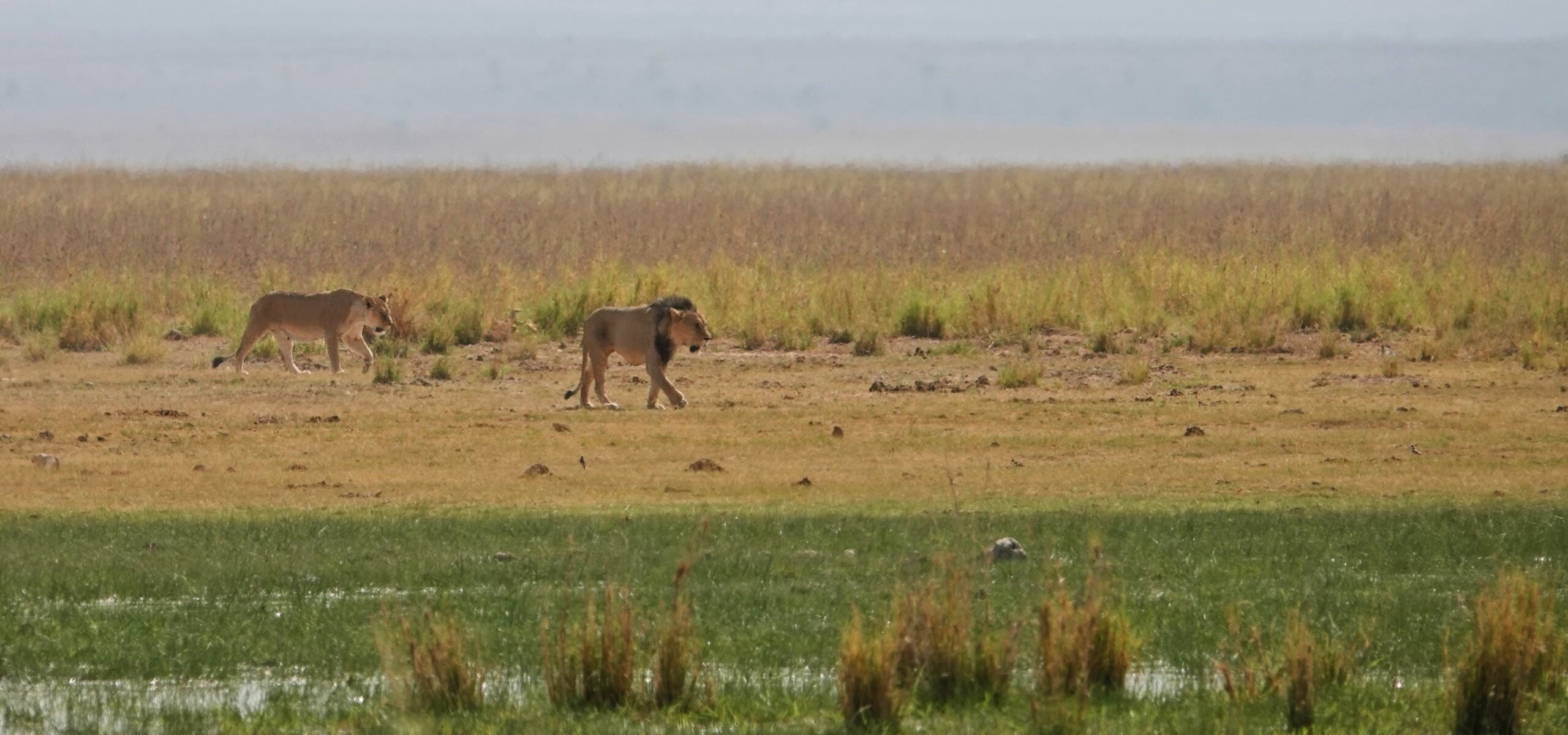
By the time our driver gets the news on the radio, dozens of cars have joined us to observe the scene. Several lionesses are now lying in the grass and one lion is staring at the zebras, motionless.
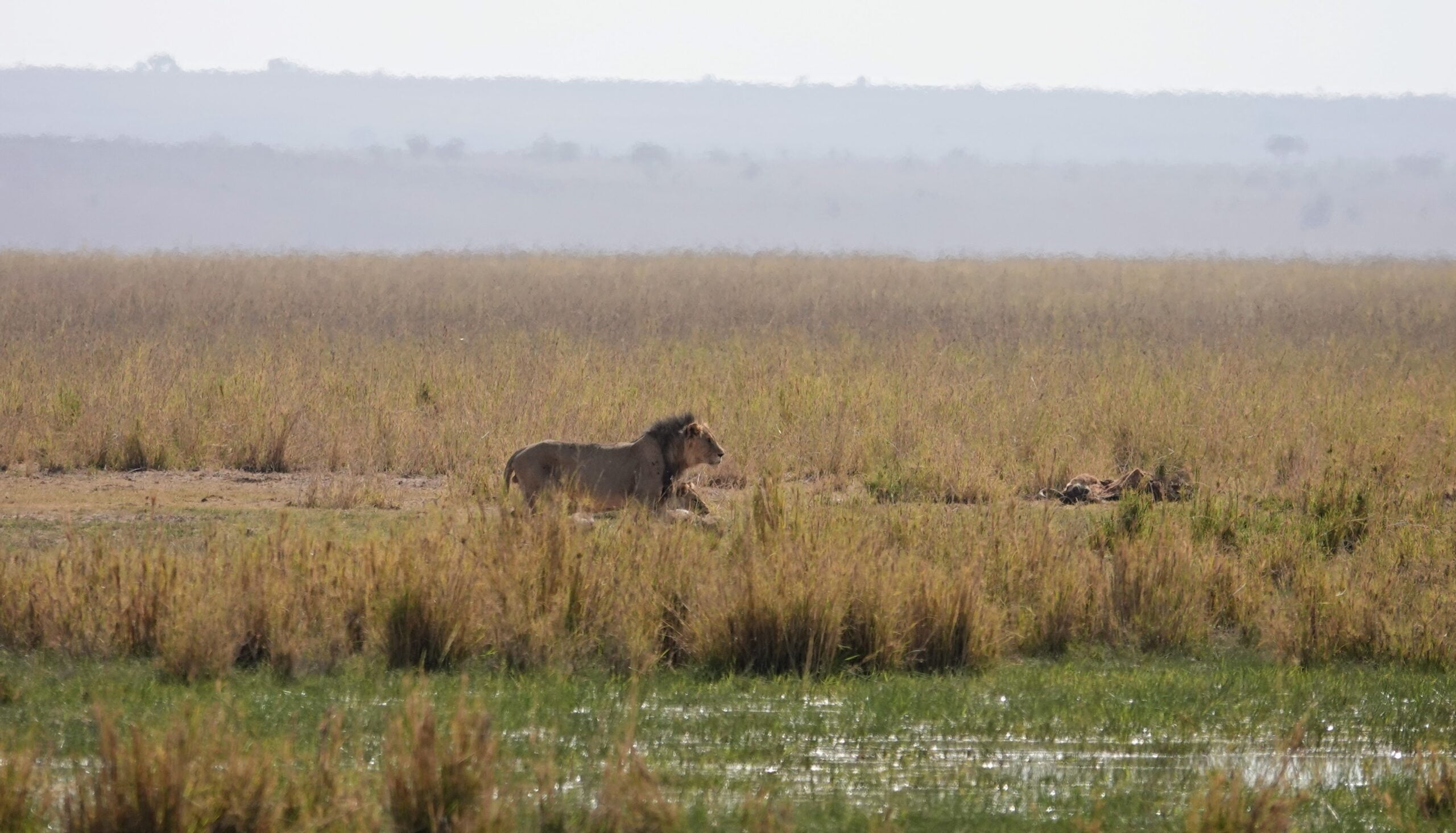
Minutes go by, nothing moves. The lions were unlikely to attack in the sweltering heat. Disappointed, we set off again for Observation Hill.
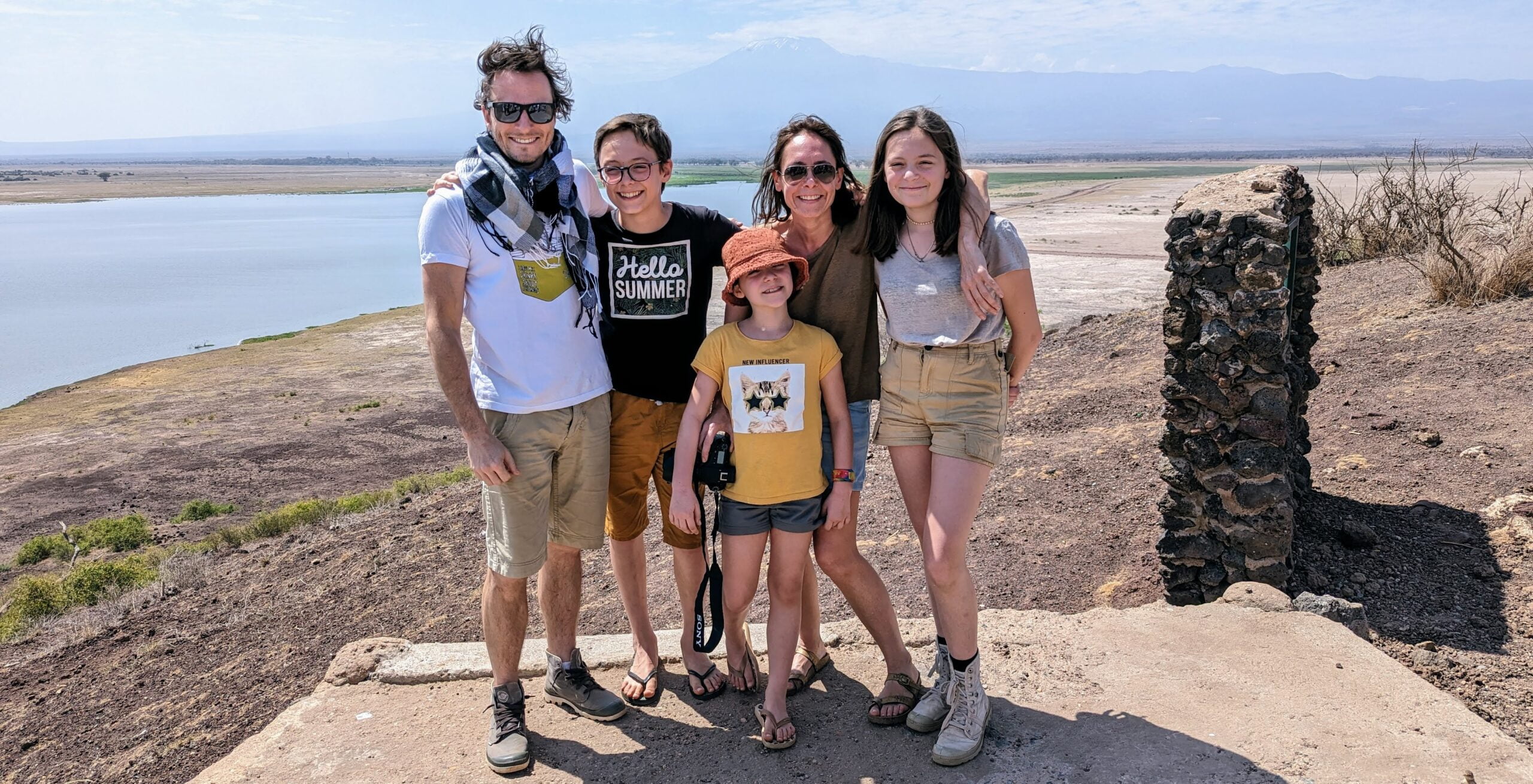
The only high point in Amboseli, Observation Hill is a small mountain, probably an ancient volcanic crater, whose flat summit serves as an observation platform and offers a 360-degree view of the park. The ideal spot for a picnic break or a family portrait in front of Kilimanjaro.
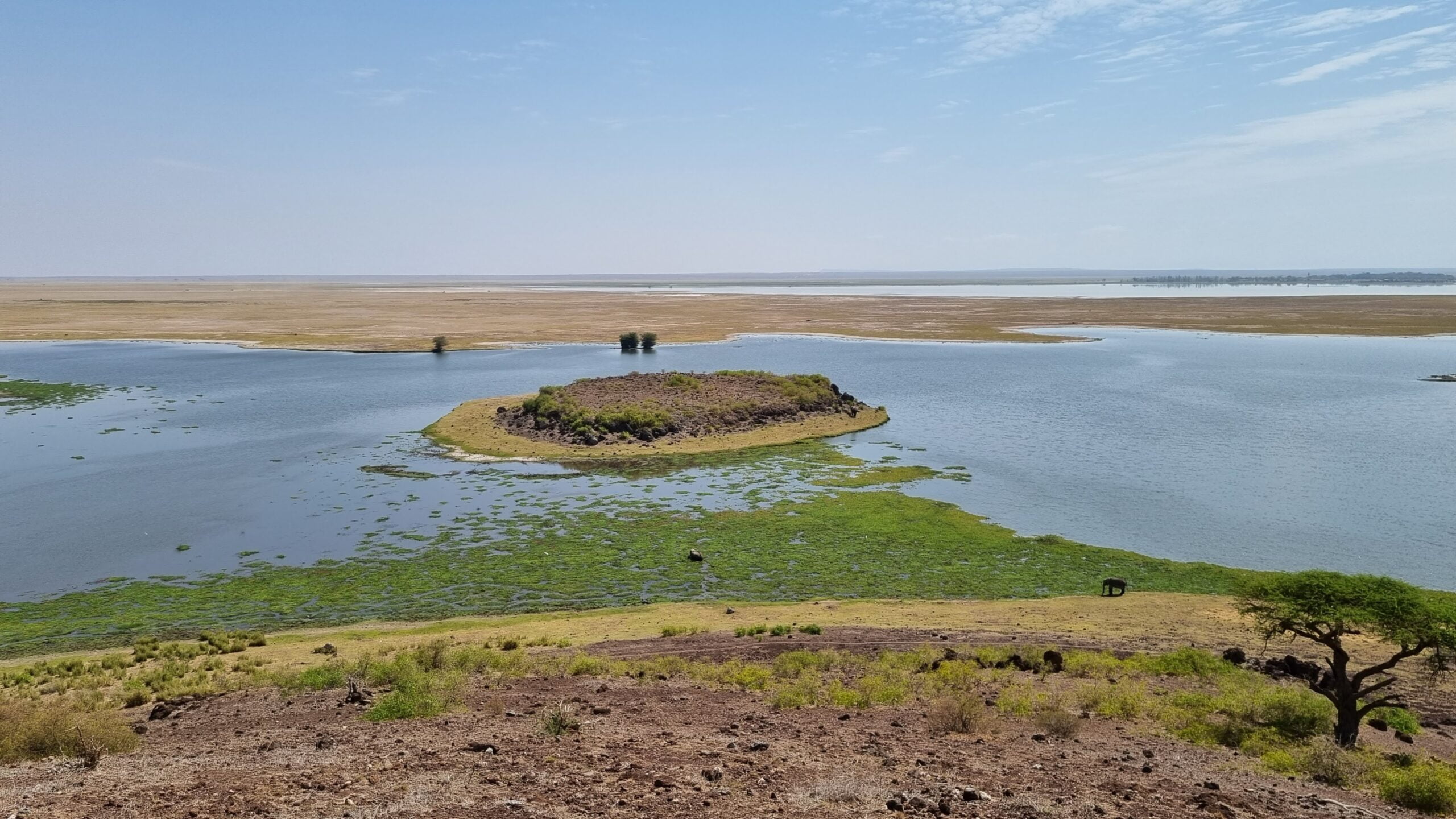
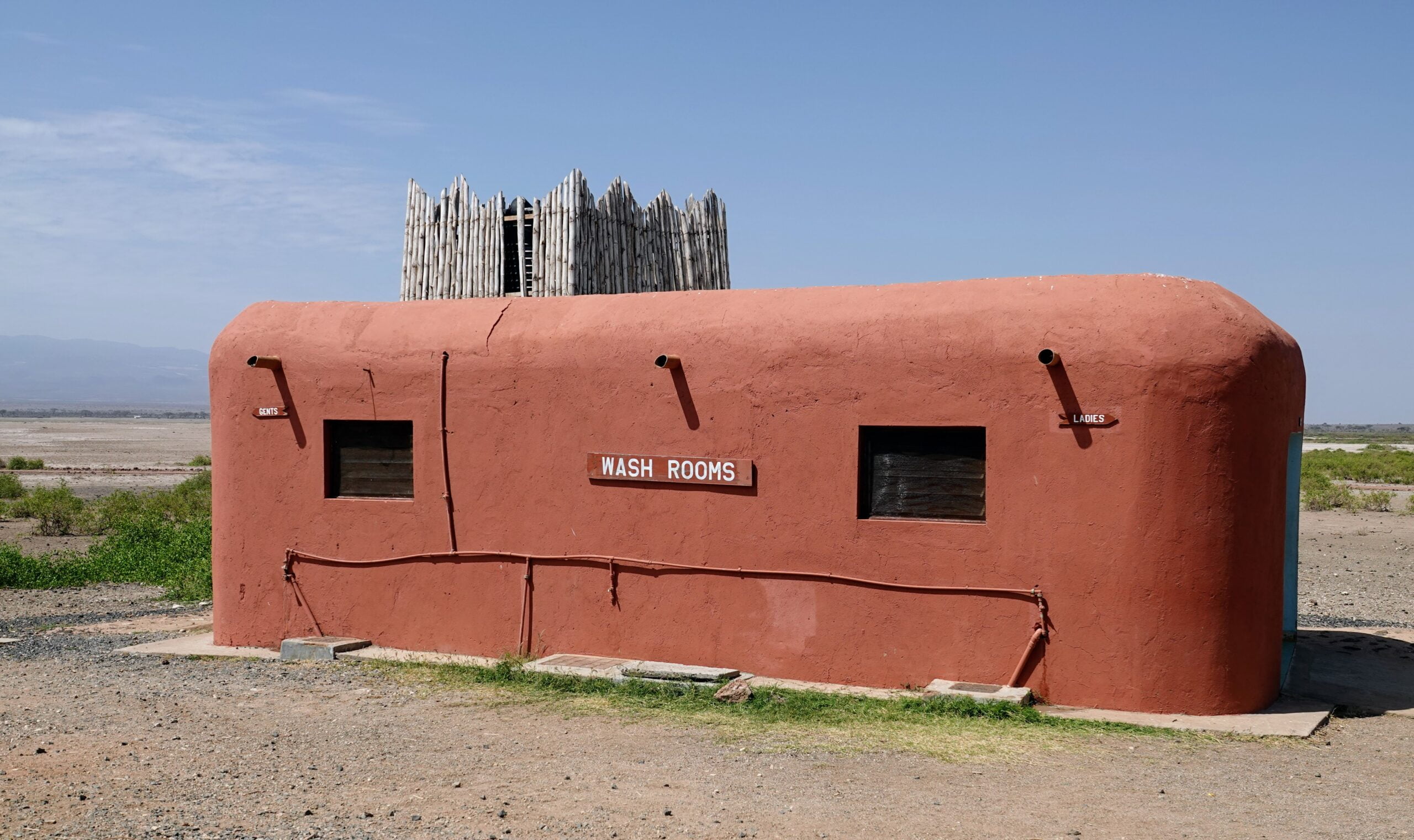
It’s also one of the few places where you’re allowed to get out of your car for a pee stop 😅
Lunch is provided at the lodge. A family of warthogs and numerous flamingos accompany us on our return journey…
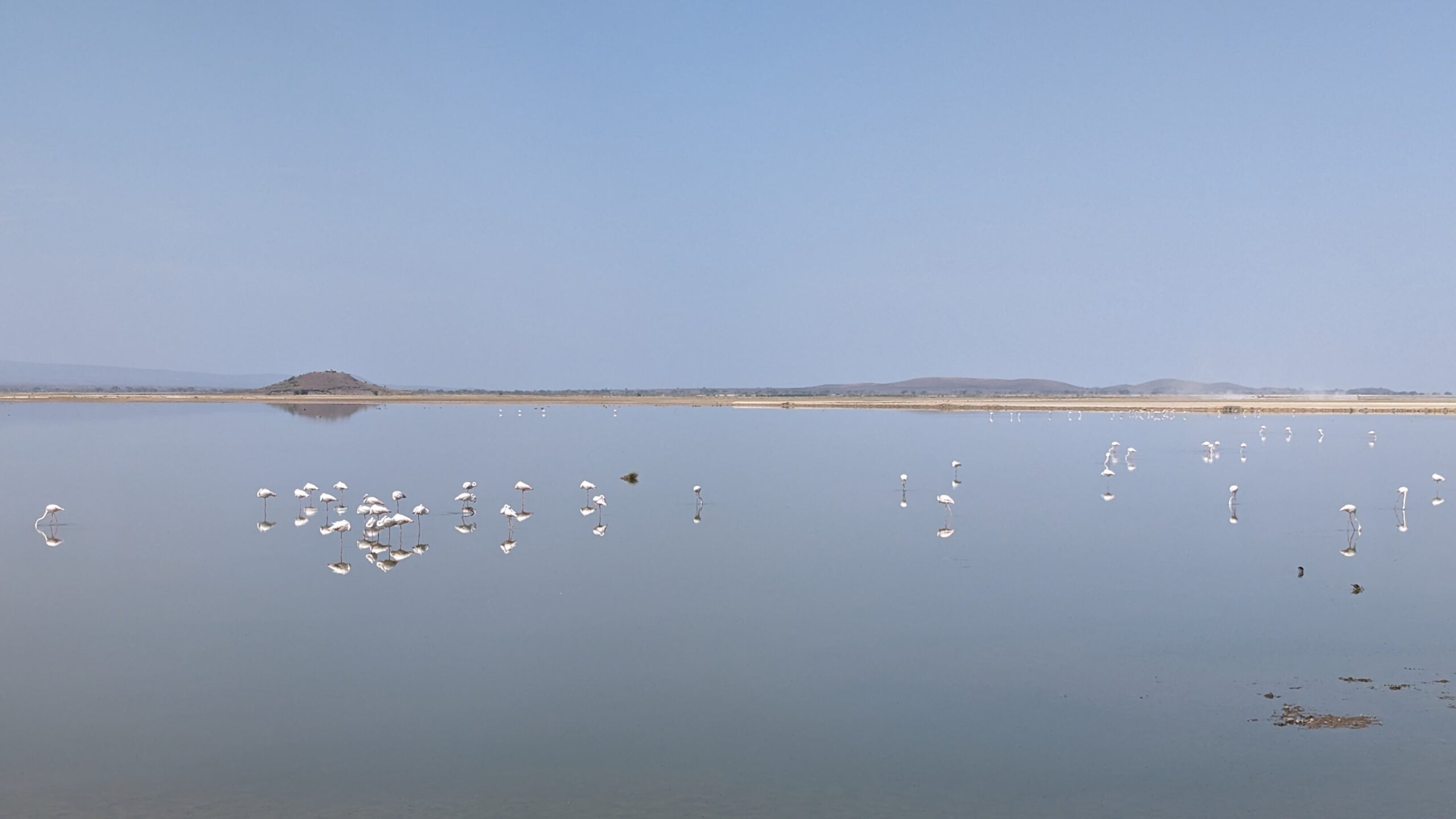
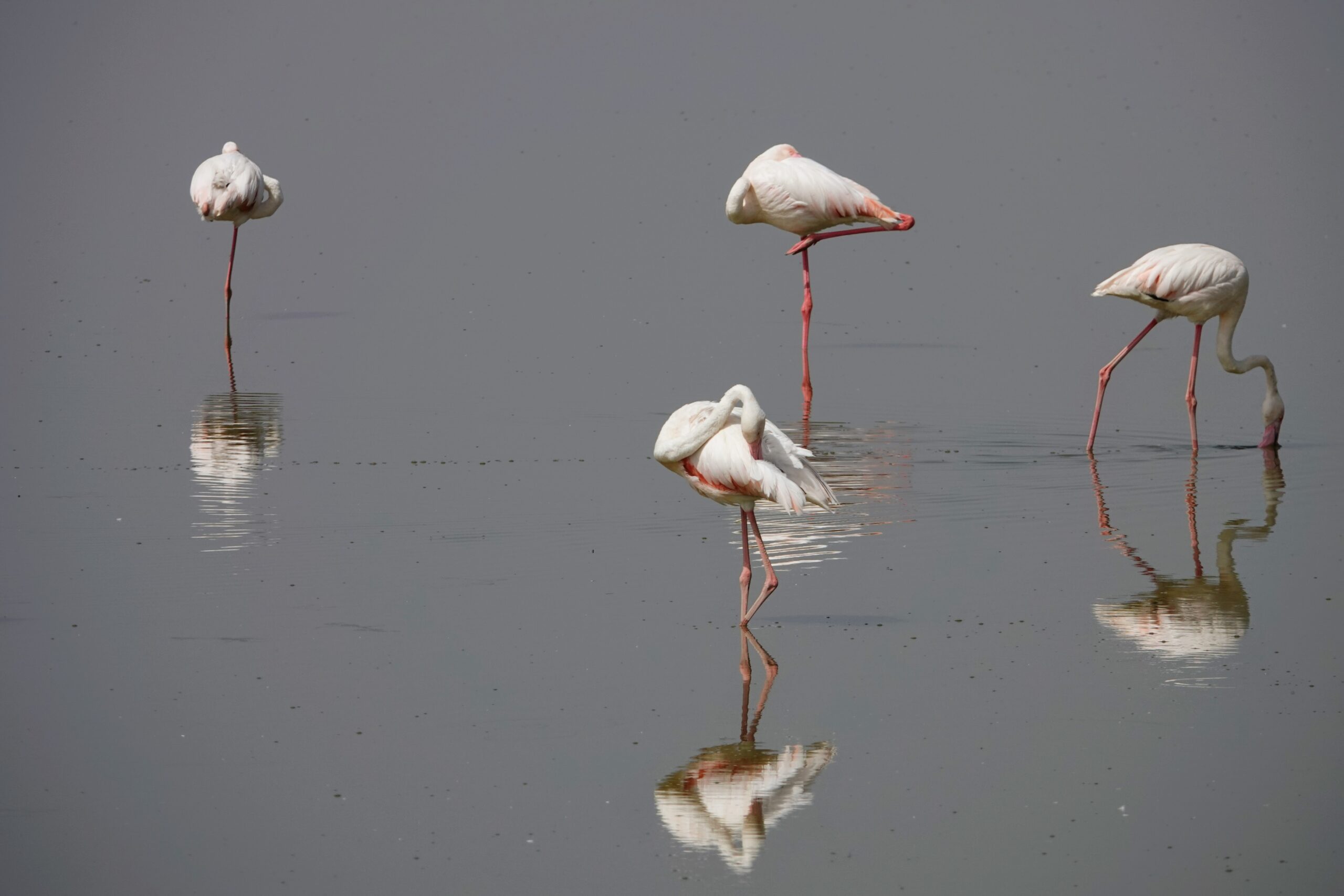
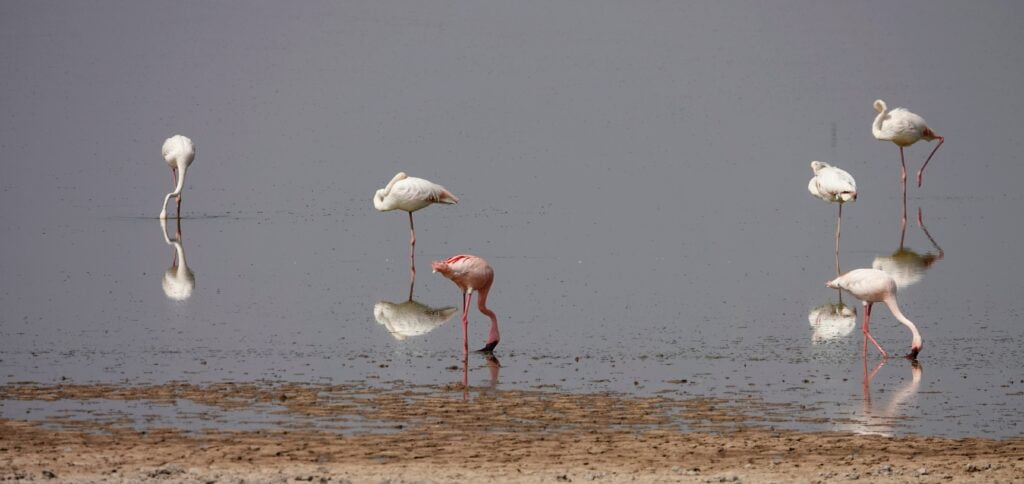
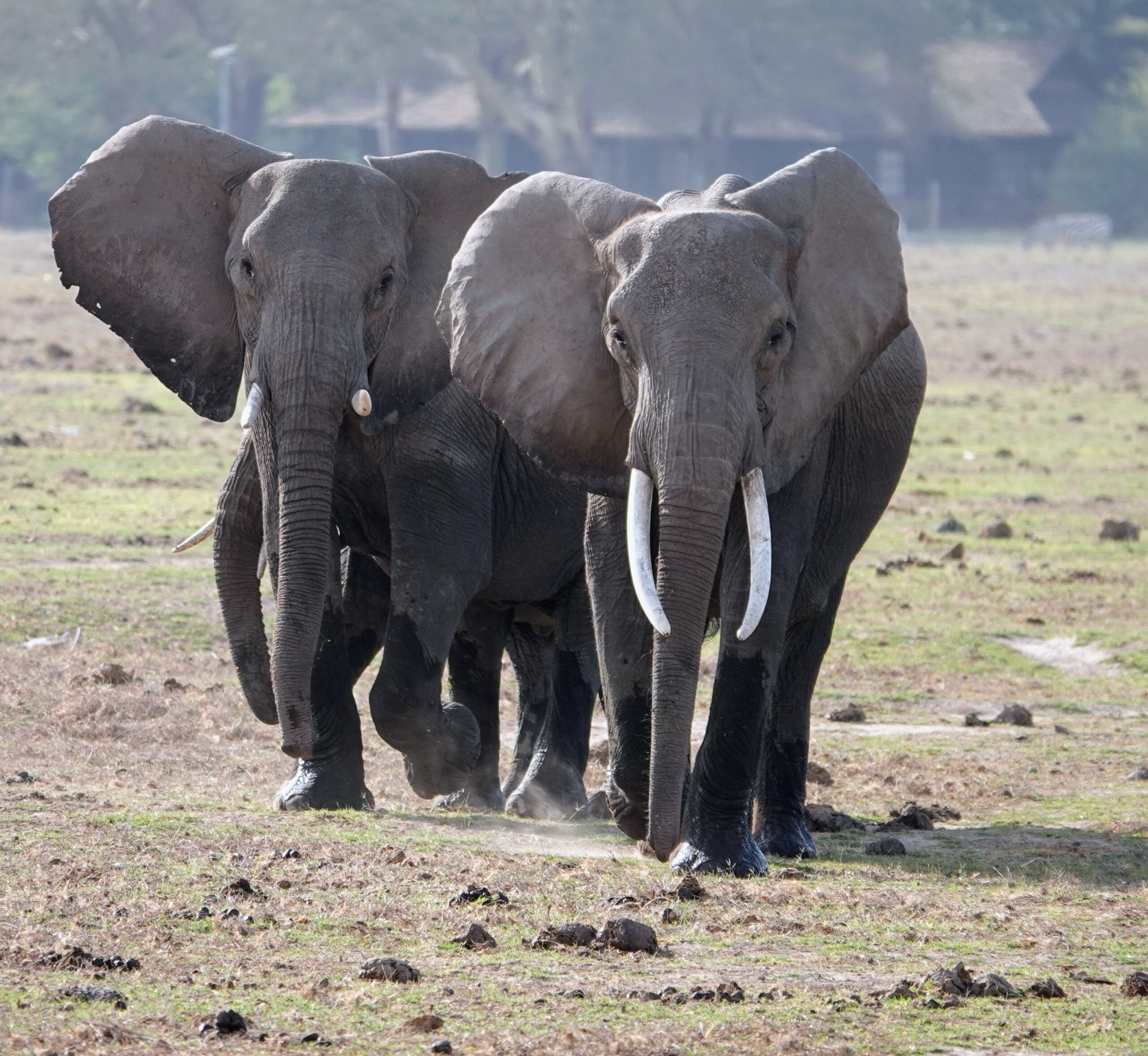
After a short nap and a refreshing dip in the lodge pool, we’re back in the park by the end of the day. Elephants are still present in large numbers, but Kilimanjaro has its head in the clouds.


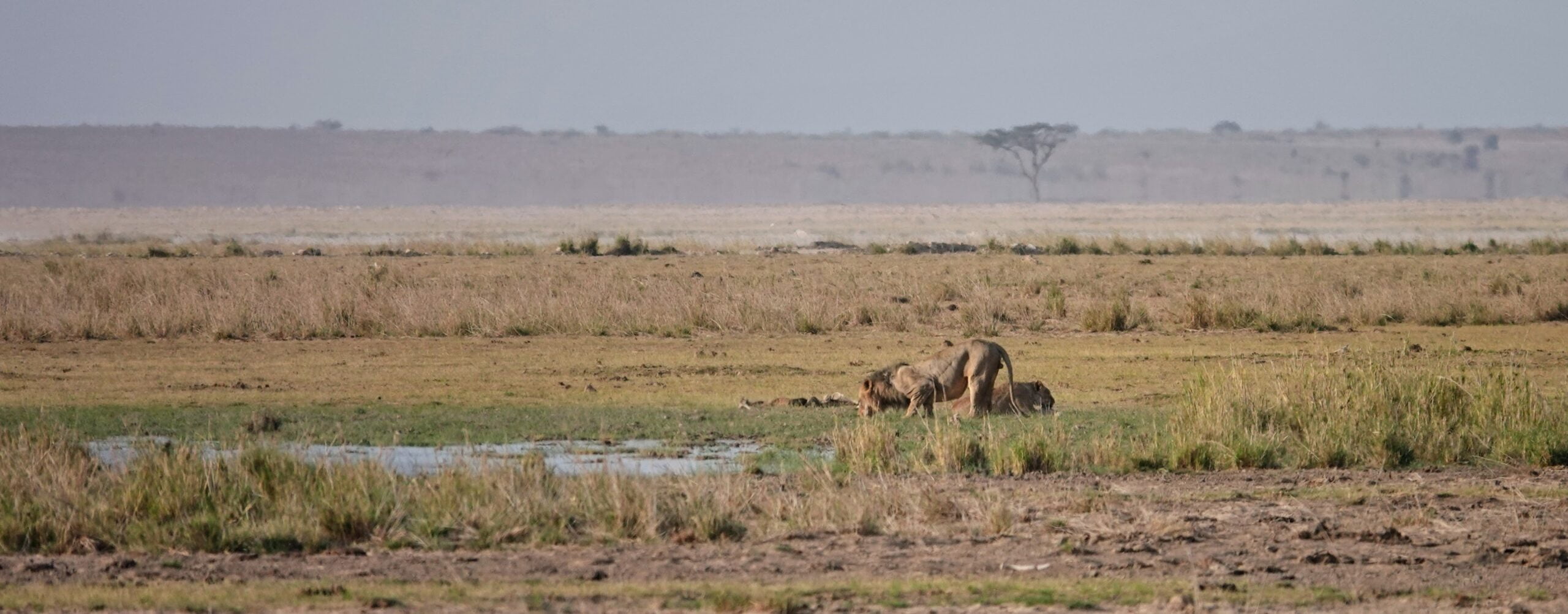
The sight of two lions near a waterhole gives us hope that the end of the day will be as magical as the one we experienced at the Masaï Mara, but we don’t manage to get any closer. We allow ourselves a few minutes of distant observation before heading home 👀
The light slowly fades over the Amboseli swamps.
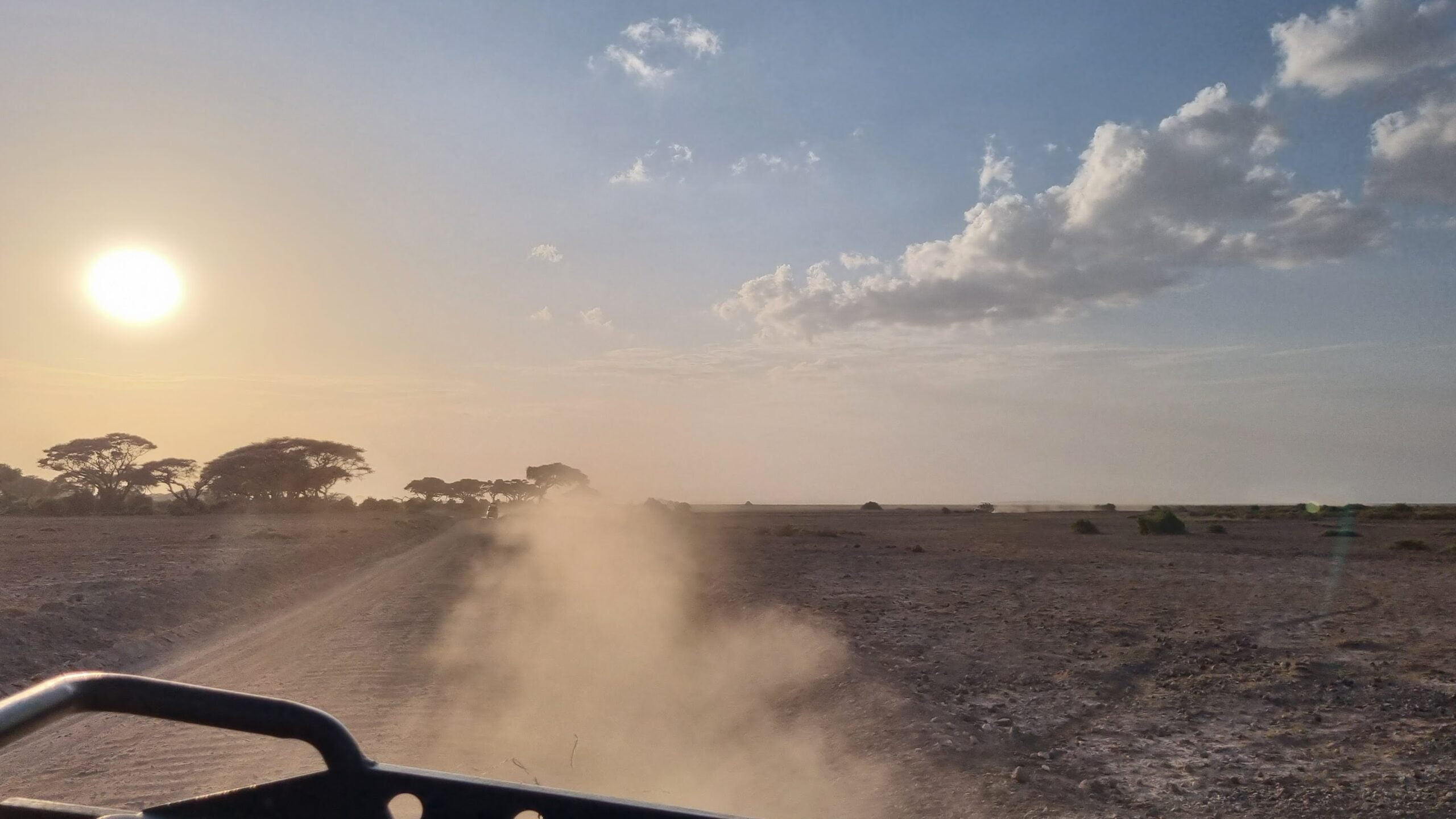
Last few kilometers of track. Last safari. It’s a real eye-opener…
Practical Information
- Amboseli National Park is open daily from 6am to 7pm.
- Entrance to Amboseli National Park costs $60 per adult and $35 per child (aged 3 to 17). These rates are valid for 24-hour periods.
- If you opt for a self-drive safari, you must also pay an entrance fee for your vehicle (300 KSh for a car with up to 6 passengers).
- If you wish to visit Amboseli Park by self-drive, remember to obtain a park map before you arrive, as there are none available at the entrance gates.
- As in all Kenya’s national parks, rules are in place to protect the flora and fauna and to ensure the safety of visitors:
- In the presence of animals, maintain a minimum distance of 25 meters.
- Vehicle speeds may not exceed 65km/h.
- It is forbidden to get out of a vehicle except at dedicated observation points.
- Noise must be kept to a minimum when approaching animals.
- It is forbidden to feed the animals.