Sri Lanka often evokes tea plantations, coconut-fringed beaches, or safaris in search of elephants. Yet it is in the center of the island that one of its greatest treasures lies: the Cultural Triangle.
Between forgotten royal cities, cave temples, ancient reservoirs, and rocks rising above the jungle, this region encompasses nearly two thousand years of history. Most of its sites are UNESCO World Heritage listed, recounting the rise of Sinhalese kingdoms, the influence of Buddhism, and the architectural genius of a civilization that shaped Sri Lanka long before the arrival of Europeans.
Visiting the Cultural Triangle means traveling back in time while discovering some of the country’s most iconic landscapes.
Sigiriya, the Icon of Sri Lanka
It is impossible to discuss the Cultural Triangle without mentioning Sigiriya.
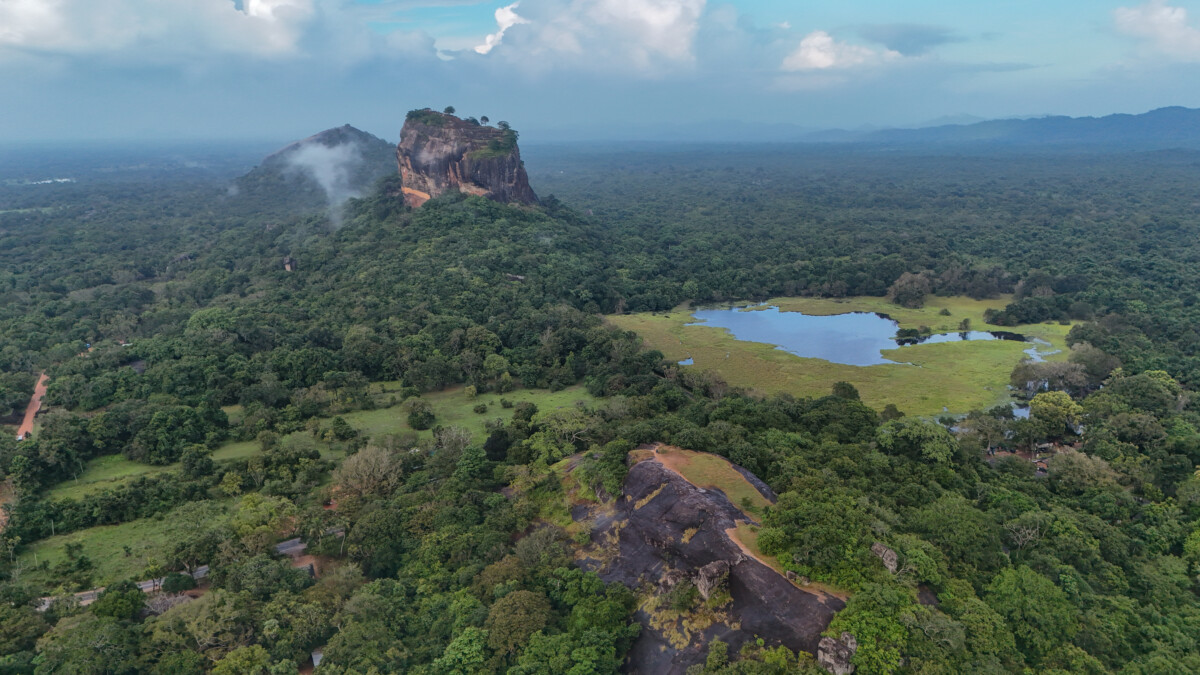
Nicknamed the “Lion Rock,” this massive monolith nearly 370 meters high has dominated the plains of central Sri Lanka for more than fifteen centuries. Visible for several kilometers around, it is now the country’s most celebrated image.
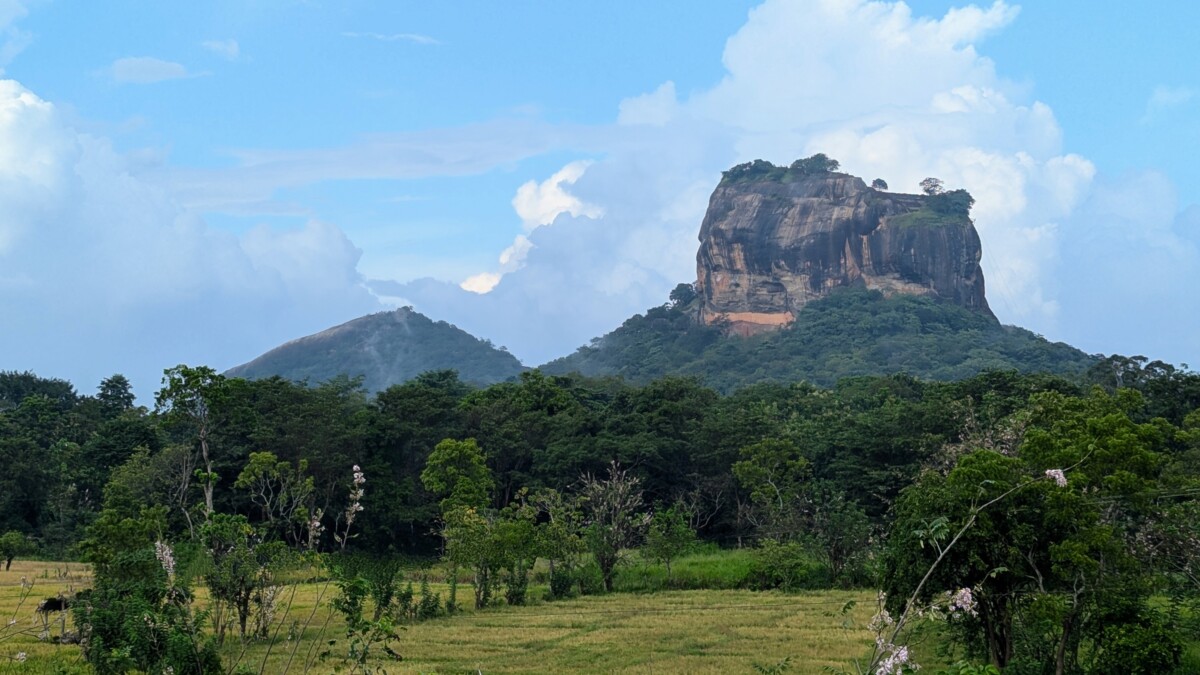
The story of Sigiriya resembles a royal tragedy. In the 5th century, Prince Kassapa murdered his father to seize the throne and forced his legitimate brother into exile. Fearing his return, he transformed this isolated rock into a reputedly impregnable fortress, having palaces, gardens, and sophisticated hydraulic systems built on and around the summit.
Twenty years later, his brother Moggallana returned at the head of an army. Kassapa was defeated and took his own life. The fortress was abandoned before being gradually reinhabited by Buddhist monks.
Today, only a few vestiges of the palace remain, along with the famous lion paws that once guarded access to the summit and the remarkable gardens surrounding the site. But what impresses above all is the silhouette of the rock itself, rising above a sea of tropical forest.
Pidurangala, the Finest Viewpoint of Sigiriya
Just a few kilometers from Sigiriya lies Pidurangala, long overshadowed by its famous neighbor.
This rock once housed a Buddhist monastery that is said to have welcomed the monks displaced during the construction of Kassapa’s fortress. Today, it is primarily known for offering one of Sri Lanka’s most beautiful panoramas.
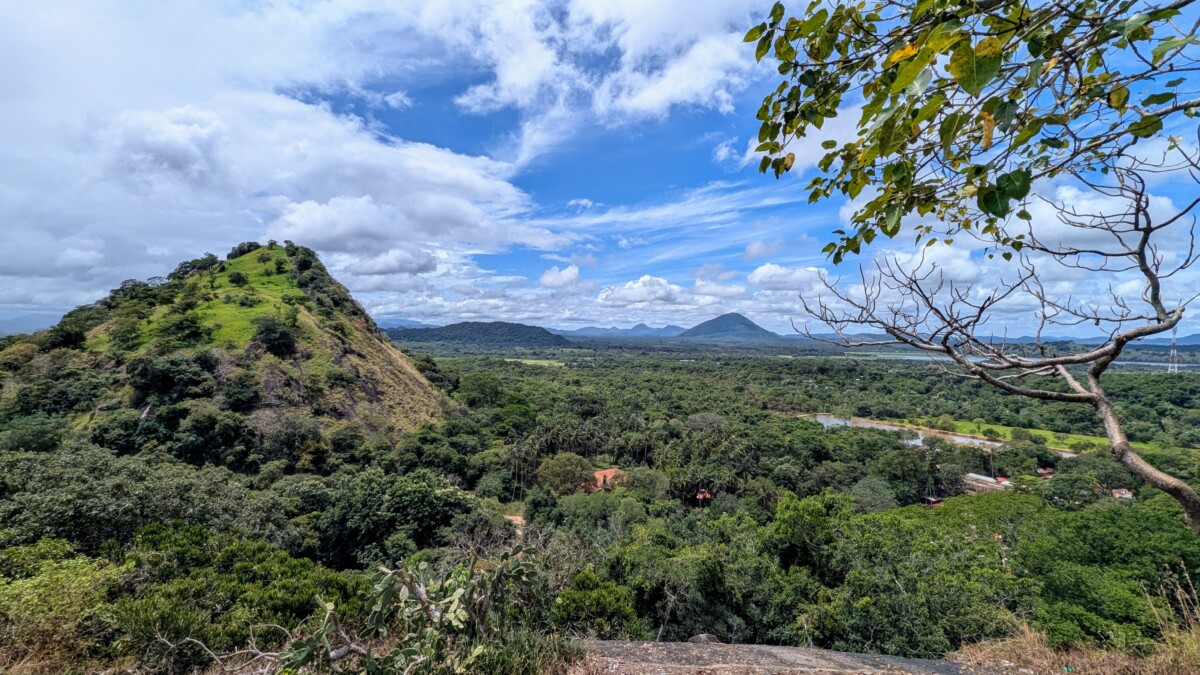
The ascent is shorter than that of Sigiriya but requires greater effort, particularly in the final section where several rock formations must be negotiated. The reward, however, is exceptional: at the summit, Sigiriya appears in all its majesty, rising above the canopy.
Dambulla, the Sanctuary Carved into Rock
Perched on an imposing rock outcrop, Dambulla houses one of Sri Lanka’s best-preserved religious complexes.
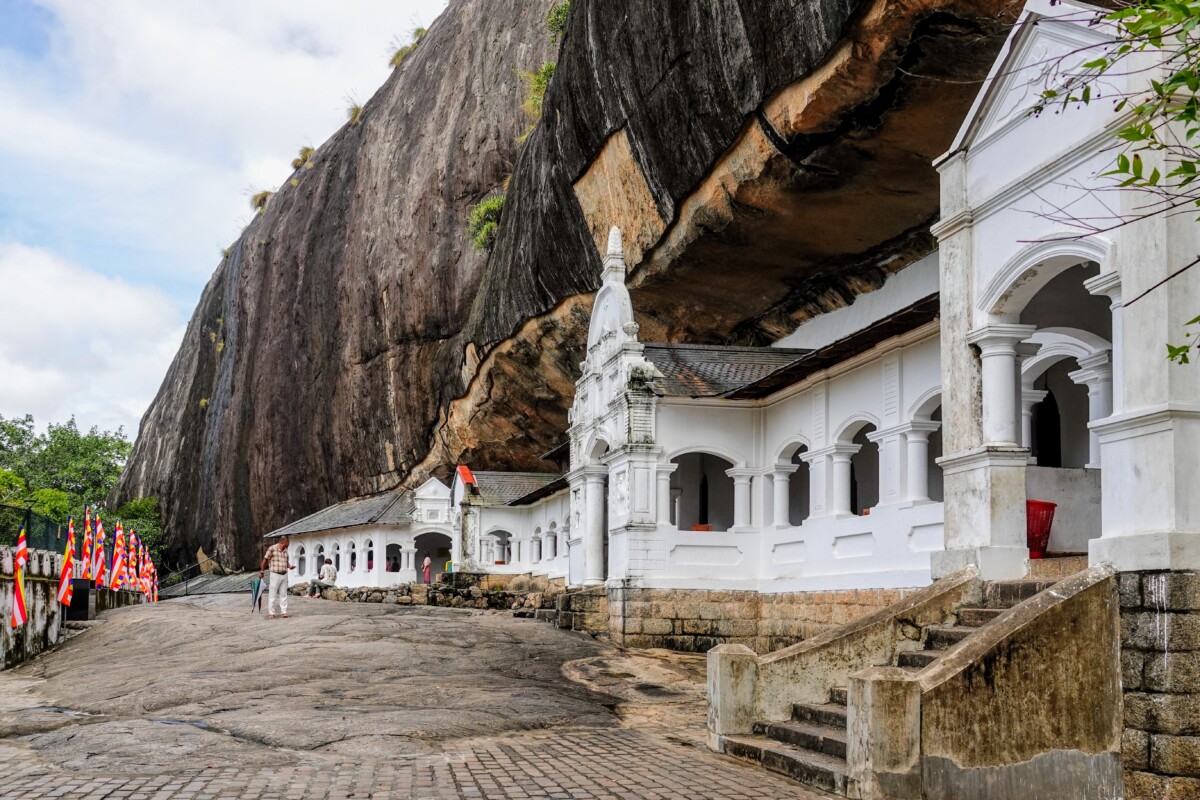
Occupied since prehistoric times, the caves became a refuge for Buddhist monks from the 3rd century BCE. According to tradition, King Valagamba took shelter there during his exile before reclaiming his kingdom and transforming the site into a sanctuary.
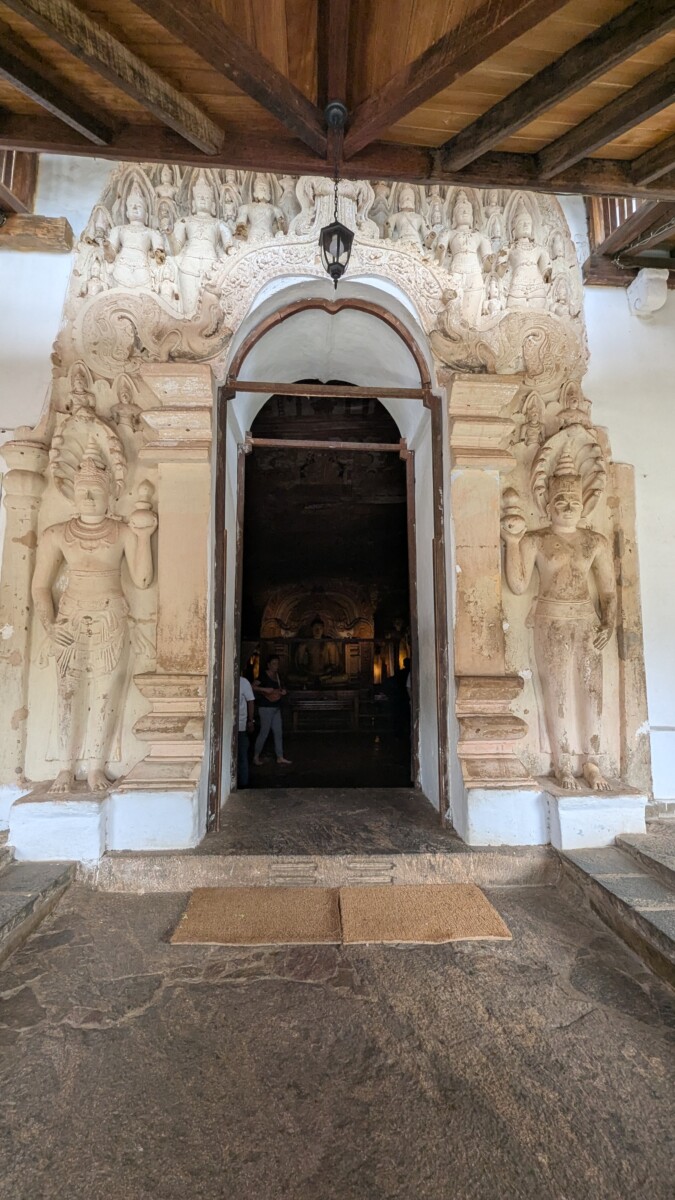
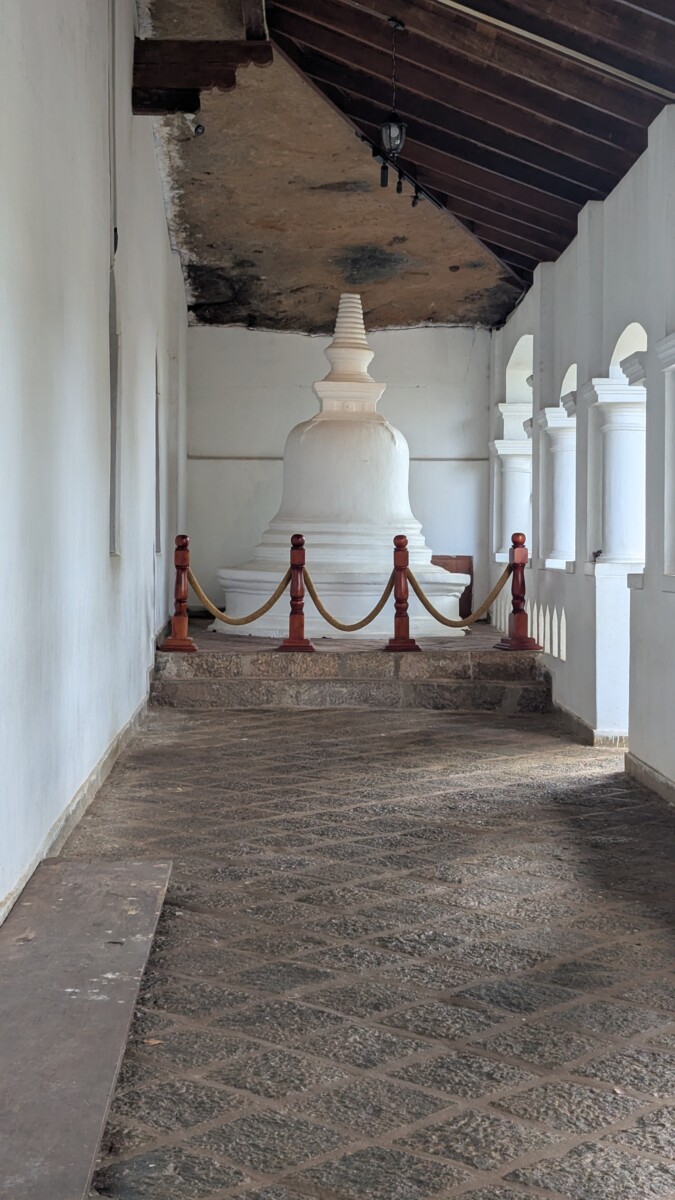
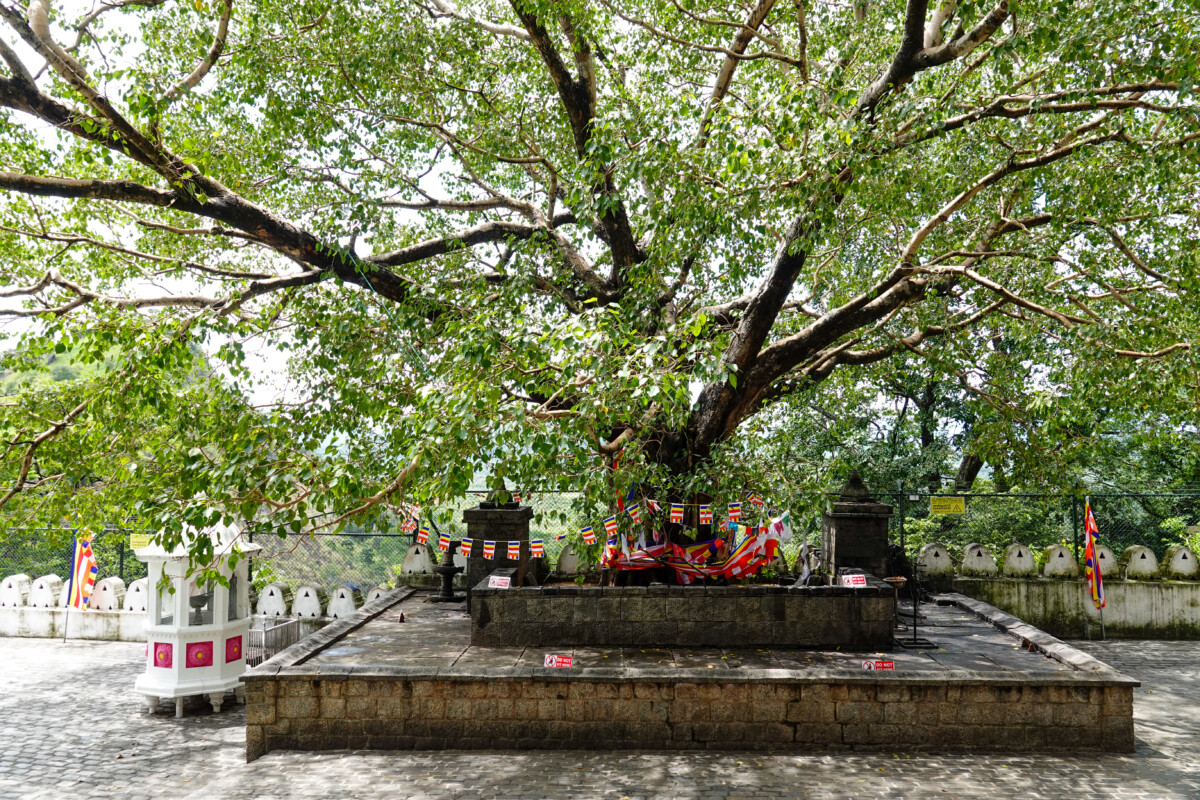
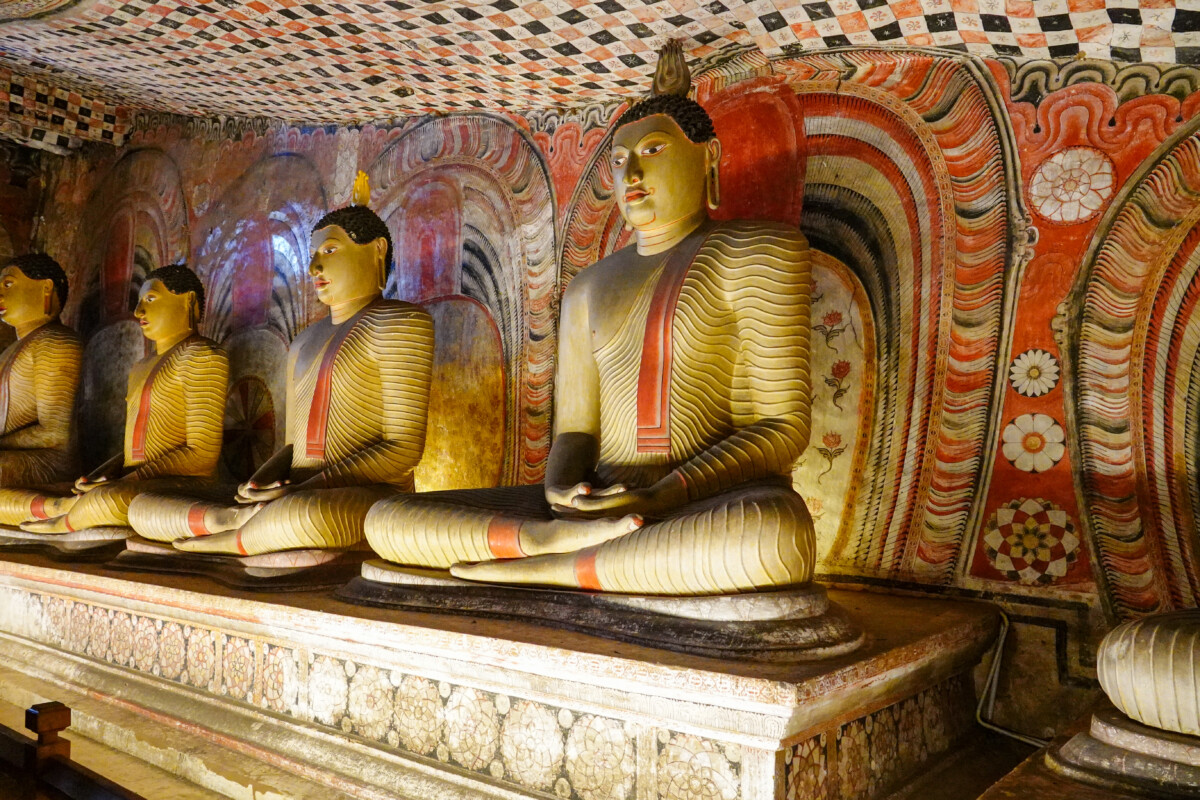
Over the centuries, successive rulers enriched the caverns with statues, paintings, and increasingly elaborate decorations. Today, five principal caves contain more than 150 statues of Buddha as well as several thousand square meters of frescoes.
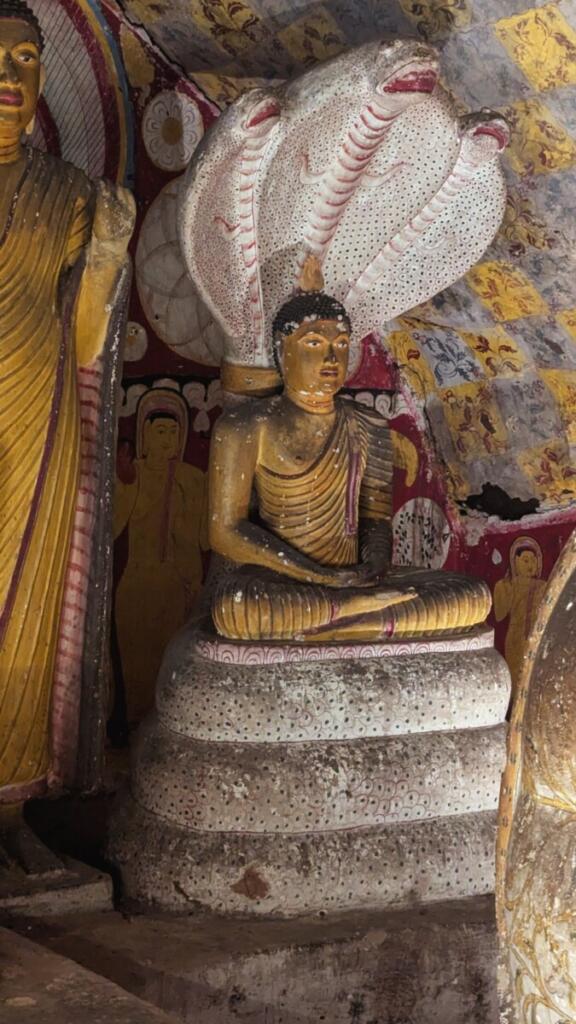
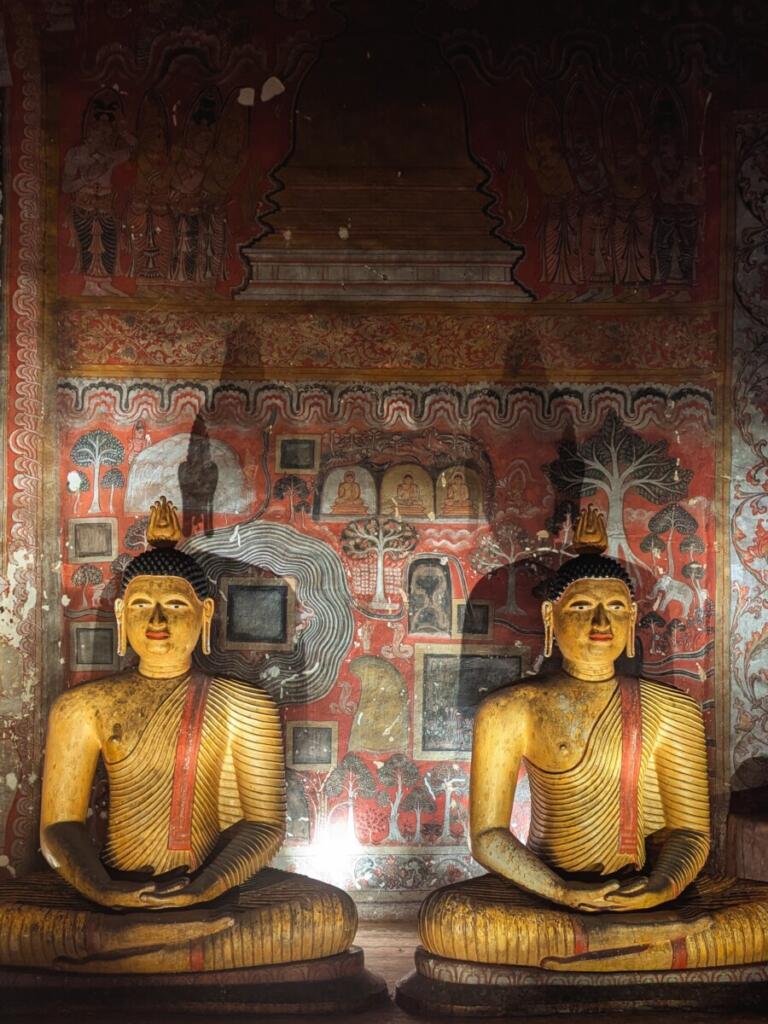
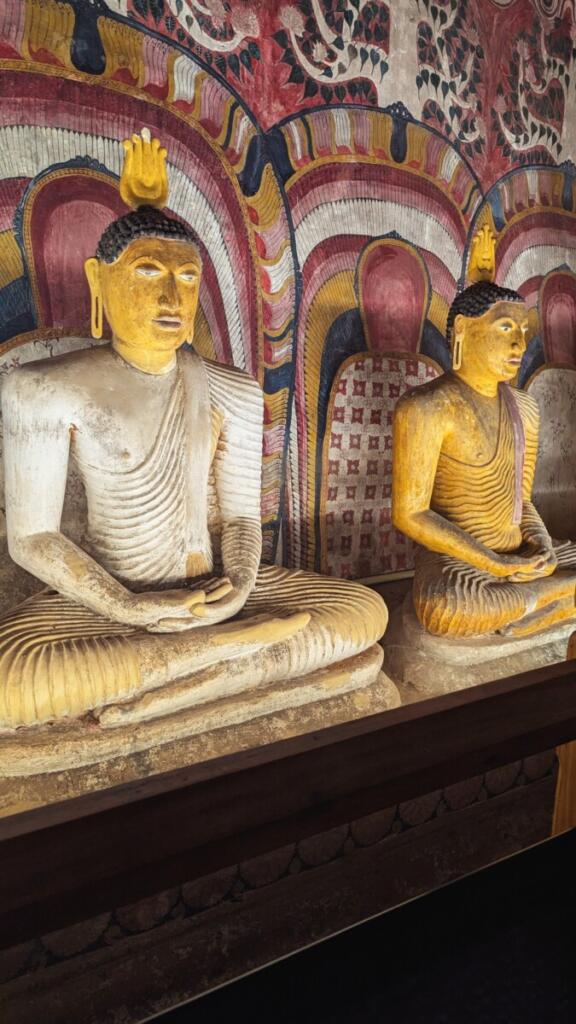
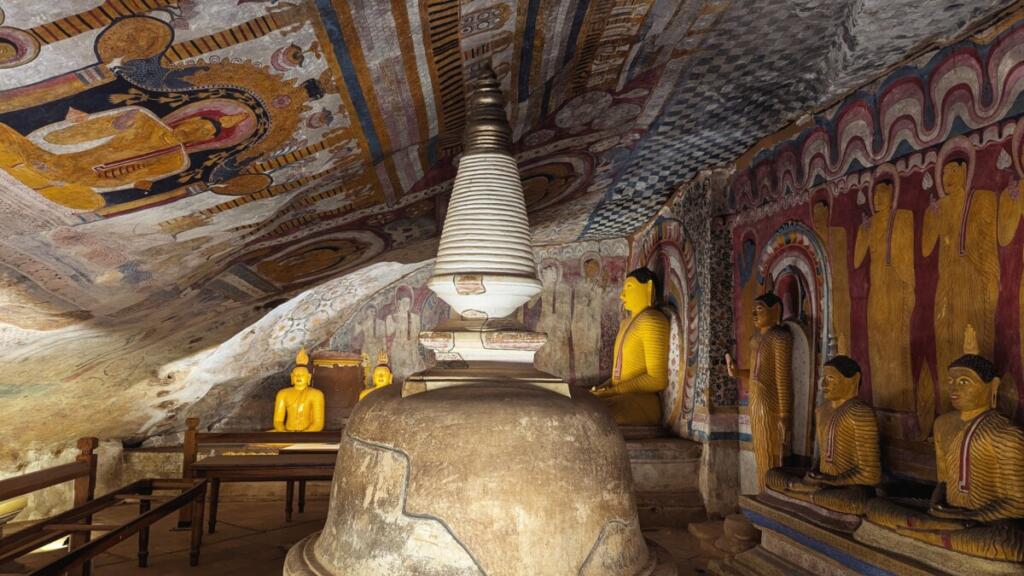
The ceilings appear entirely covered with motifs and religious scenes in ochre, red, and golden tones. Among the most impressive works is a fourteen-meter-long reclining Buddha, carved directly into the rock.
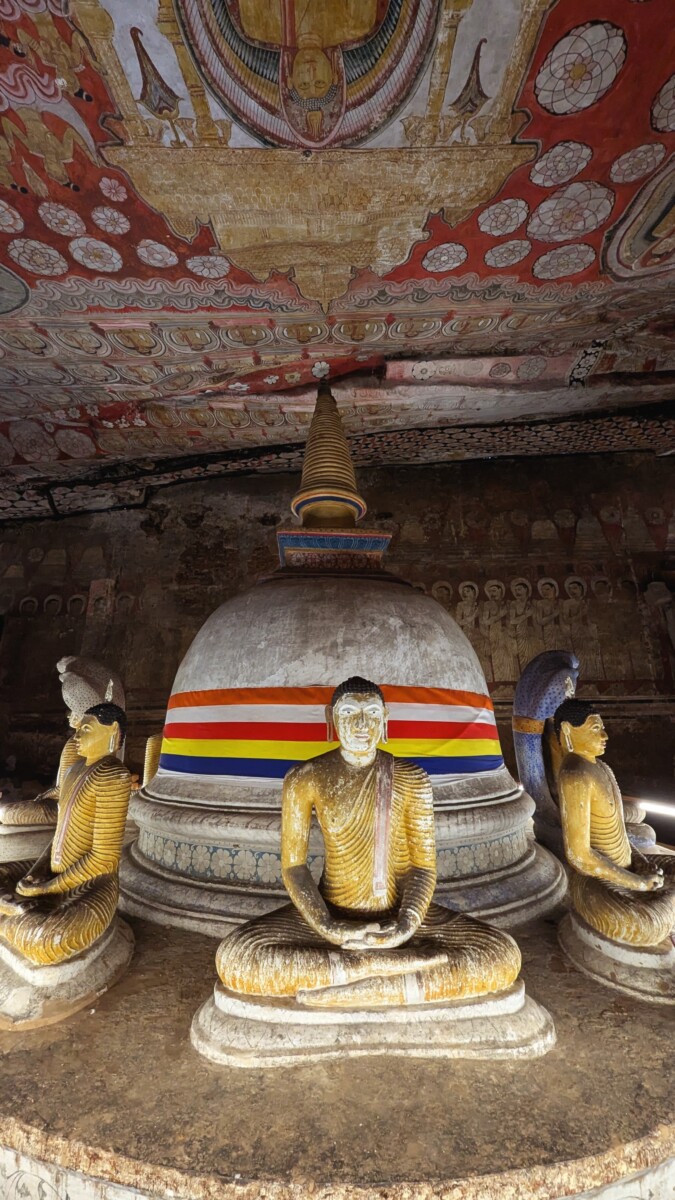
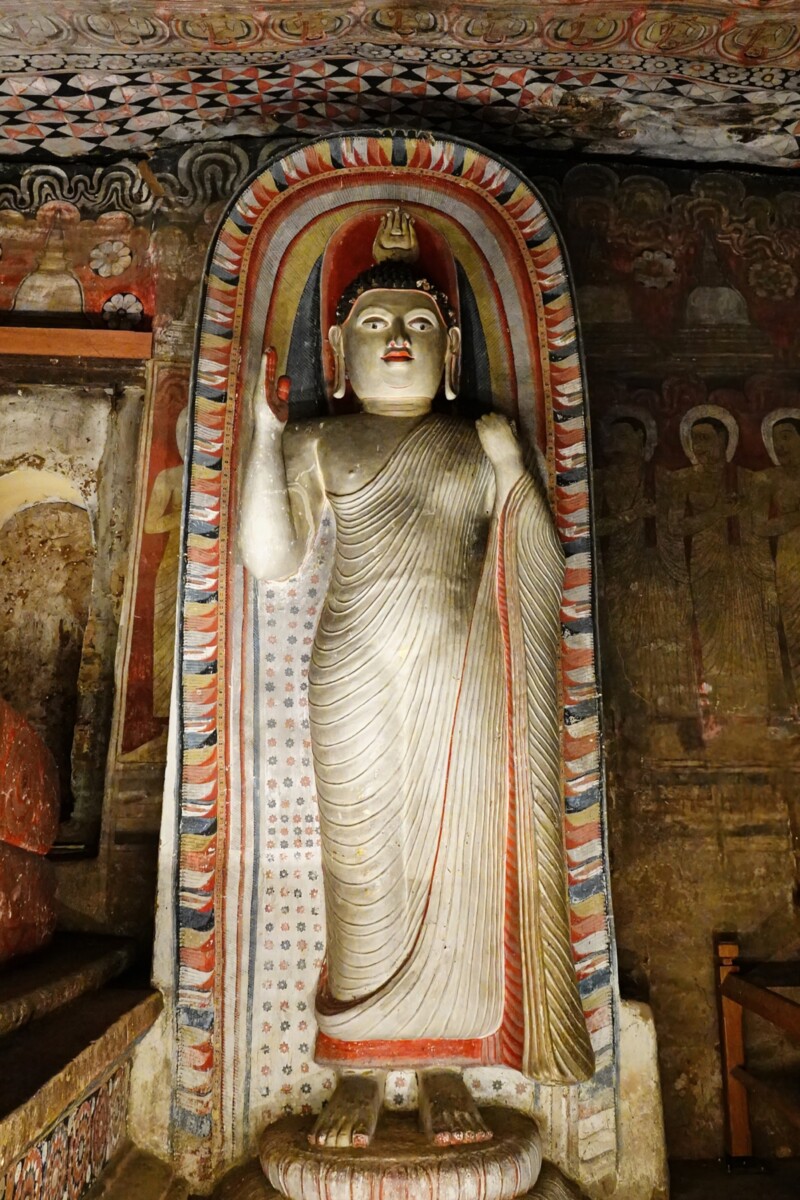
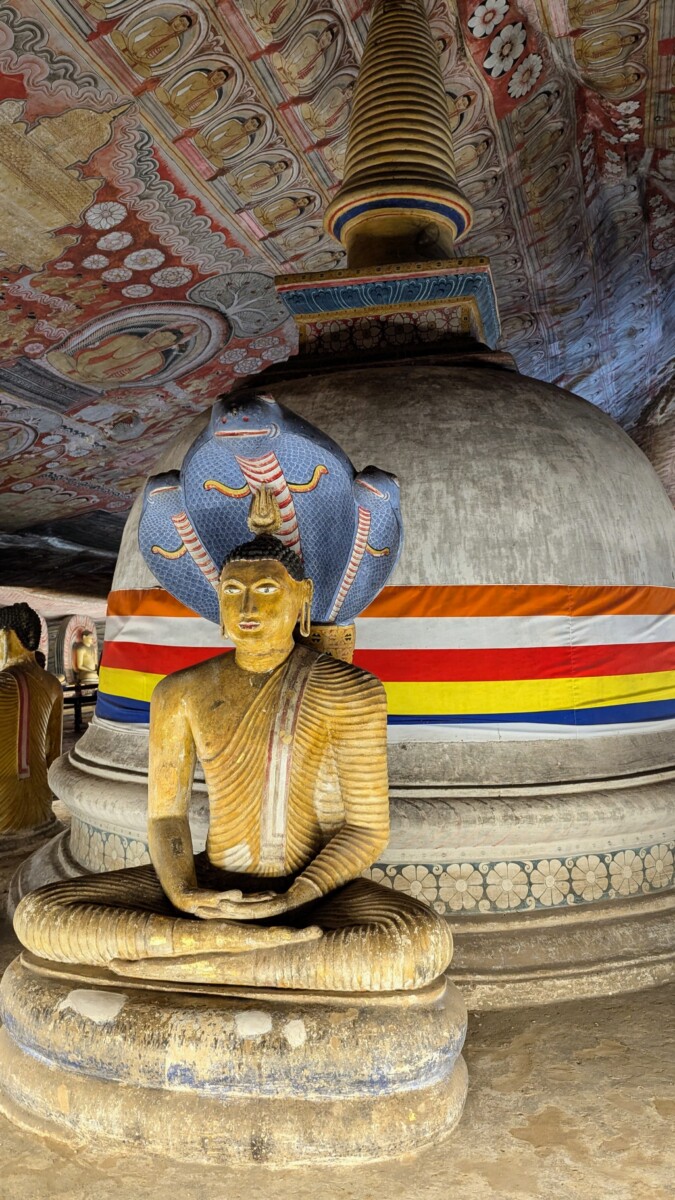
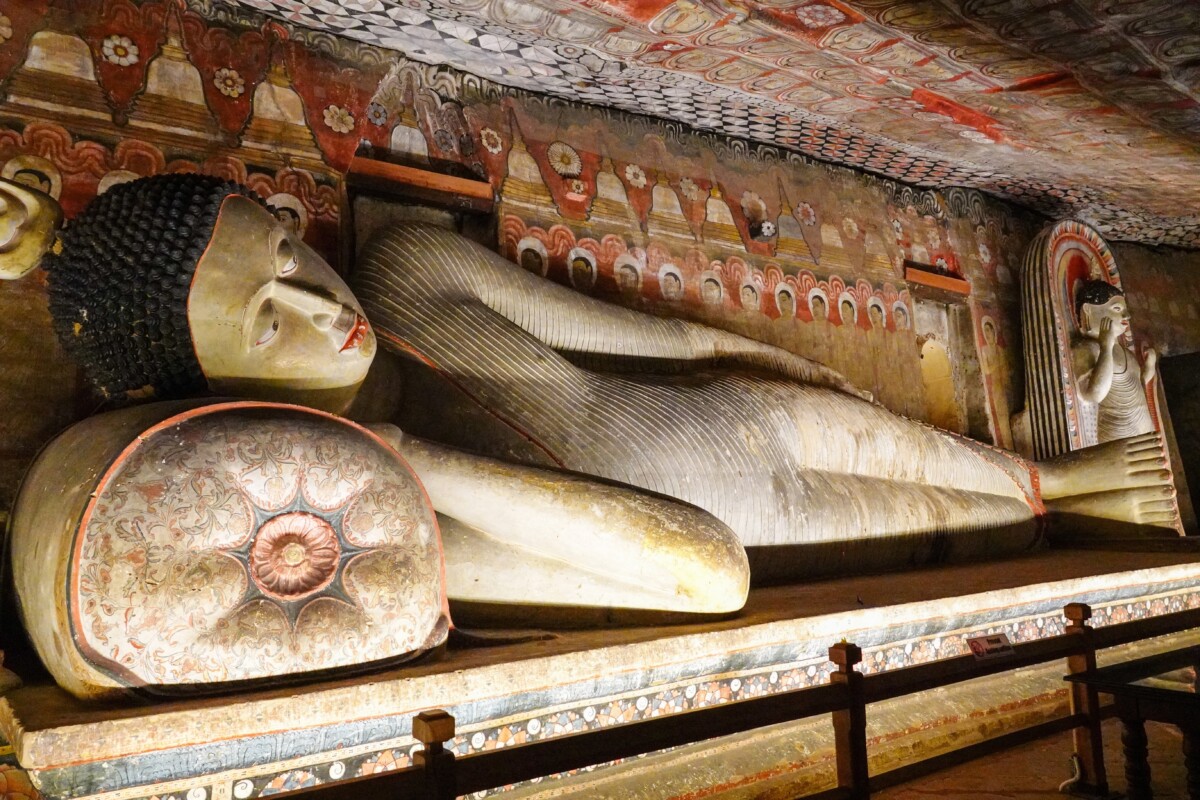
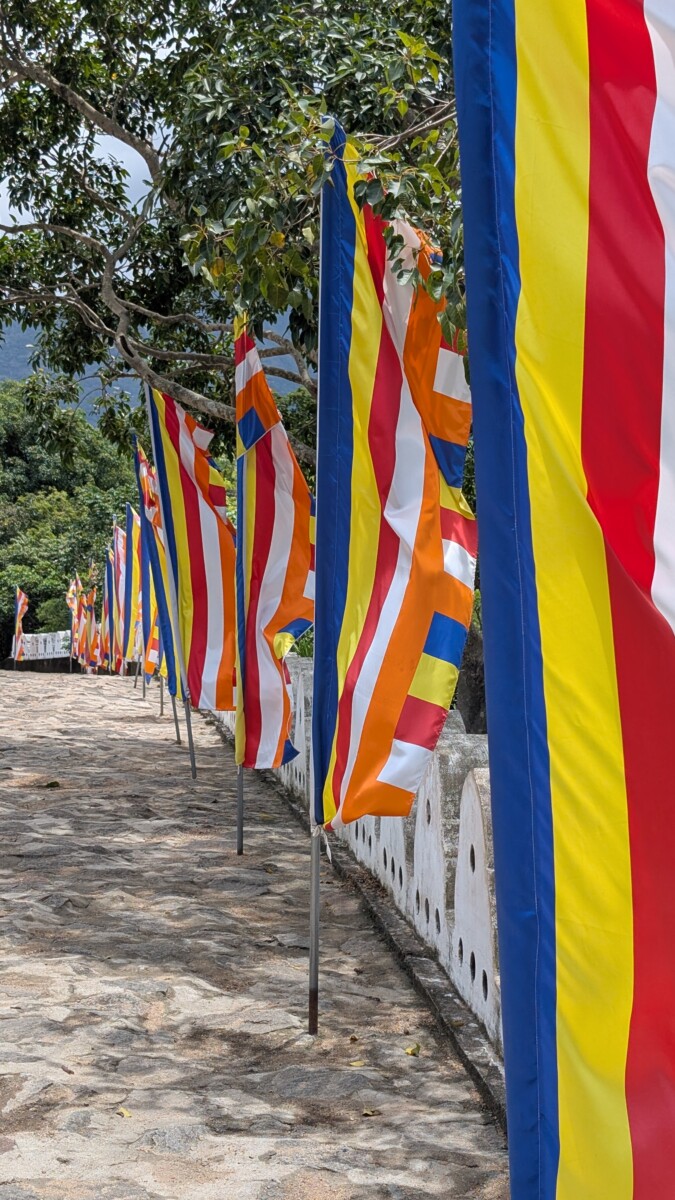
The atmosphere at Dambulla contrasts with that of the neighboring major archaeological sites. Here, the place remains vibrant and deeply spiritual, frequented daily by worshippers who come to pray.
Polonnaruwa, the Rediscovered Royal City
Following the decline of Anuradhapura, Polonnaruwa became the new capital of the Sinhalese kingdom in the 11th century.
The city developed around the gigantic Parakrama Samudra reservoir, a veritable artificial inland sea designed to support agriculture and ensure the kingdom’s prosperity. This mastery of water remains one of the greatest achievements of Sinhalese civilization to this day.
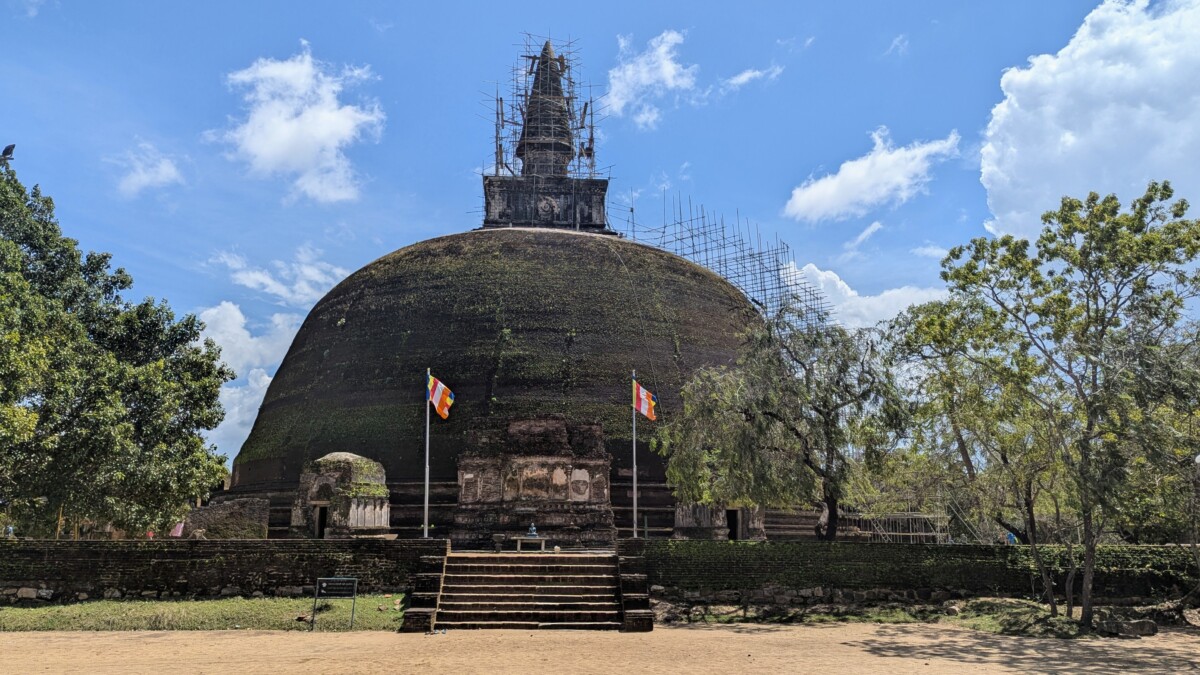
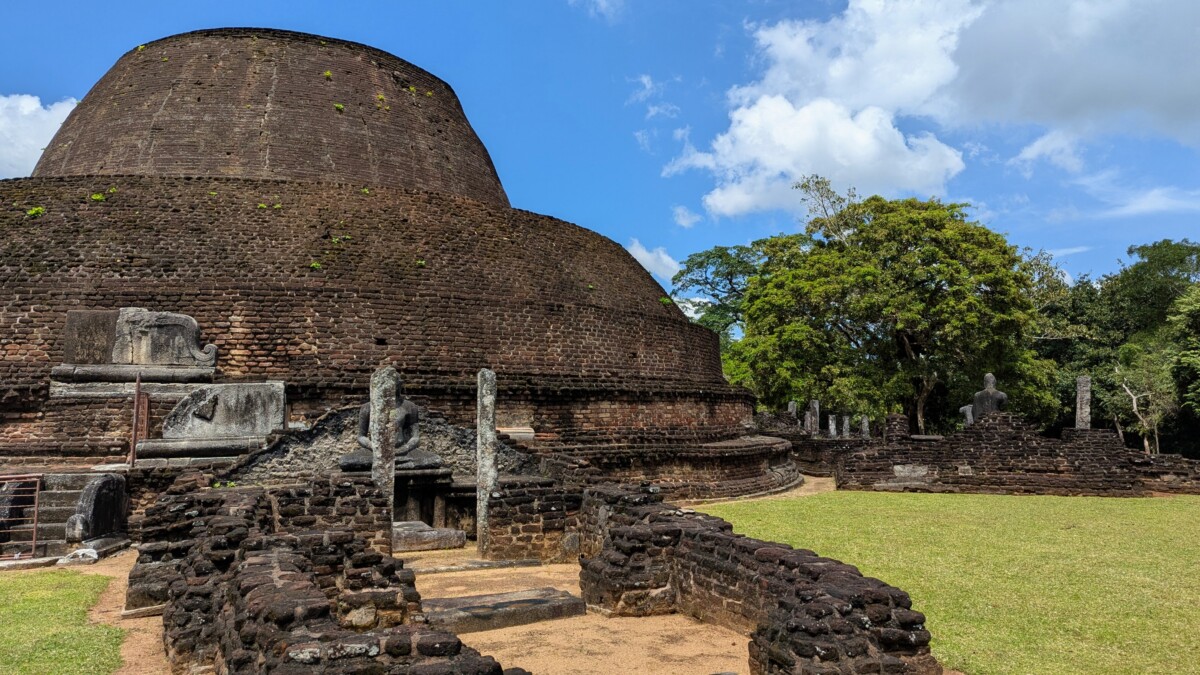
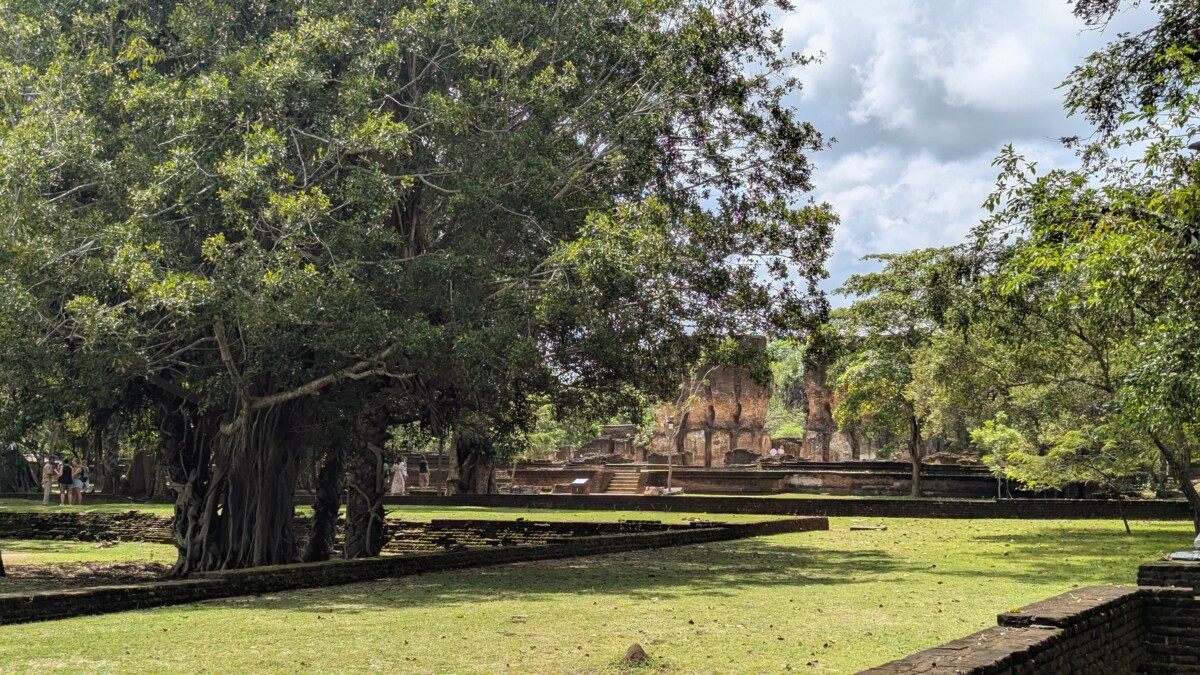
Exploring Polonnaruwa is particularly well suited to cycling. The paths traverse ruined palaces, temples, pools, and gardens in a peaceful atmosphere where nature is gradually reclaiming its domain.
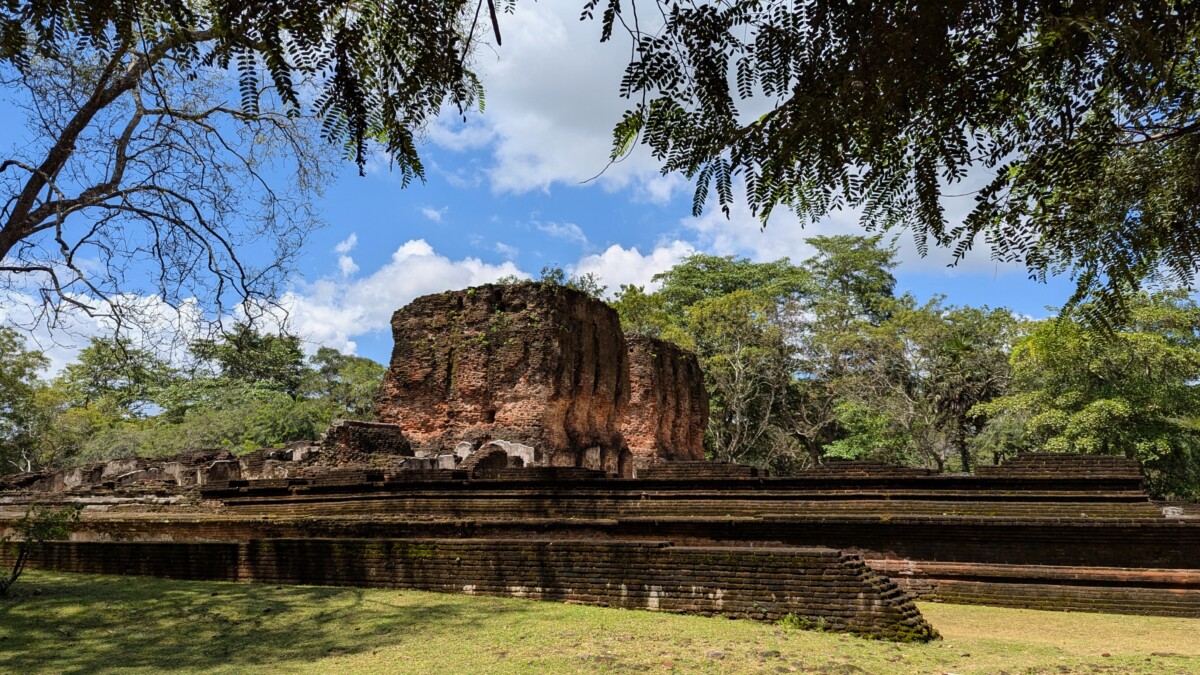
Among the most remarkable monuments are the Sacred Quadrangle, the religious heart of the ancient capital, the Lankatilaka temple, and the Tivanka Image House, renowned for its preserved frescoes.
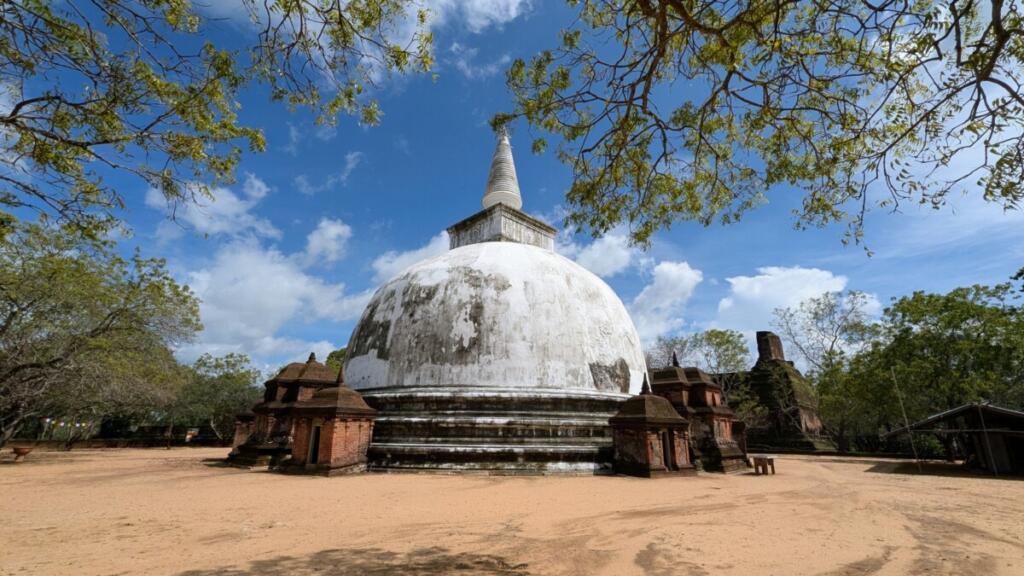
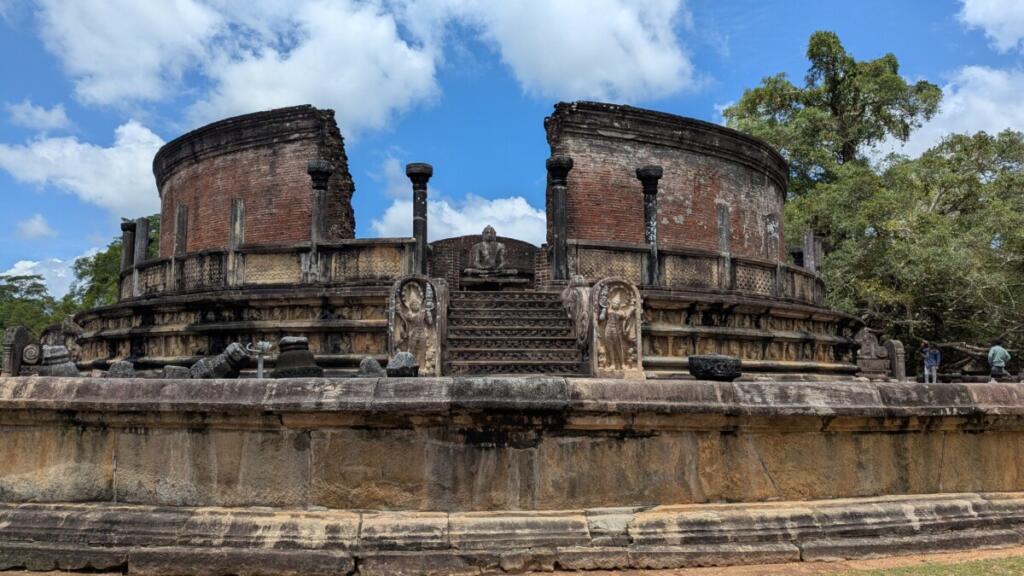
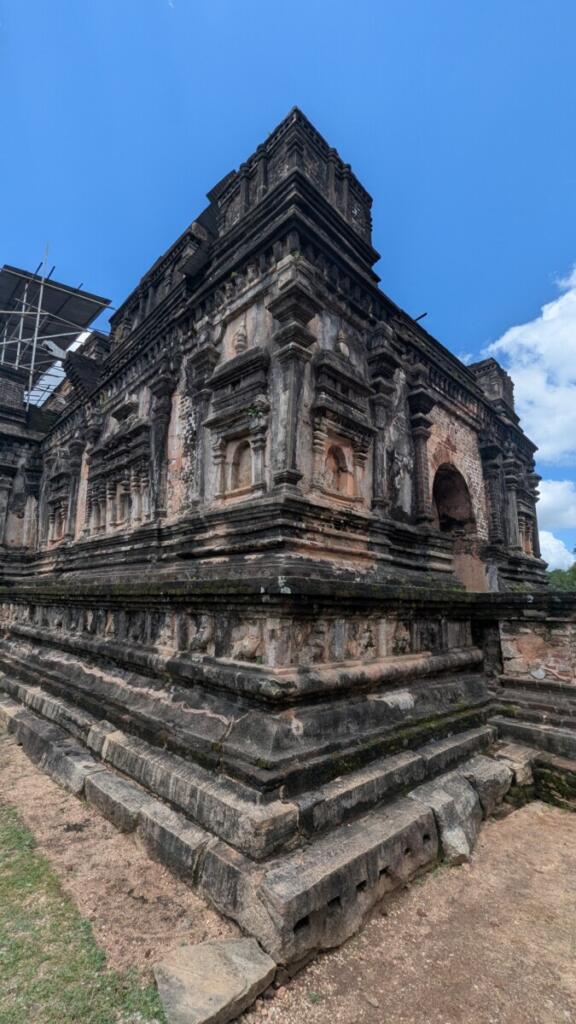
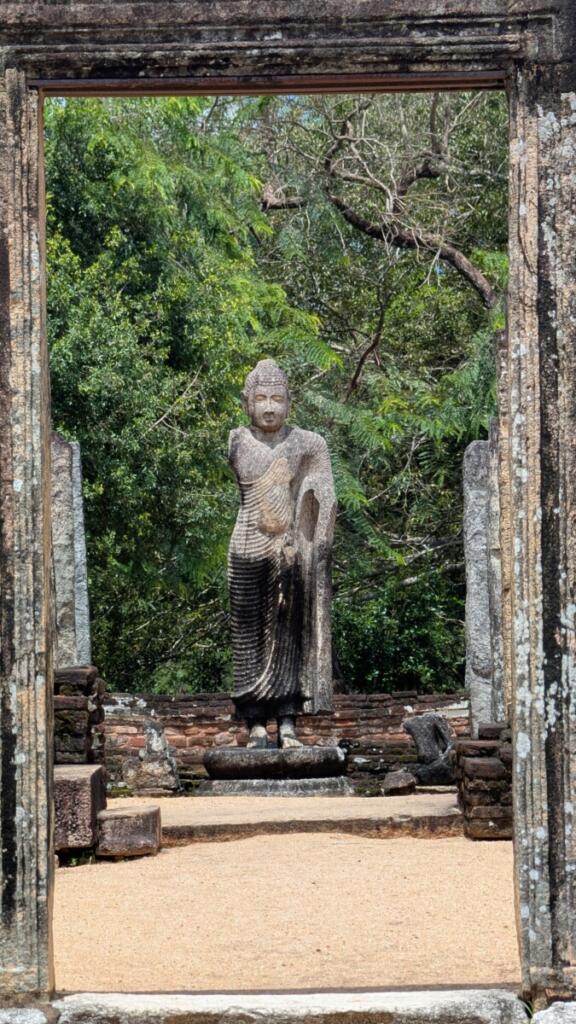
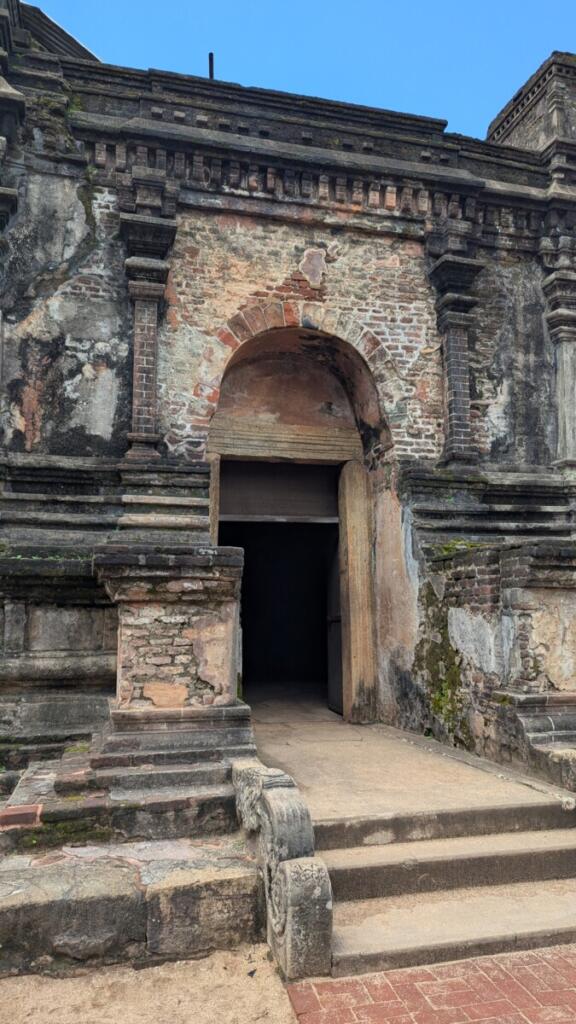
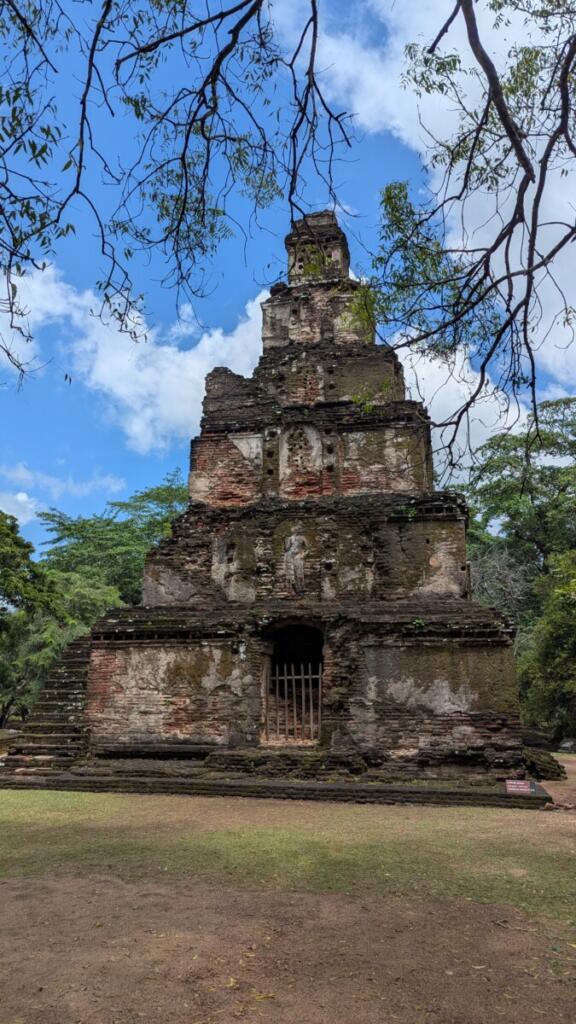
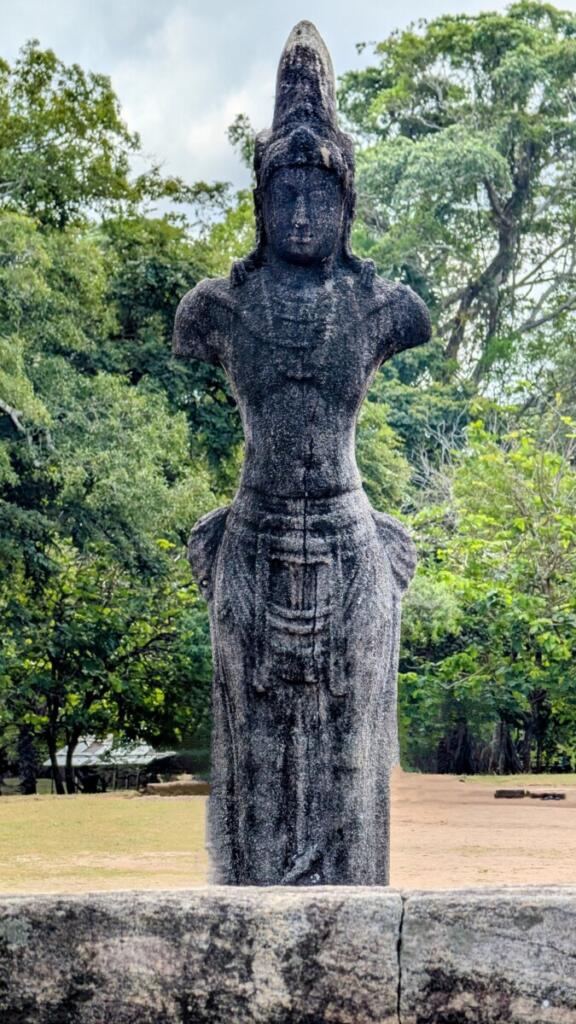
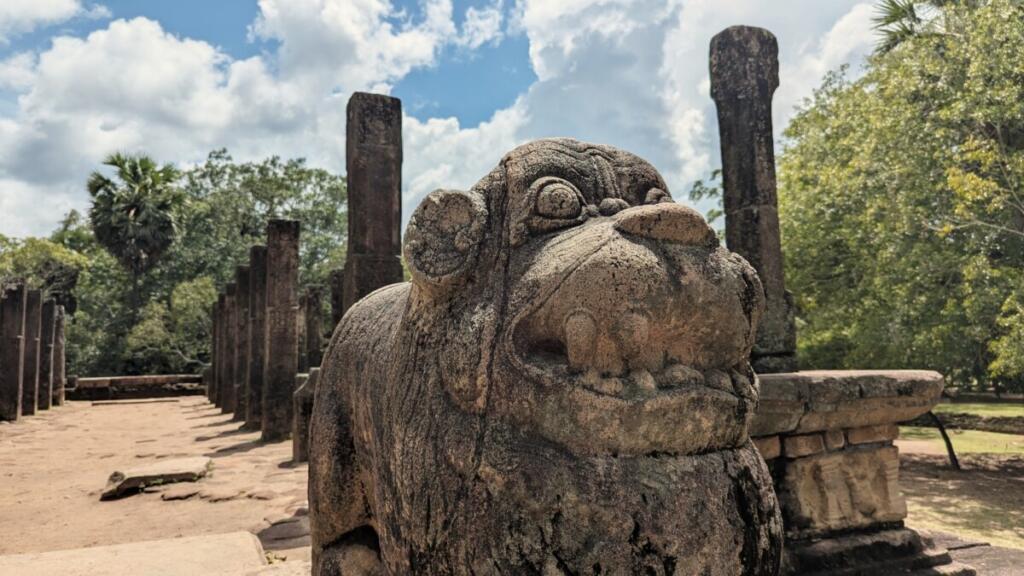
But the site’s true masterpiece remains the Gal Vihara. Carved in the 12th century from a single block of granite, four monumental statues of Buddha rank among the finest achievements of Buddhist art in South Asia.
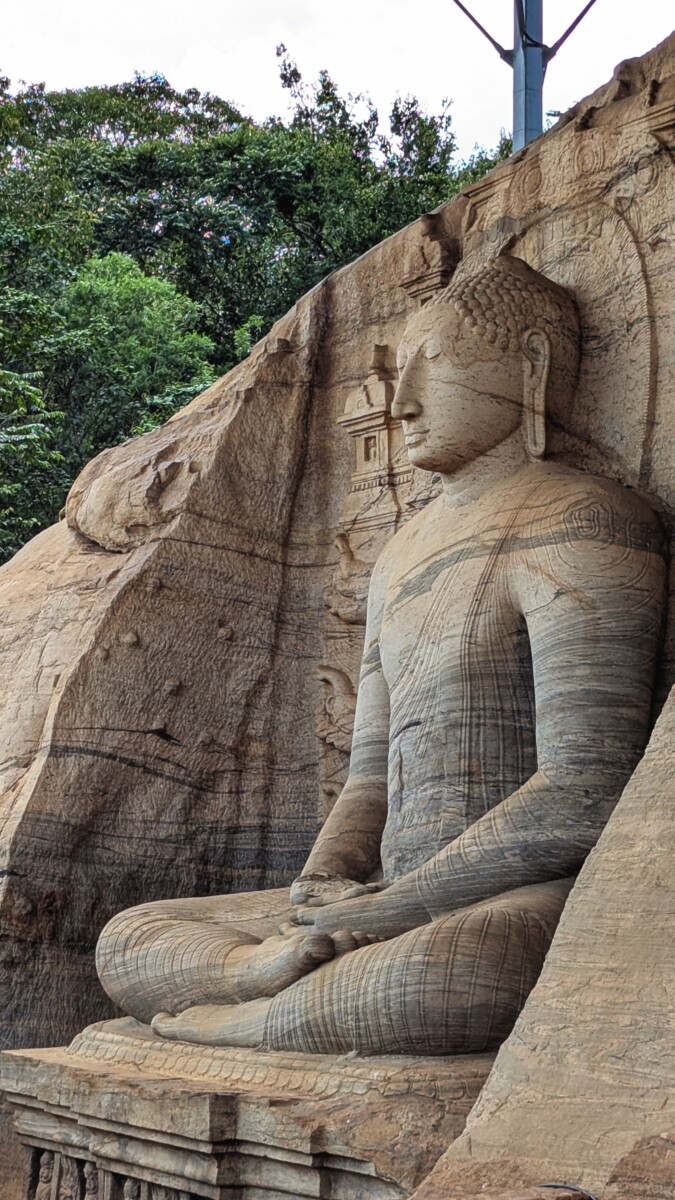
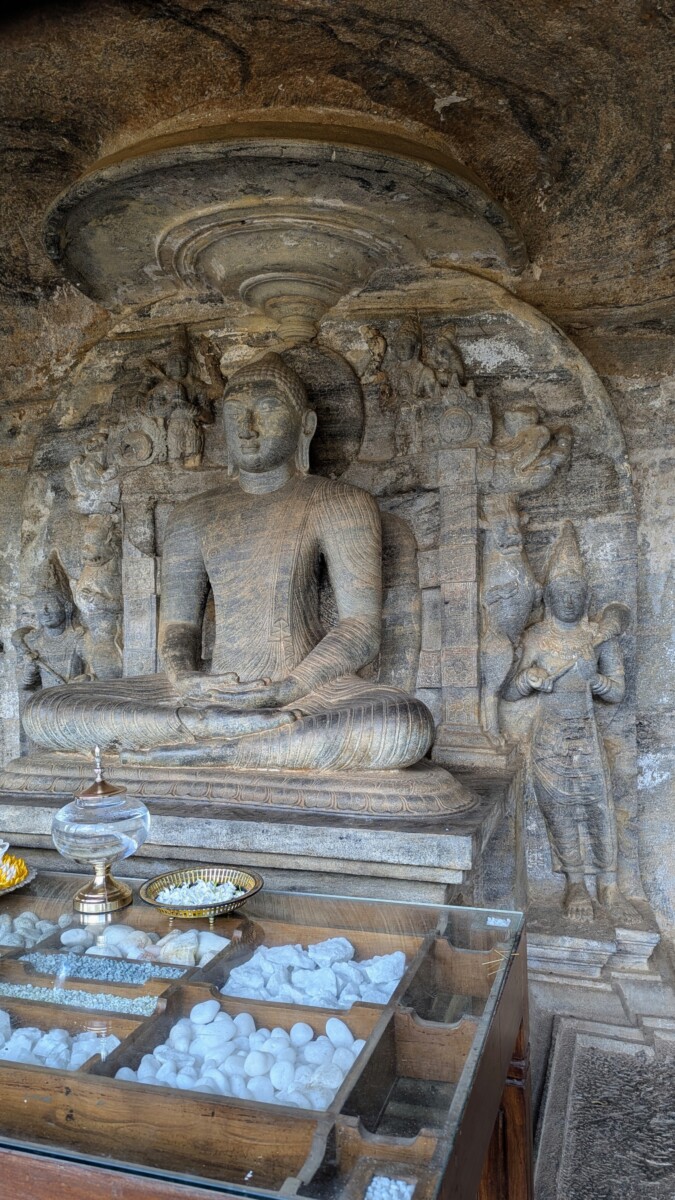
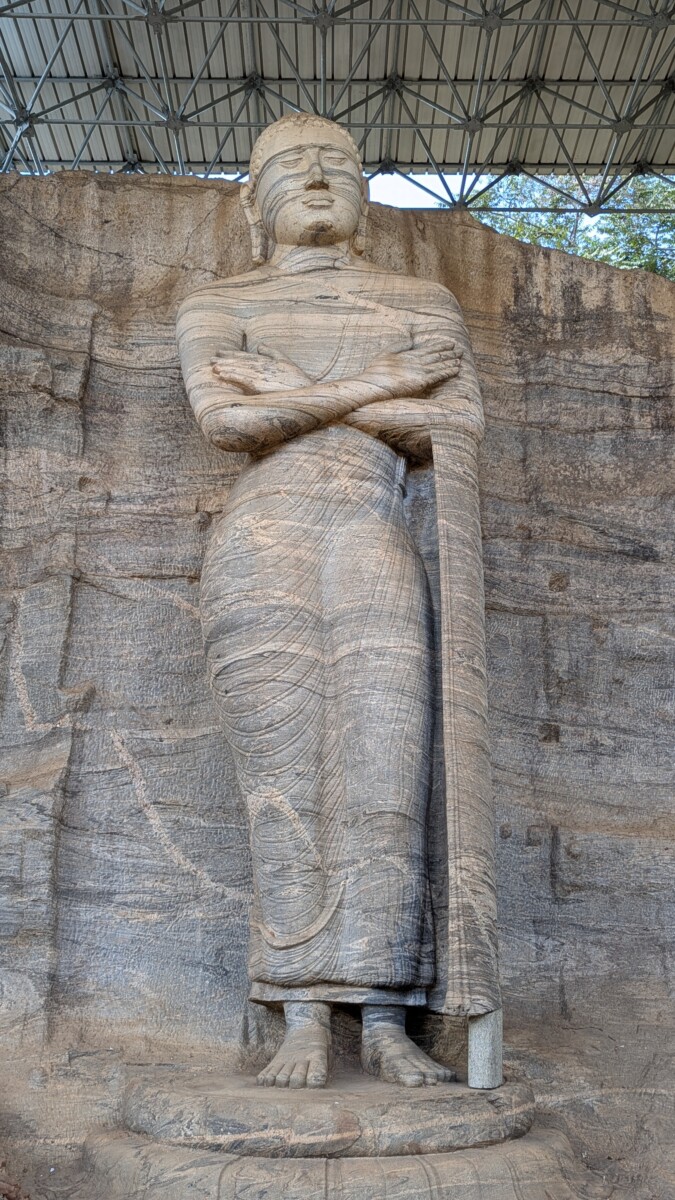
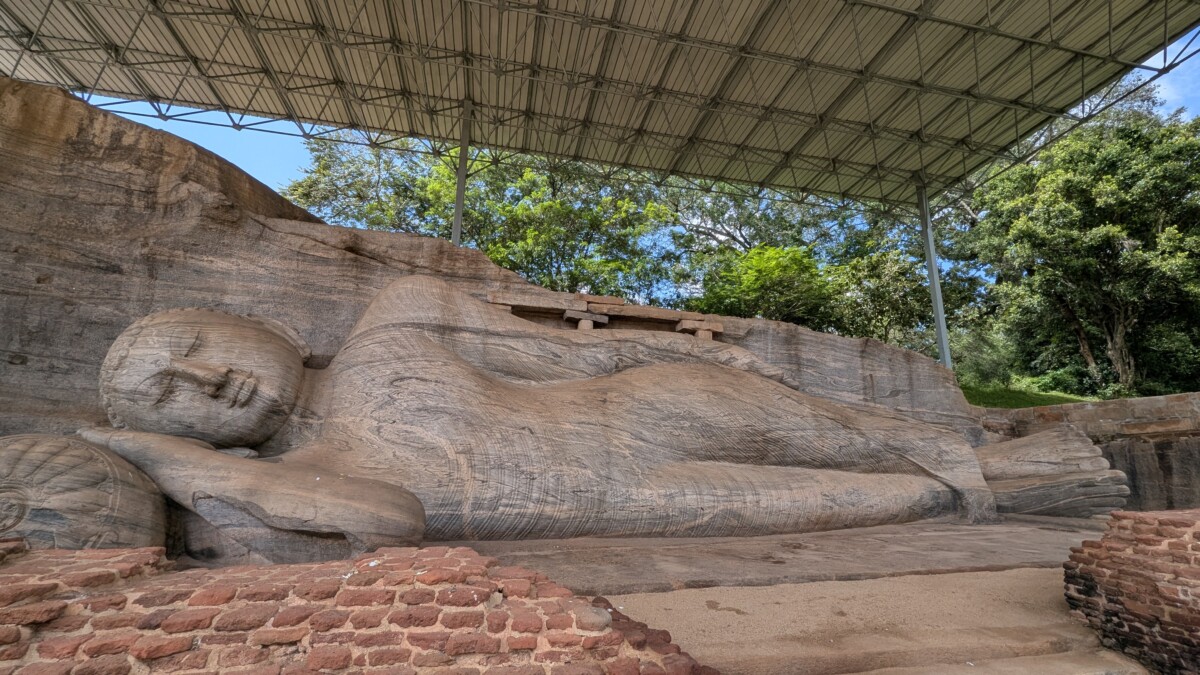
Despite its historical significance, Polonnaruwa often remains less frequented than Sigiriya, which further enhances the charm of the visit.
Anuradhapura, the Kingdom’s First Capital
For those with more time, Anuradhapura offers a fascinating complement to exploring the Cultural Triangle.
Founded in the 4th century BCE, it served for more than a thousand years as the political and religious center of the Sinhalese kingdom. Its influence then extended across much of the island.
The city owed its prosperity to an exceptional hydraulic network composed of canals, dams, and immense reservoirs. Some of these works are still in use today.
Anuradhapura also houses several sacred sites of Sri Lankan Buddhism. The most famous is the Sri Maha Bodhi, a sacred tree grown from a branch of the fig tree under which the Buddha is said to have attained enlightenment in India.
The immense stupas of Ruwanwelisaya, Abhayagiri, and Jetavanarama testify to the power of this ancient capital. At its peak, Jetavanarama ranked among the tallest monuments in the world.
Less compact than Polonnaruwa, Anuradhapura requires more time but offers a fascinating immersion into the origins of Sri Lankan civilization.
How Much Time to Allow for the Cultural Triangle?
Most travelers dedicate two to four nights to the region.
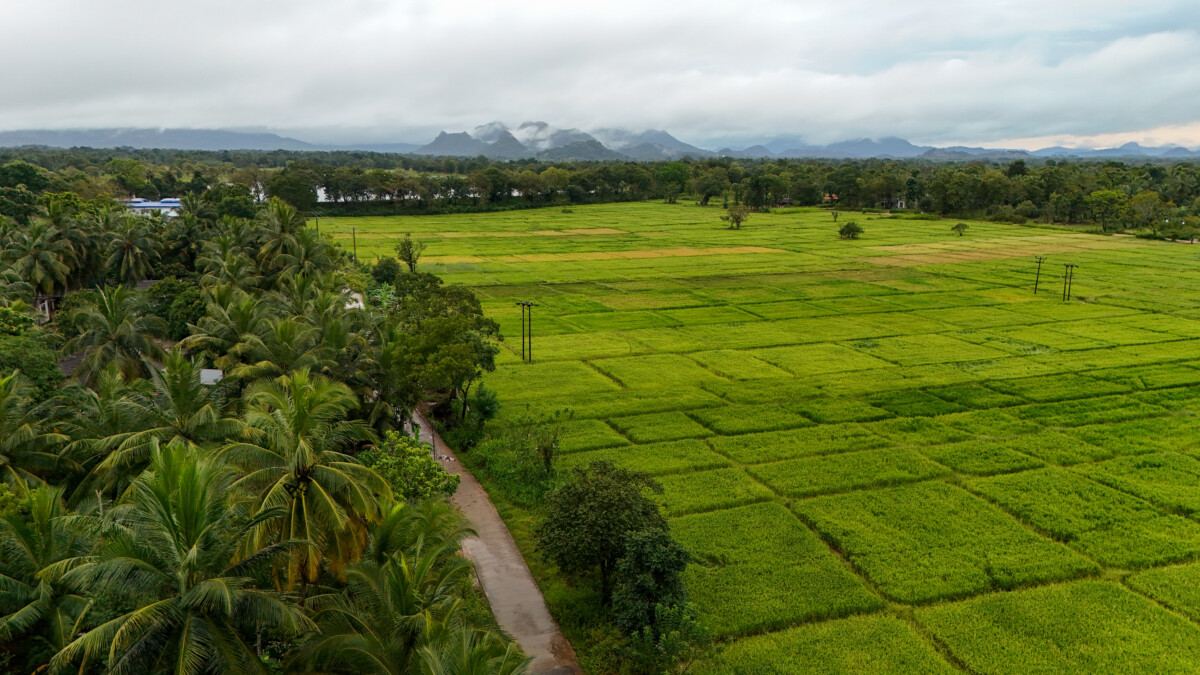
This duration generally allows for discovering Sigiriya, Dambulla, and Polonnaruwa without haste, while enjoying the rural landscapes surrounding the archaeological sites.
For history enthusiasts or those wishing to explore Anuradhapura and the region’s more secluded sites, an additional night is often fully justified.
For beyond its monuments, the Cultural Triangle reveals above all an essential facet of Sri Lanka: that of an ancient civilization that shaped the island long before its beaches and tea plantations made it famous among travelers.
The Cultural Triangle is often regarded as the cradle of Sri Lankan civilization. Between royal cities, Buddhist sanctuaries, and hydraulic achievements, it offers valuable insight into the island’s history and identity.
During a journey to Sri Lanka, this region combines easily with the tea plantations of the Highlands, the national parks of the south, or a few days of relaxation by the sea. A stage that adds greater depth to discovering the country.