In the very south of Egypt, where the Nile widens between granite islands and golden dunes, lie two jewels of Egyptian antiquity: the temple of Isis at Philae, set on a peaceful island, and the majestic temples of Abu Simbel, carved out of the rock of the Nubian desert. Between golden light, the silence of the river and millennia-old tales, these two emblematic sites offer a striking face-to-face encounter with the grandeur of the pharaohs and the delicacy of sacred worship.
Aswan, the gateway to thesouth
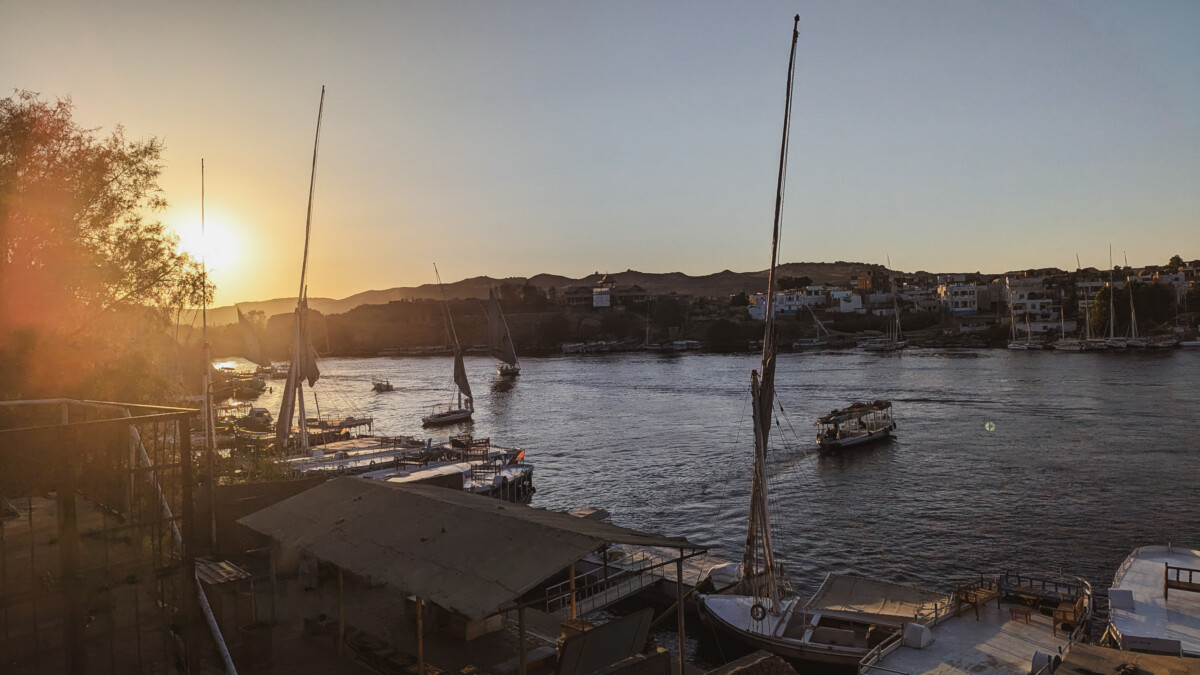
Aswan is a city apart. More peaceful than Luxor, it offers a different, slower, brighter rhythm. Here, the Nile flows between islands and rocks, feluccas glide by in an almost unreal calm, and the desert hills glow red in the setting sun.
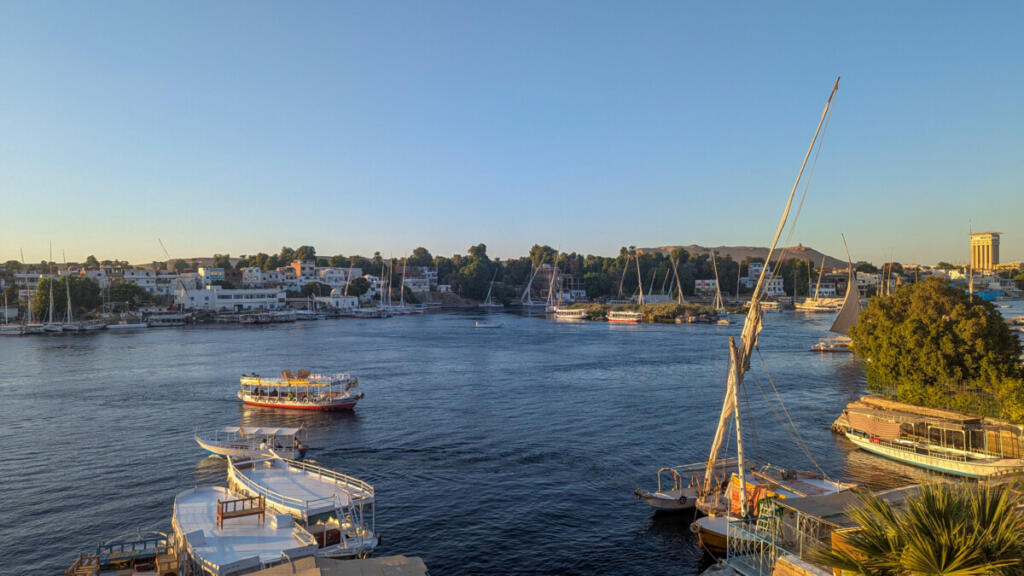
This is where ancient Egypt meets Nubia, and influences mingle. You can visit the Nubian Museum, the granite quarries and the unfinished obelisk, the high dam or the colorful, welcoming Nubian villages. But the real jewel, the one you’ll remember for a long time, is on the water: the temple of Philae.
Philae, the temple saved from the waters
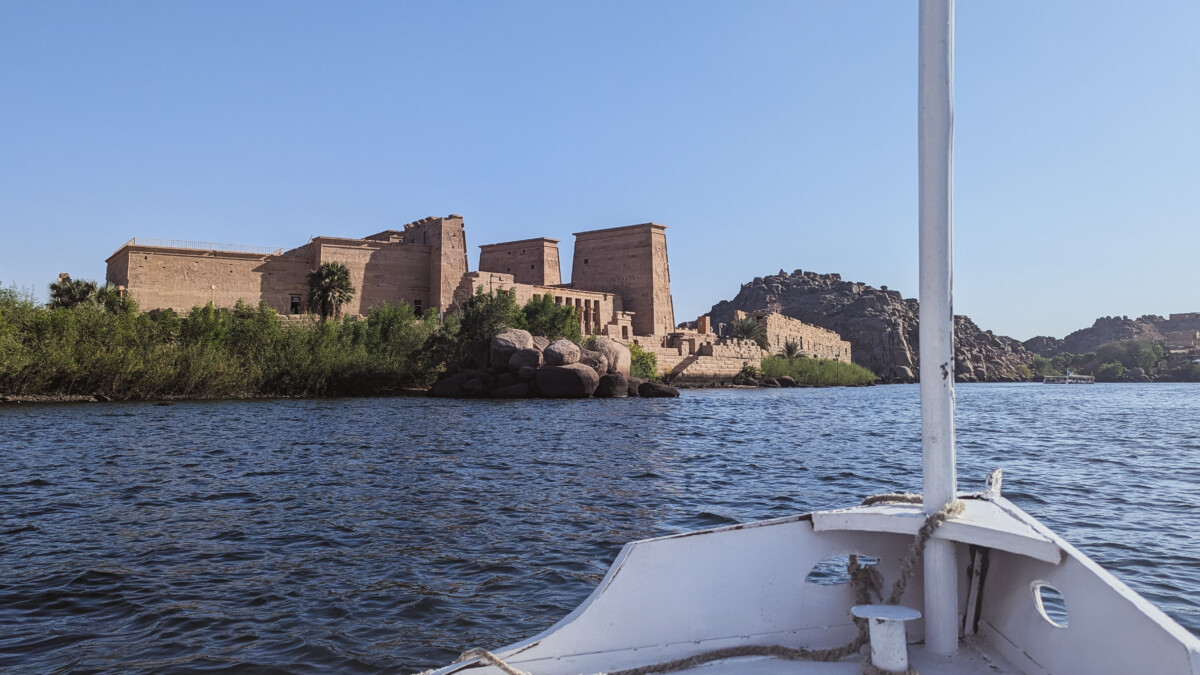
Set on an island bathed in light, the temple of Philae seems to float between the sky and the Nile. And yet, in the 1970s, this thousand-year-old sanctuary almost disappeared under the waters, swallowed up by the rising Nile following the construction of the Aswan High Dam.
The rescue of Philae follows on from an earlier titanic project carried out a few years earlier: between 1964 and 1968, the temple of Abu Simbel, a jewel of ancient Egypt, was dismantled stone by stone and then rebuilt on a higher site, also to escape flooding.
Thanks to a new international campaign led by UNESCO, the temple of Philae was moved between 1972 and 1980, thanks to the meticulous dismantling of almost 40,000 numbered blocks, then rebuilt identically on the higher, protected island of Aguilkia. The work saved one of the finest jewels of late Egypt.
But what strikes you first about Philae, even before the colonnades and reliefs, is the beauty of the place. The island of Aguilkia, surrounded by granite rocks, palm trees and tranquil waters, seems to float between the sky and the Nile. The arrival by boat, the silence in the early morning, the glint of stone in the rising sun… everything contributes to making this visit a timeless interlude, where the landscape sublimates the heritage.
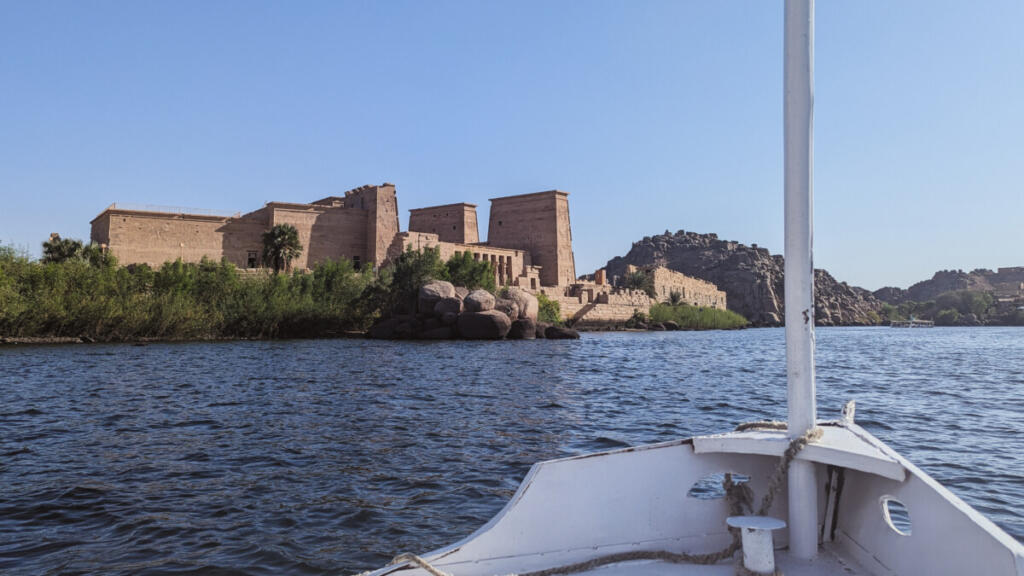
Then, as we move further onto the island, the temple reveals itself: elegant, solemn, perfectly proportioned.
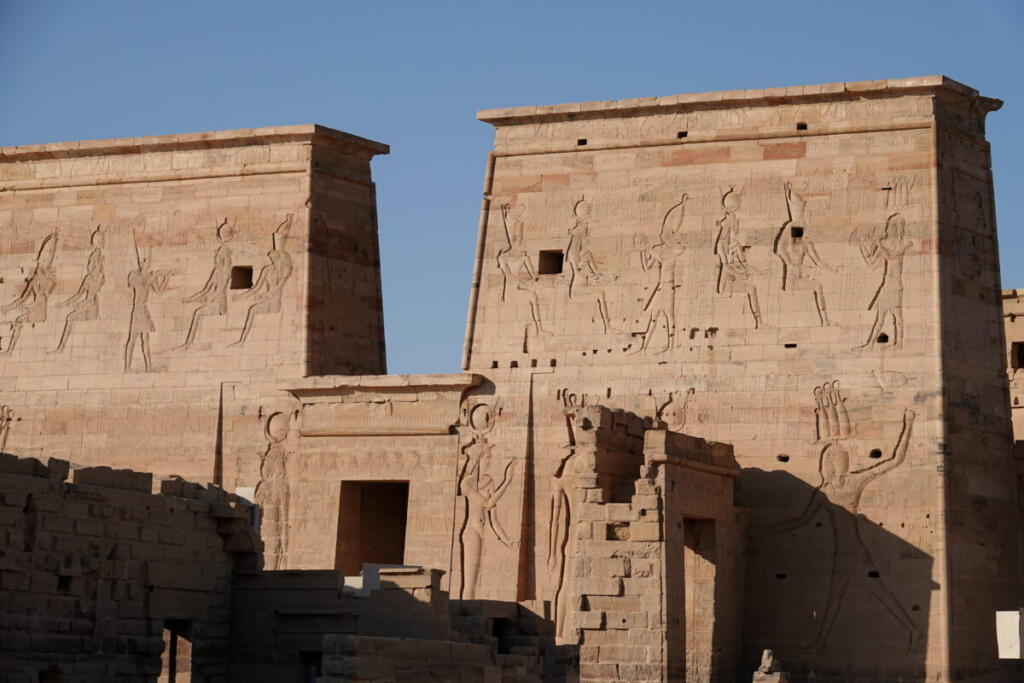
Dedicated to Isis, goddess of maternity, magic and eternal life, Philae embodies all the sacred elegance of late Egypt. Built from the 4th century BC under the Ptolemies, and completed under the Roman Empire, it was one of the last pagan sanctuaries still in use, until its official closure in the 6th century.
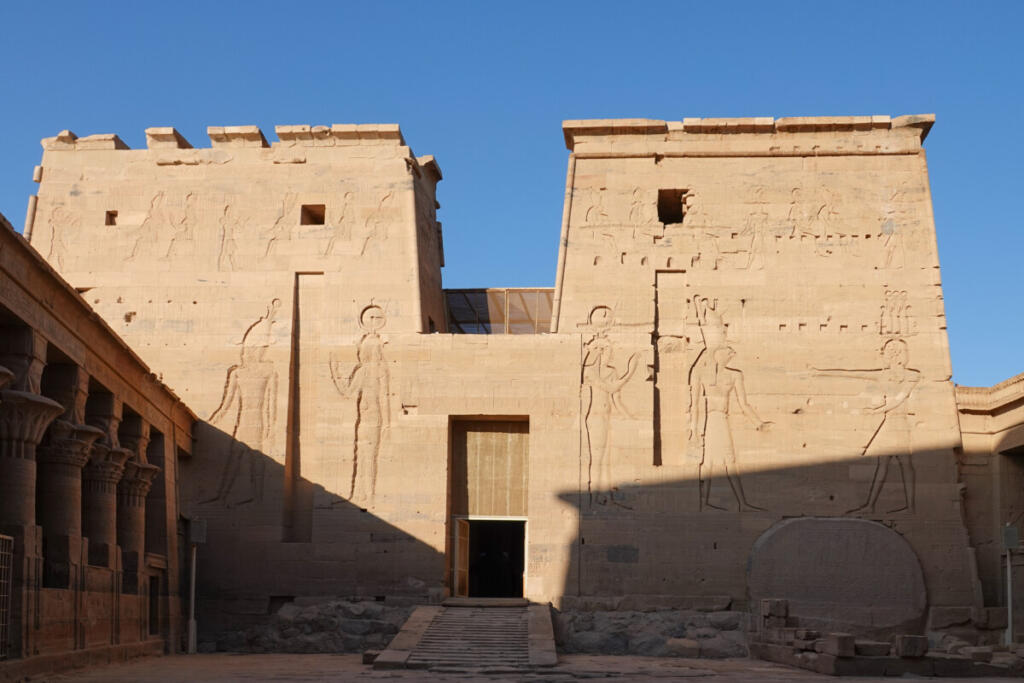
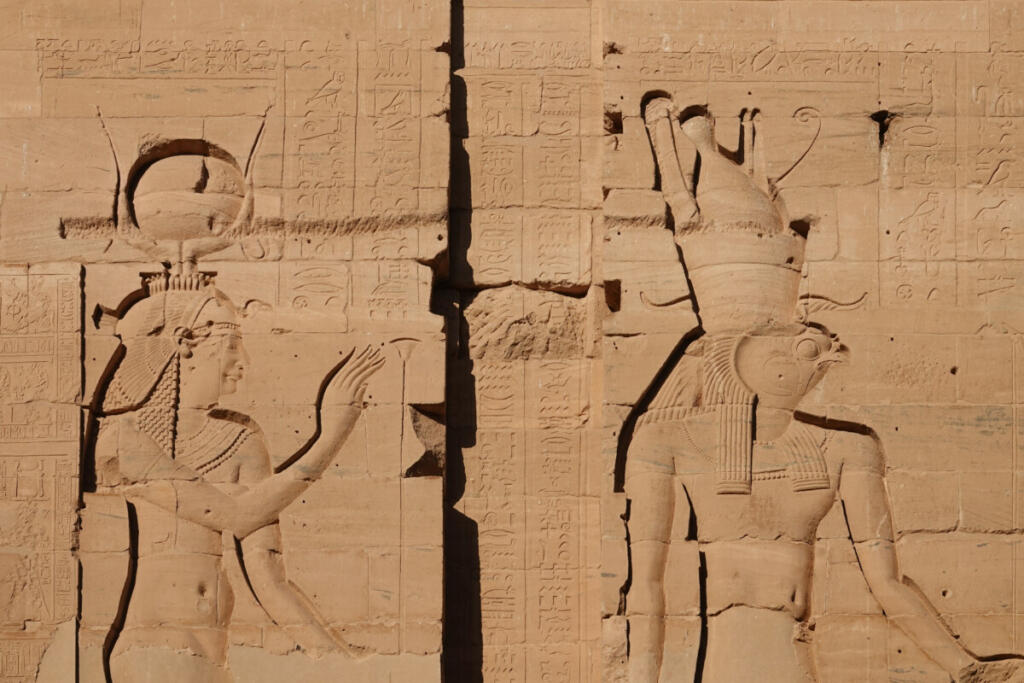
A tour of the site reveals a harmonious ensemble of pavilions, courtyards, pylons and columns, spread over a length of some 150 metres. Each building recounts a facet of the cult of Isis, from her divine power to her role as protective mother. Among others, you’ll discover:
- Several altars, chapels and nilometers (wells used to measure Nile flood levels).
- Trajan’s kiosk, an open structure composed of 14 columns, is often considered one of Philae’s most graceful symbols.
- The great entrance pylon, 18 metres high, is decorated with scenes of pharaohs smiting their enemies before Isis, Horus and Hathor.
- The hypostyle courtyard, lined with columns with floral capitals, leads to the main sanctuary.
- The mammisi, or divine birth pavilion, celebrating the birth of Horus by Isis.
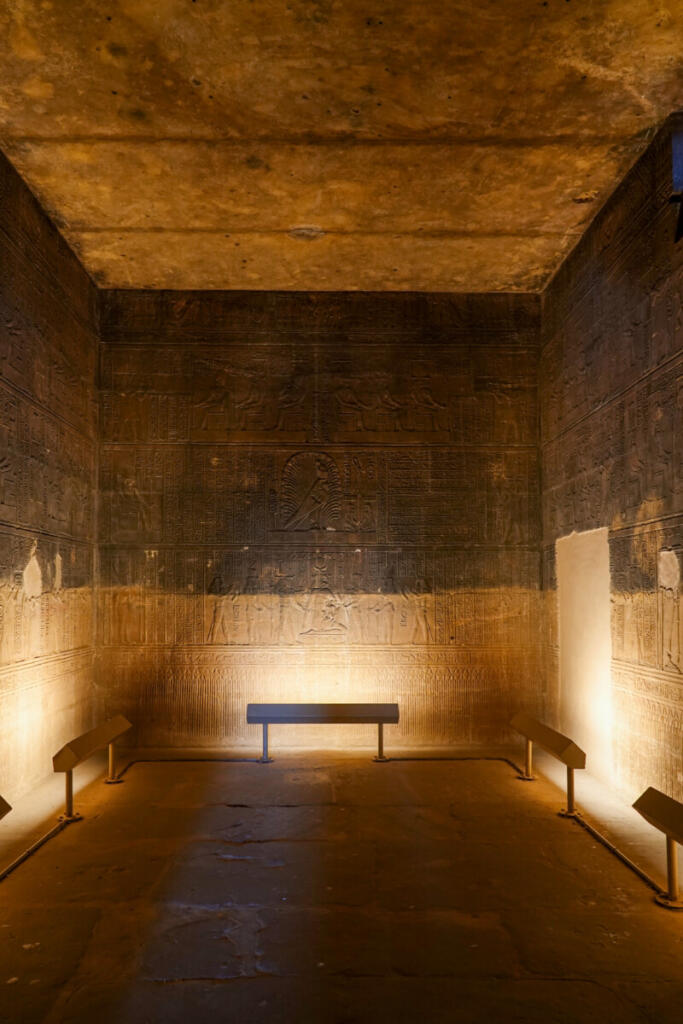
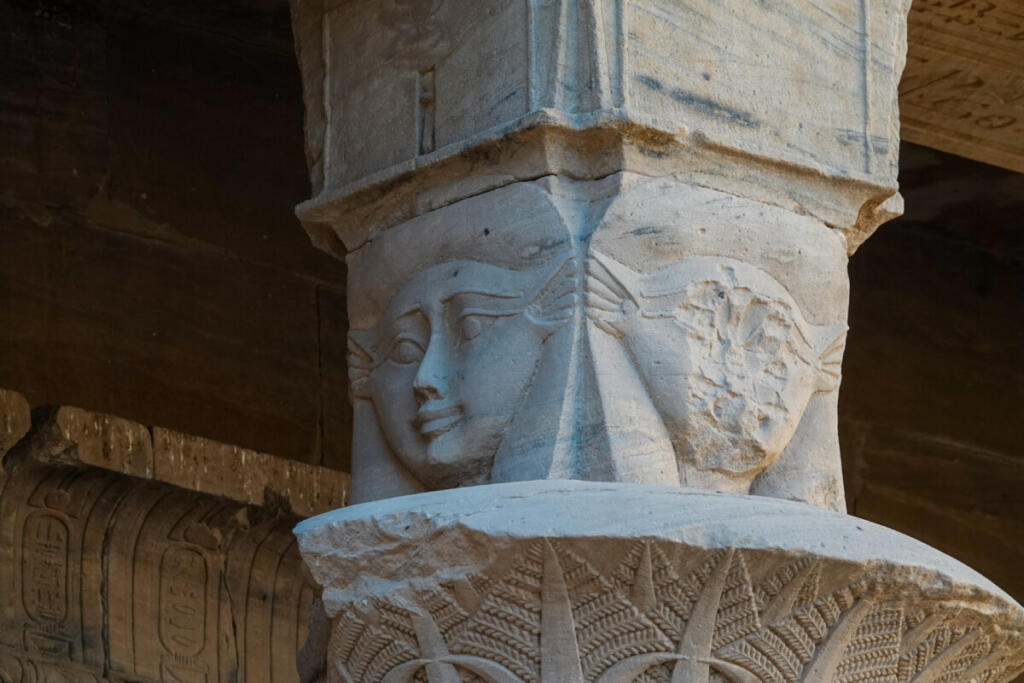
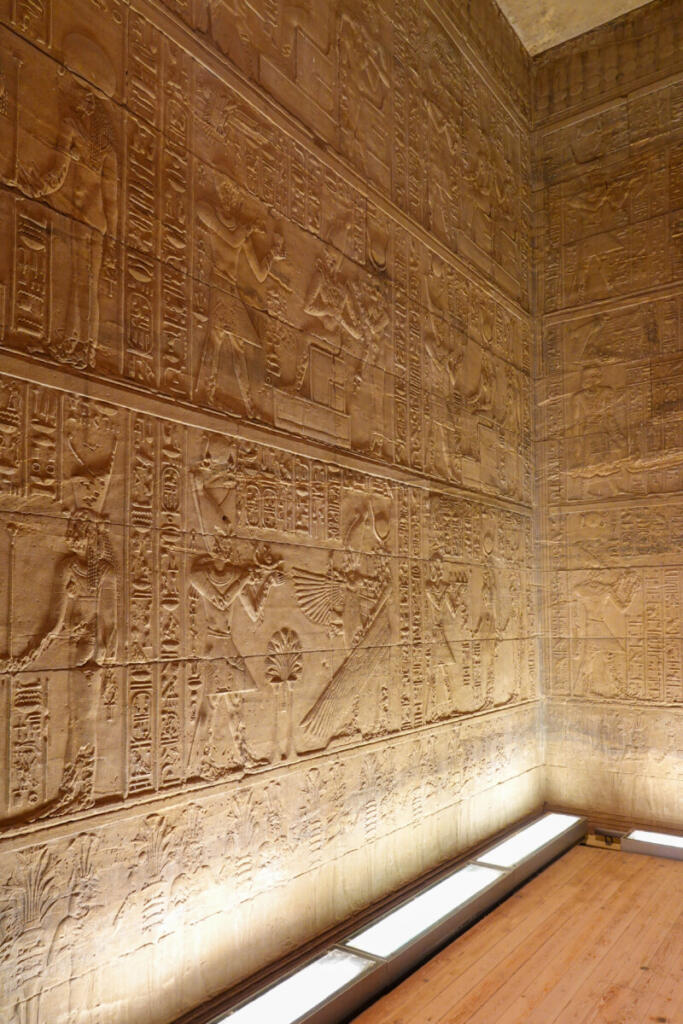
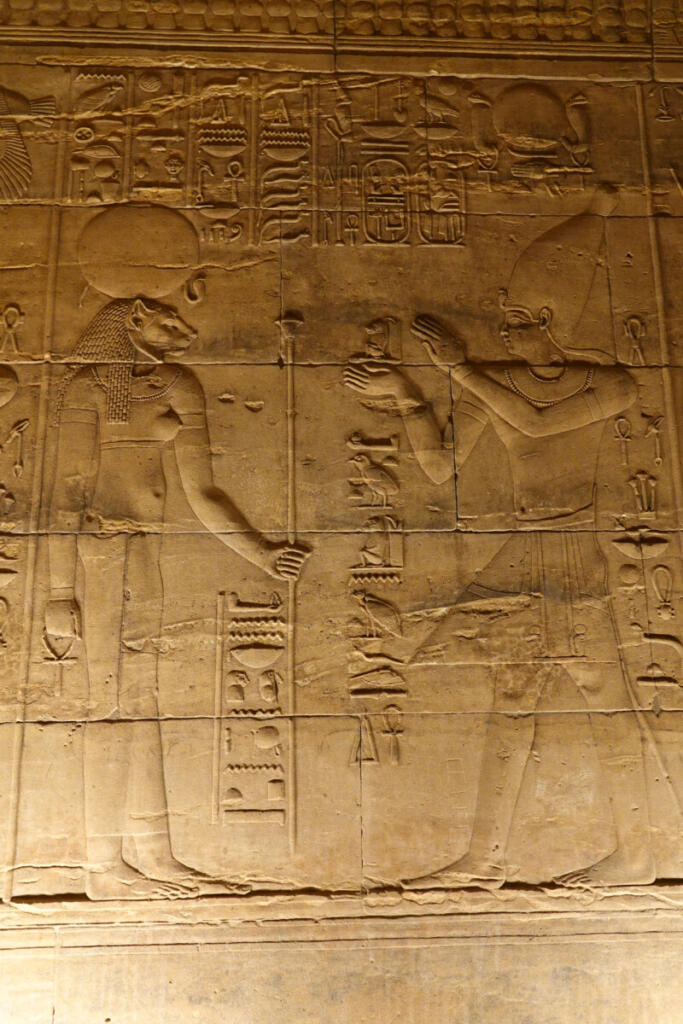
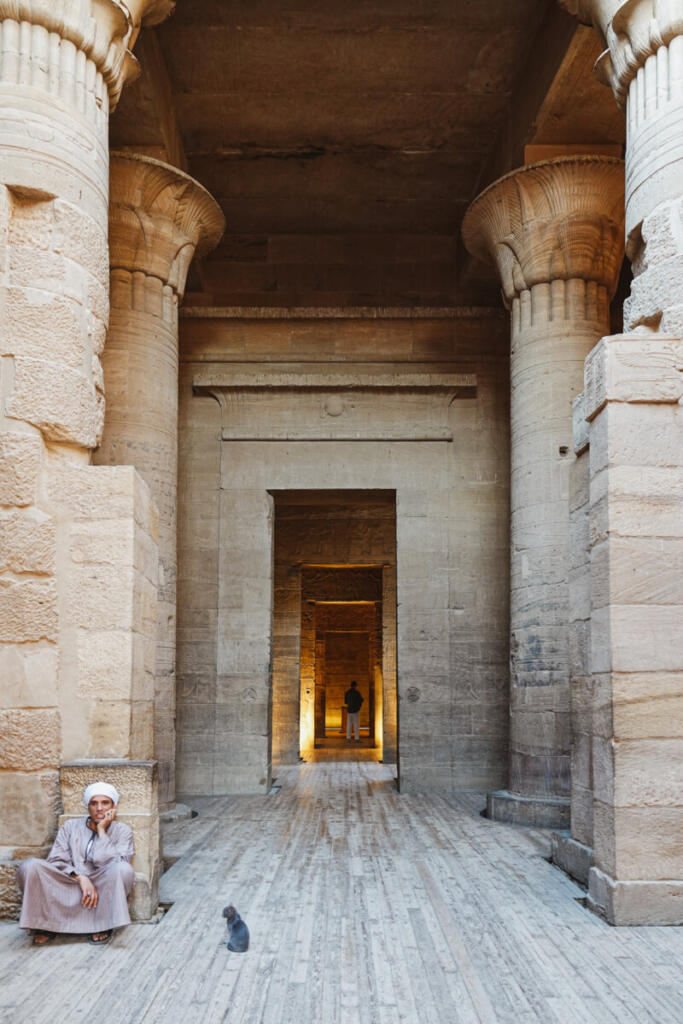
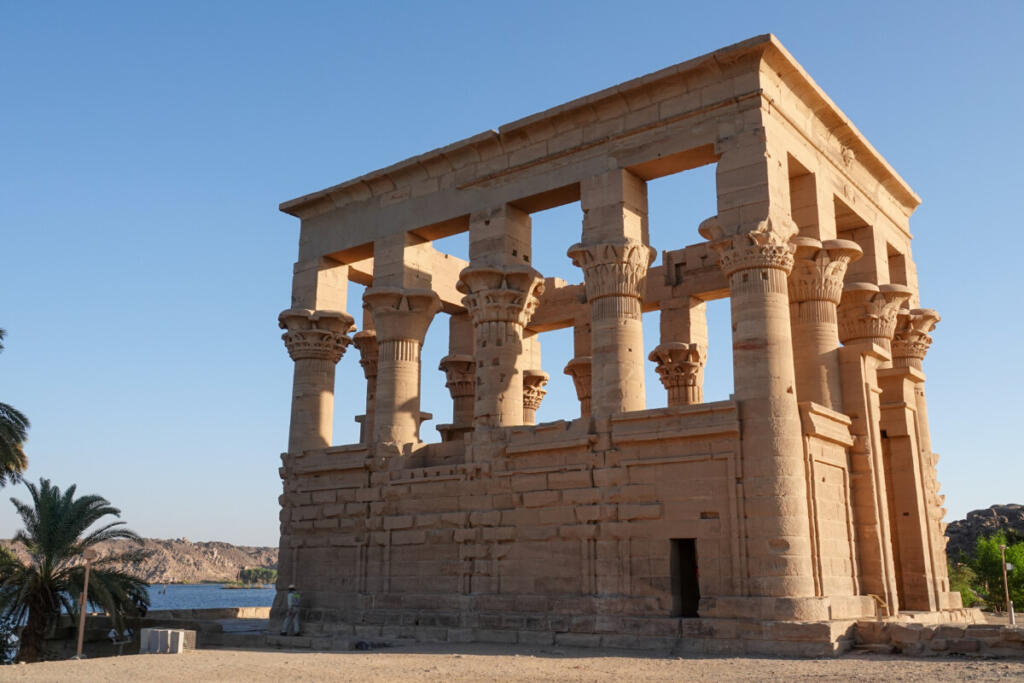
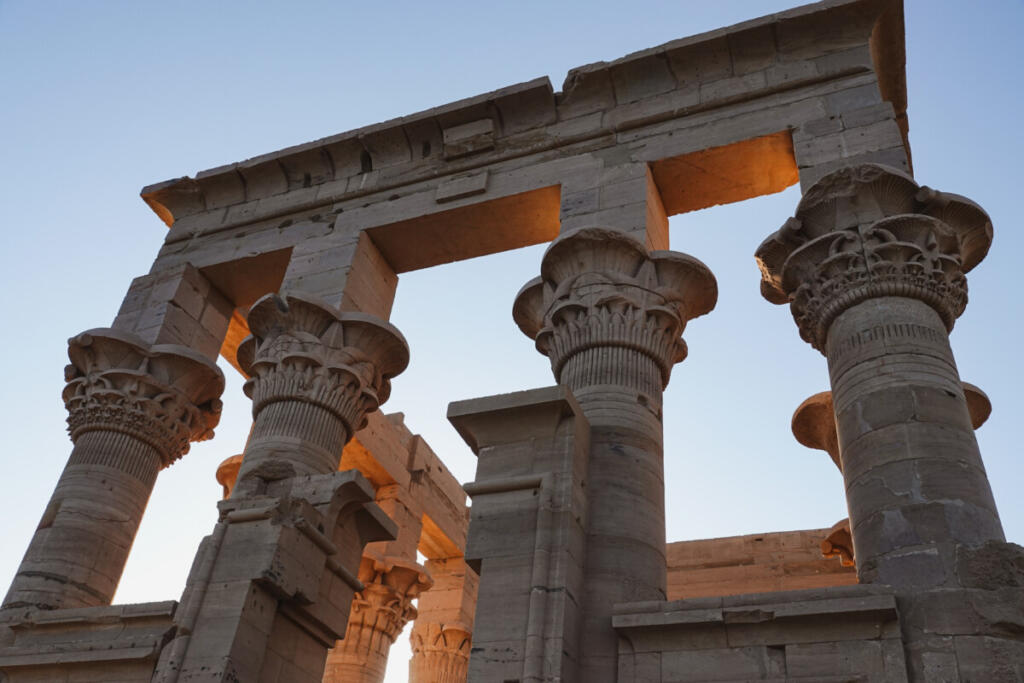
Philae is also a site of religious transition. There are inscriptions in ancient Greek and Latin, and even crosses carved into the stone: silent witnesses to the temple’s gradual transformation into a place of Christian worship.
Good to Know
- Access: only by boat from the small port of Shellal (approx. 10-minute crossing). Crossings are made aboard small motorized boats (negotiable on site or bookable through a guide).
- Opening hours: open daily from 7 a.m. to 5 p.m. – best to come early in the morning or late in the day, to enjoy the light and tranquility.
- On-site duration: 1h30 to 2h for the visit, excluding travel time.
Abu Simbel, an engineering miracle south of the Nile
Nearly 280 km south of Aswan, on the edge of Nubia, stands one of Egypt’s most spectacular sites: Abu Simbel. Lost in the middle of the desert, the two temples carved out of the rock by Ramses II leave no one indifferent.
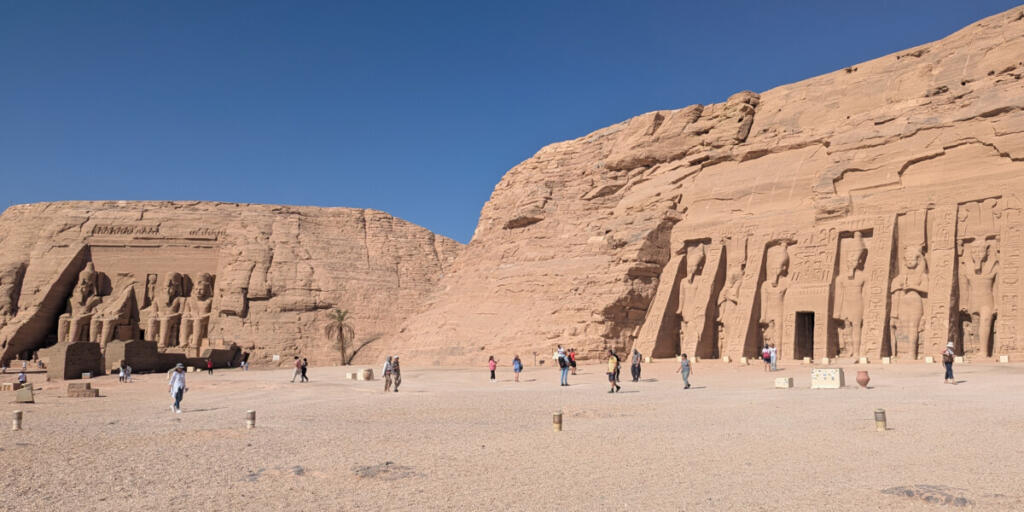
The Great Temple of Ramses II: An Ode to Power and Divinity
This monumental New Kingdom masterpiece, erected around 1260 BC during the reign of Ramses II, served as much to glorify the pharaoh as to assert Egyptian power against the peoples of the South. The great temple, dedicated to Ramses himself as well as to the deities Amun, Ra-Harakhty and Ptah, is immediately striking for its imposing façade carved directly into the cliff.
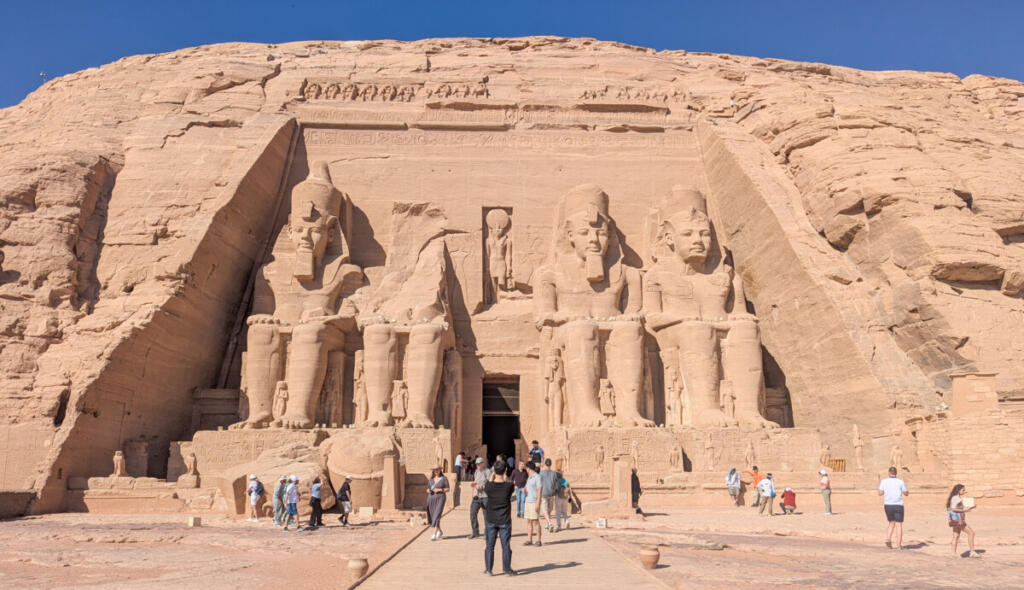
Four 20-metre-high colossi guard the entrance: carved from rock, their severe, majestic features, their straight, powerful torsos, seem to defy time. These monumental statues symbolize the authority of the pharaoh and his divine role, dominating the desert landscape with a strength unchanged for over 3,000 years.
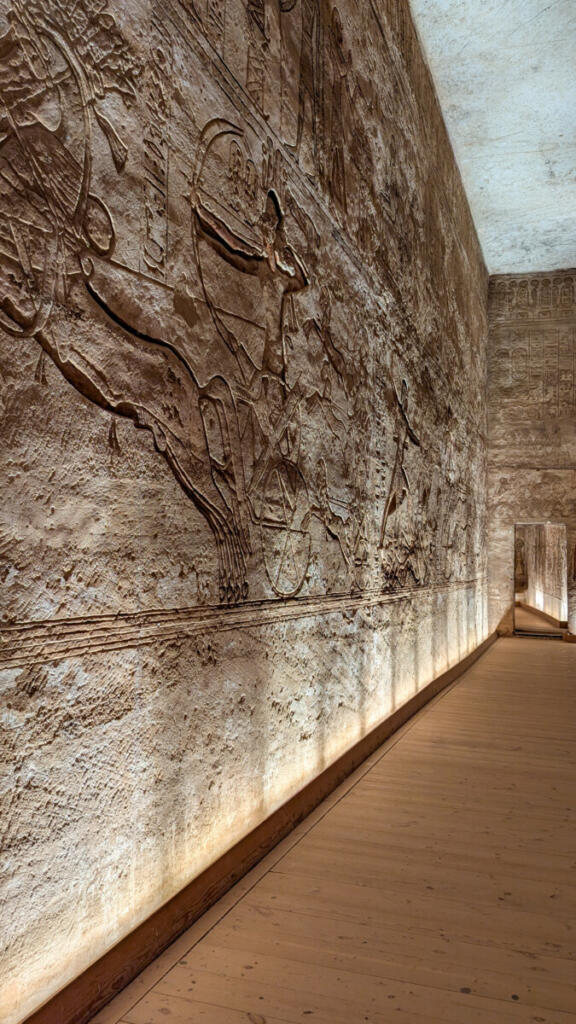
Around the entrance, bas-reliefs depict Ramses as hero and warrior, battle scenes from the famous victory at Qadesh, and offerings to the gods, testifying to the blend of politics, religion and art that characterizes this exceptional site.
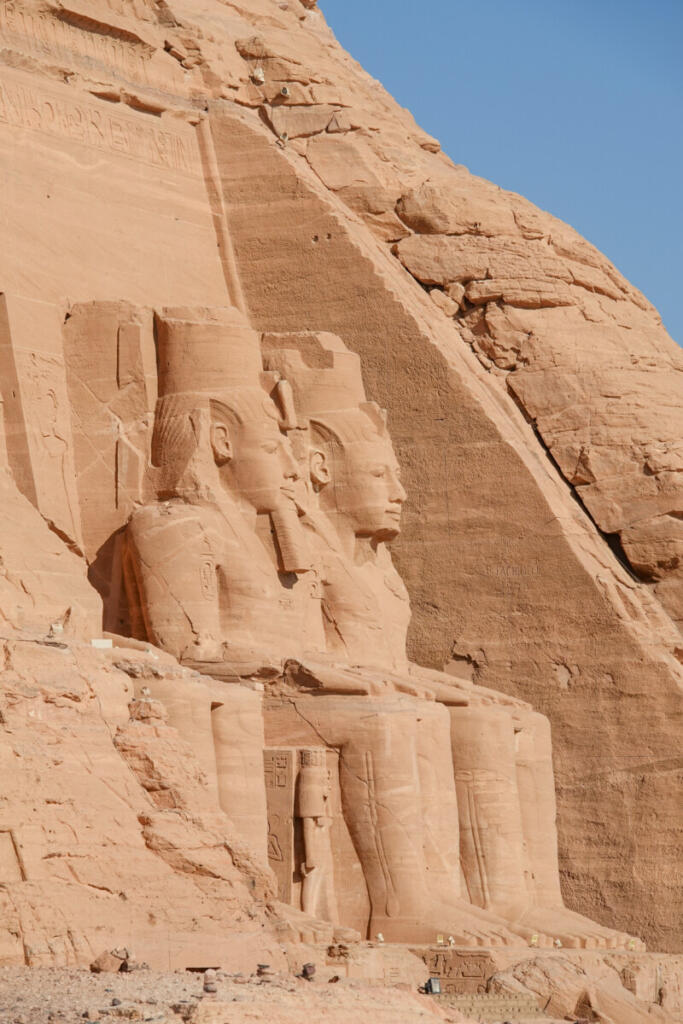
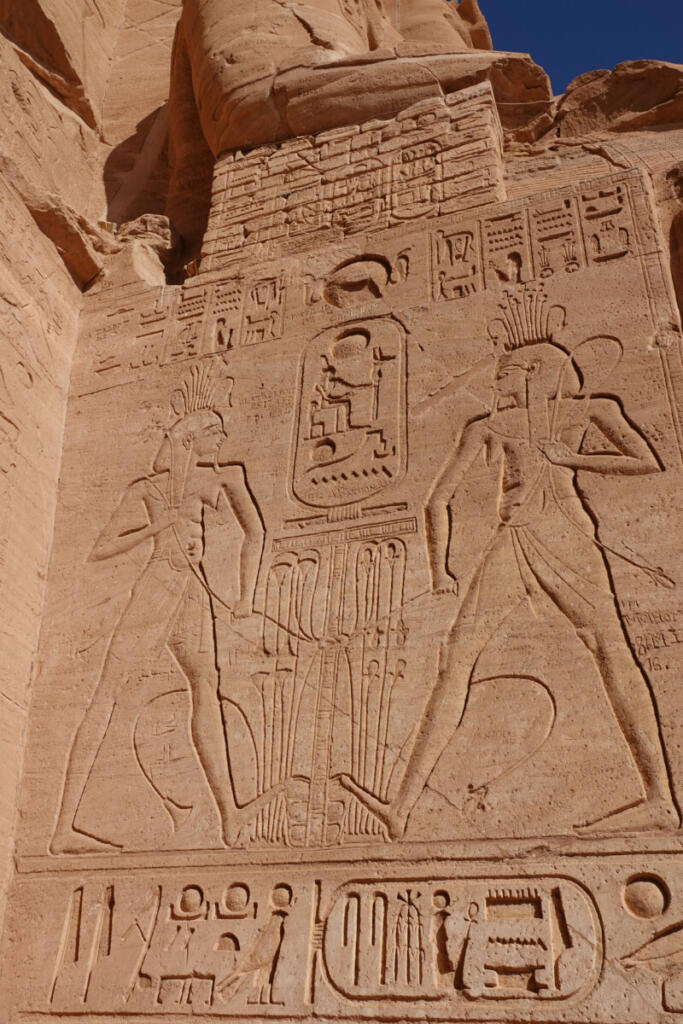
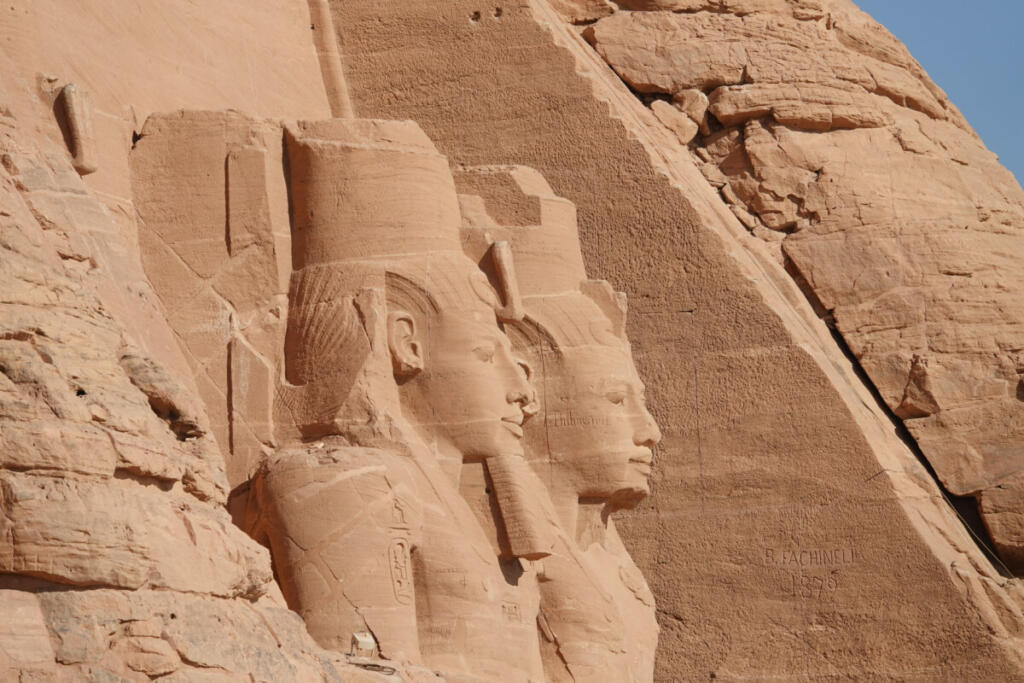
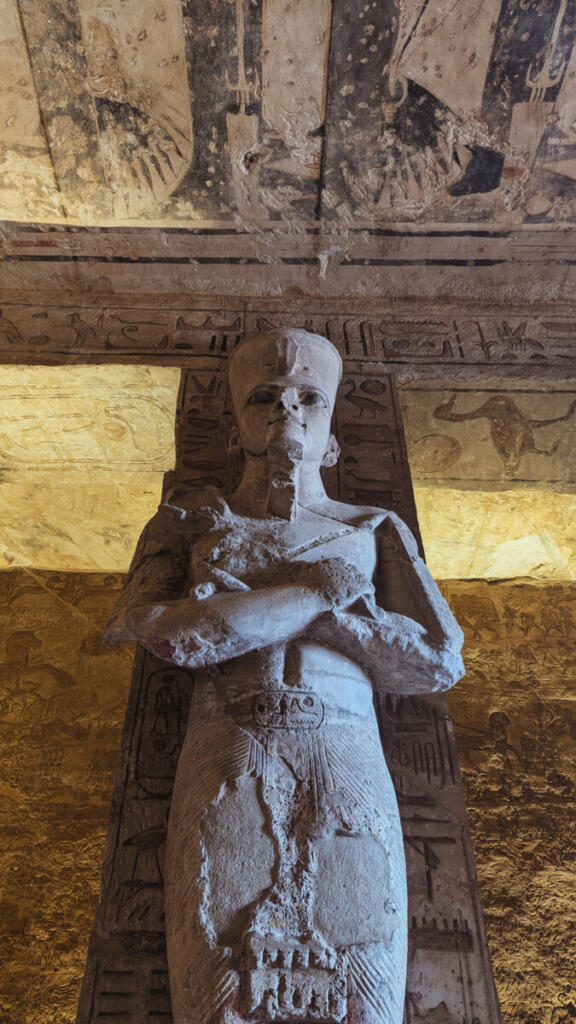
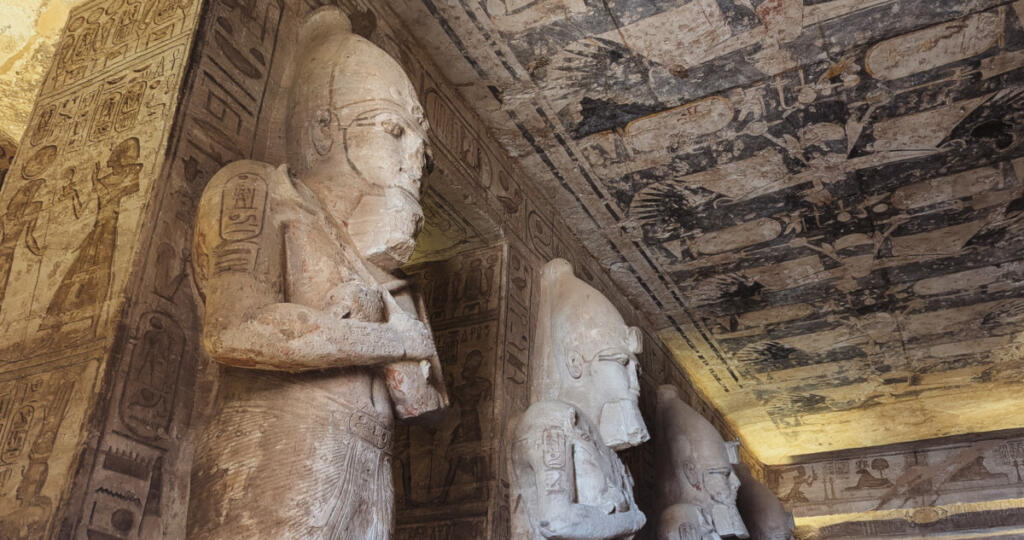
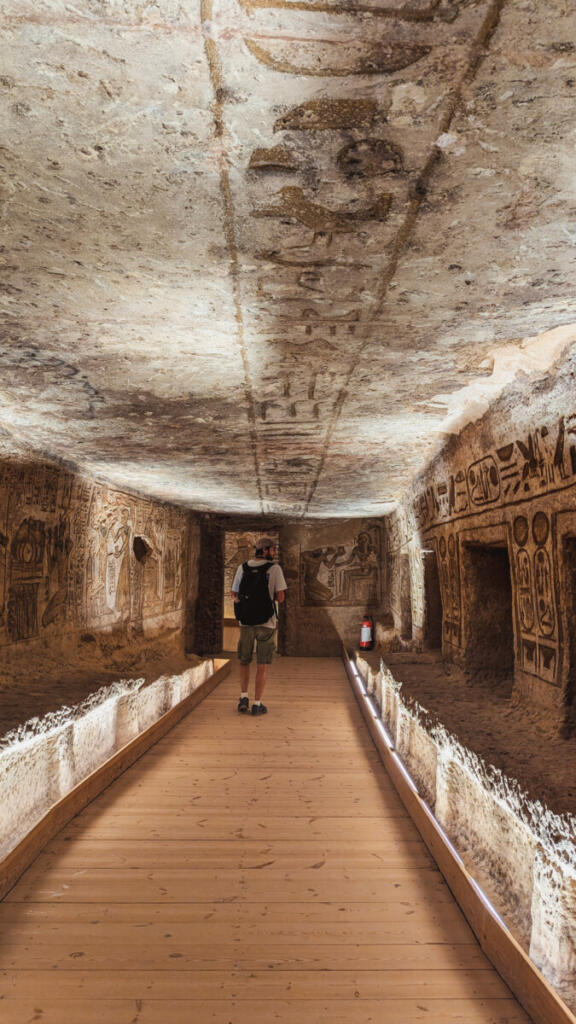
Inside the temple, visitors are immersed in a veritable journey through the art and spirituality of ancient Egypt. A succession of rooms, each adorned with human-shaped Osirid columns, symbols of rebirth and resurrection, reinforce the sacred character of the place. The walls are covered with finely sculpted bas-reliefs depicting battle scenes glorifying Ramses II, notably the famous victory at Qadesh, where the pharaoh is depicted as an invincible military leader.
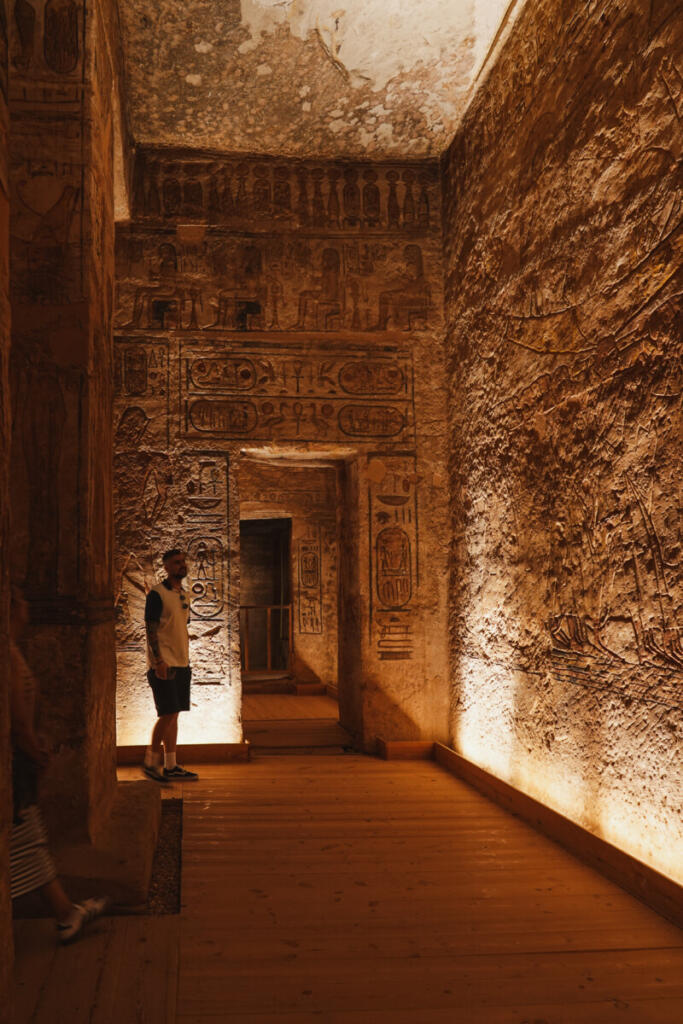
The route leads to the main sanctuary, the mystical heart of the temple, where four imposing statues are lined up: the three great deities Amun, Ra-Harakhty, Ptah, and Ramses II himself, presented in his divine form. This representation testifies to the deification of the Pharaoh, an essential element of royal theology.
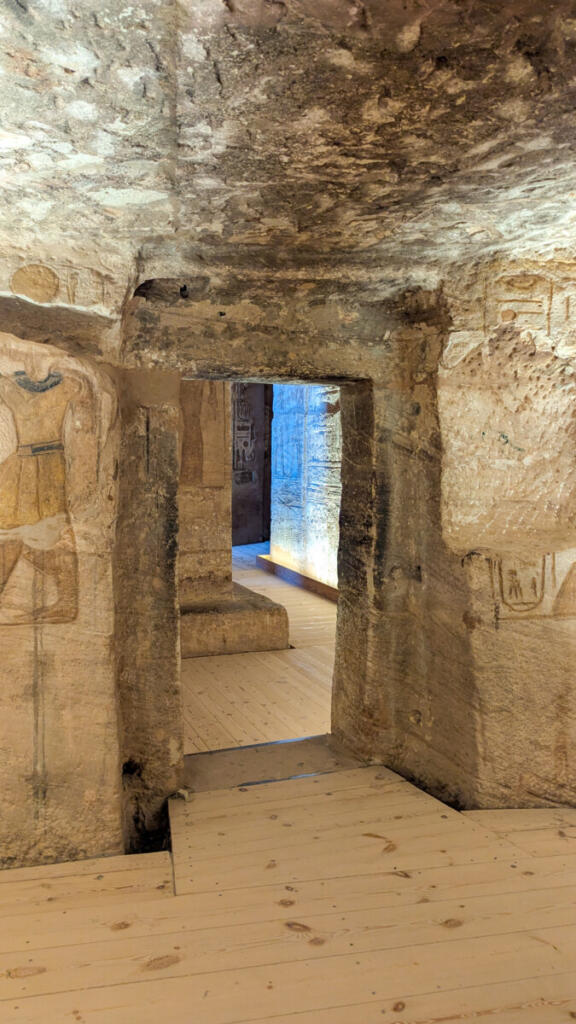
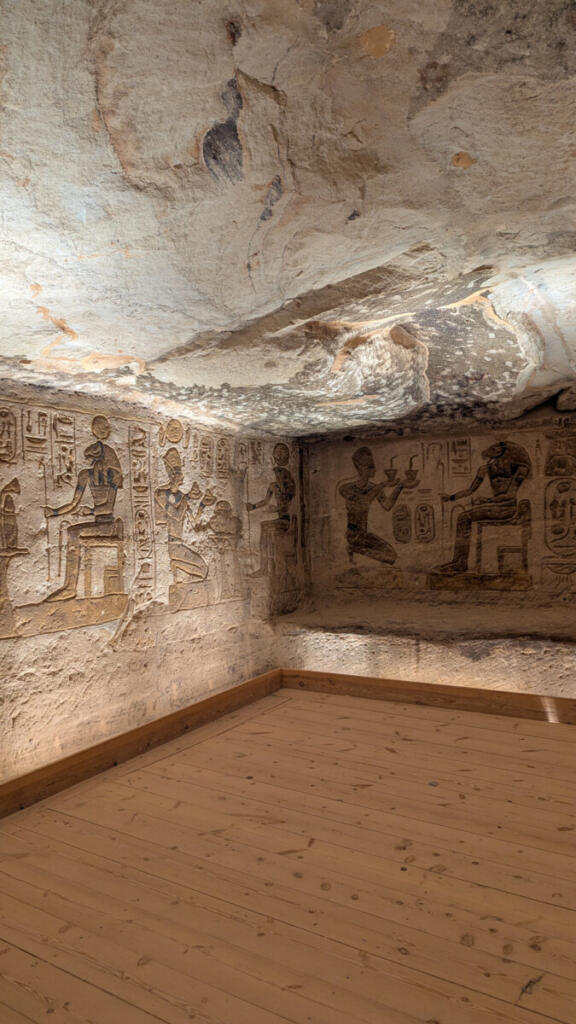
One of the most fascinating aspects of the Abu Simbel temple is its astronomical alignment. Every year, around February 21 and October 21, the first rays of sunlight enter the sanctuary and successively illuminate the statues of the gods, until they reach the statue of Ramses II at the far end of the temple. Only the statue of Ptah, the god of the underworld, remains in shadow. This rare phenomenon testifies to the exceptional mastery of architecture and astronomy in ancient Egypt.
It’s important to note that these dates are not fixed to the day. They may vary slightly from one year to the next, due to adjustments in the Gregorian calendar and astronomical phenomena such as the precession of the equinoxes. Despite these variations, these two periods remain the key times when this unique spectacle can be observed.
What’s more, this solar alignment was preserved with remarkable precision during the colossal relocation of the temple in the 1960s, an extraordinary feat of engineering that underlines the historical and cultural importance of the site.
For, like Philae, Abu Simbel was saved from the waters in the late 1960s, threatened by the rise of Lake Nasser following the construction of the Aswan High Dam. To preserve it, the temples had to be cut into blocks weighing between 20 and 30 tonnes, lifted 65 metres higher onto an artificial hill and then reconstituted on the mountain that shelters them today.
This spectacular operation remains a powerful symbol of the preservation of endangered world heritage, offering today’s visitors the chance to admire a New Kingdom masterpiece in a setting both grand and steeped in history.
The Little Temple of Hathor and Nefertari: A Royal Declaration of Love
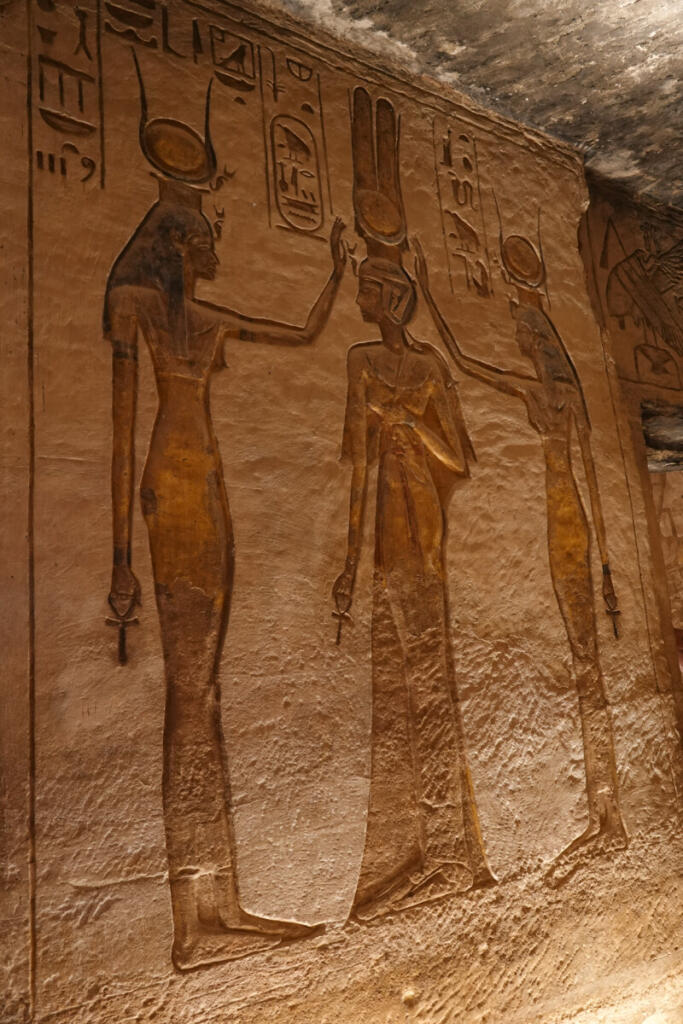
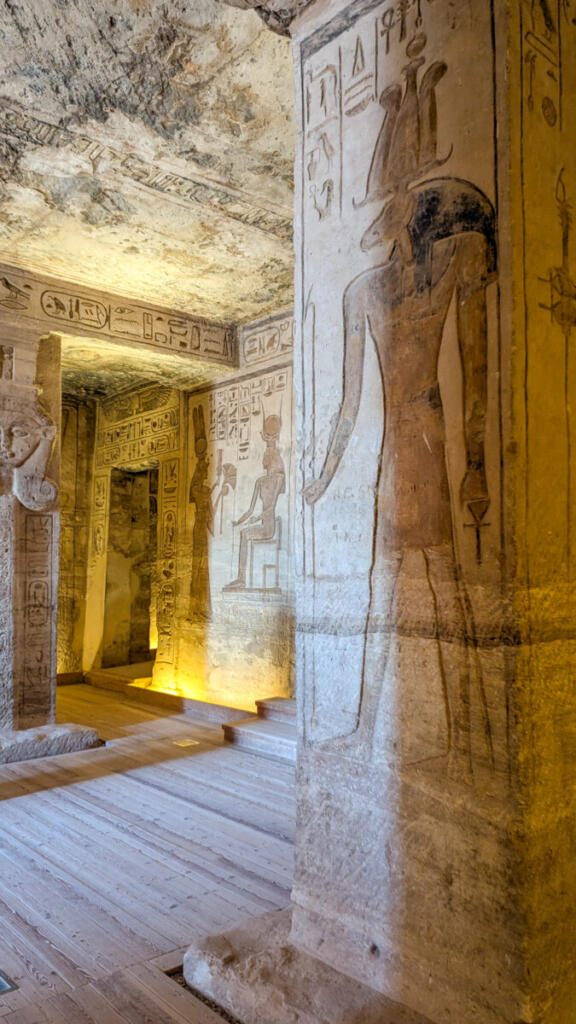
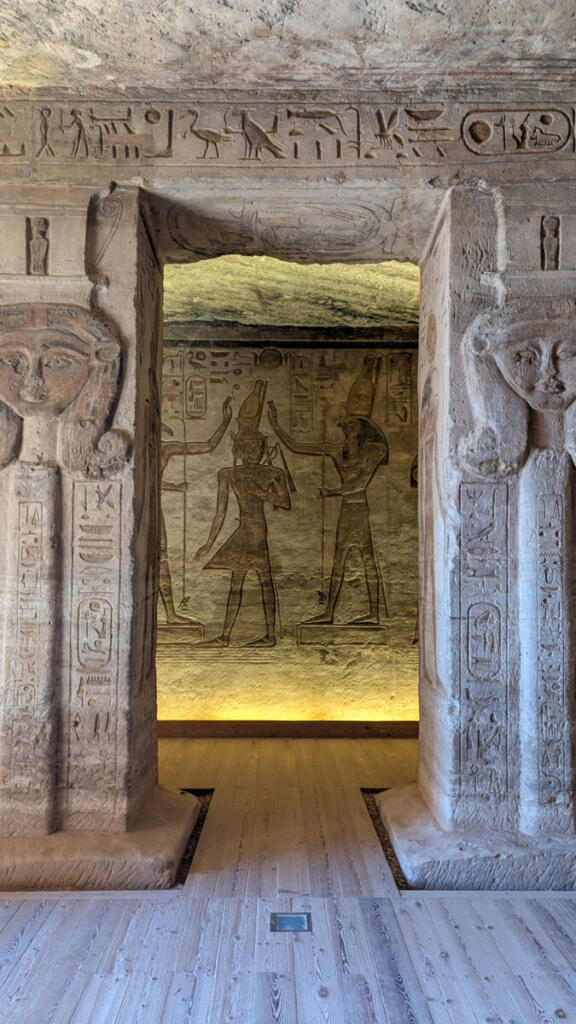
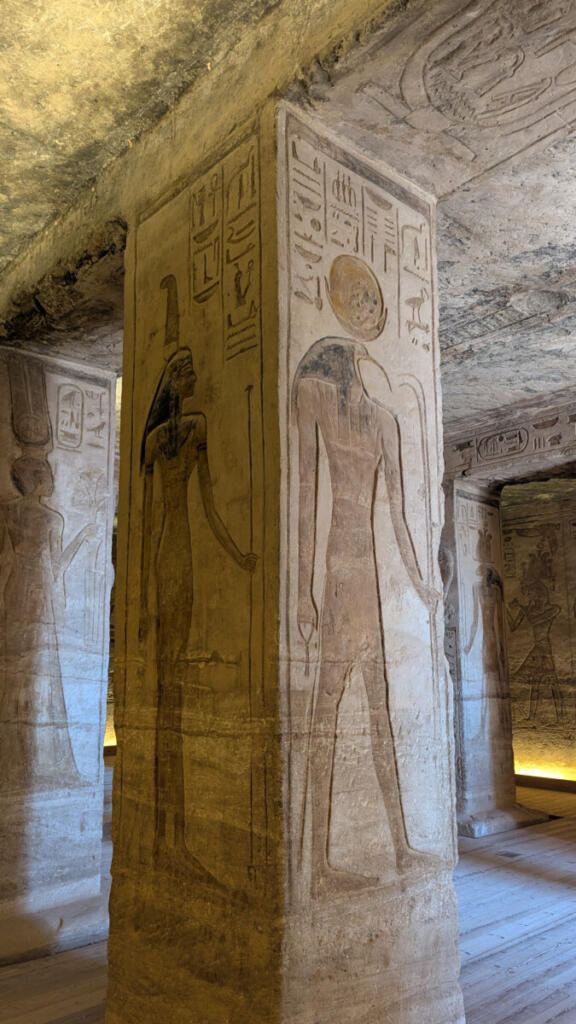
More modest than the great sanctuary of Ramses II, this temple is a true jewel dedicated to the goddess Hathor, protector of love, beauty and music, and to Queen Nefertari, favorite wife of Ramses II. Built at the same time, around 1260 BC, it celebrates both the deity and the queen, who is depicted on several occasions, proof of the exceptional esteem in which she was held.
The temple’s facade is remarkable for its six life-size statues: four represent Ramses II, while two others represent Nefertari, a rare honor reserved for a queen.
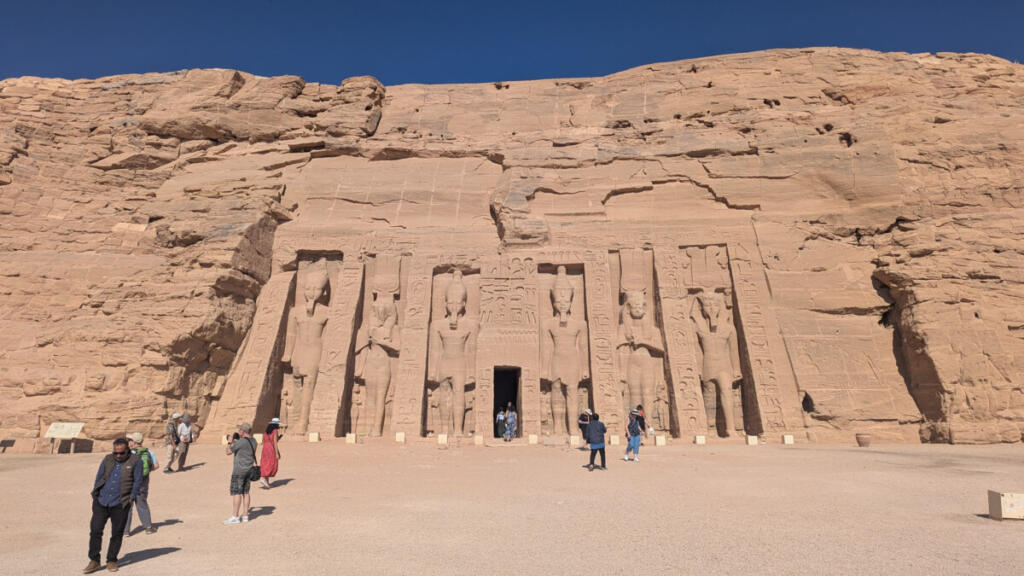
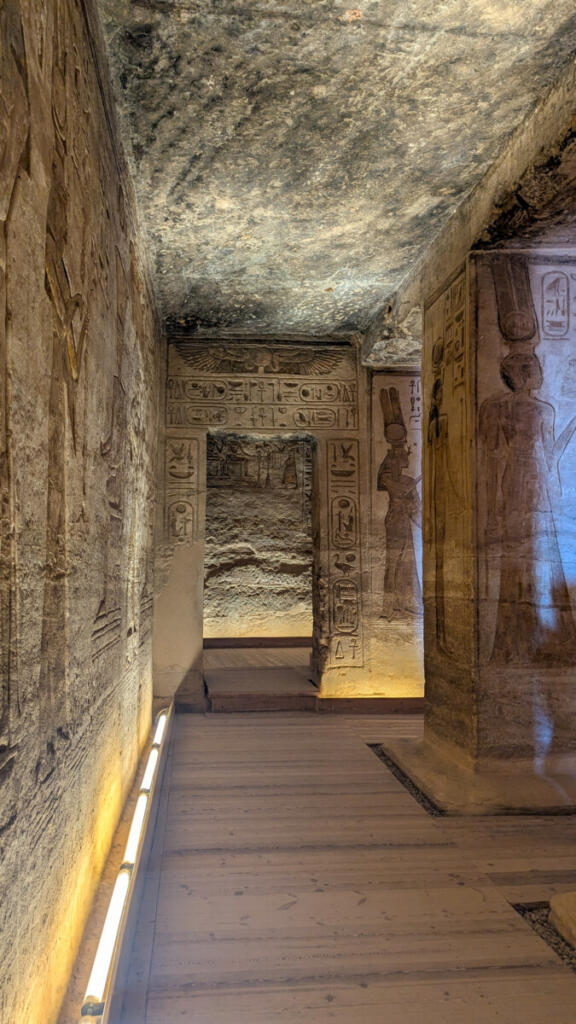
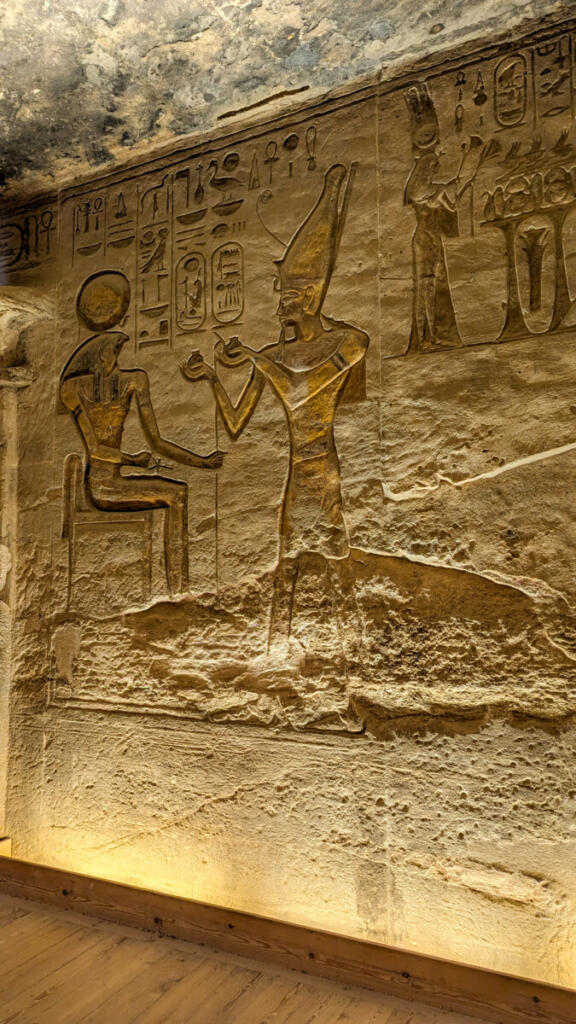
Inside, the walls are adorned with bas-reliefs and colorful paintings showing the queen in the company of the gods, notably Hathor, and participating in religious rites. These frescoes, among the best preserved in Egypt, testify to Nefertari’s central role in the spiritual and political life of the reign.
The temple is also a poignant testimony to the importance of love and respect within the royal couple, an aspect rarely emphasized in Pharaonic architecture. It offers a sensitive and intimate contrast with the imposing majesty of the Great Temple of Ramses II.
Good to Know
- Access: Abu Simbel is about 280 km from Aswan, accessible by car or plane.
- Opening hours: 6 a.m. to 4 p.m. Visits are generally scheduled for early morning or late afternoon to avoid the heat.
- Best time to visit: November to February, when the climate is milder.
To explore Philae and Abu Simbel is to experience two suspended moments in a trip to Egypt. Two temples, two islands, two spectacular rescues… but the same emotion in the face of the beauty of stone and the power of time.
These stages fit perfectly into a tailor-made itinerary through Egypt. If you would like to include them in your travel plans, please contact us for a personalized, no-obligation proposal. You can also discover our Egypt, in the land of the Pharaohs itinerary, a suggestion for an eight-day trip starting at €3,000 per person, based on a group of four travelers.