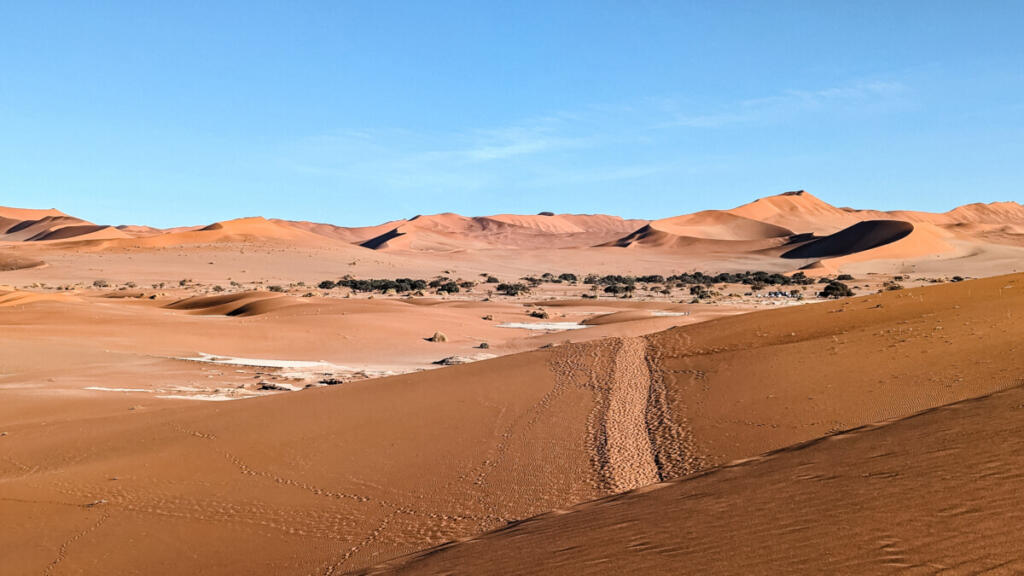
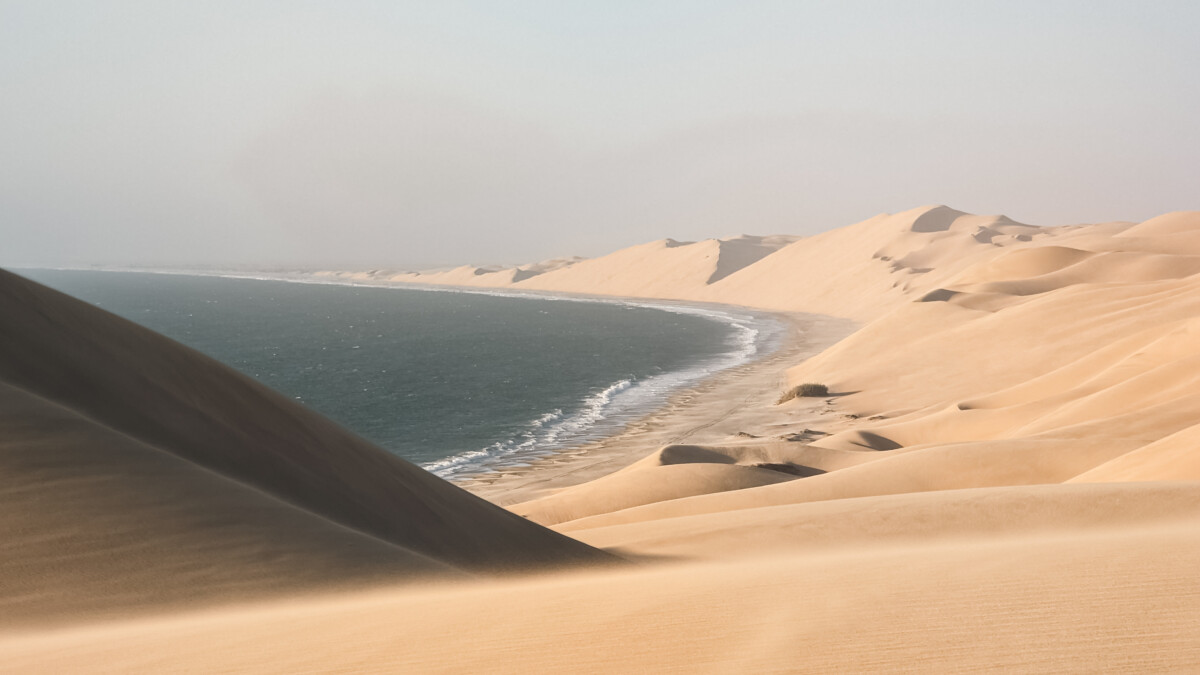
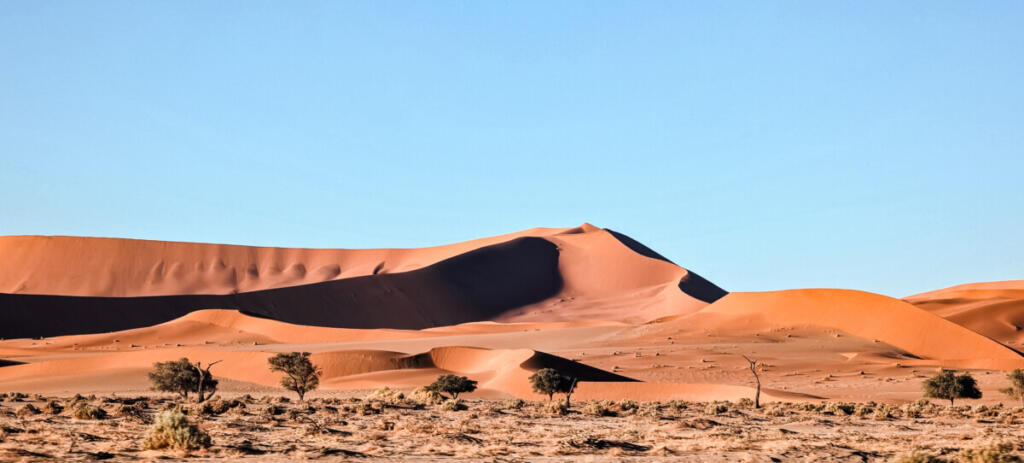
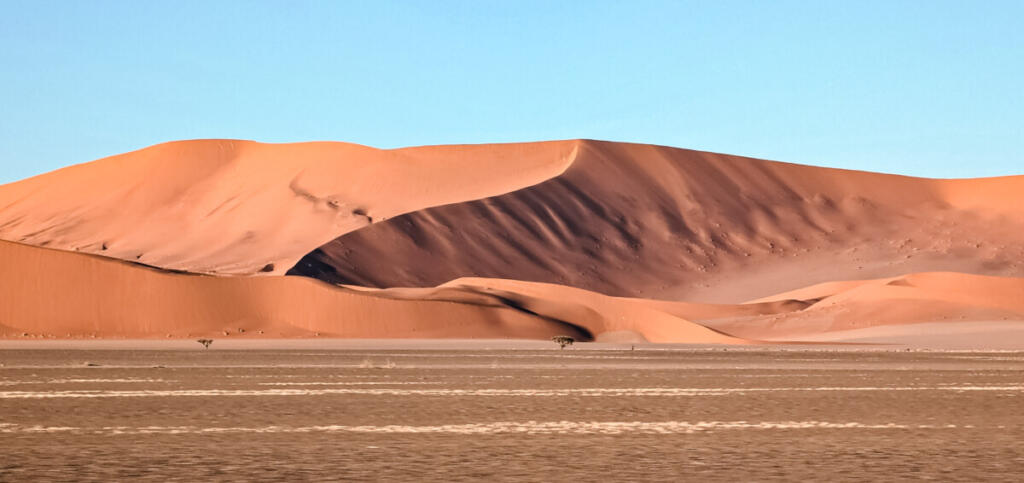
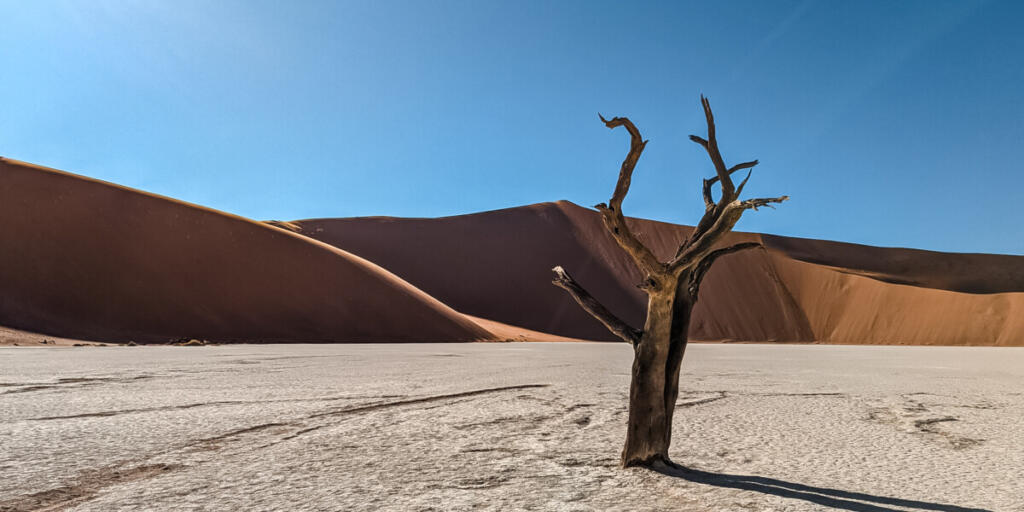
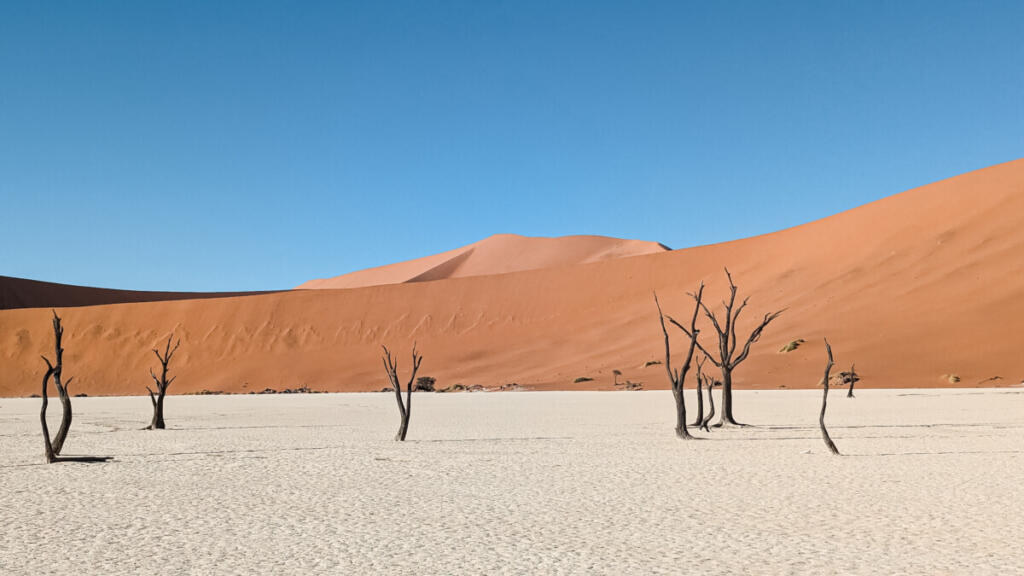
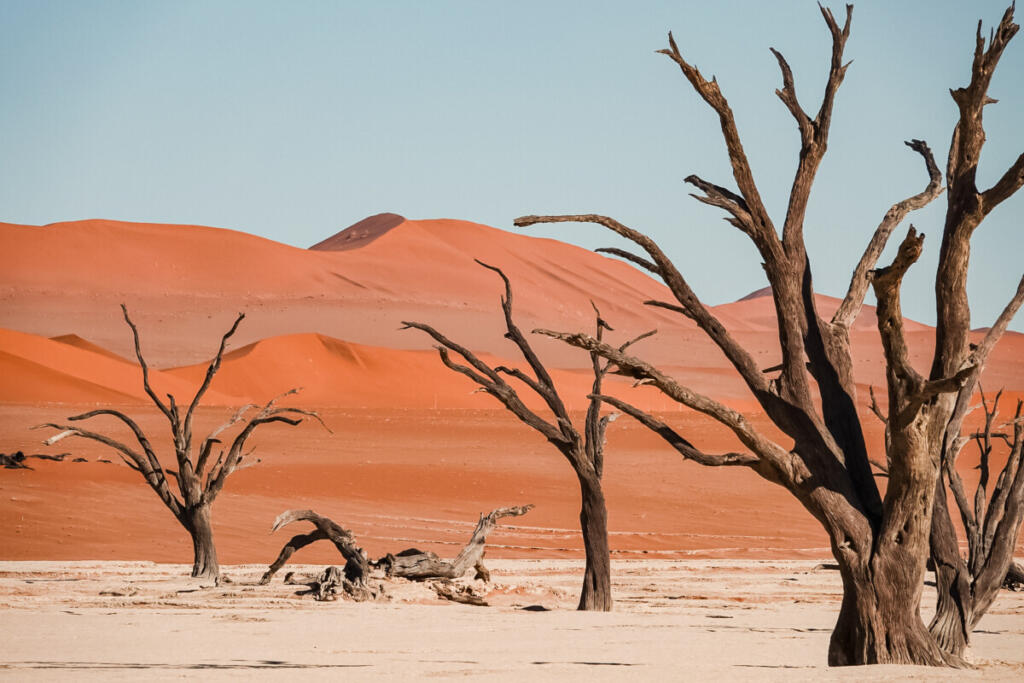
At the heart of the Namib-Naukluft National Park, Sossusvlei is one of Namibia’s most spectacular landscapes. Its red dunes, among the highest in the world, stand like moving mountains, changing color with the passing day. At their foot, the white clay basins of Deadvlei and their fossilized trees create a surreal setting that has become the emblematic image of the country.
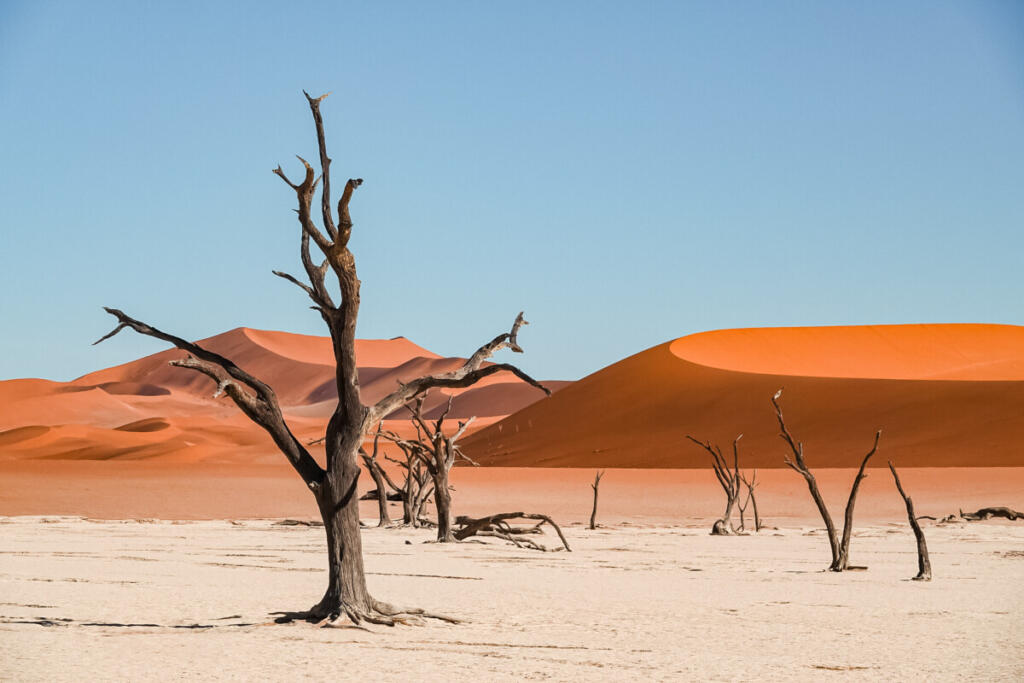
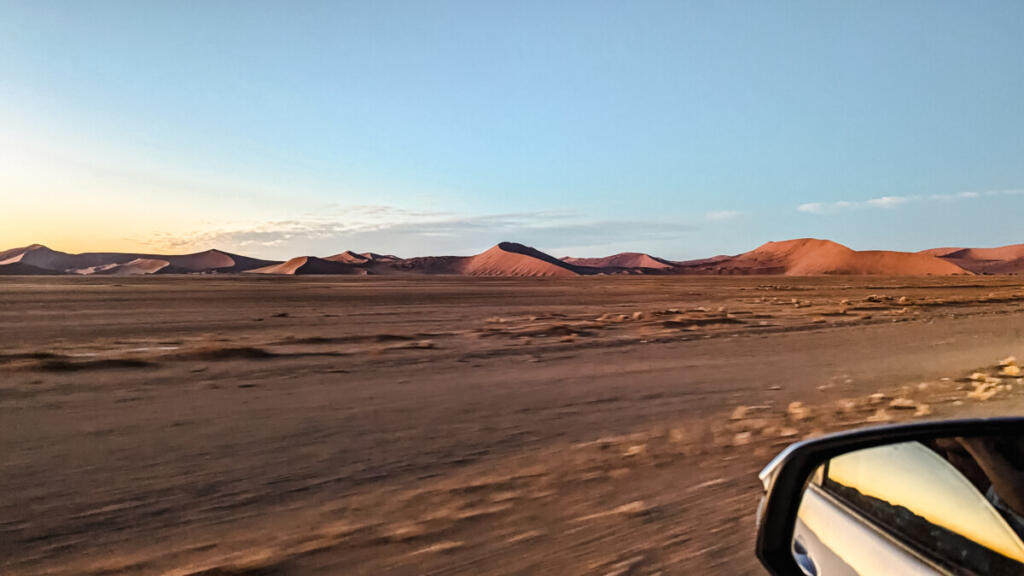
Here, every sunrise reveals a new picture: the striking contrast between red sand, blue sky and geometric shadows makes Sossusvlei a must-see, a true icon of southern Africa.
How do I get to Sossusvlei?
Sossusvlei lies in the heart of the Namib Desert, in the Namib-Naukluft National Park. The main access point is Sesriem, the small town where the park entrance is located.
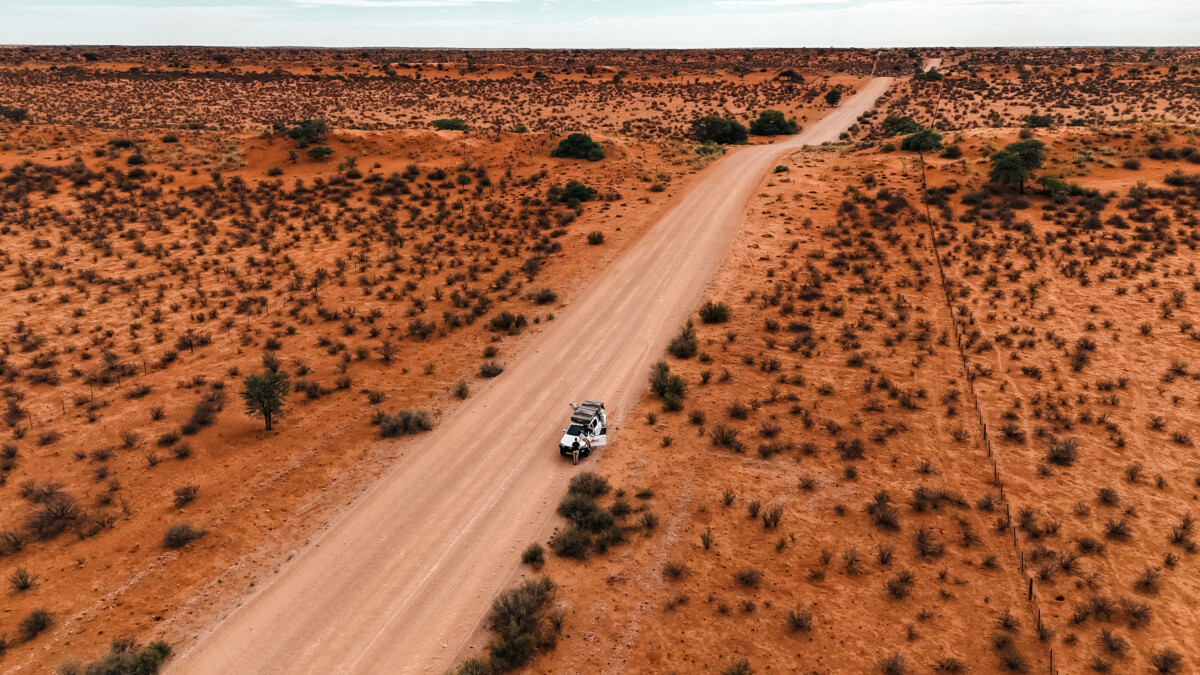
From Windhoek, it’s a 5-6 hour drive, mainly on gravel tracks. This is the most common route to start a trip to the Namib.
Sossusvlei can also be reached after a safari in the north of the country: from Etosha, it’s a long day’s drive (7 to 8 hours), with a gradual transition from lush green landscapes to arid desert expanses.
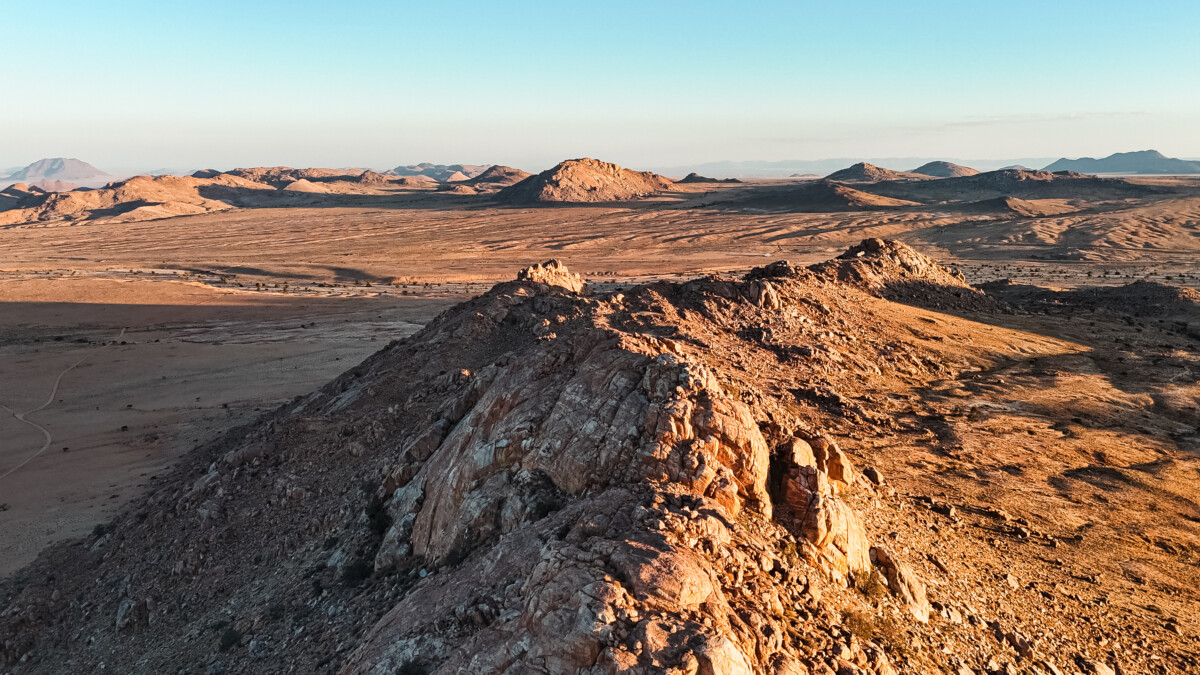
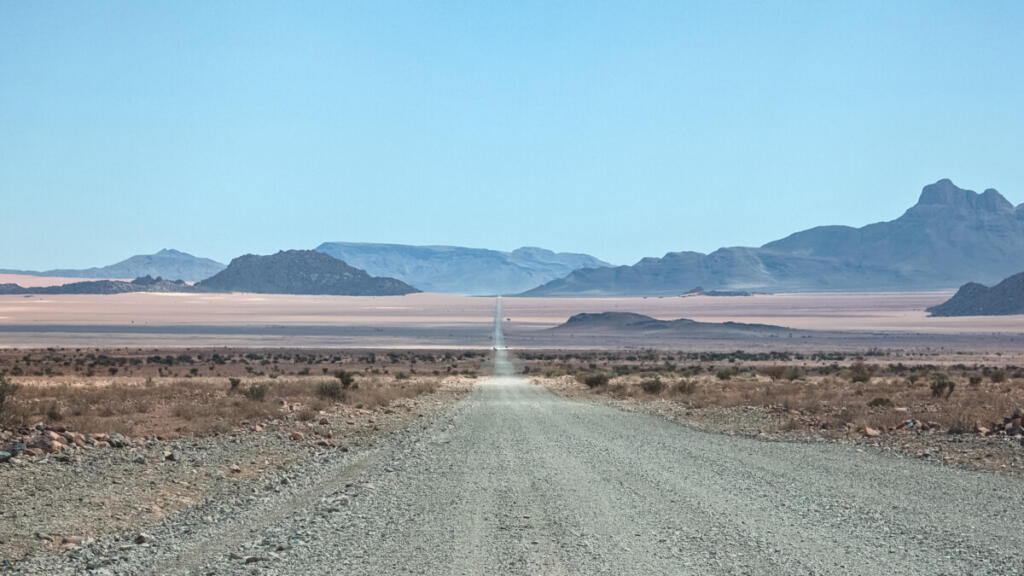
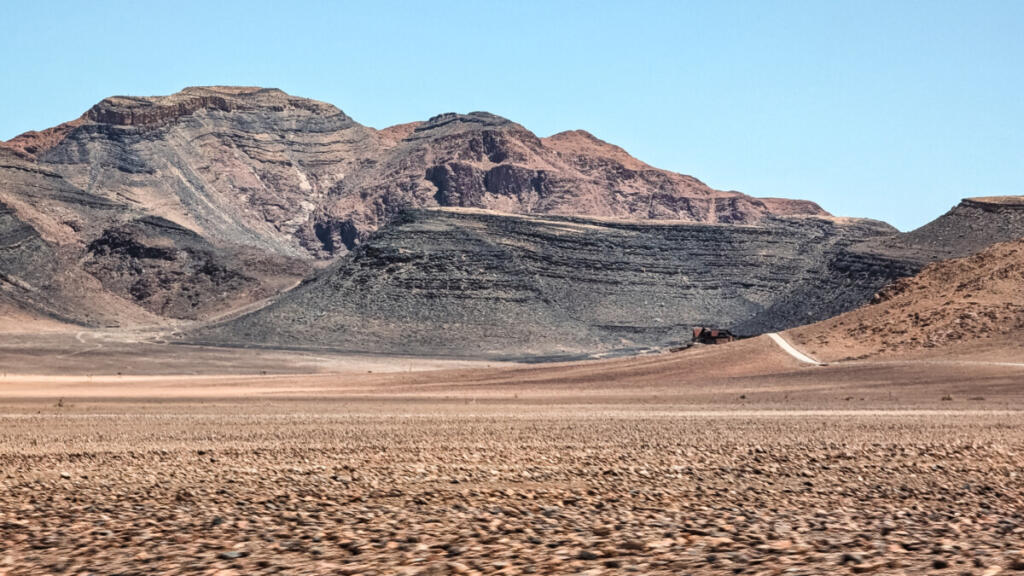
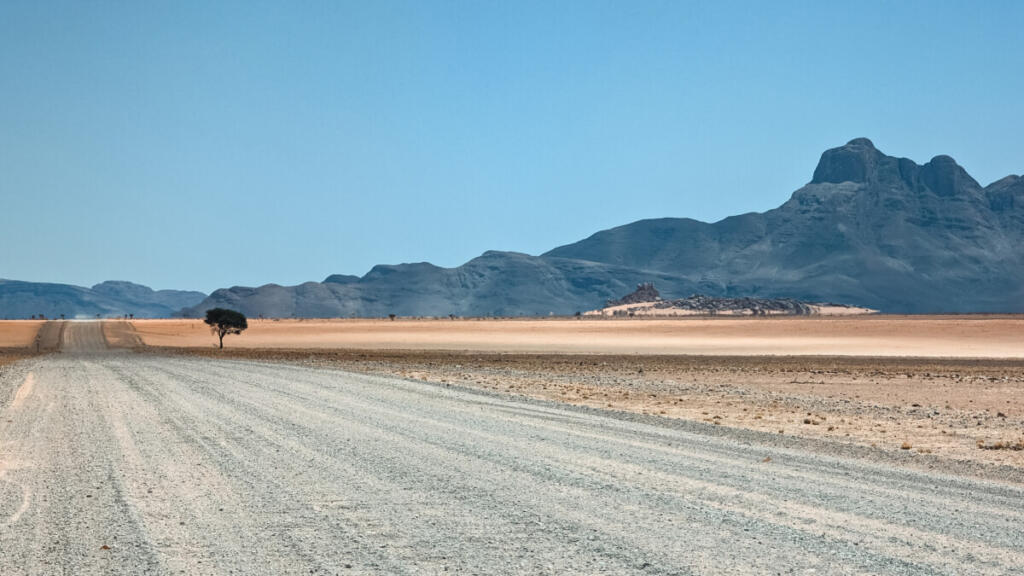
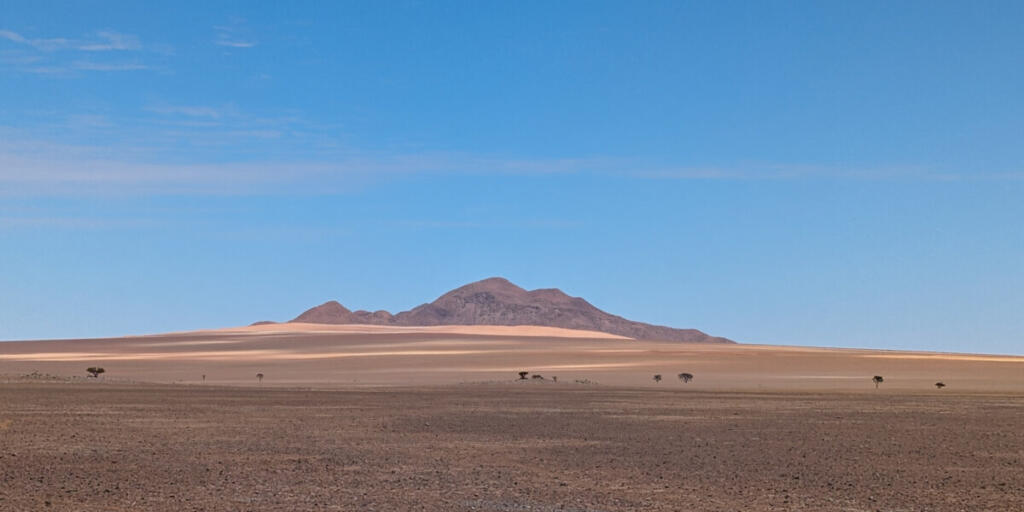
Finally, for those exploring southern Namibia, it is possible to arrive from Kanaan or the Fish River Canyon region. Taking the D707, considered one of the most beautiful tracks in the country, you’ll pass through exceptional panoramas: ochre-hued dunes, stony plains and arid mountains follow one another in a wild, mineral atmosphere.
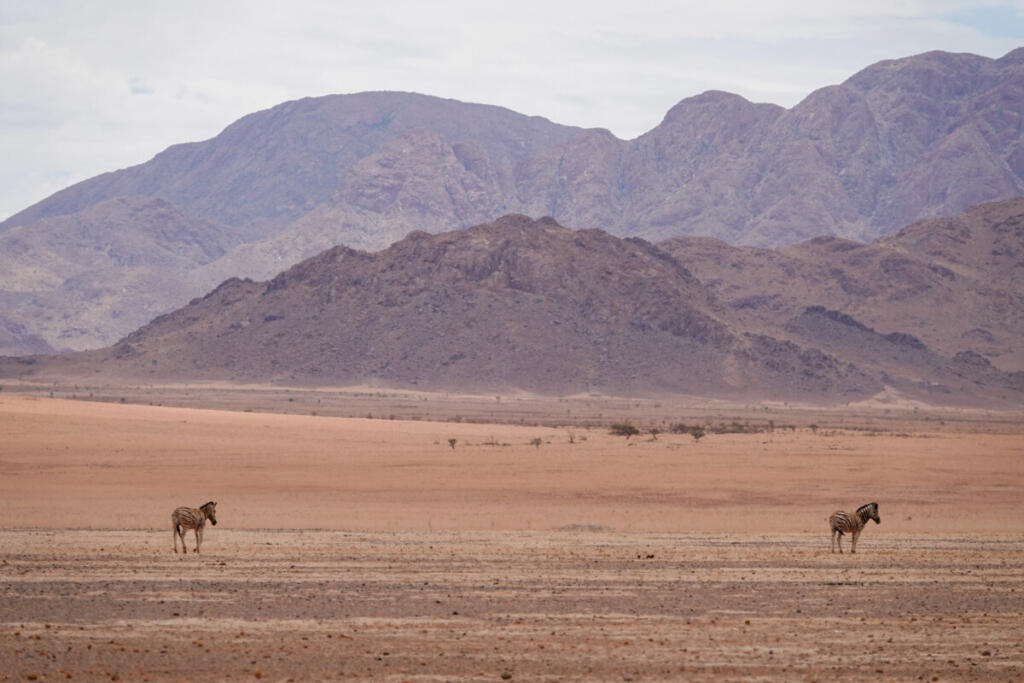
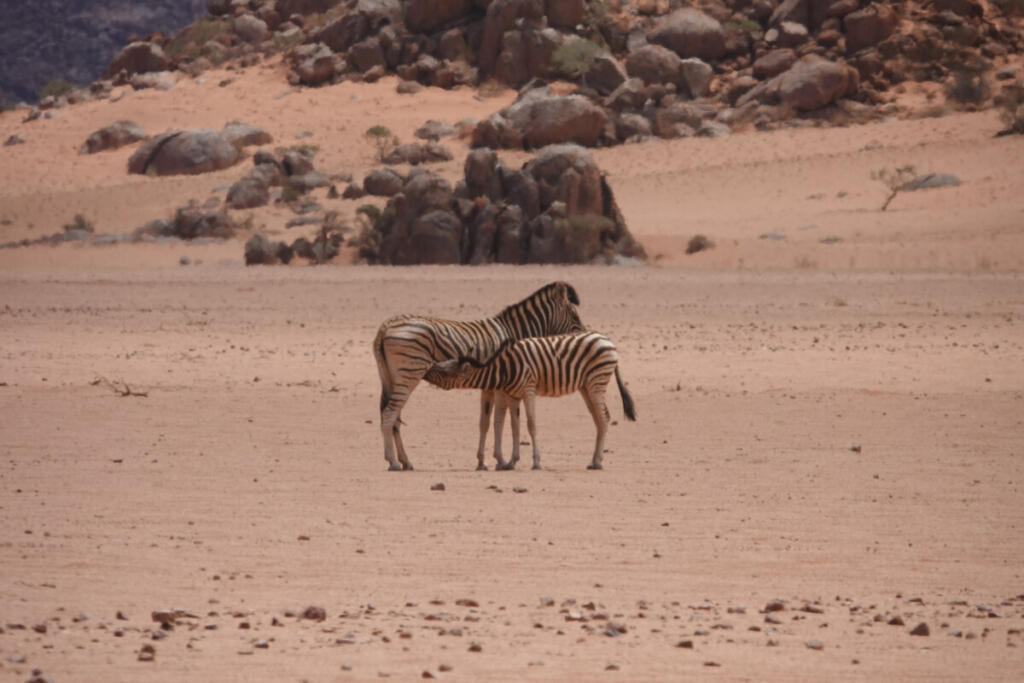
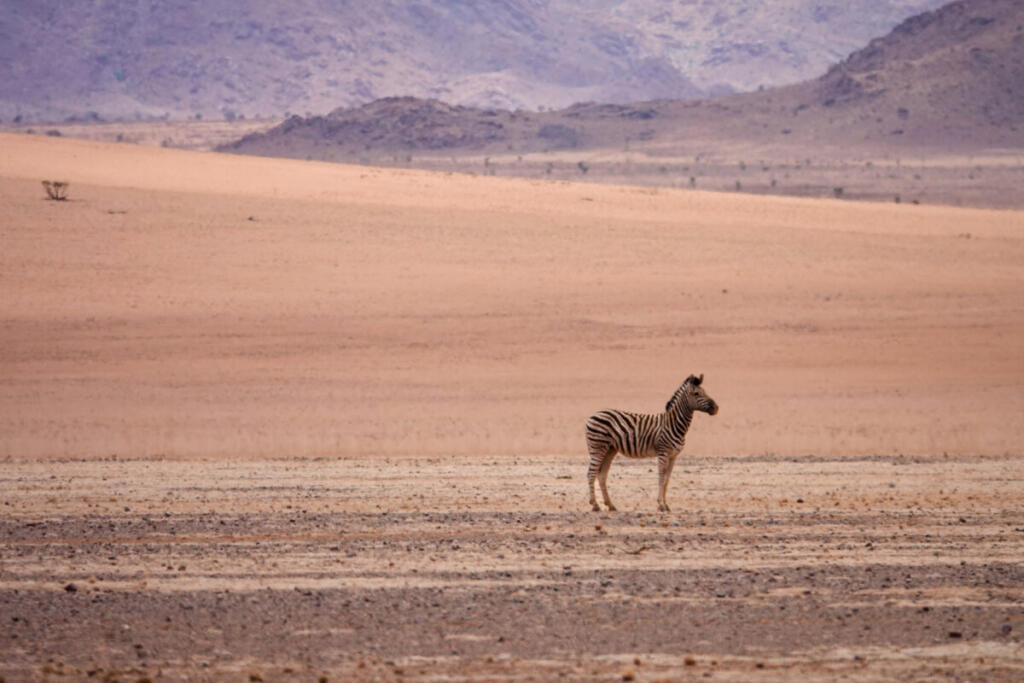
One of the most striking surprises on this route is the sighting of Hartmann’s mountain zebras. Unlike plains zebras, these hardy animals have adapted to the rugged terrain and arid conditions of south-western Namibia.
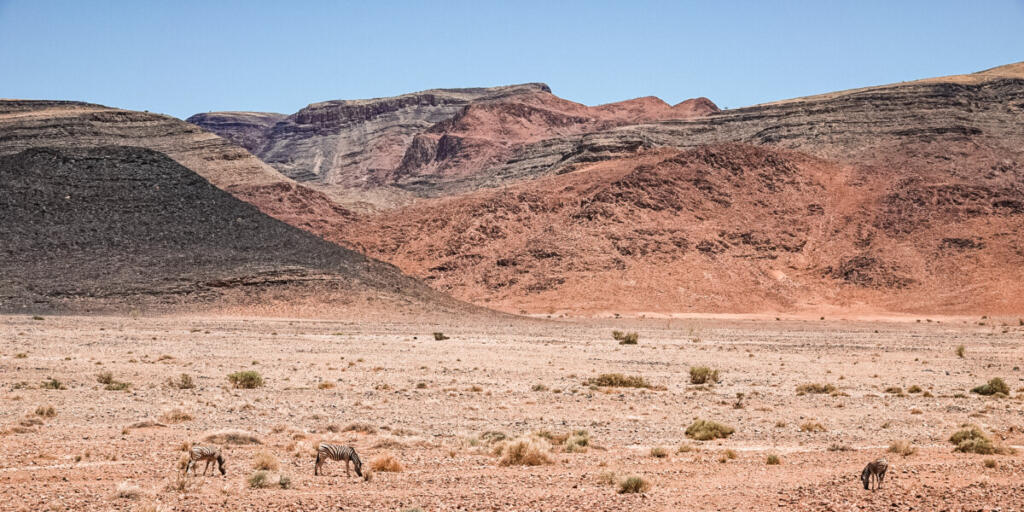
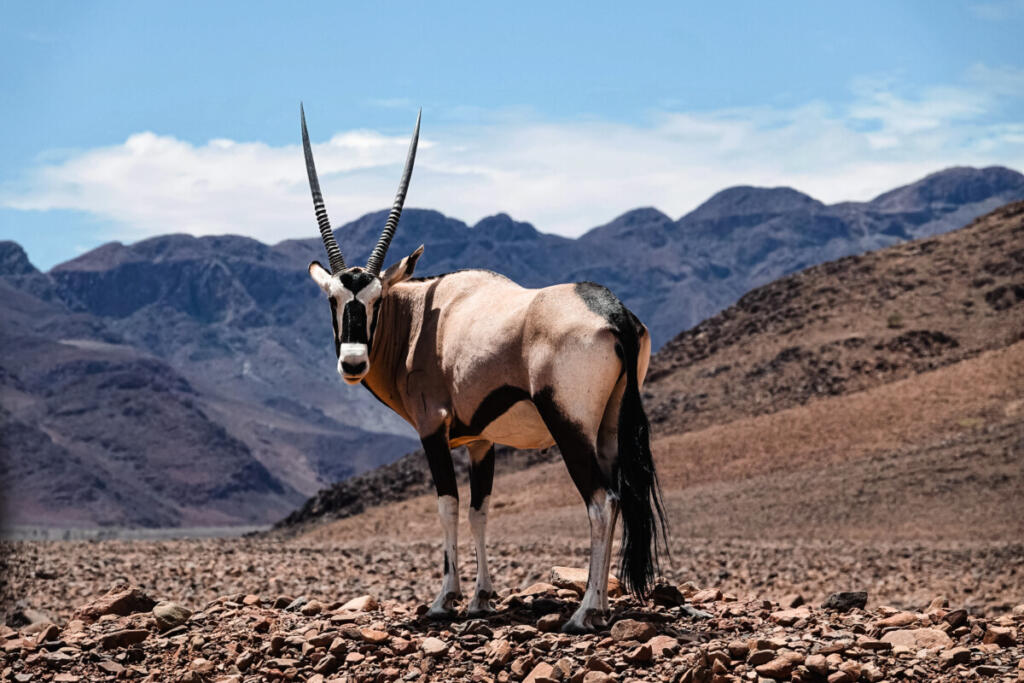
Their fine stripes, light bellies and stocky silhouettes make them easy to spot. Seeing them evolve between dunes, rocky hills and stretches of desert is an unexpected and memorable experience, in addition to possible encounters with oryx or ostriches.
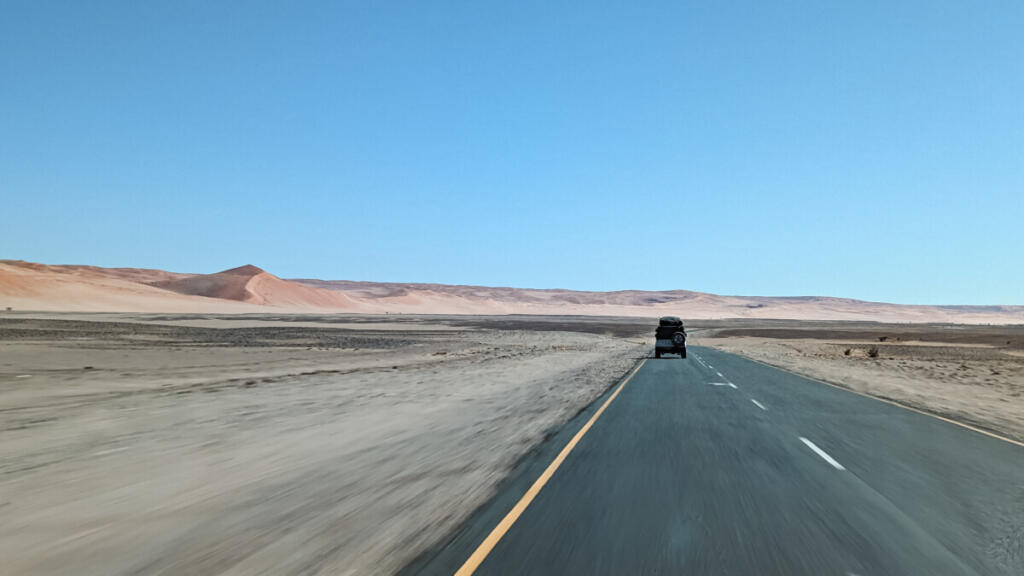
From Sesriem, a 60 km asphalt road leads to the dunes. The last few kilometers, however, are sandy and require a 4×4 vehicle and excellent track driving skills. For the less adventurous, you can take a shuttle bus from the main parking lot.
Where to stay near Sossusvlei?
Spending the night in Sesriem is a major advantage: it allows you to enter the park at dawn and witness the first rays of sunlight setting the dunes ablaze. It’s also a way to avoid the crowds of visitors arriving later in the morning. The difference is significant: those sleeping inside the park can leave before sunrise, while those staying outside have to wait for the official opening of the gates, usually at daybreak. A few minutes make all the difference when it comes to enjoying the magical, silent atmosphere of Sossusvlei in the early hours of the morning.
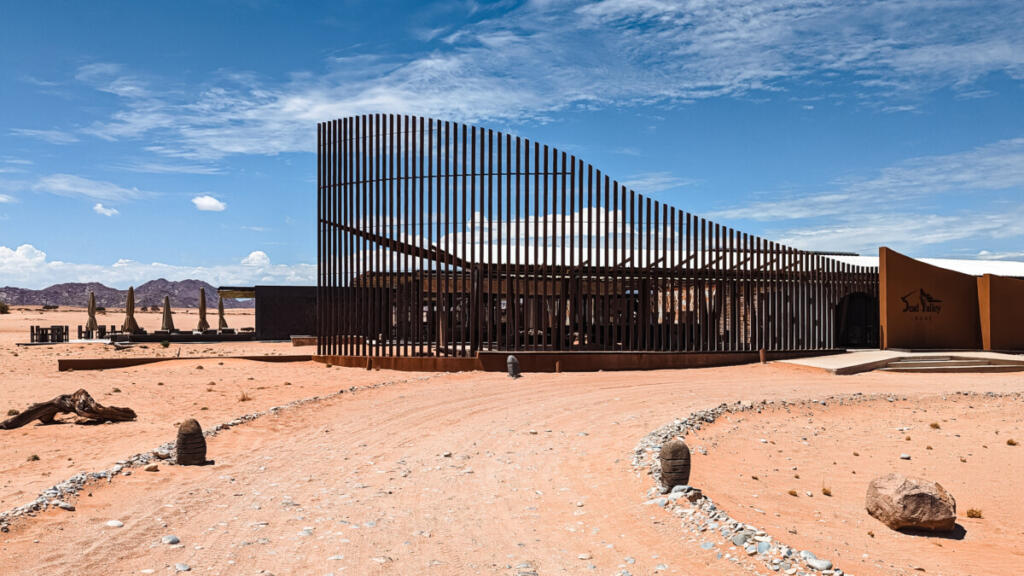
The Sesriem region offers a variety of accommodation options to suit all travelers:
- A fully equipped campsite, ideal for sleeping under the stars in a simple, authentic atmosphere, close to the desert landscape.
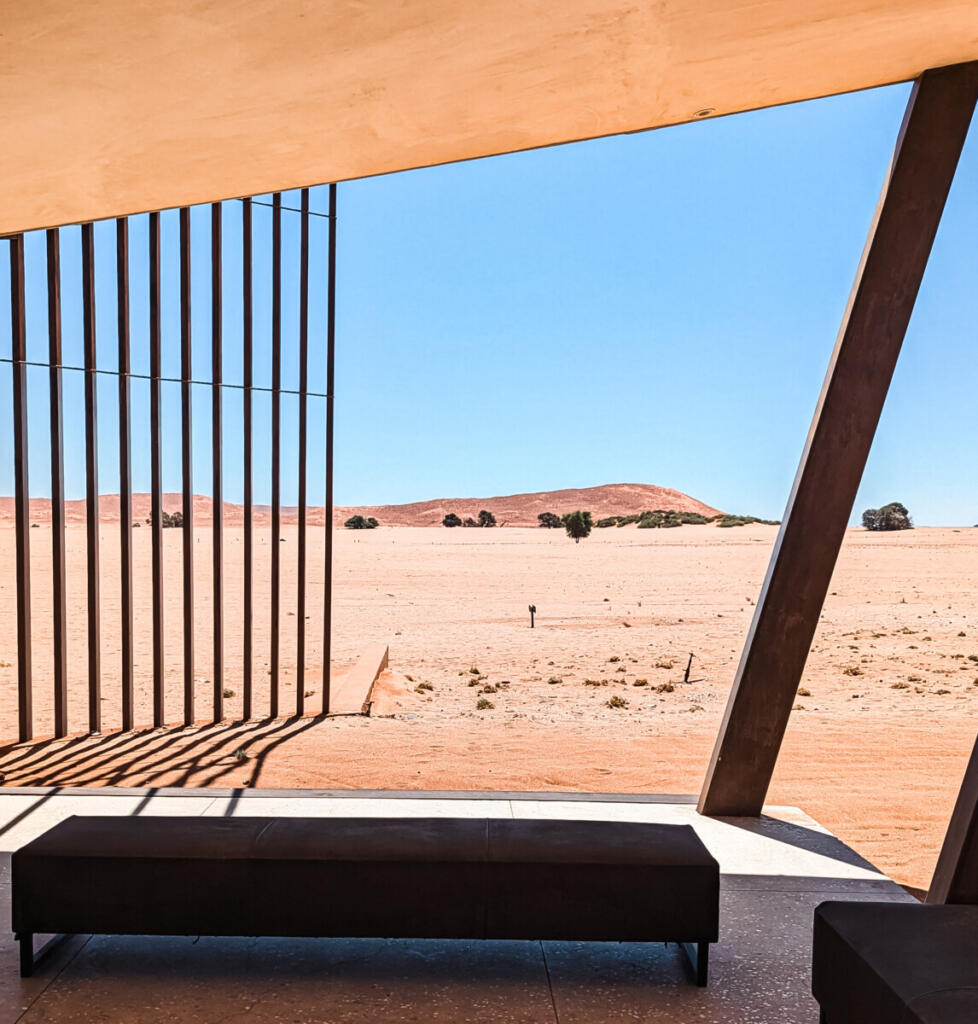
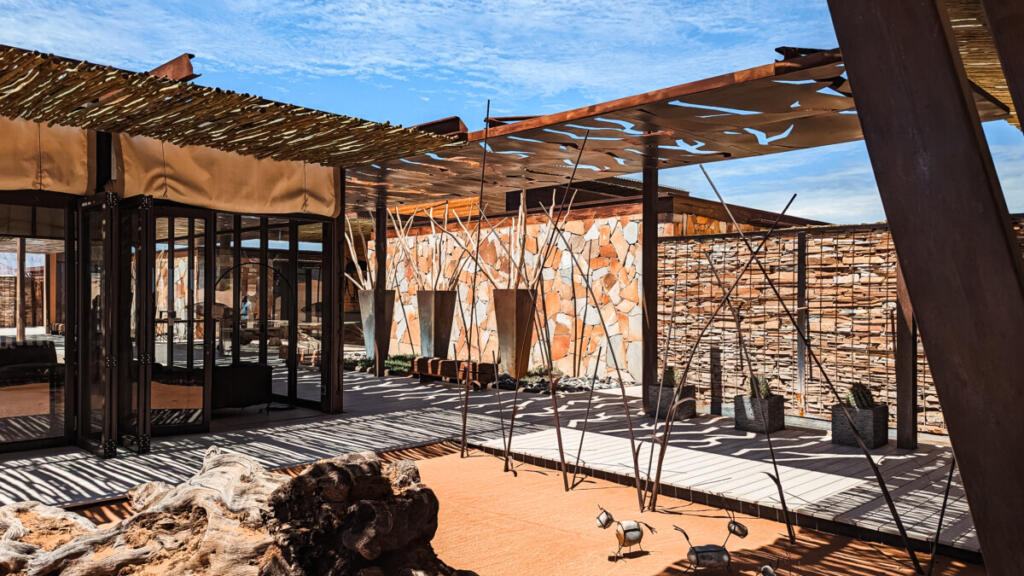
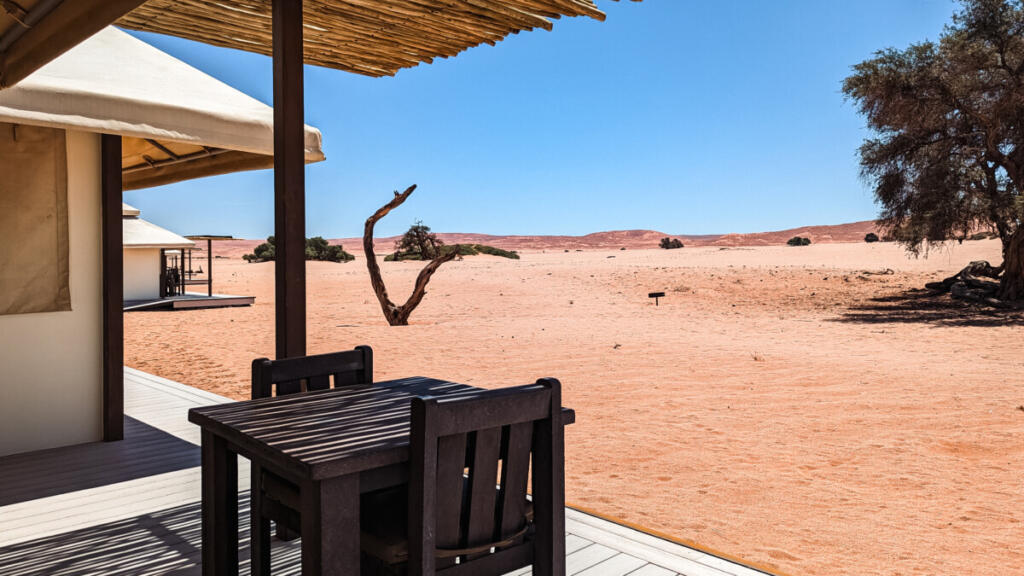
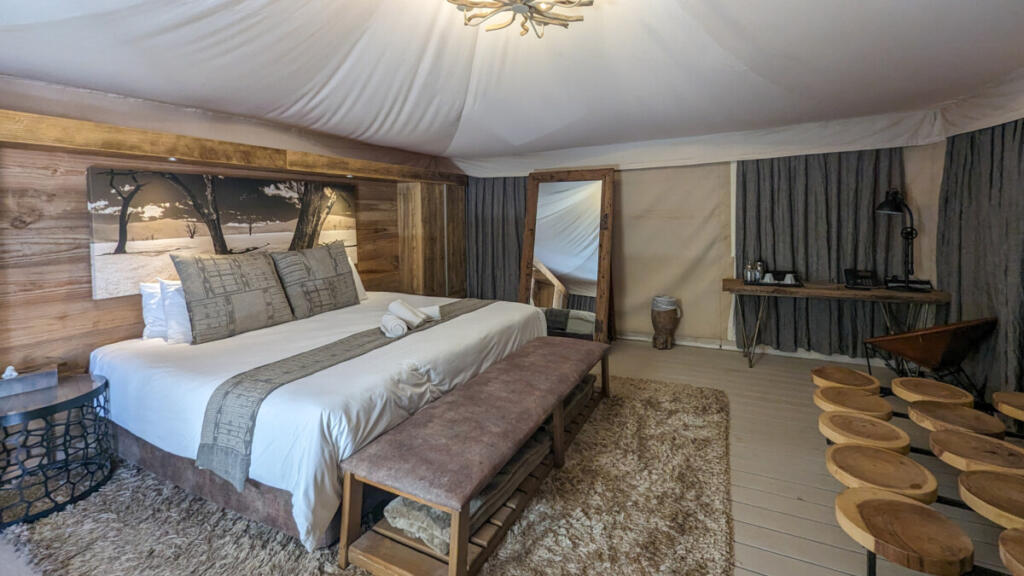
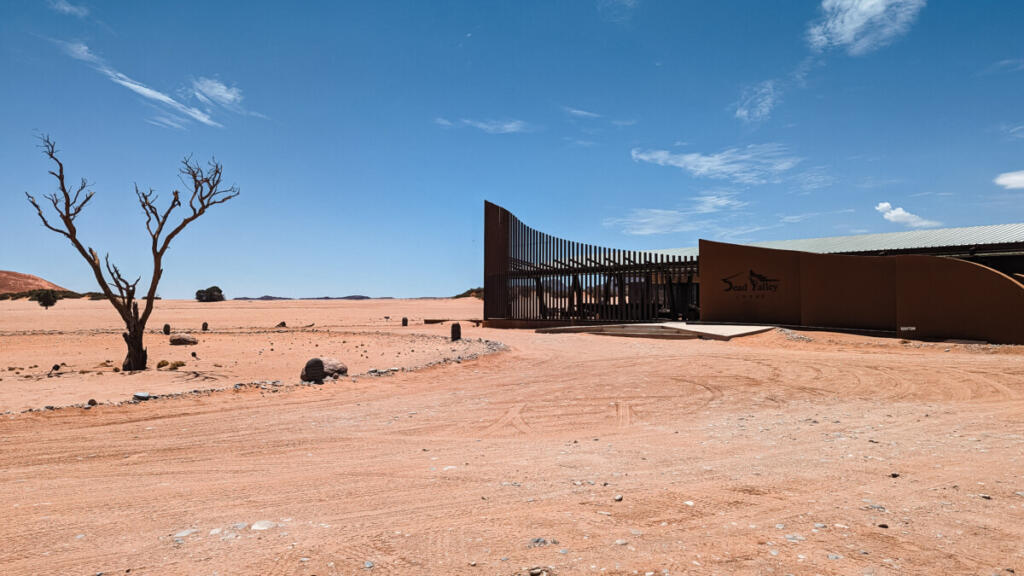
- More comfortable lodges, scattered throughout the desert, often with panoramic views of the dunes and savannah. There are terraces overlooking the horizon, pools for cooling off after excursions and sometimes even observatories for admiring the starry sky.
What to see and do in Sossusvlei?
Sesriem Canyon
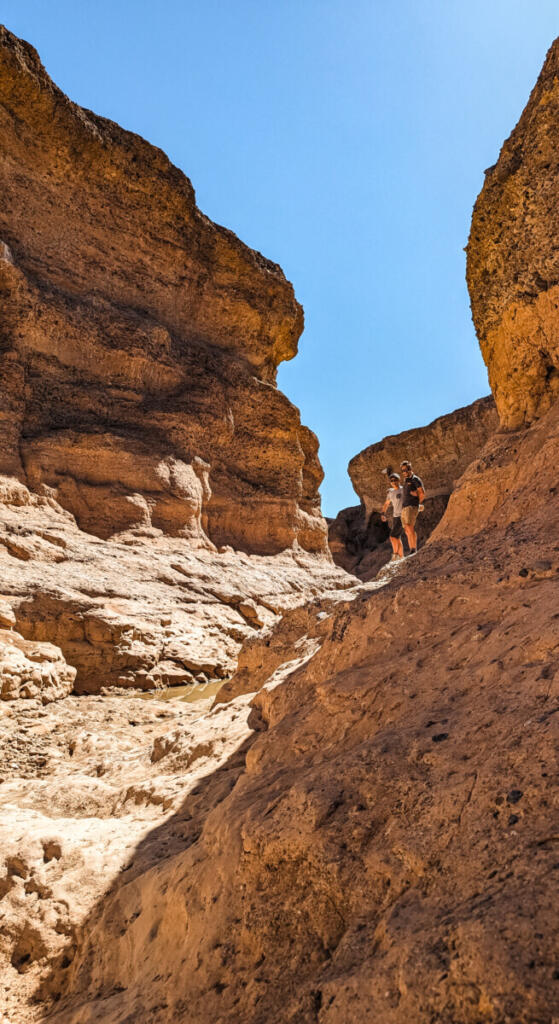
Even before reaching the dunes, the Sesriem Canyon is well worth a stop. Carved out some two million years ago by the Tsauchab River, this canyon, almost a kilometer long and up to 30 metres deep, bears witness to the power of erosion in this arid environment. Its name, Sesriem – “six straps” in Afrikaans – recalls the days when early pioneers had to tie together six leather straps to draw water from the canyon floor.
The visit is on foot, descending easily along a path from the parking lot just outside the park entrance. Once at the bottom, you make your way between the ochre and golden rock faces, which are sometimes so narrow as to let in only a trickle of light. In the wet season, small pools may still exist, attracting birds and antelopes.
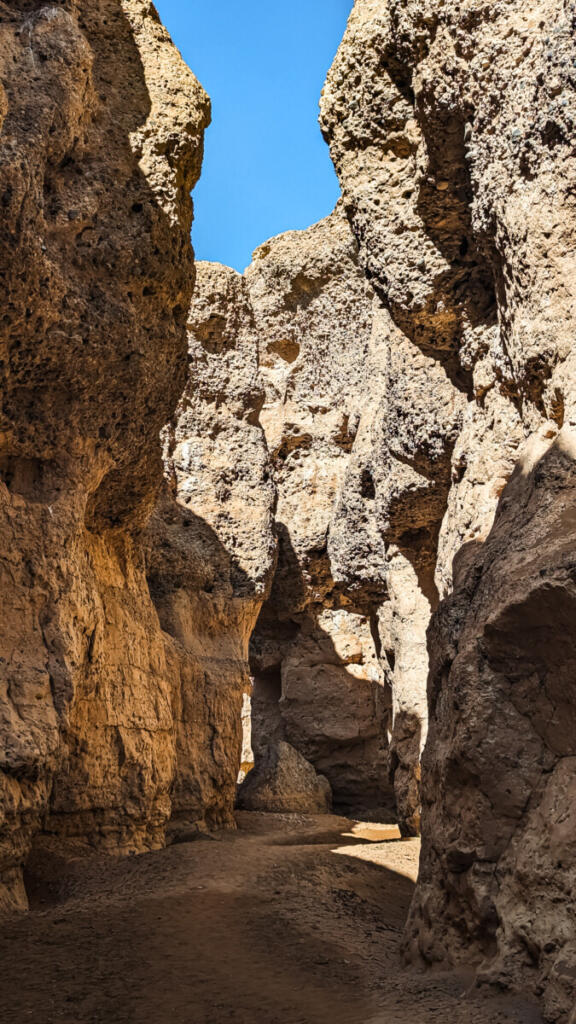
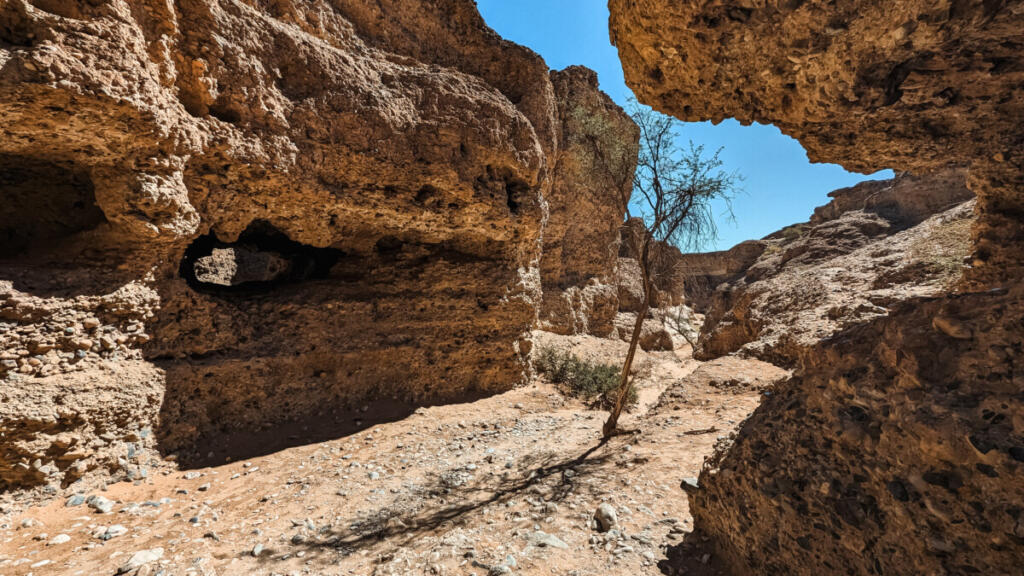
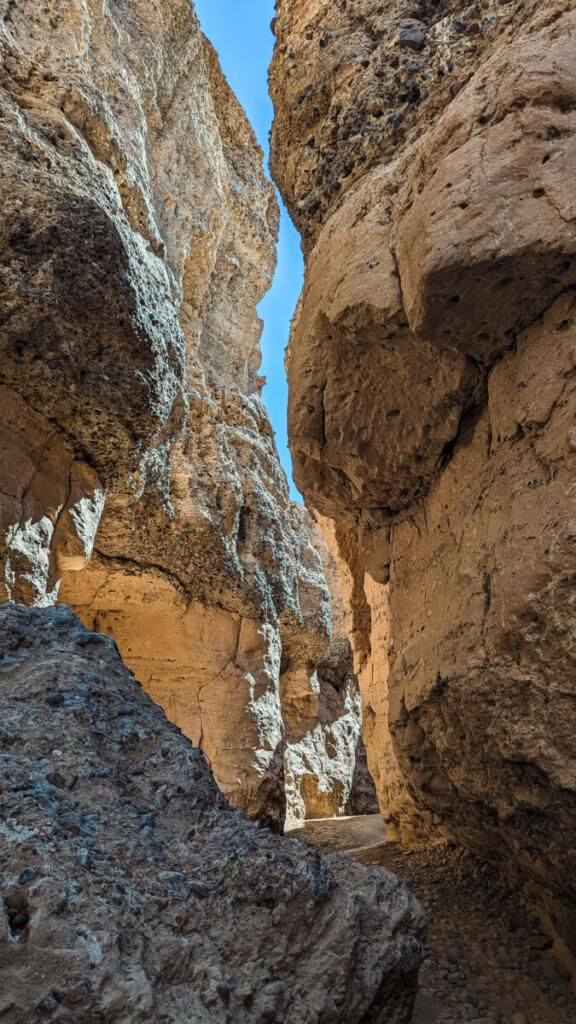
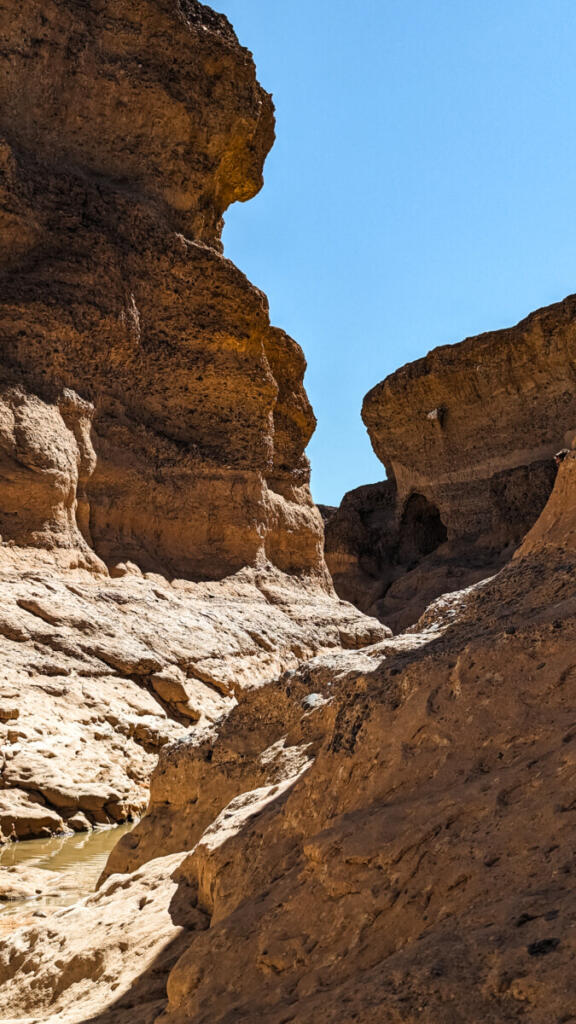
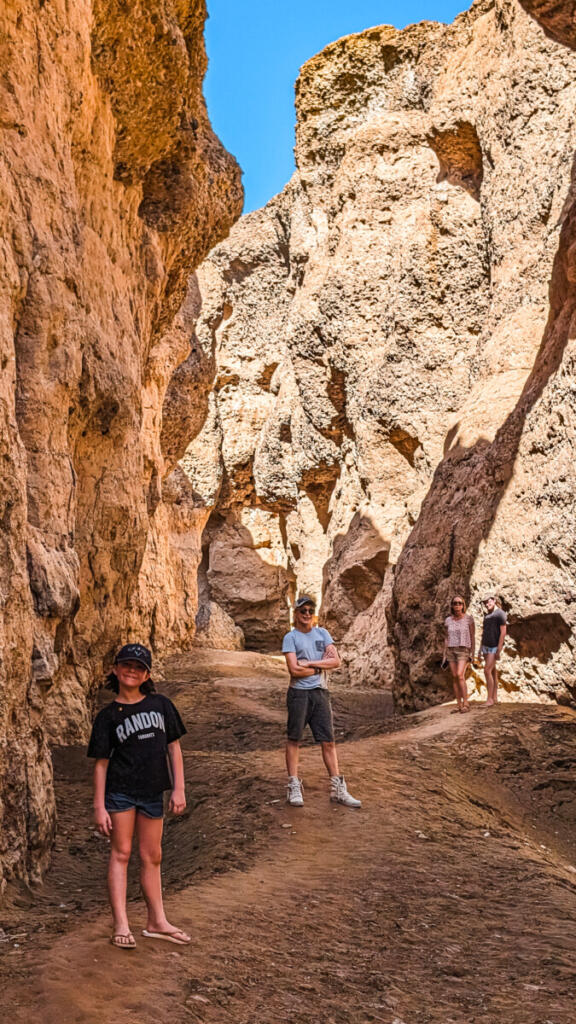
Access is included in the Namib-Naukluft Park entrance fee, paid in Sesriem, and therefore requires no additional ticket. Allow around 30 minutes to an hour for a leisurely discovery: it’s a short walk, accessible to all, offering a refreshing interlude and a striking contrast with the immensity of the surrounding plains.
Dune 45
It’s the most famous of all. Located
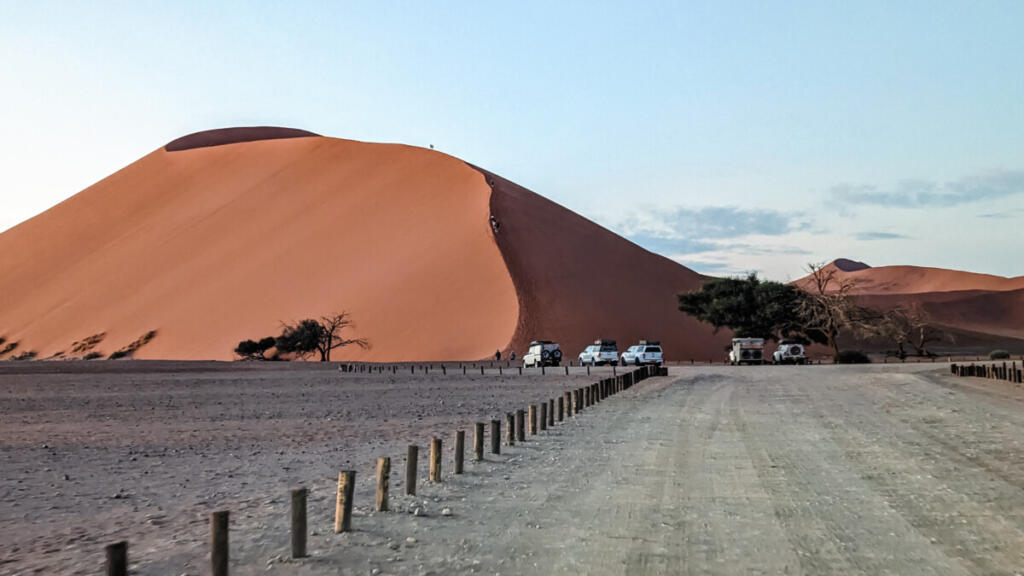
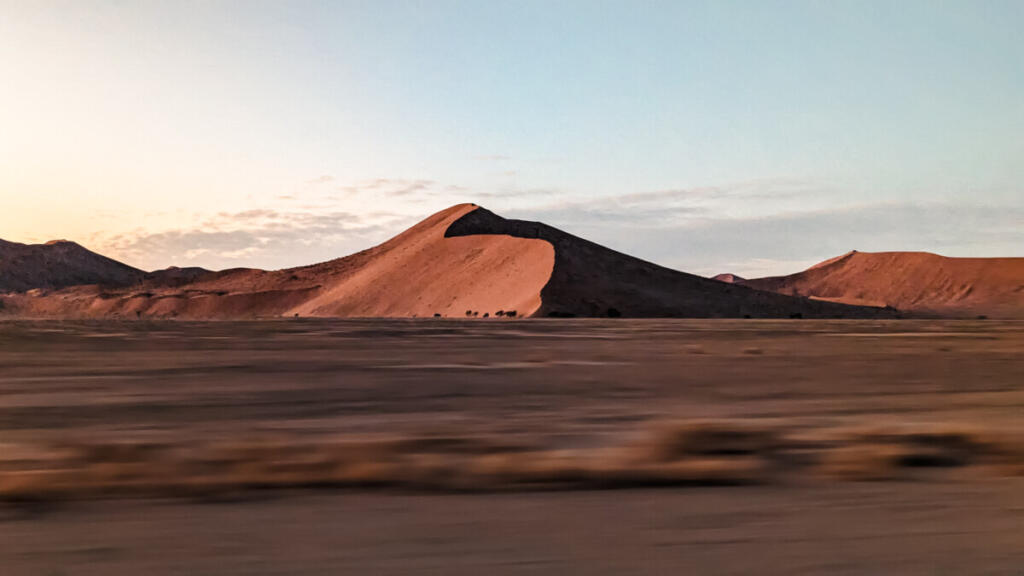
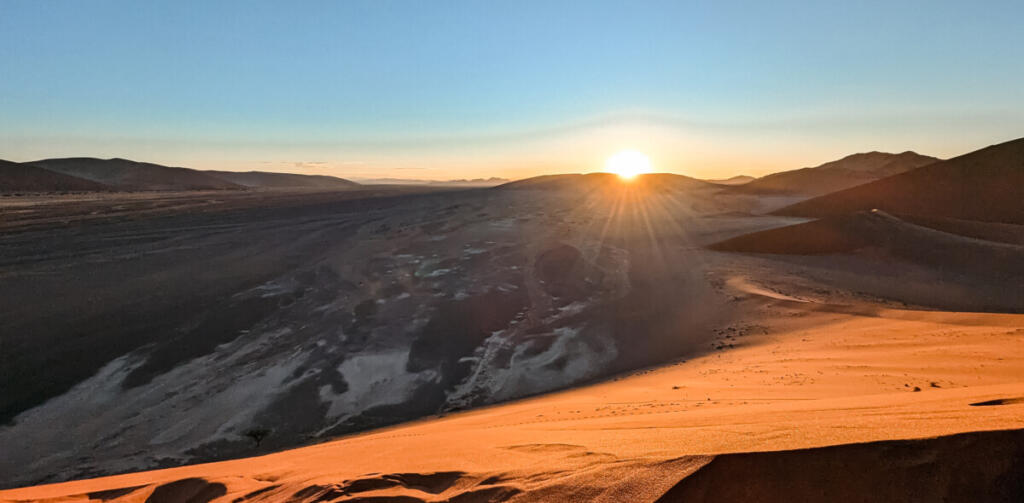
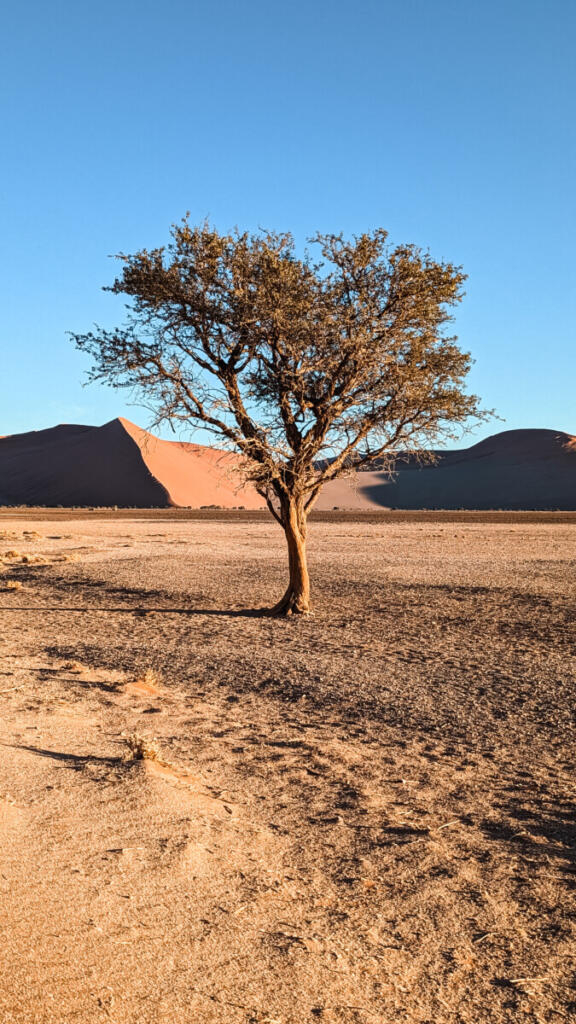
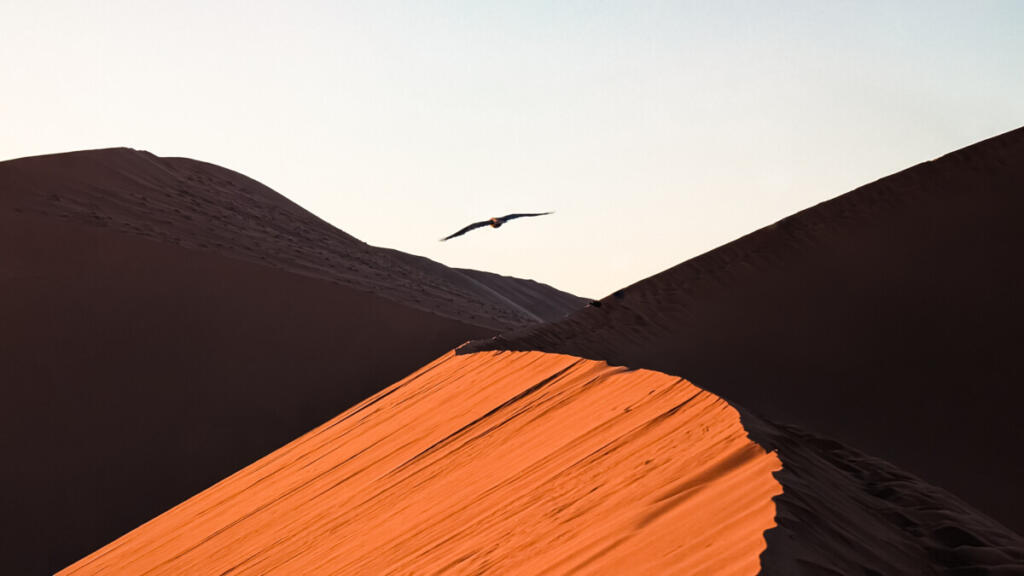
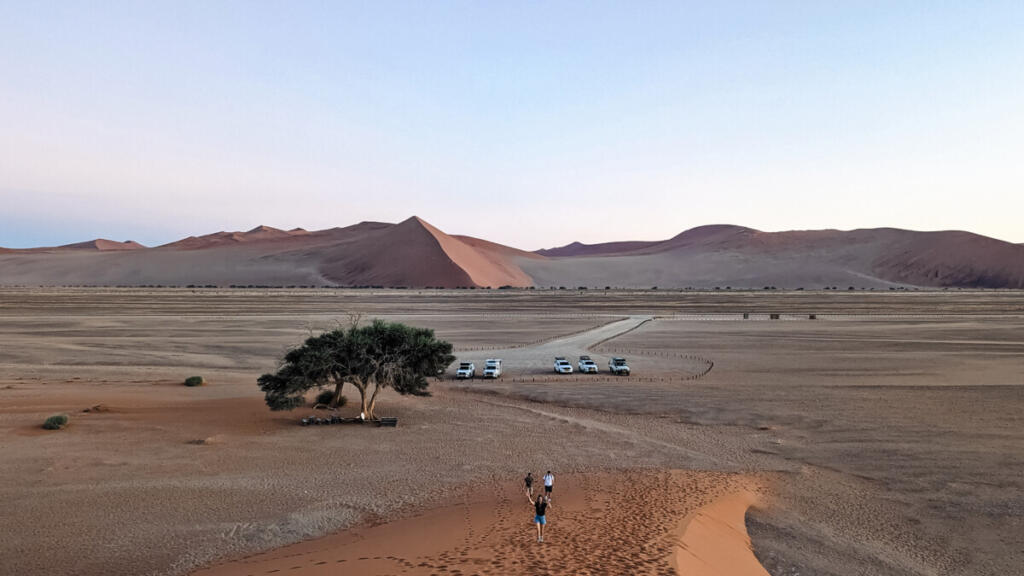
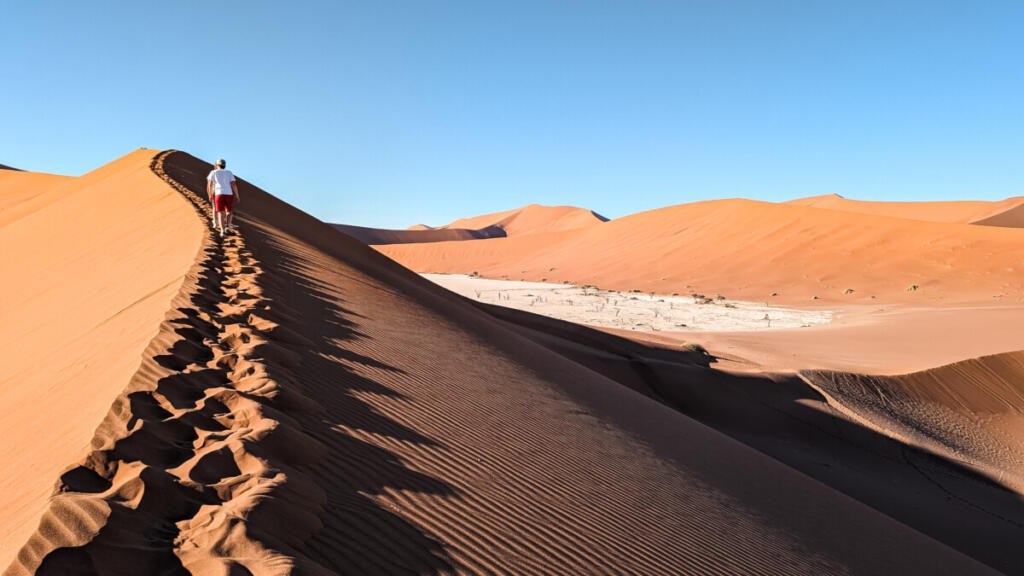
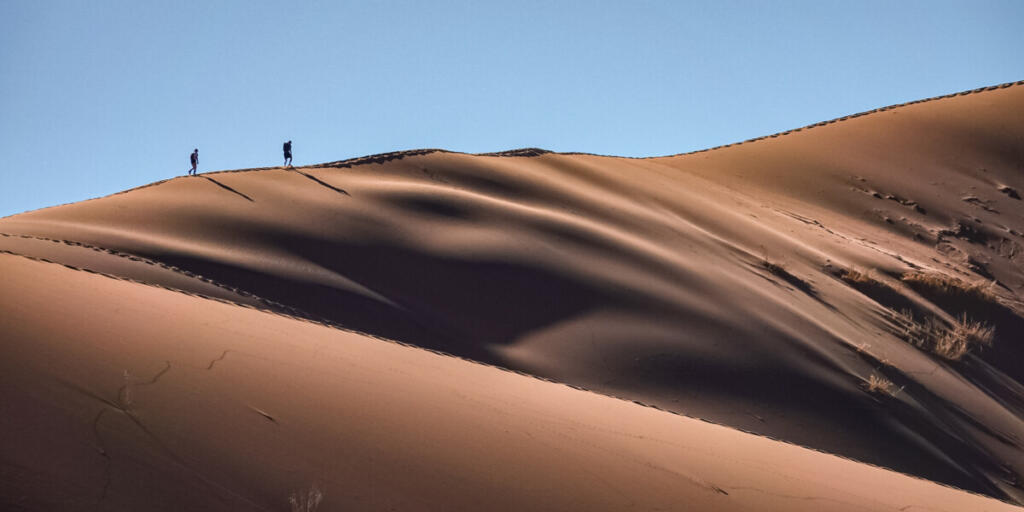
Dune 45 attracts travellers with its perfect silhouette, in the shape of an elegant ridge, and its glowing red sand, which changes hue with the passing hours. Unlike the more physically demanding Big Daddy, located at the end of the track to Deadvlei, its ascent is accessible to all. It takes around 20-30 minutes to reach the summit, with the sand making each step a little heavier, but the view over the surrounding plains and dunes more than rewards the effort.
Going there at sunrise is an unforgettable experience: the shadows stretch, the low-angled light makes the colors vibrate and the desert comes alive in an unreal atmosphere. It’s also a practical choice for those who don’t have much time in the park, or who want to enjoy an accessible ascent before continuing on to Sossusvlei and Deadvlei.
Big Daddy and Deadvlei
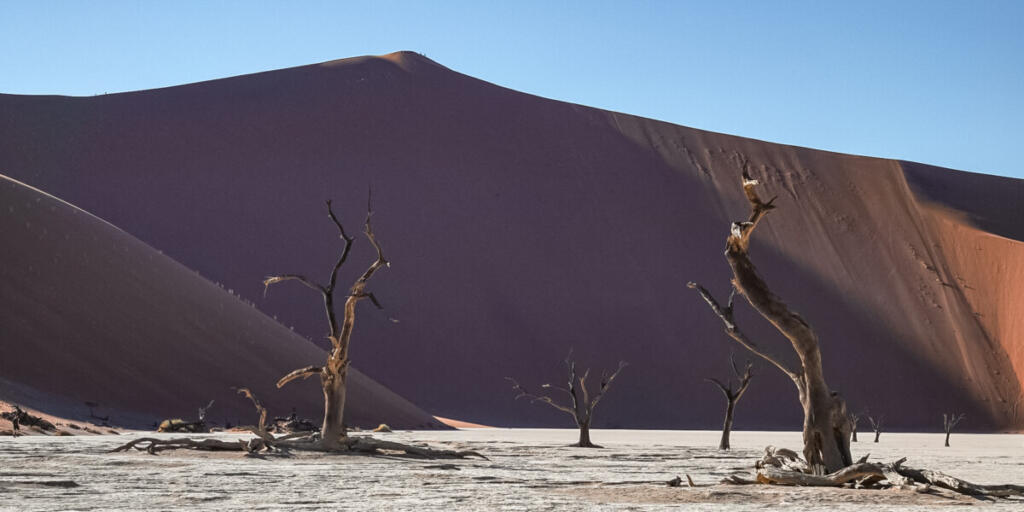
At 325 metres high, Big Daddyis one of the highest dunes in the world, and undoubtedly the most impressive in the Namib Desert. Located right on the edge of Deadvlei, it dominates the white clay basin where the dark silhouettes of acacia trees, dead for almost 900 years, still stand like sculptures in an unreal setting.
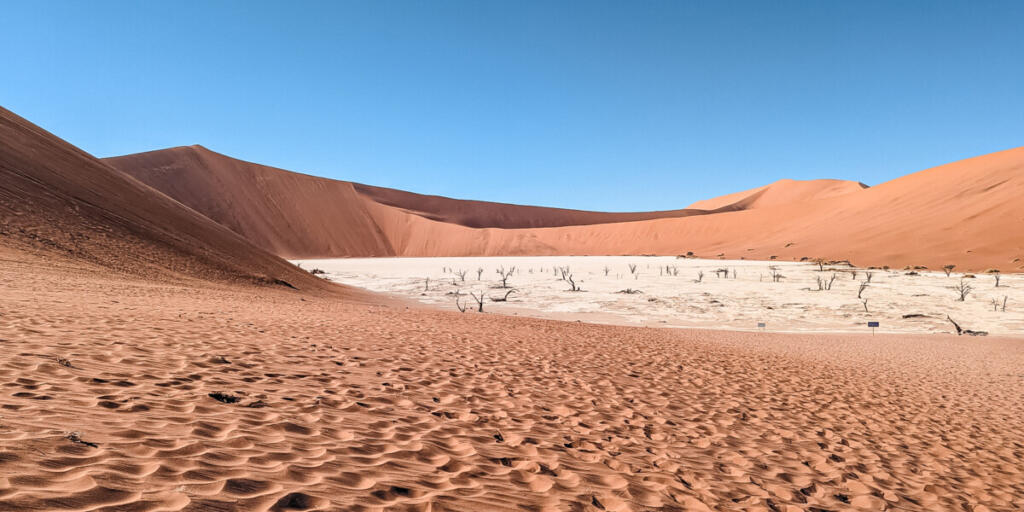
To reach it, drive to the Sossusvlei parking lot (accessible only by 4×4 or shuttle bus from Sesriem’s 2WD parking lot). From here, a path in the sand leads to the foot of the dune. The descent, fast and fun, can be made by running directly through the sand towards Deadvlei, an exhilarating experience after the effort of the climb.
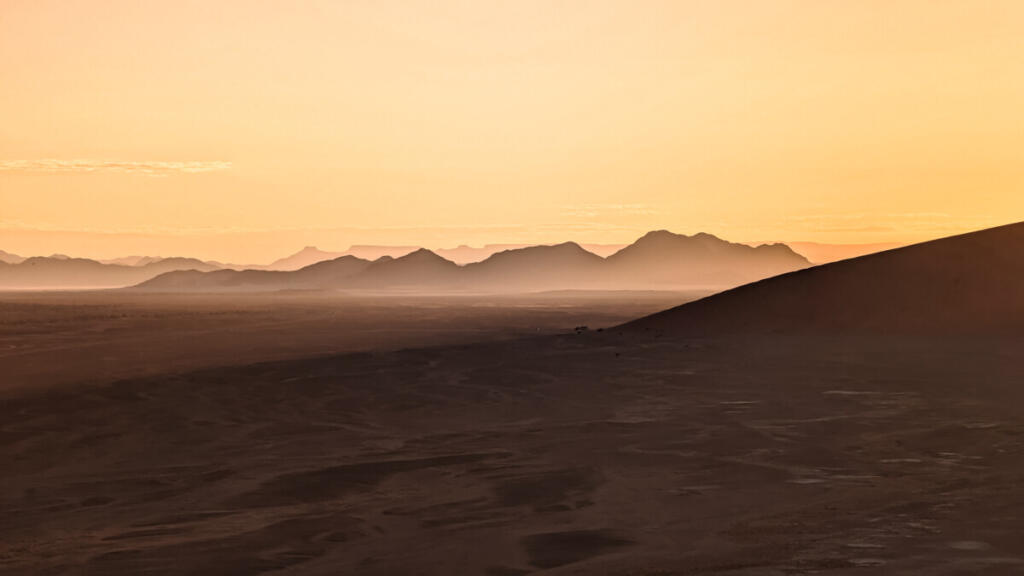
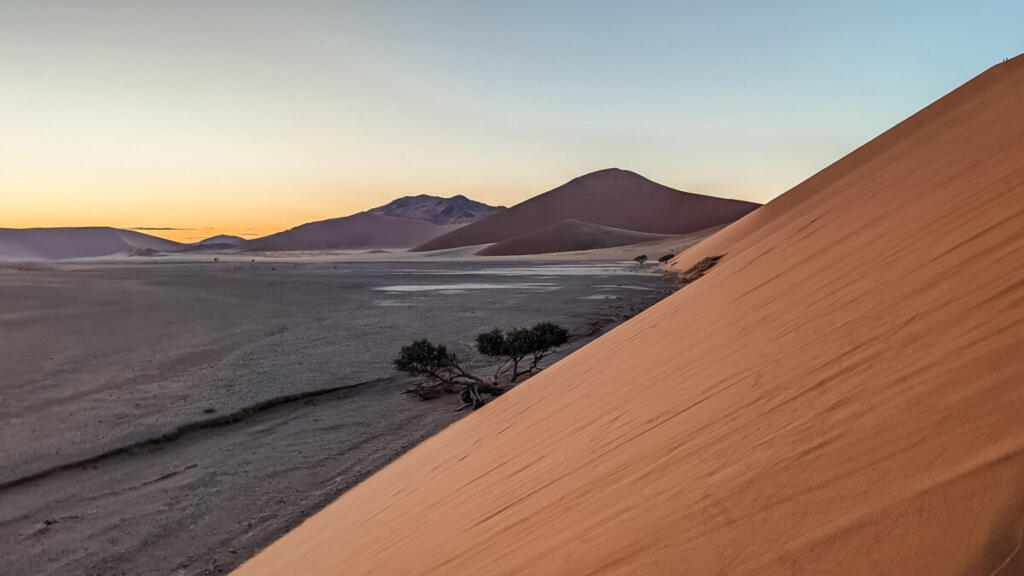
The ascent of Big Daddy is much more demanding than that of Dune 45. Depending on your pace, you’ll need to allow 1h to 1h30 for the climb, especially in the morning sun. But the effort is amply rewarded: once at the summit, the view over Deadvlei and the surrounding ocean of dunes is nothing short of spectacular.
An unforgettable experience in the Namib
Sossusvlei is much more than a stopover: it’s an immersion in the raw beauty of the desert. Between the changing colors of the dunes, the mineral silence of Deadvlei and the thousand-year-old history of Sesriem Canyon, travelers here enjoy one of Namibia’s most memorable experiences.