Damaraland, in north-western Namibia, is a region of contrasting landscapes and fascinating history. A former autonomous Bantustan, its unique geography combines arid plains, granite mountains, petrified forests and volcanic formations. The region is also rich in cultural heritage, with thousand-year-old rock engravings and Damara communities still living according to ancestral traditions.
Damaraland in a nutshell
Located in north-western Namibia, Damaraland is a wild and fascinating region, where the landscape tells the ancient story of the land and its people. Between 1980 and 1989, it was an autonomous Bantustan in what is now South-West Africa, then under South African administration. This territory was home to Africans of the Damara ethnic group, whose official language was Nama. The region’s very name means “land of the Damaras”.
Today, Damaraland is an exceptional tourist region, covering almost 48,000 km² and home to such iconic sites as the Brandberg massif, the Petrified Forest, Twyfelfontein and Spitzkoppe. Its relief is marked by arid plains and savannahs punctuated by granite mountains, the remains of ancient volcanoes, while the highest point, Königstein, rises to 2,573 meters in the Brandberg massif.
Rock paintings, vestiges of ancient communities, add a cultural dimension to this raw and spectacular nature. Every valley, every rock formation seems to tell the story of millions of years of history, offering travellers breathtaking panoramas and a total immersion in authentic Namibia.
How to get to Damaraland
There are several routes to Damaraland:
From Windhoek: approx. 6-8 hours’ drive through Namibia’s central plateau, with its semi-arid landscapes and savannahs.
From Etosha: a longer drive (8-9 hours), with a fascinating transition from the verdant north to the arid expanses of Damaraland.
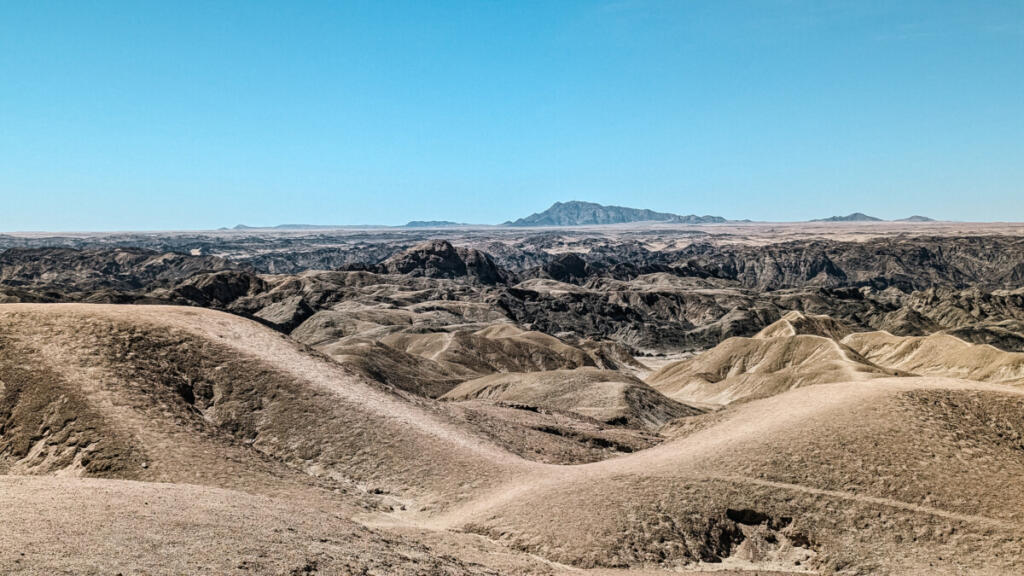
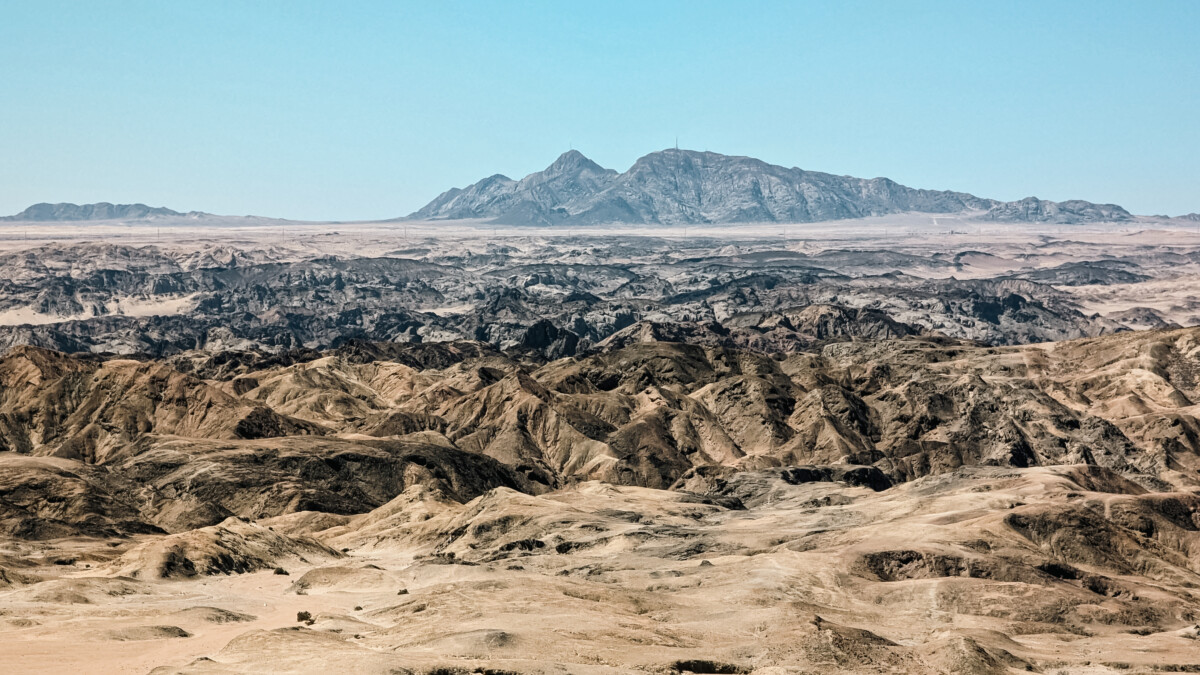
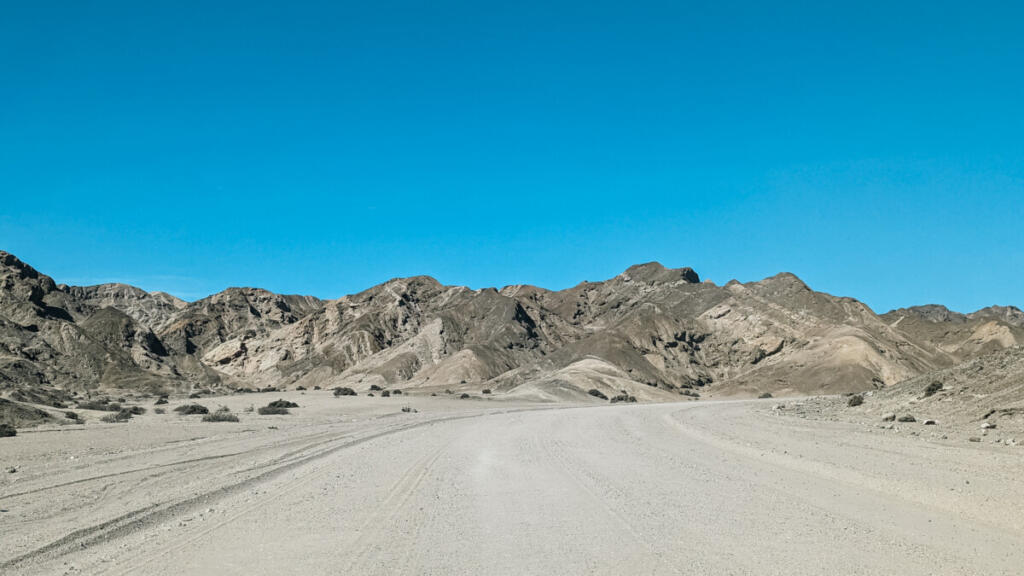
From the coast (Walvis Bay or Swakopmund): the route passes through the famous Moon Landscape, a lunar geological formation that precedes the arrival in the region. It’s a spectacular route, between canyons, desert plains and rock formations, ideal for unique photos and a few stops to admire this fascinating geology.
What to see and do in Damaraland?
Damaraland is a mosaic of landscapes and experiences. Between wind-sculpted mountains, petrified forests and traces of early civilizations, there’s as much to discover as there is to admire. Here are the must-sees to make the most of this unique region:
Spitzkoppe: the Matterhorn of the Namib
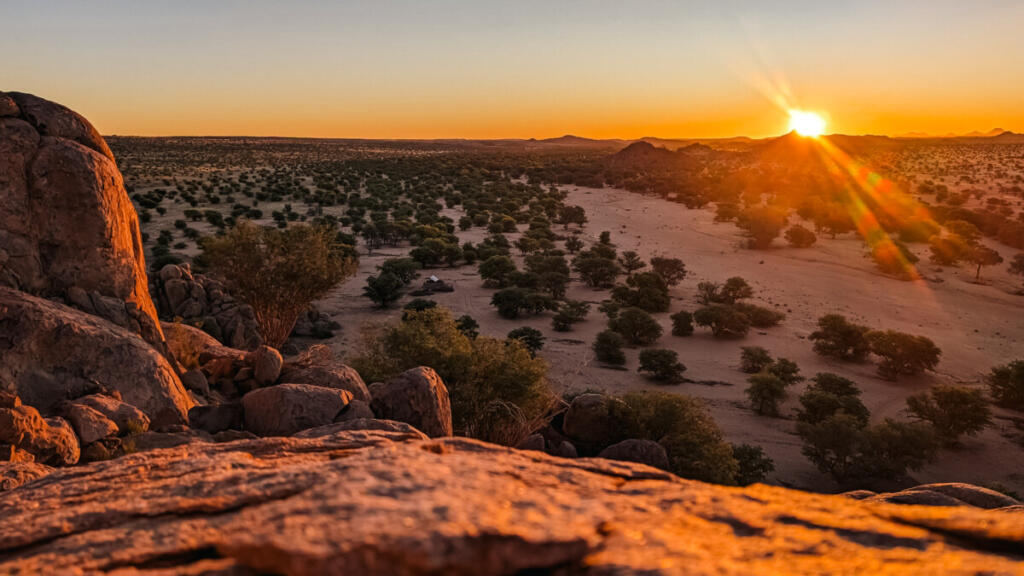
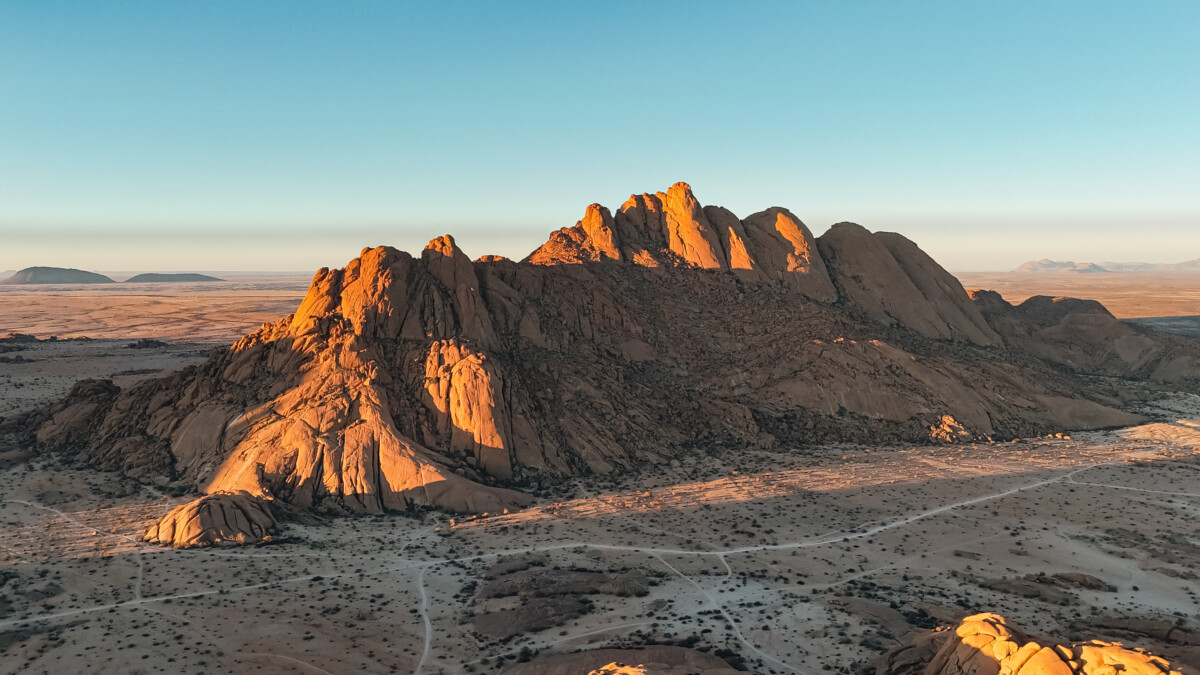
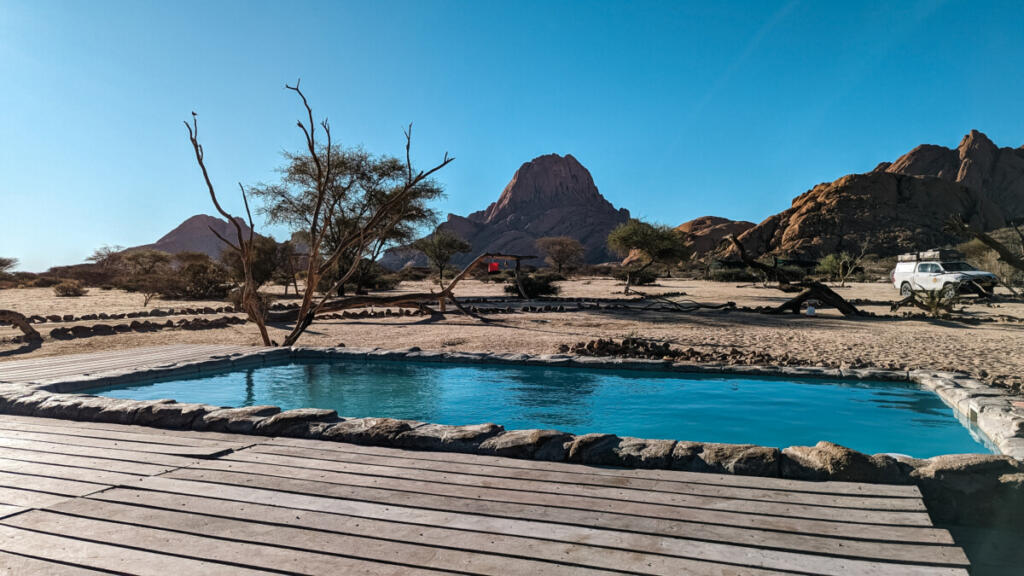
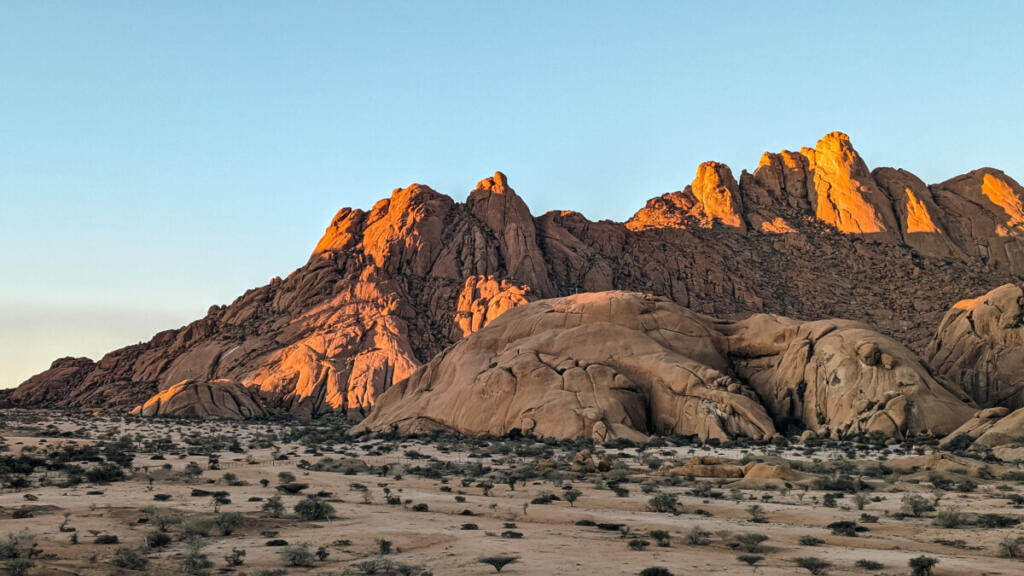
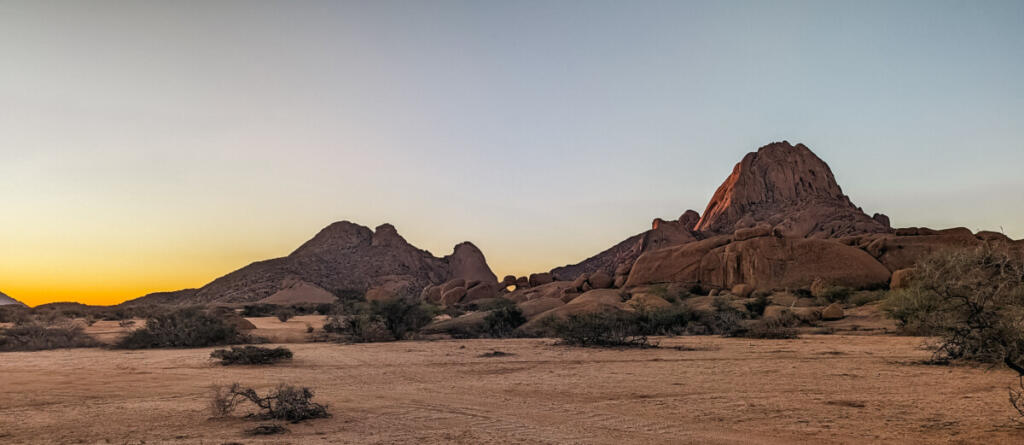
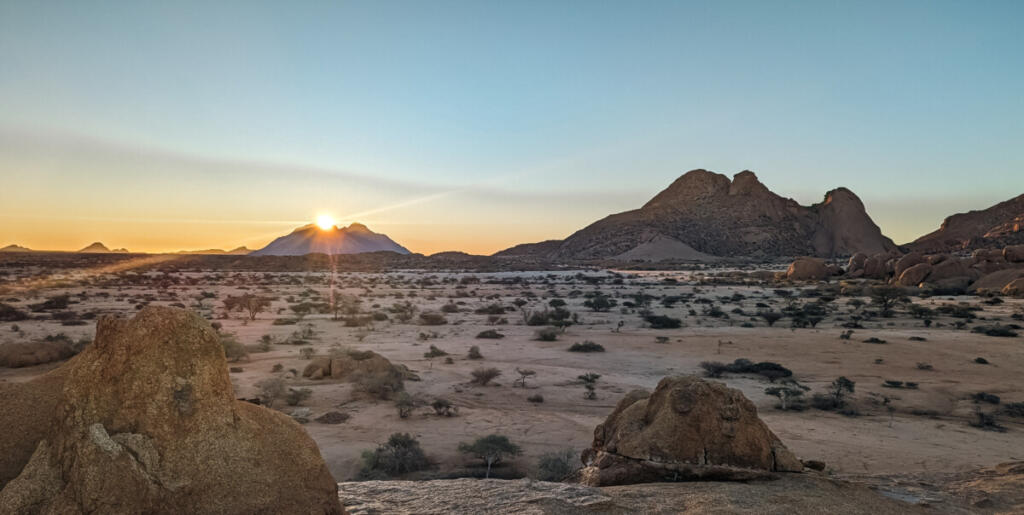
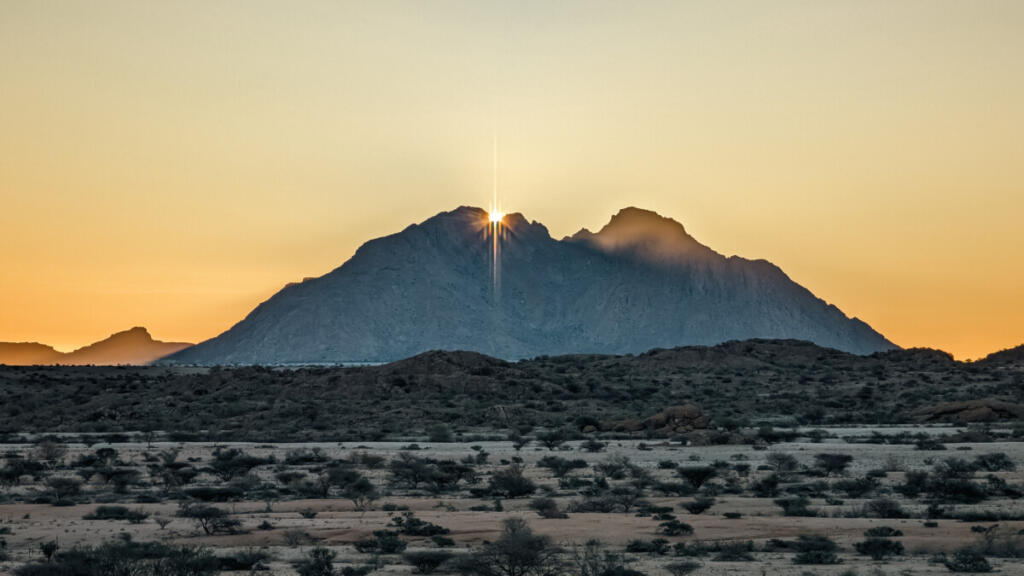
Immense granite formations rise abruptly from the arid plains of Damaraland. Nicknamed the “Matterhorn of the Namib”, Spitzkoppe dominates the valley from a height of 1,728 metres and is one of the country’s most emblematic landscapes. Leaving the B2 road to take the gravel track, you first see a few isolated dwellings before the mountain appears in the distance, standing out above the dusty plains.
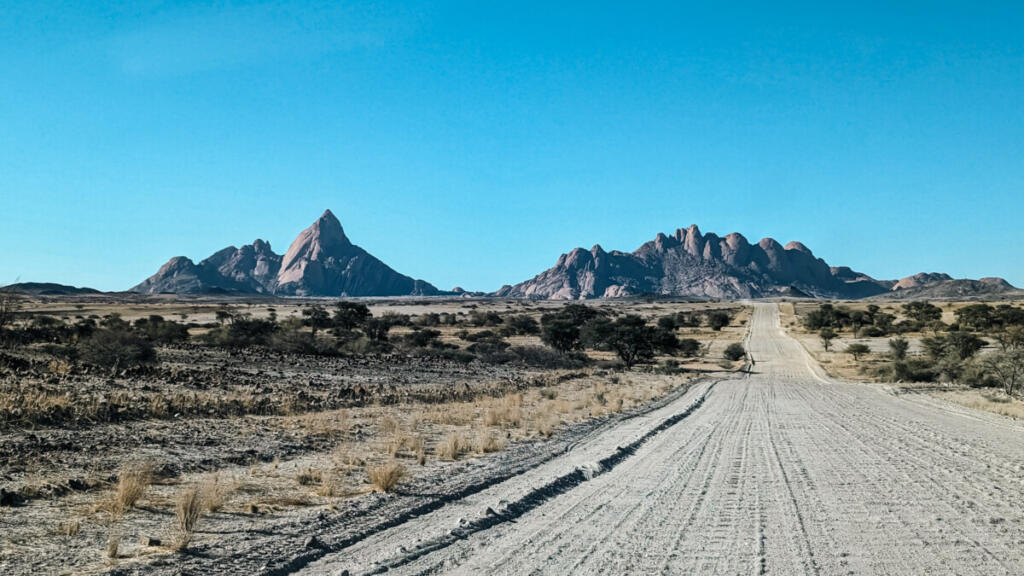
The massif is actually a collection of three formations: the Big Spitzkoppe, the surrounding granite domes of the Pontok Mountains, and the Little Spitzkoppe further south. First climbed in 1946, the mountain continues to attract the most experienced mountaineers, fascinated by its sheer walls and tapering ridges.
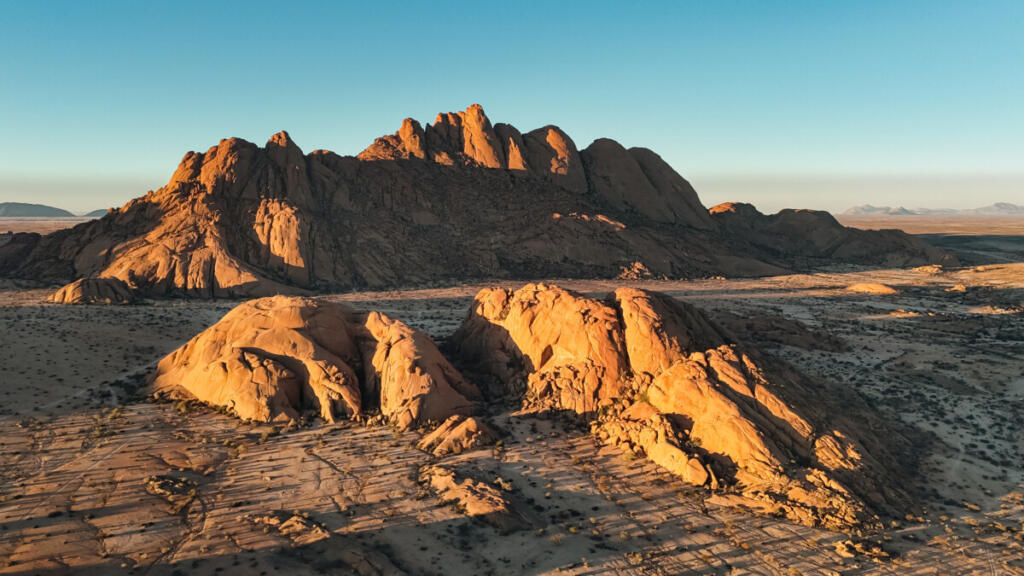
These giants of stone are impressive not only for their size, but also for their geological history: the Spitzkoppe, along with the Brandberg and the Erongo massif, is the result of 240 million years of volcanic activity, which contributed to the break-up of the supercontinent Gondwana and the formation of Africa and South America.
The site was also occupied by the ancestors of the San, who left several rock art sites, such as Bushman Paradise and Small Bushman Paradise. These engravings bear witness to the life and beliefs of the first inhabitants, even if some have been damaged by visitors or the passage of time.
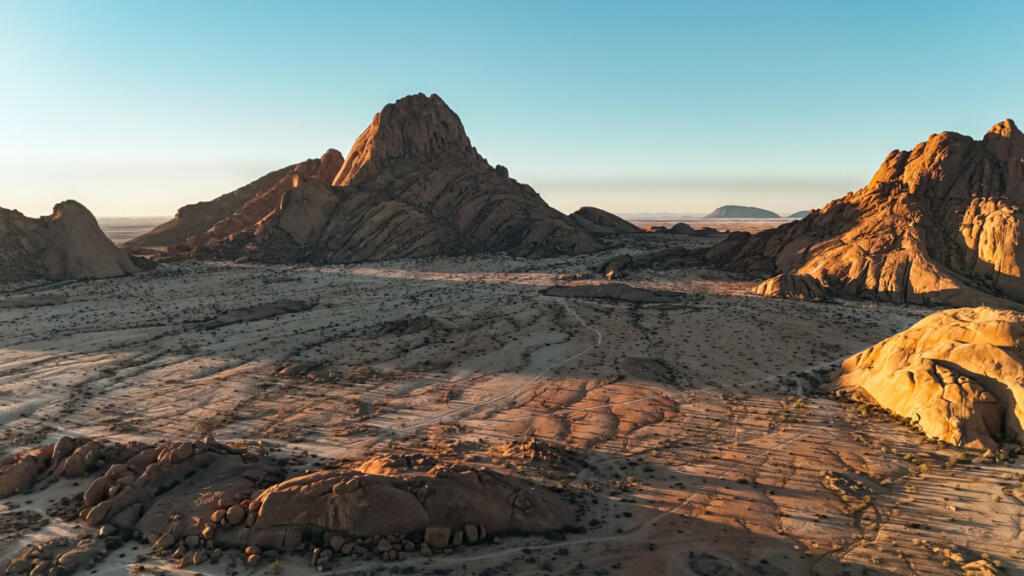
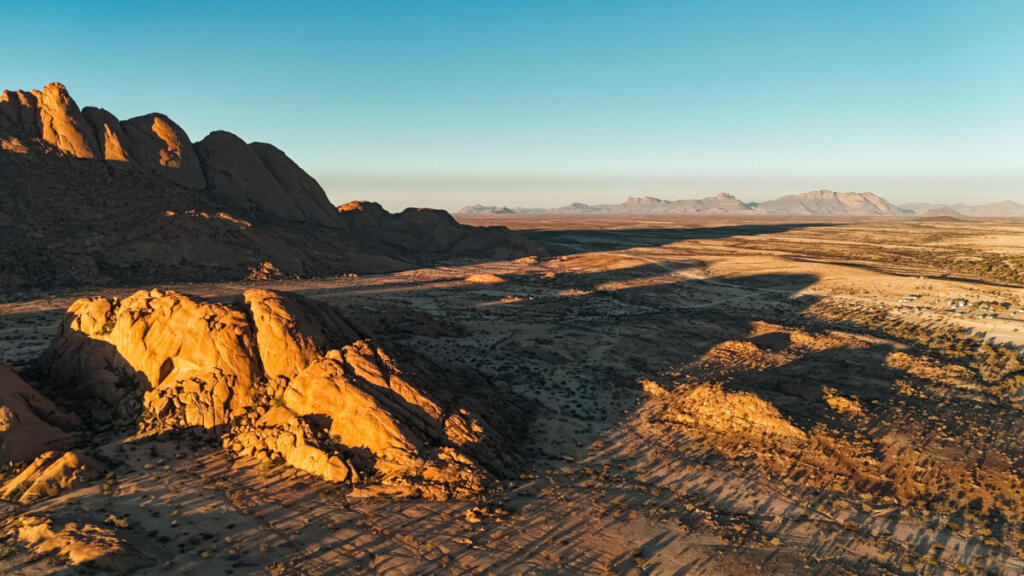
Spending the night camping at the foot of the rocks offers a unique experience: sunrise and sunset transform the granite into golden and pink hues, and the pure desert air gives a rare feeling of disconnection.
Twyfelfontein rock paintings
Listed as a UNESCO World Heritage Site, Twyfelfontein is one of Africa’s richest rock engravings. Located in the Huab Valley, the 57-hectare site features hundreds of engravings of giraffes, elephants, rhinoceroses, wildebeests and sea lions.
These works, created thousands of years ago by hunter-gatherer communities, bear witness to rituals, economic practices and a close relationship with the region’s natural water sources.
The Montagne Brûlée and the Tuyaux d’Orgues
Just a few kilometers from Twyfelfontein,Burnt Mountain stands out for its intense dark color, the remnant of a lava flow solidified some 200 million years ago. Shades of red and black change with the light, and sunset transforms the valley into an almost unreal setting. The peaceful, secluded setting is perfect for a short hike and for observing the magic of the colors on the rock.
Not far away, theOrgan Pipes offer an equally fascinating spectacle: a wall of basaltic columns resulting from thousands of years of erosion of volcanic dolerite. These “natural organs” are almost 10 metres high, and reveal the power of the geological forces that have sculpted Damaraland.
The petrified forest
A vestige of the distant past, the petrified forest of Damaraland is a timeless place. The tree trunks, transformed into stone by a long silicification process, date back millions of years. Some are covered with quartz crystals, which capture the light and add an almost magical dimension to the site.
This forest is also home to the Welwitschia, Namibia’s emblematic endemic plant. With its very short trunk and long leaves that extend right to the ground, it can live for several centuries, symbolizing nature’s resilience in extreme conditions. Visits can only be made with a guide, to ensure the safety and preservation of this natural treasure.
Brandberg and the King of the Mountains
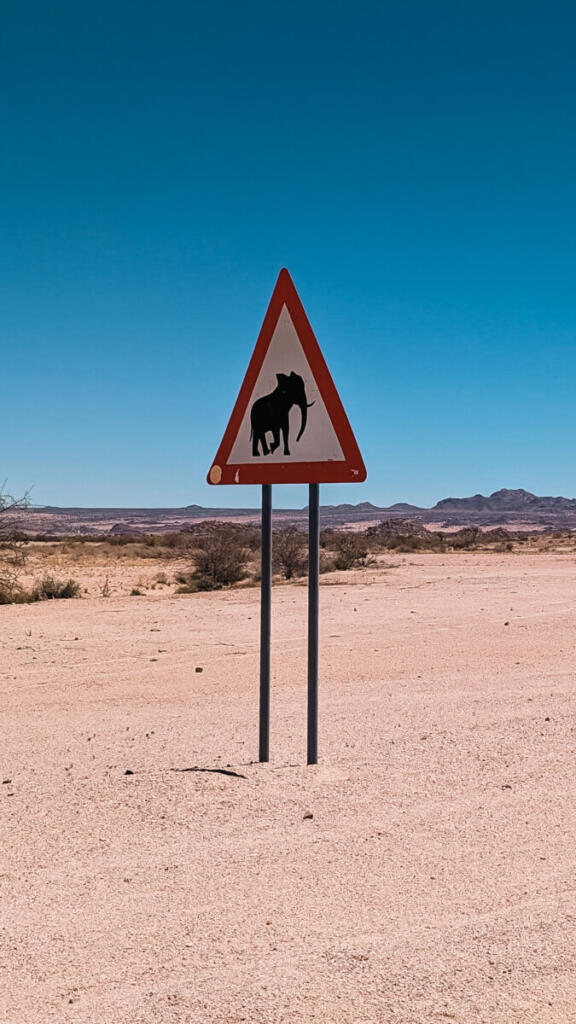
At 2,573 metres, the Brandberg massif is the highest in Namibia. In addition to its geological beauty, it is renowned for its rock paintings, including the famous “White Lady” frieze. The site is ideal for hikers and photographers, offering spectacular views of the region and the desert elephants that live there.
Safari in Damaraland: desert elephants and black rhinos
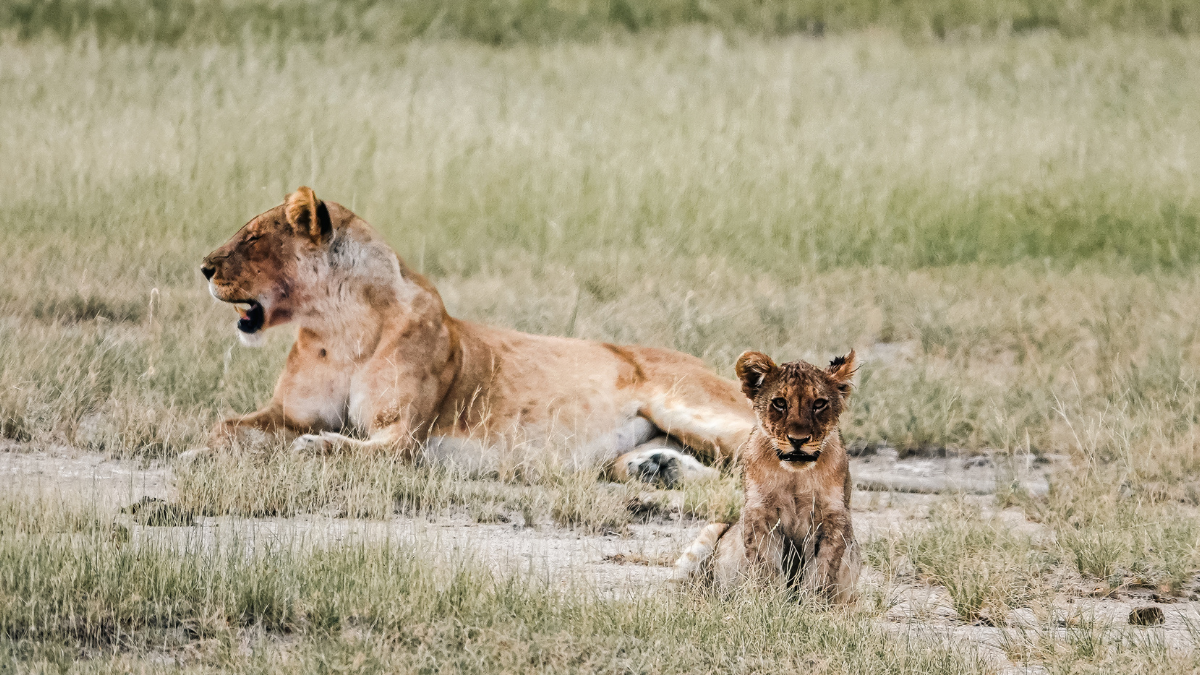
Damaraland is also a sanctuary for wildlife. Among the most emblematic,
It’s also one of the best places to spot black rhinos, an endangered species protected through conservation programs like those at Palmwag Lodge. Although access to the concession can be made by personal vehicle, a guide greatly increases the chances of observing these fascinating animals and understanding their behavior.
Where to stay in Damaraland?
Damaraland offers a unique accommodation experience, where you find yourself in harmony with the wilderness and spectacular scenery. Two types of experience in particular stand out:
Camping at the foot of Spitzkoppe
Setting up a tent at the foot of the immense Spitzkoppe rocks is a magical experience. In the evening, the granite giants light up under the last rays of the sun, and at night, the starry sky envelops the desert in a silent, almost mystical atmosphere. In the morning, sunrise transforms the granite into golden and pink hues, providing a spectacular wake-up call before a day of exploration. This type of accommodation allows you to experience the desert to the full, as close as possible to the landscapes and tranquility of the region.
Glamping and eco-friendly lodges
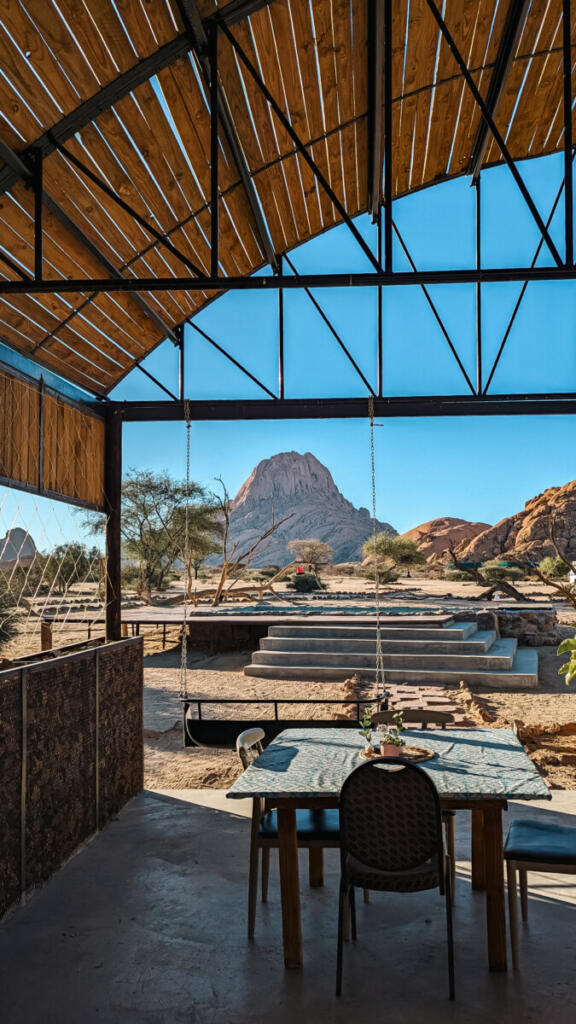
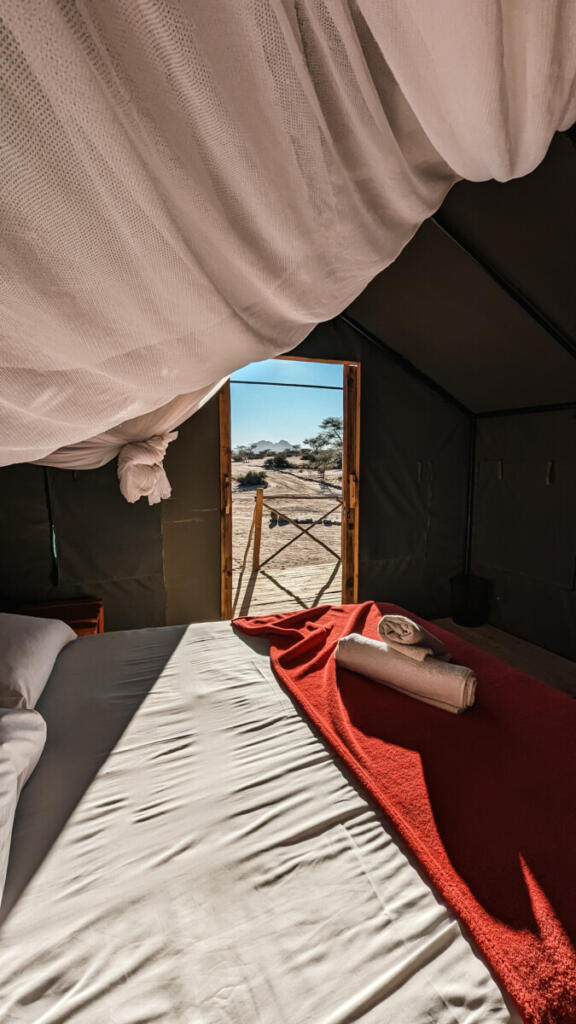
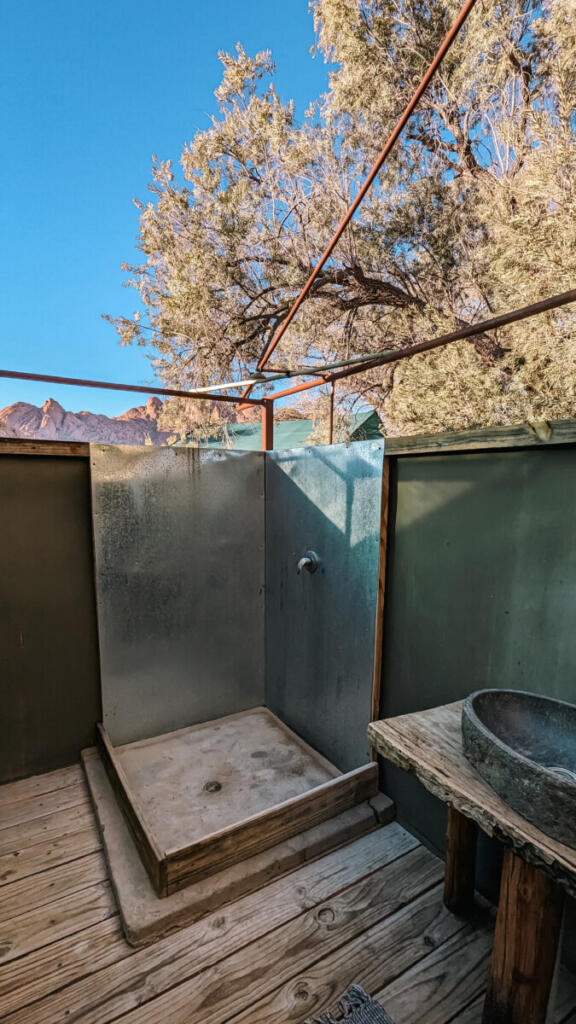
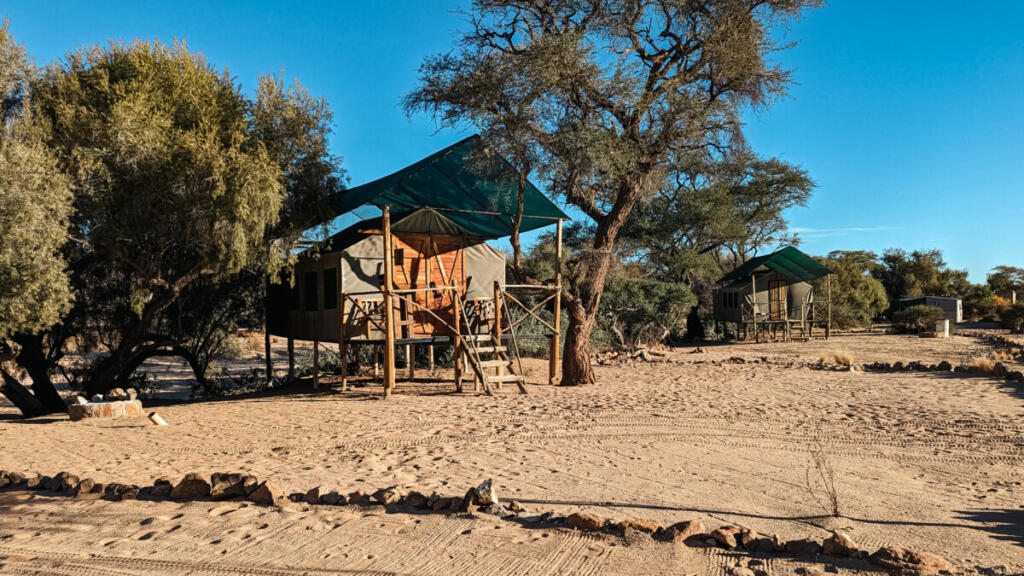
For those who want more comfort without forgoing immersion in nature, glamping lodges and camps such as Madisa offer a unique experience. Nestled in the heart of arid landscapes, surrounded by rock formations and Mopane Trees, these accommodations allow you to observe the local wildlife – desert elephants, antelopes and birds – directly from the camp. In the evening, sharing an aperitif in front of the sunset or gathering around a fire under a starry sky remains an unforgettable moment, while enjoying the comfort of a spacious tent or fully-equipped room.
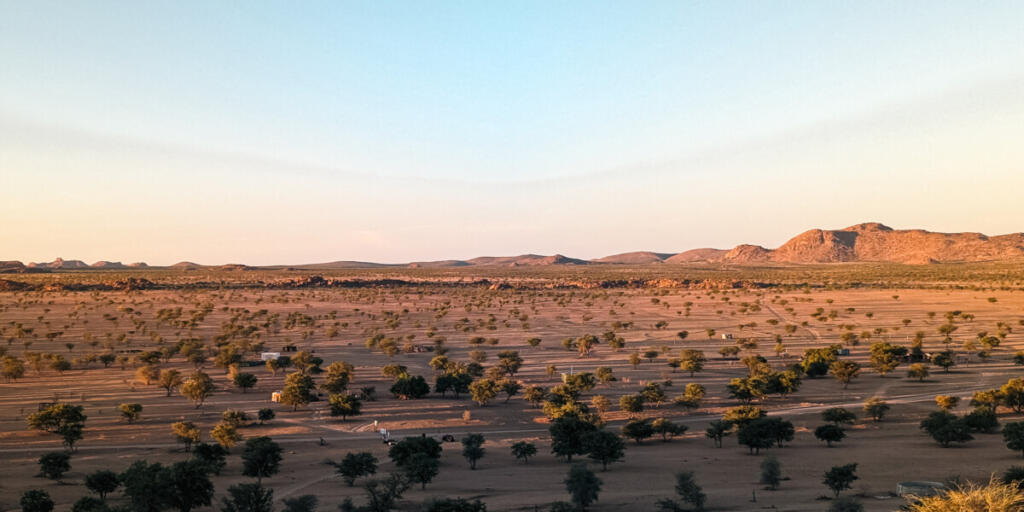
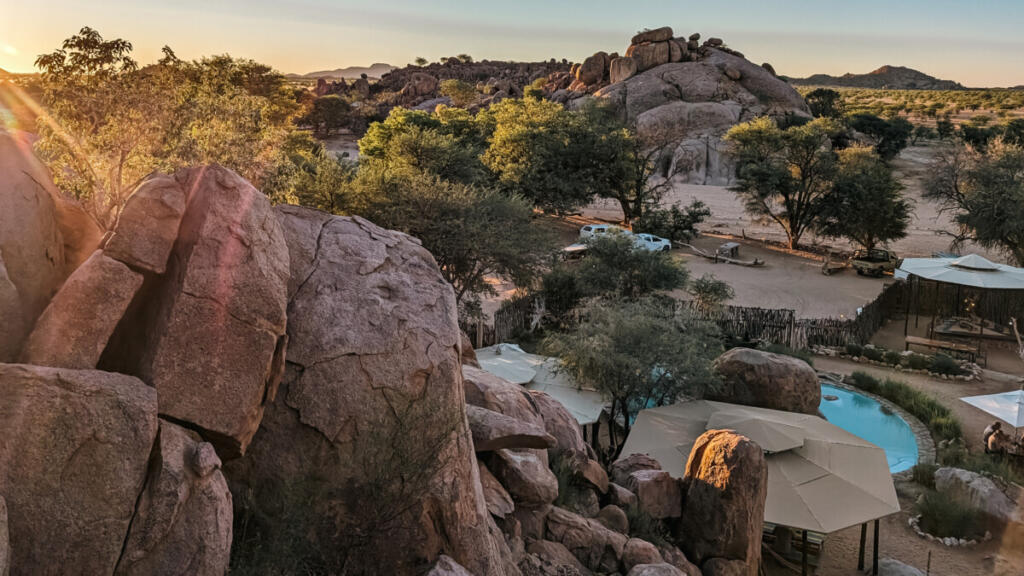
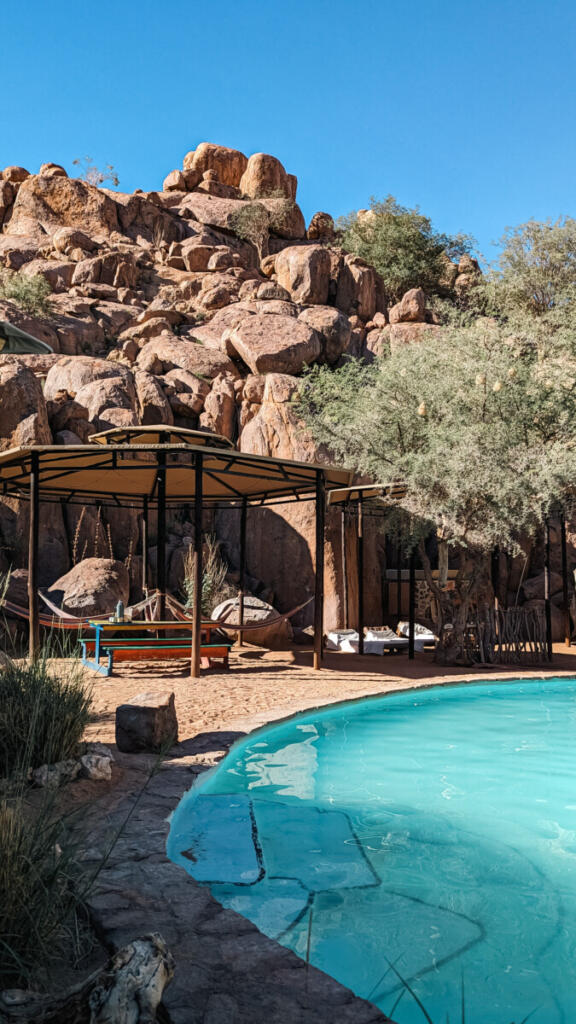
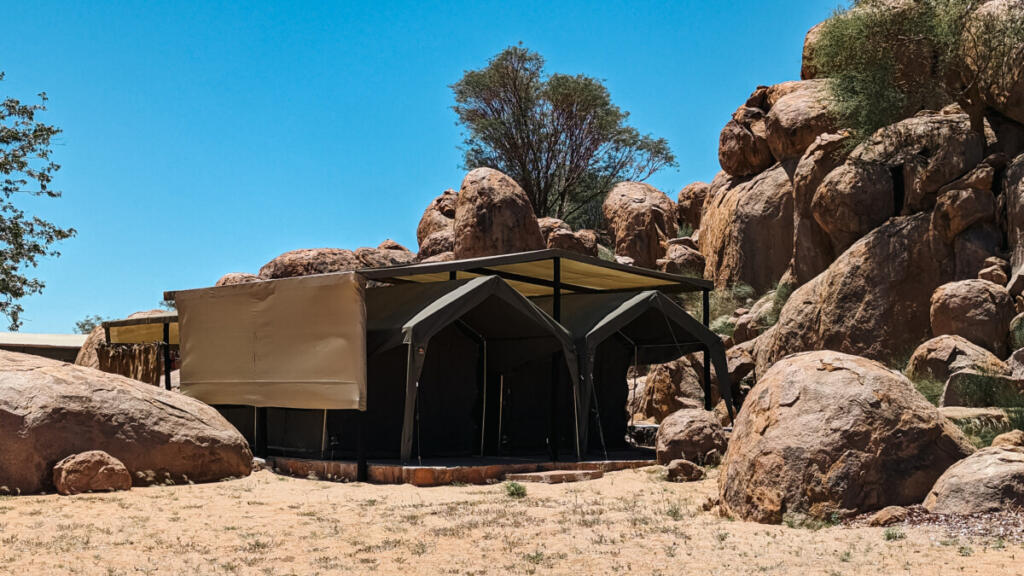
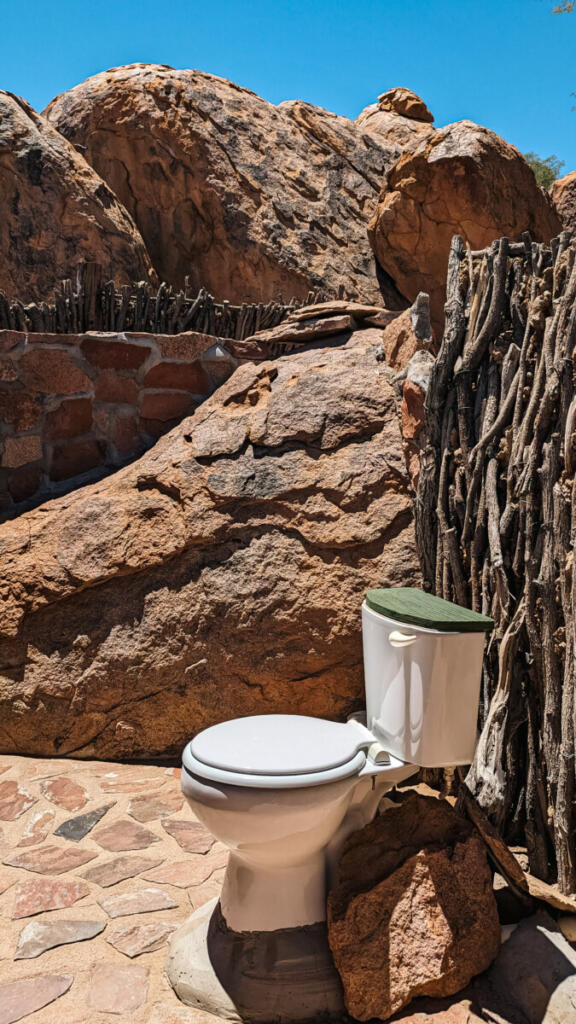
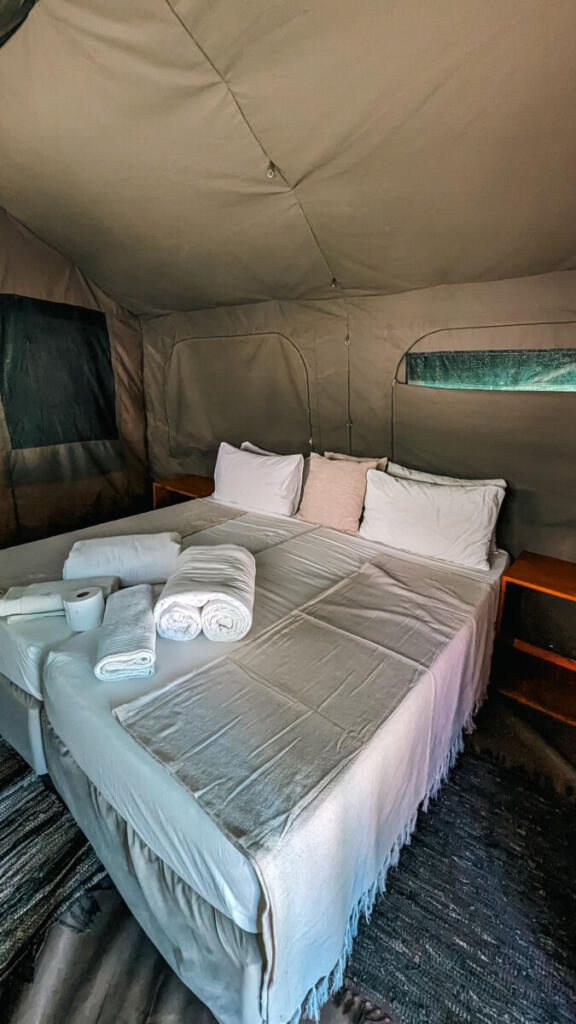
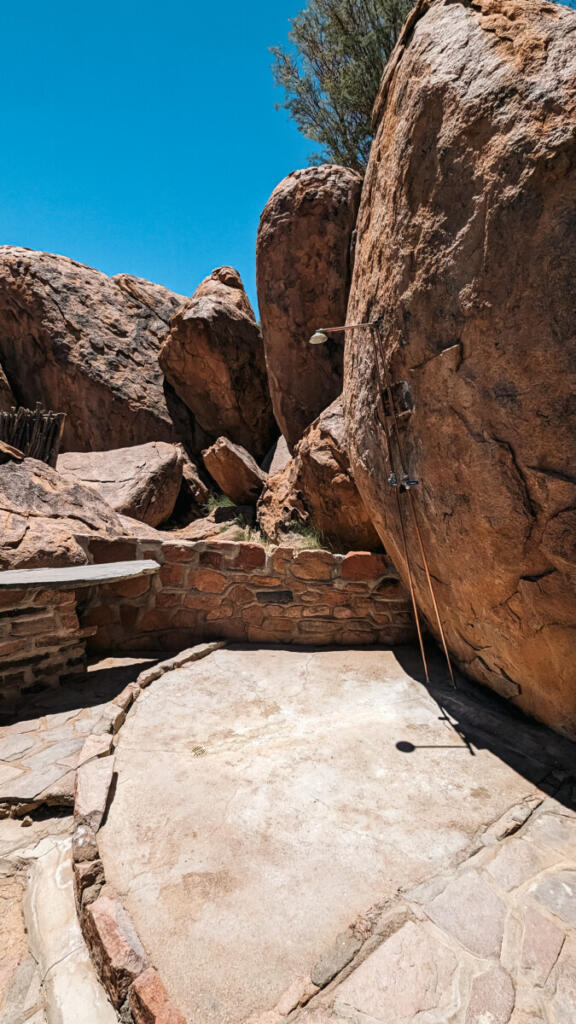
Between these two options, Damaraland offers a wide variety of places to stay, from simple campsites to intimate, eco-friendly lodges. The key factor is proximity to exceptional landscapes and the chance to reconnect with nature in an unspoilt, authentic setting.