There are ways to travel that give you a new lease on life. Sailing the Nile aboard a dahabieh is one of them. Far from the hustle and bustle of big cities and rushed tours, this traditional sailing boat offers a calmer, almost suspended rhythm. Between Luxor and Aswan, the river becomes a golden thread linking forgotten temples to the simplest scenes of life, in an intimate, warm and always lively Egypt. Follow us along the river to discover a different kind of travel, between silent observation and privileged visits.
Sommaire de l'article
The Nile in slow motion: taking the time to travel on a dahabieh
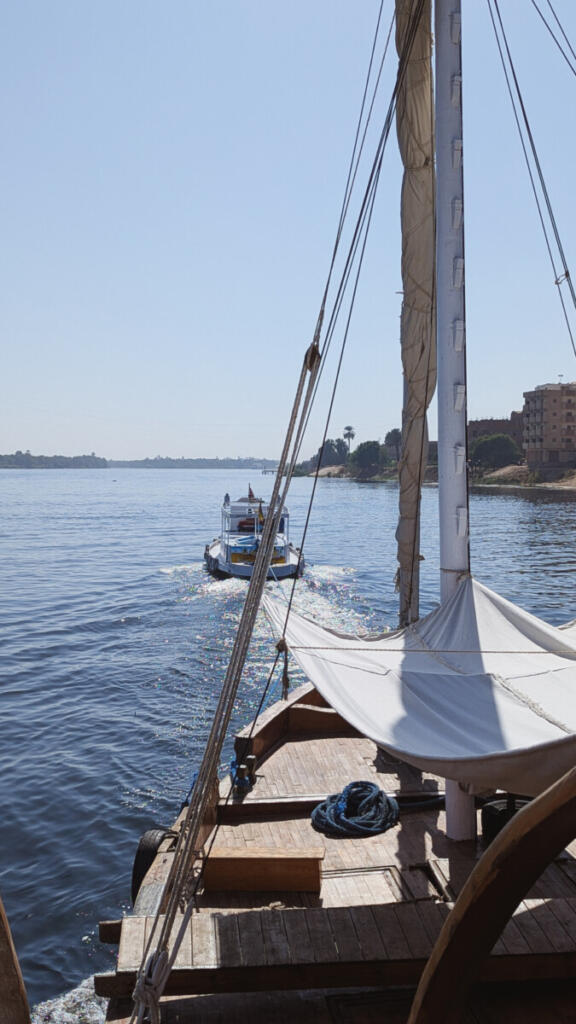
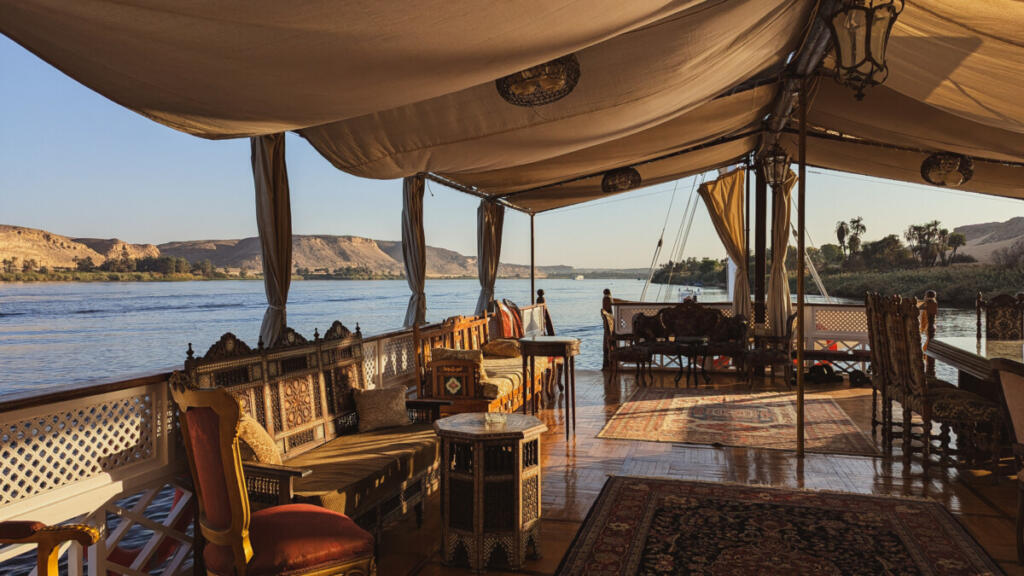
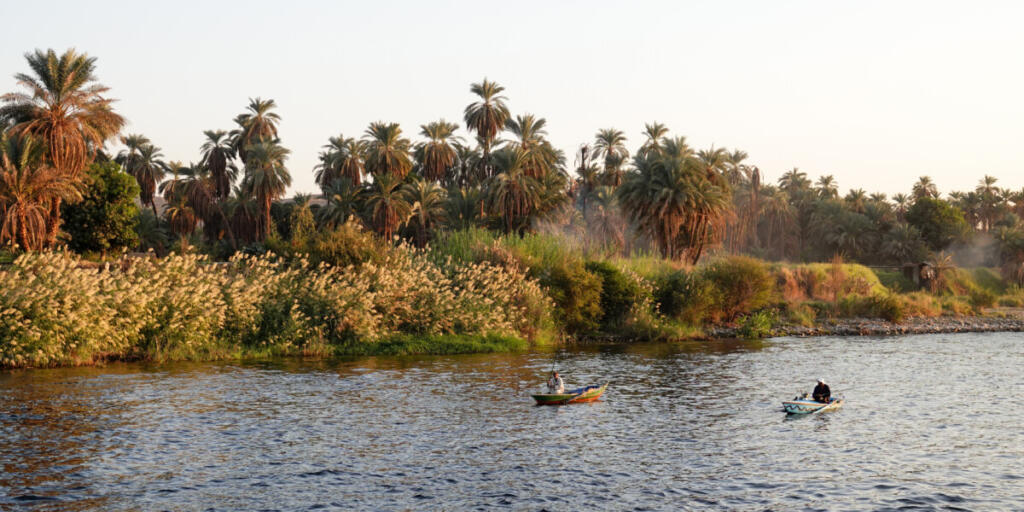
Against the tide of modern frenzy, sailing on a dahabieh means choosing to slow down. On deck, you can soak up the silence, punctuated by the lapping of the water and the rustle of the white sails.
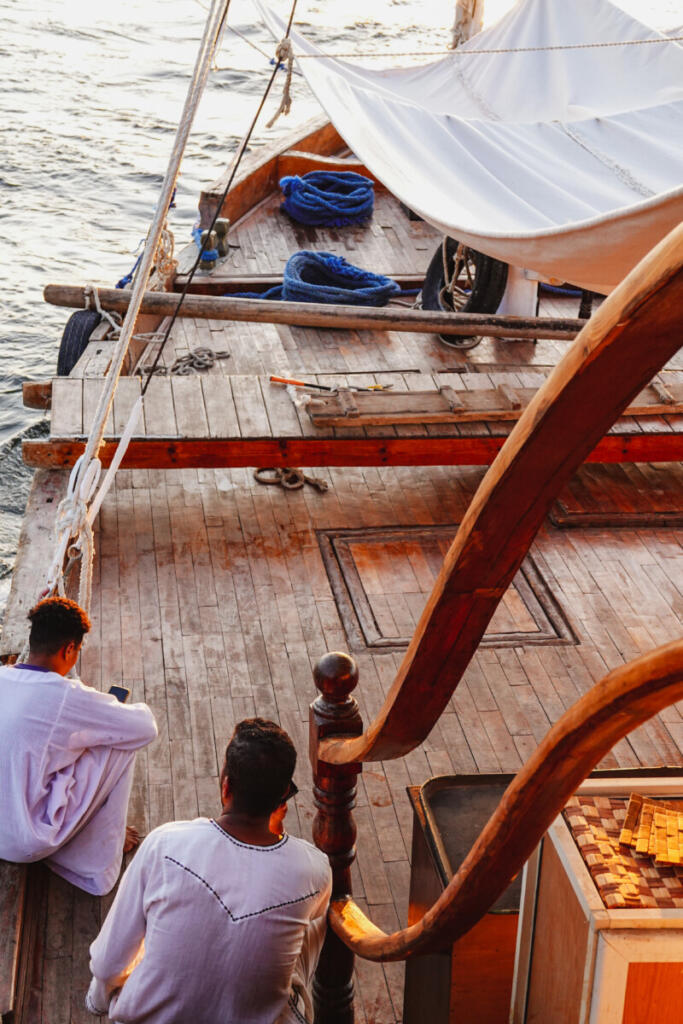
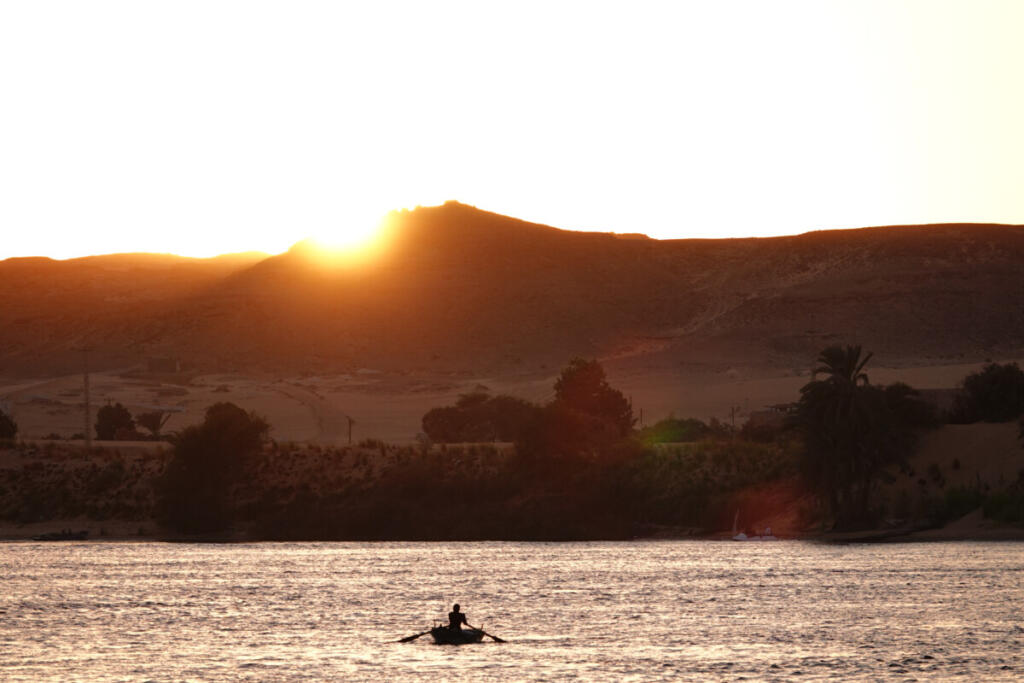
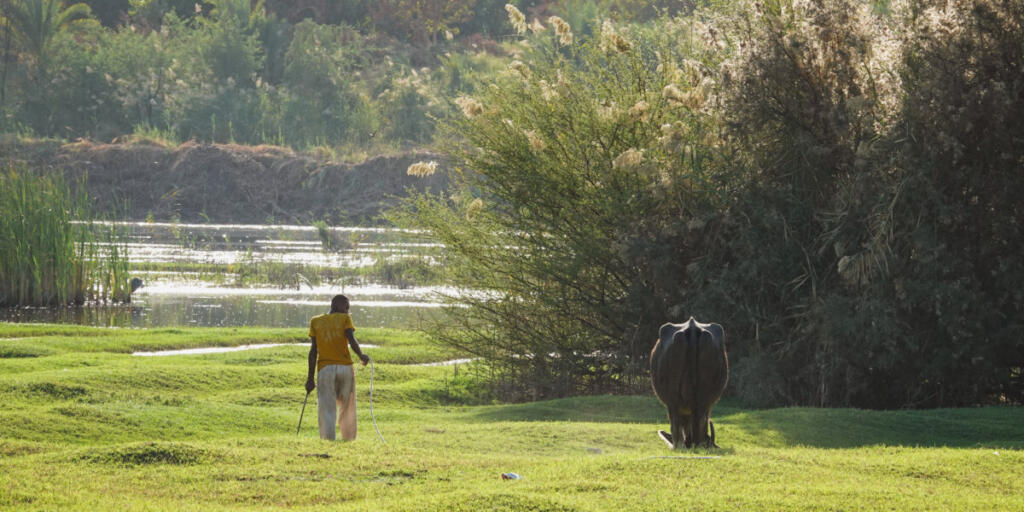
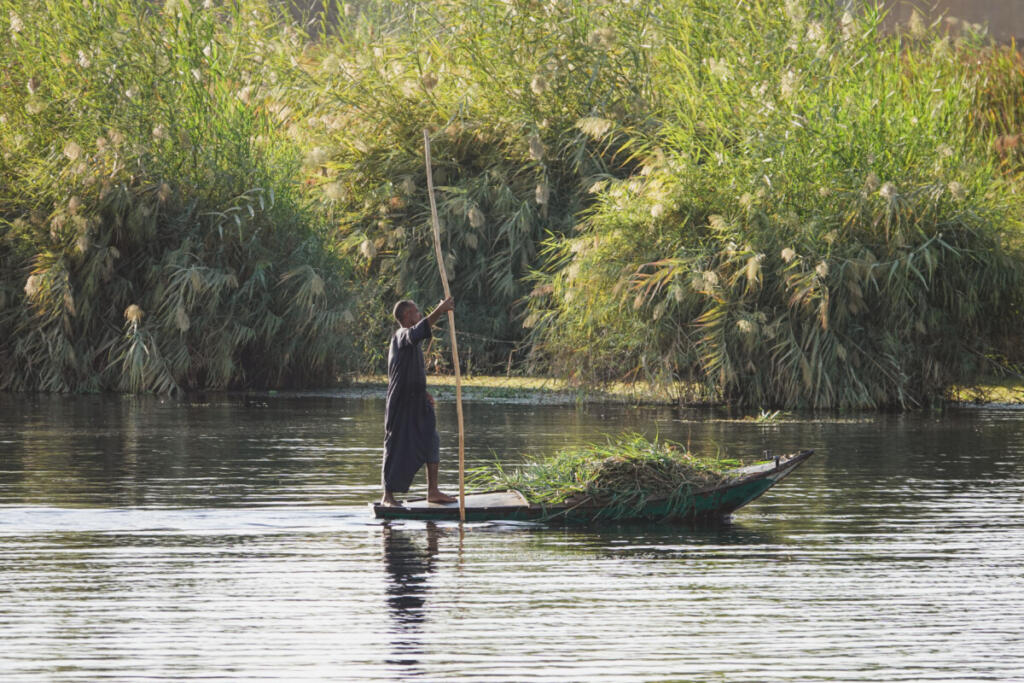
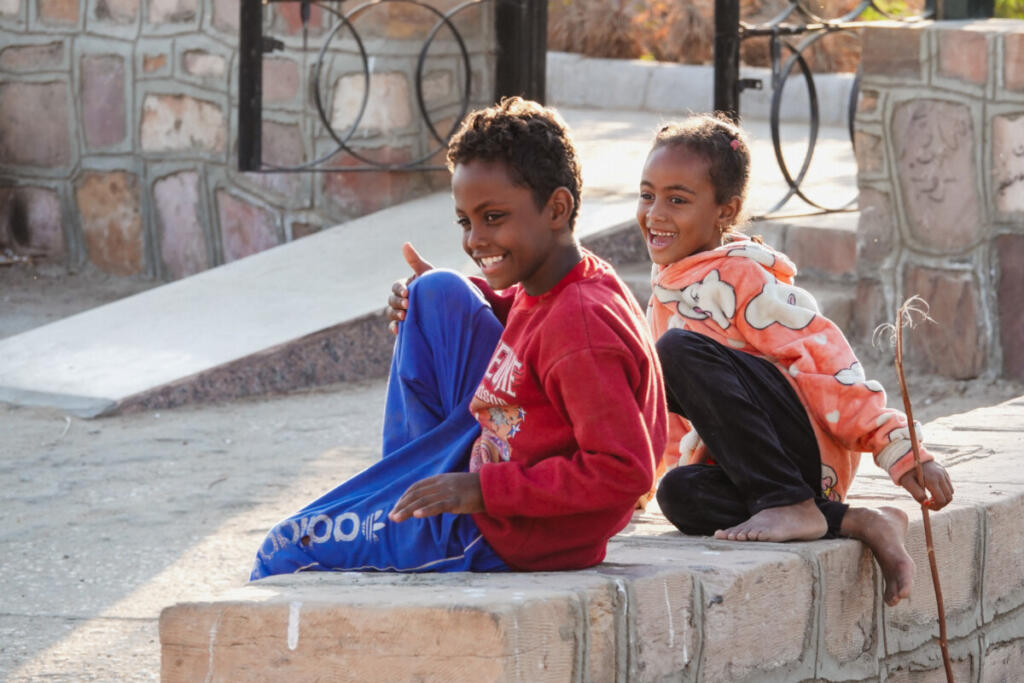
The shoreline passes slowly by: a field of sugar cane, a peasant in galabieh pushing his cart, children running towards the water to greet the passing boat, a solitary fisherman casting his net at dawn.
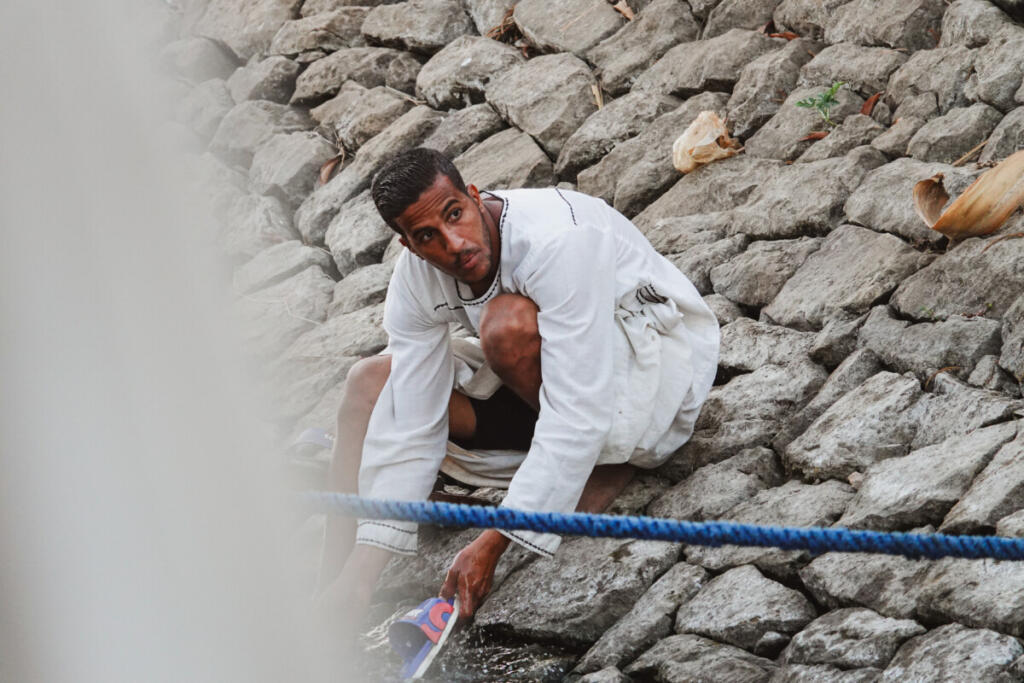
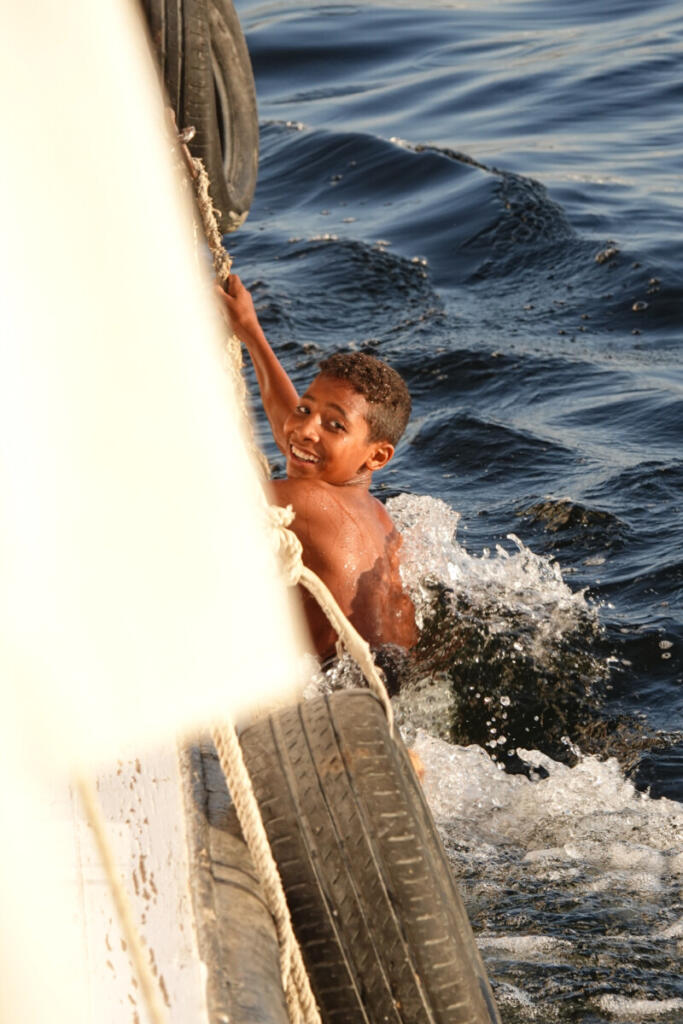
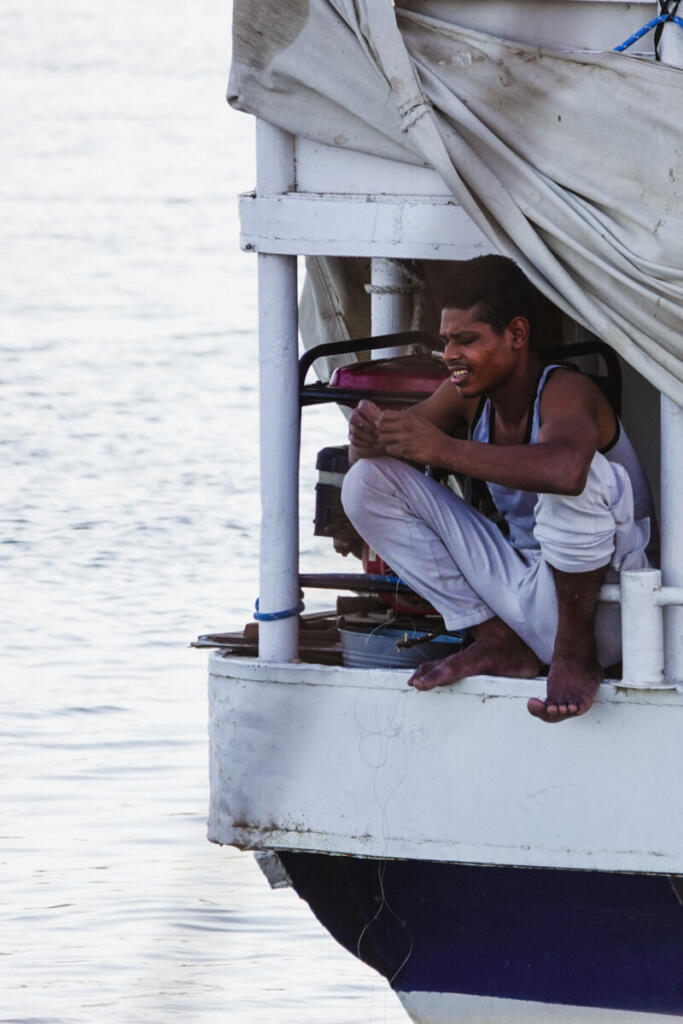
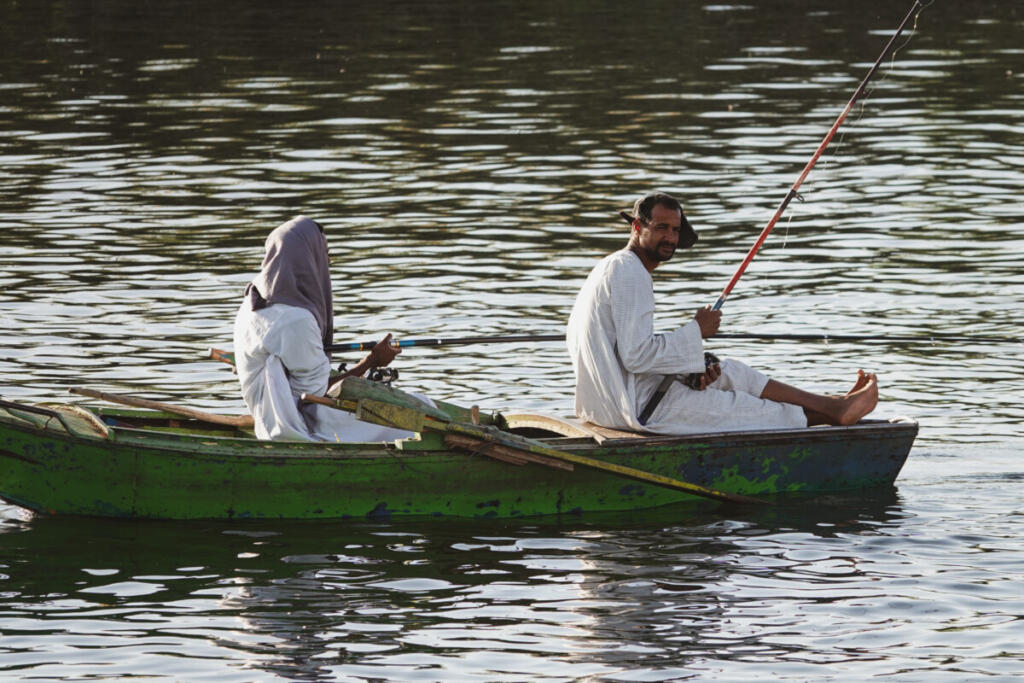
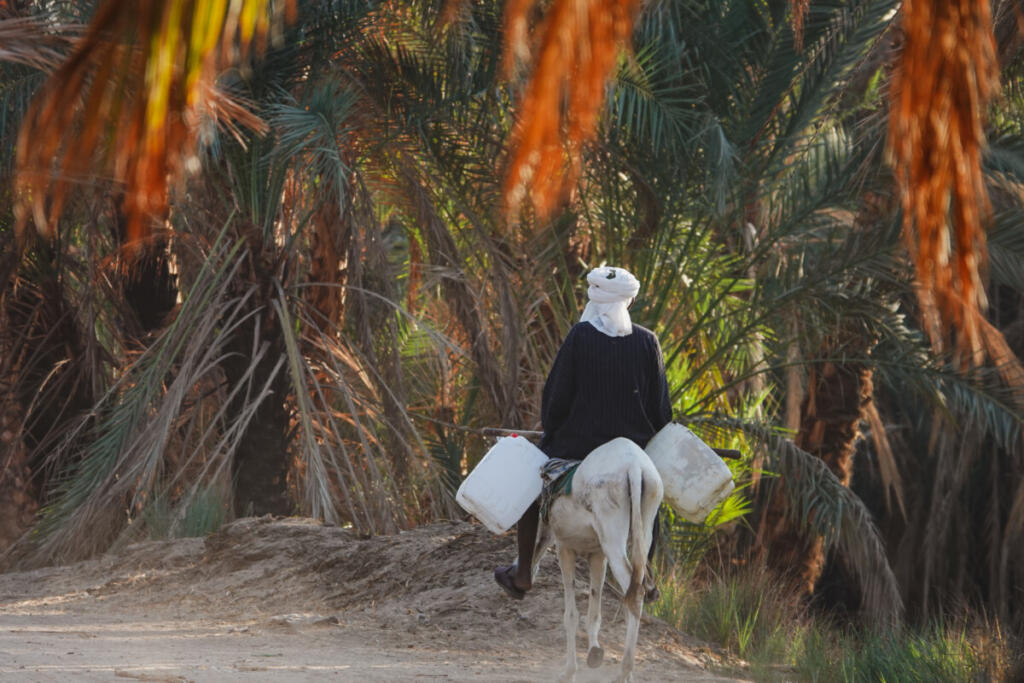
Here, you don’t look at the Nile, you experience it. Every moment becomes a parenthesis: meals served under the open sky, readings in the shade of a palm tree, improvised stopovers at the foot of a village or a sandbank.
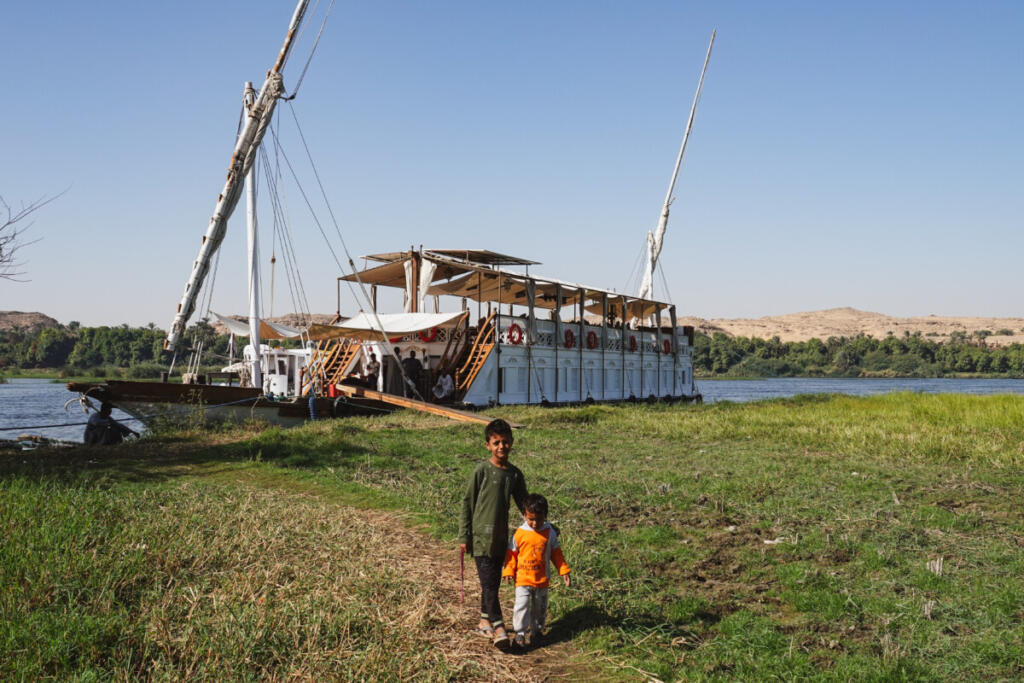
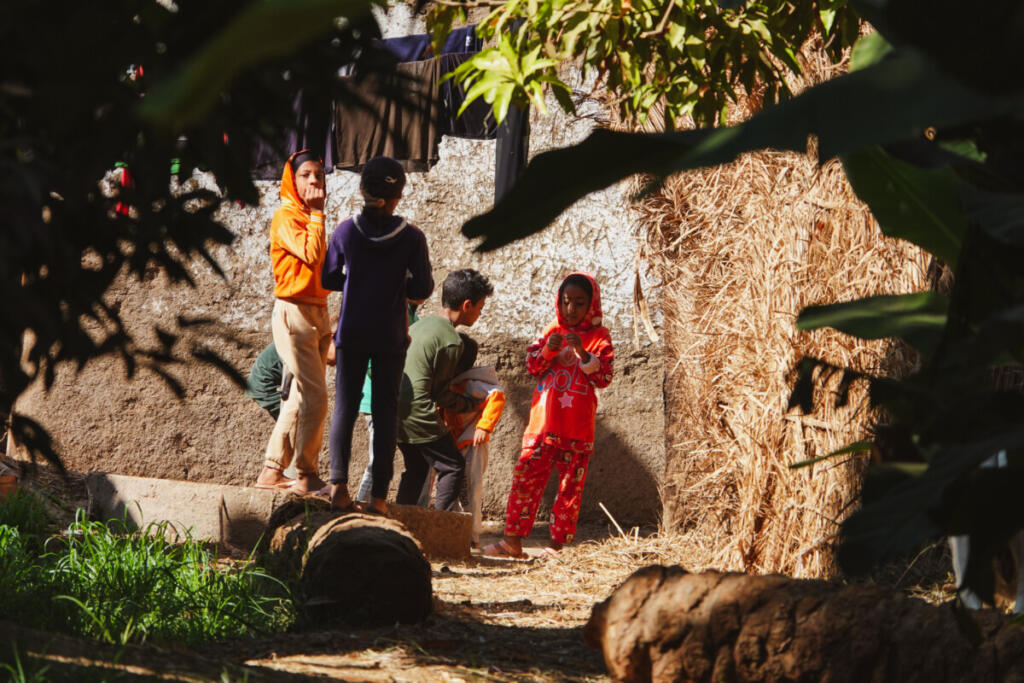
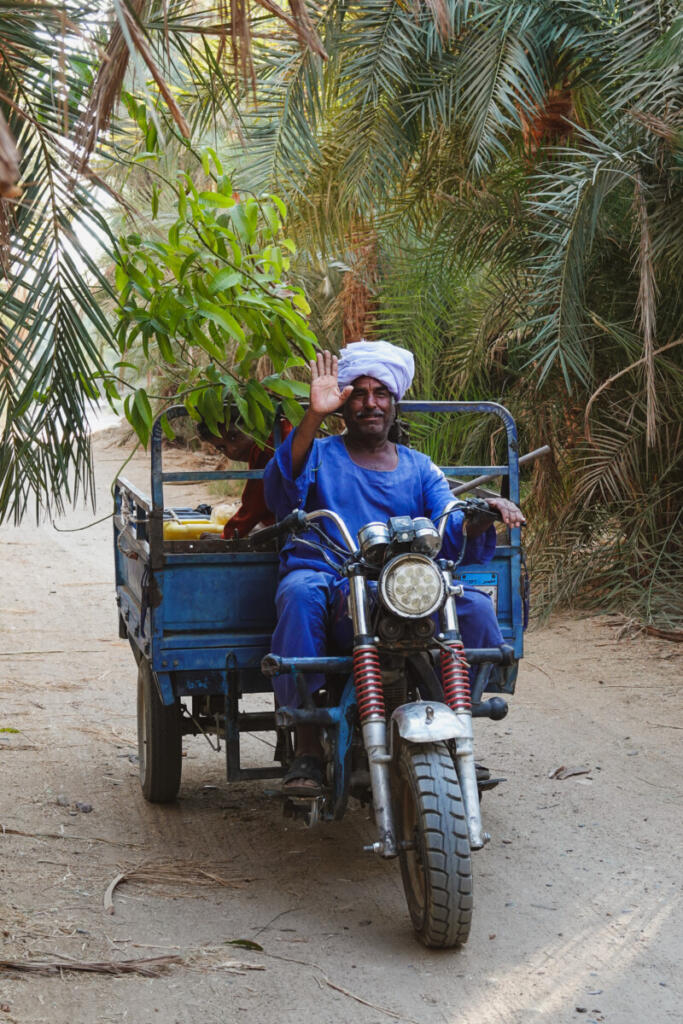
You sail with the wind, sometimes even without an engine, with the rare luxury of not rushing into anything. It’s not just a journey: it’s a voyage within a voyage, a living link between eternal stones and the everyday life of people.
Cultural stopovers: on the road to forgotten temples
A cruise on the Nile between Luxor and Aswan is also a succession of archaeological wonders, often visited against the current of the big boats, in a calm conducive to wonder.
The temple of Edfu, the radiance of the falcon god
Located on the west bank of the Nile, halfway between Luxor and Aswan, Edfu Temple is one of Egypt’s best-preserved sanctuaries. Its exceptional state of preservation is due to the fact that it was buried under the sand and alluvial deposits of the Nile for centuries, before being rediscovered in the 19th century.
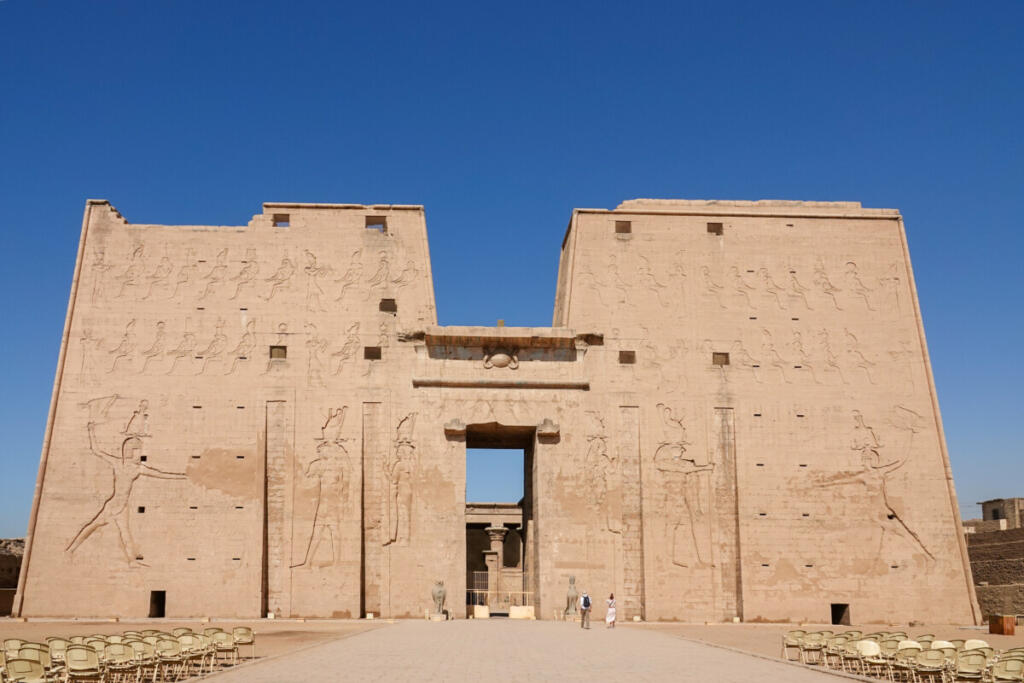
Dedicated to Horus, the falcon-god protector of royalty, this temple impresses with its monumentality: 137 metres long, 36 metres high, an entrance pylon flanked by two colossal black granite statues of Horus, and a hypostyle hall with massive columns.
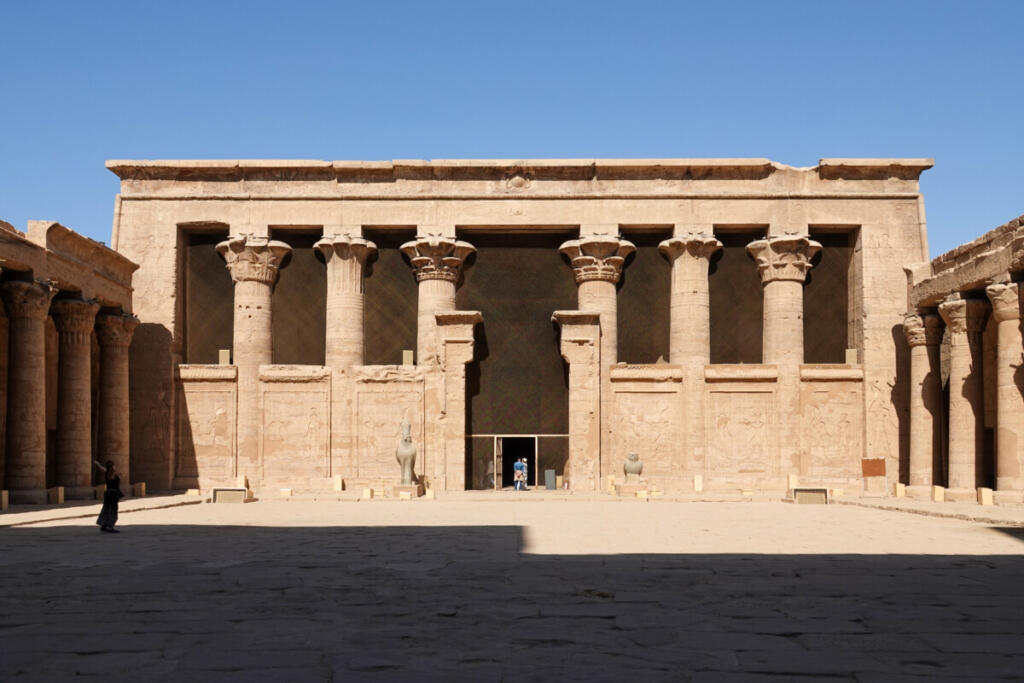
It was built over almost a century, between 237 and 57 BC, under the Ptolemaic rulers, when Egypt was already under Greek rule. Yet the architecture and decoration remain resolutely Egyptian, in keeping with age-old traditions.
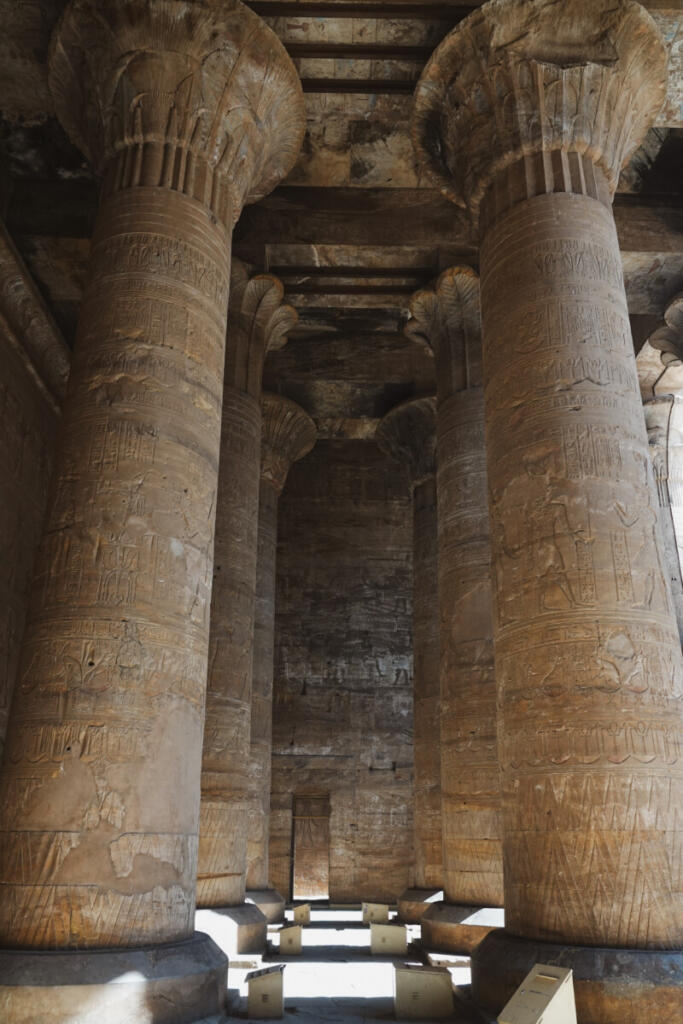
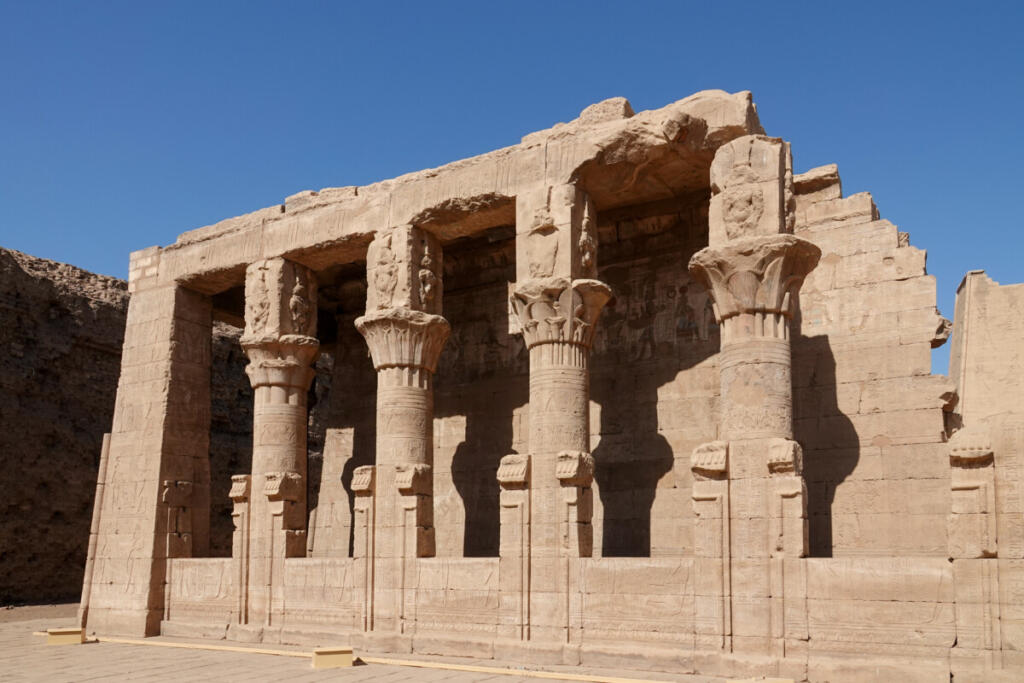
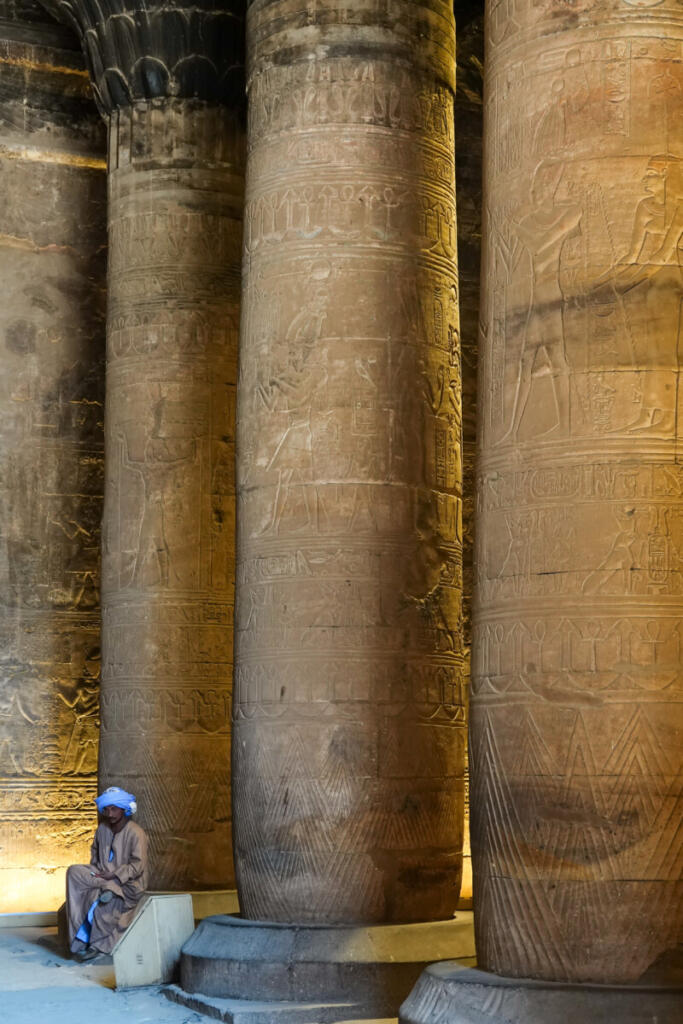
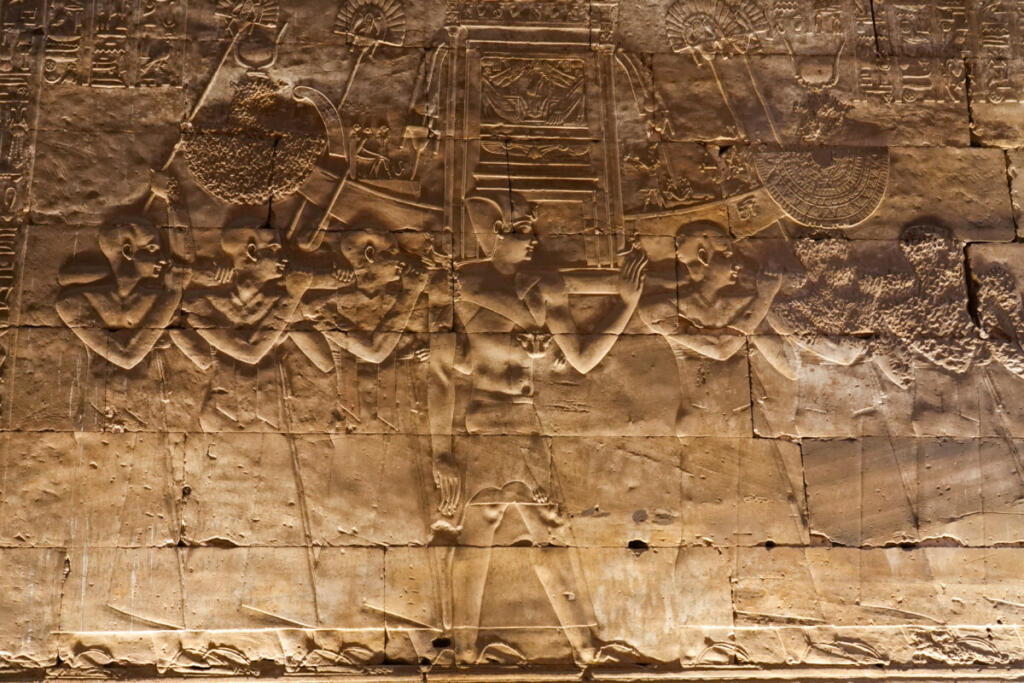
Inside, each wall recounts the cosmic struggle between Horus and Set, symbolizing the eternal confrontation between order and chaos. Here, you can follow purification rites, divine processions and even the “Festival of Union” ceremony, marking the bond between Horus and Hathor of Denderah.
The Edfu temple is also remarkable for its clarity: the reliefs are well preserved, the hieroglyphs legible and the volumes still intact. It offers a real immersion in the codes of Egyptian worship.
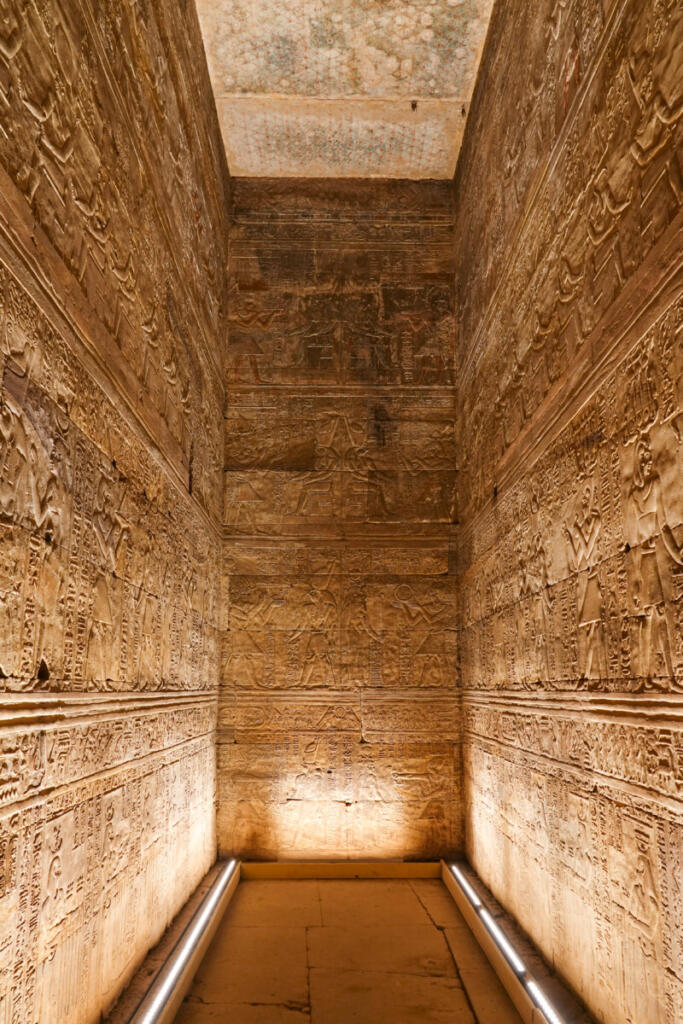
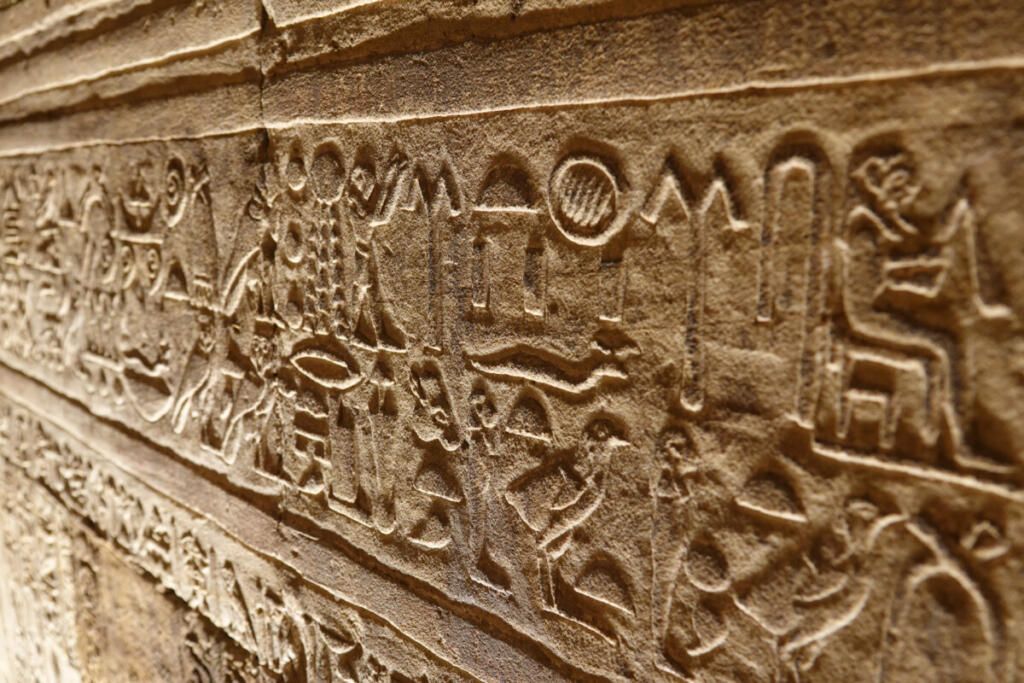
Good to know
The temple is just a few minutes’ walk from the pier. Allow around 1h30 on site. Entry is often made early in the morning, in the quiet before the arrival of the larger boats. The site is very photogenic, especially at sunrise, when the limestone takes on a golden hue.
Gebel el-Silsila, the memory of the builders
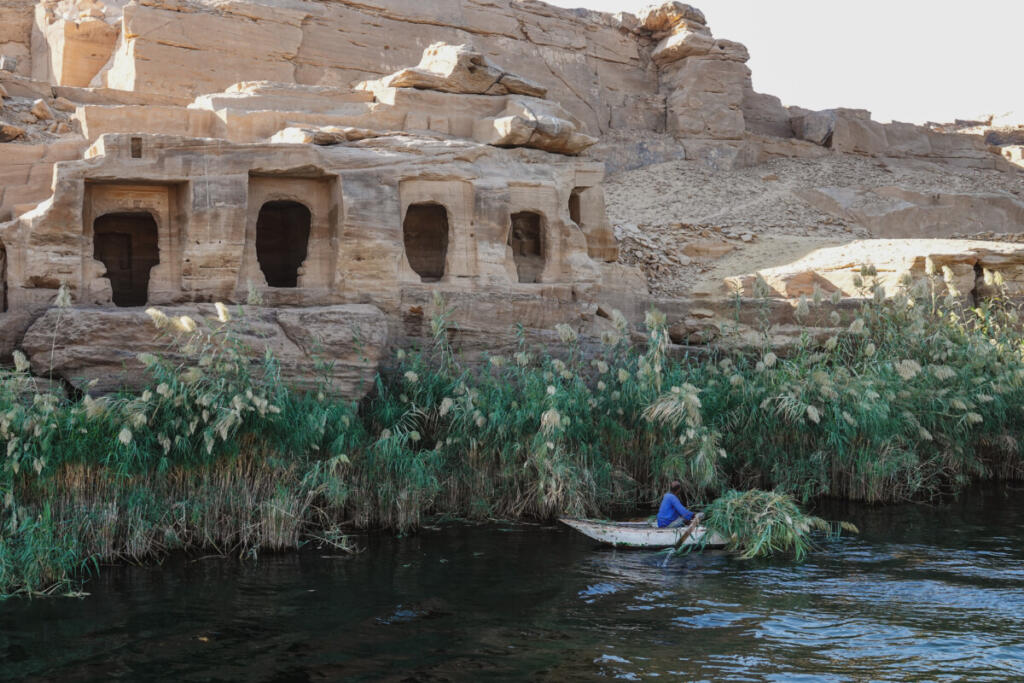
Halfway between Edfu and Kom Ombo, the Nile narrows between two red sandstone cliffs: Gebel el-Silsila. This unassuming site, often overlooked on conventional tours, was nevertheless a strategic location for ancient Egypt. For centuries, it served as the main quarry for the blocks used to build the country’s greatest temples, from Karnak to Luxor.
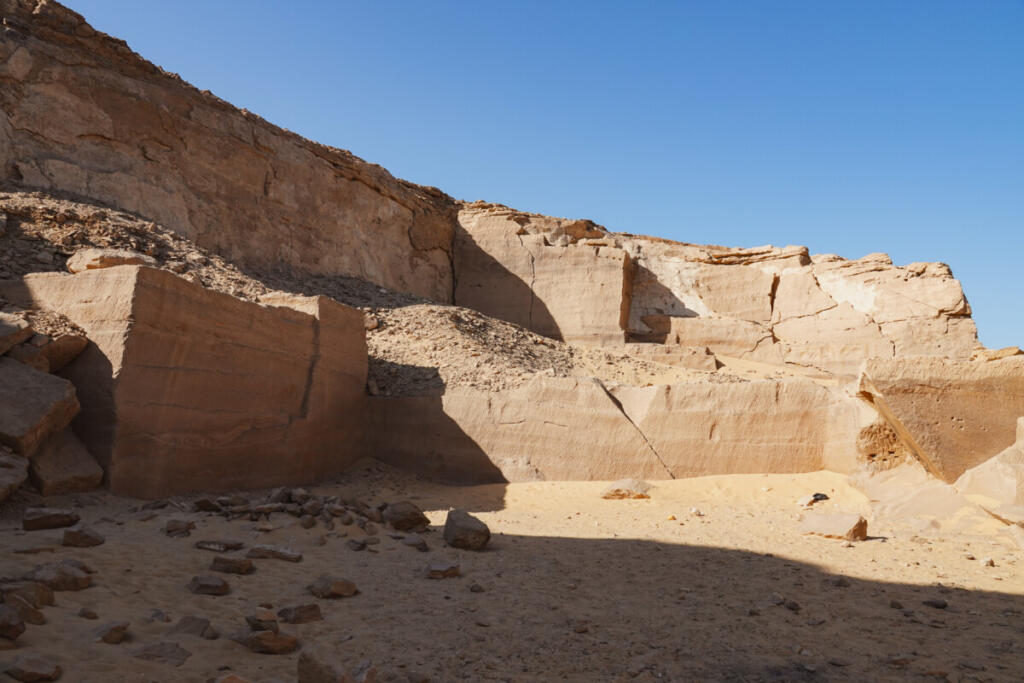
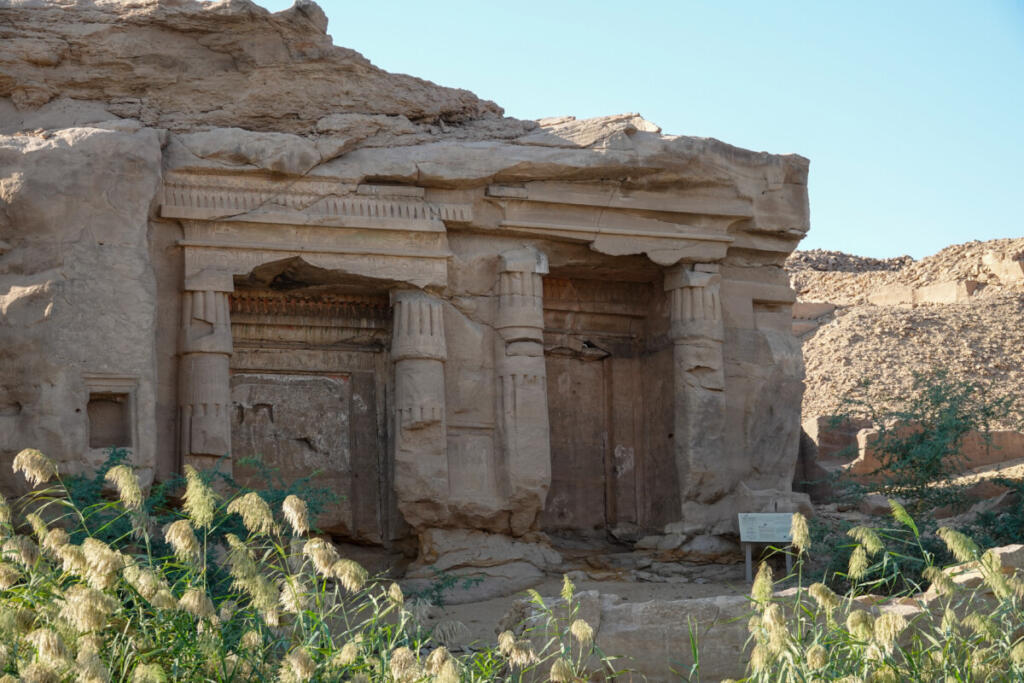
No majestic colonnades or monumental statues here. But a unique, almost meditative atmosphere. On the rock faces, you can make out the traces of the stonecutters, the marks of transport, the lines of cutting. Royal cartouches, votive stelae and rock chapels carved into the cliffs pay homage to the gods or commemorate the arrival of a sovereign.
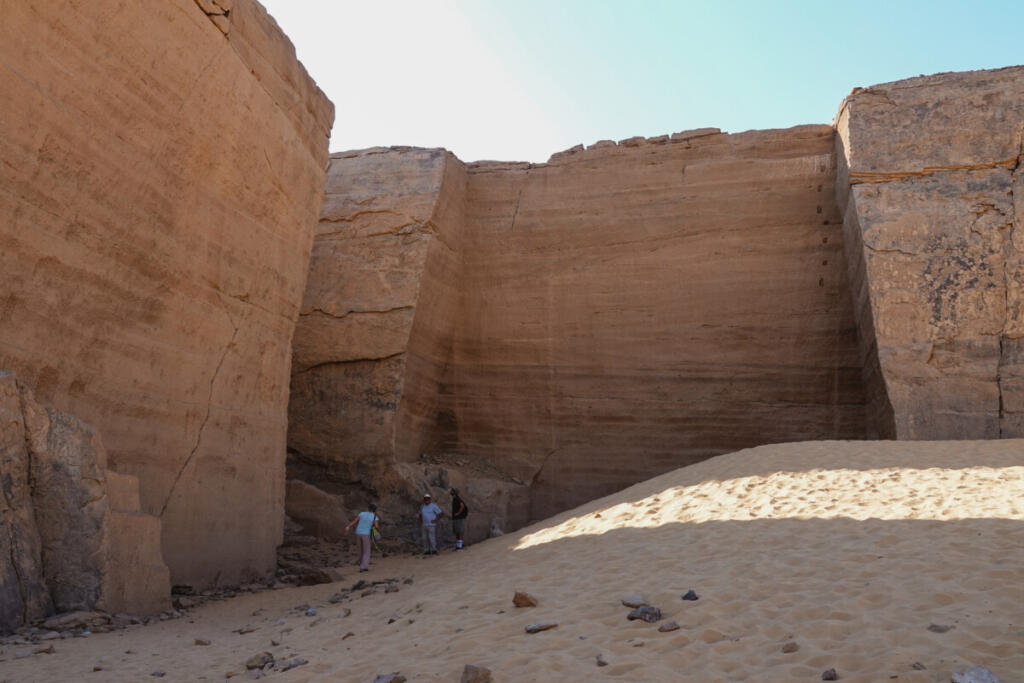
Among the most remarkable remains: a small sanctuary dedicated to Sobek and Horemheb, nestled in the southern wall, and several inscriptions listing the names of team leaders, engineers and scribes. It’s the world of the builders that we discover here, with its forgotten gestures, its simple offerings, its words engraved in stone to ward off time.
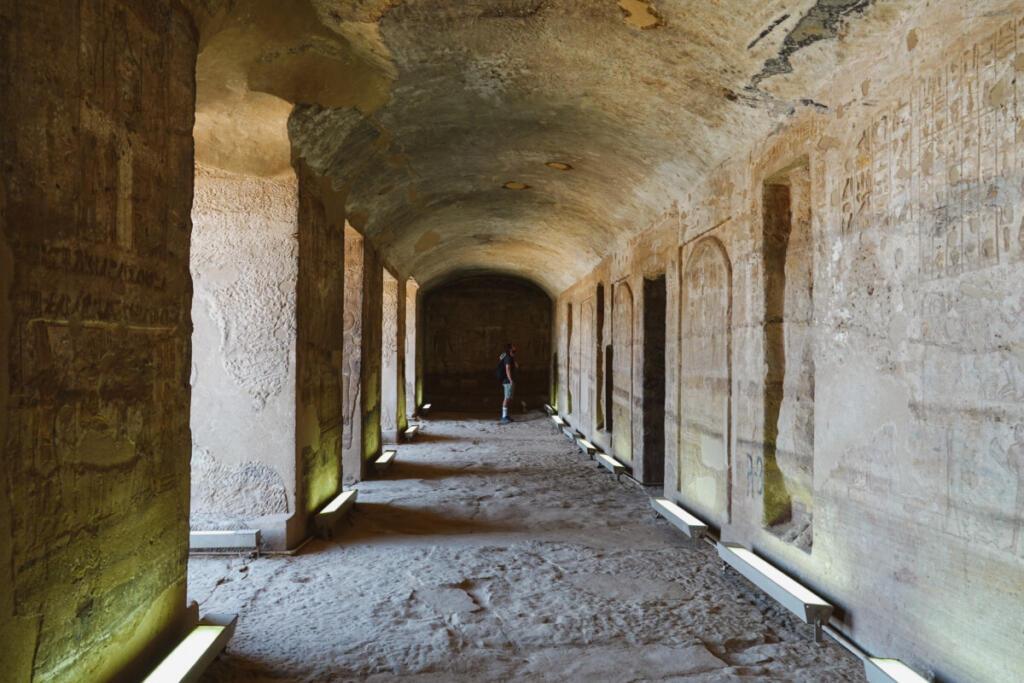
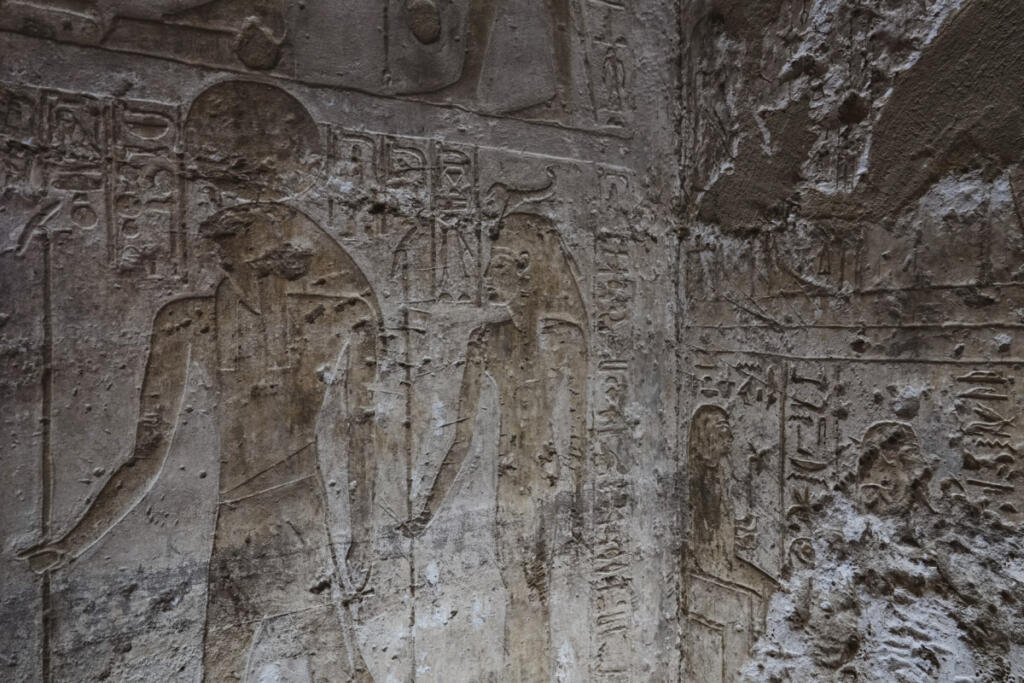
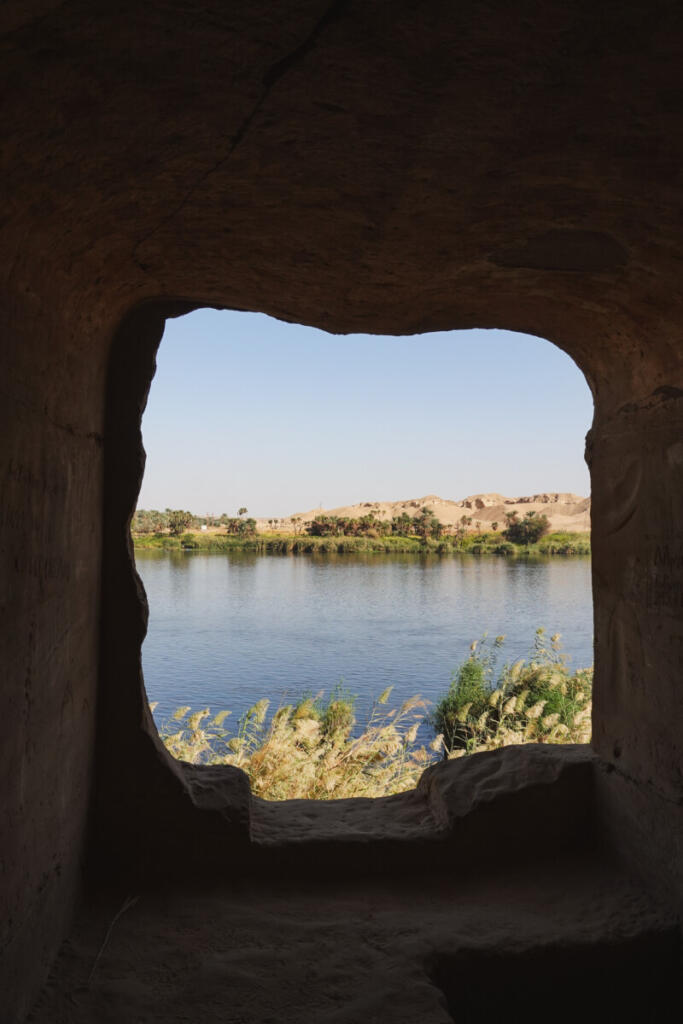
Gebel el-Silsila is also a natural beauty spot. Little-visited, it offers a breathtaking view of the meandering river in absolute calm. At the end of the day, the sun colors the cliffs in ochre, pink and purple, transforming the landscape into a living fresco.
Good to know
The site is only accessible by boat and has no tourist infrastructure, which adds to its magic. Visits are often made in small groups or accompanied by a local guide. Approximately 1 hour is enough to explore the essentials, but we’d happily stay longer just to admire the Nile from the heights.
Kom Ombo, two gods for one temple
Perched on a natural promontory overlooking the Nile, the temple of Kom Ombo is strikingly symmetrical. Unique in Egypt, this sanctuary is dedicated to two principal divinities with opposing attributes: Sobek, the crocodile god, associated with fertility, medicine and the waters of the Nile, and Haroëris, a form of Horus venerated for his light and protection.
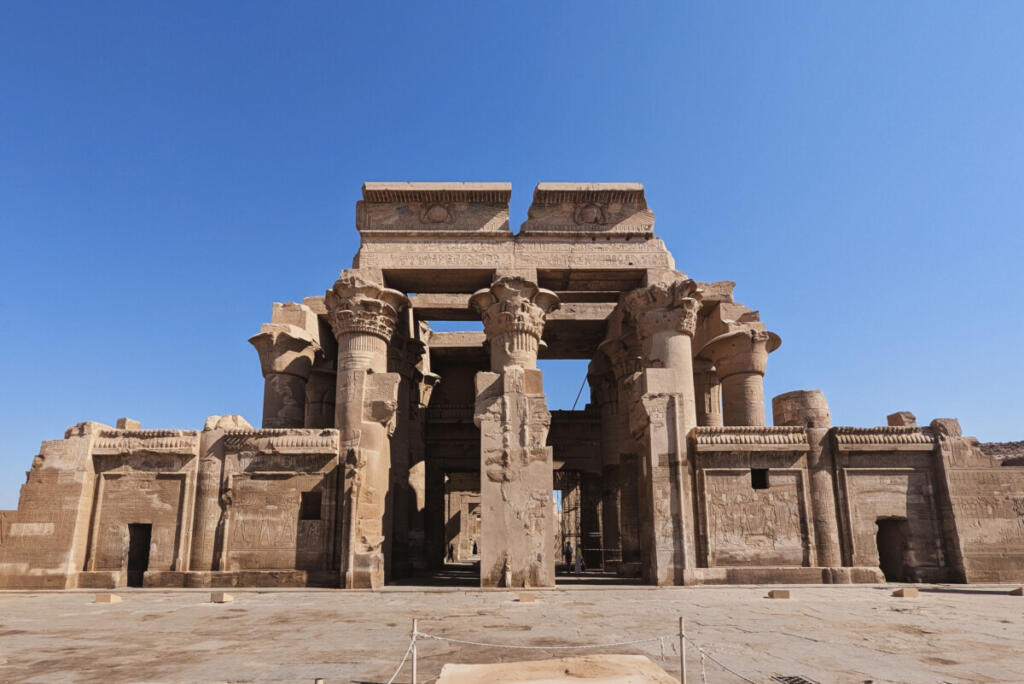
Built between the 2nd and 1st centuries BC, under the Ptolemaic dynasty, the temple adopts a “double” architecture: twin entrances, two hypostyle halls, two sanctuaries. This structure reflects the cosmic balance between two forces – often perceived as rivals – united in the same sacred space.
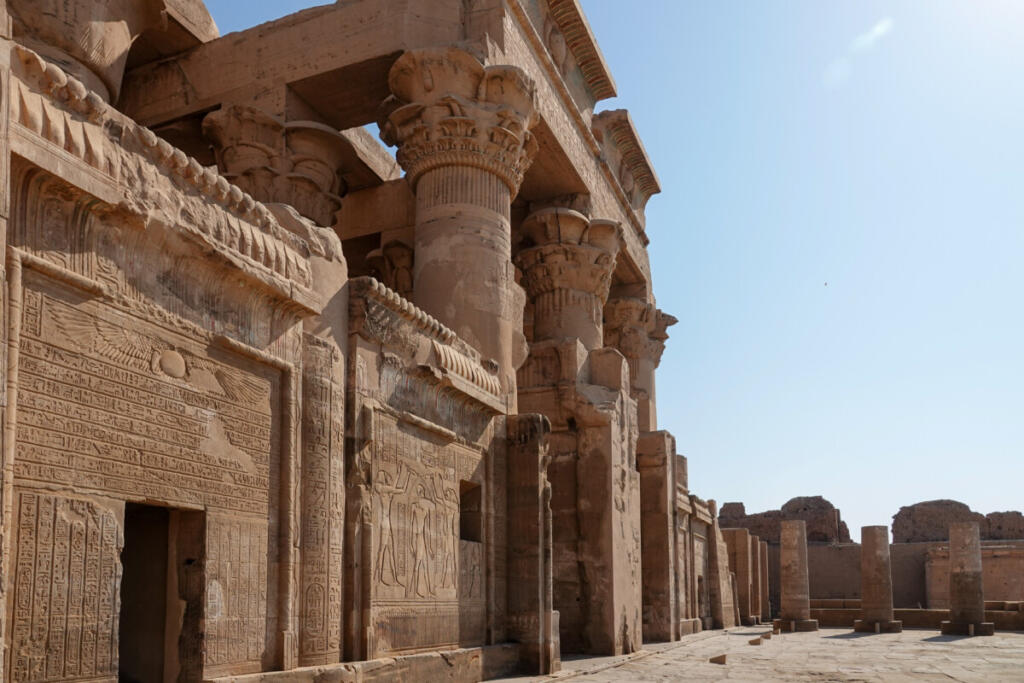
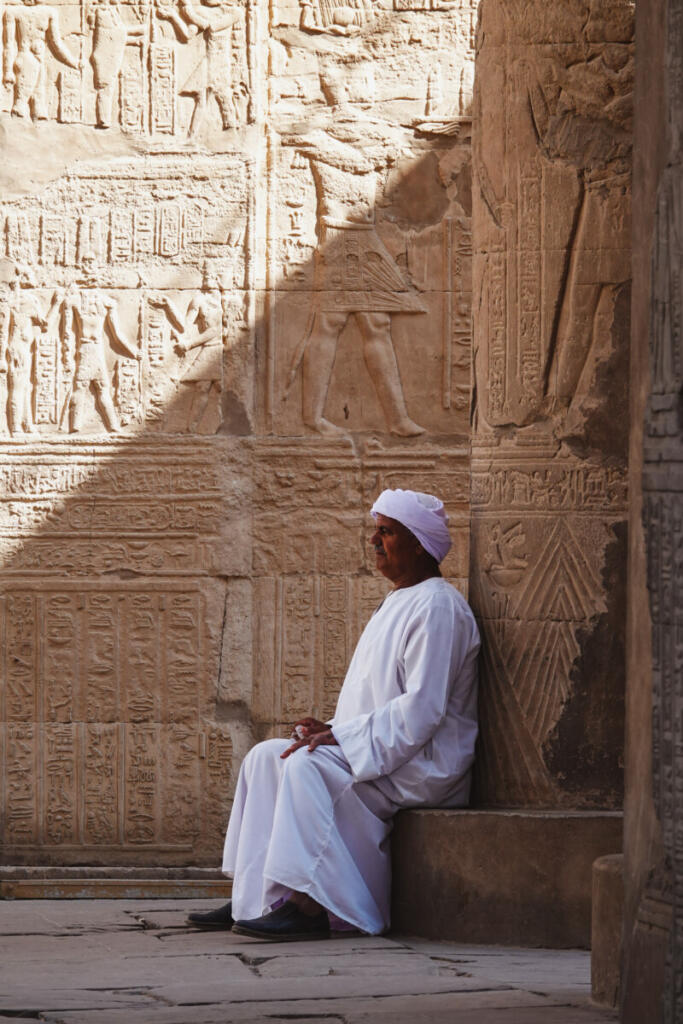
The bas-reliefs at Kom Ombo are among the most interesting for those interested in everyday life and science in ancient Egypt. They include depictions of medical instruments, childbirth scenes, healing gestures and healing deities. A carved wall presents what is often described as a symbolic “clinic”: a rare testimony to the importance of medicine in the Pharaonic world.
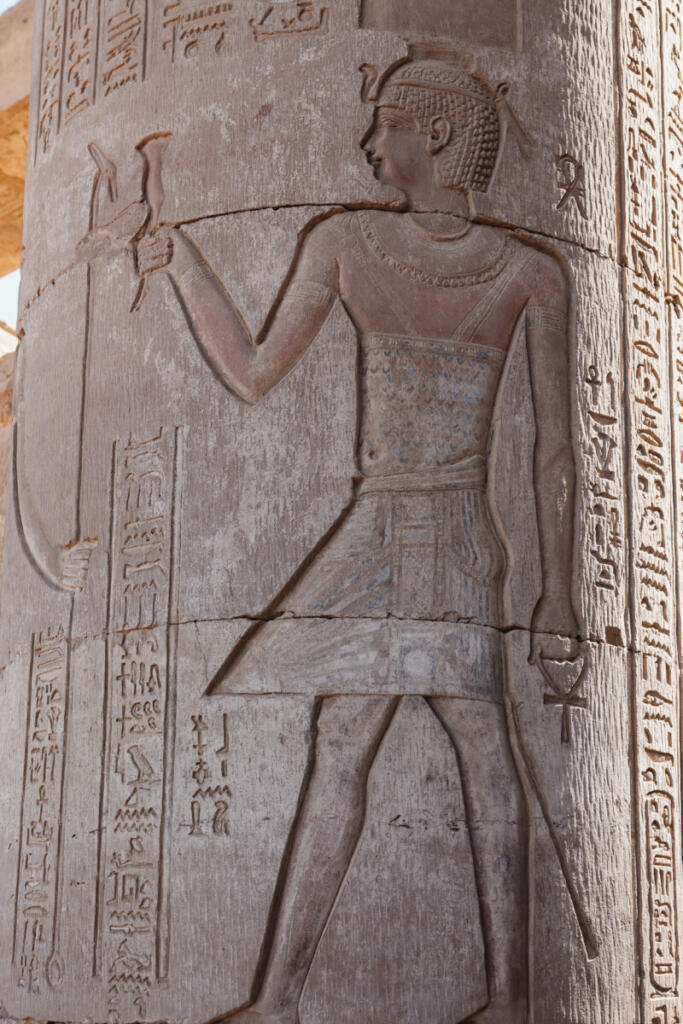
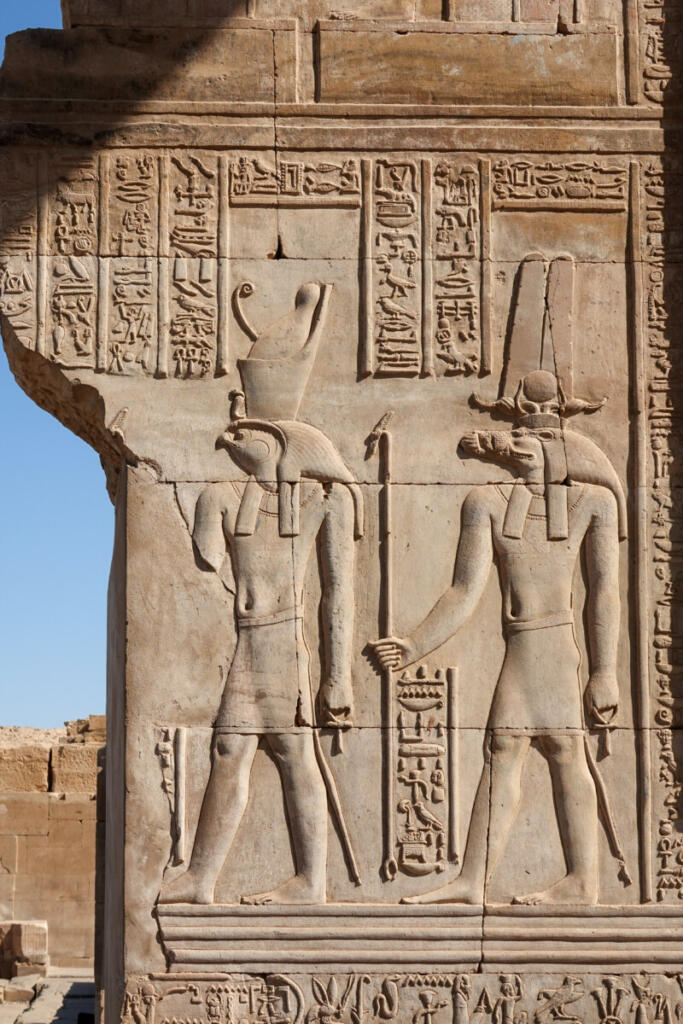
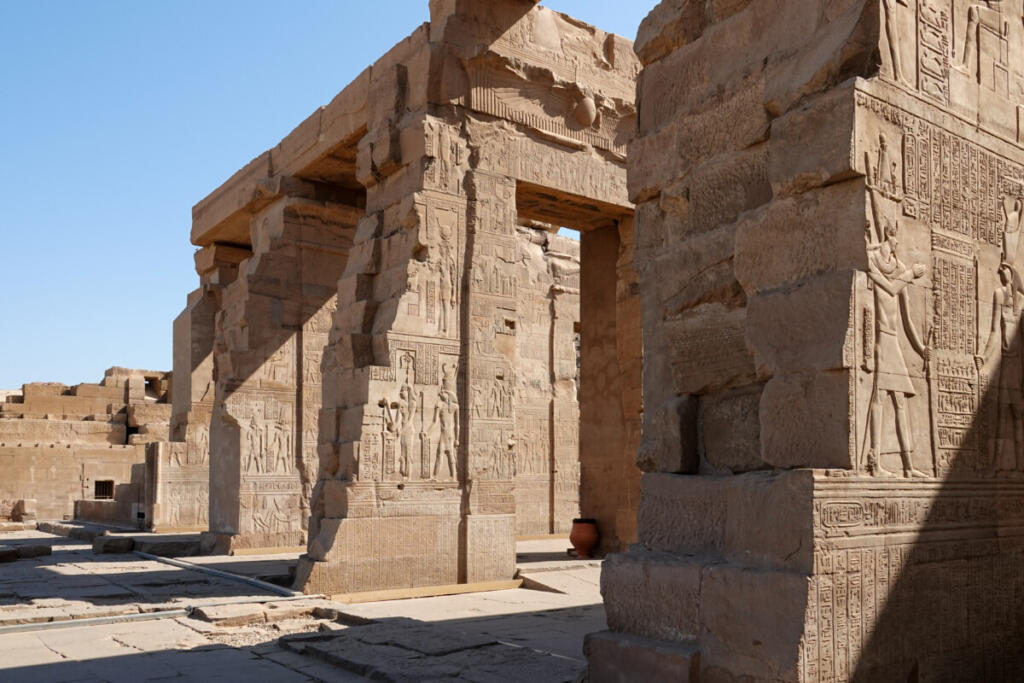
The site also houses a small museum of mummified crocodiles, where you can observe several specimens preserved in astonishing condition, a reminder of the sacred role of these animals in the region.
Good to know
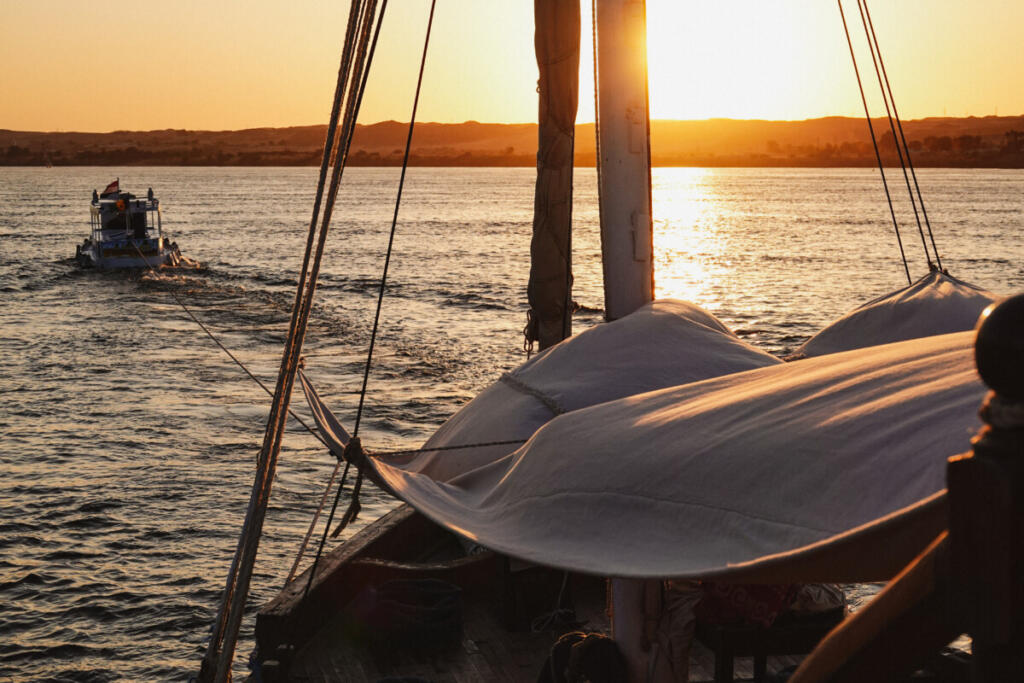
The temple is located very close to the river, making the approach by dahabieh particularly spectacular, especially at sunset. Allow around 1 hour for the visit. The museum is located right next to the main site and can be visited with the same ticket.
Practical information for a dahabieh cruise on the Nile
Cruising on a dahabieh offers many advantages: it allows you to visit major sites that are often out of the way of large groups, to access more confidential places such as Gebel el-Silsila or authentic villages, and offers an environmentally-friendly travel experience.
- Duration and itineraries: Cruises generally run between Luxor and Aswan, over several days (4 to 6 nights), enabling you to discover the major sites while enjoying the river’s slow pace.
- Type of boat: the dahabieh is a traditional sailing boat (10 to 14 passengers in general), smaller and more intimate than classic cruising boats. It is accompanied by a small tug to help with navigation when the wind is too light.
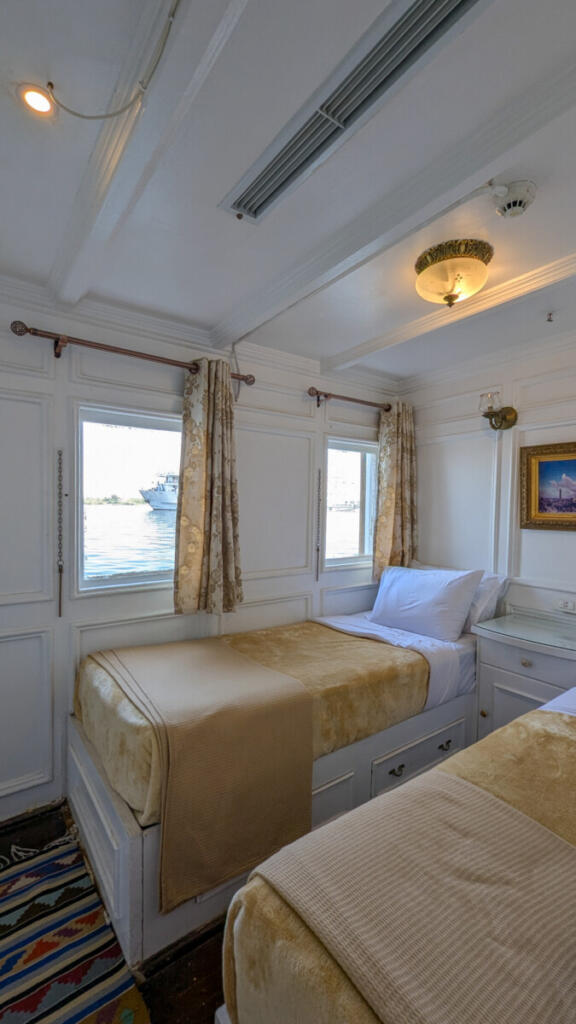
- Comfort on board: simple but comfortable cabins, some with private terraces, typical meals prepared on board, and a small, friendly and attentive crew.
- Rhythm: 2 to 3 ports of call a day, quiet sailing, free time to enjoy the deck or read along the water.
- Ideal season: The best time to sail the Nile is from October to April, with pleasant temperatures and little wind in winter.
- Booking: Given the small size of the dahabiehs, it is advisable to book several months in advance.
Cruising on a dahabieh is one of our favorites for a trip to Egypt. If you’d like to include a few days aboard a dahabieh in your travel plans, contact us for a personalized, no-obligation quote, or discover our 8-day Egypt, in the land of the Pharaohs itinerary, starting at €3,000 per person, based on a group of 4 travelers.