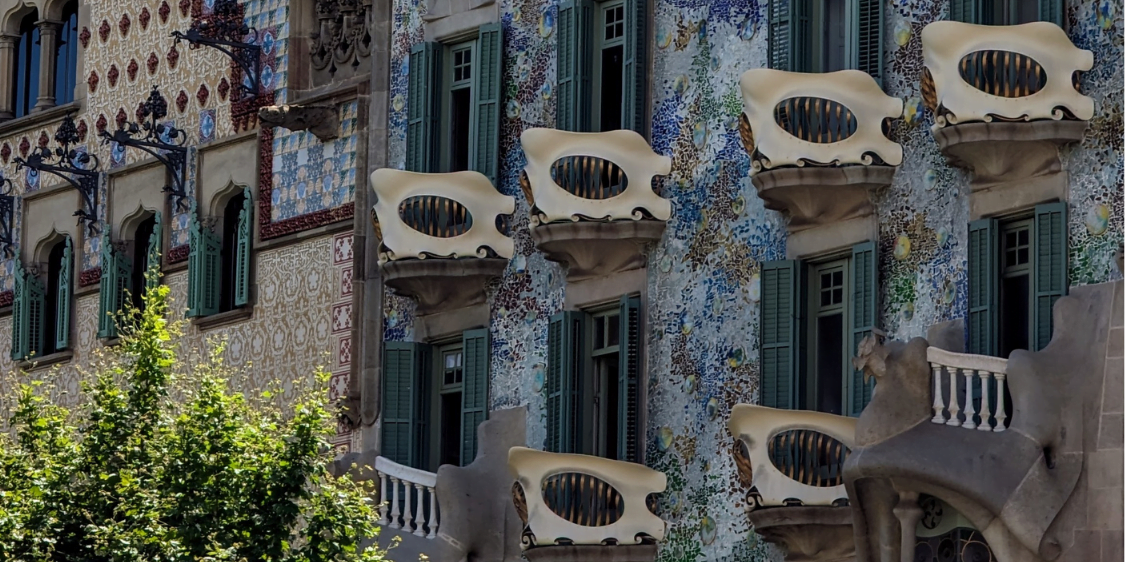
Located on the famous Paseo de Gracia(Passeig de Gràcia) in the heart of Barcelona, Casa Batlló is one of the city’s most emblematic attractions. The house is the work of the famous Catalan architect Antoni Gaudí, considered one of the most important exponents of the Modernist movement in Spain.
Casa Batlló in a nutshell
The Apple of Discord
As early as the 1860s, the Paseo de Gracia was laid out as the main thoroughfare linking Barcelona to the “Villa de Gracia”, now a city district in its own right. Lined with houses with gardens and a few private mansions, Paseo de Gracia began as a pedestrian promenade in the 19th century, before becoming an avenue for cars in the 20th century. Gradually, the bourgeoisie replaced single-storey houses with multi-storey buildings, making Paseo de Gracia the main residential center for Barcelona’s upper middle class.
The buildings at numbers 43 (Casa Batlló) and 45 were originally built in 1877 by Emilio Sala Cortes, one of Gaudí’s architectural teachers. Like the rest of the buildings on the block of houses from 35 to 45, these are conventional buildings in the traditional eclectic style of the late 19th century.
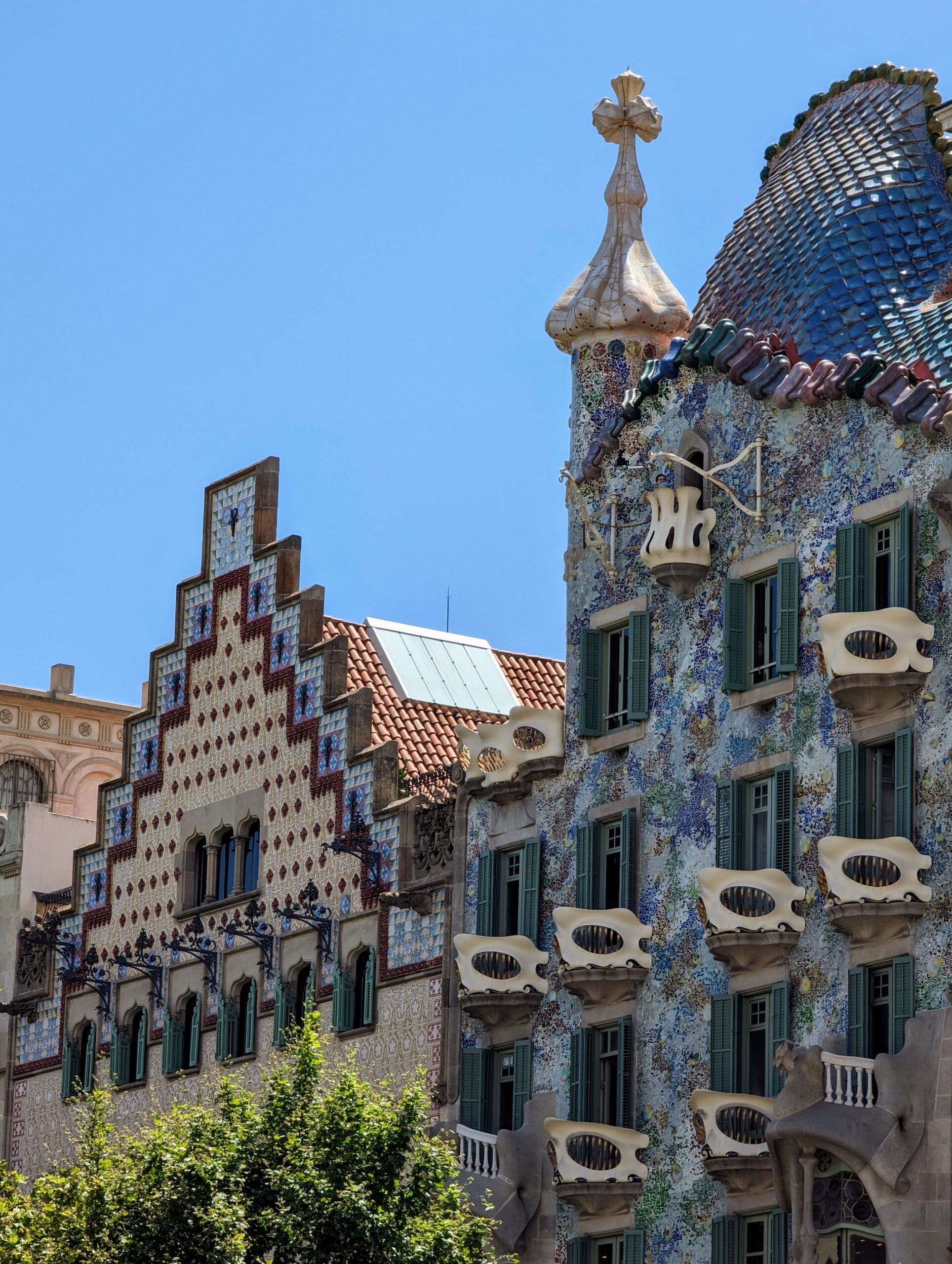
In 1900, architect Josep Puig i Cadafalch designed Casa Amatller at number 41. Famous for its gabled roof and coat-of-arms sculptures, the building features a neo-Gothic facade with Flemish-style influences. In 1902, architect Lluís Domènech i Montaner transformed Casa Lleó Morera at number 35. With facades adorned with mosaics and sculptures and richly decorated balconies, this building is another fine example of Catalan Modernist architecture.
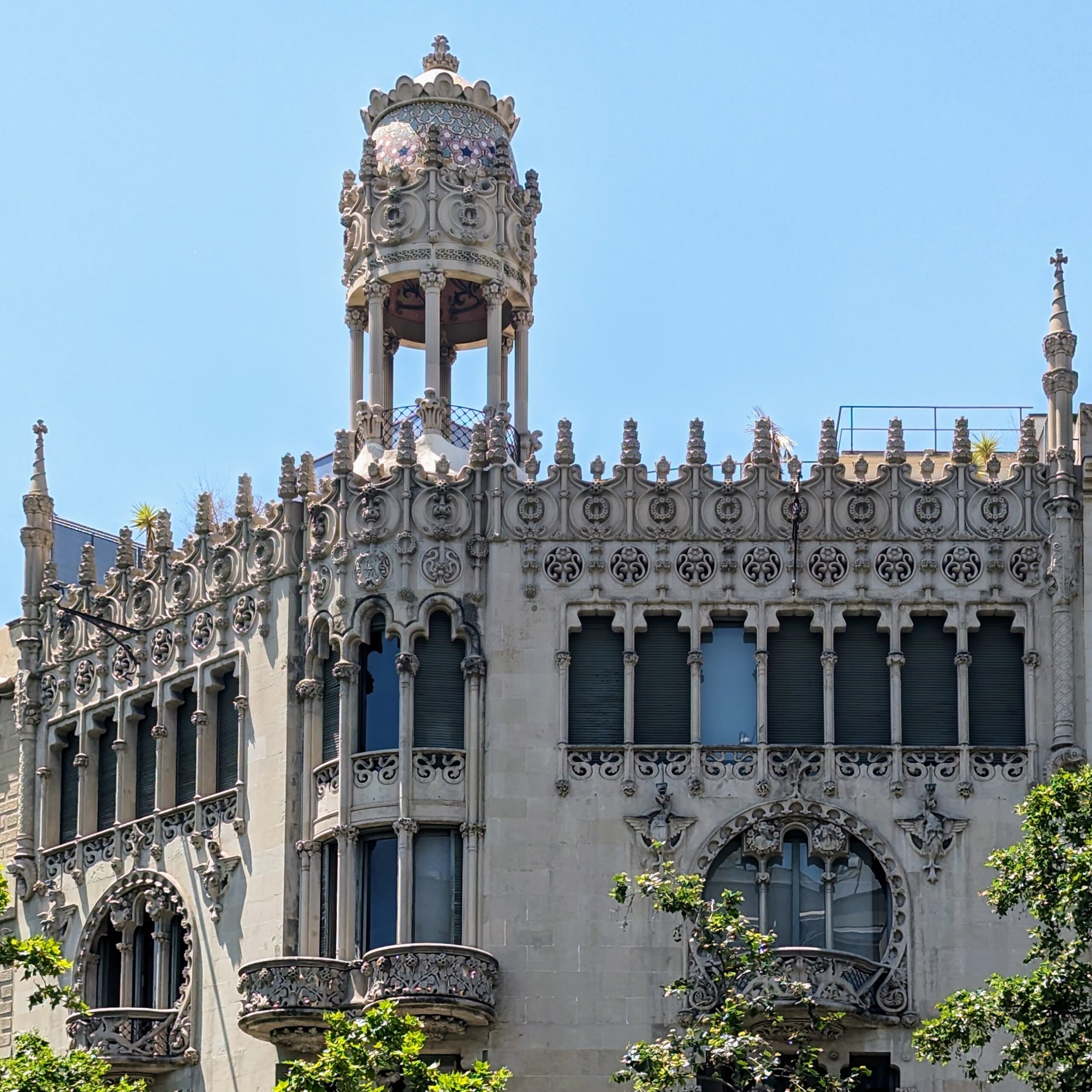
The proximity of these modernist buildings, each representing a distinct architectural style, sparked debate and rivalry among the architects of the day. The block of houses was nicknamed“The Apple of Discord“.
Genesis of the project
In 1903, Josep Batlló i Casanovas, a wealthy textile industrialist, acquired the house at 43 Passeig de Gràcia.
At the time, the Batlló family had already entrusted the construction of several buildings to the architect Josep Vilaseca i Casanovas. To stand out from the crowd, Josep Batlló called on Antoni Gaudí, winner of the first annual artistic building competition with the Casa Calvet.
Batlló initially asked Gaudí to demolish and rebuild the entire building, but Gaudí rejected the idea in favor of a complete renovation. From 1904 to 1906, the architect transformed the façade, reorganized the interior spaces, added two floors and completely remodeled the attic and terrace. Profoundly transformed, the building rose from a height of 21 meters to 32 meters and from a surface area of 3100m2 to 4300m2.

In 1906, the municipal authorities had serious doubts about the project, and cited a building permit that had not been issued as a reason for halting work on the almost-completed site. Far from stopping the work, Batlló instead applied for a permit to rent out the apartments, which was not granted until 1913.
The building was almost finished when Batlló received a visit from an associate, Pere Milà. The latter was planning to build a private mansion and, following his visit, decided to entrust Gaudí with the construction of the Casa Milà.
Recent history of Casa Batlló
Casa Batlló ceased to belong to the Batlló family in the 1950s. Subsequently, the Casa became home to various companies and individuals, before being bought and restored in the 1990s by the Bernat family, who still own the building.
In 1995, the family opened the house to the public and offered the space for events. Since 2002, the International Year of Gaudí, Casa Batlló has also been the venue for cultural visits.
Casa Batlló is now a UNESCO World Heritage Site.
Visit Casa Batlló
Main facade
To design the Casa Batlló façade, Gaudí drew up a few plans, but based them primarily on a plaster model, which he modelled until he achieved the undulating, sinuous shapes characteristic of his architectural style.
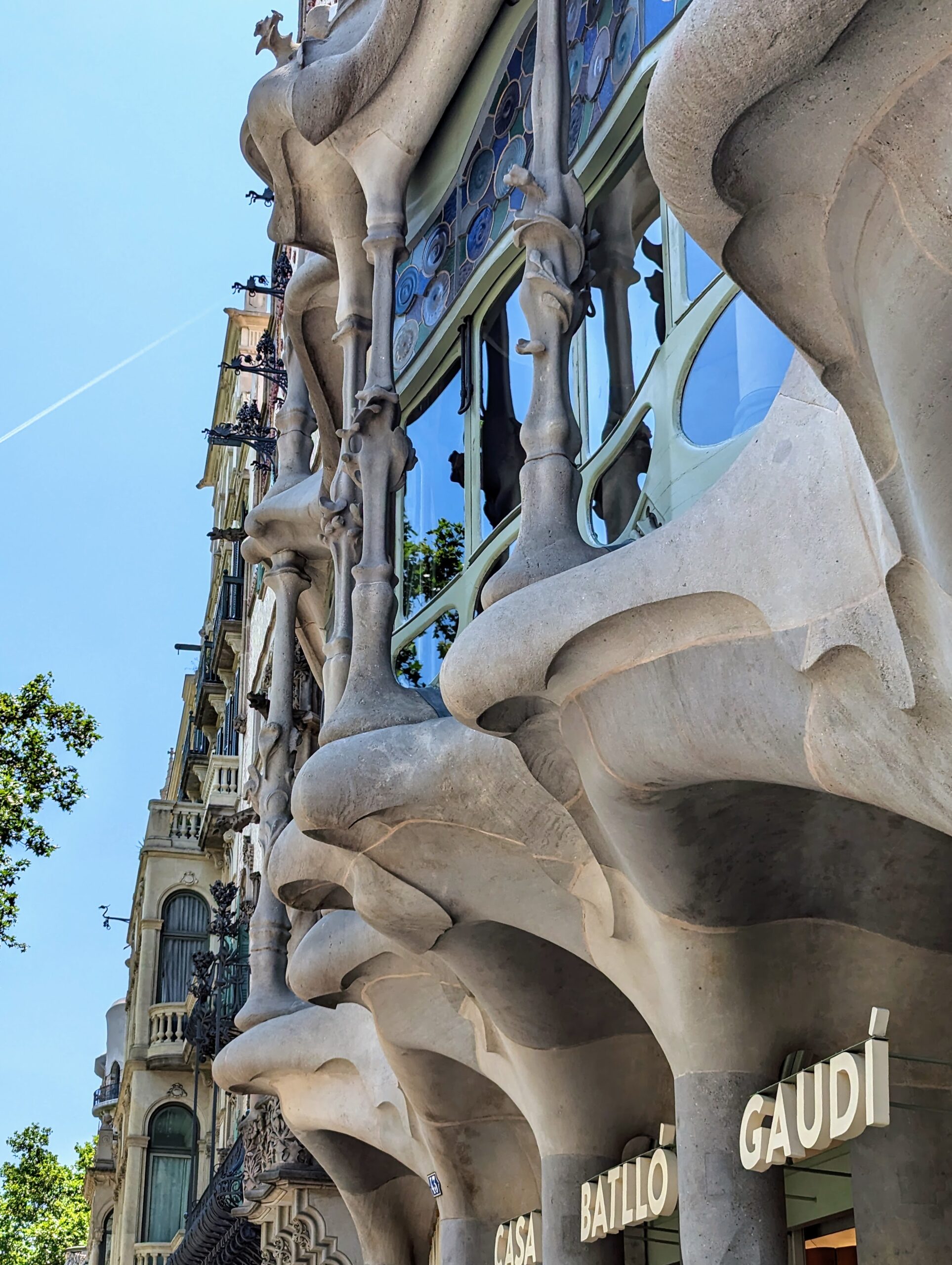
On the ground and second floors, or Étage Noble, the façade incorporates a structure of slender columns in Montjuïc sandstone, adorned with floral elements typical of Modernism. The curved, bony forms of these pillars evoke theappearance of human bones, bringing an organic and unusual touch to Casa Batlló, also nicknamed the“House of Bones“.
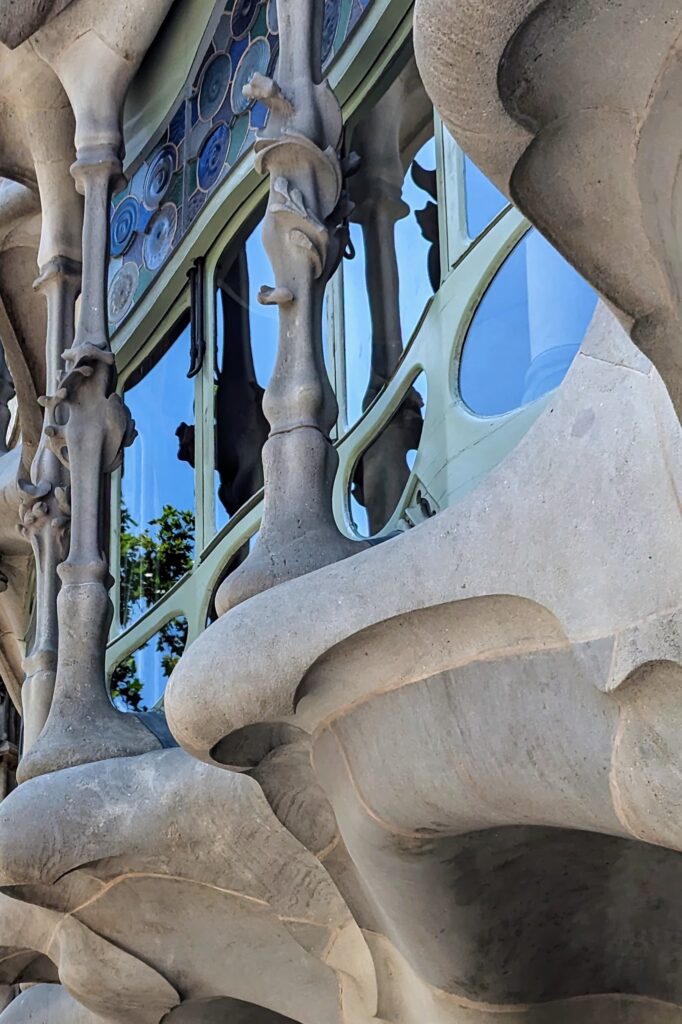
The balcony railings, made of cast iron in a single piece, are shaped like masks , reminiscent of skulls or human faces.
Gaudí entrusted the forging of the balconies and railings to the brothers Lluís and Josep Badia i Miarnau, who were also responsible for the doors of the Palacio Güell and the balconies of the Casa Milà.
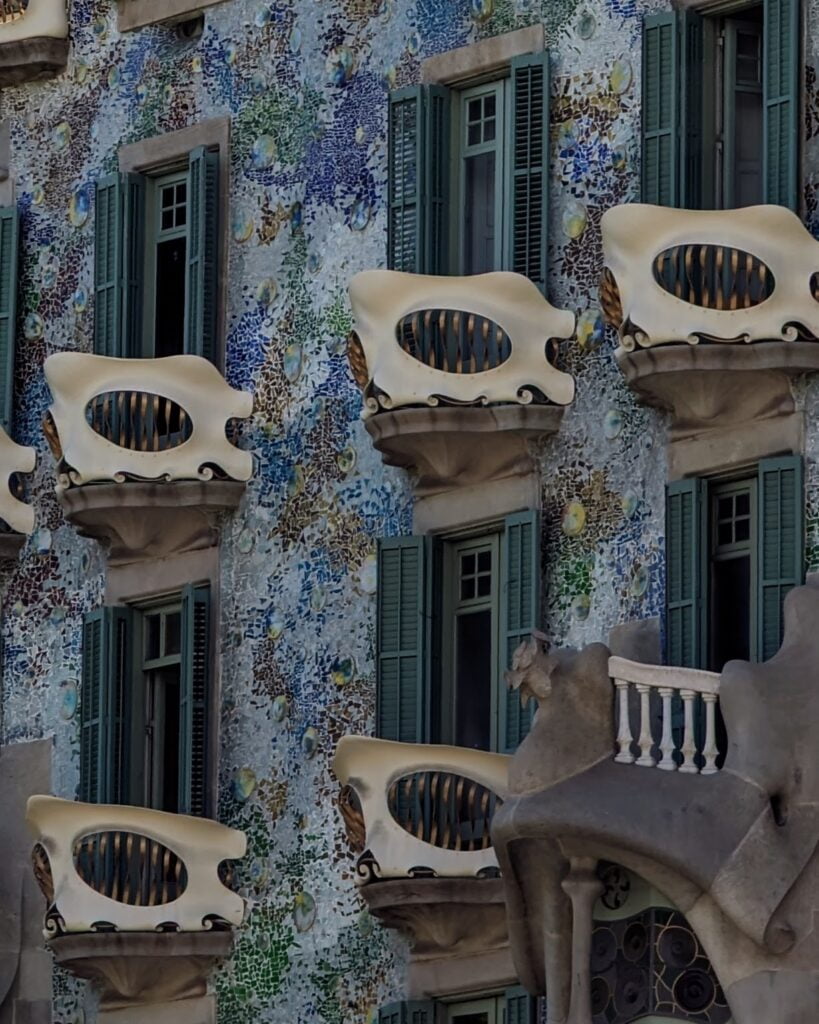
Gaudí adds a dynamic touch to the building’s exterior by covering the façade with a trencadis whose blue and green tones are reminiscent of natural coral.
Typical of Catalan Modernist architecture, trencadis is a type of mosaic based on ceramic chips, which Gaudí was the first to use to cover curved surfaces where full ceramic tiles could not be laid.
Flat roof
Gaudí designed the Casa Batlló roof in a functional manner. It takes account of rainwater run-off, the building’s natural ventilation and the space available to create a terrace that is both aesthetically pleasing and practical, offering breathtaking views over Barcelona.
➜ Don’t hesitate to sit down for a few minutes at one of the tables in the rooftop bar to enjoy the panoramic views…
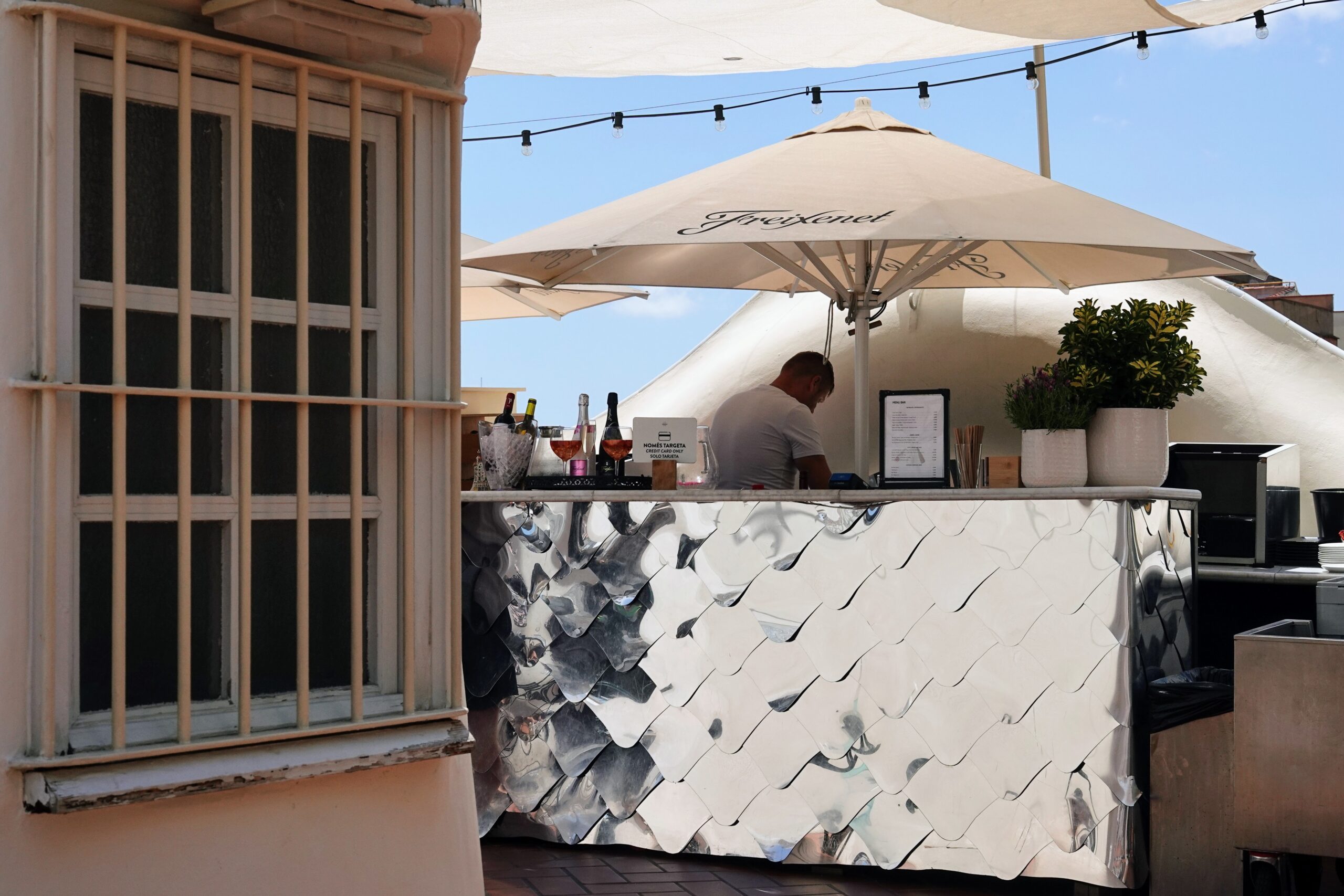
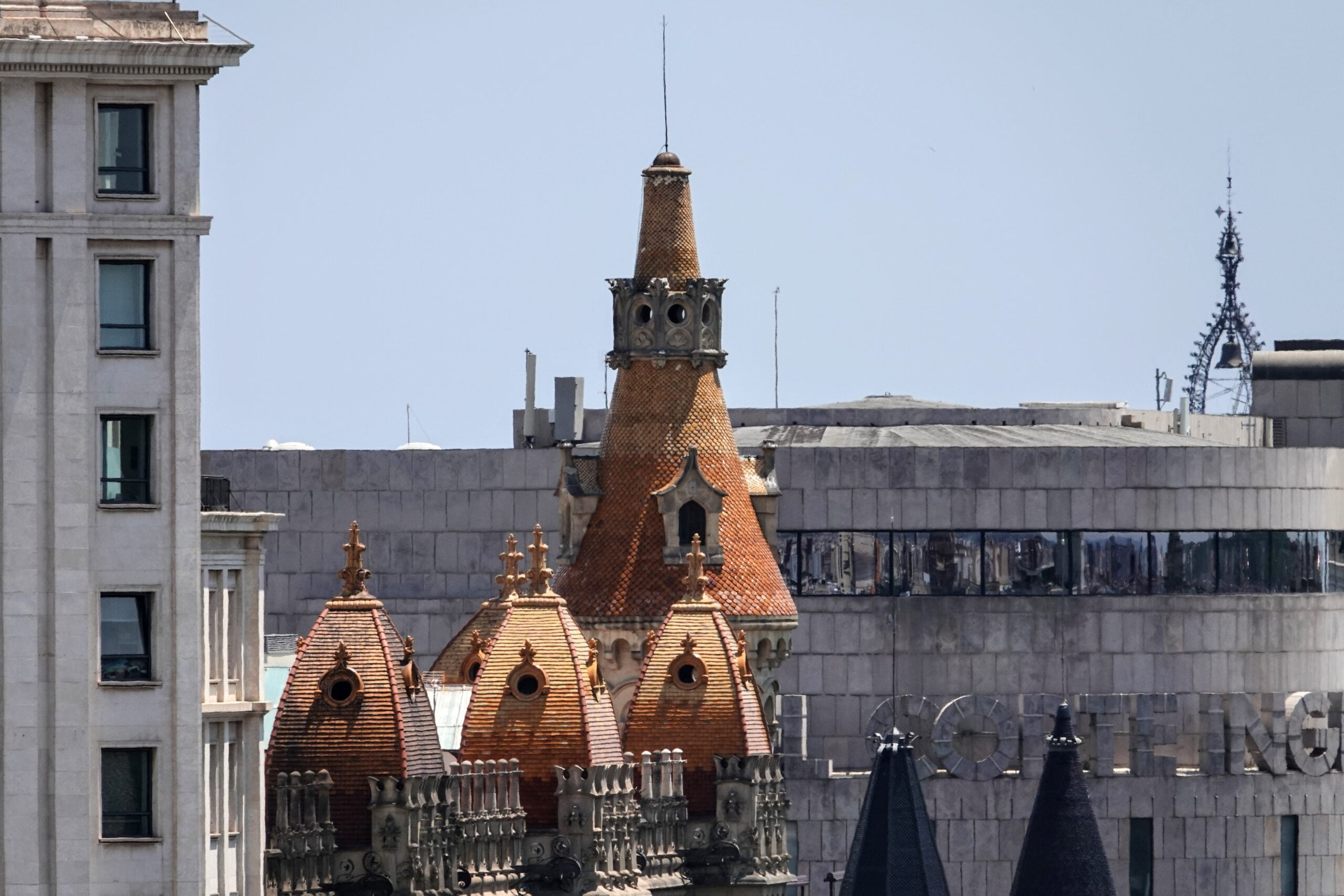
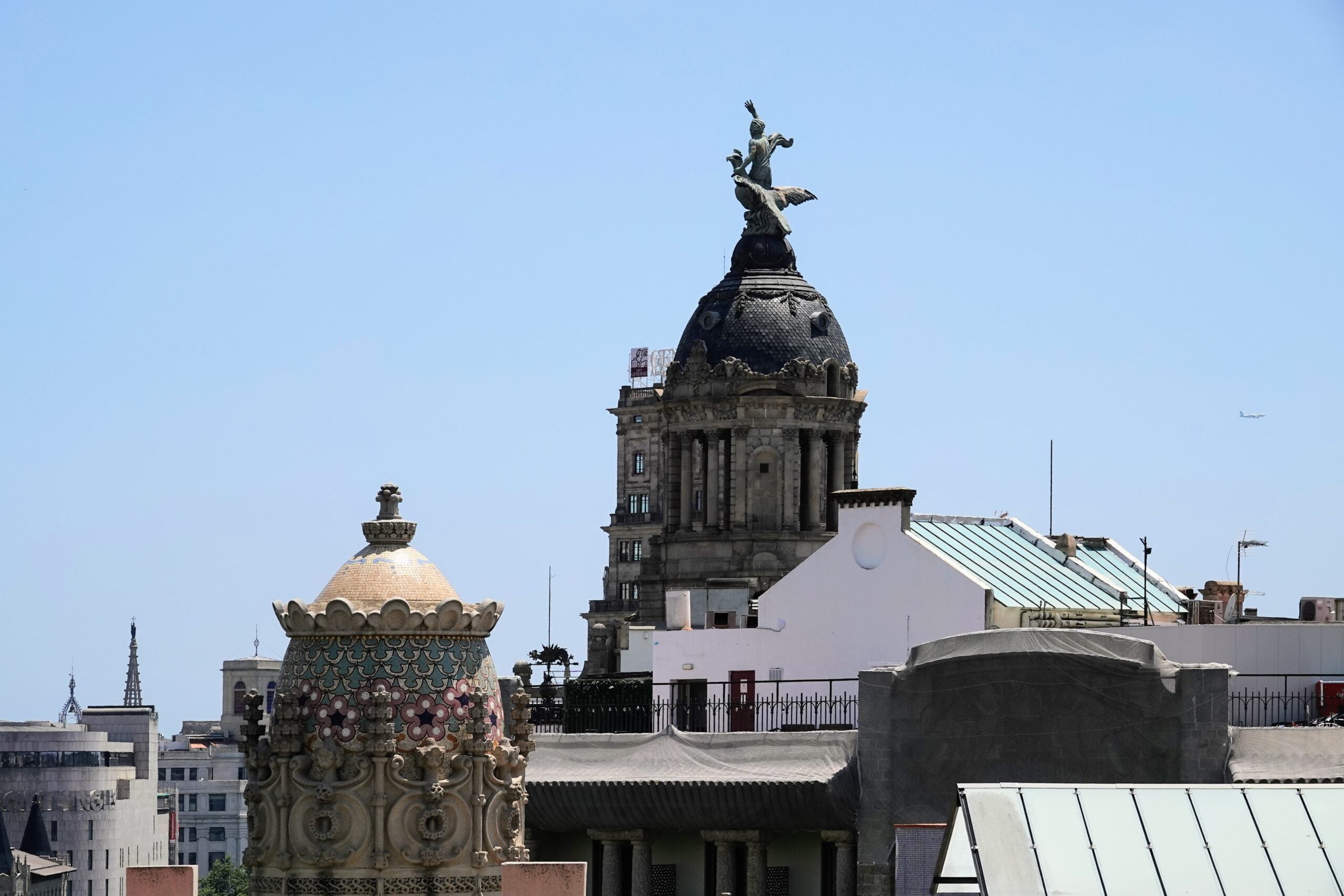
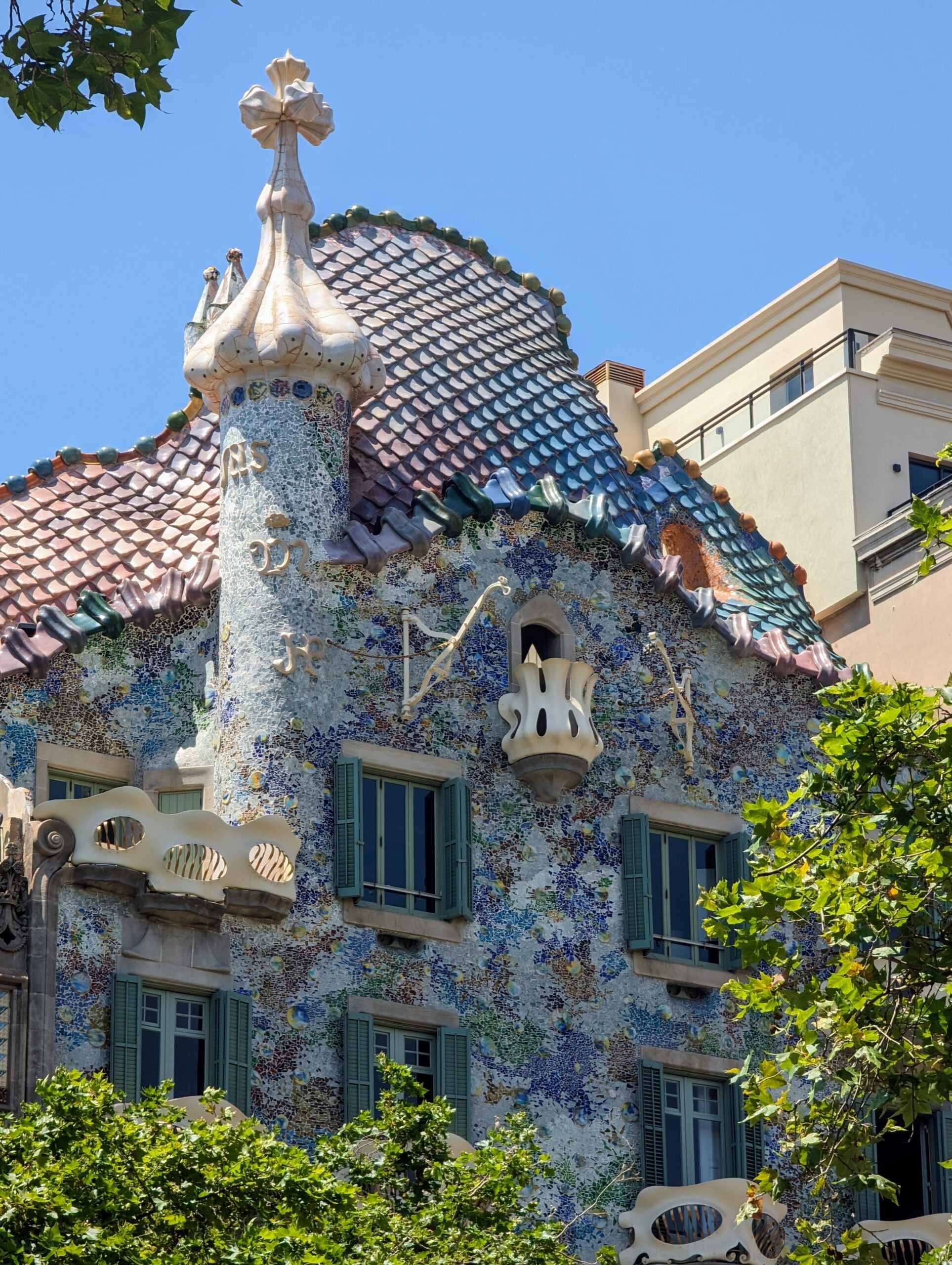
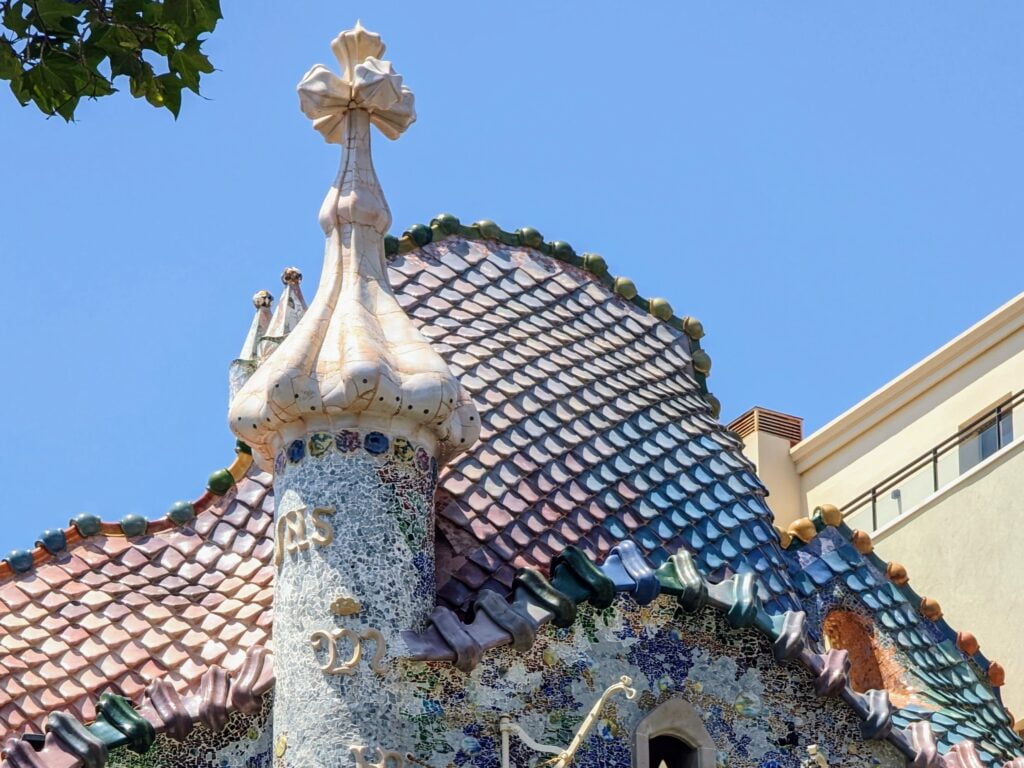
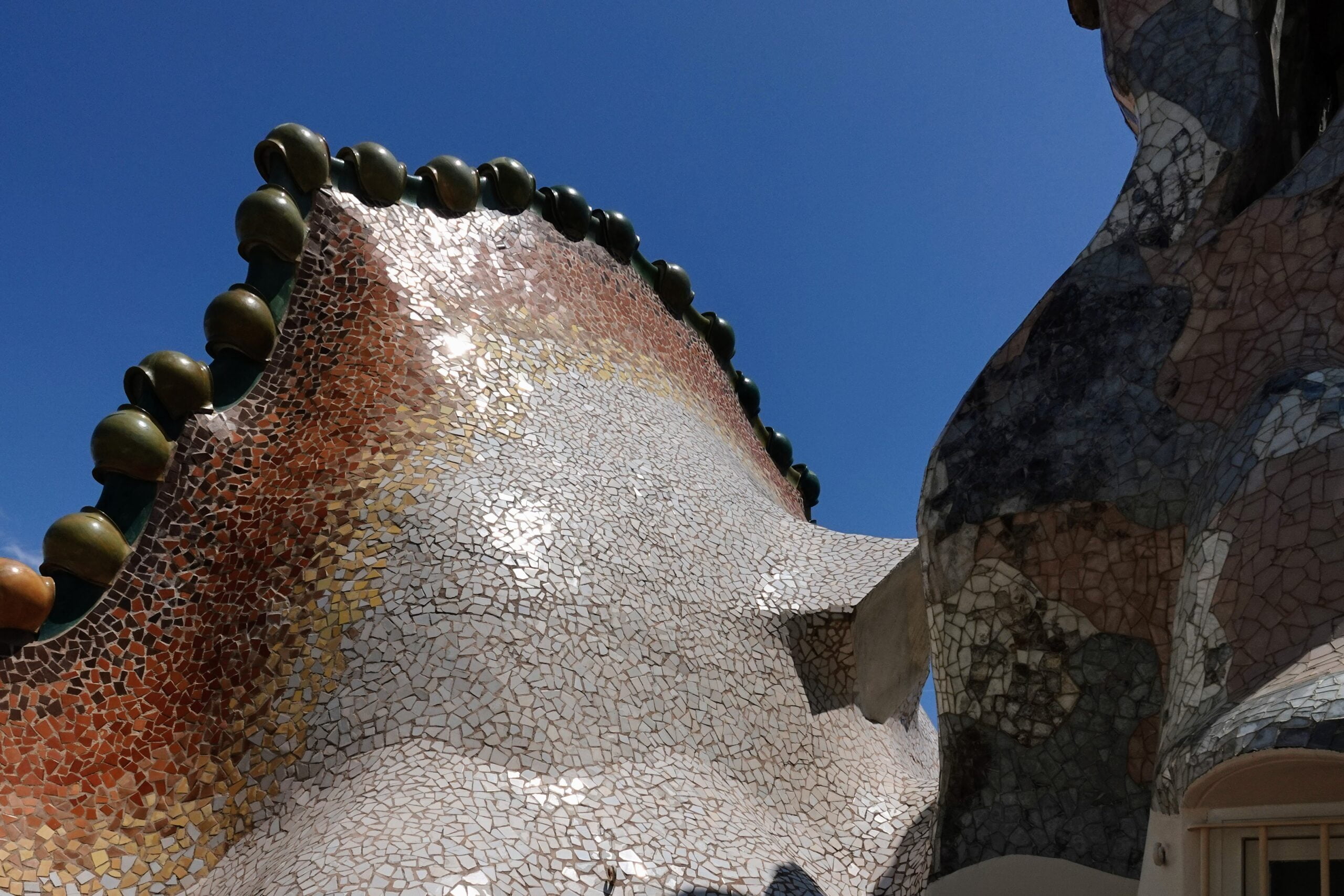
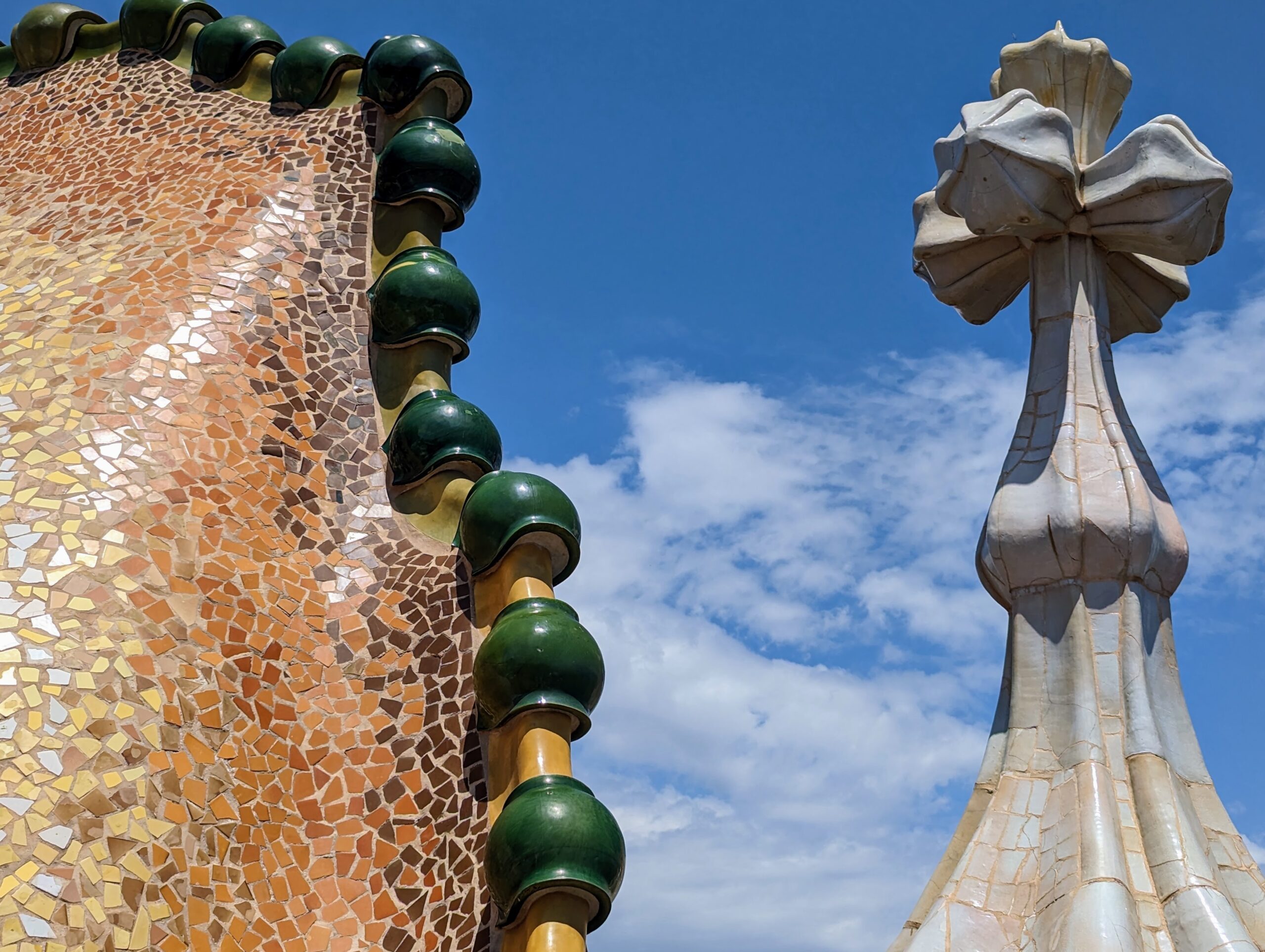
Slightly set back from the street, the roof is a sort of ridge made of colored ceramics, whose scale-like shape evokes the back of an animal, giving rise to numerous interpretations. At the top of the tower, a four-pointed cross indicates the four cardinal points.
The roof terrace is a rectangular space divided at its center by the dormer windows of the interior patios. At the front, water tanks, essential at a time when running water lacked sufficient pressure to provide the required conditions of comfort, are concealed in a large room that coincides with the upper part of the façade.
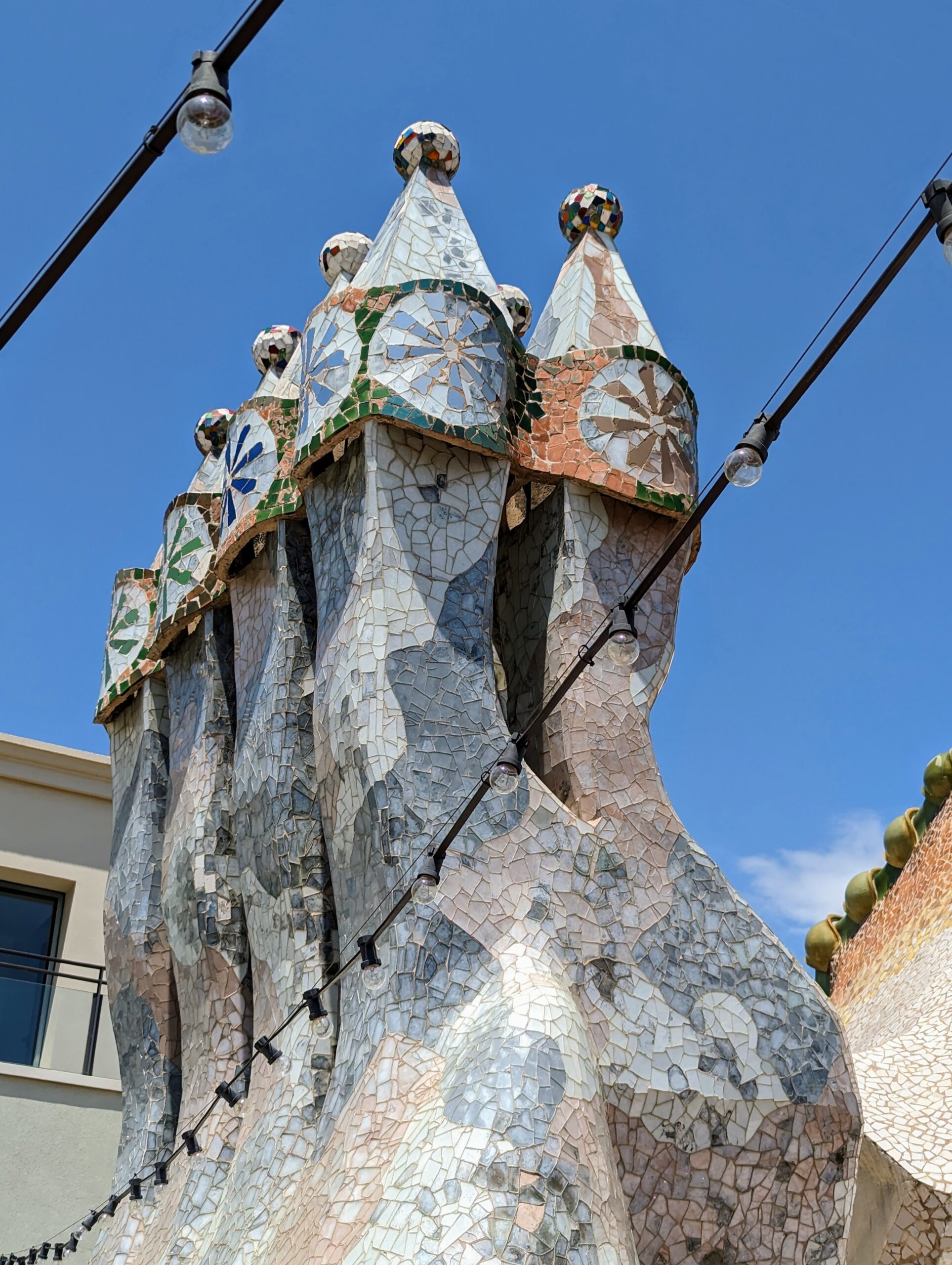
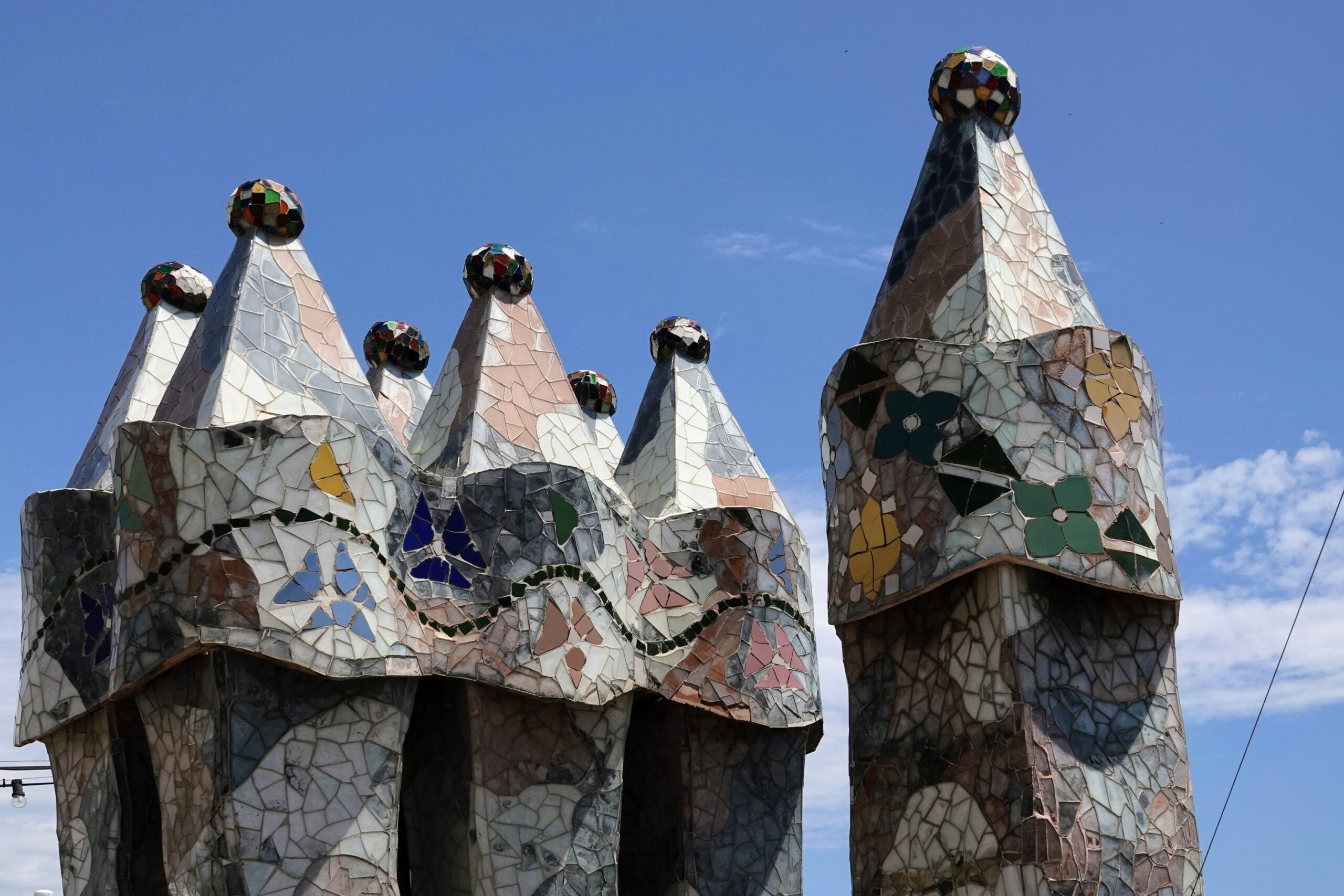
Specially designed to prevent air from flowing back, several chimneys, grouped together like mushrooms, are covered with fragments of glass and polychrome trencadís with floral motifs. Each smoke outlet is covered by a pyramid-shaped hood whose steep slope allows rainwater to run off.
Inside Casa Batlló
The interior of Casa Batlló mirrors its exterior: a blend of aesthetics and functionality. From the entrance hall to the attic, Gaudí collaborated with the best craftsmen of the time, intervening at every level to leave nothing to chance.
The building is designed as a high-end home, with the lower two floors occupied by Josep Batlló and his family, while the upper floors are rented out asapartments.
Entrance hall
On the first floor, a community lobby is decorated with a ceramic banister in blue and white. A little further on is themodernist elevator serving all the rental floors.
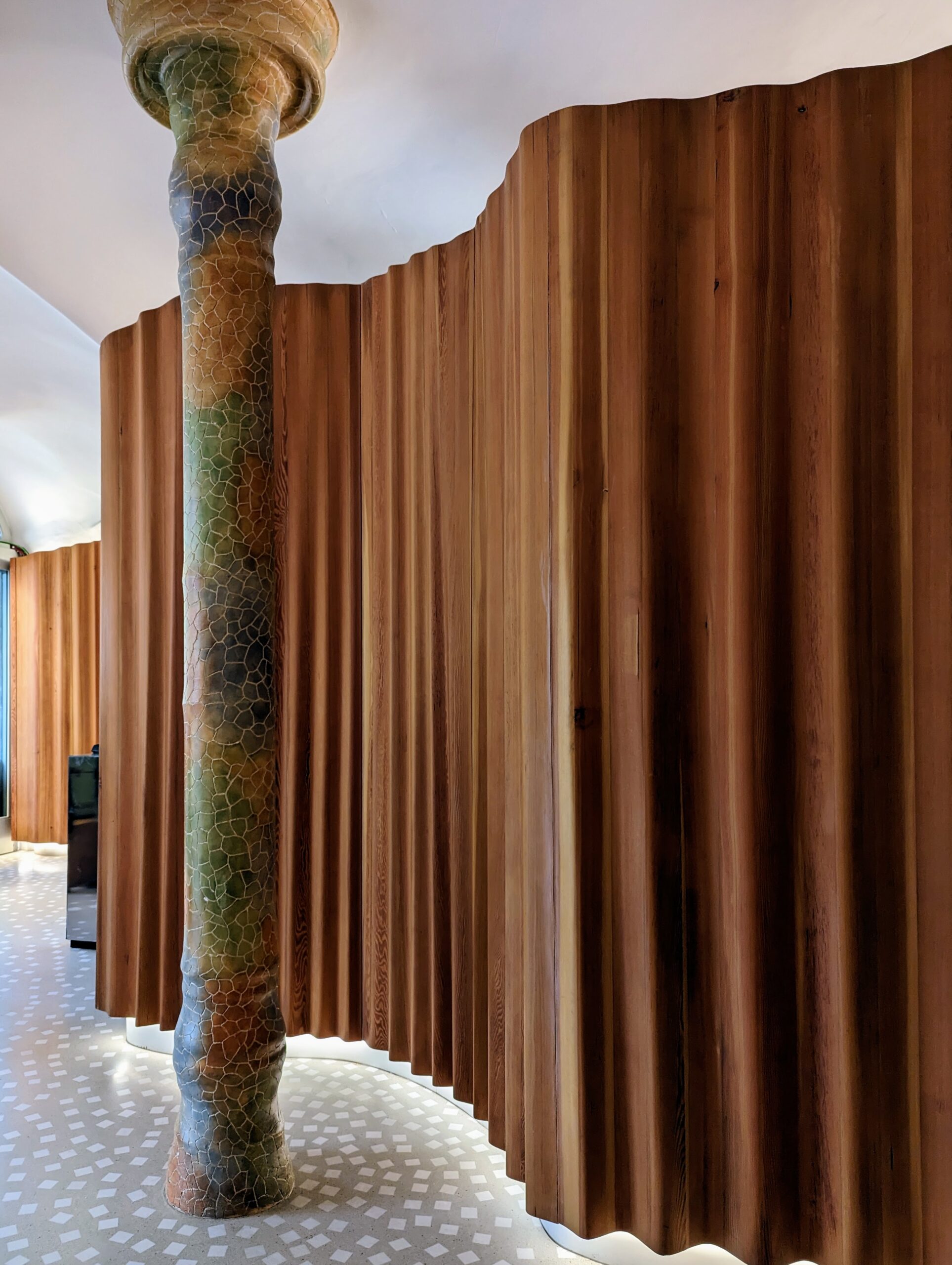
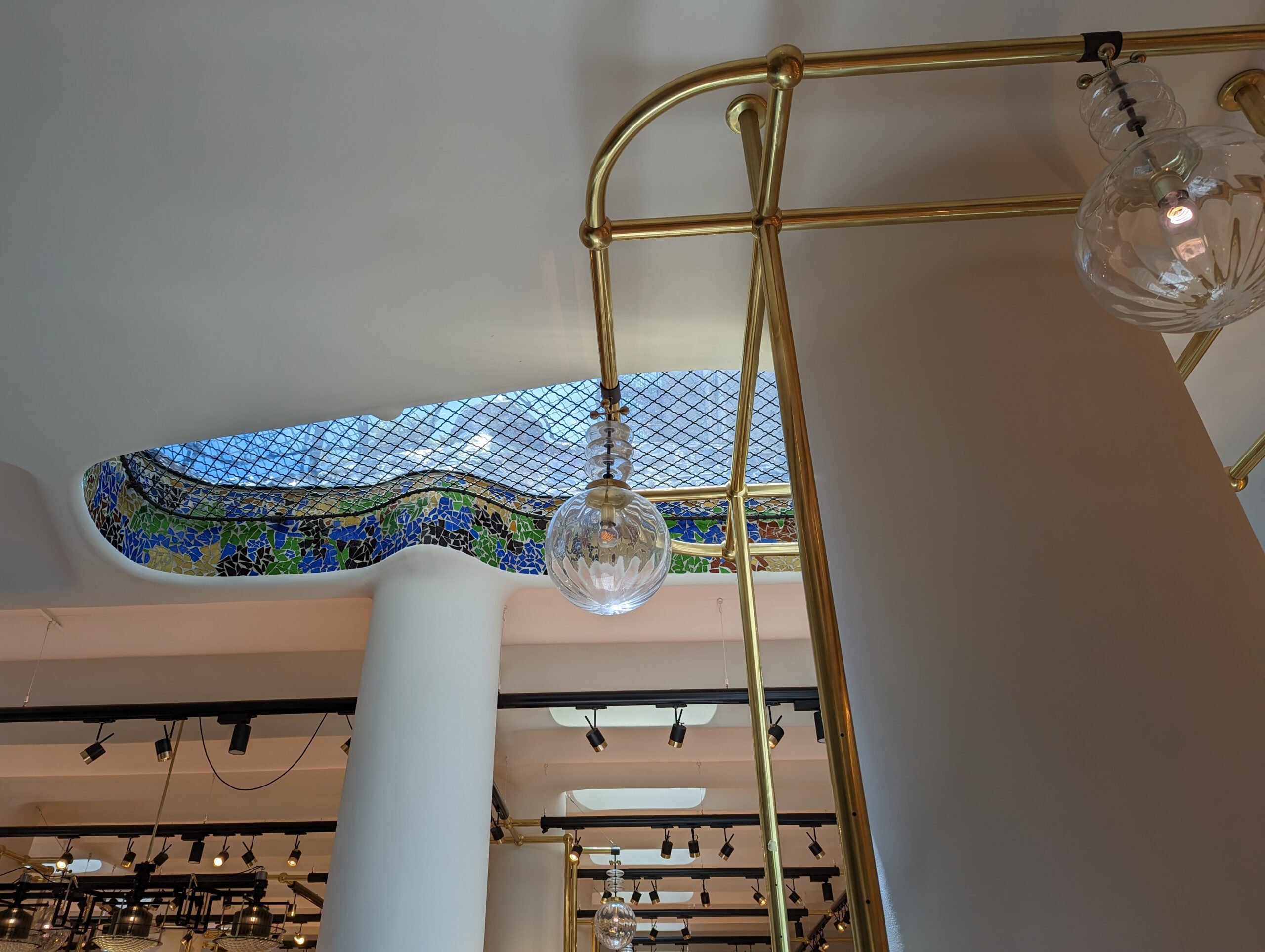
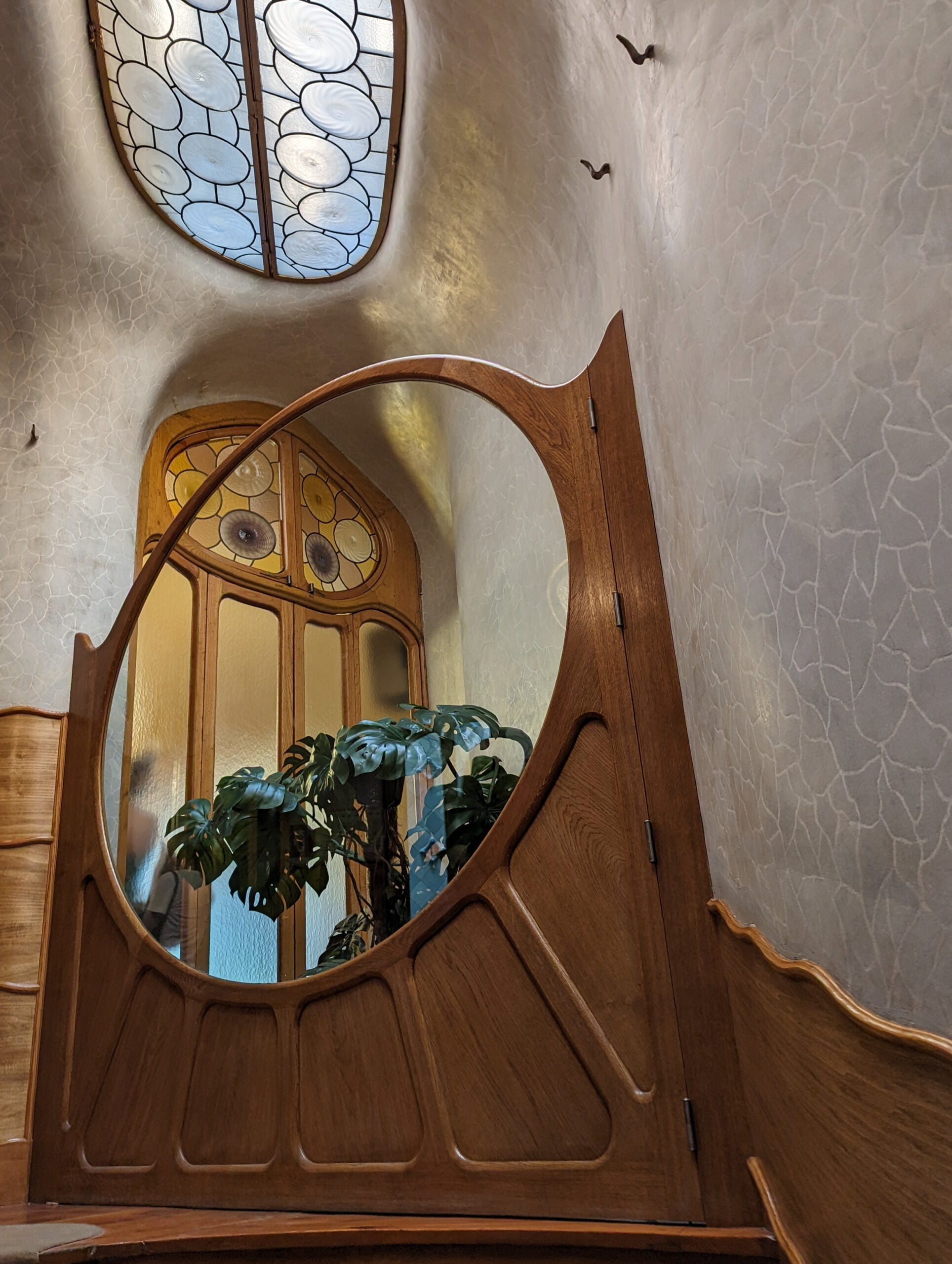
On the left, an imposing wrought-iron gate leads to the Batlló family’s private hall. The corrugated walls are at one with the ceiling, which features two large skylights decorated with hexagonal glass, allowing light in like a beehive.
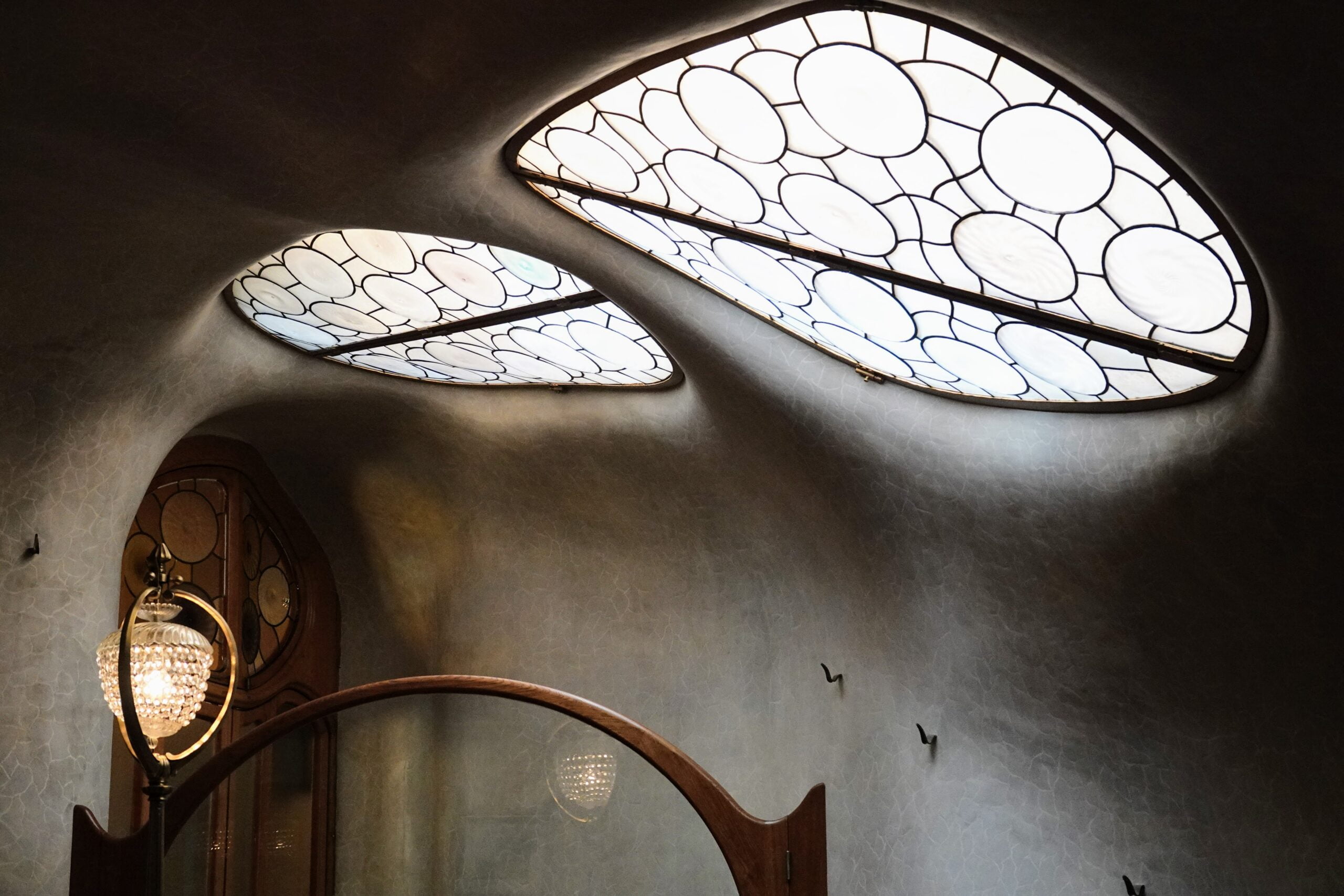
The curved shapes of the partitions, doors and windows evoke the interior of a boat, while at the far end of the vestibule, a majestic oak staircase draws the spine of a giant monster in its cave. The underwater atmosphere is reminiscent of the fantasy world of Jules Verne, very much in vogue at the time.
Noble floor
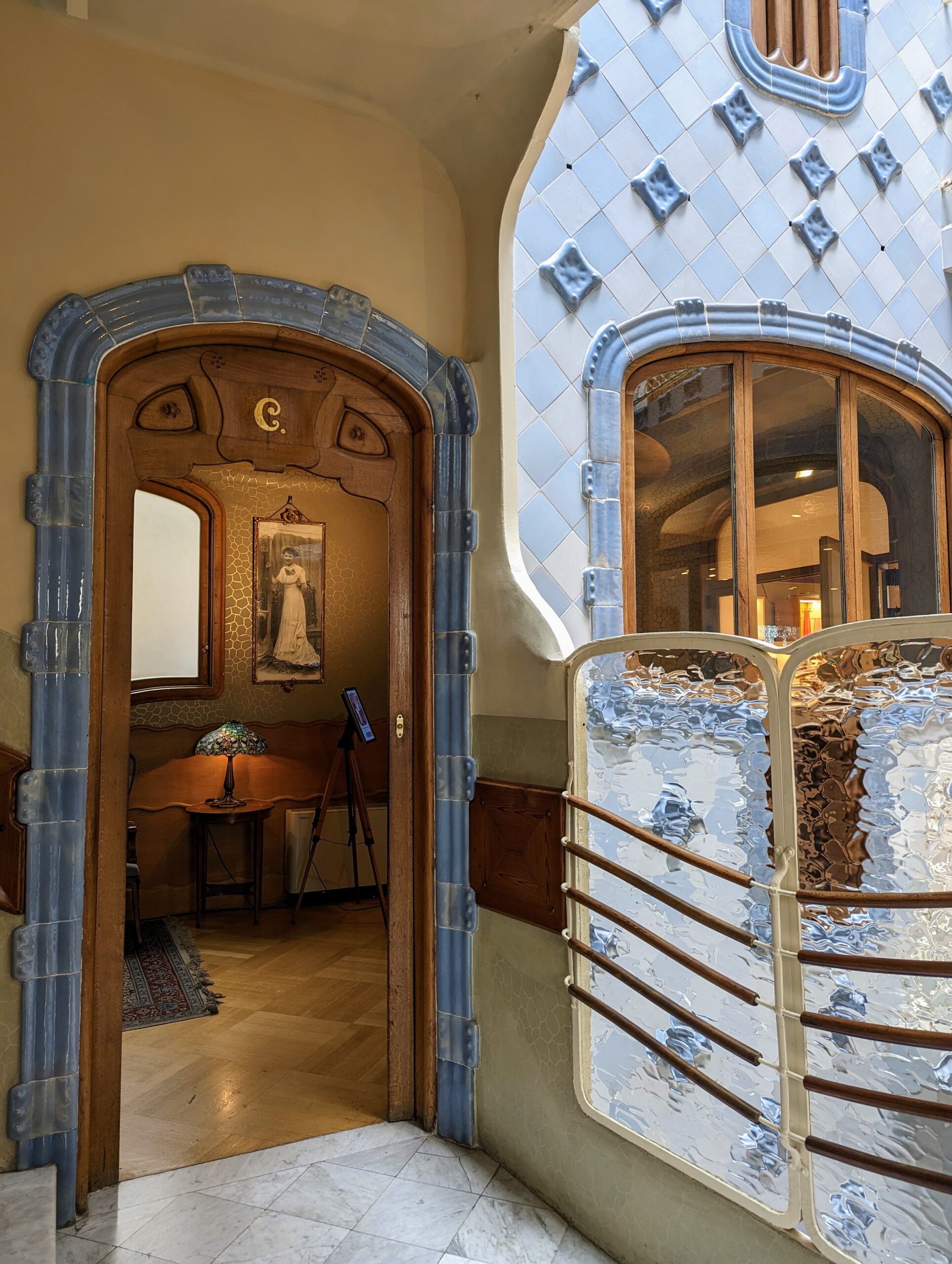
At the top of the staircase, a service room gives access to the various rooms on theNoble Floor, a true symbol of the bourgeois lifestyle of the period, whose walls all feature a characteristic crackling pattern, achieved using a lime stucco technique of varying hues.
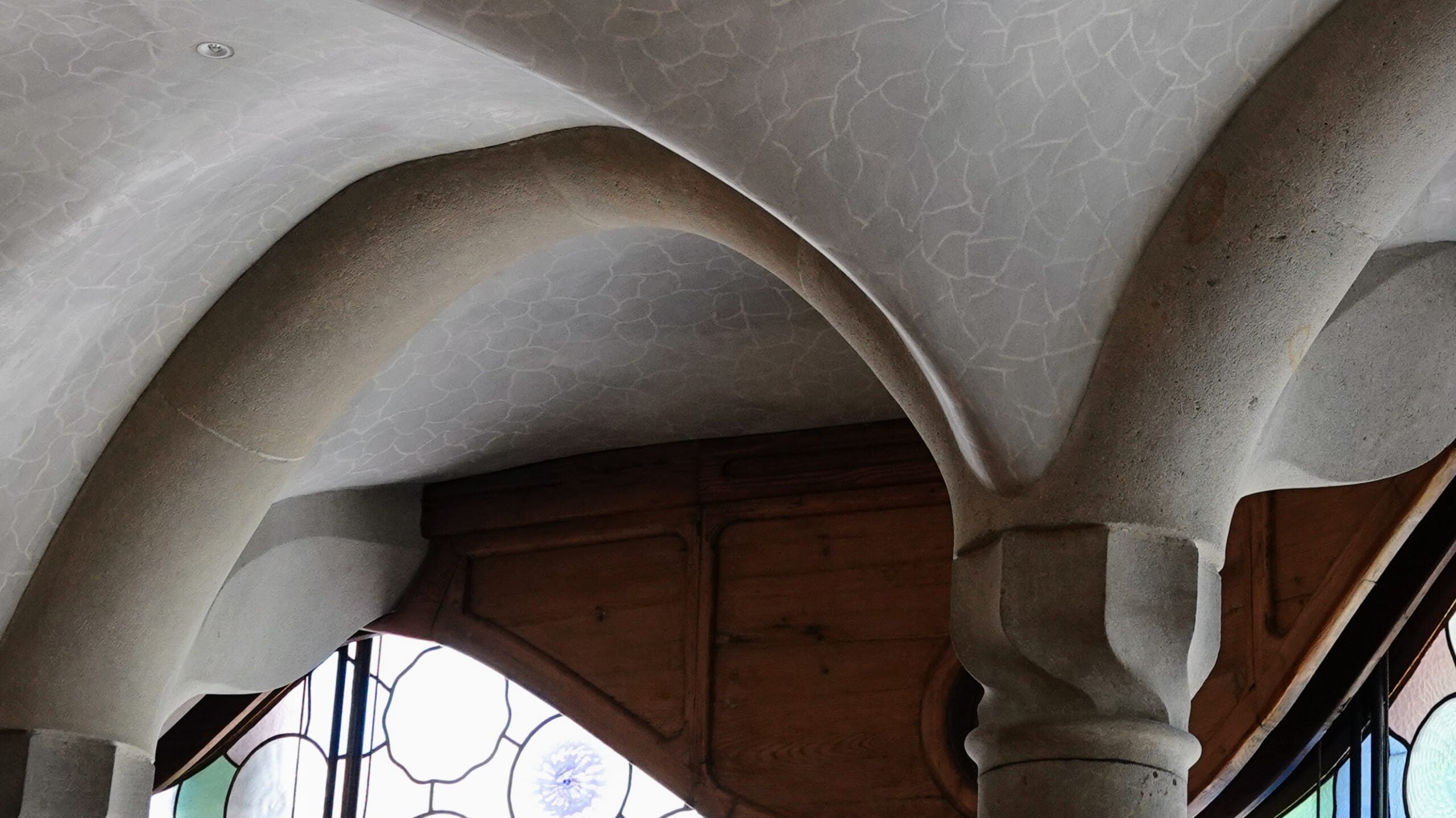
Long concealed under several layers of paint, the original coating on the walls of the Étage Noble has now been brought to light again, following a major restoration project that has underlined the exceptional nature of the work carried out at the time.
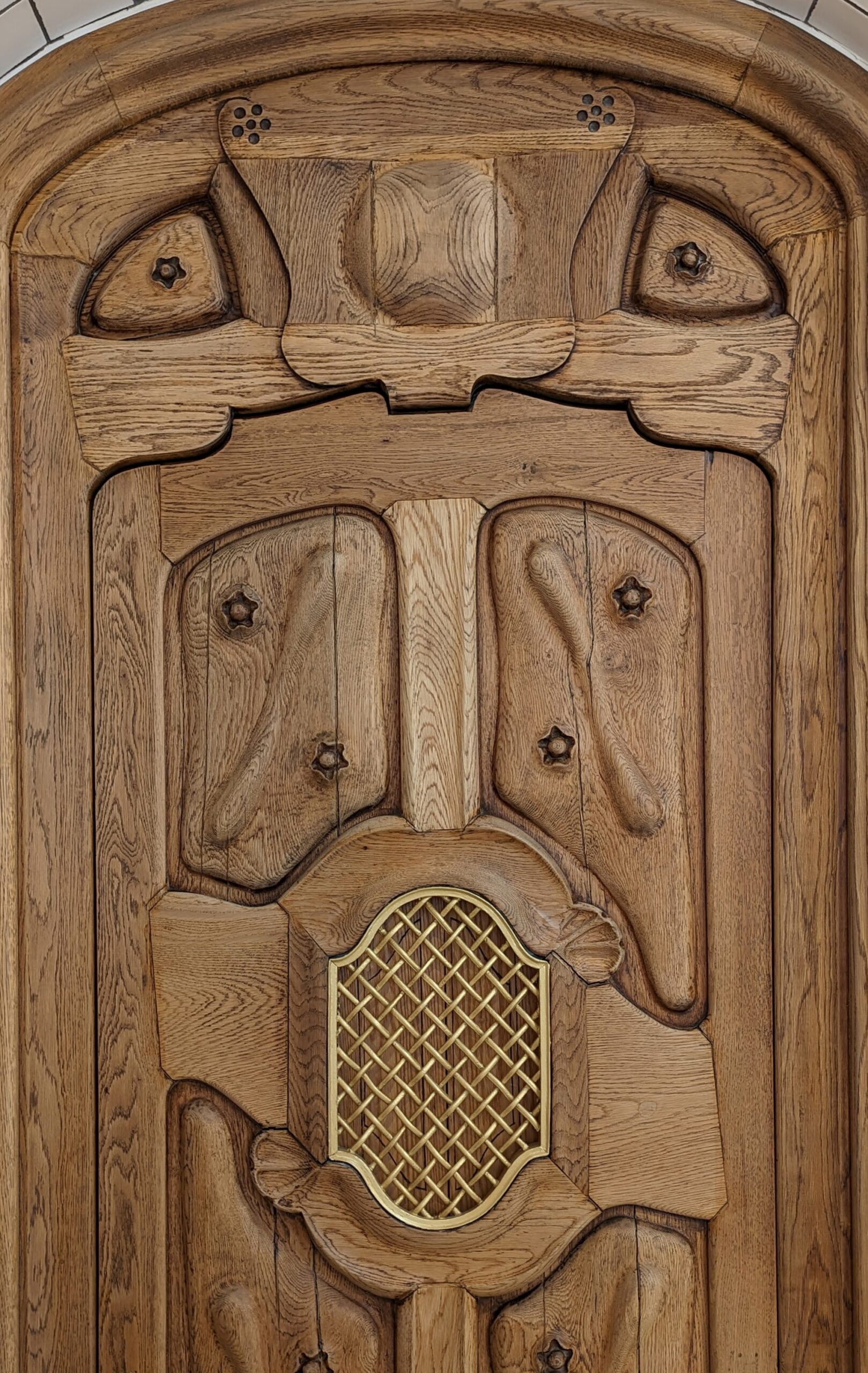
In Josep Batlló’s study, which features a mushroom-shaped fireplace and large, organically-shaped oak doors, the incisions in the stucco have been filled in with gold leaf, giving the room an even richer, more surprising allure.
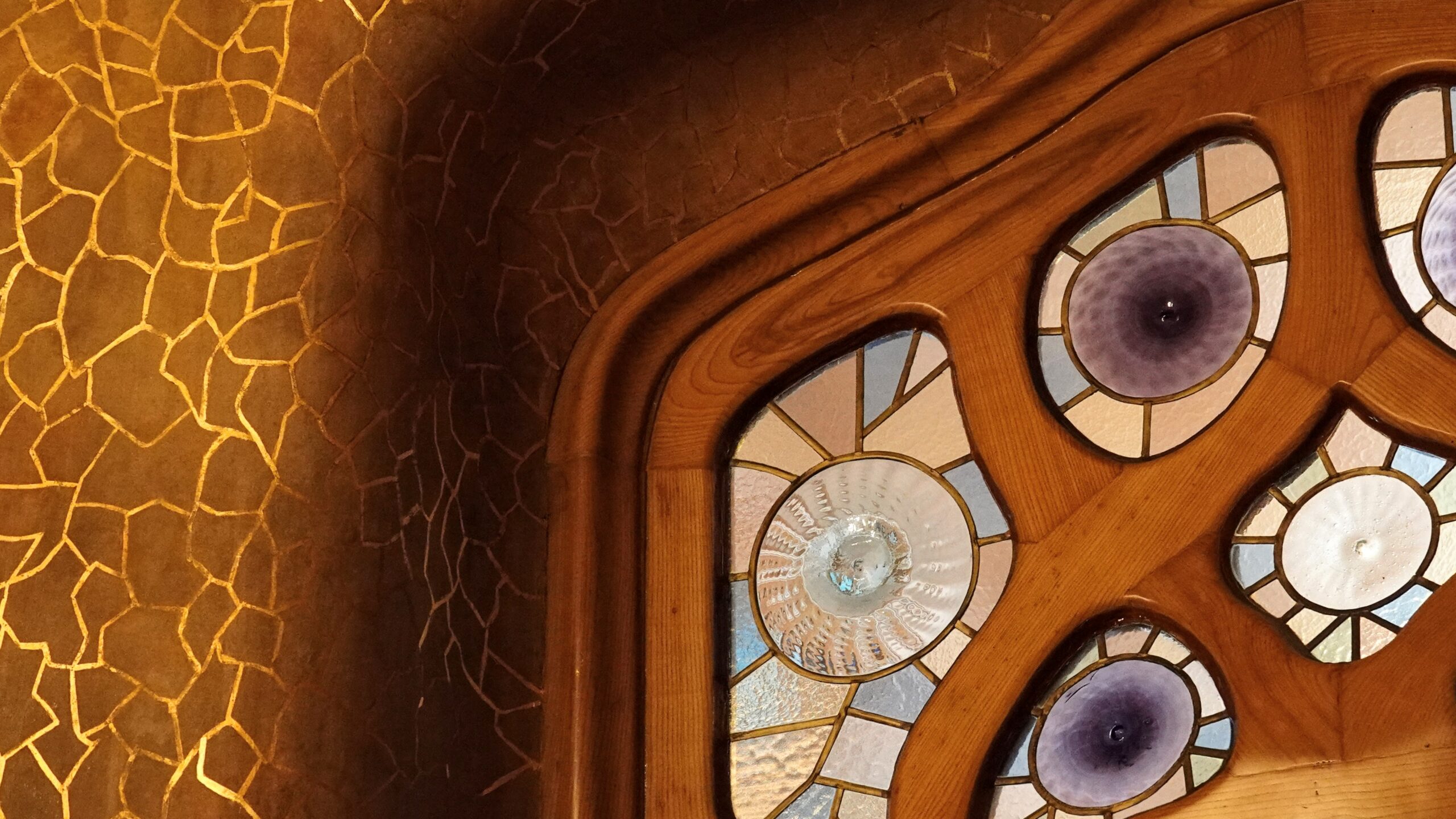
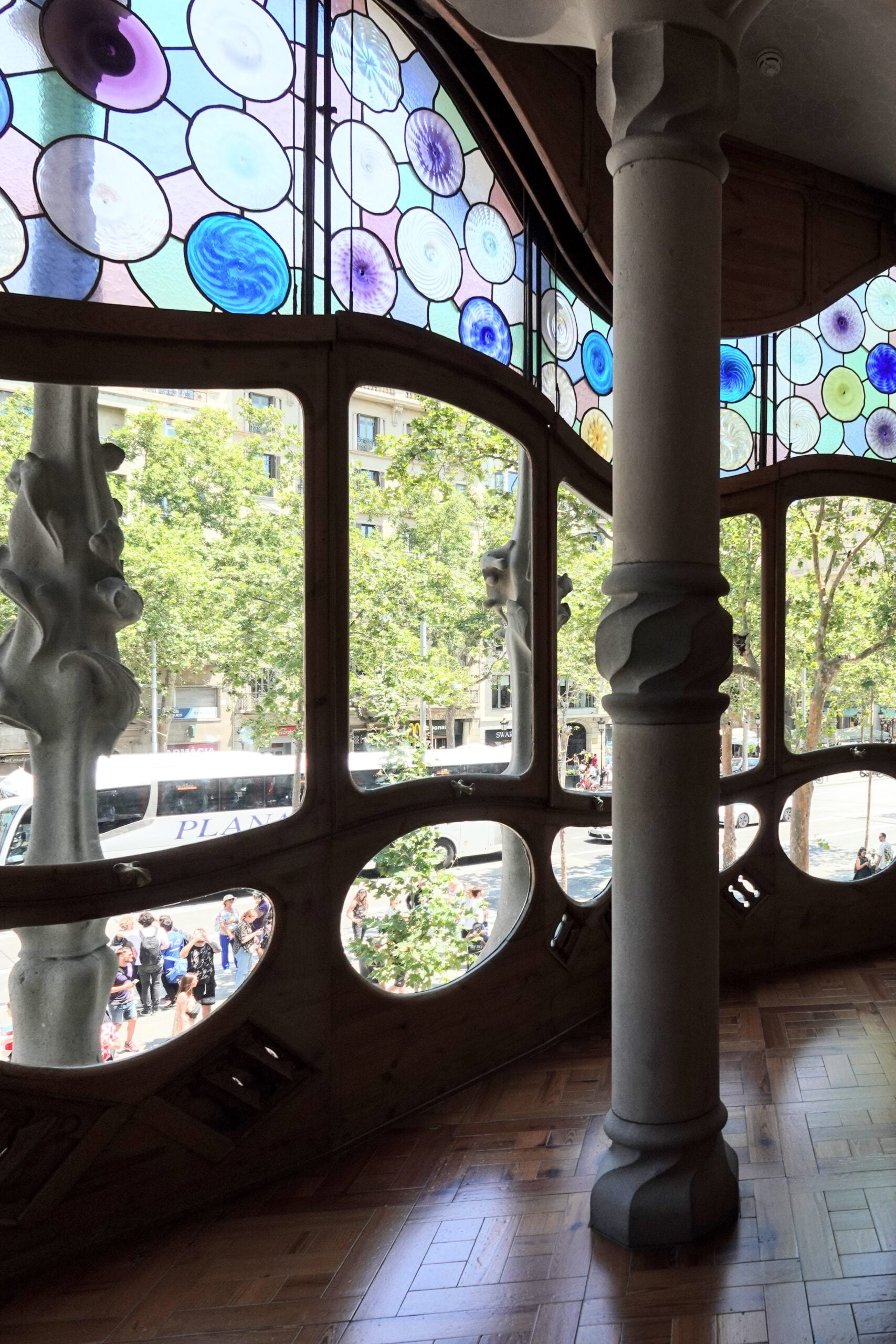
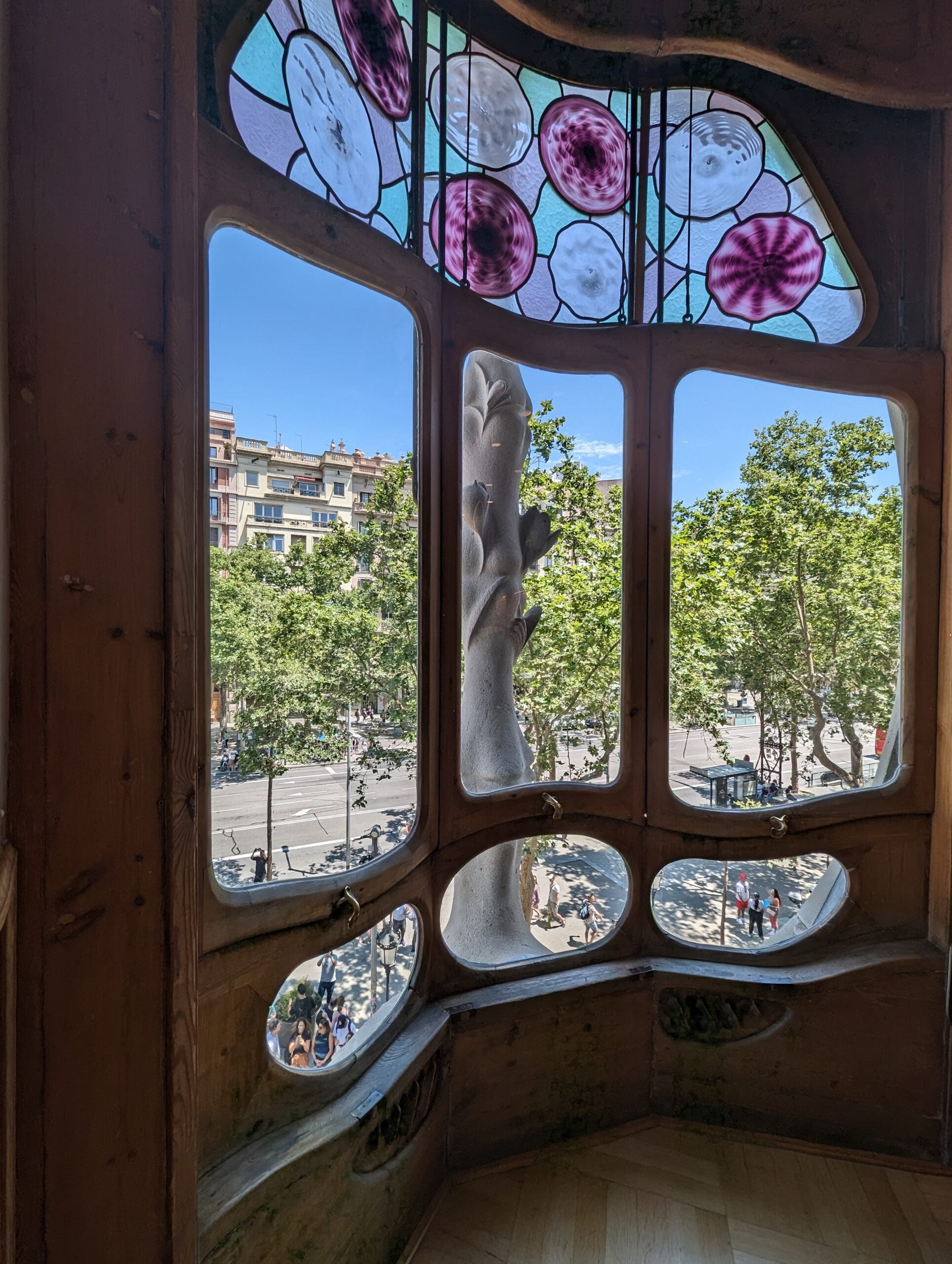
Then there’s the central lounge, on the main façade, with its large, sinuous glass roof that lets you see while being seen. At its center, sash windows slide out via counterweights concealed at the ends, revealing a Paseo de Gracia free of visual obstructions. On either side, the central living room communicates with smaller, more intimate lounges. The huge oak doors separating the rooms can be fully opened to form a single reception area.
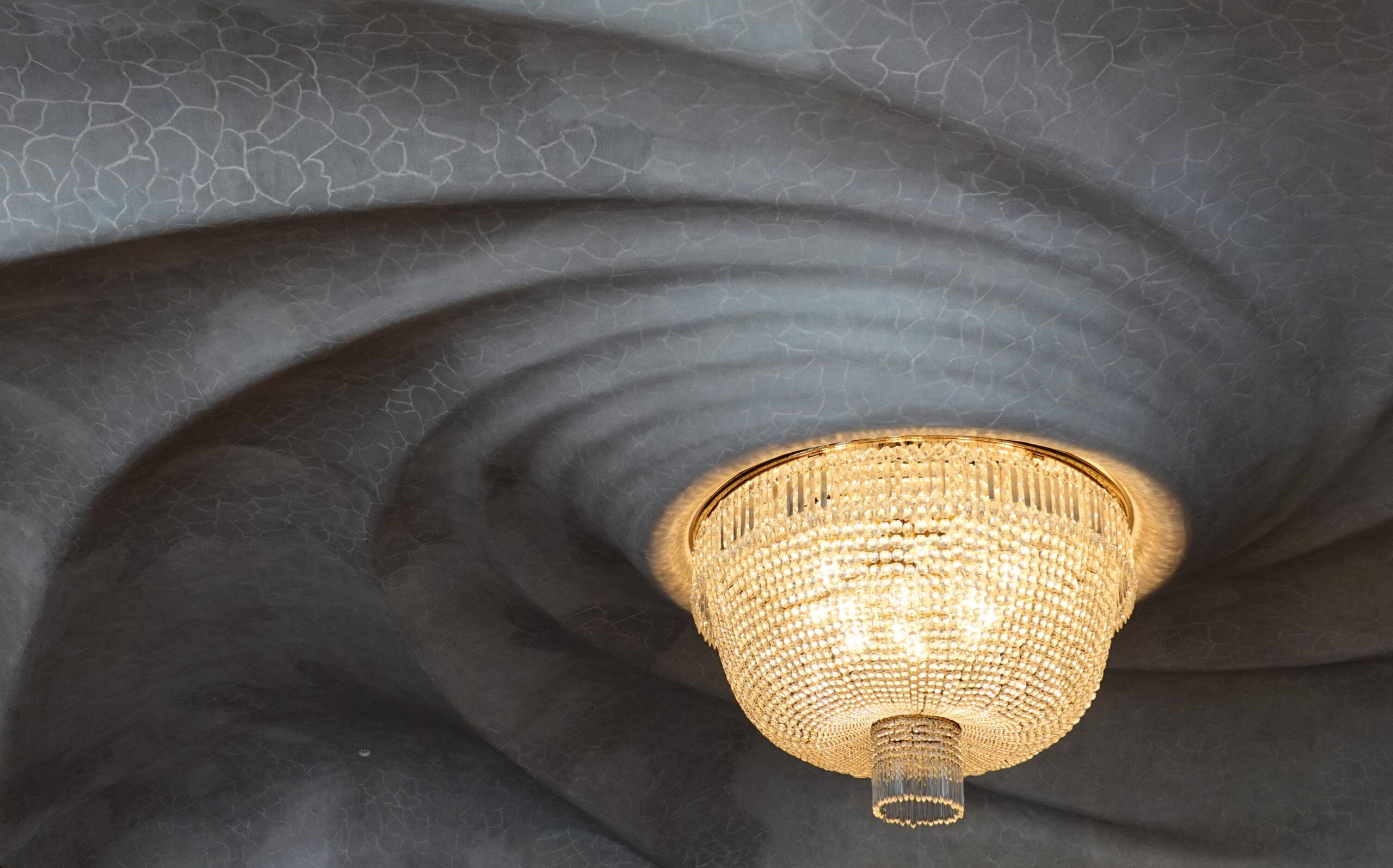
Sinuous and curved, the raised false ceiling takes the form of an impressive giant spiral, which some interpret as the movement of water in a water vortex, others as a galaxy or a heliocentric representation.
Outdoor patio
Opposite the central living room, the Batllós’ private dining room overlooks the rear façade of the Casa. Here, no whirlpool on the ceiling, but the reproduction of splashes formed on the surface of water by a falling drop.
From the dining room, access to the outdoor patio is via two large skylights that illuminate the basement. On either side, intricately curved grilles protect the windows.
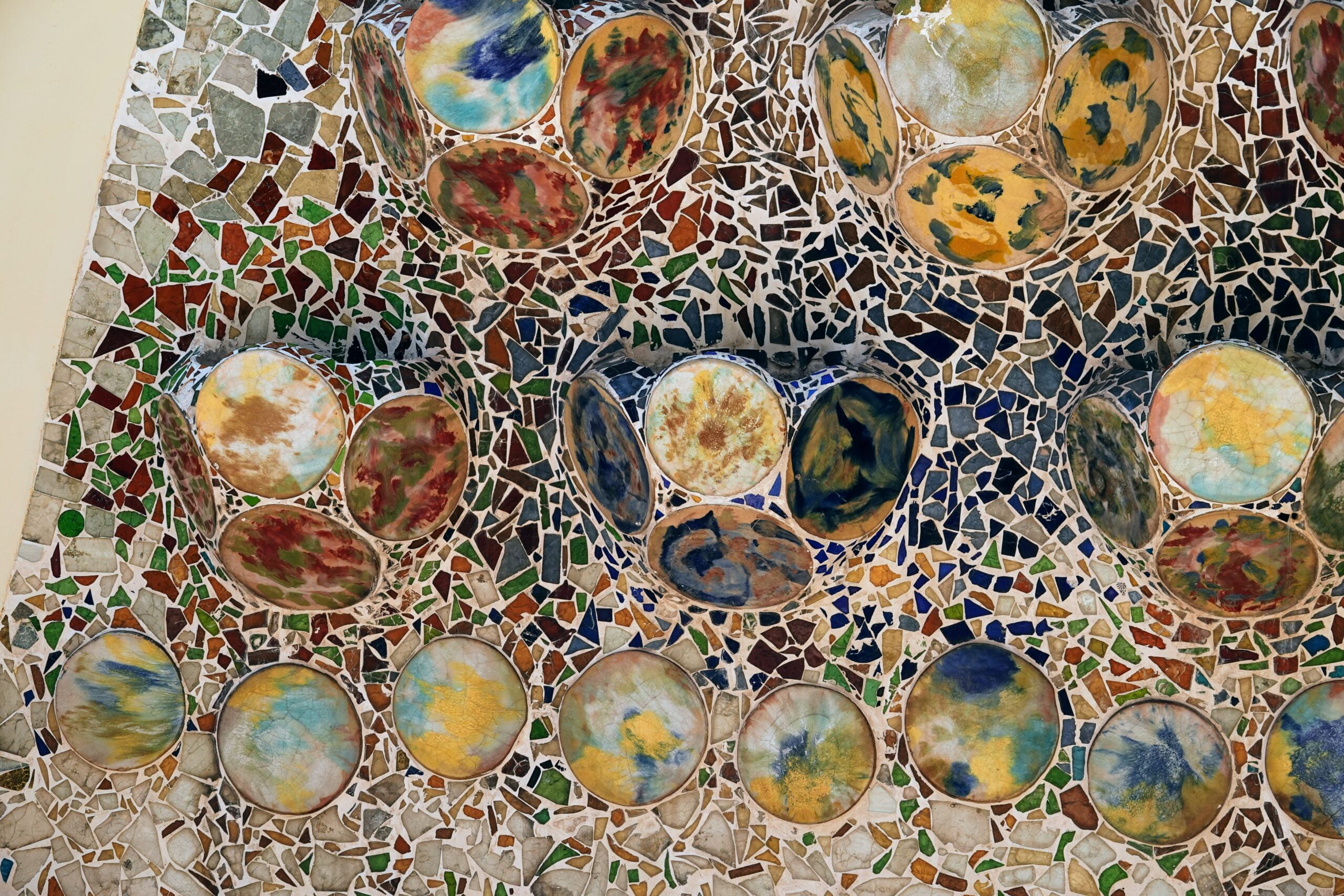
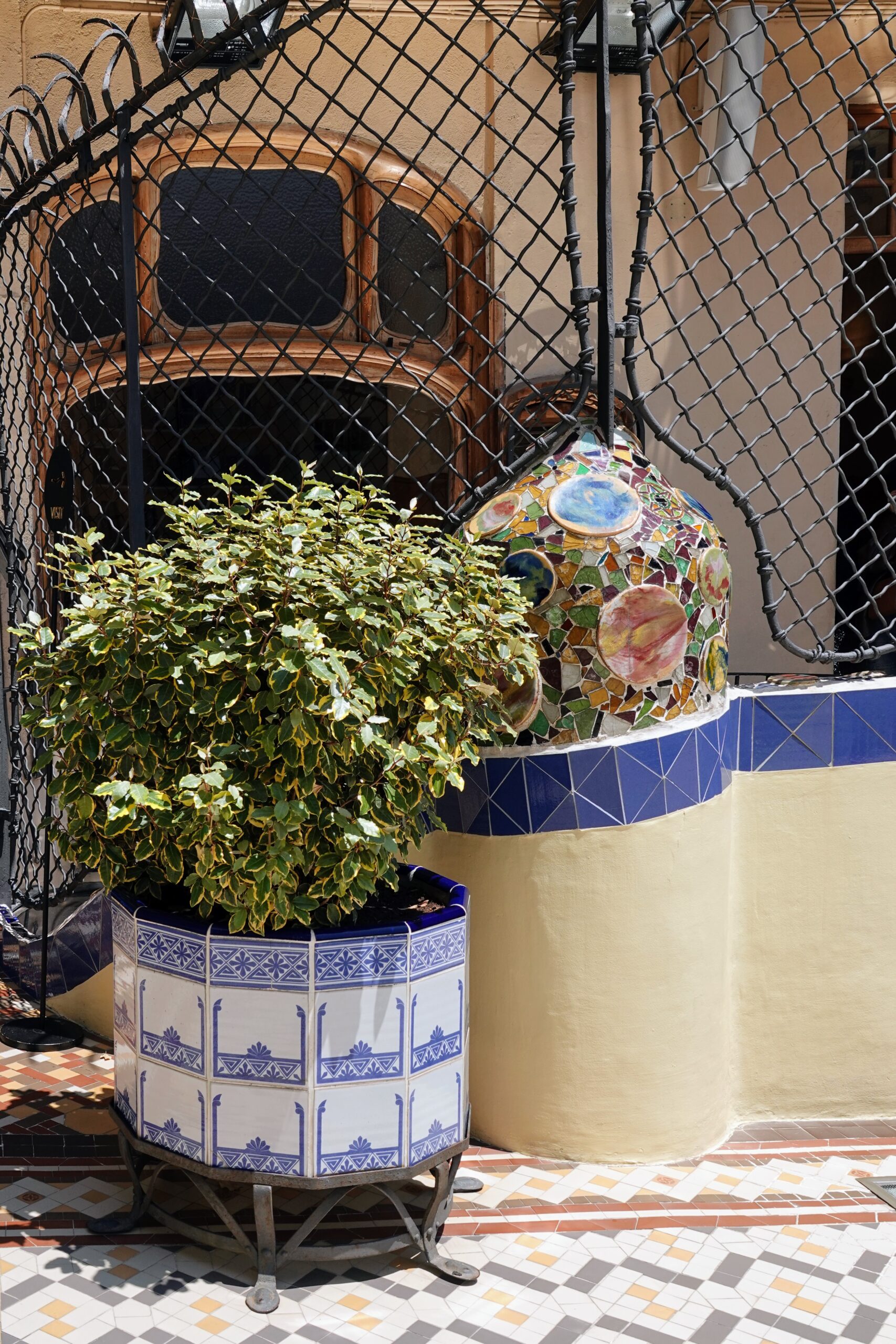
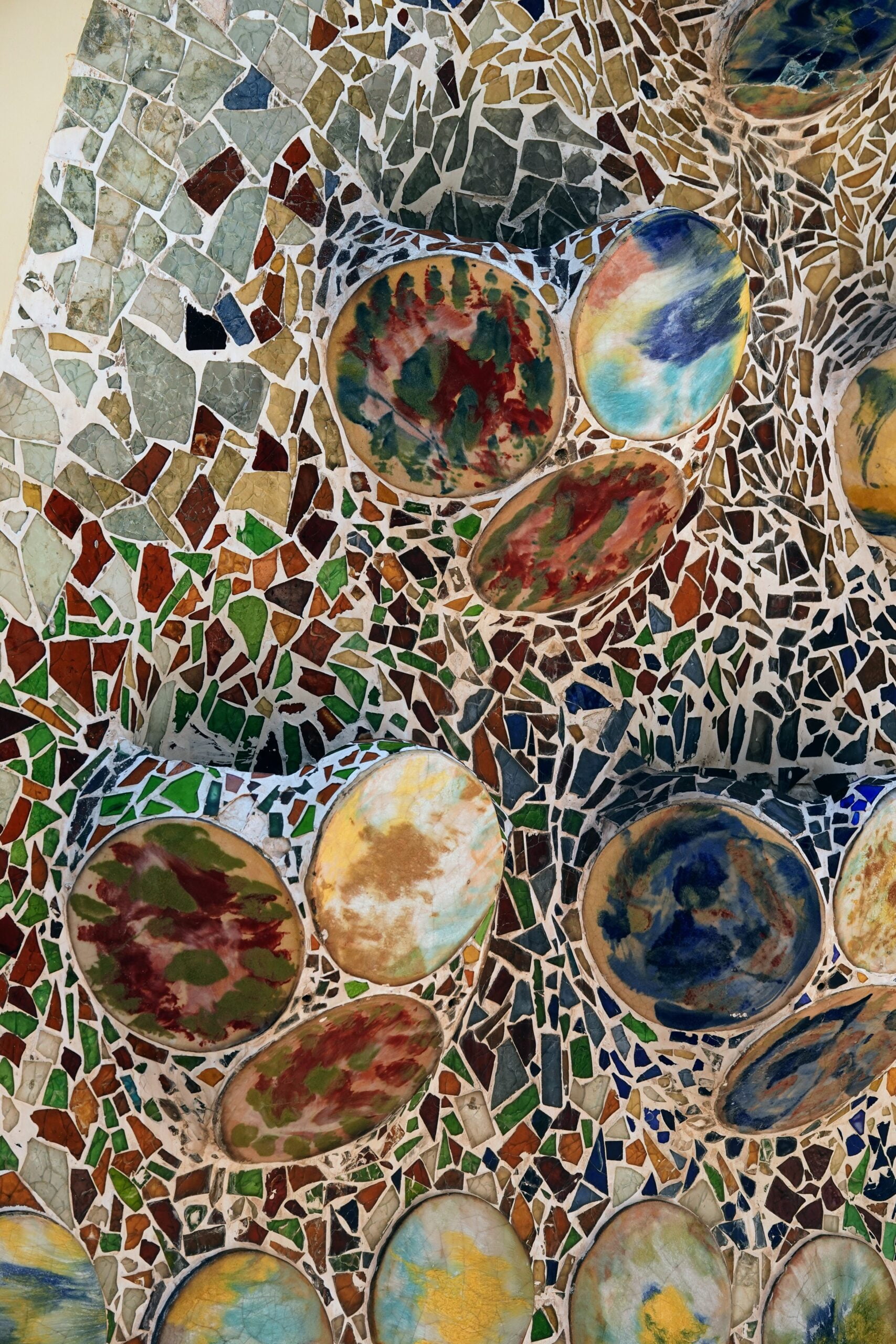
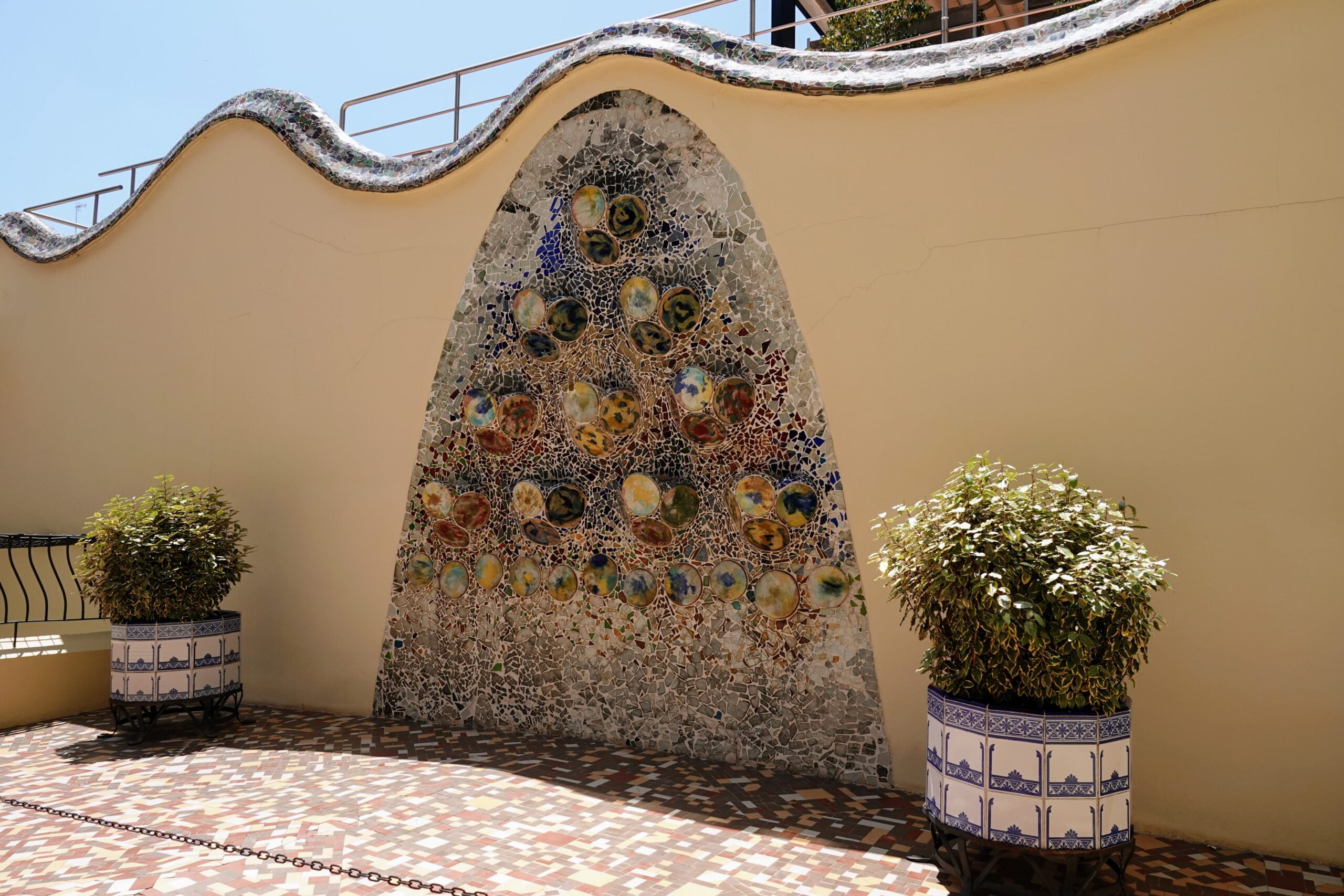
At the far end of the terrace area, an undulating wall conceals the property from view. Decorated with parabolic trencadis, this wall echoes the shape of the arches in the attic. Jutting out from the wall, planters made from the same ceramic discs as the main facade give the impression of a suspended garden.
Elevator and interior patios
A central stairwell and a modernist elevator, still functional, serve the rental floors.
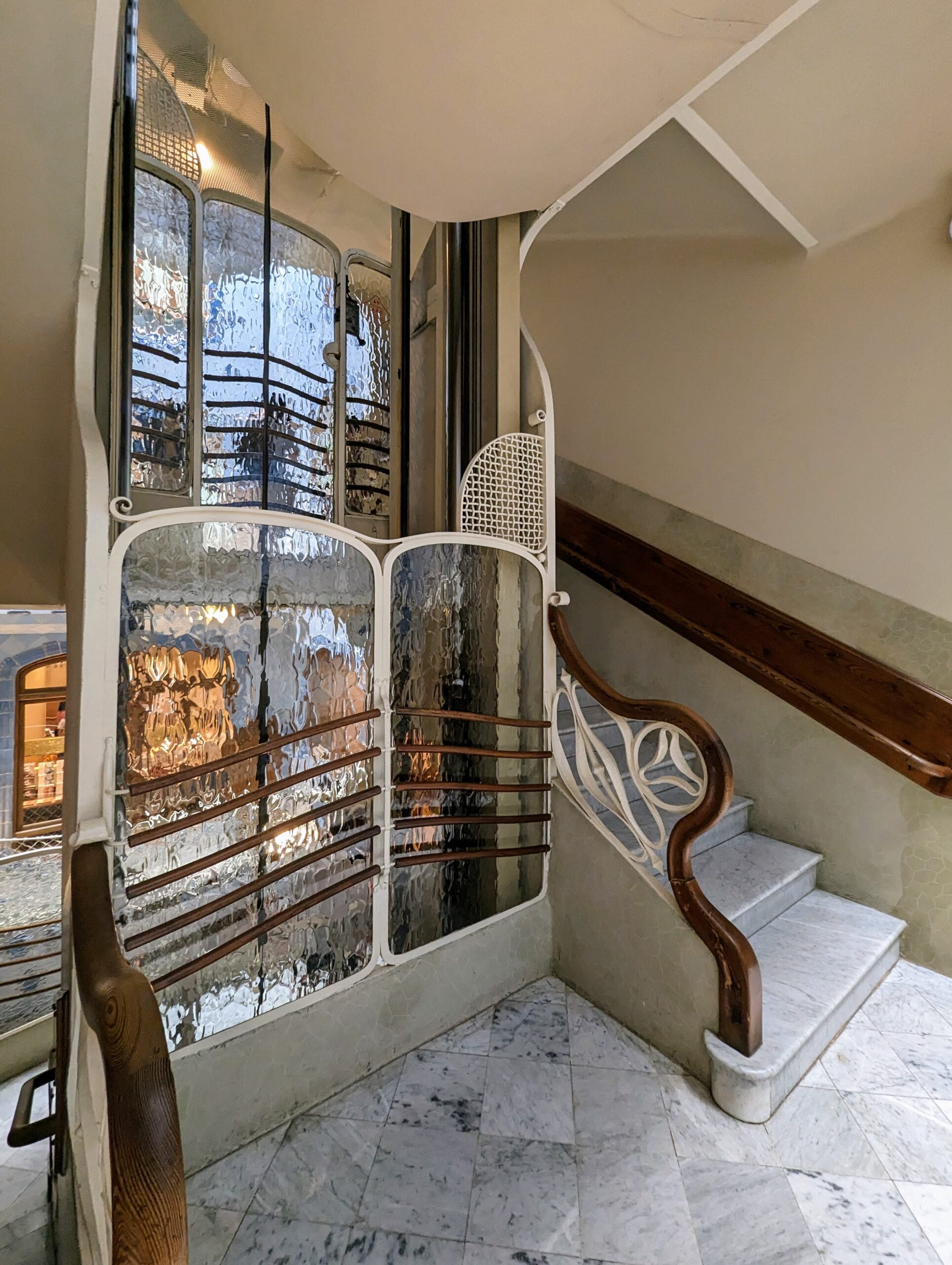
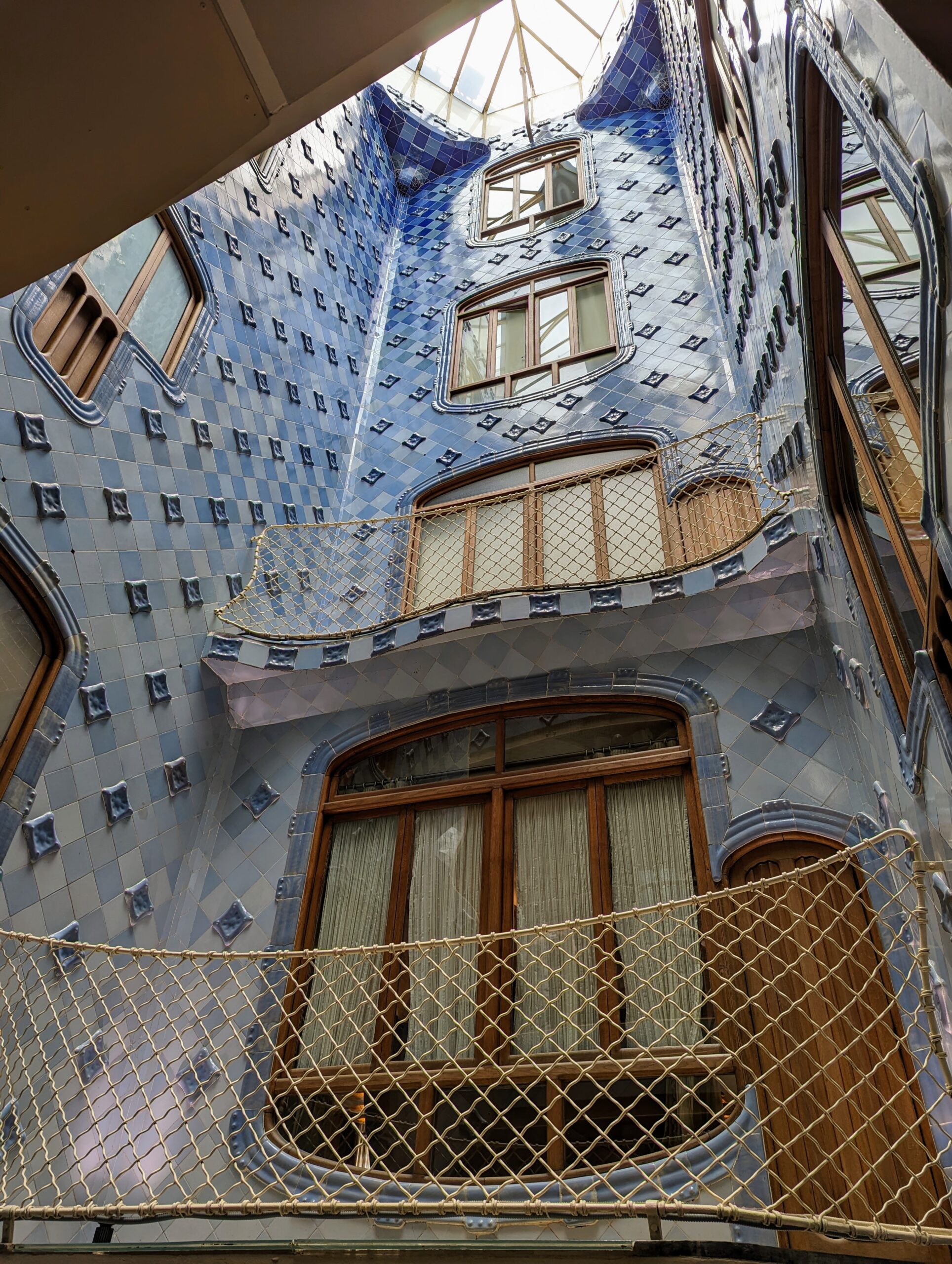
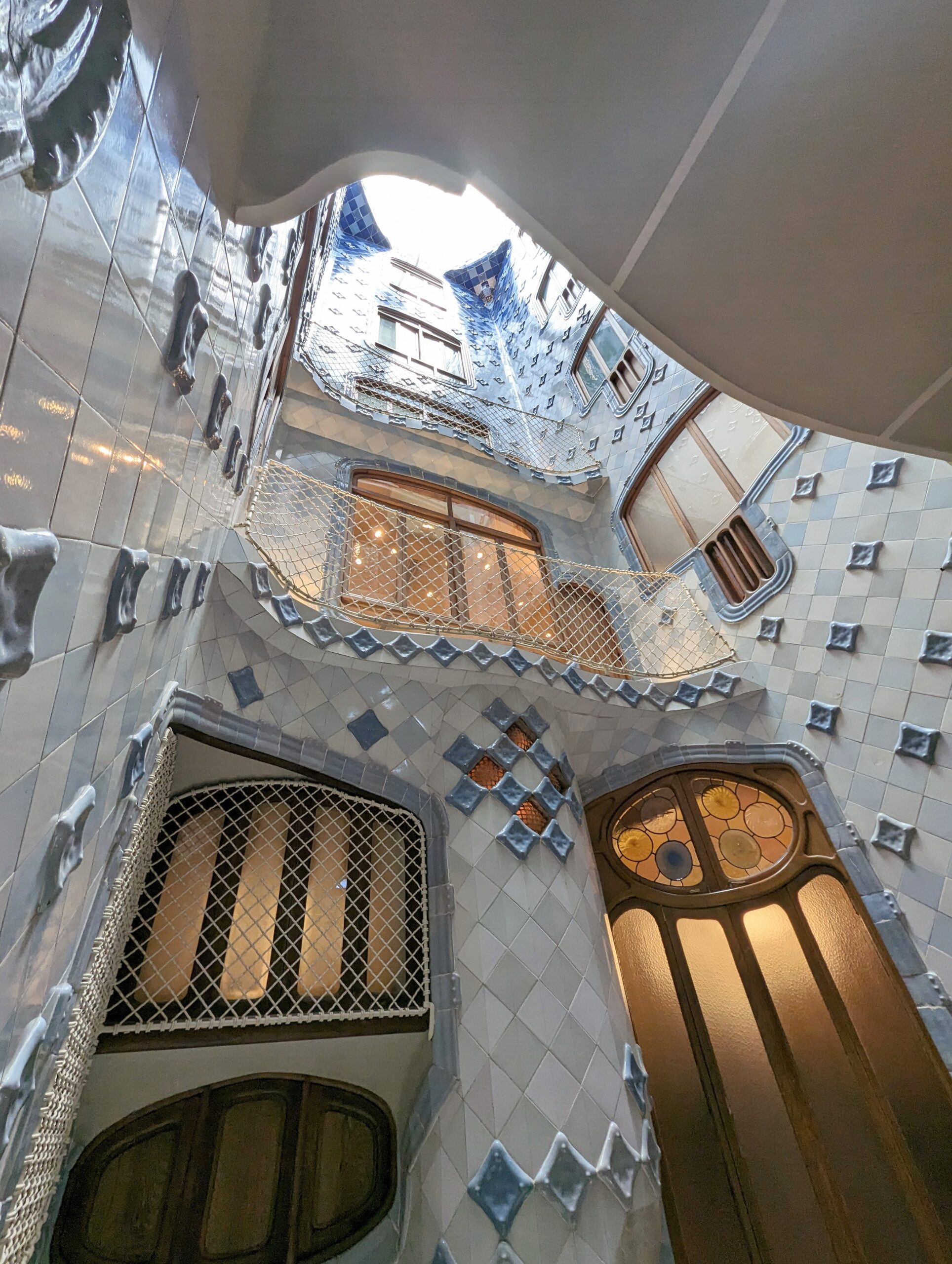
To achieve better ventilation and a balanced distribution of light throughout the building, Gaudí created two interior patios on either side of the stairwell.
In the same vein, Gaudí combined engineering and decoration when he installed larger windows on the lower floors and varied the shades of ceramic tiles from dark blue at the top to light blue at the bottom, achieving a more even distribution of light throughout the building.
Attic
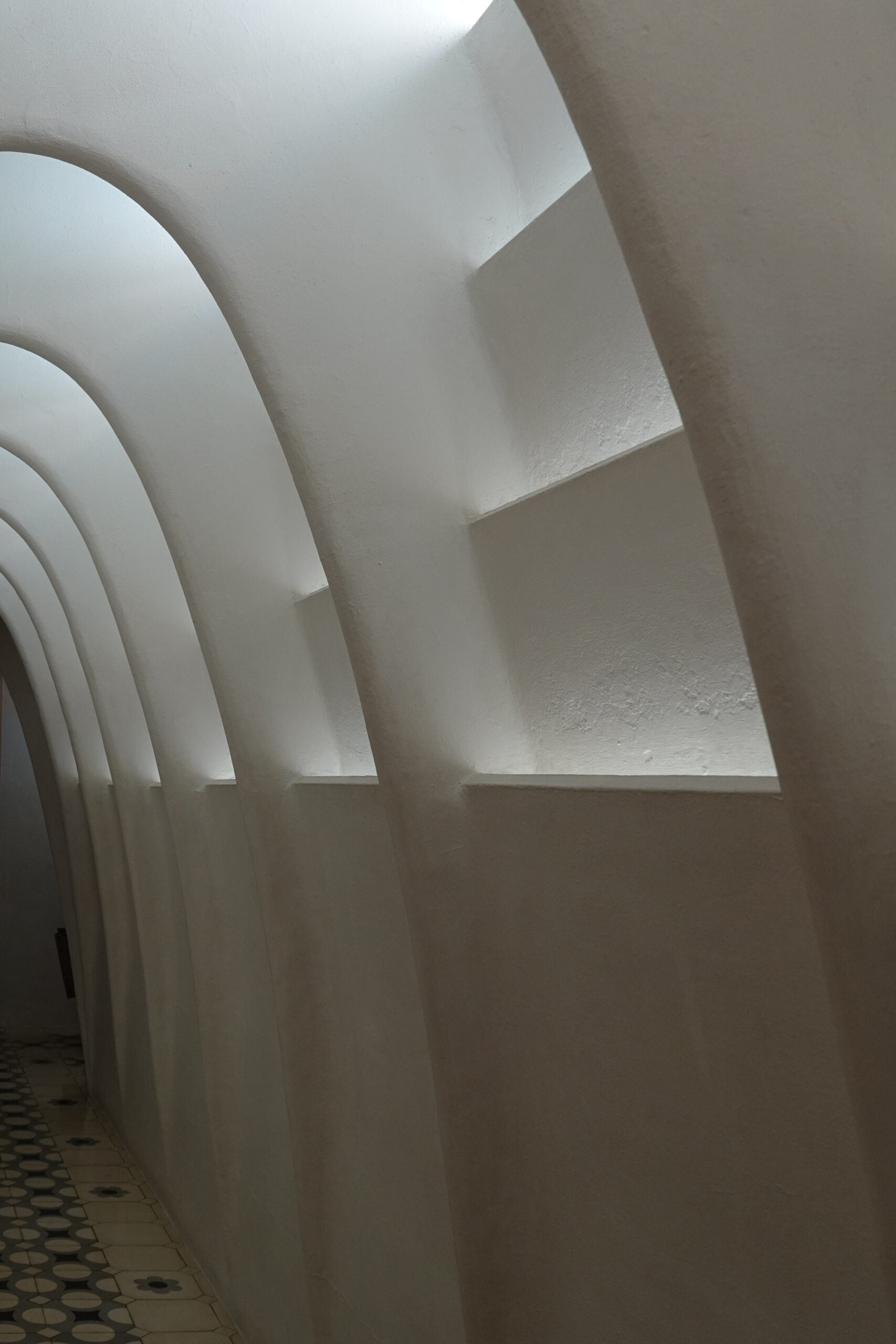
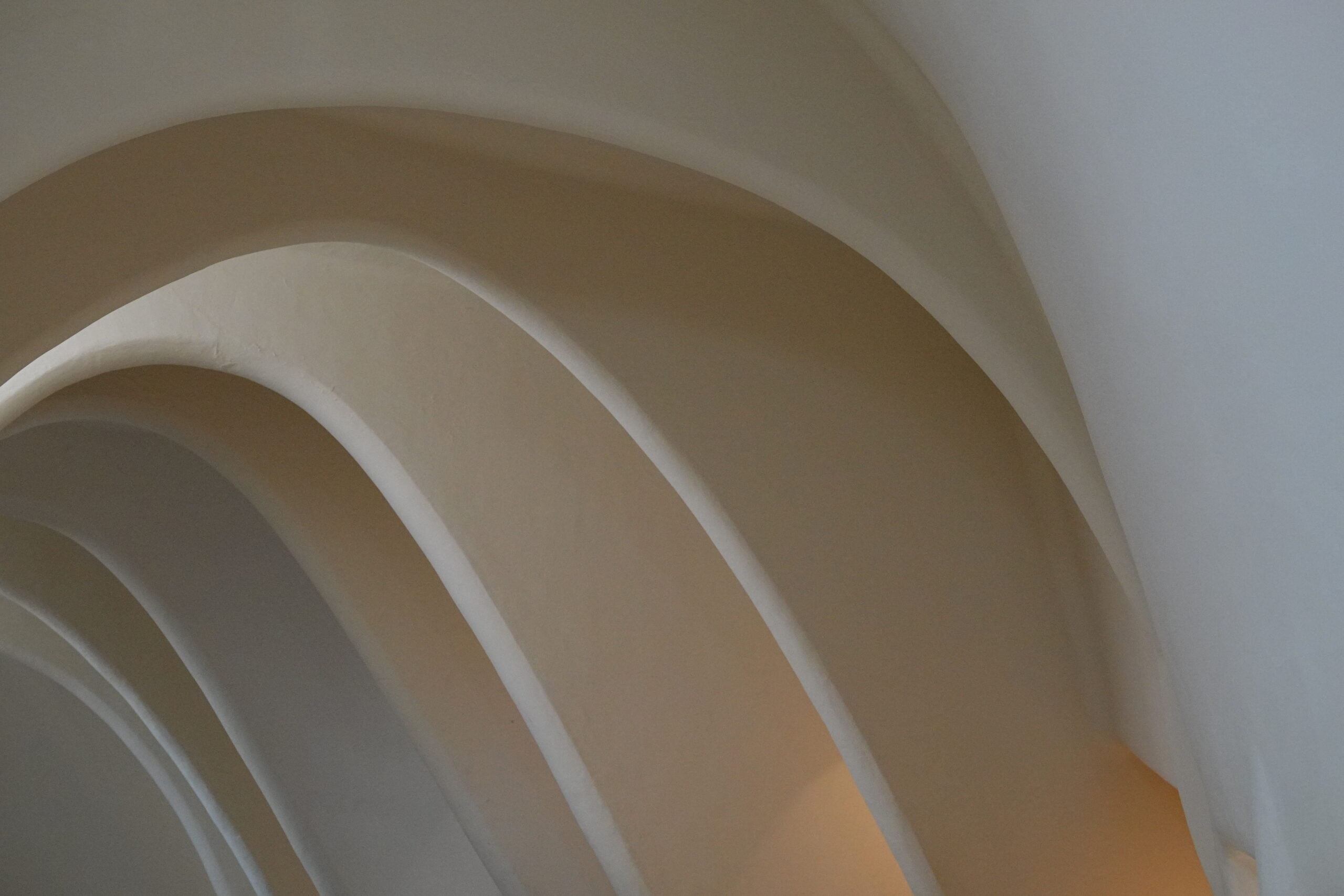
On the top floor, the attic accommodates outbuildings and utility rooms (laundry, storage) formerly reserved for the tenants of the building’s various apartments. Here, Gaudí uses one of his key techniques to support the roof: the catenary arch.
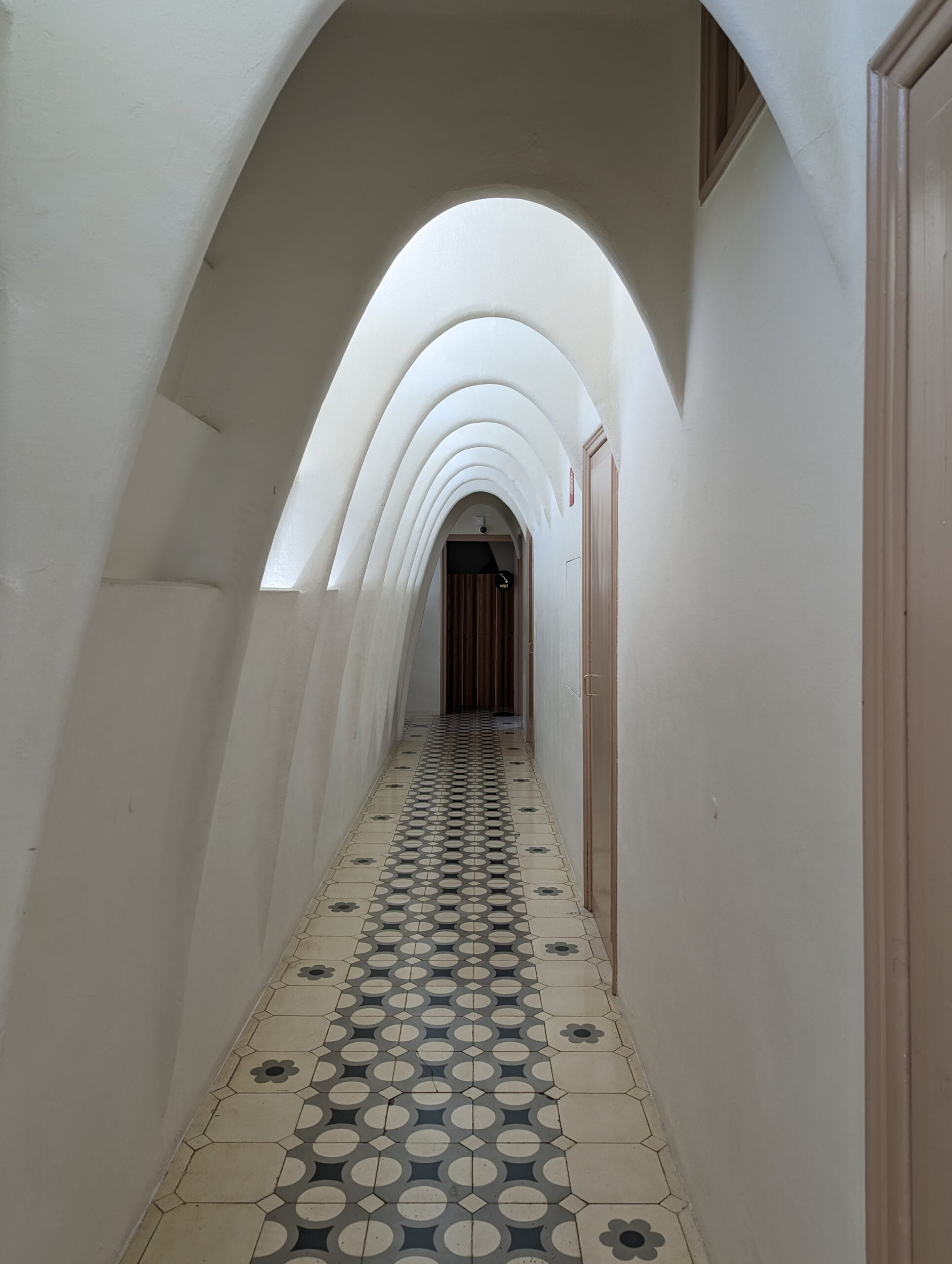
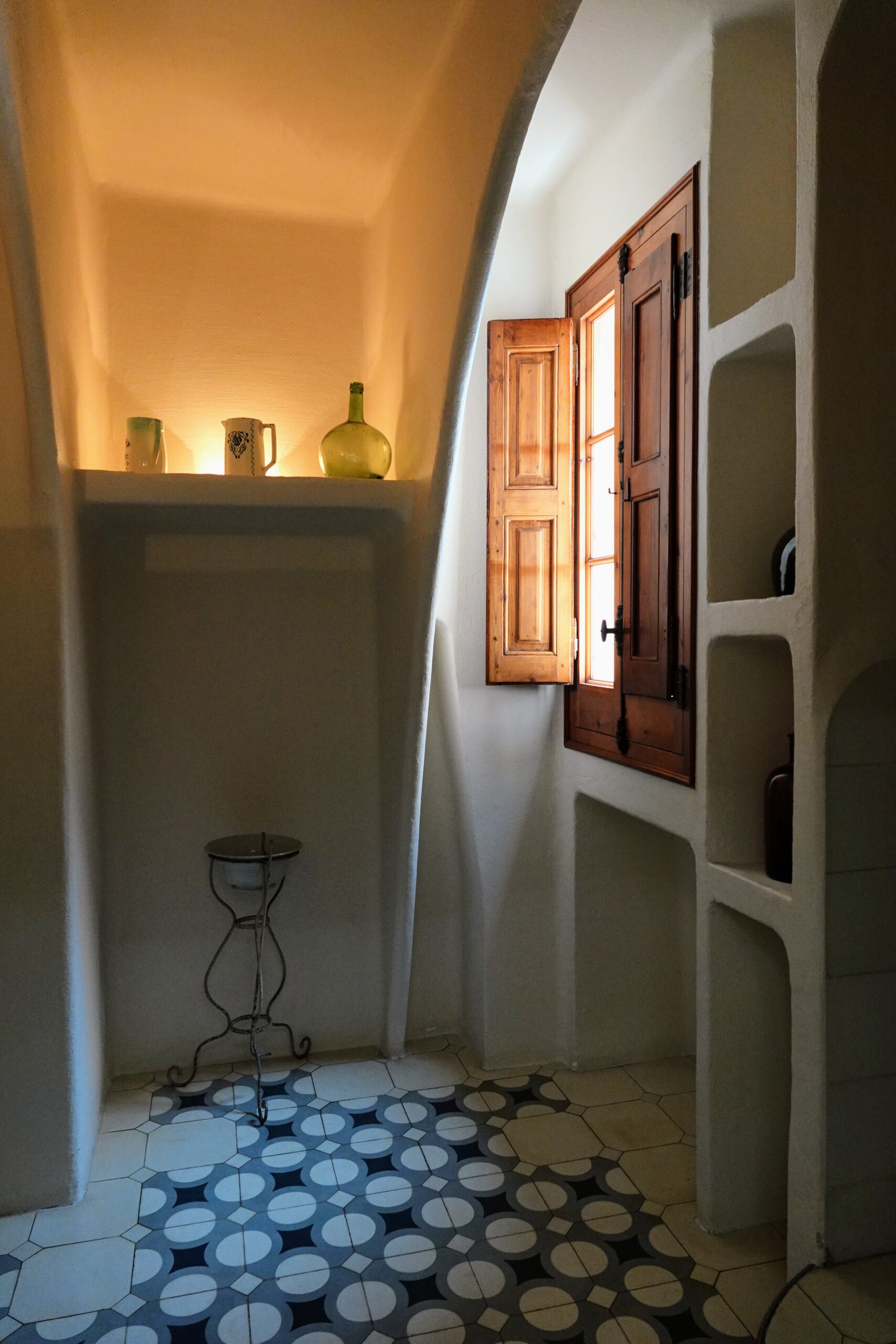
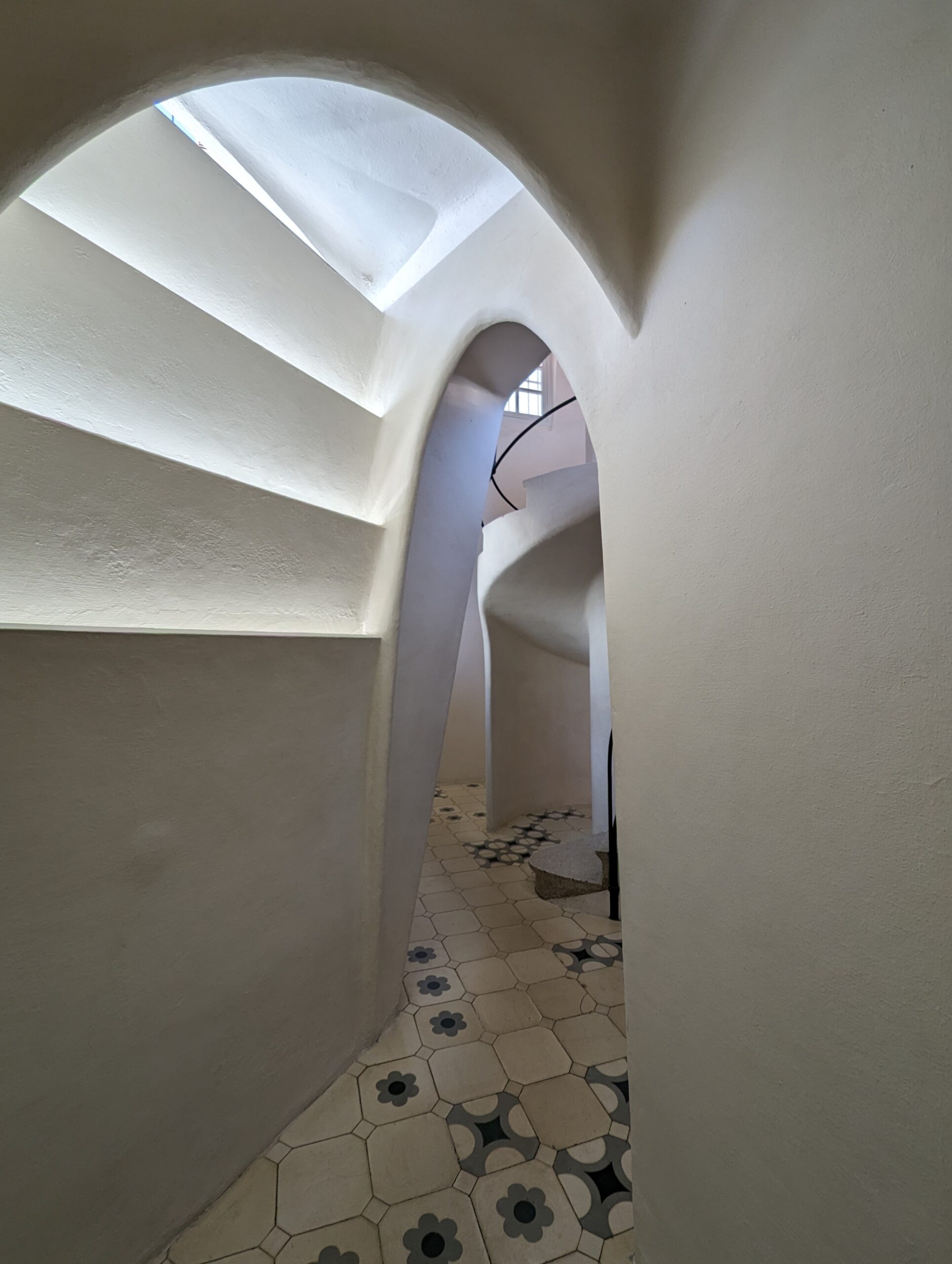
Resembling the rib cage of an animal, sixty catenary arches are distributed in two corridors along the interior patios. They form lateral spaces that regulate light. Characterized by the simplicity of their forms andthe omnipresence of light, the attics are one of the most unusual spaces in Casa Batlló.
Interpretation of the work
Gaudí never explained his work, which has given rise to many interpretations.
The legend of Sant Jordi
Gaudí was a devout Catholic. For many, Casa Batlló is a representation of the legend of Sant Jordi (Saint George), according to which Saint George, patron saint of Catalonia, cuts down the dragon with his sword to save the princess and the population from the animal’s fury.
According to this interpretation, the façade’s crowning glory would represent the dragon’s back, with ceramic tiles as scales and a small opening in the roof as an eye, struck down by Saint George’s sword, whose pommel would be symbolized by the four-pointed cross at the top of the turret. Inside the building, the great hall with its catenary arches would represent the dragon’s rib cage, and thewooden staircase in the entrance hall would be its tail. On the main façade, the skull-shaped masks and bone-shaped columns are reminiscent of the victims’ bones, while the flower-shaped balcony is that of the princess.
Water landscape
Others see in Casa Batlló’s façade the undulation of a polychrome carpet in predominantly greens and blues inspired by Monet’s Water Lilies, while the curved partitions, cracked walls and woodwork of the interior spaces evoke an underwater atmosphere very close to the fantastic world of Jules Verne.
For Salvador Dalí, the marine interpretation is unmistakable: “Gaudí built a house according to the shapes of the sea, representing the waves on a calm day.”
Immersive experience
Kengo Kuma’s staircase
After a visit to the attic and roof terrace, the tour of Casa Batlló ends with a descent into a stairwell where 164,000 aluminum chains are worked in layers byJapanese architect Kengo Kuma to create a sculptural work referencing Casa Batlló’s organic forms.
As you descend the stairs, the relationship to light changes, with each floor presenting a unique gradation of colors. Lighter at the top, the aluminum chains darken to black as they reach the old coal beds underground.
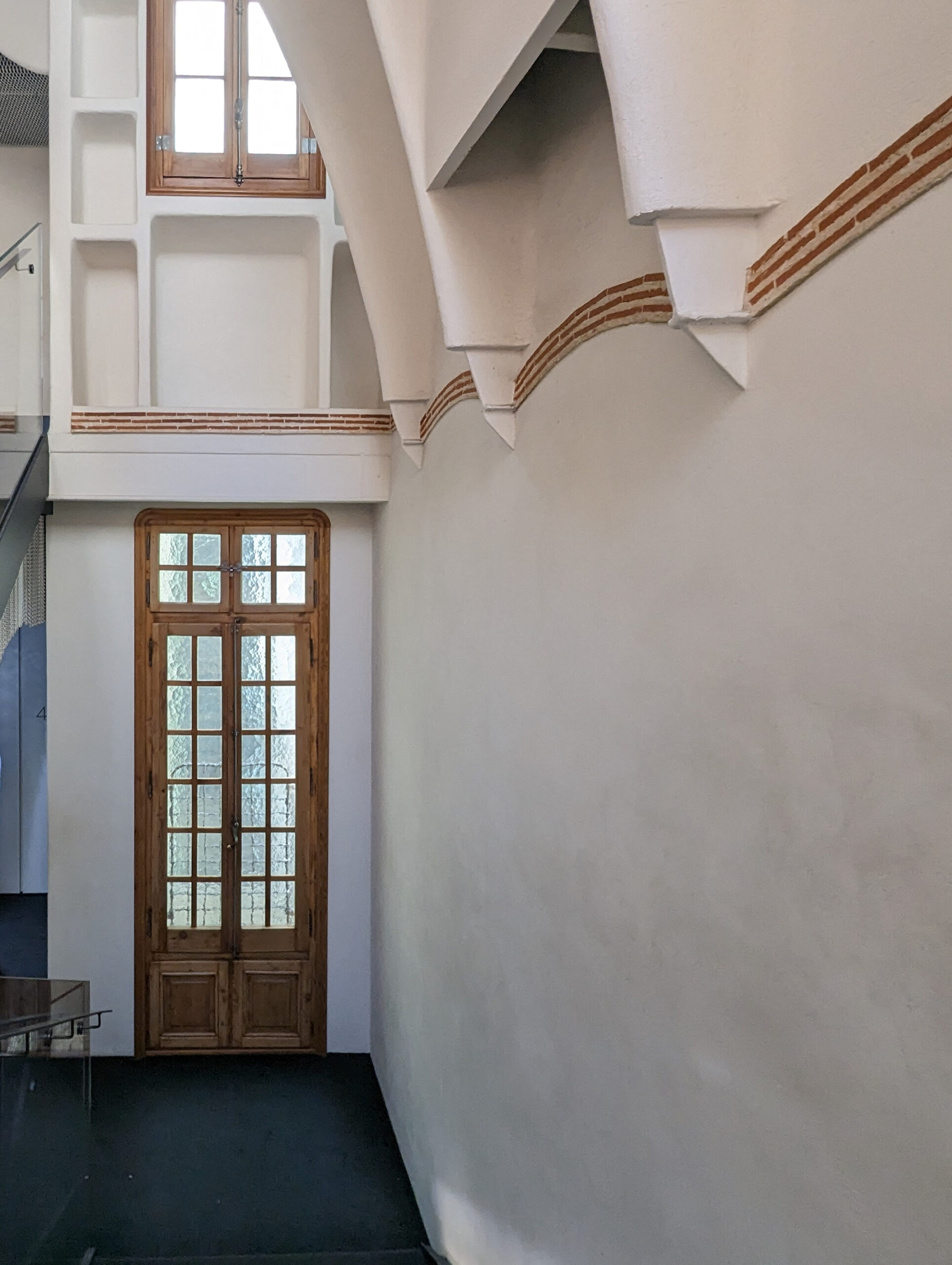
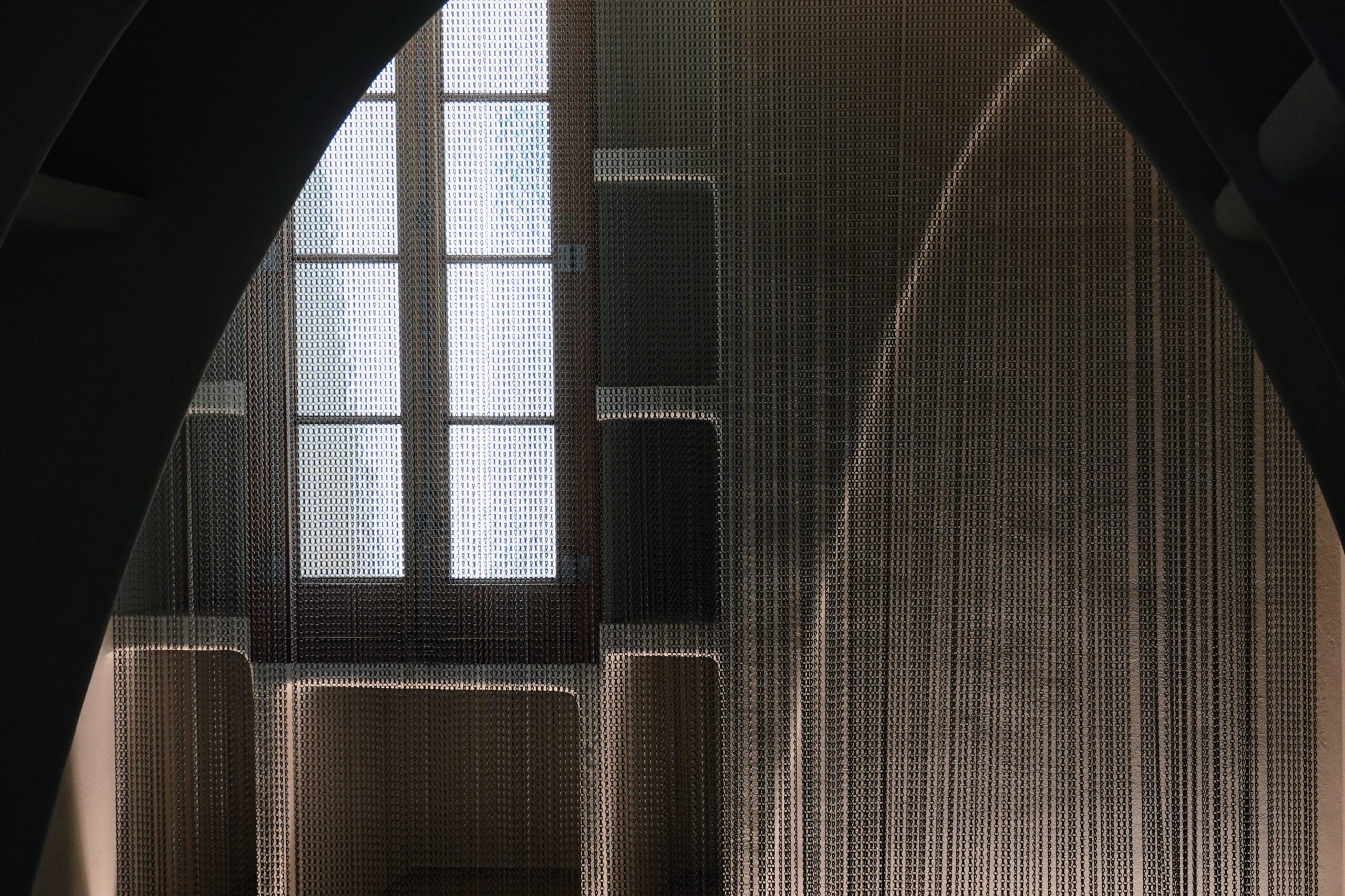
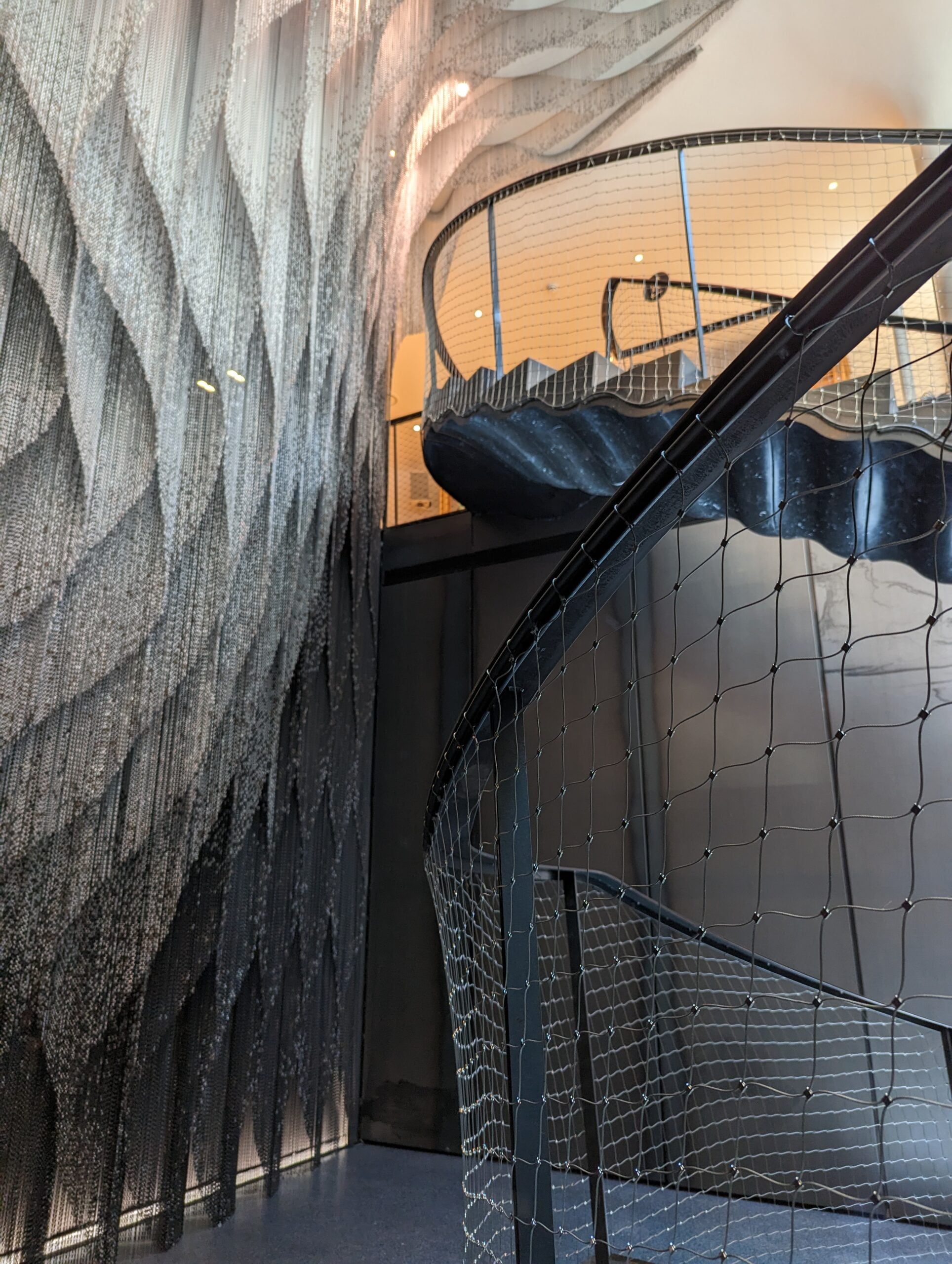
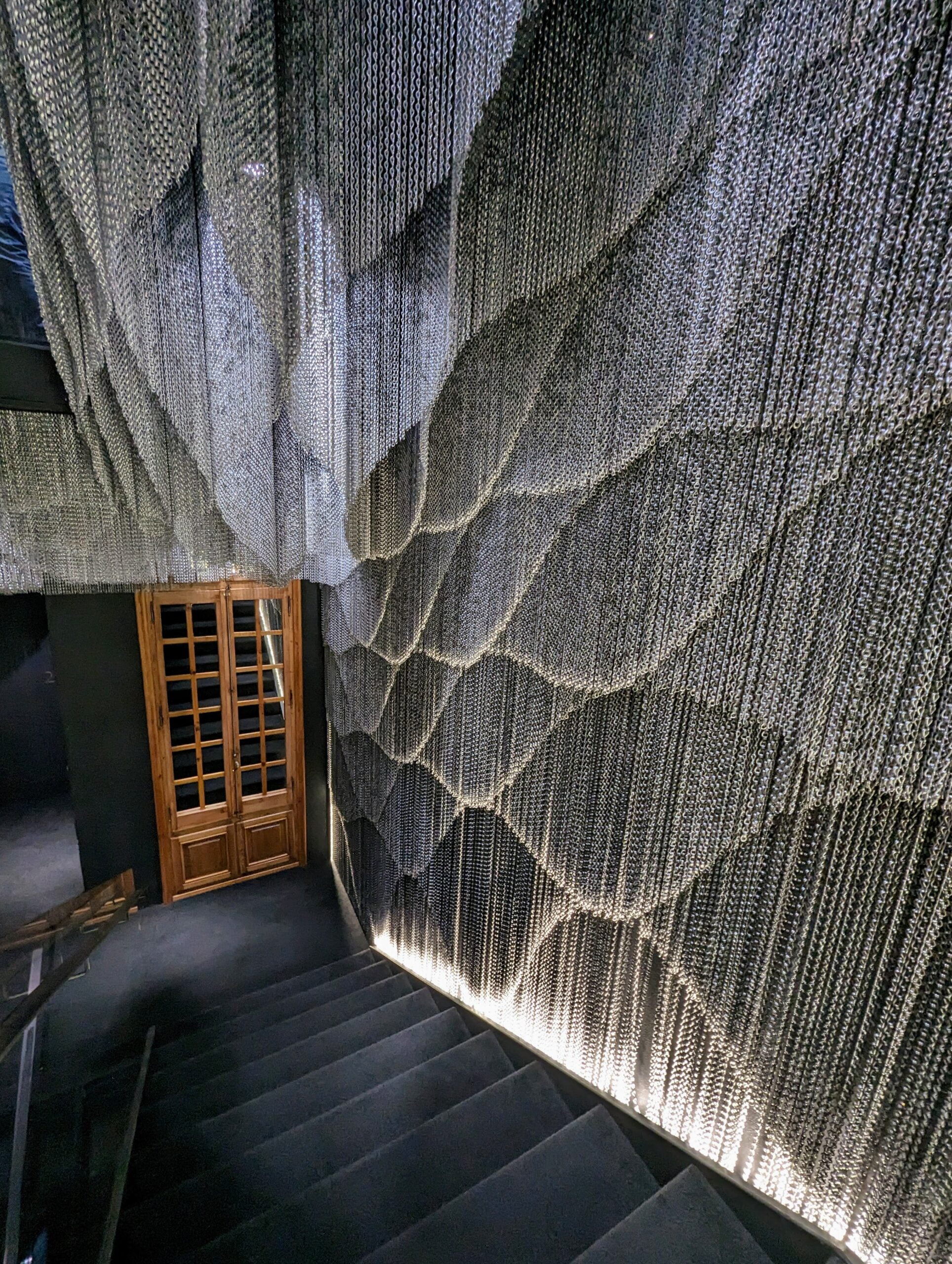
Kuma’s curtain extends into the atrium and the stairwell linking the first floor to the new exhibition spaces created in the basement as part of the Casa Batlló 10D Experience, which aims to offer visitors an immersive experience in the spirit of Gaudí.
Gaudí Cube by Refik Anadol
It is in this context that artist Refik Anadol presents images and data on Gaudí assembled with the help ofartificial intelligence and presented in the form of a cube.
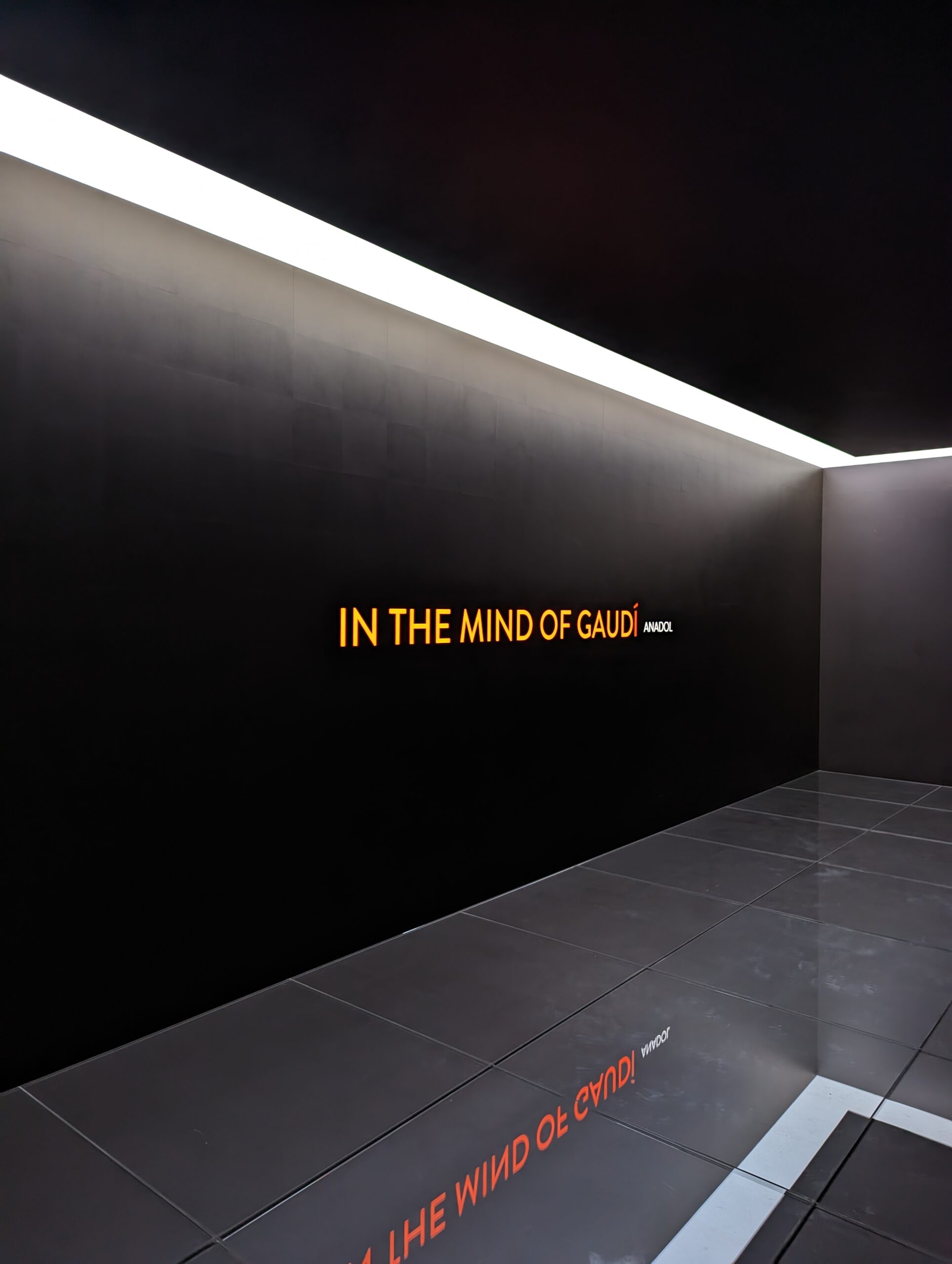
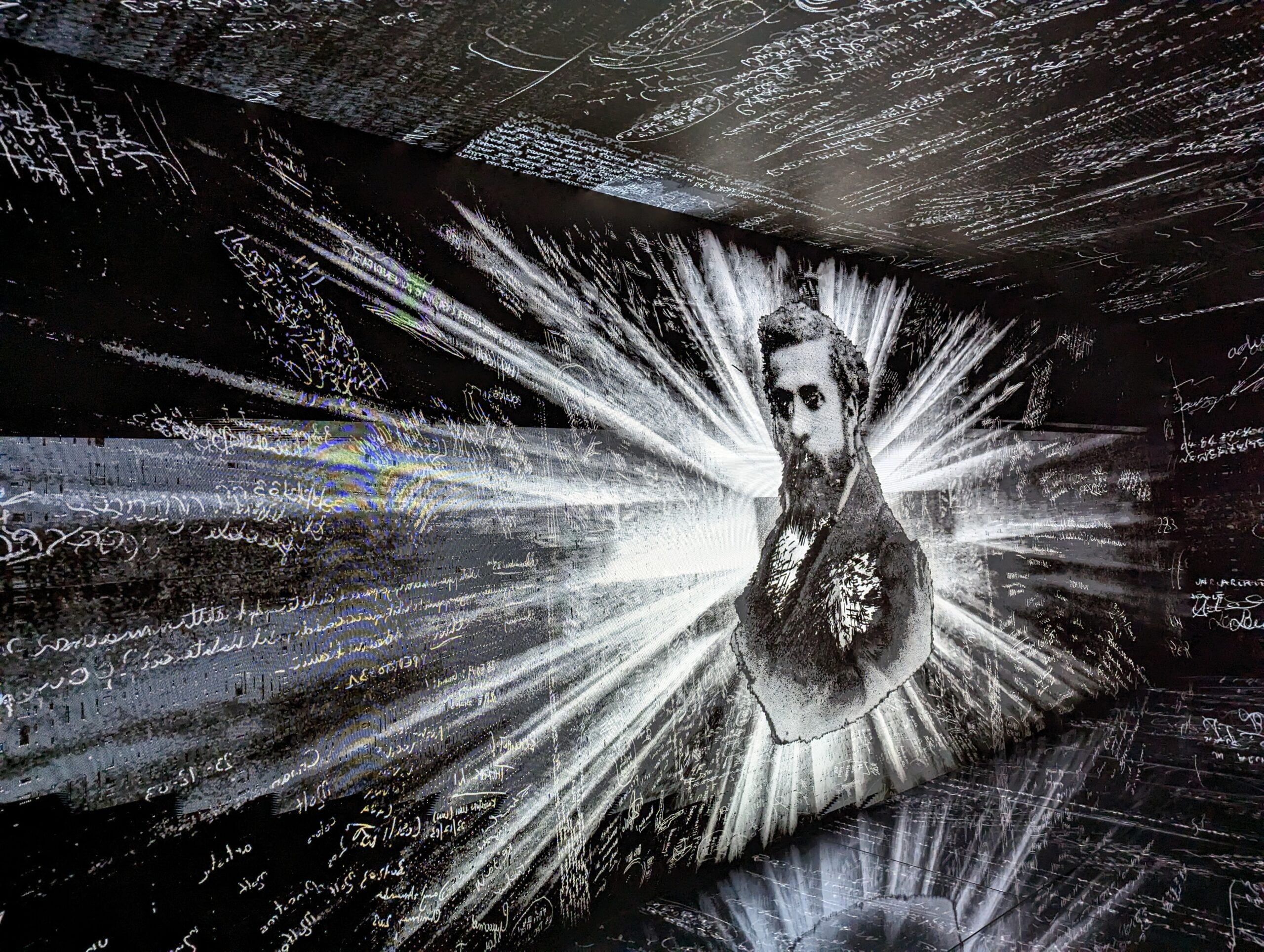
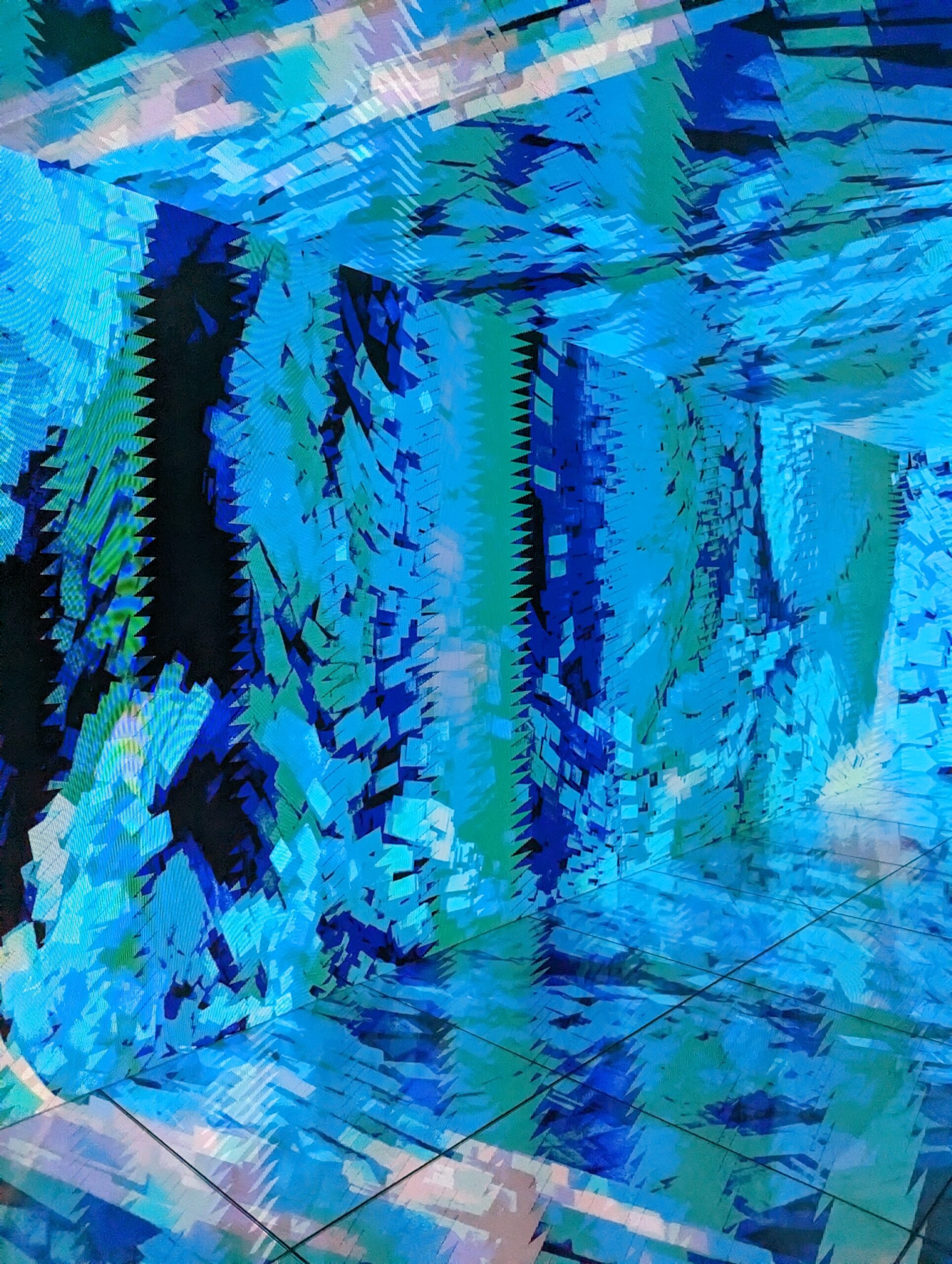
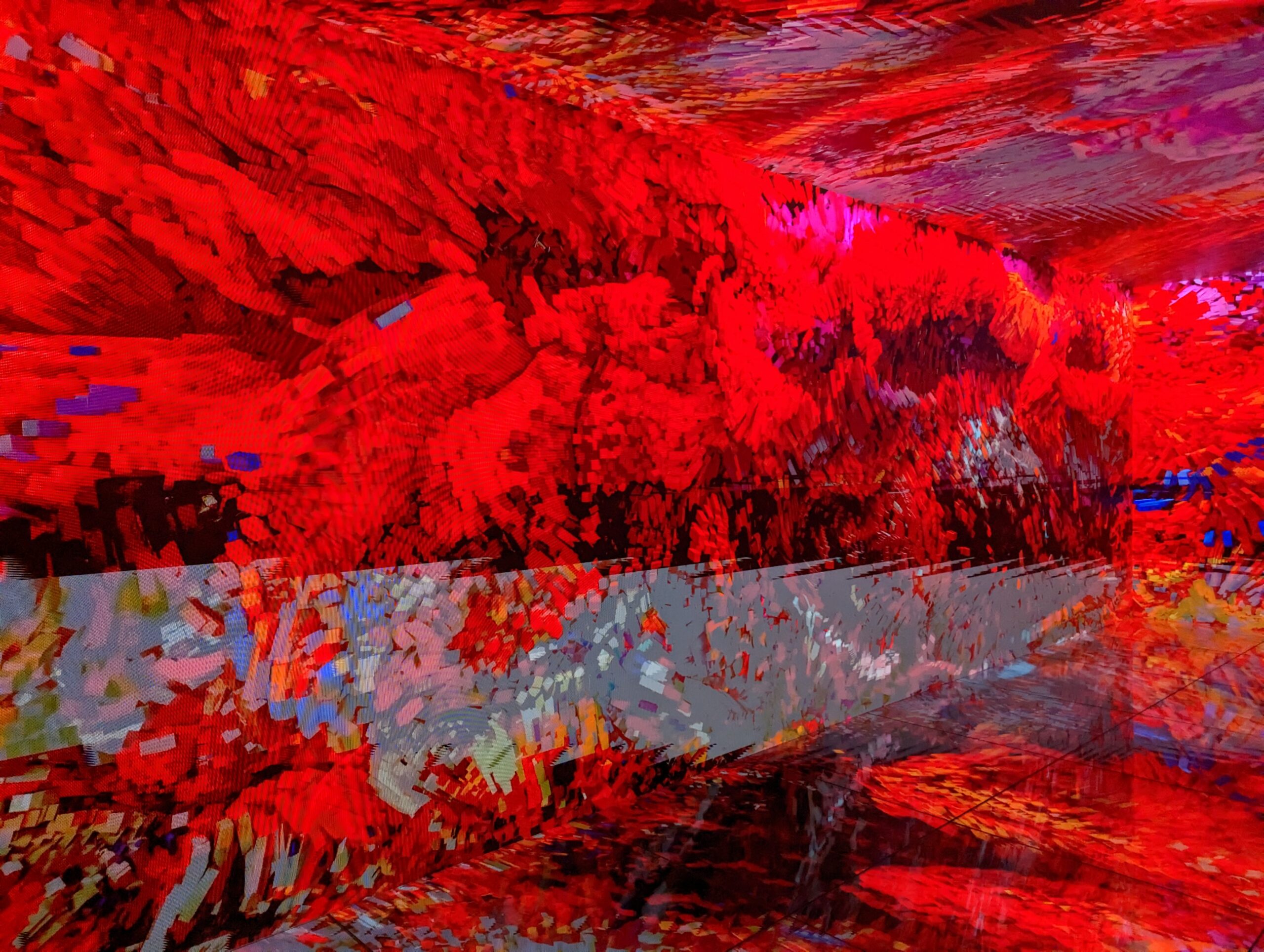
Gaudí Cube by Refik Anadol is a unique immersive installation, featuring the world’s first 6-sided LED cube and based on the world’s largest Gaudí digital library.
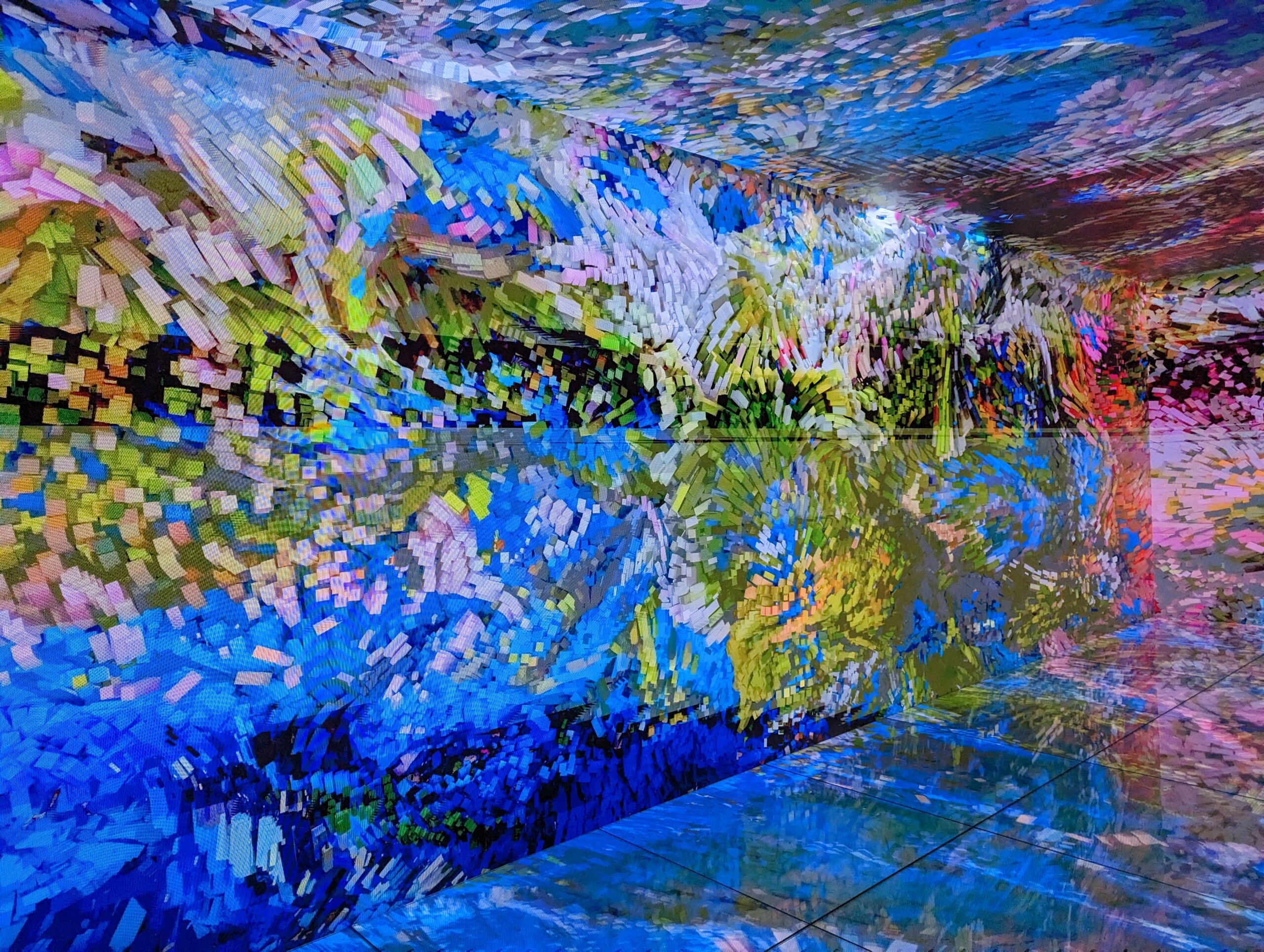
After a colossal research effort, the use of Artificial Intelligence and advanced machine learning processors has made it possible to decipher Gaudí’s trademark construction patterns, biomimetic structures and design logic.
Practical Information
- Casa Batlló is located at 43, Passeig de Gràcia. Access by metro (Passeig de Gràcia L2, L3 and L4), bus (lines H10, V15, 7, 22 and 24) or on foot on a Gaudí discovery tour.
- Casa Batlló is open every day of the year, from 9:00 a.m. to 8:00 p.m. (last entry at 7:15 p.m.).
- Admission is €35 per adult. Admission is free for children under 12. By purchasing your tickets in advance on the official Casa Batlló website, you can choose the time slot that suits you best.
- Audioguides and guided tours are available in various languages.
- Drinks can be enjoyed on the roof terrace.
- On-site, the magnificent Simbolic boutique offers a wide range of articles and souvenirs.