Sri Lanka is a destination that seduces with its diversity and blend of history, nature and culture. Whether as a family or as a couple, this teardrop-shaped island, nestled to the south of India, is brimming with treasures to explore. Exhilarating safaris, UNESCO-listed sites, verdant tea plantations and idyllic beaches… Here are just a few of the highlights of a trip rich in discovery and shared moments.
Sommaire de l'article
- Wilpattu: an immersion in nature
- Dambulla: a thousand-year-old Buddhist sanctuary
- Lion’s Rock: a breathtaking view
- Polonnaruwa: a dive into royal history
- Haputale: behind the scenes of Sri Lankan tea
- Sunrise at Lipton’s Seat: a suspended moment
- Galle: a colonial heritage by the sea
- Ella: train ride through the mountains
- Kalpitiya: dolphins and kitesurfing
- Adam’s Peak & Little Adam’s Peak: climbing sacred peaks
Wilpattu: an immersion in nature
Sri Lanka is a popular safari destination, with several national parks offering superb wildlife-watching opportunities. Among the most popular are Yala, Udawalawe and Minneriya, each with its own special features. Yala is famous for its leopards, Udawalawe is a haven for elephants, and Minneriya attracts thousands of elephants during the dry season, putting on an impressive show. These parks are very popular, but can lose some of their authenticity, with many vehicles and fewer moments of tranquillity.
If you’re looking for a more authentic safari away from the crowds, Wilpattu is an excellent option. Located in the north-west of the island, this is Sri Lanka’s largest park, covering over 1300 km² of unspoilt nature. Less crowded than other parks, it offers a more intimate experience. Its landscapes, punctuated by natural lakes and dense forests, are home to a variety of wildlife, including elephants, crocodiles, lippus bears and, with a little luck, Sri Lankan leopards. A safari trip to Wilpattu can last from 3 to 4 hours, but to get the most out of the park, it’s best to spend the whole day there. For this, we recommend staying nearby and leaving early in the morning to maximize your chances of sightings and explore this unspoilt area in greater depth.


Dambulla: a thousand-year-old Buddhist sanctuary
A UNESCO World Heritage Site, the cave temple of Dambulla is both a historical and spiritual site of great importance to Sri Lanka. This complex of five caves, perched on a massive rock, is home to over 150 Buddha statues and remarkable frescoes, some dating back over 2000 years. Among the sculptures, the 14-metre-high Reclining Buddha is particularly impressive, while the golden and ochre-coloured frescoes depict scenes from the life of Buddha and the history of Buddhism in Sri Lanka.
Access to the site is via a winding staircase, often lined with mischievous monkeys. Once at the top, the panoramic view of the surrounding region offers a well-deserved reward after the effort of the climb. For a more enjoyable experience, it’s advisable to visit the site early in the morning, to avoid the heat and crowds.


Lion’s Rock: a breathtaking view
It’s impossible to talk about Sri Lanka without mentioning Sigiriya. A true symbol of the country, the Sigiriya Rock, or “Lion Rock”, is a 370-metre-high monolith on which lie the remains of a royal palace dating back to the 5th century. Today, all that remains are the palace foundations and the imposing lion’s paws that marked the entrance, but the site, a UNESCO World Heritage Site, continues to amaze visitors. Its fascinating frescoes and breathtaking views of the surrounding jungle make the climb up the 1,300 steps, though difficult in the sun, an unforgettable experience.

Polonnaruwa: a dive into royal history
After the fall of Anuradhapura, Polonnaruwa became the new center of Sinhalese power in the 11th century. Bordered by the Parakrama Sea, an immense water reservoir that supported the region’s agriculture, Polonnaruwa embodies the hydraulic and architectural genius of its time, with its ingenious water management systems that irrigated the vast farmlands.
A UNESCO World Heritage Site, Polonnaruwa is best visited by bicycle, allowing you to explore the various sites at your own pace while admiring the surrounding scenery. Highlights include the Quadrilateral or Terrace of the Tooth, the Lankatilaka Temple and the Tivanka Image House. But the real jewel of the site remains the Gal Vihara, a group of four Buddha statues carved from a single block of granite in the 12th century, illustrating crucial moments in the life of the Buddha, and representing the apogee of classical Sinhalese art.


Haputale: behind the scenes of Sri Lankan tea
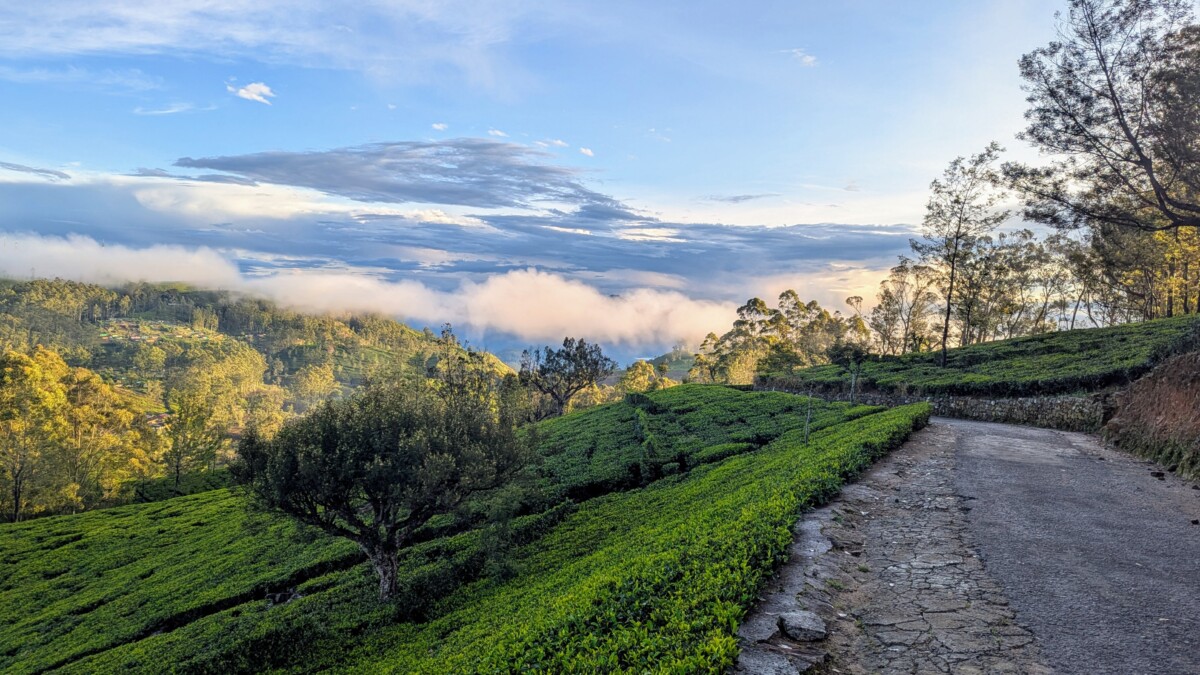
Introduced by the British in the 19th century, tea quickly became one of the riches of Sri Lanka, now one of the world’s largest producers. The central mountains, covered by lush plantations, offer ideal conditions for growing tea, thanks to a cool climate and fertile soil.
The Ella, Haputale and Nuwara Eliya regions, renowned for their rolling landscapes, are home to some of the island’s finest plantations. It’s also here that you can visit factories and follow the journey of the leaves, from their meticulous plucking, often carried out by women, to their transformation into black, green or white tea. Each stage, from oxidation to fermentation, reveals the ancestral know-how for which Ceylon tea is renowned.


Sunrise at Lipton’s Seat: a suspended moment
Lipton’s Seat is one of the most beautiful vantage points in Sri Lanka, perched at an altitude of almost 2,000 meters in the heart of the Haputale tea plantations. It was here that Sir Thomas Lipton came to contemplate his vast estates, and even today, the panorama over the green hills and surrounding countryside is spectacular, especially at sunrise.
Access is usually by tuktuk, in the darkness of the early hours, so as to arrive in time to see the sun peeking through the morning mist. Once there, you can enjoy the calm and unobstructed views, which on a clear day can extend as far as the island’s south coast.
After enjoying a cup of tea at the little kiosk, you can choose to walk back down through the plantations or explore the surrounding area before taking a tuktuk. This is a great opportunity to watch the pickers at work and soak up the unique atmosphere of this region.


Galle: a colonial heritage by the sea
Located on the south coast of Sri Lanka, Galle is a port city steeped in history. A former trading post, it owes its unique charm to its blend of European and Asian influences. Its historic center, Galle Fort, is a UNESCO World Heritage Site. Built by the Portuguese in the 16th century, then reinforced by the Dutch, it now houses a labyrinth of cobbled streets lined with colonial buildings, art galleries, boutiques and cafés.
A stroll along the ramparts at sunset is a must: the view over the Indian Ocean is magnificent, and the peaceful atmosphere contrasts with the hustle and bustle of the rest of the town. Among the sites not to be missed, the emblematic lighthouse, the old Dutch church and the fish market provide an opportunity to immerse yourself in local history and life.

Ella: train ride through the mountains
Sri Lanka is home to one of the most beautiful train journeys in the world, and the route between Kandy and Ella is undoubtedly the most spectacular. Aboard a brightly colored train, you’ll pass through breathtaking scenery: hills covered with tea plantations, misty valleys and centuries-old bridges suspended above the jungle.
The journey takes around seven hours, but every moment is an invitation to marvel. Windows wide open and doors left swinging allow you to take in the view, while street vendors pass from carriage to carriage, offering spicy samosas and hot tea. One of the highlights of the trip is the famous Nine Arches Bridge: this stone bridge, dating back to British colonial times, is a true icon of the country.


Kalpitiya: dolphins and kitesurfing
Situated on a peninsula north of Negombo, Kalpitiya is a popular destination for nature lovers and water sports enthusiasts. Renowned for its lagoons and wild beaches, it offers one of the best kitesurfing spots in Sri Lanka, especially between May and October, when the winds are particularly favorable.
But Kalpitiya is best known for its dolphin-watching excursions. At dawn, hundreds of spinner dolphins swim in schools off the coast, offering a fascinating spectacle. If you’re lucky, you may even catch a glimpse of migrating whales.
Adam’s Peak & Little Adam’s Peak: climbing sacred peaks
Adam’s Peak and Little Adam’s Peak offer two unforgettable hiking experiences in Sri Lanka. Adam’s Peak, at 2,243 meters, is a sacred pilgrimage site for many religions. Every year, thousands of pilgrims climb its 5,500 steps at night to reach the summit and admire the mountain’s perfect shadow at sunrise. The climb is demanding, but the view and the spiritual atmosphere are well worth it.
Slightly easier, Little Adam’s Peak in Ella offers a shorter hike of around 30-45 minutes, with spectacular views of the tea plantations and surrounding valleys. Although not quite as mythical as Adam’s Peak, it’s perfect for those looking for a great view without the intense physical effort.


Sri Lanka offers a rich diversity of experiences, from mountainous landscapes to peaceful beaches and fascinating cultural sites. Whether you’re looking to hike, relax or discover, this country is sure to seduce you. If you’d like to find out more, or if you’d like to organize your stay, please contact us for a no-obligation quote.